标签: Belize

伯利兹

  • Fire Victim Shadia Magaña Dies from Injuries

    Fire Victim Shadia Magaña Dies from Injuries

    In a heart-wrenching turn of events, 17-year-old Shadia Magaña, one of the victims of a horrific fire in San Felipe, Belize, has tragically passed away due to severe burn injuries sustained in the incident. The devastating attack, which occurred in the early hours of October 20, 2025, involved Shadia, her mother Angelita Magaña, and her younger brother Tishan being doused in gasoline and set ablaze by Angelita’s estranged partner, 35-year-old Francisco Godoy. Godoy, the alleged perpetrator, also died this morning at the Karl Heusner Memorial Hospital (KHMH) in Belize City. Shadia, a recent high school graduate, was initially treated at the Northern Regional Hospital before being transferred to KHMH for advanced medical care. Despite the relentless efforts of medical professionals, she succumbed to her injuries on October 22, 2025. This tragic incident has cast a somber shadow over the community, highlighting the devastating consequences of domestic violence.

  • Man Accused of Setting Family on Fire Dies from His Injuries

    Man Accused of Setting Family on Fire Dies from His Injuries

    Francisco Godoy, a 35-year-old man accused of a heinous crime in San Felipe Village, has succumbed to his injuries. Godoy was hospitalized at the K.H.M.H. with severe burns covering 90% of his body and passed away at approximately 5:45 a.m. on October 22, 2025. The incident occurred in the early hours of Monday morning when Godoy allegedly broke into the home of his estranged partner, Angelita Magaña, and her two children, six-year-old Tishan and 17-year-old Shadia. After dousing them with gasoline, he set the house ablaze. Magaña and Tishan perished in the fire, while Shadia died later while receiving treatment at the Northern Regional Hospital. Godoy had been under police guard as authorities prepared to charge him. His death marks the end of the criminal case, though investigations into the tragic event continue.

  • Belize City Man Shot Dead

    Belize City Man Shot Dead

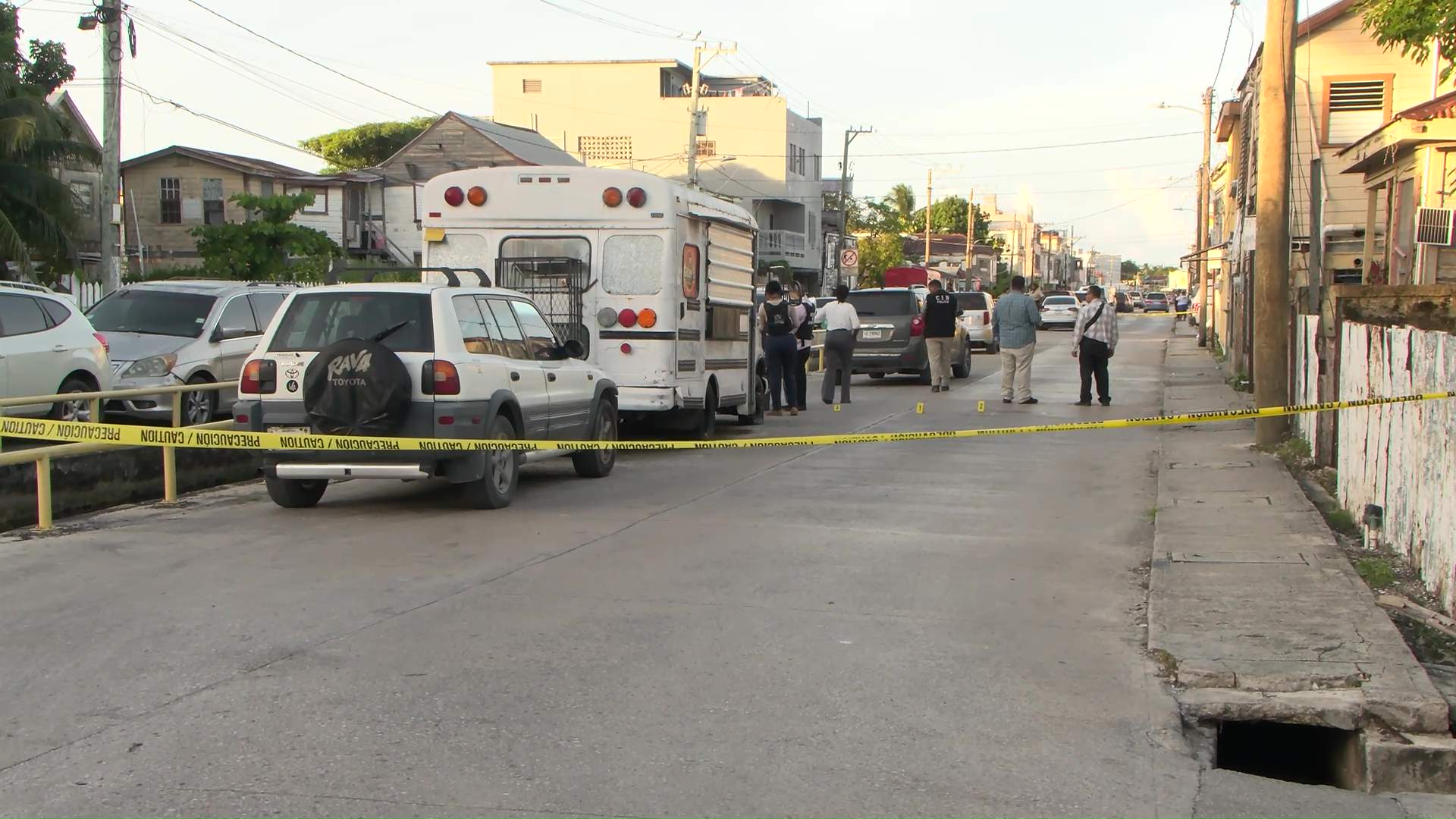
    In a tragic late-night incident, a 37-year-old man was fatally shot in Belize City on Tuesday, October 22, 2025. Police were alerted to gunfire reports around 10:45 p.m. on Nurse Findley Crescent. Upon arrival, officers discovered Ricardo Arturo Escobar with multiple gunshot wounds. He was immediately transported to the Karl Heusner Memorial Hospital (K.H.M.H.), where he succumbed to his injuries. Preliminary investigations reveal that Escobar was standing on the street when an unidentified assailant approached and opened fire, striking him multiple times before fleeing the scene. Authorities are actively investigating the incident, and further details are expected as the case develops.

  • Belize is a Third Safe; U.S. Agreement Targets Asylum Transfers

    Belize is a Third Safe; U.S. Agreement Targets Asylum Transfers

    In a significant move to enhance refugee protection and streamline asylum processes, Belize and the United States have signed a groundbreaking two-year agreement. The pact, finalized in Belmopan on October 21, 2025, establishes a framework for the safe and dignified transfer of third-country nationals seeking asylum, excluding Guatemalans. This agreement underscores both nations’ commitment to international legal standards, including the 1951 Refugee Convention, the 1967 Protocol, and the Convention Against Torture. Key principles such as non-refoulement, fair asylum procedures, and measures to prevent fraud in the refugee process are emphasized. Belize will consider accepting asylum seekers proposed by the U.S., with the latter potentially providing financial and technical support to bolster Belize’s institutional capacity. The agreement can be amended or terminated through diplomatic channels. Belize’s Foreign Minister, Francis Fonseca, highlighted that the agreement is a broad framework and will only be activated after detailed implementation plans and operating procedures are developed. He emphasized Belize’s commitment to international law, cooperation with the U.S., and the protection of individuals fleeing persecution. The agreement also raises questions about its alignment with CARICOM’s free movement policies and regional asylum frameworks, particularly concerning the inclusion of CARICOM nationals among potential transferees. Additionally, it prompts discussions on pathways to residency or citizenship for recognized refugees and safeguards against chain refoulement for those denied protection.

  • BEL Chairman Explains Why Utilities Swing Public-Private

    BEL Chairman Explains Why Utilities Swing Public-Private

    In a recent address, Andrew Marshalleck, Chairman of Belize Electricity Limited (BEL), shed light on the recurring phenomenon of utilities oscillating between public and private ownership across the Caribbean and Central America. Marshalleck, an Attorney-At-Law, emphasized that this cycle is not unique to Belize but is a regional trend observed in critical sectors such as water, telecommunications, and energy. He cited examples like the Belize Water Services (BWS), Belize Telemedia Limited (BTL), and BEL itself, which have all experienced shifts in ownership over time. Marshalleck explained that this cycle is driven by two primary factors: equality and efficiency. While privatization often prioritizes profitability, nationalization considers broader societal benefits. He noted that this dynamic is particularly evident in the case of natural resources and infrastructure, such as dams and ports, which have also seen ownership changes. Marshalleck’s insights provide a deeper understanding of the economic and social forces shaping the region’s utility sectors.

  • Thea Garcia-Ramirez Calls on Belizeans to Fight Domestic Abuse

    Thea Garcia-Ramirez Calls on Belizeans to Fight Domestic Abuse

    Belize is grappling with a disturbing surge in domestic violence cases, many of which have culminated in fatal outcomes. Despite the growing awareness spurred by these tragic incidents, countless women continue to endure abuse in silence, fearing retaliation or societal judgment. Thea Garcia-Ramirez, Belize’s Minister of Human Development, has issued a compelling call to action, emphasizing that the fight against domestic violence is a societal responsibility, not just an issue for victims and perpetrators. In a recent interview, Garcia-Ramirez highlighted the dehumanization that underpins such abuse, where victims are often viewed as inferior or disposable. She stressed that impunity and societal apathy perpetuate the cycle of violence, urging individuals and institutions to reflect on their roles in either perpetuating or combating the issue. Garcia-Ramirez also underscored the importance of addressing the root causes of violence, which often stem from learned behaviors within households. She challenged media professionals and the public to actively contribute to creating a safer environment for women in Belize, rather than shifting blame to law enforcement or government bodies.

  • Parliament Debates Landmark DNA Legislation

    Parliament Debates Landmark DNA Legislation

    In a historic move that could redefine the landscape of criminal investigations, the House of Representatives introduced a groundbreaking DNA Bill on October 17, 2025. Proposed by Home Affairs Minister Kareem Musa, the legislation seeks to empower law enforcement agencies to collect and store forensic DNA samples from individuals suspected of serious crimes. These profiles would be integrated into a national database, alongside those of convicted offenders and crime scene evidence, to enhance the efficiency and accuracy of criminal investigations. Minister Musa emphasized the bill’s alignment with constitutional human rights, ensuring that the collection and use of DNA samples respect individuals’ privacy, dignity, and bodily integrity. The proposed law also aims to address gaps in existing legislation by formalizing the establishment and operation of a national DNA database. This initiative, part of a broader strategy to modernize the criminal justice system, is expected to significantly improve the investigation of serious crimes, missing persons cases, and unidentified human remains. The bill’s introduction marks a pivotal moment in the government’s commitment to leveraging technology and innovation for public safety.

  • Forensics Chief Gian Cho Explains DNA Bill Impact

    Forensics Chief Gian Cho Explains DNA Bill Impact

    In a recent interview, Gian Cho, Executive Director of the National Forensic Science Service (NFSS), shed light on the implications of the newly enacted DNA Bill. The legislation introduces significant changes to how DNA samples are collected, particularly in cases involving indictable offenses. Under the new law, DNA samples can now be obtained from both suspects and convicted individuals, even without their consent, provided a court order is secured. Cho emphasized that while some countries, like the UK, allow DNA collection without consent, the new bill ensures a more balanced approach. Investigators must first seek consent, and if refused, they must present reasonable grounds to a magistrate to justify the collection. This process aims to protect individual rights while enhancing law enforcement capabilities. Cho highlighted that the bill incorporates safeguards from other jurisdictions, ensuring that DNA collection is conducted in the interest of justice and with judicial oversight.

  • DNA Bill Adds Database for Missing Persons

    DNA Bill Adds Database for Missing Persons

    In a groundbreaking move, Belize is set to introduce a DNA Bill that could revolutionize the way missing persons cases are handled and human remains are identified. Executive Director Gian Cho of the National Forensic Science Service (NFSS) highlighted the potential of this legislation during a recent briefing. The bill proposes the creation of a national DNA database, a first for the country, which will be equipped with stringent oversight mechanisms to ensure privacy and prevent rights violations.

    Currently, Belize lacks a DNA database, a tool that over sixty countries worldwide have already implemented. These databases store DNA profiles on secure servers, enabling law enforcement to investigate crimes, link incidents, and revisit past cases when new DNA profiles are added. Beyond criminal investigations, DNA databases are instrumental in identifying missing persons and human remains, as well as establishing familial relationships.

    Cho emphasized that the proposed database will be divided into two distinct compartments: one for criminal investigations and another for humanitarian purposes. This separation ensures that the needs of criminal investigations do not overlap with those of humanitarian efforts. When it comes to genetic data, the focus will be on specific STR markers in non-coding regions of the genome, rather than characteristics like skin color, eye color, or ancestry.

    The introduction of this DNA Bill marks a significant step forward for Belize, promising to enhance the country’s forensic capabilities while safeguarding individual privacy and rights.

  • The Shared Uses of Calabash in Indigenous Communities

    The Shared Uses of Calabash in Indigenous Communities

    For centuries, the calabash fruit has been a cornerstone of indigenous life, serving as a versatile tool in both practical and spiritual contexts. From food containers to musical instruments, this humble gourd has transcended its natural form to become a cultural treasure. In Belize, the calabash continues to play a vital role in the daily lives and traditions of the Garifuna and Mayan communities.

    In Garifuna spiritual ceremonies, the calabash is transformed into maracas, its seeds rattling to create a sacred sound. Garifuna historian Sebastian Cayetano emphasizes its significance, noting its use in serving food to ancestors and its role in strengthening community ties. Similarly, in Mayan culture, the calabash is used to serve traditional dishes like caldo and the sacred cacao drink. Estevan Peck, a Mayan community member, highlights its historical importance, explaining how ancestors relied on the calabash for utensils and dishes.

    Beyond its practical uses, the calabash holds deep spiritual meaning. Garifuna spiritual leaders, known as Buyae, use calabash maracas in ceremonies, while Mayan rituals incorporate calabash instruments into dances like the Moro Dance and Deer Dance. This shared tradition has fostered a sense of unity between the two communities, as they trade and collaborate in the processing of calabash.

    Despite the availability of modern utensils, the calabash remains a popular choice in many Belizean households. Peck attributes this to the enduring connection to nature and traditional practices. Cayetano echoes this sentiment, expressing hope that the calabash will continue to be a part of daily life for future generations.

    Today, calabash trees stand as symbols of resilience and cultural pride across Belize. In Belize City, a calabash tree near the House of Culture serves as a testament to the community’s enduring strength. The calabash, with its rich history and multifaceted uses, remains a cherished emblem of indigenous heritage.