标签: Belize

伯利兹

  • The Bennett Extradition Case Just Hit a Major Reset

    The Bennett Extradition Case Just Hit a Major Reset

    One of Belize’s most closely followed legal disputes, the long-running extradition case of attorney Andrew Bennett, has entered a new phase following a landmark ruling from the Caribbean Court of Justice (CCJ) issued on May 15, 2026. The regional appellate court has ordered the matter back to Belize’s High Court for reconsideration after identifying a critical legal error in earlier lower court decisions.

    At the heart of the legal conflict is the question of whether WhatsApp messages allegedly tying Bennett to a U.S.-linked money laundering conspiracy can be used as admissible evidence in extradition proceedings. The messages, which prosecutors claim document direct communications between Bennett and an American undercover agent, had already been ruled inadmissible by lower courts, which found that using the private digital communications violated Bennett’s constitutional rights to privacy.

    However, the CCJ’s review uncovered a fundamental flaw in those earlier rulings: lower courts had based their decision on a piece of legislation that was not legally in effect at the time the messages were collected, nor when the initial judgements were issued. The law in question, Belize’s Interception of Communications Act, only came into force in November 2023, years after the relevant digital communications were obtained as part of the investigation into the alleged money laundering scheme.

    Instead of issuing a final ruling on the underlying constitutional question of whether admitting the messages would violate Bennett’s rights, the regional court opted to remand the entire matter back to the Belize High Court. CCJ judges explained that this step will give both the prosecution and the defense a full, fair opportunity to present their arguments on whether the use of the digital evidence clashes with broader constitutional privacy protections, rather than relying on an inapplicable statute.

    The court also emphasized that the case is far from a straightforward legal dispute, noting that it raises complex, evolving questions around digital privacy, modern communication technology, and the standards courts should apply when handling digital evidence in extradition proceedings. For now, the future of the high-profile extradition battle remains unresolved as it heads back to the lower court for a fresh review, continuing a years-long legal process that has drawn sustained public attention across Belize and the Caribbean region.


  • 35 Stann Creek Farmers Trained in Poultry Biosecurity

    35 Stann Creek Farmers Trained in Poultry Biosecurity

    On a Wednesday in mid-May 2026, 35 small-scale and commercial poultry farmers gathered from all corners of Belize’s Stann Creek District to participate in a targeted training program focused on poultry disease prevention and agricultural biosecurity. This capacity-building initiative forms a core part of Belize’s long-standing proactive strategy to shield its domestic poultry industry from the growing outbreak threats that continue to impact the broader Central American region.\n\nAccording to Belize’s Ministry of Agriculture, the workshop delivered practical, hands-on instruction that covered critical topics including identification of common poultry pathogens, evidence-based prevention protocols, rigorous on-farm sanitation practices, and the long-term production benefits of building and maintaining robust biosecurity frameworks. Unlike generic informational sessions, the training was designed to give farmers actionable tools they can implement immediately on their own operations.\n\ Lionel Irving, a representative from the Belize Agricultural Health Authority, led a key segment of the training focused on systematic disease surveillance. During his address to the participating farmers, Irving emphasized the outsized role that on-the-ground producers play in the early detection of potential outbreaks, as well as the critical importance of rapid reporting to agricultural health authorities to stop the spread of disease before it becomes widespread.\n\nThe timing of this training is particularly relevant to the current regional context. Since first reporting cases in 2025, neighboring Central American nations Guatemala and El Salvador have been engaged in persistent efforts to control ongoing avian influenza outbreaks that have devastated local poultry sectors in parts of both countries. In contrast, Belize successfully eradicated avian influenza back in 2015, and has maintained a disease-free status for the poultry industry for more than a decade. Belizean agricultural officials note that maintaining this status requires constant vigilance and ongoing investment in farmer training, given the constant transboundary risk of disease spread.\n\ The Ministry of Agriculture also highlighted that the high level of farmer turnout for the voluntary training signals a growing industry-wide interest in refining poultry management practices and strengthening collective action to safeguard Belize’s $100 million-plus poultry sector from external threats.

  • Belize Loses Beloved Paediatrician Dr. Cecelio Eck

    Belize Loses Beloved Paediatrician Dr. Cecelio Eck

    The small Central American nation of Belize is grieving the loss of one of its most cherished medical professionals, Dr. Cecelio Eck, a pediatrician who dedicated nearly 30 years of his life to caring for the country’s children. Dr. Eck passed away on [May 15, 2026], following a prolonged, very public fight against late-stage cancer.

    Dr. Eck first made his cancer diagnosis public in 2024, choosing to be open about his health journey at a time when many people keep such news private. Over the course of his treatment, he tried multiple cutting-edge and standard therapeutic approaches, including chemotherapy, radiation therapy, and immunotherapy. For a brief period after initial interventions, his health improved enough that he was able to return to the clinic to see the young patients he described as his greatest joy. Unfortunately, he later shared the devastating news that despite aggressive treatment and surgical intervention, the cancer had recurred.

    Throughout every step of his illness, Dr. Eck maintained radical transparency about his experience. He spoke openly and honestly about the physical, emotional, and psychological challenges that come with a stage four cancer diagnosis, providing comfort and perspective to other patients and families navigating similar battles across the country. Colleagues, patients, and community members remember him as a physician who gave endlessly of his time, energy, and compassion to his practice. He went far beyond the standard duties of a doctor, often staying late to see a sick child or supporting families through frightening health scares with gentle empathy.

    As news of his passing spreads across Belize, tributes are pouring in from across the nation. Communities that relied on Dr. Eck’s care are honoring his decades of service and the profound impact he had on generations of Belizean children and their families.

  • Trump’s Two Days of Talks with China Ends With No Clear Deal

    Trump’s Two Days of Talks with China Ends With No Clear Deal

    After two days of high-stakes bilateral discussions hosted in Beijing, former U.S. President Donald Trump has concluded his summit meeting with Chinese President Xi Jinping, leaving the international community with little clarity on concrete progress and conflicting narratives from both sides. The talks, held on May 14 and 15 2026, addressed many of the most contentious and urgent issues shaping global geopolitics and economic cooperation, but failed to deliver any officially confirmed, mutually agreed-upon deals.

    On the economic front, Trump claimed in an interview with Fox News that China had committed to purchasing 200 commercial aircraft from U.S. manufacturing giant Boeing, framing the arrangement as a major win that would deliver mutual economic benefits to both nations. However, neither Chinese officials nor Boeing representatives have issued any confirmation of this alleged agreement. Following the summit, Boeing’s stock price dropped by more than 4 percent in trading on Friday, reflecting investor uncertainty over the outcome of the talks.

    Official statements released by both governments outline the topics covered by the two leaders, but the content of these documents only aligns in a small number of areas, highlighting deep divisions on key geopolitical issues. When addressing the ongoing war in Iran, for example, the two sides offered starkly different framing. The White House stated that both leaders had reached a joint commitment that “Iran can never have a nuclear weapon.” By contrast, China’s official readout of the meeting made no mention of this specific pledge, instead noting that the conflict “should never have happened” and calling for all parties to pursue a negotiated political resolution to end the violence.

    Discussions over the Strait of Hormuz, a critical global shipping chokepoint that is central to international energy supplies, also revealed mismatched accounts. The White House claimed that Xi voiced opposition to the militarization of the waterway and indicated China was interested in expanding imports of U.S. crude oil. Neither of these points appears anywhere in China’s official statement on the summit.

    The deepest rift between the two sides emerged over the issue of Taiwan, which Beijing considers an inalienable part of its sovereign territory. During the talks, Xi identified Taiwan as “the most important issue in China-US relations” and issued a clear warning that mishandling the sensitive topic could lead to “clashes and even conflicts” between the two major powers. Notably, the White House’s post-summit public statements made no mention of Taiwan at all, an omission that underscores the ongoing disagreement over the status of the island.

    The only concrete, mutually confirmed outcome of the two-day summit is an agreement that Xi will conduct an official state visit to the United States in the autumn of 2026, a planned diplomatic engagement that is expected to open another window for high-level talks between the two powers.

  • Belize Spent Over Half a Million Dollars on OnlyFans in 2025

    Belize Spent Over Half a Million Dollars on OnlyFans in 2025

    New data from an independent annual industry analysis reveals that consumers in Belize poured more than half a million Belize dollars into content subscriptions on OnlyFans during 2025, marking a double-digit year-over-year increase that aligns with broader growth trends across the Caribbean and Central America.

    According to OnlyGuider’s *OnlyFans Wrapped 2025* report, a global study tracking user spending patterns across 188 nations, total U.S. dollar-denominated spending on the platform from Belizean users hit $310,246.99 in 2025. That figure converts to roughly 620,000 Belize dollars, representing an 11.6% increase from the 2024 total of $277,988.10 USD. Globally, Belize ranks 139th in overall total spending on the platform and 108th in per capita spending.

    Belize’s steady growth is far from an unusual trend in the region, the report confirms. Neighboring economies across the Caribbean and Central America have seen far more dramatic spikes in OnlyFans spending: Dominica recorded a staggering 254% year-over-year jump, while Grenada saw spending rise by 194%. Jamaica, one of the larger economies in the region, notched total annual spending of $2.8 million USD on the platform in 2025.

    OnlyGuider’s analysis attributes the widespread regional growth in consumer spending on the platform to two key interconnected factors: ongoing expansion and improvement of mobile internet infrastructure across smaller Caribbean and Central American nations, and the rise of tourism-linked digital creator economies. Many content creators in the region tie their work to travel and lifestyle themes centered on the area’s popular tourism sector, building subscriber bases that include both local users and international followers.

    For Belize specifically, the 11.6% annual increase underscores a gradual but consistent shift in how local consumers interact with and financially support independent digital content, mirroring a global shift toward direct consumer support for online creators rather than reliance on ad-supported platforms.

  • 135 Days! Belize still without an Ombudsman Panton warns

    135 Days! Belize still without an Ombudsman Panton warns

    More than four months have passed since Belize’s Office of the Ombudsman was left without a sitting leader, creating a critical gap in the country’s system of public oversight that has already halted legal proceedings and sparked fierce criticism from the nation’s opposition. As of this week, the vacancy stretches to 135 days, with no formal announcement of a confirmed replacement from the ruling administration.

    The position became open at the end of December 2025, when the government opted not to renew the term of former Ombudsman Major Gilbert Swaso. While administration officials signaled earlier in 2026 that a formal appointment process would move forward in short order, no candidate has been publicly named or sworn in to fill the role.

    Under Belizean law, the Ombudsman acts as one of the country’s key independent watchdog bodies, with explicit authority to investigate public complaints against government departments and state agencies. The office’s mandate covers everything from allegations of abuse of power, maladministration, and public corruption to disputes over Freedom of Information (FOI) requests, giving it a central role in upholding transparency and government accountability.

    Opposition Leader Tracy Panton has emerged as one of the most vocal critics of the prolonged vacancy, warning that the extended gap in leadership is actively eroding Belize’s systems of public checks and balances. In an exclusive interview with *The Reporter*, Panton described the unfulfilled post as “deeply troubling and unacceptable,” noting that the office serves as a core independent avenue for citizens seeking redress for government wrongdoing.

    The vacancy has already had tangible impacts on ongoing government transparency cases. One high-profile FOI appeal, currently pending before the Belize Court of Appeal, has been brought to a standstill as a result of the empty post. The case stems from a 2025 ruling by former Ombudsman Swaso, which ordered the Attorney General’s Ministry to release records detailing public payments made to private legal practitioners. The Attorney General challenged that ruling and the matter is now before the Court of Appeal, but proceedings cannot move forward while the Ombudsman position remains vacant.

    Panton argues that the delay in filling the post comes at a particularly sensitive moment for Belize’s democratic institutions, when public trust in government bodies is already low. She also raised pointed questions about whether the current administration remains committed to the transparency and accountability commitments it made to voters before taking office.

    Going further, the opposition leader called for a transparent, independent appointment process that is fully insulated from political interference. She emphasized that Belize urgently needs an Ombudsman who can carry out the office’s mandate “without fear or favour,” free from pressure from the ruling party to soften oversight of government activity.

  • ‘Free Education’ Still Costing FamiliesFamilies Outside ‘EUp’ Still Facing School Costs

    ‘Free Education’ Still Costing FamiliesFamilies Outside ‘EUp’ Still Facing School Costs

    A heated political clash has erupted in Belize over the country’s flagship education access reform, with the opposition demanding accountability for hundreds of families trapped in a bureaucratic and financial limbo that threatens students’ academic progress. Opposition Leader Tracy Panton made the explosive allegations this week in a formal press statement, arguing that the ruling government’s repeated claims of expanding free education mask a broken system that still leaves thousands of households grappling with crippling school-related costs.

    Panton revealed that her constituency office in Albert Division has been flooded with urgent appeals from desperate parents over the past weeks. Dozens of families reported their children face being barred from graduation or withheld final report cards because of unpaid outstanding school fees, a penalty that upends years of academic work for young learners. What makes the situation more egregious, Panton emphasized, is that many of these families had already completed the full application process for government tuition assistance through the Ministry of Education. In a number of cases, they even received official commitment letters confirming the government would pay all eligible fees directly to their children’s schools.

    Yet according to the families’ accounts shared with Panton, the schools have yet to receive a single cent of the promised funding, leaving minors and their caregivers caught between unresponsive government bureaucracy and rigid institutional fee policies. Panton pointed out that most of these families are already stretched thin by overlapping cost-of-living crises, navigating skyrocketing grocery prices, rising rent and utility bills, and a host of other unexpected education-related expenses on top of basic needs.

    Beyond the broken payment promises, the opposition leader also called out the proliferation of extra charges that fall outside the scope of the government’s tuition coverage. These additional fees range from mandatory registration and supplementary material costs to graduation fees, institutional mission fees, and required summer program charges, all of which add up to substantial sums that low-income households cannot absorb. Panton also raised alarms about the new online application portal the Ministry of Education rolled out for assistance requests, arguing that the digital system introduces unnecessary red tape and creates new barriers for families without reliable internet access or digital literacy, defeating the purpose of expanding support.

    Framing the crisis as a systemic failure of national priorities, Panton argued that Belize is abandoning its young people and working families if access to quality education remains contingent on a household’s ability to pay.

    For its part, the ruling government has defended its signature policy, the Education Upliftment Project (EUp), marketed under the slogan “Together We Rise,” maintaining that the initiative has dramatically expanded tuition-free access to secondary education across the country, especially at state-run campuses. According to the Ministry of Education, the program launched in the 2022/23 academic year as a pilot at four government-owned secondary schools in southside Belize City, before rolling out to southern Belize and other districts across the nation. By the start of the upcoming 2024/25 academic term, the government projects the program will extend coverage to nearly half of all secondary school students in Belize.

    Education Minister Francis Fonseca confirmed that all students enrolled in government secondary schools now pay no tuition under the EUp initiative, adding that the program also includes extra support for low-income learners: free school uniforms, on-campus meals, transportation stipends, internet access, and personal digital learning devices to close the digital divide.

    The core of the disagreement, however, stems from a critical gap in the program’s design: the Education Upliftment Project primarily extends benefits to government-owned secondary schools, while a large share of Belize’s student population attends grant-aided and church-managed institutions, which operate with separate funding frameworks and retain the authority to set their own fee requirements. This gap leaves thousands of students ineligible for the full free tuition benefits the government repeatedly touts.

    Economists also add a broader contextual layer to the debate: the term “free education” is often a misnomer, as the model is more accurately described as taxpayer-funded or government-subsidized education. All program costs are ultimately covered by Belize’s public revenues drawn from national taxes, so expanding assistance naturally increases the fiscal burden on the country’s national budget and ordinary taxpayers.

  • Global Food Prices Rise Again; Oils and Meat Push Index Higher

    Global Food Prices Rise Again; Oils and Meat Push Index Higher

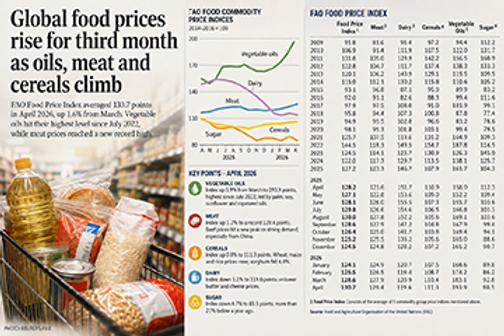
    After two straight months of gains, global food prices continued their upward climb in April 2026, according to the closely monitored Food Price Index published by the United Nations Food and Agriculture Organization (FAO). The monthly benchmark, which tracks price shifts for the world’s five major traded food commodity groups, hit an average of 130.7 points last month. That marks a 1.6% increase from March 2026 and a 2% rise compared to the same period one year earlier. While the sustained upward movement has raised concerns about new food inflation pressures, the current index still sits 18.4% below the all-time record set in March 2022, when the Russia-Ukraine war sent global food markets into unprecedented volatility.

    The April uptick was led by a sharp surge in vegetable oil prices, which jumped 5.9% month-over-month to hit their highest level since July 2022. Growing demand from the global biofuel sector has been the primary catalyst for the rally: palm oil prices have now risen for five straight months, fueled by both rising biofuel adoption and market jitters over shrinking production outputs across major Southeast Asian producing nations. Prices for soy oil and rapeseed oil also trended upward in April, as biofuel production ramped up in the United States and European Union, boosting competing demand for the agricultural commodities.

    Following vegetable oils, the meat category recorded the next largest gain, with the FAO Meat Price Index climbing to a new all-time high in April. Beef prices led the increase, driven by tight cattle supplies in top exporter Brazil and sustained strong international demand, particularly from key importer China. Both poultry and pork prices also moved higher, as ongoing supply chain disruptions and shipping bottlenecks in multiple producing regions kept markets tight.

    Cereal prices posted a more modest 0.8% increase in April, with individual sub-sectors facing their own unique supply-side pressures. Wheat prices rose on the back of ongoing drought concerns across major growing regions of the U.S. and forecasts for below-average rainfall in Australia, another top global exporter. Elevated costs for fertilizers and energy have also led market analysts to anticipate that many farmers may scale back wheat planting in upcoming seasons, adding upward support to prices. Maize prices also climbed, as unfavorable weather outlooks have dampened production projections in Brazil and the U.S. Rice prices increased by 1.9% during the month, as higher energy prices pushed up both transportation and production costs for major exporting nations.

    In contrast to the upward trend across most commodity groups, two categories moved lower in April. The FAO Sugar Price Index fell 4.7% month-over-month, sitting more than 21% below its level from April 2025. The decline stems from widespread expectations of larger global sugar supplies this season, with increased production projected in top producing nations including Brazil, China, and Thailand. Dairy prices also dipped, dropping 1.1% overall, driven by lower prices for butter and cheese as milk supplies expand across major exporting regions in Europe and Oceania.

    For small Central American nation Belize, the latest shifts in global food markets carry mixed economic consequences. As a country that relies heavily on imports for wheat-based products, cooking oils, and many core food commodities, the country is directly exposed to rising international cereal and vegetable oil prices. Higher global costs will likely translate to increased import expenses, upward pressure on domestic food prices, and higher input costs for local livestock producers and food processors.

    At the same time, the ongoing slide in global sugar prices creates fresh challenges for Belize’s domestic sugar industry, which has already been struggling with weak international pricing and shrinking profit margins. The 4.7% April drop in global sugar prices adds further downward pressure on the sector’s revenue and profitability.

    As a leading benchmark for global food commodity markets, the FAO Food Price Index is tracked closely by policymakers, economic analysts, agribusiness leaders, and food producers around the world. It measures monthly price changes for a weighted basket of the most widely traded food commodities, covering cereals, vegetable oils, meat, dairy, and sugar.

  • Lord’s Bank Community in Shock After Another Execution-Style Killing

    Lord’s Bank Community in Shock After Another Execution-Style Killing

    The tight-knit Lord’s Bank community in Belize is grappling with fear and grief after a beloved local construction worker became the latest victim of brutal gun violence, leaving his family shattered and residents reeling from yet another senseless killing.

    George Anglin, a devoted family man who saw construction as more than a trade — as a way to build a stable, rooted life near the people he loved — was gunned down just steps from his own front door on the evening of May 14, 2026. Authorities have confirmed that Anglin had been receiving threats in the period leading up to his attack, though no clear motive has been officially established as the investigation proceeds.

    According to witness accounts collected by local outlet News Five, the assailants called Anglin out by name from the street outside his property. Family members initially assumed the person outside had returned Anglin’s motorcycle, which he had taken to a local mechanic for repairs earlier that day. When Anglin walked out to the street to meet the caller, the gunmen opened fire immediately.

    Anglin’s niece, who was nearby when the shots rang out, rushed to the scene to find her uncle lying in a pool of blood, with first responders and community members already starting to gather. Still overwhelmed by shock, she described the devastating moment in an on-the-record interview: “I rushed cross there I went through the lee short cut. My uncle was on the ground in a pool of his own blood. By the time I got there, there were already police there, people gathering, talking and I could not hold back tears. Its cruel and it just makes me want to stay far from everybody and want to enclose myself and not mess with anybody, because you never know who is out to hurt you just to hurt you.”

    For the Anglin family, this killing is not an isolated tragedy — it is the latest chapter in a decades-long cycle of violent death that has haunted multiple generations. Just five months prior, in December 2025, George Anglin’s brother Beris Anglin was shot and killed inside his own home in nearby Orange Walk. More than 20 years before that, the brothers’ father was stabbed to death in the same district.

    Authorities have not yet confirmed any connection between George Anglin’s murder and the December 2025 killing of his brother. “There is no information so far suggesting a nexus with the two, however the investigation is ongoing,” explained Assistant Superintendent of Police Stacy Smith, Staff Officer for the department, in an official statement to reporters.

    Community members who knew Anglin remember him as a gentle, dedicated family man and a loving father figure. The half-finished three-bedroom apartment he had been building brick by brick stands as a stark reminder of the life and future that was cut short by the attack.

    The killing has renewed fear in a community that has already been shaken by repeated outbreaks of violent gun crime. As police continue their investigation into the attack, Anglin’s family is left to navigate the agonizing process of grieving yet another loved one lost to senseless violence.

  • State of Emergency Fuels Crime Sweep in Ladyville

    State of Emergency Fuels Crime Sweep in Ladyville

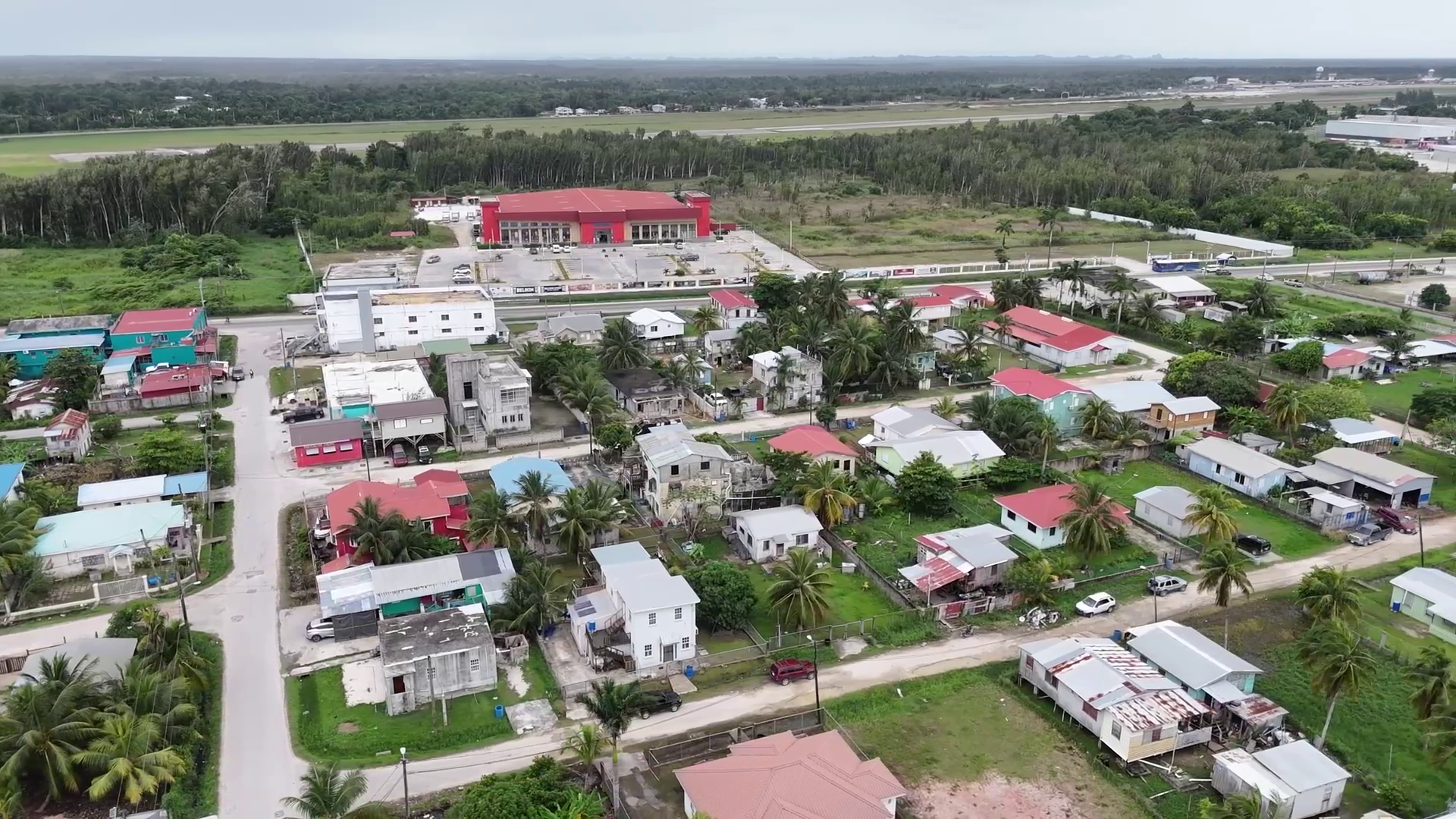
    Scheduled for publication on May 14, 2026, this report details an intensifying law enforcement crackdown on criminal activity in the Ladyville community, launched in the wake of a newly declared state of emergency. Despite public speculation that the boosted operations are a direct response to a fatal homicide that unfolded in the area Wednesday night, Assistant Superintendent of Police Stacy Smith, who serves as a staff officer for the department, has clarified that the sweep is part of a pre-planned, long-term anti-crime initiative that was already in motion before the killing.

    Ladyville was officially added to the state of emergency declaration just last Friday, opening the door for law enforcement to expand their operational scope and ramp up pressure on local criminal networks. Smith explained that the community has long been a priority for police, noting its close geographic proximity to the nearby urban center that makes it effectively an extension of the city. With all of the social and economic amenities the city offers also present in Ladyville, Smith said that population growth and increased activity have naturally led to a corresponding rise in criminal incidents, making sustained targeted operations a necessity.

    Since the state of emergency took effect, officers have been carrying out coordinated joint operations that have already yielded measurable progress. Smith highlighted one early success from two to three weeks prior, when two male suspects were taken into custody in connection with an illegal firearms case. More recently, the expanded sweep has resulted in multiple arrests on felony charges, a outcome that Smith says reflects the proactive, investigation-driven posture law enforcement has adopted in the area. As operations continue, police are maintaining a tight presence in Ladyville as they work to dismantle criminal groups and improve public safety for local residents.

    This report is adapted from a televised evening news transcript originally published online by the outlet.