标签: Belize

伯利兹

  • Boy, 8, Recovering After RTA; Mother Speaks to News 5

    Boy, 8, Recovering After RTA; Mother Speaks to News 5

    An eight-year-old student from Hopkins, Stann Creek District, is undergoing recovery following a traumatic traffic incident that occurred near his school premises on Tuesday afternoon. Karter Benedit, a Standard Two pupil at Holy Family RC Primary School, suffered significant injuries when a motorcycle collided with him while he was crossing the street alongside classmates.

    The child was immediately transported to Southern Regional Hospital for emergency treatment. Medical professionals performed approximately 12-15 stitches to address head trauma, while also treating serious leg injuries that involved exposed back muscles. According to medical assessments, the boy narrowly avoided permanent mobility damage due to the white tissue remaining undamaged.

    Dyny Martinez, Karter’s mother, recounted the harrowing experience of receiving the emergency call from school authorities. She described the urgent transfer to Dangriga hospital for specialized admission and treatment. Physicians have indicated a minimum two-week recovery period for the young patient.

    Law enforcement authorities have confirmed that a suspect is currently in custody regarding the incident. This event has ignited community discussions about road safety measures near educational institutions. Martinez has publicly advocated for enhanced traffic controls, including speed bumps and increased police monitoring of motorcycle operators near school zones.

    The timing coincides with announced transportation safety initiatives by national authorities. Chester Williams, CEO of relevant transportation authorities, recently disclosed that the Ministry of Transport is evaluating comprehensive measures to improve motorcycle training protocols and enforcement procedures. These developments include deploying additional traffic officers equipped with body cameras, dashboard cameras, speed detection devices, and breathalyzer technology.

  • Ocean Academy Forced to Operate Without Proper Classrooms

    Ocean Academy Forced to Operate Without Proper Classrooms

    In an extraordinary display of community solidarity, Ocean Academy on Caye Caulker Village has commenced its new academic term utilizing improvised learning spaces after its primary campus became unavailable for classes. The educational institution has implemented an innovative distributed learning model across multiple repurposed facilities throughout the island community.

    Principal Noemi Zaiden revealed that contingency planning began prior to the holiday break, with school administrators working diligently to secure alternative teaching environments. The village council contributed crucial spaces including their community center and NEMO emergency operations room, while a former waterfront restaurant previously operating as Fantasy Dining was additionally converted for educational purposes.

    “Our team has been transporting infrastructure daily – this morning alone we moved over fifty desks and chairs to prepare these spaces,” Zaiden reported. The single-story restaurant building, while unable to accommodate the entire student body, has enabled the reinstatement of in-person instruction for several classes through carefully coordinated rotational schedules.

    Physical education sessions are currently conducted adjacent to the island’s airstrip, maintaining both academic programming and vital social interaction opportunities. “These touchpoints significantly impact student development,” Zaiden emphasized. “Social connectivity remains equally important as curricular concepts during this transitional period.”

    The school community awaits governmental authorization to implement a more permanent solution, having already secured approximately 90,000 Belize dollars through local and international fundraising efforts. Prefabricated structures stand ready for deployment on designated land, though administrative approval remains pending despite earlier indications of scheduled meetings.

    While Area Representative Andre Perez has projected construction commencement by May, Zaiden maintains focus on immediate educational continuity. “Our present concern addresses the interim period until then,” she stated. “Our students’ learning cannot be postponed.”

    The principal extended gratitude to educators, parents, and community members for their sustained support under challenging circumstances, particularly acknowledging teachers’ dedication to both academic quality and student welfare. As the term progresses, the school community maintains hope for imminent approval of their constructed solution, advocating for students’ fundamental right to “safe, dry spaces conducive to learning.”

    News Five has initiated contact with Belize’s Ministry of Education seeking official commentary regarding the authorization timeline.

  • Elderly Woman in Wheelchair Rescued From Blaze

    Elderly Woman in Wheelchair Rescued From Blaze

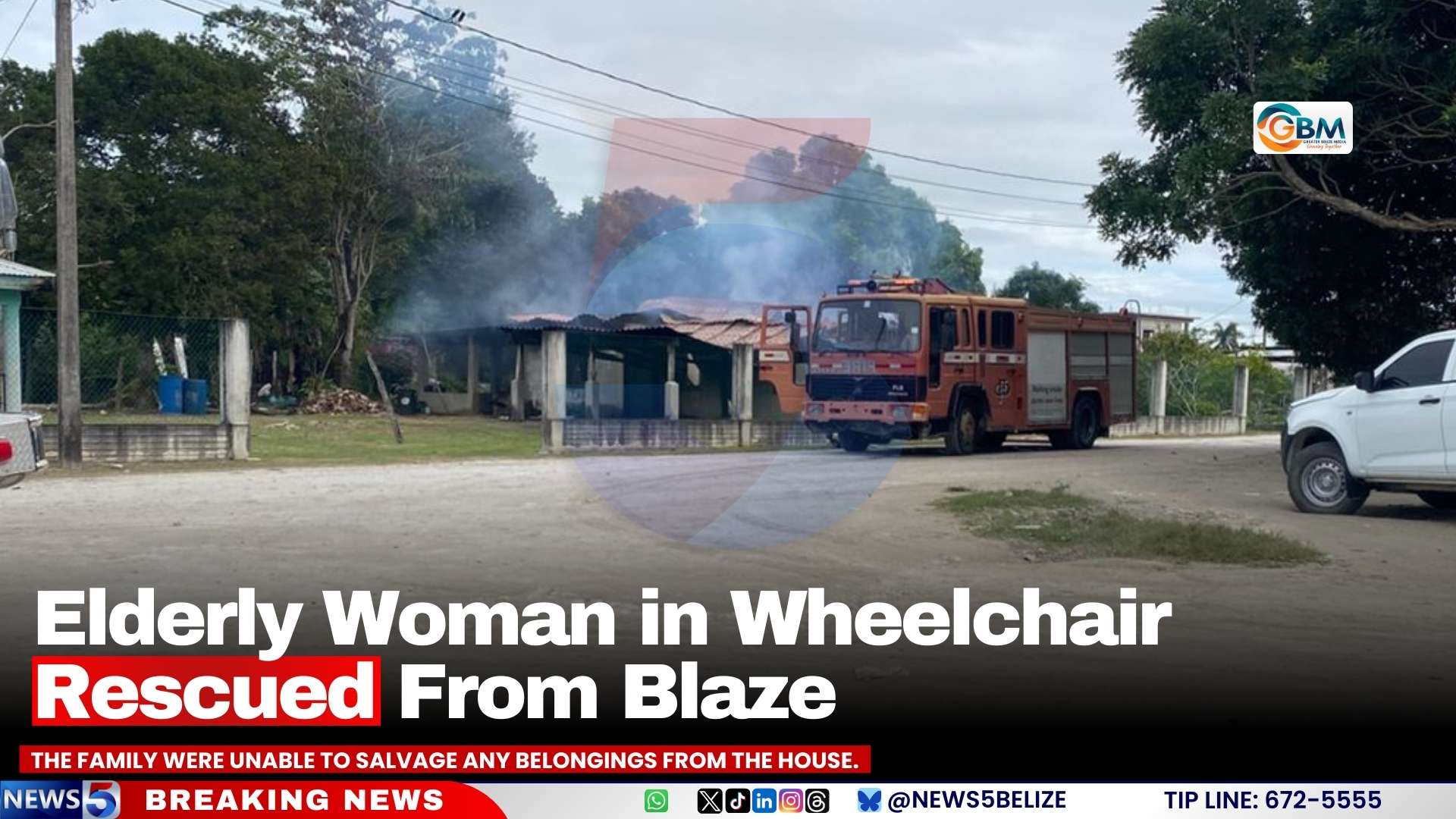
    A swift-acting neighbor became the hero of a harrowing incident in San Narciso Village, Corozal, when a residential fire broke out on the morning of January 7, 2026. The blaze completely destroyed a local home but resulted in no injuries thanks to the neighbor’s courageous intervention.

    The emergency unfolded when an elderly woman confined to a wheelchair found herself trapped inside the rapidly burning structure. Demonstrating remarkable presence of mind, a nearby resident rushed to the scene and successfully extracted the vulnerable occupant before flames could engulf the entire property.

    Preliminary information from the homeowner, identified as a local educator, suggests the conflagration originated from an electrical malfunction near her workstation. The area contained multiple connected devices that may have contributed to the incident, though official cause determination remains pending from fire investigators.

    Additional family members arrived during the emergency and attempted to combat the spreading fire using a truckload of water, but their efforts proved insufficient against the intensifying flames. When professional firefighting units eventually reached the location, the structure had already been completely consumed by the fire.

    The property owners suffered total loss of their personal belongings as the intensity of the blaze prevented salvage operations. Authorities continue their examination of the scene to establish definitive causation while the displaced family receives community support following their devastating loss.

  • Recurring Garbage Problem Sparks Frustration in Caledonia Village

    Recurring Garbage Problem Sparks Frustration in Caledonia Village

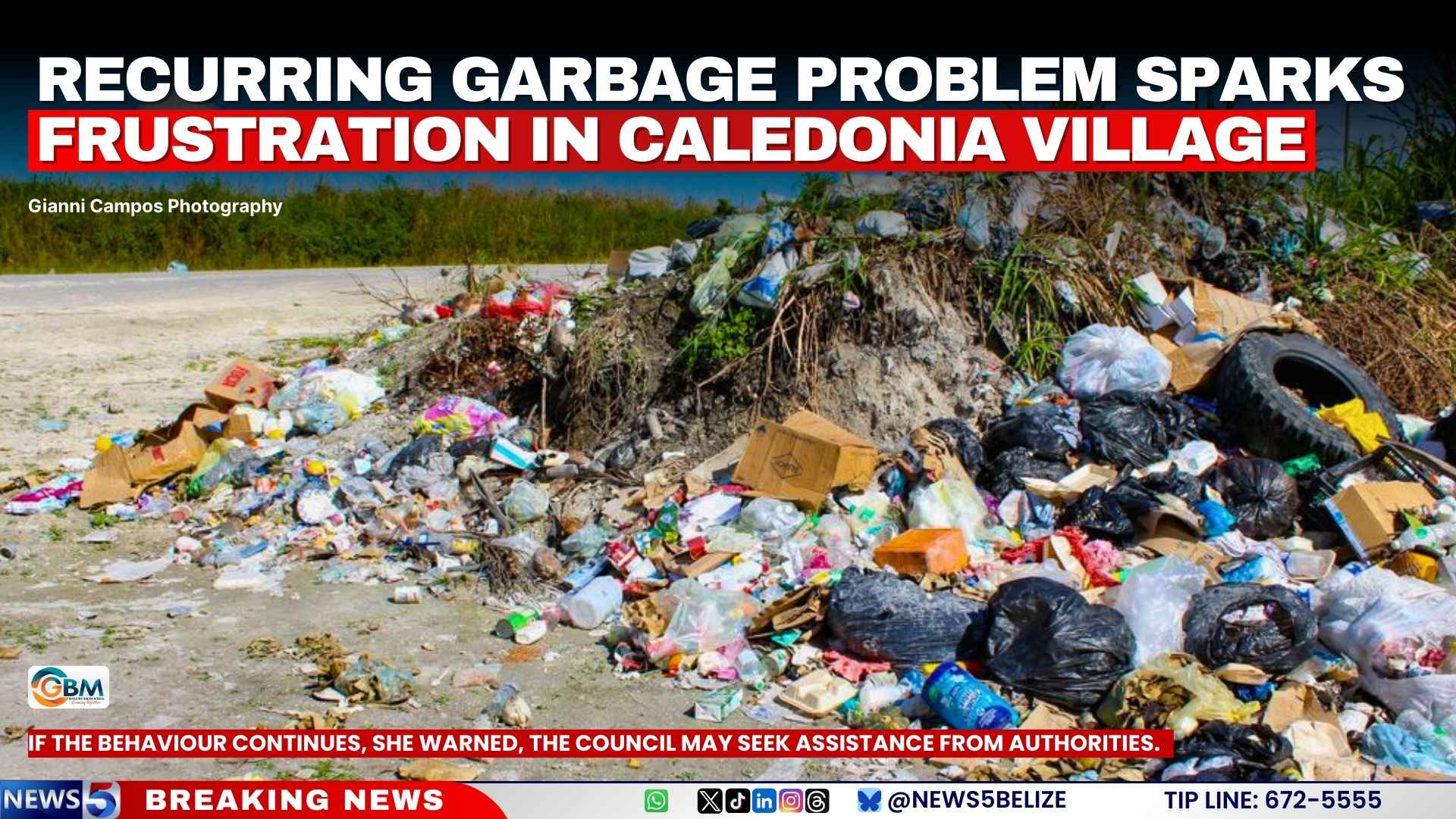
    The community of Caledonia Village in the Corozal District faces an escalating environmental and public safety crisis as persistent garbage dumping at the village entrance continues unabated. Despite ongoing efforts by local authorities, residents report that political polarization and community non-cooperation are severely hampering resolution efforts.

    According to eyewitness accounts, the recurring problem involves substantial waste accumulation along roadways near designated disposal areas, creating hazardous conditions with broken glass and metal cans posing direct threats to motorists and pedestrians. A concerned villager described the situation as cyclical, noting the problem has resurfaced repeatedly over several years.

    The political dimension of the crisis emerged clearly through resident testimony describing how community initiatives frequently encounter opposition based on political affiliations. “When supporters of one party implement solutions, opponents from the other party deliberately undermine progress,” explained one resident, highlighting how partisan divisions prevent collective action on shared community problems.

    Vice Chairlady Docia Chan confirmed the current village council inherited a severely compromised waste management situation upon taking office. Recognizing the strategic importance of the location as the village’s primary entrance, council members prioritized cleaning and maintaining the area to create a positive impression for both visitors and residents.

    Despite these efforts, including recent cleanup activities conducted on January 4th, 2026, and the installation of warning signage, fresh garbage bags appeared within just 24 hours of restoration work. Chan expressed frustration at the disregard for community standards, noting the properly accessible disposal area remains consistently underutilized.

    While the vice chairlady acknowledged uncertainty regarding whether the continued dumping stems from political motivation or simple negligence, she issued a firm appeal for improved community responsibility. The council has now escalated its response, preparing to involve law enforcement authorities to investigate and potentially prosecute offenders if the situation doesn’t improve.

    Residents are joining calls for unity, urging community members to transcend political affiliations and collaborate on solving environmental challenges that affect all villagers equally. The situation continues to develop as community leaders weigh additional measures to address this persistent public health and safety concern.

  • US Seizes Two Oil Tankers Linked to Venezuela Sanctions, China and Russia Call it “Bullying”

    US Seizes Two Oil Tankers Linked to Venezuela Sanctions, China and Russia Call it “Bullying”

    In a significant escalation of sanctions enforcement, United States naval forces have intercepted and seized two oil tankers carrying Venezuelan crude in Caribbean waters. The operation, confirmed by the US European Command, culminated a two-week Atlantic pursuit targeting vessels allegedly violating international sanctions against Venezuela.

    The seized vessels include the Russian-flagged Bella 1 and the fully-loaded Sophia tanker, collectively transporting millions of barrels of crude oil. Maritime tracking data indicates the Sophia alone carries approximately two million barrels of Merey crude loaded from Venezuela’s Jose Oil Terminal in late December.

    President Donald Trump announced the unprecedented seizure, stating that between 30 million and 50 million barrels of sanctioned oil would be confiscated and sold at market value. The President issued directives demanding Venezuela exclusively collaborate with the United States on oil exports while severing energy ties with China, Russia, Iran, and Cuba.

    “This Oil will be sold at its Market Price, and that money will be controlled by me, as President of the United States of America, to ensure it is used to benefit the people of Venezuela and the United States!” Trump declared via social media on Tuesday.

    The operation received substantial international support, with United Kingdom forces providing surveillance and logistical assistance. British Defence Secretary John Healey characterized the seizure as part of “global efforts to crack down on sanctions busting.”

    However, the action has provoked strong diplomatic backlash from both China and Russia. Chinese Foreign Ministry spokesperson Mao Ning condemned the seizure during a Wednesday press conference, stating: “The United States’ brazen use of force against Venezuela and its demand for ‘America First’ when Venezuela disposes of its own oil resources are typical acts of bullying.” Russian officials echoed similar sentiments, denouncing the seizure as an unlawful assertion of extraterritorial jurisdiction.

  • Single Mother Calls Out Male Mechanics for ‘Taking Advantage’

    Single Mother Calls Out Male Mechanics for ‘Taking Advantage’

    A single mother’s social media outcry has ignited a heated discussion about gender equity and consumer protection within the automotive repair sector. In a widely circulated Facebook post, the woman detailed her experiences with male mechanics allegedly exploiting female customers through excessive pricing and unnecessary delays on straightforward repairs.

    The complainant articulated the vulnerability many women feel when navigating car maintenance, stating, “The majority of us women lack technical knowledge about vehicles, and as single parents, we’re particularly financially constrained. Despite this, certain mechanics deliberately take advantage of our situation.”

    She further described frustrating repair experiences, noting, “Mechanics frequently retain our vehicles for multiple days despite knowing the issue requires minimal time to resolve. Subsequently, they present exorbitant bills that seem impossibly high.”

    The mother issued a moral appeal to automotive professionals, urging them to consider their ethical responsibilities: “Reflect upon your own mothers—would you accept such treatment toward them?” Her message emphasized the need for greater accountability and compassion in customer interactions.

    As a potential solution, the woman advocated for increased female representation in the automotive repair industry. She suggested that women-operated repair shops might provide more trustworthy service, stating that female mechanics would likely ensure “proper care and fair treatment for female clients.”

    The post has stimulated broader conversations about consumer rights, gender-based pricing discrimination, and the importance of transparency in specialized service industries.

  • U.S. Delivers Emergency Vehicles to Belize

    U.S. Delivers Emergency Vehicles to Belize

    In a significant demonstration of international cooperation, the United States has bolstered Belize’s emergency response capabilities through the delivery of four specialized emergency vehicles. The shipment arrived via a U.S. Air Force C-17 Globemaster III aircraft originating from Joint Base Lewis-McChord, representing a concrete commitment to regional disaster preparedness.

    The transfer was facilitated through the Denton Humanitarian Assistance Program, an innovative U.S. initiative that enables the transportation of donated relief supplies aboard military aircraft without cost to contributing organizations. This program has consistently served as a vital conduit for delivering essential resources—including medical equipment, educational materials, and food supplies—to regional partners throughout Central America.

    U.S. Embassy officials emphasized that the strategic utilization of available cargo space on military flights creates a dual benefit: providing critical humanitarian assistance while simultaneously strengthening international partnerships. This initiative falls under the broader mission of U.S. Southern Command, which focuses on enhancing safety, building regional resilience, and promoting economic prosperity throughout the hemisphere.

    The newly delivered emergency vehicles will be operated by Southern Emergency Services to support disaster response operations across multiple communities in Belize, significantly improving the nation’s capacity to address emergencies and natural disasters effectively.

  • Too Many Drones? Belize Debates Safety, Growth, and Control of the Skies

    Too Many Drones? Belize Debates Safety, Growth, and Control of the Skies

    BELIZE CITY – The rapid proliferation of unmanned aerial vehicles across Belize’s skies has sparked a critical national dialogue on aviation safety, economic development, and regulatory oversight. As drones become increasingly integrated into diverse sectors including agriculture, real estate, media, and land surveying, aviation authorities warn that the nation’s unique airspace characteristics demand immediate regulatory intervention.

    The Belize Department of Civil Aviation has initiated a comprehensive public consultation process regarding a proposed operational directive that would establish binding nationwide regulations for all drone operations. This regulatory framework aims to replace the current patchwork of approvals with standardized licensing protocols and operational limitations, aligning Belize’s drone policies with international aviation standards observed in the United States and European nations.

    Director of Civil Aviation Nigel Carter emphasized the critical safety implications of unregulated drone activity, noting Belize’s distinctive aviation environment where low-altitude aircraft operations intersect with densely populated urban centers and busy tourism routes. “We have to be very careful not to create a mix of manned and unmanned aircraft in the same vicinity,” Carter stated, highlighting the potential for catastrophic consequences without proper oversight.

    The technological adoption has accelerated across multiple industries, with drones now serving essential functions in agricultural monitoring, geographic information system (GIS) mapping, property marketing, and land surveying. Training programs have emerged to address the growing demand for certified operators, including comprehensive courses covering both technical proficiency and regulatory compliance.

    However, the mandatory nature of the proposed directives has raised concerns among commercial operators and technical professionals who depend on drone technology for their livelihoods. Stakeholders are organizing emergency meetings to discuss the potential economic impact and operational constraints that standardized regulations might impose.

    The ongoing consultation process represents a pivotal moment for Belize as it attempts to reconcile technological innovation and economic growth with the imperative of maintaining aviation safety standards. The outcome will likely establish precedents for how developing nations manage the integration of emerging technologies within existing infrastructure frameworks.

  • A Five-year Moratorium on Extractions from National Land

    A Five-year Moratorium on Extractions from National Land

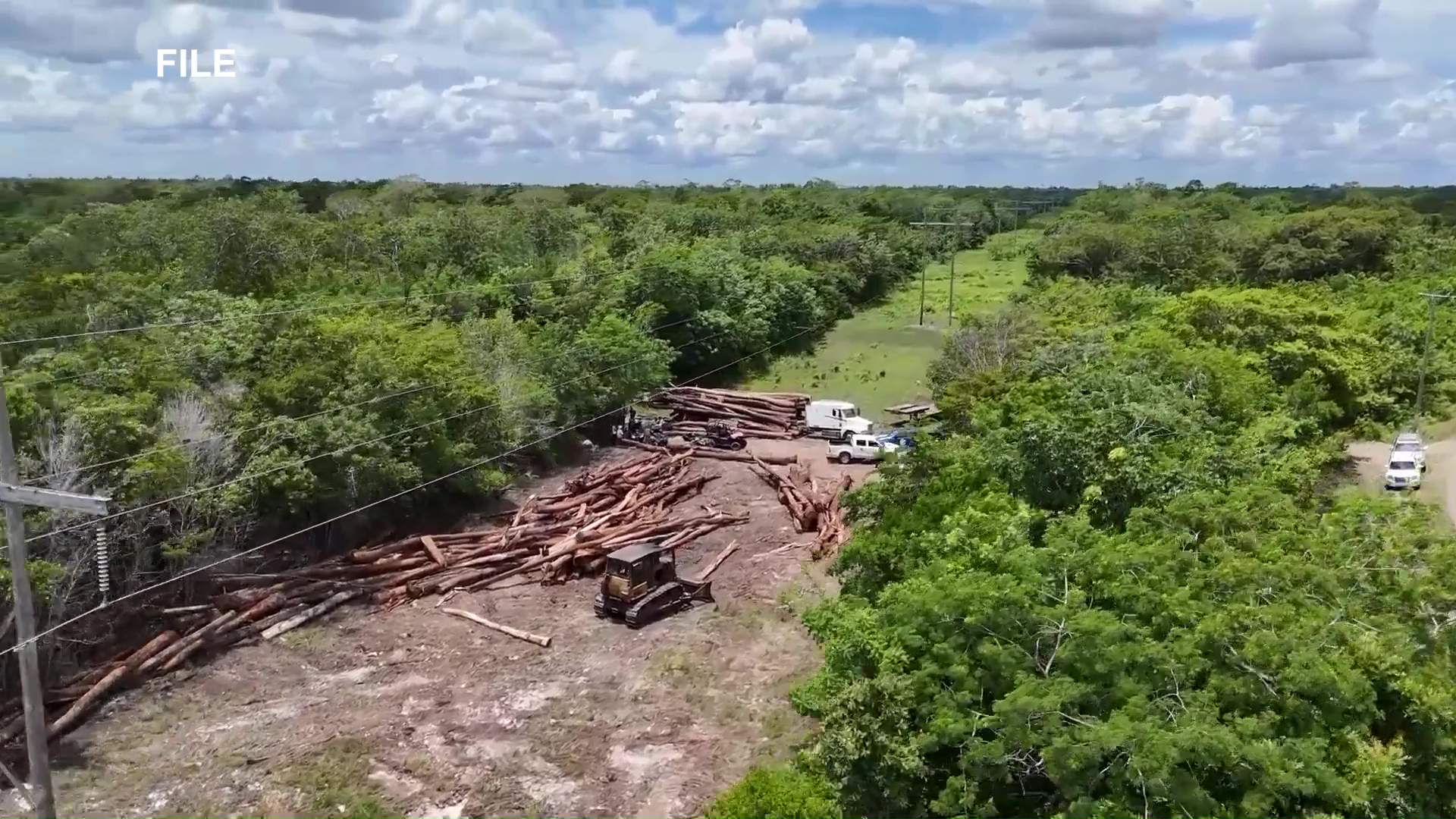
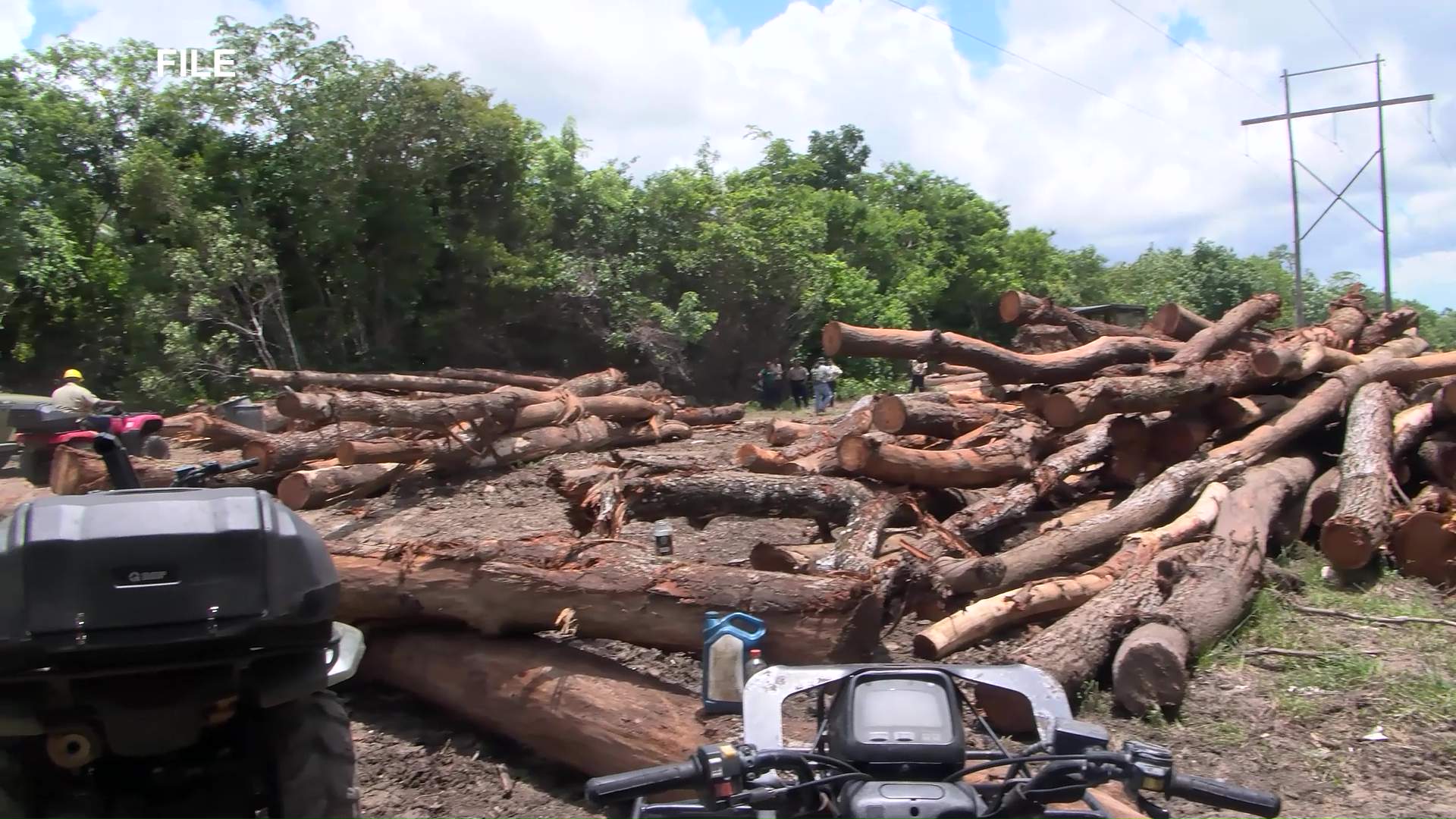
    Belize has declared a comprehensive five-year prohibition on resource extraction from national lands in response to an escalating environmental emergency. The moratorium, implemented in early December, represents the government’s decisive action against rampant illegal logging operations that are systematically stripping public forests of timber, bush sticks, bay leaves, and other vital natural resources.

    Despite the stringent measures, offenders have adapted their tactics, increasingly operating during holiday periods when enforcement capabilities are stretched thin. Deputy Chief Forest Officer John Pinelo reported that during the recent Christmas and New Year’s season, authorities successfully intercepted multiple truckloads of contraband materials and levied fines exceeding fifty thousand dollars.

    The environmental crisis extends beyond immediate tree loss, threatening entire ecosystems that future generations will depend upon. Pinelo emphasized the severity of the situation, noting that social media platforms have become marketplaces for illegal forest products, with advertisements openly offering five hundred bush sticks—representing five hundred potential future trees—for single home construction projects.

    Under the new regulations, logging is now strictly permitted only on private properties or through legitimate leases with proper extraction permits. To enhance enforcement capabilities, the government established a dedicated hotline (610-1524) three months ago, which has significantly improved the identification and apprehension of illegal operators. Forest Department personnel routinely confront major violations, including the recent seizure of a fifty-foot truckload of unauthorized bay leaves.

    The five-year moratorium aims to allow critical recovery time for renewable resources like bay leaf and pimienta sticks, which nevertheless require years to regenerate, while addressing the irreversible damage caused by the destruction of immature trees and established timber.

  • Forest Officers Confront Violence in Line of Duty

    Forest Officers Confront Violence in Line of Duty

    Forestry officials in Belize are confronting increasingly violent resistance while combating illegal logging operations, with armed confrontations becoming alarmingly routine. Deputy Chief Forest Officer John Pinelo Jr. revealed that enforcement teams now regularly face direct threats, weapon brandishment, and even attempted vehicular assault during their patrols.

    The escalation follows successful crackdowns on national land extraction, which has redirected illegal operations to private properties. Pinelo described a particularly dangerous incident where officers responding to reports of illegal activity were nearly rammed by a tractor operator who subsequently drew a firearm on the entire team. Private security personnel monitoring the area were forced to disable the tractor by firing at its radiator before the suspect aimed his weapon at officers.

    Despite these hazards, forestry teams continue monitoring remote regions, frequently operating with police support to ensure their safety. All officers now conduct patrols in groups, especially during nighttime operations or in isolated areas. The individual involved in the tractor incident has been formally charged, with forestry authorities advocating for maximum legal consequences for assaults on officers performing their duties.

    This dangerous trend highlights the increasing risks environmental protection personnel face while safeguarding Belize’s natural resources against organized illegal logging networks.