标签: Belize

伯利兹

  • Lee Mark Warns of Credit Card Fraud Tied to BPOs

    Lee Mark Warns of Credit Card Fraud Tied to BPOs

    Belize’s burgeoning Business Process Outsourcing (BPO) sector is confronting a severe credibility crisis as sophisticated credit card fraud operations threaten to undermine the industry’s economic contributions. Lee Mark Chang, proprietor of Chon Saan Palace restaurant, has presented compelling evidence indicating organized criminal networks within the BPO ecosystem are trafficking stolen payment card information.

    The sophisticated fraud scheme involves the illegal acquisition, distribution, and utilization of credit card details for unauthorized online transactions. Chang’s investigation reveals that perpetrators have evolved their tactics, now employing fabricated identification photographs to bypass merchant security verification protocols. This development has rendered traditional fraud prevention measures increasingly ineffective.

    The financial impact on local enterprises has reached critical levels, with businesses experiencing hundreds of chargebacks—forced transaction reversals initiated by financial institutions upon detecting fraudulent activity. These chargebacks not only result in direct revenue loss but also incur substantial penalty fees from payment processors.

    Chang emphasizes the complex dilemma facing Belize: while the BPO industry provides vital employment opportunities with compensation significantly exceeding minimum wage standards, the associated fraudulent activities threaten to destabilize the entire digital commerce framework. The situation has deteriorated to the extent that multiple businesses are contemplating the complete discontinuation of online credit card payment acceptance—a move that would substantially impact consumer convenience and commercial operations.

    This emerging crisis demands urgent collaborative intervention from banking authorities, law enforcement agencies, and BPO regulatory bodies to implement enhanced security frameworks that protect both economic interests and Belize’s growing reputation as a competitive outsourcing destination.


  • Chon Saan Tightens Delivery Rules to Protect Drivers Amid Rising Robberies

    Chon Saan Tightens Delivery Rules to Protect Drivers Amid Rising Robberies

    In response to escalating security concerns, Chon Saan Palace restaurant in Belize City has implemented stringent new delivery protocols to safeguard its employees from increasing criminal activities. Business proprietor Lee Mark Chang has made the difficult decision to restrict delivery services to certain high-risk neighborhoods following a series of violent incidents targeting delivery personnel.

    The establishment had previously ceased deliveries to the Pelican and Antelope Street extension zones after drivers experienced muggings, physical assaults, and even a fatal incident several years ago. Recently, the Lake Independence area has emerged as another concerning location with multiple security breaches reported.

    Under the revised safety framework, customers residing in designated risk zones are now required to meet delivery drivers at predetermined, secure locations along main thoroughfares. This strategic approach ensures both staff and customers can conduct transactions in mutually agreeable, well-trafficked areas that minimize vulnerability to criminal elements.

    Chang emphasized that while these measures might inconvenience some patrons, employee welfare remains the paramount consideration. The restaurant owner expressed hope that community understanding would prevail given the grave circumstances necessitating these protective actions. This development highlights broader urban safety challenges affecting service industry workers in certain Belize City districts.

  • KHMH Nears CEO Appointment After Months of Vacancy

    KHMH Nears CEO Appointment After Months of Vacancy

    Belize’s primary healthcare institution, Karl Heusner Memorial Hospital (KHMH), is approaching a critical leadership resolution following an extended period without permanent executive direction. The hospital’s top position has remained unoccupied since mid-October when former Chief Executive Officer Chandra Cansino’s contractual term concluded.

    Health and Wellness Minister Kevin Bernard has officially confirmed that the hospital’s Board of Governors now holds complete responsibility for determining the new appointment. Minister Bernard’s statement reveals that five qualified candidates have been shortlisted for comprehensive evaluation, with formal interviews scheduled imminently. The selection committee anticipates concluding the recruitment process before January concludes.

    During this transitional phase, the Ministry has implemented temporary administrative oversight to maintain operational continuity at the nation’s crucial medical referral center. While both internal and external candidates are under consideration, informed sources within KHMH administration suggest two prominent contenders have emerged: former Acting CEO Timothy Seguro and Financial Controller Sharine Reyes, who reportedly enjoys substantial support among board representatives.

    Healthcare observers emphasize the significance of this appointment as KHMH confronts persistent operational challenges including staff allocation constraints, budgetary limitations, and service delivery optimization. The new CEO will inherit responsibility for steering the institution through these complex healthcare management issues while maintaining quality patient care standards.

    Hospital administration officials stress that despite apparent frontrunners, the selection process remains actively competitive with no predetermined outcome. The final decision will reflect comprehensive assessment of each candidate’s qualifications and strategic vision for the institution’s future development.

  • Political Graveyard? Musa’s New Ministry Explained

    Political Graveyard? Musa’s New Ministry Explained

    In a significant cabinet reshuffle last November, Belizean politician Kareem Musa experienced a notable shift in political fortunes, transitioning from the high-profile Ministry of Home Affairs and New Growth Industries to the traditionally less-visible portfolio of Immigration, Labour, and Governance. This ministerial department has historically been characterized by political observers as a ‘political graveyard’ due to its limited media attention and perceived administrative constraints.

    Despite this repositioning, Minister Musa has demonstrated unexpected enthusiasm for his new responsibilities. During a public engagement event on Tuesday, Musa openly acknowledged missing his previous role in police administration while simultaneously expressing genuine appreciation for his current position.

    “I miss the police ministry,” Musa conceded during the event, before elaborating on his positive experiences. “I’m enjoying my time here at immigration as well. I am absolutely impressed by the level of professionalism here at immigration, labor and governance.”

    The minister emphasized his ongoing familiarization tour through various departments within his portfolio, noting the welcoming reception he has received from staff members. Musa’s transition represents more than merely a change of office—it signifies a strategic test of his administrative capabilities in managing complex, albeit less publicly celebrated, government functions that are crucial to national stability and workforce development.

    Political analysts are monitoring whether Musa can transform this traditionally low-profile ministry into a platform for substantive policy achievements, potentially redefining its historical reputation within Belize’s political landscape.

  • Faber Slams Government’s ‘Timid’ Venezuela Response

    Faber Slams Government’s ‘Timid’ Venezuela Response

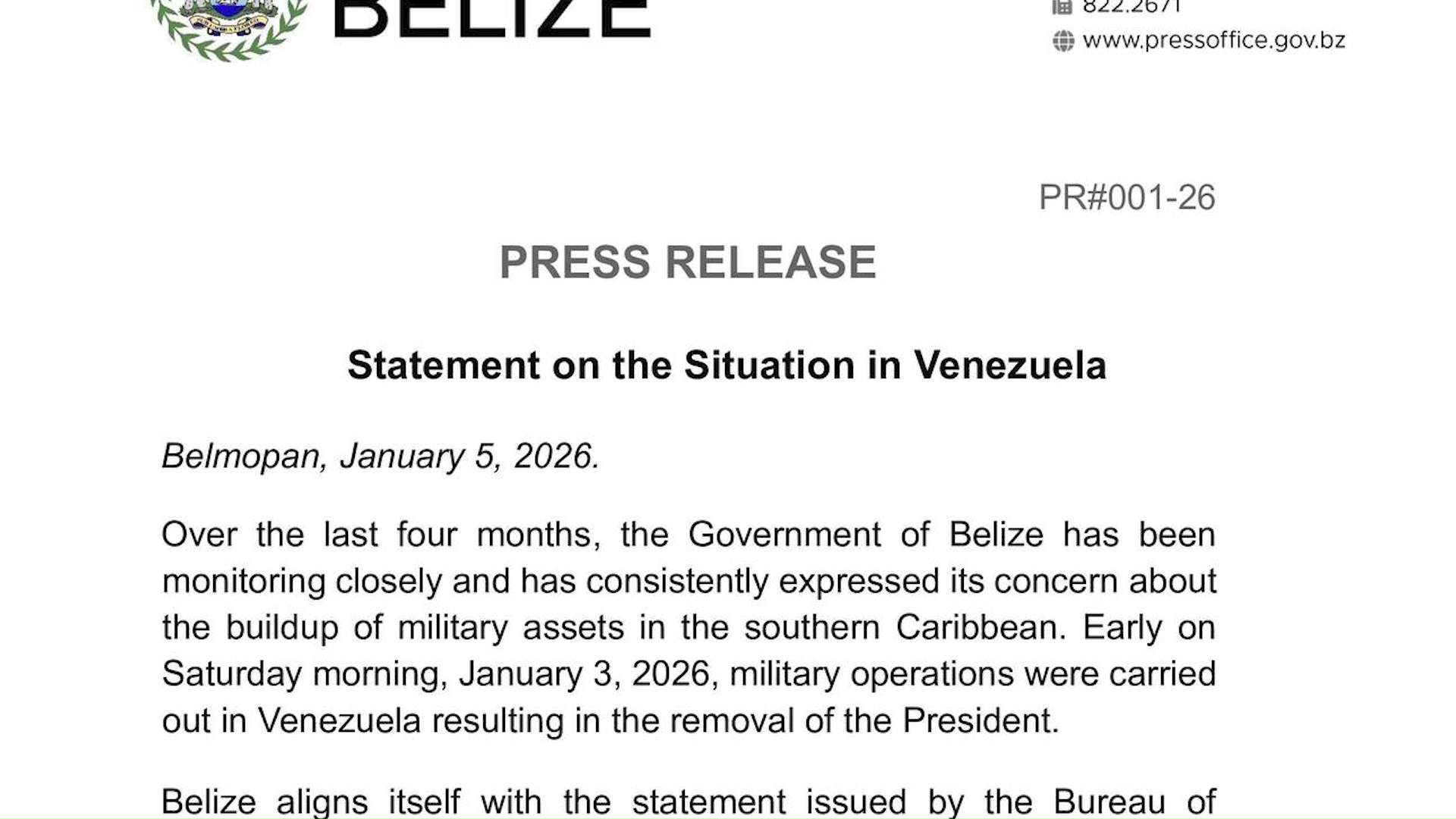
    In a striking critique of Belizean foreign policy, United Democratic Party Senator Patrick Faber has denounced the Briceño administration’s response to recent military operations in Venezuela as fundamentally inadequate. The opposition leader characterized the government’s January 5th statement as a deliberately vague document that fails to articulate Belize’s sovereign position while conspicuously avoiding direct reference to United States involvement.

    Faber asserted that the official communication reads as a generic obligatory release rather than a serious foreign policy declaration. He highlighted the puzzling omission of the United States as the executing force behind the Venezuelan military operation, despite the statement acknowledging the forcible removal of the Venezuelan president. This omission carries significant weight under international law, which explicitly prohibits regime change through military intervention.

    The opposition senator accused the government of hiding behind CARICOM’s collective regional stance rather than demonstrating independent leadership. According to Faber, Belize has chosen to align with regional positions while refusing to state its own convictions regarding the legality and legitimacy of the Venezuelan situation. The approach suggests a government more concerned with maintaining favorable relations with Washington than asserting principled sovereignty, reflecting what Faber describes as a timid diplomatic posture that undermines Belize’s independent voice in international affairs.

  • Belize Mourns Two Icons: Tourism Pioneer and Healthcare Leader

    Belize Mourns Two Icons: Tourism Pioneer and Healthcare Leader

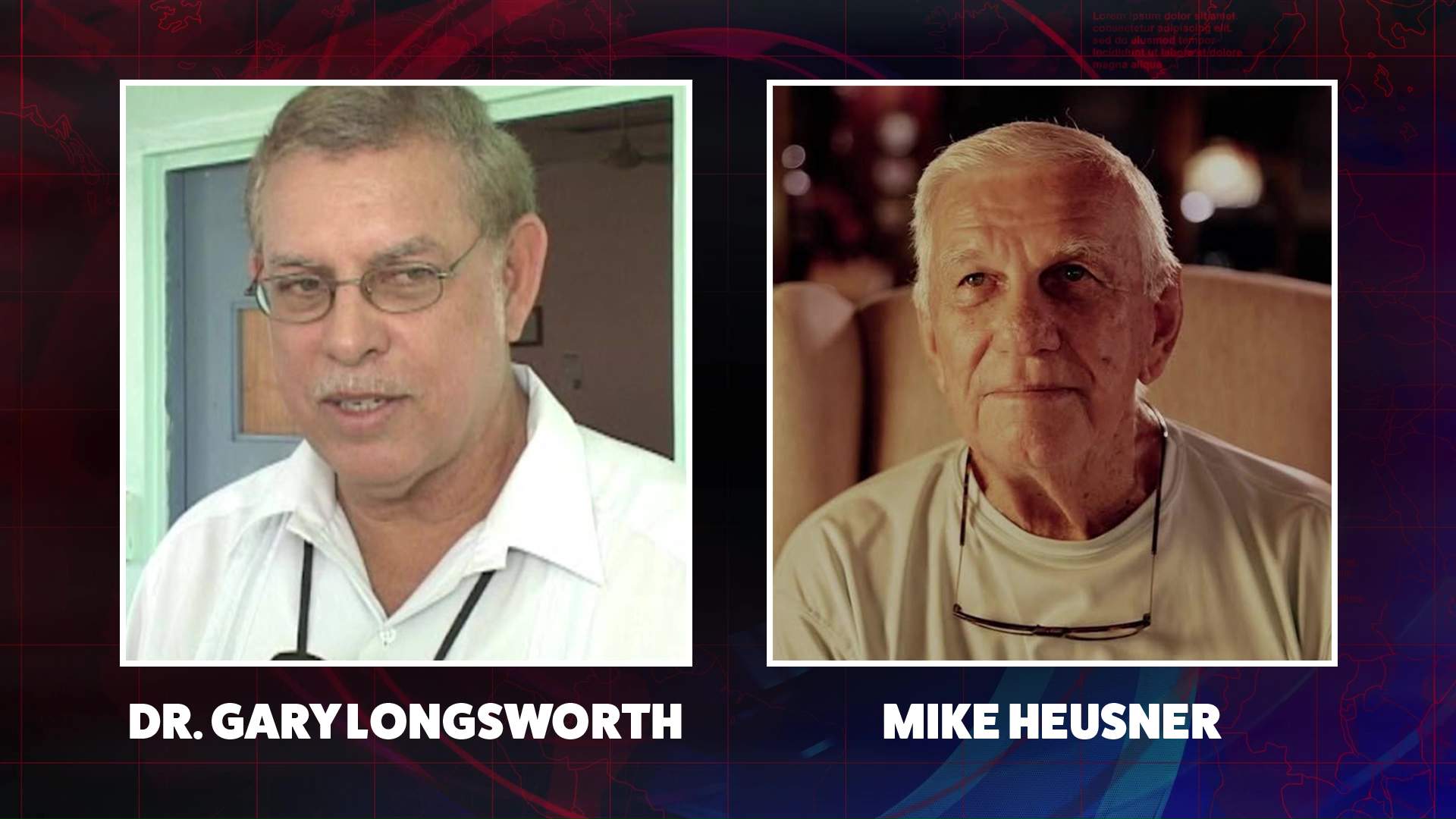
    The nation of Belize confronts a profound dual loss this week with the passing of two distinguished figures who shaped critical sectors of national development. Michael J. ‘Mike’ Heusner, a visionary in eco-tourism and sport fishing, and Dr. Francis Gary Longsworth, a transformative healthcare leader, have both died, leaving enduring legacies.

    Heusner, renowned as the longtime steward of Belize River Lodge, was instrumental in establishing Belize’s global reputation as a premier destination for angling and nature-based tourism. A pioneering conservationist, he advocated for sustainable practices for decades, serving in pivotal roles with the Belize Audubon Society and various tourism boards. His groundbreaking work was formally recognized in 2018 when he was named an Oceana Ocean Hero. Minister of Tourism Anthony Mahler and the Belize Tourism Board have publicly honored Heusner, crediting him for inspiring generations and fundamentally shaping the nation’s tourism identity.

    Simultaneously, the medical community grieves the loss of Dr. Francis Gary Longsworth, the former Chief Executive Officer of the Karl Heusner Memorial Hospital (KHMH). Dr. Longsworth passed away following a brief illness. His career began in academia as a biology lecturer before he pursued medicine at the University of the West Indies. Returning to Belize, he ascended to lead KHMH, where his tenure was marked by significant advancements, most notably the establishment of the Neonatal-Pediatric Intensive Care Unit. Colleagues universally describe him as a calm, approachable, and deeply dedicated leader. His commitment extended beyond the hospital walls through his service on the HelpAge Belize board and relentless efforts to enhance national medical services. He is survived by his former wife, Luz, and their two adult children. His passing marks the end of an era defined by compassionate and progressive healthcare leadership.

  • Faber Slams PM for Skipping Gordon’s Funeral

    Faber Slams PM for Skipping Gordon’s Funeral

    Belize’s political landscape witnessed a significant confrontation as Lead Opposition Senator Patrick Faber publicly criticized Prime Minister John Briceño for his conspicuous absence at the state funeral of former Senator Henry Gordon. The January 13 ceremony, which featured full state honors including a twenty-one-gun salute performed by the Belize Defense Forces, was attended by the country’s highest officials except the sitting Prime Minister.

    Faber emphasized the symbolic importance of the Prime Minister’s absence during the solemn occasion that celebrated Gordon’s extensive public service career. The Opposition Senator noted that while the ceremony was attended by Governor General Dame Froyla Tzalam, Opposition Leader Moses Barrow, Senate President Carolyn Trench-Sandiford, and other dignitaries, the missing head of government represented what Faber characterized as a profound disrespect to Gordon’s legacy.

    The protocol breach became particularly evident during the wreath-laying ceremony, where four wreaths were prepared for placement—one each for the Governor General, the Opposition Leader, and representatives from the legislative chambers Gordon served in, with the fourth designated for the Prime Minister. According to Faber’s account, the Prime Minister’s wreath remained untouched on its tripod throughout the service and was left in place even after the ceremony concluded, creating what the Opposition Senator described as a visually striking representation of the alleged disregard for ceremonial traditions and respect for deceased public servants.

    Faber’s condemnation framed the incident as not merely a personal snub but as indicative of broader concerns about the administration’s respect for political traditions and veteran public servants, potentially signaling deeper political tensions within Belize’s governance structure.

  • Pregnant Tapir Killed on Hummingbird Highway

    Pregnant Tapir Killed on Hummingbird Highway

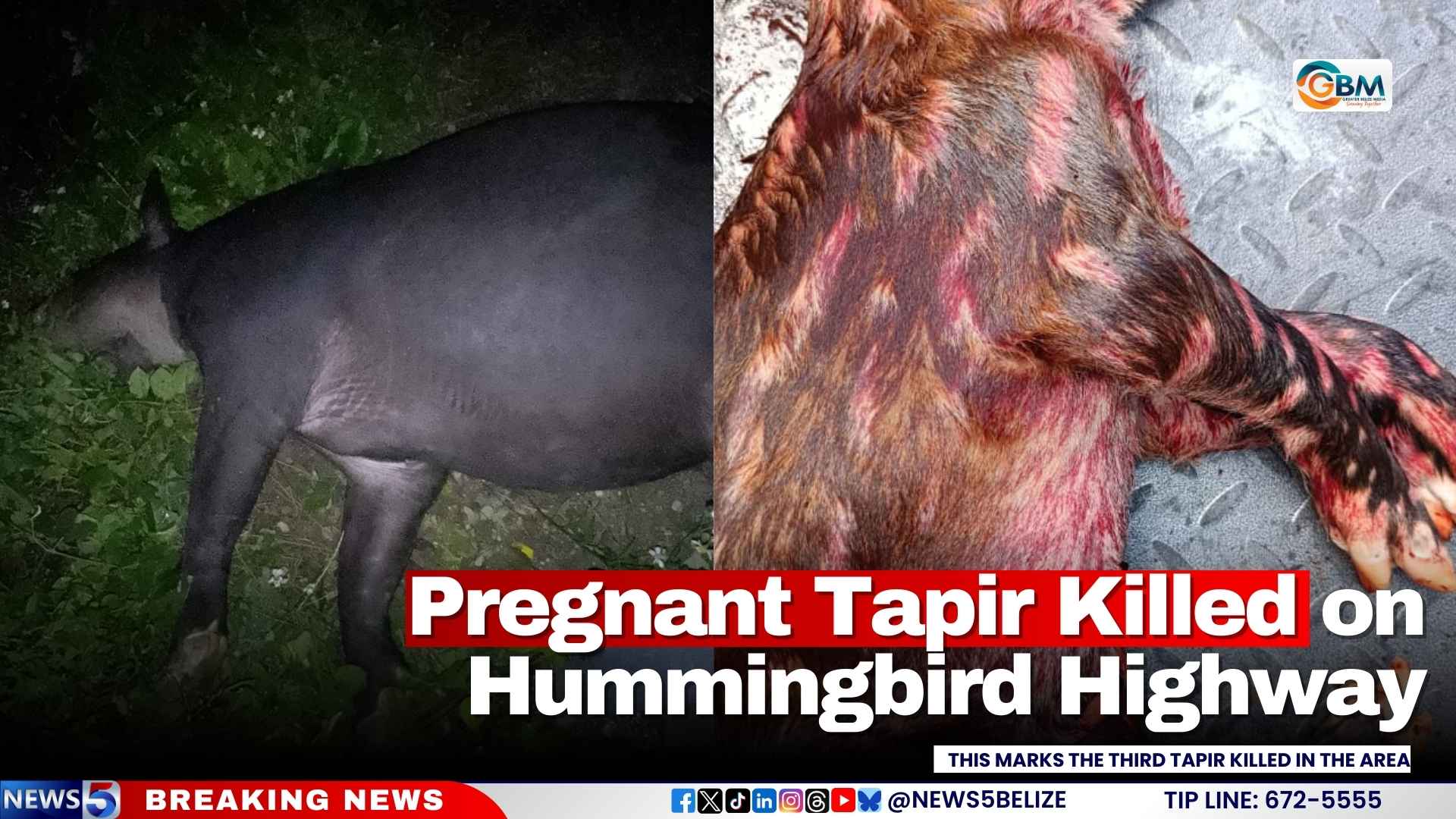
    A devastating wildlife-vehicle collision on Belize’s Hummingbird Highway has resulted in the death of a pregnant Baird’s tapir, the country’s national animal, marking the first recorded tapir road mortality of 2026. The incident occurred near Sibun Bridge late Monday night and was reported by staff from The Rainforest Lodge at Sleeping Giant.

    Conservation organization The Belize Tapir Project confirmed the tragic event after performing a necropsy that revealed the deceased female was carrying a full-term calf weighing approximately 20 pounds. This single collision effectively claimed two lives from the vulnerable species.

    The growing infrastructure development throughout Belize has created increasing dangers for wildlife as expanded roadways fragment their natural habitats. Conservation experts emphasize that these transportation corridors present lethal obstacles for animals while simultaneously creating hazardous conditions for motorists.

    This recent incident represents the third tapir fatality documented in this particular area, amplifying calls from environmental advocates for improved wildlife protection measures. Conservation groups are urging implementation of specialized infrastructure including wildlife crossings, underpasses, and more ecologically-conscious road planning to mitigate future tragedies.

    The Belize Tapir Project issued a statement framing this loss as a somber reminder of the urgent need for coexistence strategies: “As we move forward in 2026, let this loss renew our commitment to safer roads for both people and wildlife.”

  • Some Red Bank Residents Push for Scarlet Macaw Sanctuary

    Some Red Bank Residents Push for Scarlet Macaw Sanctuary

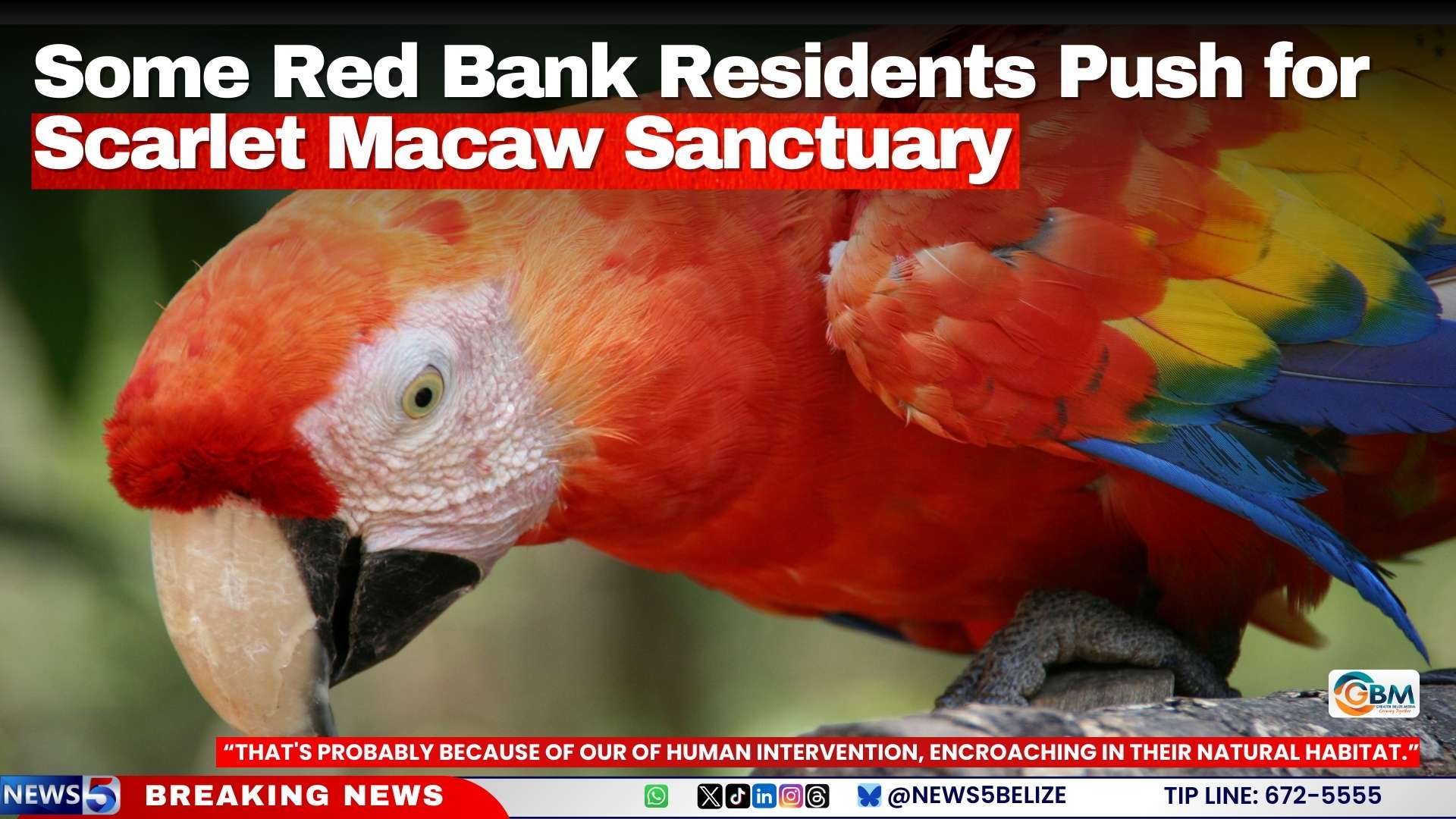
    A significant environmental and social debate is unfolding in Red Bank as local tour guides and residents advocate for governmental approval of a second Scarlet Macaw sanctuary within the Maya Mountains region. This proposed conservation area aims to safeguard crucial feeding territories for hundreds of Scarlet Macaws while simultaneously enhancing ecotourism opportunities.

    The initiative, however, faces opposition from community members concerned about potential displacement following remarks from Minister Orlando Habet of the Ministry of Sustainable Development. The ministry has previously engaged with village leadership regarding hill conservation measures, creating uncertainty about future land access.

    Basilio Mes, a local tour guide and prominent advocate for the sanctuary, emphasized the dual benefits of protected status. “This sanctuary represents a critical opportunity for both species preservation and sustainable community development,” Mes stated. He highlighted the alarming population decline, noting that thousands of birds previously inhabited areas that now host merely hundreds, attributing this reduction to human encroachment into natural habitats.

    The proposed sanctuary model specifically addresses access concerns by allowing continued, regulated use of the hills by Red Bank residents, farmers, and tour operators. This approach aims to balance ecological protection with the preservation of traditional livelihoods through sustainable resource collection practices. The outcome of this proposal could establish significant precedents for community-involved conservation efforts throughout Belize.

  • UDP Says They Are in “Fit and Fine Fighting Form”

    UDP Says They Are in “Fit and Fine Fighting Form”

    In a strategic move signaling organizational revitalization, the United Democratic Party (UDP) has unveiled a comprehensive restructuring of its executive leadership and committee appointments. Chair Sheena Pitts announced the new configuration during a press conference, emphasizing the party’s commitment to principles of inclusion, consultation, and accountability.

    The reconfigured Central Executive leadership features Tracey Taegar Panton at the helm as Party Leader, supported by Hugo Patt as First Deputy and Miguel Guerra as Second Deputy. Pitts characterized the reorganization as positioning the party in ‘fit and fine fighting form,’ indicating preparedness for upcoming political challenges.

    Significant appointments include Damien Goff assuming chairmanship of Policy and Planning, described by Pitts as the architect behind the party’s operational machinery. The party also established specialized directorates with Anne Marie Williams leading the National Organisation for Women and Melvin Sutherland Jr. taking charge of Youth affairs, signaling renewed focus on demographic representation.

    Geographical representation was strengthened through regional caucus leadership appointments: Dr. Omar Figueroa (West), Godwin Hulse (Central), Alfonso Sanchez (South), and Tony Herrera (North).

    The UDP simultaneously revealed its national campaign leadership structure under Campaign Manager Juliet Thimbrel and established policy platform committees covering critical sectors: health (chaired by Kim Simplice Barrow), tourism (Karen Bevans), banking and financial services (Natalie Goff), national security (Errol Gentle), energy (Lawrence Lopez), infrastructure (Denny Grijalva), and National Health Insurance (Carlos Perrera).

    Concluding with a rallying declaration, Pitts asserted the opposition party’s readiness for forthcoming political engagements, stating unequivocally: ‘UDP is in fine, fit, fighting form. And when I tell you UDP is ready, UDP is ready.’