标签: Belize

伯利兹

  • Inflation Increased by 0.4% in November 2025

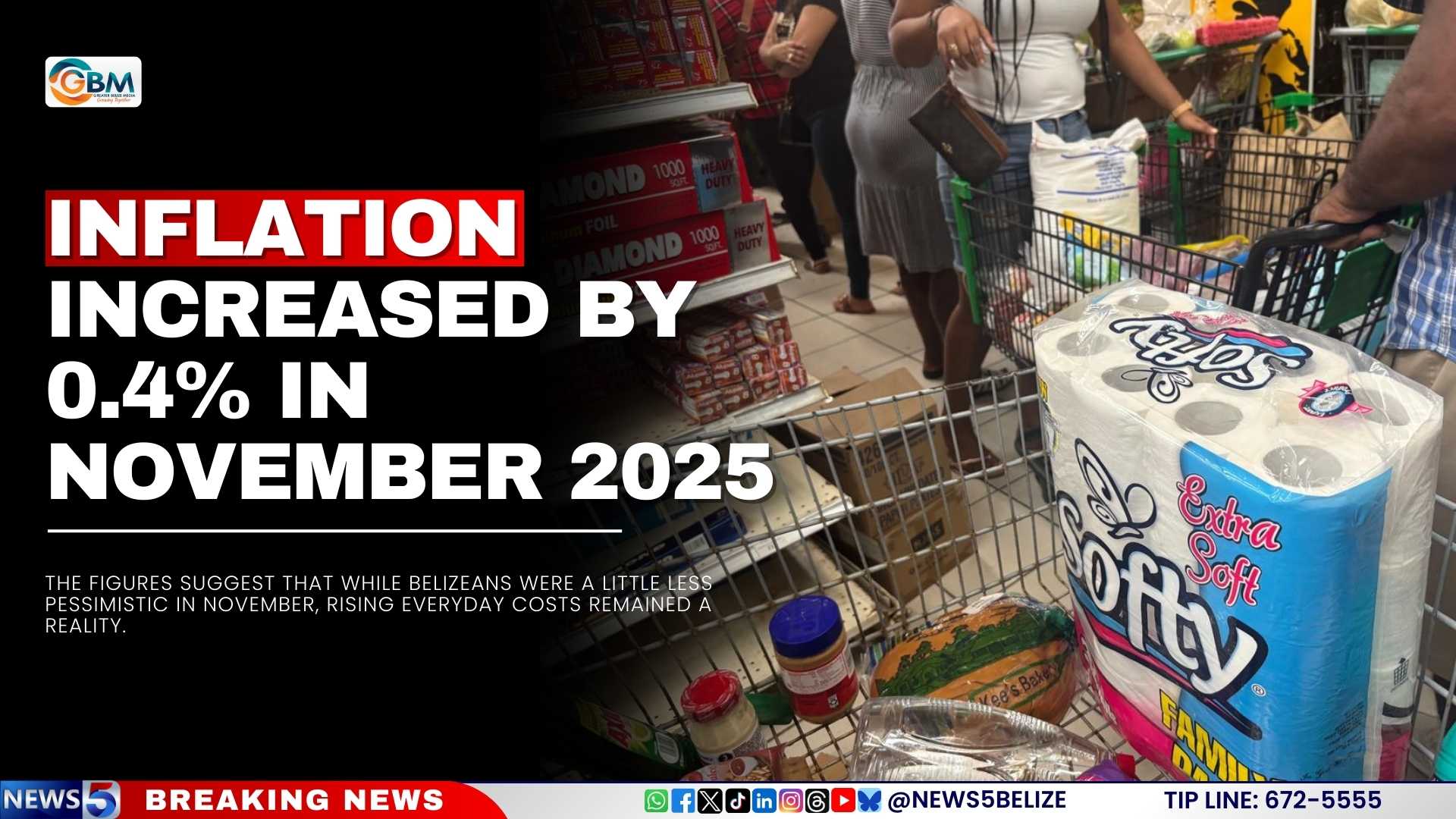
    Inflation Increased by 0.4% in November 2025

    The Statistical Institute of Belize (SIB) reported a 0.4% increase in the Consumer Price Index (CPI) for November 2025, revealing a complex economic landscape where consumer confidence showed modest improvement despite persistent cost-of-living pressures. The inflation data indicates Belizeans expressed slightly greater optimism about household finances even as essential expenses continued their upward trajectory.

    Housing and utilities emerged as primary inflation drivers, with rental costs climbing significantly and liquefied petroleum gas (LPG) prices reaching $128.57 per 100-pound cylinder—a notable increase from $123.97 recorded during the same period in 2024. The healthcare sector experienced substantial price escalations across medical services, including elevated fees for physician consultations, pharmaceutical products, and surgical procedures.

    Food categories demonstrated particular volatility, with beef products, grapes, and watermelon showing marked price increases. The transportation sector provided counterbalancing relief through reduced fuel costs, with diesel prices declining by $0.56 per gallon, regular gasoline decreasing by $0.46, and premium fuel dropping by $0.33 compared to previous year levels.

    Geographic analysis revealed significant regional disparities, with Punta Gorda residents experiencing the steepest cost increases for essential commodities including food staples and educational materials. Conversely, Orange Walk documented modest deflationary trends as fuel and personal care items became more affordable.

    The cumulative inflation for 2025 reached just over 1% year-to-date, indicating moderate price growth across the annual period. These economic indicators present a nuanced picture of consumer sentiment juxtaposed against ongoing financial pressures affecting household budgeting decisions.


  • Belize, Guatemala Foreign Ministers Meet at OAS Border Office

    Belize, Guatemala Foreign Ministers Meet at OAS Border Office

    In a significant diplomatic development, the Foreign Ministers of Belize and Guatemala convened on January 22, 2026, at the Organization of American States (OAS) Adjacency Zone Office along their western border. The high-level meeting brought together Belize’s Foreign Affairs Minister Francis Fonseca and Guatemalan Foreign Minister Carlos Ramiro Martínez under the mediation of Antonia Urrejola, Special Representative of OAS Secretary-General Sebastian Kraljevich for the bilateral relationship.

    The strategic dialogue featured comprehensive presentations detailing the OAS office’s operational activities throughout 2025, specifically designed to foster stronger bilateral cooperation between the neighboring nations. Both ministerial delegations engaged in substantive discussions regarding ongoing confidence-building measures and diplomatic channels.

    This meeting represents another critical step in the protracted peace process between Belize and Guatemala, who have been working through international mechanisms to resolve their long-standing territorial differences. The involvement of the OAS continues to provide essential institutional support for these diplomatic efforts, maintaining the momentum toward a judicial settlement at the International Court of Justice where both nations have agreed to pursue a legal resolution to their dispute.

  • Belizeans Little Less Pessimistic About Finances in Nov 2025

    Belizeans Little Less Pessimistic About Finances in Nov 2025

    The Statistical Institute of Belize has reported a notable improvement in national economic sentiment during November 2025, marking a significant reversal from previous downward trends. According to the latest Consumer Confidence Index (CCI) findings, Belizean households demonstrated increased optimism regarding both macroeconomic conditions and personal financial circumstances.

    The comprehensive index, which measures public perception across three critical dimensions—national economic outlook, personal financial situations, and major purchase readiness—climbed to 48.2 points in November. This represents a substantial 6.8% increase from October’s reading of 45.2, indicating the most pronounced monthly improvement recorded in 2025.

    Despite remaining below the 50-point threshold that traditionally separates optimism from pessimism, this upward movement suggests a potential turning point in consumer psychology after consecutive months of declining confidence earlier in the year. The sustained sub-50 reading simultaneously reflects persistent economic caution among significant portions of the population.

    Geographic analysis revealed distinct regional patterns, with Belize District experiencing the most dramatic confidence surge while Cayo District registered as the sole region showing decreased optimism. A notable urban-rural divide emerged, with rural residents reporting systematically higher confidence levels than their urban counterparts.

    Demographic breakdowns showed particularly strong improvements among young adults aged 18-24, suggesting heightened economic expectations within this cohort. While both genders reported improved outlooks, male respondents maintained a slight confidence advantage over female respondents. The Garifuna community demonstrated the most significant confidence increase among ethnic groups, though specific contributing factors remain unspecified in the report.

    Economists interpret these findings as potentially reflecting divergent regional economic conditions and varying employment prospects across demographic groups. As consumer spending constitutes a substantial component of Belize’s economic activity, this confidence uptick may foreshadow modest improvements in domestic consumption patterns heading into 2026.

    The Statistical Institute of Belize maintains standard methodological protocols for the CCI survey, though specific sample sizes and margin-of-error data were not disclosed in this release. Perception-based indicators inherently capture subjective economic assessments rather than objective financial conditions, potentially overlooking variations in household economic pressures.

    Future data releases will determine whether this November improvement represents a temporary fluctuation or the beginning of a sustained confidence recovery, providing crucial insights for policymakers and business leaders navigating Belize’s economic landscape.

  • PM Defends Plan to Classify Media as Essential Services

    PM Defends Plan to Classify Media as Essential Services

    Prime Minister John Briceño has articulated a robust defense of his administration’s proposal to designate media organizations as essential services within Belize’s telecommunications sector. The policy initiative, currently under cabinet consideration, would establish formal protections preventing service providers from arbitrarily disconnecting media outlets.

    During a recent press engagement, Briceño clarified the government’s position: “Our proposal through regulatory frameworks seeks to categorize media as essential infrastructure. This classification ensures service cannot be terminated without due process, while maintaining reasonable expectations that bills must be settled promptly.”

    The announcement follows mounting concerns from media representatives who reported service disruptions affecting Krem Television and Plus TV, with some speculating these incidents correlated with their editorial content. The Prime Minister directly addressed these allegations, stating: “I must challenge this presumption of content-based discrimination.”

    Briceño drew historical parallels to previous administration actions, notably recalling when the United Democratic Party government withdrew advertising from Channel Five (now Greater Belize Media). He pointedly questioned the media collective’s response: “I observed no collective outcry from media institutions when these punitive measures were enacted against Channel Five. Our administration fundamentally rejects such retaliatory practices.”

    The essential services designation would institute mandatory advance notification periods before any service discontinuation, providing media entities adequate opportunity to address billing disputes while safeguarding against politically motivated disruptions.

    This policy development emerges amid ongoing debates about press freedom and the government’s role in regulating telecommunications infrastructure, positioning Belize at the intersection of media rights and regulatory oversight.

  • PM Backs Chebat, Says Stalled BTL Needs Merger to Survive

    PM Backs Chebat, Says Stalled BTL Needs Merger to Survive

    Belize’s Prime Minister John Briceño has issued a strong defense of his Public Utilities Minister Michel Chebat’s position regarding the proposed telecommunications merger involving Belize Telemedia Limited (BTL). The Prime Minister’s statements come following Tuesday’s Cabinet meeting where the controversial consolidation was discussed.

    Minister Chebat previously asserted that the market consolidation would not create a monopoly, highlighting the existence of approximately twenty-three broadband providers currently operating within Belize’s telecommunications landscape. Prime Minister Briceño expanded on this position with a stark warning about BTL’s financial trajectory.

    “Taxpayers invested almost seven hundred million dollars in BTL,” stated Briceño, “and if they do not make changes it is going to crash.” The Prime Minister revealed concerning internal projections showing the company’s growth flatlining for the next five years without consolidation, while operational costs continue to escalate.

    The government maintains that the proposed merger with Smart is fundamentally about creating operational efficiencies rather than market domination. Briceño emphasized that broadband services remain accessible through numerous competitors, contradicting monopoly concerns raised by critics.

    In response to questions about regulatory oversight, the Prime Minister confirmed plans to strengthen the Public Utilities Commission’s role and amend existing legislation where necessary. However, he reiterated that the primary objective remains preventing the collapse of a significant public investment and protecting stakeholders including Social Security and Belizean taxpayers.

    The administration’s unified stance signals a determined approach to telecommunications reform, framing the merger as an economic imperative rather than merely a market restructuring exercise.

  • BTL Defends Merger Push, Says Efficiency Key to Protecting Consumers

    BTL Defends Merger Push, Says Efficiency Key to Protecting Consumers

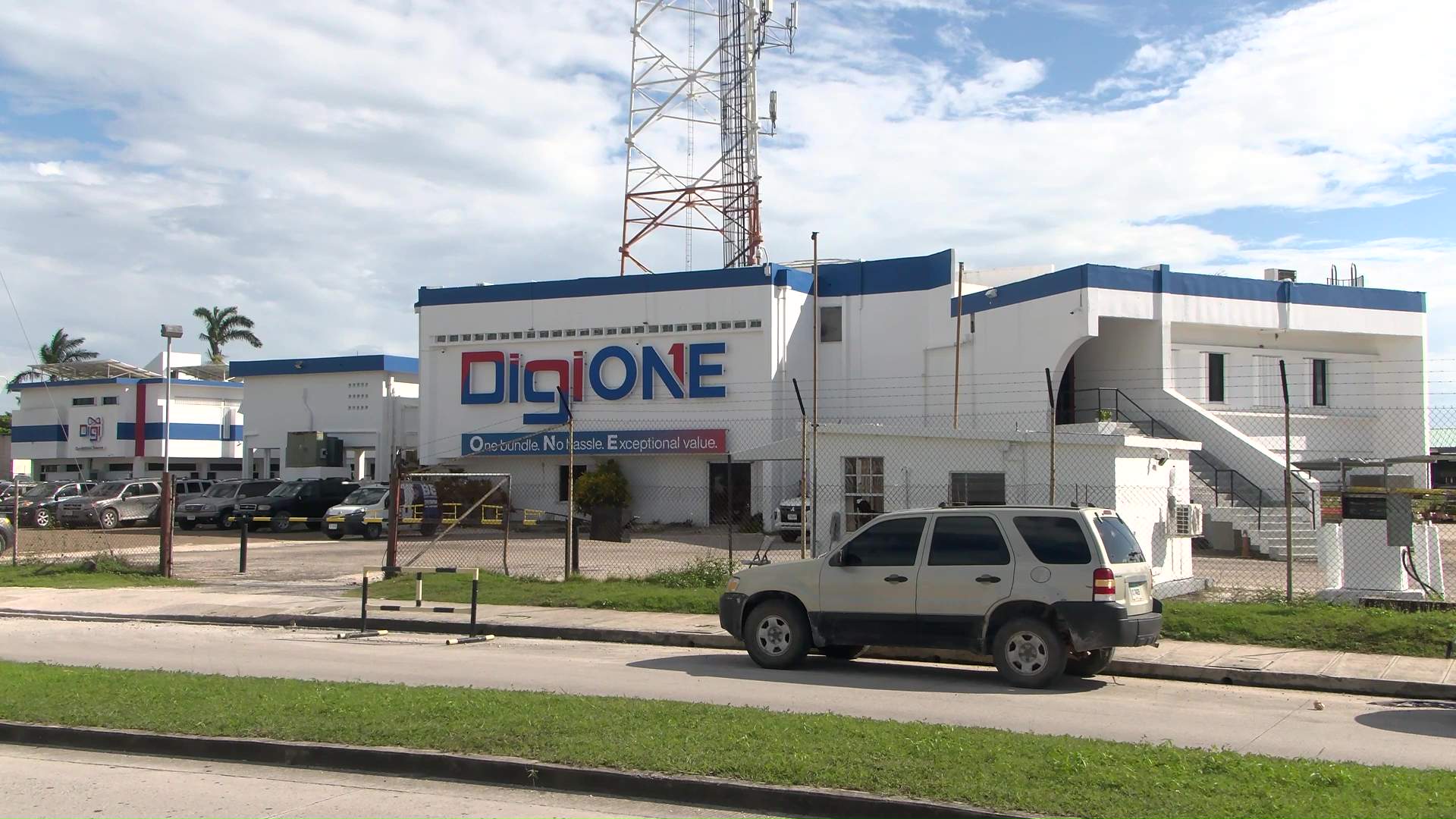
    Amid mounting public scrutiny, Belize Telemedia Limited (BTL) is vigorously defending its proposed merger with Speednet, asserting that operational efficiency through consolidation represents the only viable path forward. BTL Chairman Mark Lizarraga presented a stark choice to Belizean consumers: embrace the merger or face potential reductions in dividends, infrastructure investment, and consumer benefits.

    In an exclusive interview, Lizarraga emphasized the enormous financial demands of maintaining and expanding telecommunications infrastructure in Belize’s small market. “Technology has a very short lifespan and they’re very expensive,” stated Lizarraga, highlighting the economic challenges of serving a limited population base without achieving greater operational efficiencies.

    The chairman outlined BTL’s dual commitment to both national development and consumer protection, noting the company’s pledge to maintain current pricing structures for at least two years regardless of the merger outcome. However, Lizarraga warned that without the proposed consolidation, BTL’s ability to expand services, lower prices, and maintain existing infrastructure would be severely compromised.

    Lizarraga positioned the merger as fundamentally connected to Belize’s broader digital transformation agenda, arguing that the telecommunications efficiencies gained would directly enable national progress. The chairman’s remarks come as public debate intensifies regarding the potential market consolidation and its implications for consumer choice and pricing in Belize’s telecommunications sector.

  • BTL Claims Speednet Acquisition Would Boost Efficiency

    BTL Claims Speednet Acquisition Would Boost Efficiency

    In the wake of recent warnings about operational sustainability, Belize Telemedia Limited (BTL) has articulated its strategic rationale for acquiring competitor Speednet, emphasizing significant efficiency gains rather than immediate financial figures. Chairman Mark Lizarraga presented the case that BTL’s existing infrastructure could absorb Speednet’s customer base with minimal additional expenditure, creating substantial operational synergies.

    The proposed merger, according to Lizarraga, represents a strategic move to enhance telecommunications efficiency in Belize without necessitating price increases or workforce reductions. The chairman emphasized that BTL’s current network capacity remains underutilized and could accommodate Speednet’s subscribers with virtually no incremental costs, thereby generating substantial savings.

    These efficiency gains, Lizarraga argued, would produce multifaceted benefits for multiple stakeholders. Consumers would benefit from maintained pricing structures, employees would see job security reinforced, and shareholders would value the improved operational metrics. Furthermore, the chairman positioned the acquisition as critical for national interests, noting that enhanced telecommunications efficiency would strengthen Belize’s competitiveness in the rapidly evolving digital economy.

    Lizarraga highlighted the indispensable nature of reliable internet services for modern economic activities, particularly referencing how Business Process Outsourcing (BPO) sectors and other employment channels depend on robust digital infrastructure. The integration would theoretically create a more economically efficient telecommunications environment that supports national productivity.

    Despite these asserted advantages, the proposal remains subject to scrutiny as BTL has not disclosed specific financial projections or detailed cost-saving calculations. The absence of quantifiable metrics leaves unanswered questions regarding the precise economic impact and potential market implications of creating a consolidated telecommunications entity in Belize’s relatively compact market.

  • Hydro Belize Share Sale Raises Big Money, But What Comes Next?

    Hydro Belize Share Sale Raises Big Money, But What Comes Next?

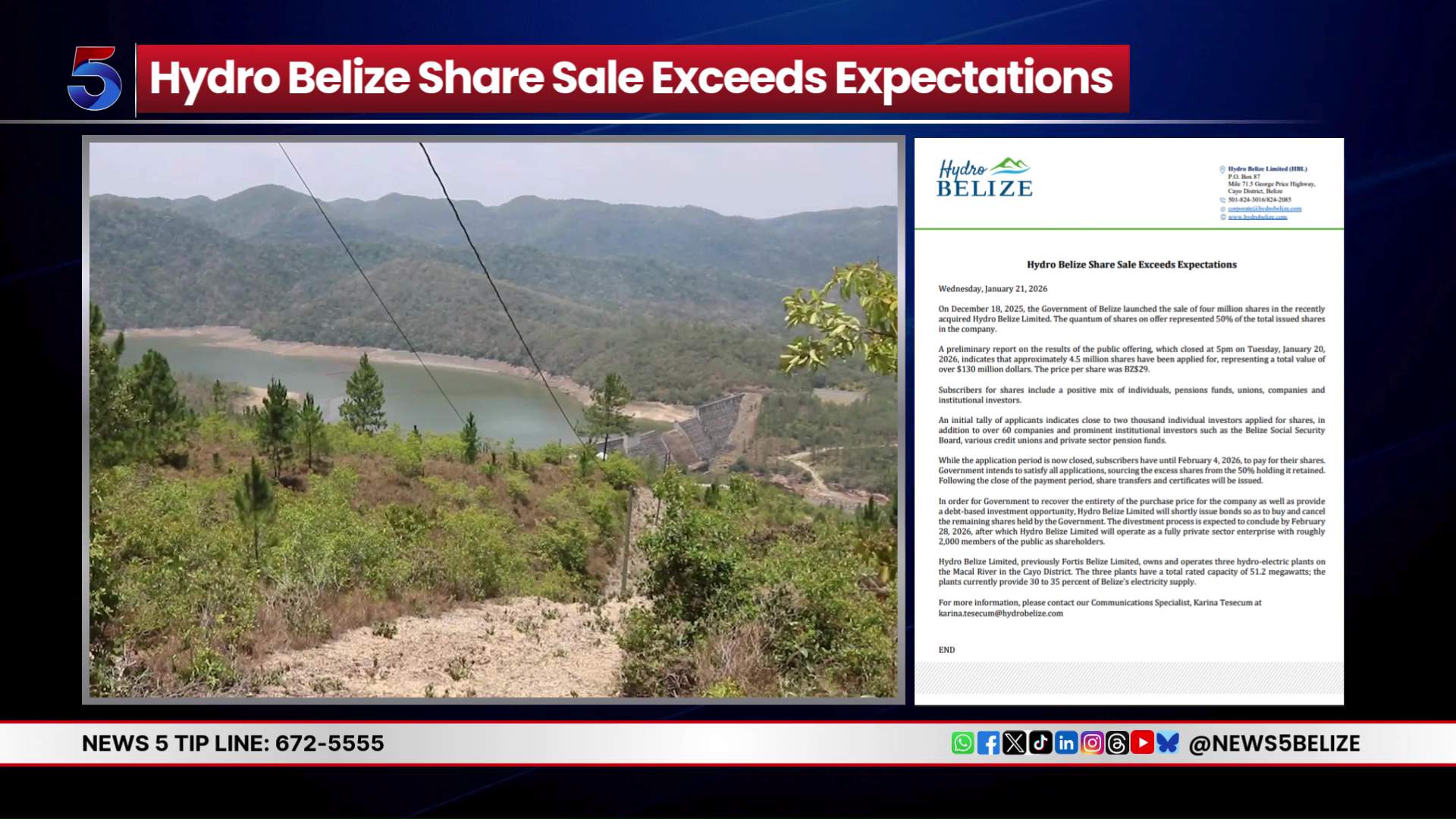
    Belize’s ambitious initiative to transfer public ownership of its key hydroelectric provider to private investors has yielded remarkable financial results, significantly exceeding initial governmental projections. Preliminary data reveals an overwhelming response to the share offering of Hydro Belize Limited, with domestic applicants seeking approximately 4.5 million shares despite only 4 million being initially available. With shares priced at $29 Belize dollars each, this demonstrates substantial market confidence totaling over $130 million in demand.

    The investor landscape comprises a diverse mix of nearly 2,000 individual citizens alongside more than sixty corporate entities and major institutional participants. Notable institutional interest came from credit unions, pension funds, and the Social Security Board, reflecting broad-based confidence in the nation’s energy infrastructure.

    In response to the exceptional demand, government authorities have announced they will allocate additional shares from their reserved portion to satisfy all applications. This strategic decision results in the state relinquishing a larger equity stake than originally envisioned in the privatization roadmap.

    The transformation continues beyond this initial public offering. Hydro Belize has outlined plans to issue new corporate bonds specifically designed to repurchase the government’s remaining shares. This financial maneuver would culminate in complete privatization by the targeted date of February 28, 2026, should the schedule proceed without complications.

    Hydro Belize, previously operating as Fortis Belize, represents a critical component of the nation’s energy infrastructure. The company manages three hydroelectric facilities situated on the Macal River, generating up to 51.2 megawatts of electricity. This output constitutes approximately 30-35% of Belize’s total electricity supply, making the transfer of ownership fundamentally significant for national energy security.

    This transaction transcends conventional corporate restructuring, representing a strategic shift in the ownership model of essential national infrastructure with far-reaching implications for Belize’s economic and energy future.

  • Minister, CEO Dismiss Kickback Claims as ‘Nonsense

    Minister, CEO Dismiss Kickback Claims as ‘Nonsense

    In a firm response to mounting corruption allegations, Belize’s Minister of Rural Transformation Oscar Requena and his Chief Executive Officer Valentino Shal have vehemently denied accusations of financial misconduct within their ministry. The high-ranking officials characterized the claims as baseless attempts to undermine their department’s integrity during recent press inquiries.

    The allegations, which have circulated through unspecified channels, suggested possible kickback schemes and improper payments for unfinished infrastructure projects in northern regions. When confronted with these assertions, Minister Requena dismissed them as ‘total nonsense,’ emphasizing his ministry’s adherence to strict financial protocols and oversight mechanisms.

    ‘We maintain a cadre of highly skilled professional employees operating with complete transparency,’ Requena stated. ‘All our operations undergo rigorous scrutiny from the Ministry of Finance and development partners, ensuring full compliance with national financial regulations.’

    CEO Shal adopted an equally defiant stance, refusing to engage with what he termed ‘speculation and allegations’ without concrete evidence. He suggested the accusations originated from parties seeking to ‘tarnish the hard work’ of the ministry while hinting at awareness of the sources behind the claims.

    Addressing perceptions of financial impropriety, Shal clarified: ‘Some might imagine the ministry controls substantial discretionary funds, but reality proves otherwise. All resources originate from the Ministry of Finance following established procedures and multiple approval stages.’

    Both officials maintained their primary focus remains on executing their ministerial duties despite the distracting allegations. They declined to publicly identify their suspected sources of the accusations while affirming confidence in their operational integrity and financial management practices.

  • Price Controls Lifted on Packaged Sugar, PM Says

    Price Controls Lifted on Packaged Sugar, PM Says

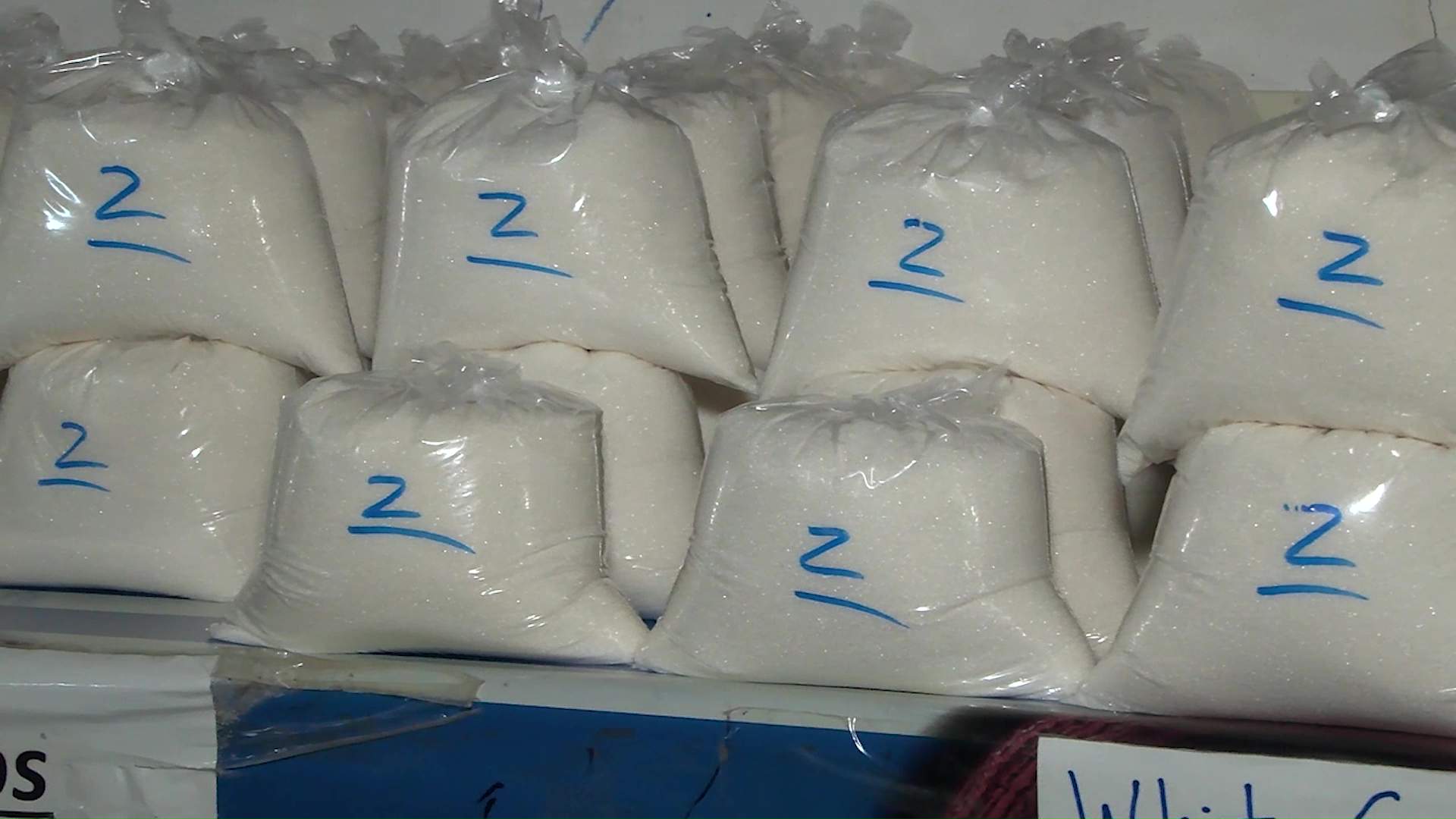
    In a significant policy shift, the Belizean government has officially removed price controls on prepackaged retail sugar, a move defended by Prime Minister John Briceño as beneficial for sugarcane farmers. The new regulations create a clear distinction between bulk sugar sold by weight, which remains under strict price control, and branded, pre-packaged sugar products now open to market competition.

    Prime Minister Briceño clarified the policy framework during a recent press engagement: “What we have done is that with sugar being sold in bag that they weigh for you, that is being controlled. What is not controlled is the one packaged, with the label and all of that—one-pound, five-pound bags. That is not controlled and that is open to anybody who wants to package.”

    The policy change enables multiple market participants—including Santander Sugar, local entrepreneurs, and even cane farmers themselves—to package and sell sugar directly to consumers. This deregulation represents a substantial departure from previous market restrictions that limited packaging operations primarily to Belize Sugar Industries (BSI).

    When questioned about Santander’s potential dominance in local markets, PM Briceño acknowledged ongoing discussions regarding the company’s future role. Santander, which is developing sugar refining capabilities expected to become operational within one to two years, has expressed interest in accessing the domestic market.

    The Prime Minister firmly rejected concerns that market liberalization might disadvantage local cane growers (caneros), stating: “Whenever we sell sugar on the local market the caneros benefit.” He emphasized that farmers retain the option to package and market their own sugar, potentially capturing additional value from the supply chain previously retained by processors.

    This policy revision fundamentally alters Belize’s sugar market dynamics, introducing competitive packaging opportunities while maintaining consumer protections for traditionally weighed sugar purchases.