标签: Belize

伯利兹

  • BPO Association Speaks on Credit Card Fraud

    BPO Association Speaks on Credit Card Fraud

    The Belize Business Process Outsourcing Association (BBPOA) has formally addressed mounting concerns regarding sophisticated credit card fraud operations potentially linked to the nation’s BPO sector. This response follows an investigative report by News Five that uncovered substantial financial losses suffered by local businesses through fraudulent transactions originating from compromised payment data.

    In its official statement, the BPO trade group unequivocally condemned all forms of financial fraud and data misuse while emphasizing its commitment to cooperate with ongoing investigations. Notably absent from the association’s communication was any acknowledgment regarding whether specific member companies are currently under investigation or if internal security breaches might have facilitated the alleged criminal activities.

    The association’s response strategically highlighted the industry’s substantial economic contributions, noting that Belize’s BPO sector employs approximately 16,000-20,000 citizens and generates roughly US$150 million in annual wages. While underscoring this significant economic footprint, the statement provided limited concrete information addressing potential security vulnerabilities within member organizations.

    BBPOA officials pointed to existing compliance measures including Payment Card Industry Data Security Standard (PCI DSS) certification, advanced encryption systems, restricted access protocols, and regular third-party audits as evidence of robust governance frameworks. The association further announced collaborative efforts with member companies to reexamine security procedures and strengthen compliance standards.

    Despite pledging support for a ‘thorough and transparent investigation,’ the trade group stopped short of committing to public disclosure of internal review findings or outlining potential consequences for member companies where security deficiencies might be identified. This cautious approach has raised questions about accountability mechanisms within the rapidly growing industry.

  • Belize City Councillors Want a Stipend Increase

    Belize City Councillors Want a Stipend Increase

    Belize City Council’s push for increased stipends and pension benefits for its members has encountered a measured response from the national government, with officials emphasizing that such enhancements must not compromise essential public services.

    Oscar Requena, Minister of Rural Transformation and Local Government, confirmed that his ministry is reviewing compensation requests from multiple municipal councils across Belize. However, he clarified that no formal proposal has been officially submitted by Belize City Council leadership despite ongoing discussions.

    “I am cognizant of their appeal but haven’t received documented particulars,” Minister Requena stated. “While we will thoroughly examine this matter, any financial considerations must align with broader fiscal responsibilities.”

    The movement for improved compensation gained momentum during an August 2024 council session where Deputy Mayor Allan Pollard advocated for structural reforms. Pollard contended that contemporary municipal governance has evolved into a full-time commitment requiring professional expertise, thereby justifying enhanced remuneration packages.

    Pollard specifically proposed implementing pension benefits for council members completing two or more terms, arguing that such incentives would attract and retain qualified individuals in local government positions. Alternatively, he suggested significant stipend increases could serve as a compensatory measure if pension provisions proved unfeasible.

    Minister Requena emphasized the variable nature of municipal compensation across Belize’s jurisdictions, noting that “remuneration structures differ substantially between municipalities, primarily determined by their respective financial capacities and revenue generation.”

    The minister reiterated that any potential salary adjustments for elected municipal officials would only receive consideration after local governments demonstrably fulfill their primary service obligations to residents, establishing a clear hierarchy of governmental priorities.

  • PM Says Rural Residents Forgotten for Too Long

    PM Says Rural Residents Forgotten for Too Long

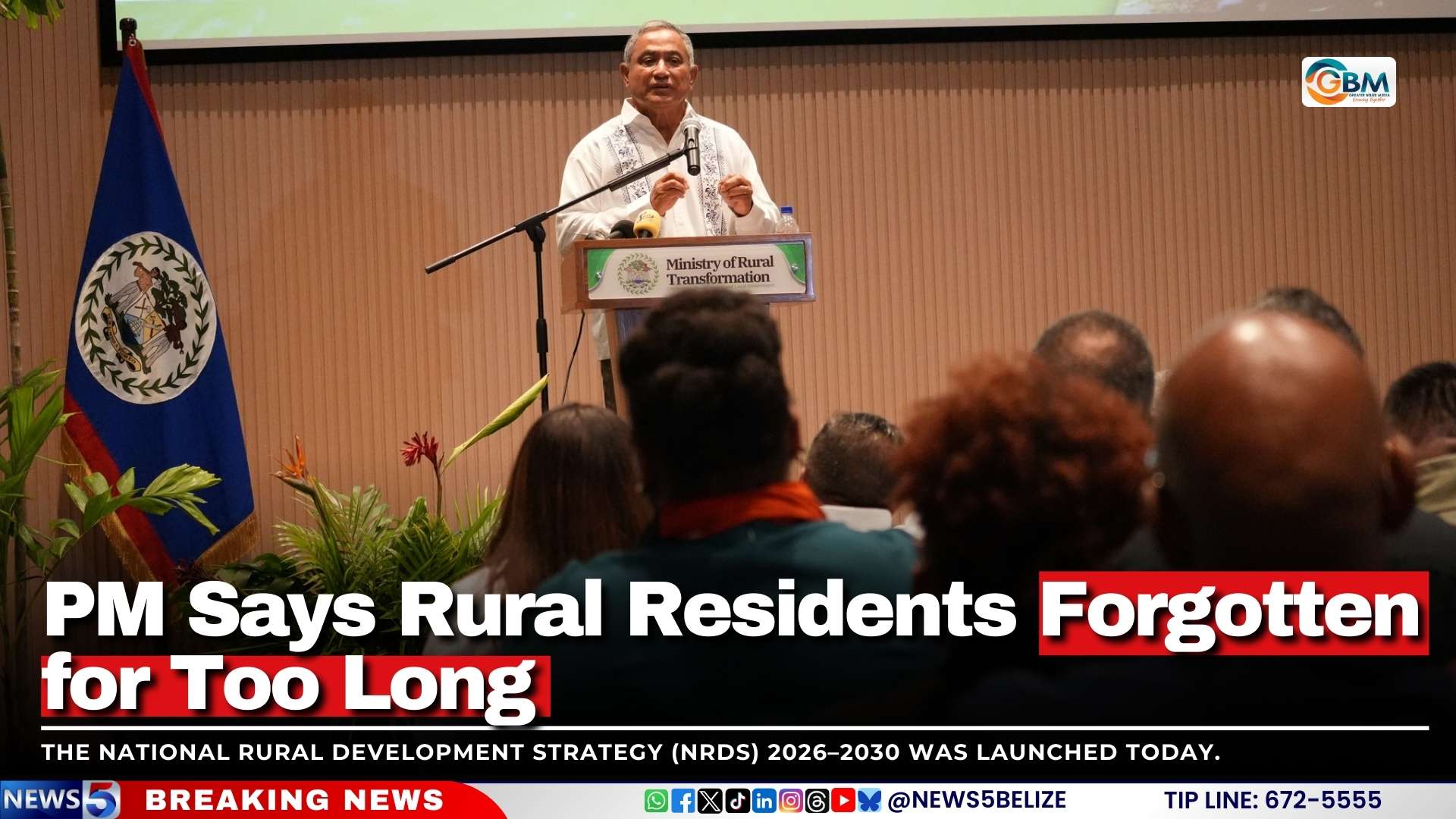
    In a landmark announcement on January 21, 2026, Belizean Prime Minister John Briceño unveiled the National Rural Development Strategy (NRDS) 2026–2030, declaring an end to decades of neglect toward rural populations. The comprehensive five-year blueprint represents a paradigm shift in national development priorities, targeting systemic poverty reduction through enhanced economic opportunities and infrastructure modernization.

    Prime Minister Briceño delivered a powerful critique of historical development disparities, stating, ‘For generations, we have failed to allocate proper attention and resources to our rural citizens.’ He emphasized that despite housing over half of Belize’s population, these regions continue to experience severe infrastructure deficits, including unreliable electricity access, inadequate water systems, and underdeveloped road networks.

    The Prime Minister drew stark contrasts between urban and rural living conditions: ‘In urban centers, residents enjoy immediate access to basic utilities—switches deliver instant electricity, faucets provide running water. Meanwhile, rural communities face the complete opposite reality.’

    Briceño reframed the national conversation by identifying rural Belize as the nation’s economic backbone, highlighting its concentration of agricultural production, tourism assets, food security capabilities, and natural reserves. ‘The very elements that define Belize’s unique character and generate national wealth originate in our rural territories,’ he asserted.

    The NRDS establishes a coordinated framework for governmental investment, prioritizing strategic infrastructure development including farm-to-market road networks, land accessibility programs, affordable credit systems, reliable electrification projects, and educational support mechanisms designed to interrupt intergenerational poverty cycles.

    This initiative marks the most significant rural development commitment in Belize’s recent history, signaling a fundamental reorientation of national policy toward inclusive, equitable growth across all geographical regions.

  • Hydro Belize Share Sale Oversubscribed by 500,000 Shares

    Hydro Belize Share Sale Oversubscribed by 500,000 Shares

    The Belizean government’s landmark public offering of Hydro Belize Limited shares has concluded with exceptional investor enthusiasm, recording oversubscription by approximately 500,000 shares. Preliminary data indicates applications reached roughly 4.5 million shares, significantly surpassing the four million shares initially available to investors at BZ$29 per share, translating to over $130 million in total application value.

    The offering represented 50% of the company’s total issued shares, with the government confirming it will fulfill all excess demand by allocating additional shares from its retained 50% stake. The investment initiative attracted nearly 2,000 individual investors alongside more than 60 corporate entities, including major institutional participants such as the Belize Social Security Board, multiple credit unions, and private sector pension funds.

    Successful applicants have until February 4, 2026, to finalize payments, with share transfers and certificate issuance scheduled following the payment closure period. In a parallel development, the government announced Hydro Belize Limited’s forthcoming bond issuance program designed to repurchase and cancel the state’s remaining shares. This strategic maneuver enables full government cost recovery while creating new debt investment opportunities, with complete divestment targeted by February 28, 2026.

    Post-divestment, Hydro Belize Limited will transition to full private sector ownership with approximately 2,000 public shareholders. The company, previously operating as Fortis Belize Limited, maintains ownership and operational control over three hydroelectric facilities along the Macal River in the Cayo District. These installations collectively generate 51.2 megawatts of rated capacity, currently supplying 30-35% of Belize’s national electricity requirements.

  • GOB Takes Early Action Ahead of Sargassum Season

    GOB Takes Early Action Ahead of Sargassum Season

    The Government of Belize has initiated proactive measures to address the escalating sargassum threat across the Caribbean region through its specialized National Sargassum Task Force (STF). This coordinated national response comes as satellite monitoring indicates increased sargassum activity heading toward Belizean coastal waters for the 2026 season.

    Co-led by the Ministry of Tourism, Youth, Sports and Diaspora Relations and the Ministry of Blue Economy and Marine Conservation, the STF has identified five priority zones for intervention: San Pedro, Caye Caulker, Seine Bight, Hopkins, and Placencia. The comprehensive preparedness strategy involves both technological and infrastructural enhancements to mitigate the environmental and economic impact of the seaweed influx.

    Strategic acquisitions include specialized shoreline maintenance equipment such as a Barber Beach Rake and replacement components for existing machinery in Placencia. Concurrently, infrastructure assessments are progressing in San Pedro and Caye Caulker to evaluate disposal site suitability and logistical requirements.

    The task force is employing the sophisticated Sargassum Monitoring (SAMTool) platform, which utilizes satellite detection and drift prediction technology to forecast landfall patterns. This advanced monitoring system enables authorities to anticipate accumulation hotspots and optimize cleanup coordination.

    Additional resources deployed include a purpose-built workboat designed for sargassum removal in shallow marine environments and a continuous collection floating unit for near-shore operations. Current operations remain in limited pilot phases, with full-scale deployment across all five locations scheduled progressively as equipment and support systems become operational.

  • Minister Requena Rejects Corruption Allegations

    Minister Requena Rejects Corruption Allegations

    In a firm rebuttal to serious corruption allegations, Belize’s Minister of Rural Transformation Oscar Requena has publicly denounced claims of financial misconduct within his ministry as baseless and unsubstantiated. The scandal emerged following the circulation of a WhatsApp message allegedly sent by Cabinet Secretary Stuart Leslie, which implicated ministry officials in a kickback scheme involving a local hardware supplier.

    Minister Requena addressed the allegations with strong language, stating: ‘First of all, I want to say that that is total nonsense. Every operation we conduct at the Ministry of Rural Transformation is above-board and in line with financial regulations.’ The message in question had specifically claimed that a ministry director received checks and commissions in exchange for directing procurement contracts, with alleged kickbacks funneled to senior officials.

    The minister also categorically denied separate claims that his ministry had authorized payments for incomplete roadwork projects in northern Belize, dismissing these assertions with equal vigor. Requena emphasized the rigorous procurement protocols governing ministry operations, noting that all purchases require multiple quotations and undergo strict oversight from both the Ministry of Finance and international development partners.

    ‘It is our responsibility to ensure that we go where we get value for money,’ Requena added, highlighting the ministry’s commitment to fiscal responsibility.

    In a significant development, Prime Minister John Briceño has reportedly conducted preliminary checks with the supplier named in the allegations, finding no evidence of business dealings between the company and the Ministry of Rural Transformation. The government’s response indicates a coordinated effort to address and dispel the corruption claims that have circulated through digital channels.

  • Marie Sharp Makes Forbes’ 50 Over 50 Global List

    Marie Sharp Makes Forbes’ 50 Over 50 Global List

    Marie Sharp, the visionary Belizean entrepreneur behind the iconic hot sauce brand, has secured a prestigious position on Forbes Magazine’s 2026 50 Over 50 Global roster. This distinguished compilation honors extraordinary leaders, founders, and innovators across 36 nations who are driving transformative change in diverse sectors from aviation to mining.

    The Forbes recognition specifically celebrates individuals who have achieved record-breaking accomplishments, pioneered revolutionary technologies, or developed medical treatments with potential global impact. Sharp’s inclusion reflects her remarkable journey from educator to culinary innovator.

    Her entrepreneurial story began following her teaching career when she started experimenting with habanero peppers and garden vegetables. While maintaining full-time employment at the Citrus Company, Sharp developed her distinctive recipes, initially sharing them with family before friends encouraged commercial production. In 1981, she launched her sauce venture, which rapidly gained popularity and expanded into the lucrative United States market.

    A significant trademark challenge prompted strategic rebranding, leading to the 1992 establishment of Marie Sharp’s Fine Foods. The company has since evolved into a comprehensive provider of artisanal sauces, jams, and specialty seasonings. The industry formally acknowledged Sharp’s culinary contributions in 2016 with her induction into the Hot Sauce Hall of Fame.

    Forbes positioned Sharp at number 85 within their global ranking, highlighting her as an exemplar of entrepreneurial perseverance and innovation. Her recognition underscores the growing global appreciation for Caribbean culinary traditions and female entrepreneurship in the food industry.

  • PM Clarifies Removal of Price Controls on Retail Sugar

    PM Clarifies Removal of Price Controls on Retail Sugar

    In a significant policy shift, the Belizean government has eliminated price controls on retail sugar products, a move defended by Prime Minister John Briceño as beneficial for both market competition and sugarcane farmers. The January 21st announcement clarifies that while bulk sugar in standard bags remains regulated, pre-packaged retail units (including one-pound and five-pound bags) are now exempt from price controls.

    Prime Minister Briceño emphasized that this deregulation creates new market opportunities, allowing any enterprise or individual to purchase bulk sugar and package it for retail sale. “This is open to anybody that would want to be able to package,” Briceño stated, specifically mentioning that Santander Sugar Limited—currently prohibited from direct local sugar sales—could now participate in the retail market through prepackaged products.

    The policy change addresses Santander’s ongoing request to sell its refined sugar domestically, though Briceño noted this separate matter remains under governmental review. Importantly, the Prime Minister asserted that sugarcane farmers (cañeros) continue to benefit from local market sales regardless of packaging format, as Belize Sugar Industries (BSI) purchases sugarcane from growers before processing and packaging operations.

    This market liberalization represents a shift from previous protectionist measures and is expected to stimulate competition in Belize’s retail sugar sector while maintaining support for agricultural producers through the existing bulk sugar price control mechanism.

  • PM Dismisses Corruption Allegations as “Mischief”

    PM Dismisses Corruption Allegations as “Mischief”

    BELIZE CITY – Prime Minister John Briceño has categorically dismissed emerging corruption allegations targeting his administration’s Ministry of Rural Transformation, characterizing the claims as deliberate “mischief” with foreign origins.

    The controversy ignited when a private message containing unverified accusations regarding road construction projects, procurement processes, and contract approvals was inadvertently published to the WhatsApp status of Cabinet Secretary Stuart Leslie. The message remained briefly visible before being deleted from the public platform.

    Addressing journalists, PM Briceño revealed the message traced back to a Mexican telephone number, raising immediate suspicions about its credibility. “When you observe something of this nature originating internationally, it becomes evident that malicious intent is at play,” Briceño stated. He provided context that the message had been forwarded through official channels: initially sent to him, then directed to Cabinet Secretary Leslie for appropriate routing to ministry officials, but accidentally posted publicly instead.

    The Prime Minister demonstrated his proactive response by ordering immediate verification checks with key suppliers allegedly involved. “We contacted Benny’s among other vendors,” Briceño reported, “and they have formally confirmed conducting zero business transactions with the Ministry of Rural Transformation.”

    Briceño further fortified his defense by highlighting the ministry’s funding structure. “The majority of this ministry’s budgetary allocations derive from European Union development funds,” he explained, “which operate under rigorously established procurement protocols and external oversight mechanisms that prevent financial irregularities.”

    Concluding his statements, the Prime Minister expressed confidence that the allegations lacked substantive foundation, indicating no formal investigation would be warranted given the absence of credible evidence and the foreign nature of the source.

  • Police Information System Restored

    Police Information System Restored

    BELIZE CITY – The Belize Police Department has successfully restored full operational capacity to its critical Crime Information Management System (CIMS), concluding a nearly two-month period of significantly limited functionality. The technical disruption originated from administrative delays in processing an outstanding annual software maintenance fee.

    Rear Admiral Elton Bennett, Chief Executive Officer of the Ministry of Home Affairs and Enterprise, provided official confirmation to News 5 regarding the system’s complete restoration. Bennett clarified that the technical complications emerged specifically after the belated settlement of a $186,000 Belize Dollar (approximately $93,000 USD) mandatory annual fee for software licensing and support services.

    “Technicians are currently engaged in comprehensive efforts to return the system to full 100% operational status,” Bennett stated during his briefing. He emphasized that despite the severe technical limitations experienced over recent weeks, core police operations remained uncompromised throughout the duration of the system impairment.

    The CEO provided crucial context regarding operational adaptations during the outage: “Throughout this period of reduced system capacity, the Belize Police Department maintained access to critical information databases. The primary impact was operational efficiency rather than functional paralysis, with data retrieval processes requiring substantially more time and intermediary steps.”

    Bennett further explained that the technical constraints necessitated a modified workflow where individual police stations lost direct access privileges, requiring them to submit data requests through central IT personnel who served as intermediaries for database queries. This procedural workaround, while functional, considerably slowed routine information retrieval processes for frontline officers across the nation.

    The restoration of CIMS to full functionality marks a significant return to normalcy for Belize’s law enforcement operations, eliminating the previously necessary bureaucratic layers that hampered efficient data access during the technical disruption.