标签: Belize

伯利兹

  • “It Can Be Done”: NTUCB Rejects Briceño’s Position on BTL Board

    “It Can Be Done”: NTUCB Rejects Briceño’s Position on BTL Board

    Nearly three months after the National Trade Union Congress of Belize (NTUCB) tabled 11 policy and representation demands before the government of Prime Minister John Briceño, long-running negotiations have hit a major impasse, with two core proposals emerging as the central points of conflict.

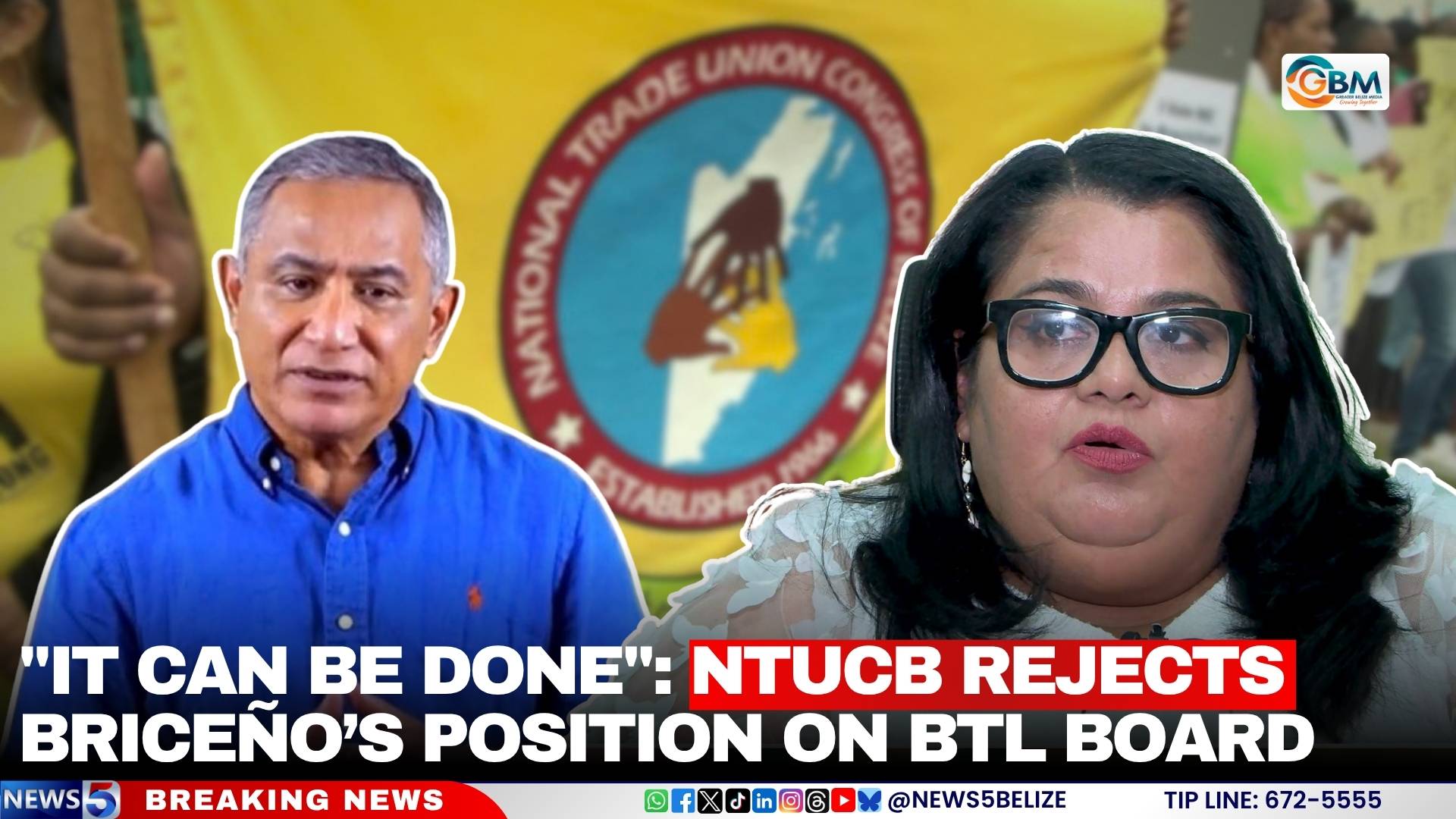
    Briceño’s Cabinet issued its official response to the union’s demands last week, blending partial concessions, non-binding future commitments, and outright rejections of key asks. During the NTUCB’s regular weekly broadcast on Open Learning TV Tuesday evening, union president Ella Waight publicly pushed back against the government’s position, calling out its rejection of two high-priority demands: the placement of a permanent NTUCB liaison officer within the Office of the Prime Minister, and the adoption of a tripartite governance structure for Belize Telemedia Limited (BTL), the country’s leading telecommunications provider.

    Waight first pushed back against the Cabinet’s core argument for rejecting the liaison officer role, which claimed existing representation through the Joint Union Negotiating Team (JUNT) already provides an adequate channel for union outreach to the prime minister’s office. Rejecting this framing as misleading, Waight emphasized that while JUNT member unions are affiliated with the NTUCB, the two bodies are not interchangeable, making the government’s claim of existing access disingenuous.

    On the question of BTL governance, the NTUCB is demanding that the utility’s board of directors follow a tripartite model, with equal or proportional representation for three groups: government, private sector employers, and organized labor. Waight pointed to Belize’s own Social Security Board as a successful example of this structure in action, noting that tripartite representation inherently boosts transparency and accountability. Each stakeholder representative is required to report back to their constituency, ensuring no single group can control decision-making behind closed doors.

    Waight added that this structure would have already provided a formal, direct channel for organized labor to raise questions and concerns about high-profile ongoing proposals, such as the recent acquisition plan involving BTL and local communications provider SMART.

    Addressing Prime Minister Briceño’s direct assertion that the tripartite BTL board structure “cannot be done,” Waight delivered a blunt rebuke: “It can be done.”

    As of September 23, 2026, the NTUCB is scheduled to submit its formal, written response to Cabinet’s position, and will return both disputed issues to the negotiating table for further discussion, setting the stage for continued talks between the nation’s largest union federation and the sitting government.

  • Belize Joins Regional Plans for Investment Network

    Belize Joins Regional Plans for Investment Network

    At the 2026 World Trade Organization Public Forum held in Geneva, Switzerland, Belize has formally joined a coordinated regional push to boost cross-border investment and streamline business operations across Latin America and the Caribbean. The September 16 forum discussions, which brought together high-level government representatives and global development leaders, centered on advancing implementation of the WTO’s Investment Facilitation for Development Agreement and identifying actionable strategies to upgrade regional investment and regulatory environments. Representing Belize at the invitation of World Bank Vice President for Countries and Regional Integration Anabel González was Narda Garcia, Chief Executive Officer of the Prime Minister’s Office. A core focus of the talks was the proposed Regional Network for Investment Facilitation and Promotion, a collaborative framework designed to connect participating nations across the region. Under the network’s structure, member states will gain access to structured platforms to exchange successful policy experiences, upskill institutional teams, and secure targeted technical and financial resourcing to refine their domestic investment frameworks. The Inter-American Development Bank has already thrown its institutional and financial support behind the project, with formal launch ceremonies scheduled for October 20 in Panama. Once operational, the network will prioritize deepening regional coordination on investment policy, supporting member states in rolling out practical regulatory reforms, and closing capacity gaps for public institutions tasked with attracting and retaining foreign and domestic investment. Belize’s participation marks a key step toward expanding the initiative’s reach across Central America, aligning the small Caribbean nation with broader regional goals of inclusive economic growth through improved investment accessibility. Development leaders note that the agreement and accompanying regional network address longstanding barriers to investment in the region, including fragmented regulatory processes and limited institutional capacity to support new business ventures. For Belize, joining the network opens new opportunities to attract sustainable investment, share its own development experiences with peer nations, and access global expertise to refine its business climate.

  • Pacific Hurricane Activity Ramps Up

    Pacific Hurricane Activity Ramps Up

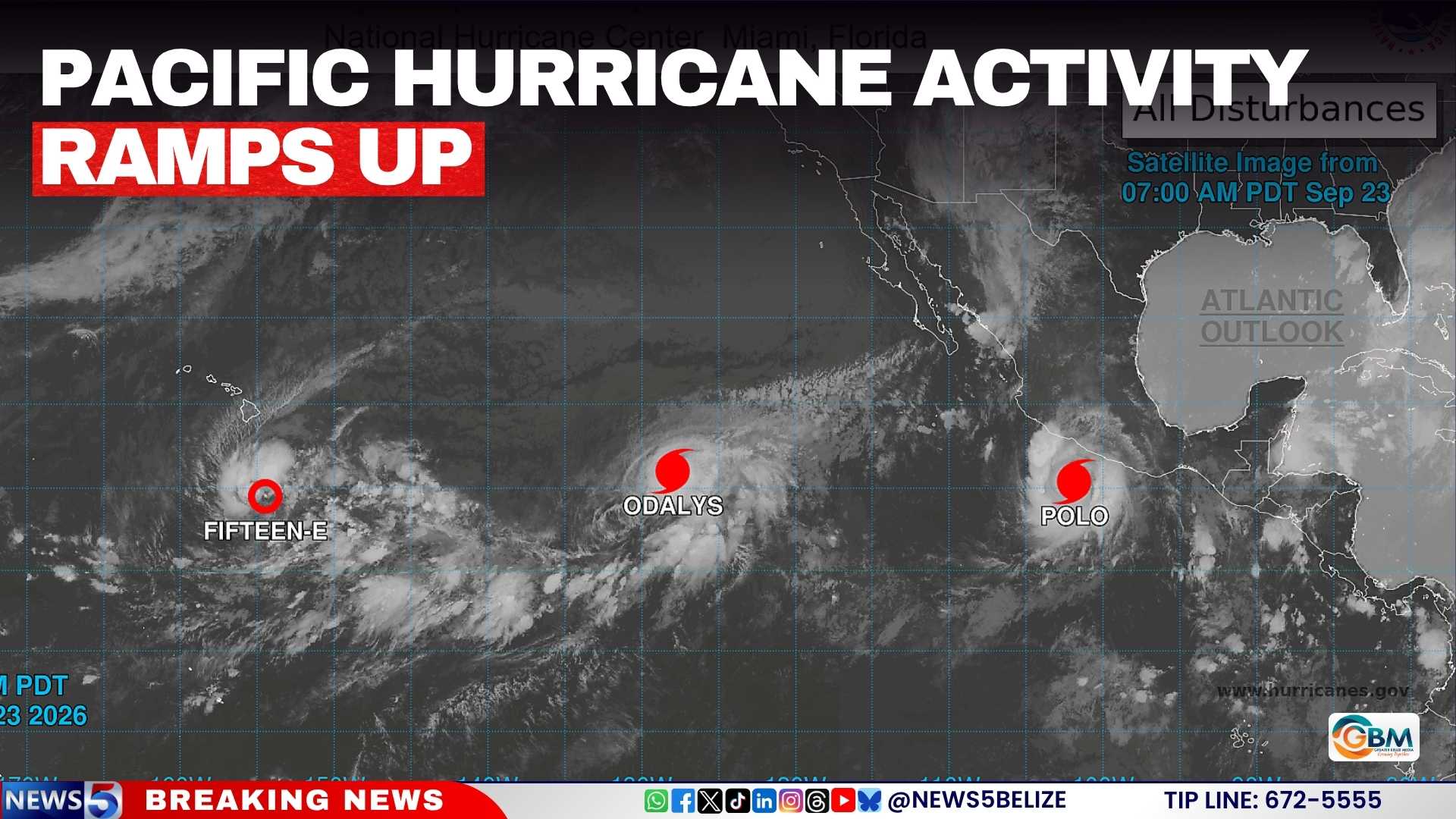
    As the 2026 Pacific hurricane season enters a period of heightened activity, Hurricane Polo has emerged as the most significant weather threat off Mexico’s southwestern coast, even after a slight reduction in intensity. The US National Hurricane Center (NHC) confirmed in its Wednesday update that the storm was downgraded from an extremely dangerous Category 5 to Category 4, but it still retains enough power to pose severe risks to coastal communities in southern Mexico.

    As of the latest advisory, Polo is currently situated hundreds of miles offshore from southern Mexico, making it one of four active weather systems that forecasters are actively monitoring across the eastern and central regions of the North Pacific. The storm is projected to track slowly along a west-northwest path over the coming days. While Mexican President Claudia Sheinbaum confirmed Tuesday that current models do not show Polo making a direct landfall along the Mexican coast, she has urged all residents across Pacific coastal zones to maintain high alert and follow official guidance closely.

    Forecasters have issued urgent warnings about the extreme precipitation risks the storm will bring to parts of western Mexico, particularly the states of Jalisco, Colima and Michoacán. Torrential downpours are expected to trigger life-threatening flash flooding and mudslides, with the greatest danger concentrated in steep, mountainous areas of these states. Total rainfall across affected regions is forecast to reach 15 centimeters, with isolated pockets seeing as much as 20 centimeters of accumulation, which is well above threshold for dangerous flood events.

    Just one day before its downgrade, Polo underwent explosive intensification to reach Category 5 strength, when a NOAA Hurricane Hunter research aircraft flew through the storm’s core on Tuesday and measured sustained wind speeds of nearly 285 kilometers per hour (180 miles per hour), with even more powerful gusts recorded near the storm’s eye.

    Meteorologists and climate scientists point to a record-breaking El Niño event as the primary driver of Polo’s rapid intensification and the heightened overall Pacific hurricane activity this season. Unusually warm sea surface temperatures, a hallmark of strong El Niño, are providing abundant energy to power storm development. On September 19, NOAA recorded average sea surface temperatures in the central-eastern Pacific hitting 3.05°C above the long-term average, surpassing the previous record set during the intense 2015 El Niño event. NOAA notes that current atmospheric and oceanic conditions remain “very conducive” for Polo to regain strength in the coming days as it moves across warm Pacific waters.

    Polo is not the only active storm system being tracked in the region. The NHC is also monitoring Hurricane Odalys, a recently upgraded storm located far to the west-southwest of Baja California, and Tropical Depression Fifteen-E, which has re-formed hundreds of miles southeast of Hawaii’s Big Island. Forecasters also added that a new tropical system is expected to develop south of the Gulf of Tehuantepec later this week, with an 80 percent probability of it strengthening into a named storm within the next seven days.

  • “We Will Never Bow Our Head”: Iran’s President Tells Trump at UN

    “We Will Never Bow Our Head”: Iran’s President Tells Trump at UN

    At the 2026 United Nations General Assembly held in New York on September 23, Iranian President Masoud Pezeshkian delivered a defiant address to global leaders, pushing back against escalating pressure from the United States and reaffirming Iran’s refusal to concede to external coercion.

    A central focus of Pezeshkian’s speech centered on the strategic Strait of Hormuz, a critical global waterway that carries a significant share of the world’s oil and maritime trade. He emphasized that Iran would not permit the United States or any foreign power to exploit the strait as a tool of aggression against Tehran. “We cannot let some have free access and gain their interest from a waterway while at the same time using that waterway to impose their aggressions upon us, to impose insecurity upon us, to forbid us access to our own waterways,” Pezeshkian told the assembled body.

    The Iranian leader directly rejected demands from US President Donald Trump, stating clearly that Iran would “never bow our head or bend at the knee” to external pressure. He clarified that Iran’s overture to international cooperation is not a sign of weakness, but a reflection of the nation’s confidence in its own resilience. “Iran extends her hand towards the world, we invite the world. We call the world, not out of weakness, but out of a deep belief in our own power and steadfastness to cooperate and collaborate,” he added.

    Pezeshkian’s remarks came in direct response to Trump’s address to the General Assembly one day earlier, where the US president claimed he faced a binary choice between annihilating Iran or negotiating a new deal to end ongoing hostilities between the two nations. On the sidelines of the UN gathering, US officials confirmed that American and Iranian delegations have held indirect talks through third-party mediators, though no details of the discussions have been released to the public.

    During his speech, Pezeshkian also accused the United States of ongoing aggression against Iran, noting that the Iranian people have long “been the victims of terrorism”. This portion of the address prompted the sole US delegate in attendance to walk out of the chamber in protest.

    The ongoing confrontation between the two nations has already had measurable global consequences. Maritime traffic through the Strait of Hormuz has dropped sharply since the outbreak of hostilities, exacerbating economic instability in already tense global markets and extending the impact of the bilateral conflict far beyond the Middle East. Despite this pressure, Pezeshkian insisted that Iran would not surrender to economic sanctions, military posturing, or what he framed as international bullying, repeating that Tehran remains committed to working with the global community to achieve what he called “true peace and stability.”

  • Three Months Later: Will Mira and Marin Return to Cabinet?

    Three Months Later: Will Mira and Marin Return to Cabinet?

    Three months after two senior Belizean government ministers were placed on administrative leave over the controversial ‘Mira Millions’ procurement scandal, Prime Minister John Briceño is nearing a high-stakes decision that will shape public perception of his administration’s commitment to accountability.

    Oscar Mira, the former Minister of Home Affairs, saw his three-month temporary leave expire on September 22, 2026 – but the official audit into alleged procurement irregularities and conflict of interest claims linking Mira and several of his family members is still ongoing. The first official report from the Auditor General’s office is on track to be delivered by the end of September, according to Auditor General Maria Rodriguez.

    In an early September 2026 interview, Rodriguez confirmed the investigation is proceeding as scheduled, noting: “We are on time, we are on schedule. We have began some interviews. We have done site visits to confirm information and analysis has been completed for the first report. So we are on time for submission at the end of September.”

    When pressed last week about whether Mira would be reinstated before the audit wraps, Briceño declined to tip his hand, calling the final call a core prime ministerial prerogative. “Well, I think you’re, you’re asking something that it is a prerogative of the prime minister. Uh, when that time comes, I will let you know,” he told reporters mid-September.

    For his part, Mira has remained publicly confident that the audit will clear him of any wrongdoing. The former minister, who voluntarily requested the leave of absence to allow the probe to proceed unimpeded, says he has stayed focused on development plans for the capital city of Belmopan amid growing political chatter around the scandal.

    “I am focused on working. I am focused on the development. We have a plan to develop Belmopan, to make it the city we want to be. I can’t be deterred by the noise. That noise is going to be extinguished by itself. That noise is going to, people will realize at the end of the day it is political noise and I am prepared to see the process through. I think it is one of the reasons why I asked the PM let me go on leave,” Mira said in an early June statement.

    In Mira’s absence, Minister Julius Espat stepped in to lead the Ministry of Home Affairs, and has already notched visible progress in modernizing the Belize Police Department over the past three months. Briceño highlighted that Espat’s tenure has brought tangible improvements to the force: “Over the past two months, we have significantly improved the interdiction capability by acquiring fifteen vehicles for the Police Department, installing numerous surveillance cameras at strategic locations, and, most importantly, strengthening the morale of the men and women of the Police Department.” A potential return by Mira would trigger a second leadership shuffle at the ministry in under four months.

    Mira is not the only official whose political future hangs in the balance. Former Defense Minister Florencio Marin Junior was placed on administrative leave roughly two weeks after Mira, and has kept a low profile throughout the investigation. When contacted for comment earlier this summer, Marin declined to speak at length, saying he would wait for the audit’s findings before addressing the allegations. “I am prepared to speak, but please let us have the audit finished first. Right now it is ongoing and I believe that it is prudent that we reserve our comments for when that comes up,” Marin said in June.

    As the Auditor General’s office prepares to hand over its first findings, all eyes in Belize’s political sphere are on Briceño. The prime minister’s choice on whether to reinstate Mira and Marin will not only shape the composition of his cabinet, but will also determine how the public – already shaken by the scandal’s impact on trust in government – judges the ruling People’s United Party. Should the audit find evidence of wrongdoing, their return could become a major electoral liability ahead of future contests; if the pair are cleared, Briceño will face pressure to restore them to their posts. For News Five, reporter Paul Lopez brings this update from Belmopan.

  • Belmopan Endorsement Draws Smaller-Than-Expected Crowd

    Belmopan Endorsement Draws Smaller-Than-Expected Crowd

    Five months out from Belize’s upcoming municipal elections, a low-voter turnout at a key endorsement convention for the ruling People’s United Party (PUP) in Belmopan has sparked fresh questions about how deeply the ongoing “Mira Millions” political scandal is eroding the party’s local support base.

    On September 22, 2026, incumbent Belmopan Mayor Pablo Cawich and his sitting municipal council gathered for a formal endorsement event, laying the groundwork for their campaign to win a second consecutive term in office. In pre-event comments to local outlet Plus TV, Cawich set an ambitious attendance goal, projecting that at least 2,000 loyal supporters would turn out to back the PUP slate. To draw crowds, organizers offered multiple incentives: complimentary meals, discounted $2 beers, soft drinks, and a post-ceremony performance by popular local act Super Furia. Senior party figures, including sitting ministers and Belize’s prime minister, were also scheduled to speak at the gathering to boost the ticket’s profile.

    Despite these planned attractions, independent credible estimates put actual attendance at only around 300 people — just 15 percent of the mayor’s projected target. The unexpectedly small crowd has amplified ongoing public conversation about the unresolved political futures of two PUP figures, Oscar Mira and Florencio Marin Jr., who are at the center of the unfolding Mira Millions corruption scandal.

    Cawich maintained before the convention that the event would serve as a formal confirmation of the entire incumbent council as the PUP’s official candidate slate for the 2027? No, 2026? Wait, corrected: the municipal elections are scheduled five months after September 2026, so early 2027. Wait, original says five months away, yes. Cawich acknowledged ahead of the event that rainy weather was a possible factor that could lower turnout, but political analysts note that the scale of the attendance shortfall goes far beyond what bad weather could explain. Many are now pointing to the low turnout as tangible evidence that the public backlash from the Mira Millions scandal has reached the mayor’s office, even though Cawich and his council are not directly implicated in the controversy.

    As the campaign period officially kicks off in the coming weeks, the question now hanging over Belmopan’s municipal race is whether Cawich and his team can rebuild voter confidence and distance themselves from the scandal to secure re-election, or if the public anger over the corruption affair will prove to be the deciding issue that pushes voters to reject the PUP ticket at the polls.

  • Belizean Pride Dominates Briceño’s Independence Day Address

    Belizean Pride Dominates Briceño’s Independence Day Address

    As Belize marked its 45th year of sovereignty on September 21, 2026, the national Independence Day celebrations unfolded as a study in contrasts: a unifying, pride-focused address from the nation’s prime minister in the capital, while a local commemoration in the southern district of Punta Gorda devolved into a heated public political confrontation.

    In his keynote national address, Prime Minister John Briceño centered his remarks on deeply personal ideas of national identity, shifting away from the economic policy and development metrics that dominated his public remarks the previous week. Aligning with the 2026 celebration theme, “Look at me. I am Belize at 45,” Briceño paid tribute to the quiet strength, ingenuity and relentless determination that define ordinary Belizeans across every sector of society.

    Briceño highlighted that Belizean identity lives in every member of the community: from farmers tending fertile lands and fishers venturing into Caribbean waters, to educators molding the next generation, entrepreneurs building new businesses, honest public servants, and union advocates fighting for workers’ rights. He emphasized that beyond the nation’s globally renowned natural attractions — including the UNESCO-listed Belize Barrier Reef and the iconic Blue Hole — and its vibrant multicultural heritage, the world should recognize the core character of the Belizean people as the nation’s greatest asset.

    A key focal point of Briceño’s forward-looking address was the long-running territorial dispute with neighboring Guatemala. He announced that the International Court of Justice had scheduled oral arguments in the Belize-Guatemala case for February 2027, to be followed immediately by oral presentations in a separate border dispute between Belize and Honduras. After decades of unresolved border tensions, Briceño expressed confidence that the ICJ process would vindicate Belize’s territorial sovereignty, clearing the way for improved, constructive relations with both the Guatemalan government and people.

    In a moment of tribute to foundational Belizean leaders, Briceño honored the late Gwendolyn Lizarraga as a paragon of public service, holding her up as a model for young Belizeans to follow, citing her lifelong commitment to using her talents to strengthen the nation.

    While the national event maintained a focus on unity, the mood shifted sharply during Independence Day activities in Punta Gorda, the capital of Belize’s southern Toledo District. For years, Belizean political leaders have intentionally separated partisan political messaging from Independence Day commemorations to preserve a spirit of cross-party unity around national pride. But that consensus broke down during a local ceremonial address, when a verbal exchange between opposing party politicians escalated into a public confrontation.

    The clash began when Frank “Kranka” Polonio, the United Democratic Party (UDP) mayoral candidate, used his speaking time to deliver a blistering critique of the current administration’s failures. Polonio questioned the meaning of national independence for ordinary Belizeans, pointing to widespread unaffordability of land, lack of economic opportunity for young people, household financial strain, underfunded public schools where teachers must beg for basic classroom supplies, and a system he claimed awards opportunities based on political connections rather than merit. He also demanded public answers regarding unaddressed corruption allegations tied to the Toledo Teachers Credit Union and claims of millions of dollars in misappropriation linked to a local political family, arguing that silence cannot be accepted as a response to public concerns.

    Polonio’s remarks drew an immediate fiery response from Dr. Osmond Martinez, the incumbent People’s United Party Area Representative for Toledo East. Martinez pushed back against Polonio’s claims, revealing that he had personally assisted Polonio in processing his own land title documents. He also attacked Polonio’s record in public office, noting that during Polonio’s six years as deputy mayor of Punta Gorda, Polonio was forced to sue the UDP-led town council to receive his earned monthly stipend, as the council could not even afford to pay its own deputy mayor. Martinez challenged Polonio to compare that six-year record to the progress delivered by the current administration over just two years in office, and accused Polonio and the UDP of discriminating against Mayan communities, highlighting that Polonio is currently campaigning against a PUP candidate of Mayan descent — a move Martinez called unacceptable for any self-described leader.

    After the public exchange, Martinez declined to comment further, noting that he had attended the event committed to the spirit of unity, and only responded after Polonio delivered a deliberately negative, partisan address.

    This report is a transcript of an evening television newscast, with all Kriol-language statements transcribed using a standardized spelling system.

  • George Price Remembered as Humble, Formidable Leader

    George Price Remembered as Humble, Formidable Leader

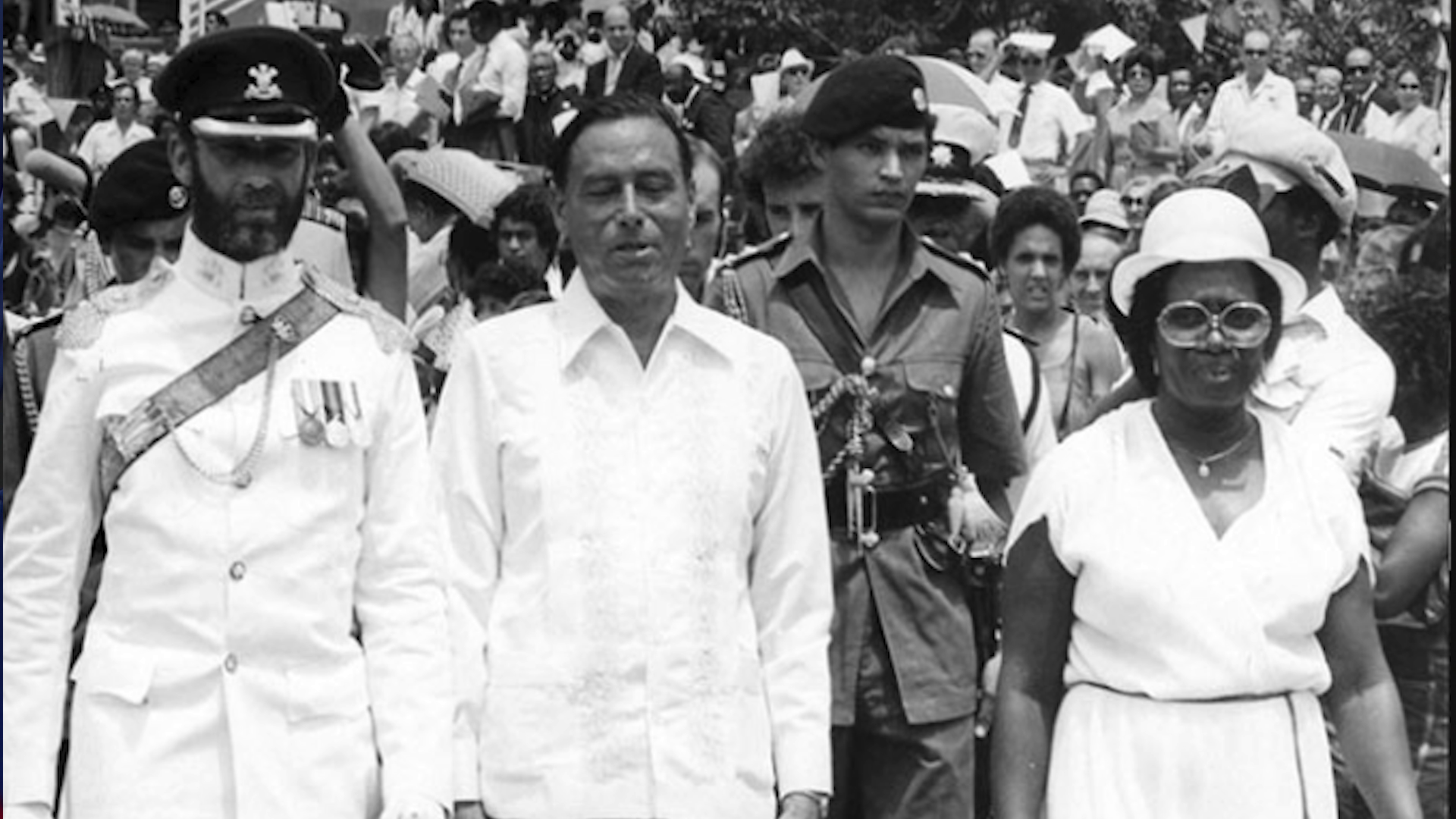
    On a quiet Saturday at Belize City’s Lord Ridge Cemetery, hundreds of Belizeans from all walks of life gathered to honor the legacy of one of the nation’s most transformative figures: the Right Honorable George Price, the architect of Belizean independence. Marking the 15th annual wreath-laying ceremony in his memory, the event drew Price’s extended family, sitting government officials, opposition leaders, and ordinary citizens, turning a routine act of remembrance into a pressing conversation about the character of modern politics.

    At a moment when partisan friction across the globe—and increasingly in Belize—has curdled into personal vitriol, speakers emphasized that Price’s career offers a timeless blueprint for public service, even as many question whether the qualities that defined him can survive today’s combative political climate.

    Clement Usher, a close relative of the late leader, used his remarks to call for a return to the ethical principles that guided Price’s decades in public life. “If we are to continue down the path of this great leader and Prime Minister, we must embed into our lives the kindness, patience, understanding, and humility that George Price lived every day—most of all, his commitment to putting service above self,” Usher said. He did not shy away from calling out modern political discourse, noting that recent exchanges on social media and in public news coverage have sunk into unkind, personal attacks between high office holders. “We can certainly agree to disagree, but we can do it the way George Cadle Price did it,” he added. “A little humility will not hurt anyone.”

    Prime Minister John Briceño offered a nuanced portrait of Price that pushed back against the misperception that his humility made him a weak or passive leader. Briceño reminded attendees that Price held national leadership for more than 40 years, a run of political longevity few modern leaders can match, and that success was not the product of easy compromise. “He did not lead for that long because he was an easy-going soft man, but because he had a core of steel,” Briceño said. “There were many political opponents who tried to stand against him over the decades who ended up on the wrong side of electoral history. You don’t last that long in office without that strength of will.” The prime minister, who has already notched 33 years of service in Belize’s National Assembly, joked that he had no plans to match Price’s four-decade tenure in the top job, drawing lighthearted agreement from the crowd.

    The ceremony also included opening remarks from Belize City Mayor Bernard Wagner, and opposition leader Tracy Panton was in attendance to pay her respects, a rare moment of cross-partisan unity for an event focused on the nation’s shared history.

    This remembrance comes as political discourse around the world grows more polarized, making the conversation sparked by Price’s legacy feel particularly timely. For many in attendance, the annual memorial is not just a chance to honor a leader who brought Belize to full independence—it is a reminder that strength of character and commitment to public good can coexist with the steel needed to lead a nation.

  • The Search Continues for Police Constable Kenyon Barrow

    The Search Continues for Police Constable Kenyon Barrow

    Two separate disappearance-related cases are drawing public scrutiny in Belize, nearly two weeks after 21-year-old police constable Kenyon Barrow went missing, and one year after the alleged abduction of Joseph Budna. Both cases have highlighted ongoing gaps in investigative transparency and sparked renewed debate over the country’s international human rights obligations.

  • Celebrations End in Gunfire: Santa Elena Man Critical

    Celebrations End in Gunfire: Santa Elena Man Critical

    A late-evening confrontation that broke out shortly after community celebrations wrapped up in Santa Elena, Cayo District has left a 27-year-old local man fighting for his life in hospital, according to local law enforcement updates shared on September 22, 2026.

    What began as a physical brawl involving 27-year-old Marco Vasquez and multiple other attendees quickly escalated into a deadly shooting after a man with a legally held firearms license stepped in to de-escalate the conflict. Assistant Superintendent of Police Stacy Smith, a staff officer with the department, outlined the preliminary findings of the ongoing investigation in a formal statement.

    Smith explained that according to initial evidence collected at the scene, Vasquez attacked the intervening licensed gun holder while armed with a machete. In response, the license holder drew his registered weapon and fired two rounds, one of which struck Vasquez. Emergency medical teams quickly transported the injured man to Western Regional Hospital, where he is currently classified as being in stable but critical condition.

    Responding officers seized the shooter’s firearm as evidence shortly after arriving at the scene, and also recovered the machete Vasquez was reported to have carried. The licensed gun holder remains in police detention as investigators assemble a full case file to submit to the Director of Public Prosecutions (DPP), whose official guidance will determine what formal charges, if any, will be filed. As of the latest update, law enforcement has not confirmed whether alcohol consumption contributed to the violent confrontation.

    This report is adapted from a transcript of an evening television news broadcast, with original Kriol language statements standardized to conventional English spelling for published distribution.