标签: Belize

伯利兹

  • Police Brace for Retaliation After Brutal San Pedro Triple Murder

    Police Brace for Retaliation After Brutal San Pedro Triple Murder

    The tranquil facade of Ambergris Caye has been shattered by a brazen triple murder that has plunged the island community of San Pedro into a state of heightened tension and fear. Authorities are now engaged in a critical race against time to prevent retaliatory violence between warring drug factions following the execution-style killings on March 20, 2026.

    The victims—identified as 29-year-old fisherman Karim Espat, 35-year-old carpenter Oscar Mas, and 21-year-old Honduran national Yerlin Alvarez—were ambushed inside a residence in the Mosquito Coast area by multiple assailants. According to police reports, three hooded gunmen approached the property through a nearby landfill around 9:30 p.m. before storming the yard and unleashing a barrage of gunfire in what investigators describe as a targeted attack.

    Assistant Commissioner Hilberto Romero, Head of the National Crime Investigation Branch, confirmed that Espat was the primary target of the assault, citing an ongoing and volatile rivalry between drug trafficking organizations operating on the island. The Espat family name has been repeatedly connected to violent incidents and gang-related investigations in San Pedro over recent years, with Karim Espat himself having faced multiple previous charges. His brother, Christian Espat, is currently remanded for a separate triple murder case.

    In response to the escalating crisis, police have implemented emergency security measures, including the deployment of additional personnel from the major crimes team and the establishment of intensified armed patrols across the island. Several suspects are already in custody as investigators work to unravel the precise circumstances surrounding the attack.

    The community remains gripped by apprehension, with residents expressing concerns about potential retaliation and further violence. Senior police commanders, including Deputy Commissioner Alden Dawson and Senior Superintendent Raymundo Reyes, have convened at the San Pedro Police Station to coordinate the security response and investigation efforts.

    This incident represents one of the most severe outbreaks of violence to affect the island in recent months, highlighting the persistent challenge of gang-related crime even in Belize’s popular tourist destinations. Authorities continue to urge calm while maintaining their heightened security presence across San Pedro.


  • Orange Walk Man, Albertito Pott, Gunned Down at Dawn

    Orange Walk Man, Albertito Pott, Gunned Down at Dawn

    The Orange Walk district was shaken by a fatal shooting incident in the early hours of March 20, 2026, resulting in the death of local resident Albertito Pott. According to official reports from the National Crime Investigation Branch, the tragedy unfolded around 7:15 AM when an unidentified assailant scaled a fence and opened fire without warning.

    Assistant Commissioner of Police Hilberto Romero, head of the investigative branch, confirmed that Pott was in a residential yard with another individual when the attack occurred. Emergency services transported the victim to hospital, where he was pronounced dead upon arrival from multiple gunshot wounds.

    Police authorities revealed that the victim had previous encounters with law enforcement. ACP Romero acknowledged that Pott had been brought in for questioning regarding a separate shooting incident several months prior to his death, though no formal charges had been filed at that time.

    Investigators are currently pursuing multiple leads in their search for the perpetrator, but details remain limited as the investigation continues. The community has expressed profound shock at the brazen nature of the daylight attack, which has raised concerns about public safety in the area.

    The incident has sparked emotional responses from family members, with Pott’s mother reportedly grieving the loss of her son in connection to what community sources suggest may be relationship-related motives.

  • Sixteen‑Year‑Old Alex Griffith Dies in Tragic Bicycle Accident

    Sixteen‑Year‑Old Alex Griffith Dies in Tragic Bicycle Accident

    A comprehensive investigation is underway following the tragic death of sixteen-year-old Alex Griffith in a cycling accident along the Phillip Goldson Highway on Thursday afternoon. The incident occurred near an active roadwork zone in Ladyville, raising significant concerns about roadway safety protocols.

    According to official reports from the National Crime Investigation Branch, Griffith was cycling when he suddenly lost control of his bicycle, falling directly into the path of an approaching Tillett’s bus. Assistant Commissioner of Police Hilberto Romero confirmed that despite immediate medical transport, Griffith was pronounced dead upon arrival at the hospital.

    Eyewitness accounts describe a mechanical failure involving the bicycle’s rear wheel suddenly swinging into the highway lane. The bus, operated by driver Jonathon Eck, reportedly made contact with the wheel before the devastating impact occurred. Emergency responders arrived promptly but could not save the young victim.

    Griffith, identified as a second-form student at Sadie Vernon High School, had not attended classes regularly for the past three months, according to school administrators. His homeroom teacher Geraldine Jones remembered him as ‘a bright child filled with potential,’ expressing profound regret that school premises might have provided safer surroundings during the accident timeframe.

    The Belize Police Department is conducting a thorough forensic examination of the accident scene and vehicle mechanics. All findings will be submitted to the Office of the Director of Public Prosecutions for formal review and potential legal determinations regarding responsibility.

    This tragedy has ignited community-wide discussions about infrastructure safety, particularly concerning cycling lanes and protection measures in construction zones. Local authorities have pledged to reevaluate current road safety implementations along high-traffic corridors.

  • Hilux Raffle Hype Fizzles Out: Fundraiser Stalls Before the Finish Line

    Hilux Raffle Hype Fizzles Out: Fundraiser Stalls Before the Finish Line

    A highly publicized charitable fundraising initiative spearheaded by the Sub Umbra Floreo Lions Club has ended in disappointment and unanswered questions. The ambitious raffle, which promised a brand-new 2026 Toyota Hilux as its grand prize, was officially canceled months after its launch, leaving ticket holders and the community seeking accountability.

    The project, initially presented as a partnership with Belize Diesel and Equipment, was designed to generate $120,000 for the club’s charitable endeavors across Belize. Priced at $100 each, a total of 1,200 tickets were made available for purchase. The drawing was originally scheduled for December 31, 2025, at a gala event but was subsequently postponed to March 7, 2026, with approval from the national Gaming and Lotteries Commission.

    Behind the optimistic public promotions, the logistical framework began to disintegrate. Internal communications reveal that despite early planning discussions and a pro forma invoice issued by Belize Diesel and Equipment on June 19, 2025, for a $70,000 vehicle, the Lions Club never finalized the purchase. A company spokesperson confirmed that no transaction was ever completed under the club’s name.

    Facing mounting public pressure, the club’s president, Indira Mejia, formally sought permission to cancel the raffle. Lewin Samuels, Secretary of the Lotteries Committee, has stated that the club has been instructed to provide a full public accounting of all tickets printed, sold, and unsold, alongside a comprehensive list of vendors. The committee has mandated that a public notice of cancellation be issued and that one hundred percent refunds be processed for all ticket purchasers within a strict thirty-day window. Samuels emphasized that such cancellations are exceptionally rare within the regulated fundraising sector.

    The abrupt termination of the fundraiser has cast a shadow over the organization’s operational credibility, prompting broader concerns about transparency and accountability in charitable fundraising practices. The Sub Umbra Floreo Lions Club now faces the critical task of rebuilding public trust while navigating the logistical and financial complexities of issuing widespread refunds.

  • Belize Gaming & Lotteries Ltd. Warns of Rising Lottery Scam

    Belize Gaming & Lotteries Ltd. Warns of Rising Lottery Scam

    The national lottery operator of Belize has issued a critical public alert regarding an escalating wave of sophisticated digital fraud schemes targeting lottery enthusiasts. Belize Gaming & Lotteries Ltd. (BGLL) confirmed on March 20, 2026, that malicious actors are deploying counterfeit social media profiles and unauthorized web pages to deceive citizens with false promises of guaranteed winning numbers for popular games including Boledo, the Ordinary, and the Jackpot Lottery.

    These fraudulent operations typically solicit upfront payments or sensitive personal information under the pretense of providing privileged access to predetermined results. BGLL officials have categorically denounced these practices as both legally impermissible and fundamentally impossible, emphasizing that lottery outcomes are entirely random and cannot be predicted through any means.

    The corporation detailed its multilayered security protocol to validate draw integrity: each ball undergoes precise weighing before and after official draws, proceedings are supervised by senior public officials alongside independent auditors, and full broadcasts are publicly accessible for transparent verification. This rigorous framework ensures absolute fairness and eliminates any potential for outcome manipulation.

    BGLL’s advisory urges citizens to exclusively purchase tickets through authorized vendors, refrain from transmitting payments or personal data to unverified entities, and immediately report suspicious approaches to law enforcement. The organization underscored that perpetrators face severe legal penalties under Belizean statutes, including criminal prosecution for lottery-related fraud.

  • Agriculture Boost as Belize Eyes El Salvador Market

    Agriculture Boost as Belize Eyes El Salvador Market

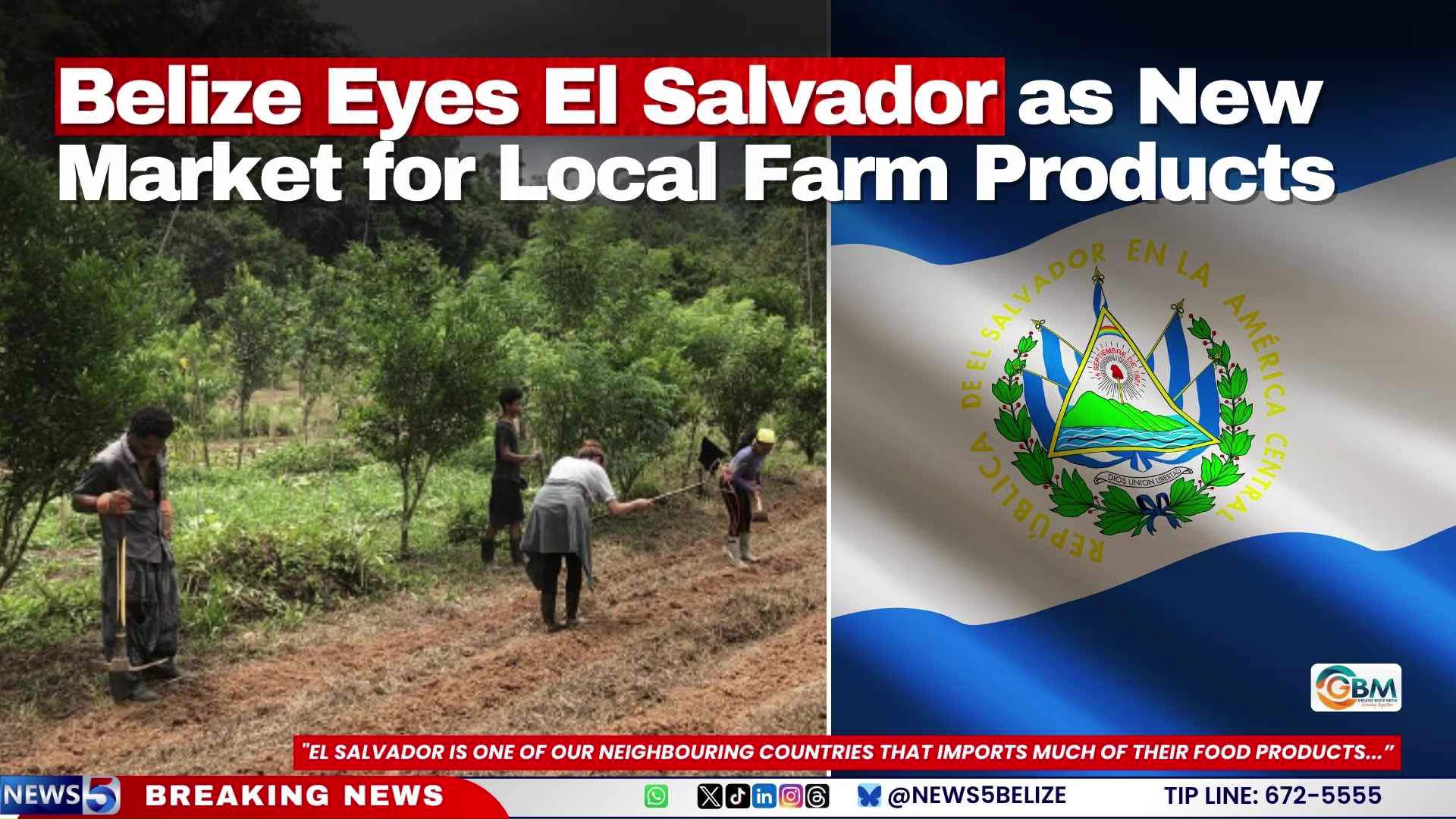
    In a significant development for regional trade integration, Belize has successfully negotiated enhanced transit arrangements through Guatemala to access the Salvadoran market. A high-level delegation led by Agriculture Minister Rodwell Ferguson convened with Guatemalan counterparts this week to establish streamlined protocols for agricultural shipments.

    The technical discussions focused specifically on creating seamless transit corridors for sealed containers carrying Belizean produce destined for El Salvador. This breakthrough represents a critical implementation phase of the forthcoming partial scope trade agreement between Belize and El Salvador, which aims to create new export channels for local producers.

    Minister Ferguson’s delegation included senior officials from the Belize Agricultural Health Authority (BAHA) and the International Regional Organization for Agricultural Health (OIRSA). The productive negotiations yielded consensus on operational frameworks for cross-border agricultural transportation, with a formal Memorandum of Understanding expected to be finalized by late April.

    This trade facilitation initiative addresses a fundamental challenge for landlocked Belizean exporters seeking access to Central American markets. Currently dependent on maritime routes, Belizean farmers stand to gain substantially from overland access to El Salvador’s substantial food import market. The agreement establishes clear parameters for eligible products and standardized phytosanitary certification processes.

    The successful negotiations mark a strategic advancement in Belize’s ongoing efforts to diversify agricultural export destinations and reduce dependency on traditional markets. Government officials characterize the agreement as a win for regional economic integration that will directly benefit agricultural communities and export-oriented businesses throughout Belize.

  • Young Women Leaders Push for Gender Equality

    Young Women Leaders Push for Gender Equality

    A transformative movement is gaining momentum in Belize as a new generation of female leaders emerges to challenge gender disparities in governance. The Caribbean Women in Leadership (CWIL) initiative recently concluded an intensive two-day workshop specifically designed to equip young Belizean women with essential tools for political engagement and decision-making roles.

    The program represents a strategic regional effort to address the persistent underrepresentation of women in Caribbean politics. Through comprehensive training modules, participants engaged in transformative leadership development, gender equality advocacy, and practical political skill-building. The curriculum incorporated feminist theory, advocacy techniques, and real-world problem-solving methodologies.

    Kathy Jones, Belize Chair of CWIL, emphasized the organization’s mission: “Our primary objective centers on developing transformational leadership among young women, particularly those interested in political life. While we acknowledge trailblazers like Honorable Mia Motley and local representatives including Honorable Tracy Panton and Honorable Valerie Woods, significant representation gaps persist across governmental structures.”

    The workshop culminated in a simulated parliamentary session where participants debated gender equality motions, providing practical experience in legislative processes. This mock assembly served as both training exercise and symbolic precursor to potential future policy initiatives.

    Nana Hesse-Bayne, President of CWIL’s Board of Directors, highlighted the program’s regional context: “Since 2018, we’ve implemented this leadership development model across seven Caribbean nations. Belize represents our newest chapter, building on proven methodologies that combine theoretical frameworks with practical application.”

    The initiative forms part of broader regional efforts to strengthen women’s participation in governance structures. Organizers anticipate that these capacity-building investments will eventually translate into increased female representation in Belize’s House of Representatives and other decision-making bodies, potentially influencing gender policy formulation in the future.

  • Nation Unites to Stand Against Child Abuse with Blue Teddy

    Nation Unites to Stand Against Child Abuse with Blue Teddy

    BELIZE CITY, BELIZE – A powerful new national initiative against child abuse launched today as government agencies and international partners unveiled the symbolic Blue Teddy Bear Campaign. The National Commission for Families and Children (NCFC), in collaboration with UNICEF and Belize’s Ministry of Human Development, introduced the distinctive blue teddy bear bearing a band-aid as an emblem of comfort, healing, and protection for vulnerable children.

    The campaign represents a strategic shift from previous awareness efforts, moving beyond recognition toward concrete action against Belize’s persistent child abuse crisis. The initiative specifically targets the urgent need for early detection, intervention, and reporting mechanisms across all sectors of society.

    Executive Director Shakira Sutherland of NCFC emphasized the comprehensive nature of the effort: “This campaign advocates for prevention of child abuse in all its forms – sexual violence, physical violence, and general violence against Belizean children. We require support from the entire community ecosystem: government ministries, education and health sectors, law enforcement, private enterprises, and most importantly, families and neighborhoods.”

    The campaign will initially deploy in Southside Belize City, identified as an area with particularly vulnerable child populations. Organizers plan to directly engage over 800 community members through schools, local organizations, businesses, and household visits. The program aims to achieve measurable outcomes including increased reporting of suspected abuse, enhanced violence identification skills, improved knowledge of support resources, and strengthened community advocacy networks.

    Maria Contreras, Chairperson of NCFC, underscored the universal responsibility: “Child protection constitutes everyone’s business – in homes, schools, and every space children inhabit. We must empower children to recognize safety concerns and understand that their voices matter. When they report issues, they must be heard.”

    Success ultimately depends on creating an environment where children feel secure speaking out, confident that their disclosures will trigger appropriate responses and that the national child protection system will respond effectively.

  • Backing the Defenders of Belize’s Natural Heritage

    Backing the Defenders of Belize’s Natural Heritage

    In a landmark celebration of environmental stewardship, the Belize Nature Conservation Foundation (BNCF) has awarded substantial funding to two frontline conservation organizations during its eighteenth annual awards ceremony. The event, held recently in Bermudian Landing, highlighted Belize’s innovative approach to sustainable conservation financing that has endured for over a quarter-century.

    The Community Baboon Sanctuary Women’s Conservation Group and Friends for Conservation and Development (FCD) each received $50,000 grants to intensify their protective measures. The Baboon Sanctuary group will allocate resources toward enhanced environmental education programs targeting youth engagement through practical training and outdoor learning experiences. Simultaneously, FCD will deploy its funding to strengthen surveillance operations within the vulnerable Chiquibul Cave System, equipping specialized units to combat illegal activities threatening this ecological treasure.

    BNCF Chair Edilberto Romero emphasized the historic significance of the foundation’s enduring financial model, noting: ‘After twenty-five years, we still have resources available for grants due to our unique debt-for-nature swap design. Unlike similar initiatives in Latin America that exhausted their funds within a decade, our endowment approach has created lasting impact.’

    The ceremony underscored Belize’s collaborative conservation framework, with both recipient organizations working in coordination with national institutions including the Protected Areas Conservation Trust, the National Biodiversity Office, and the Institute of Archaeology, which holds jurisdiction over the nation’s cave systems.

    Jessie Young of the Community Baboon Sanctuary articulated their mission to ‘inspire behavioral change and cultivate a new generation of conservation leaders,’ while FCD Executive Director Rafael Manzanero emphasized the critical need for ‘ranger presence, equipment, and specialized training’ to protect Belize’s natural heritage effectively.

  • The Financial Power of Chinese-Owned Grocery Stores in Belize

    The Financial Power of Chinese-Owned Grocery Stores in Belize

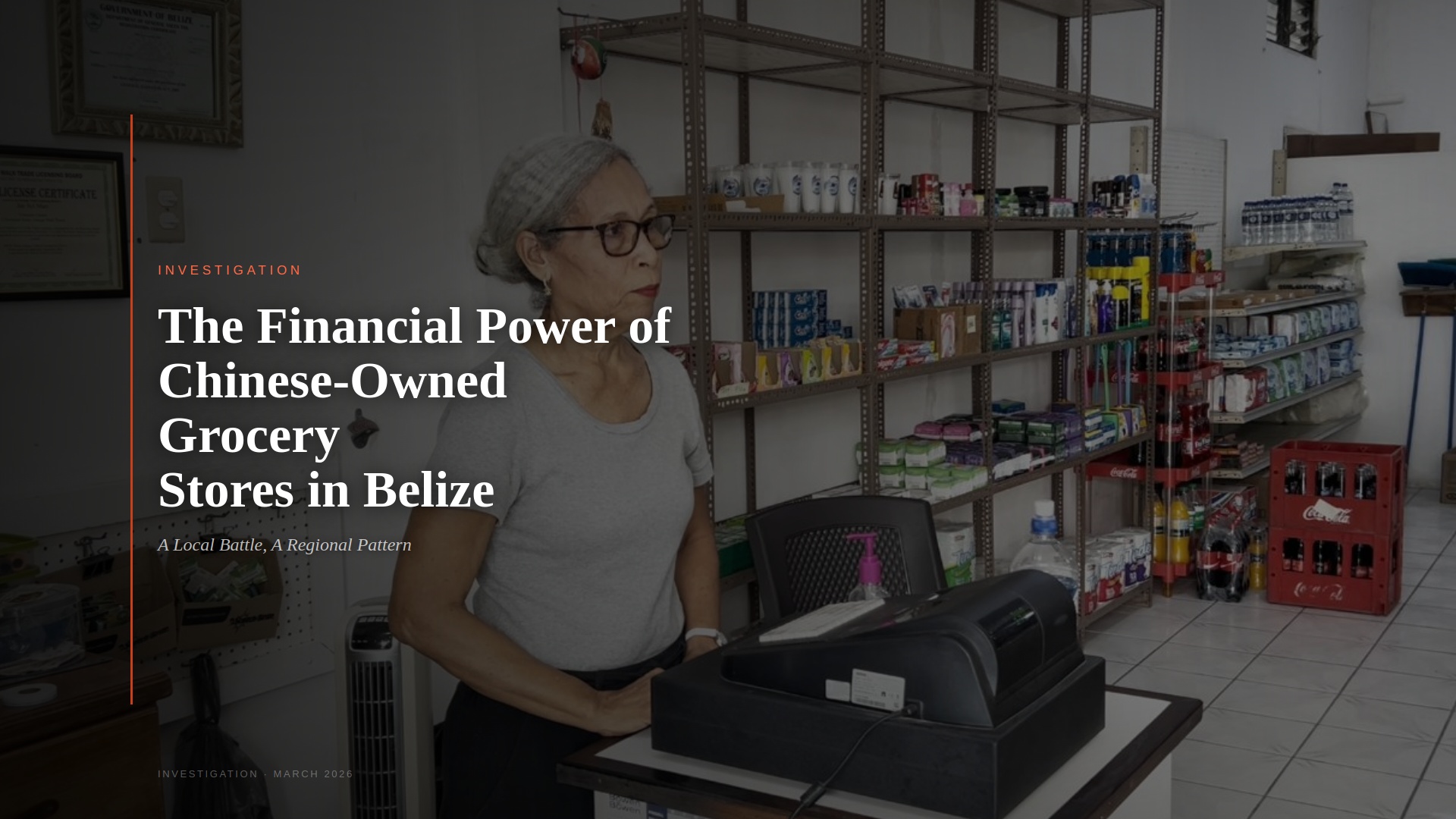
    A profound transformation is underway in Belize’s retail grocery sector, where Chinese-owned supermarkets have established competitive dominance through radical cost control measures and informal financial networks. This shift has created intense pressure on traditional neighborhood stores that have long operated on personal relationships and community trust.

    In Orange Walk Town, 67-year-old Consuelo Catzim represents the struggling traditional model. Her store, Jansyl Mart, has served the community since 1999, operating on personal knowledge of customers and occasional credit extensions. “I started this because I had to survive,” Catzim recalls, having invested her retirement payout to support her children. Despite building deep community connections, her sales dropped sharply as customers migrated to Chinese-owned stores offering lower prices.

    The competitive gap stems from fundamentally different business models. A 2015 University of Belize study of 60 Chinese businesses revealed extraordinary operational discipline: 56.7% operate 12+ hours daily, 53.3% work all seven days weekly, and 58.3% maintain monthly expenses below BZD $9,000 despite 30% reporting monthly sales exceeding $50,000. Startup capital primarily came from family networks (45%) rather than bank loans (5%).

    This financial advantage is compounded by supply chain dynamics. Small retailers like Catzim pay significantly higher wholesale prices—sometimes $3 more per case than bulk buyers—forcing them to charge retail prices that cannot compete. “That five cents is what kills us,” Catzim explains, referencing the marginal price differences that determine shopping decisions.

    New enforcement data reveals additional competitive distortions. Belize’s Supplies Control Unit documented 136 establishments violating price control regulations for essential goods like rice, bread, and cooking oil. Violations included failure to display prices and selling above mandated maximums, with Chinese-owned stores disproportionately represented on violation lists.

    The expansion is fueled by sophisticated informal financing systems documented by University of Calgary researchers. Chinese entrepreneurs typically access capital through family networks, rotating credit associations, and overseas remittances rather than formal banking. This allows rapid deployment of capital despite higher effective interest rates.

    Dr. Osmond Martinez, Minister of State in Economic Transformation, views the competition as educational: “The reason why they have survived is because they have managed to capitalize on the finance that they have, the finance mechanism, and the network that they do have.” He encourages Belizean entrepreneurs to adopt similar collaborative approaches.

    The pattern extends beyond Belize. Nicaragua experienced an influx of 400 Chinese retail businesses following its 2024 Free Trade Agreement with China, while Guyana has seen similar market transformations. This regional trend highlights how informal entrepreneurial networks can reshape entire retail sectors through disciplined cost control and alternative financing mechanisms.

    As traditional shops decline—Orange Walk saw 27% closure in five years—the question remains whether Belize can preserve the community-oriented commerce represented by operators like Catzim while adapting to new competitive realities.