标签: Barbados

巴巴多斯

  • Police seek missing elderly St John man

    Police seek missing elderly St John man

    Law enforcement officials in Barbados are turning to the public for urgent help to locate an elderly man who has been missing for weeks. 85-year-old Joseph Brathwaite, who also goes by the aliases ‘Norman’ and ‘Nou’, was last spotted by members of the public on 1 April 2026 in his home neighborhood of Gill Land, Eastmont, St John.

    Brathwaite lives with two critical health conditions that put him at heightened risk of harm while unaccounted for: he is completely blind in his left eye and lives with dementia, a condition that can impair his ability to navigate unfamiliar areas or recall his personal details. Investigators have released a detailed physical description to help community members identify him: he stands roughly five feet six inches tall, has a slim build and dark complexion, with distinct features including large sunken eyes, a broad bulbous nose, thin lips, oversized ears and sagging cheek tissue. He speaks with a distinct Barbadian accent, has a naturally abrupt communication style and a deep speaking voice.

    When he was last seen, Brathwaite was wearing a simple green crewneck T-shirt and black three-quarter length pants, and he was not wearing any footwear. Police confirmed he is known to regularly travel between two St. John areas: Small Town and his home neighborhood of Gill Land, so search efforts are currently focused on these regions.

    Authorities are urging anyone who may have spotted Brathwaite since 1 April, or anyone who holds any information about his current location, to reach out to investigators immediately. Tips can be submitted directly to District ‘C’ Police Station via the phone lines 416-8200 or 416-8204, to the national police emergency hotline at 211, to the anonymous Crime Stoppers tip line at 1-800-TIPS (8477), or in person at any local police station across the country.
  • BRA tax clinics begin this weekend

    BRA tax clinics begin this weekend

    As the annual personal income tax filing peak period approaches, the Barbados Revenue Authority (BRA) is rolling out a widespread network of free in-person Tax Clinics starting April 4, designed to cut through confusion and help taxpayers complete their submissions correctly and on schedule.

    The first wave of assistance will open to the public this Saturday at two convenient central locations: Queen’s Park Steel Shed and the Rice’s Resource Centre. To expand access to residents across the island, additional clinic sites will be activated on every following Saturday through the end of April. These include the Valley Resource Centre, BRA’s existing offices at Holetown and Warrens Towers II, and a one-off clinic at the Briar Hall Resource Centre on the final Saturday of the month.

    All Saturday clinics will run from 9 a.m. to 3 p.m. local time across all participating locations, with one exception: the Queen’s Park Steel Shed location will close early at 1 p.m. on April 25. To accommodate taxpayers who cannot attend weekend sessions due to work or other commitments, BRA has added extended weekday clinics at Queen’s Park Steel Shed running from April 20 to 30. These weekday sessions also operate from 9 a.m. to 3 p.m., and will be closed on official bank holidays.

    Unlike general inquiry services, these targeted clinics are tailored to address two key needs for Barbadian residents: assistance filing 2024 Personal Income Tax returns, and support for residents applying for the Reverse Tax Credit. Every clinic will be staffed by fully trained BRA officers, who are prepared to walk attendees through step-by-step filing processes, clarify confusing regulatory requirements, answer individual questions, and resolve common filing errors before submissions are finalized.

    BRA officials are urging all taxpayers who have not yet completed their returns, or who have questions about the Reverse Tax Credit program, to take advantage of the free service well in advance of the filing deadline. The authority noted that accessing early support helps avoid the rushed, last-minute mistakes that often lead to processing delays or penalties, and ensures that eligible residents receive any applicable credits without unnecessary hold-ups.

    To make the most of their clinic visit, BRA advises all attendees to come prepared with two critical items: all relevant supporting financial documents for the tax year, and a valid form of government-issued photo identification. Up-to-date information on location changes, additional clinic dates, and program details is posted continuously on the official BRA website, which can be accessed at www.bra.gov.bb.

  • Teen granted bail on robbery, wounding charges

    Teen granted bail on robbery, wounding charges

    A teenage defendant has been released on $5,000 bail after facing two serious criminal charges before a Barbadian magistrate earlier this week.

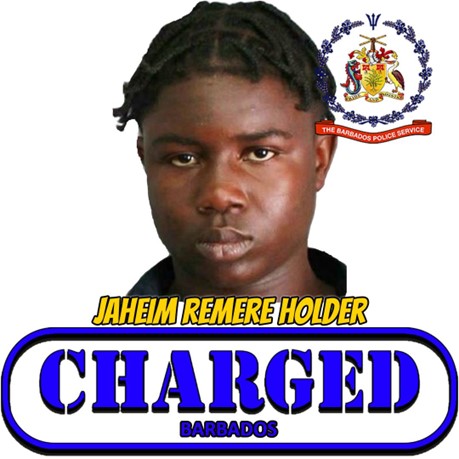
    Sixteen-year-old Jaheim Remere Holder, a resident of Licorish Village in the My Lords Hill neighborhood of St Michael, made his first court appearance on Thursday before Magistrate Alison Burke at the District ‘A’ Traffic Court. As the charges against Holder are classified as indictable offences under local law, the defendant was not required to enter a formal plea during this initial hearing.

    The charges stem from a reported violent incident that took place on March 27, in which 52-year-old Oberon Padmore was allegedly the victim of the robbery and intentional wounding. Following the brief proceeding, Magistrate Burke granted Holder bail set at $5,000, and scheduled the next hearing in the case for June 18, 2026, to allow for further investigative and procedural preparations. The matter remains ongoing as the legal process moves forward.

  • interCaribbean Airways, Air Canada launch interline agreement

    interCaribbean Airways, Air Canada launch interline agreement

    In a strategic move that will reshape travel connectivity between the Caribbean and North America, interCaribbean Airways unveiled a new interline partnership with Canada’s flag carrier Air Canada this Friday. The collaboration centers on streamlining travel through two key Caribbean hub points: Barbados and Antigua, forging stronger transportation ties between the two regions.

    What this agreement delivers is a marked expansion of travel choices for passengers moving between the Caribbean basin and Air Canada’s far-reaching global and North American route network. For travelers heading to or from the Caribbean, the new arrangement allows them to book an entire connecting journey on a single ticket, granting seamless access both to interCaribbean Airways’ comprehensive route coverage across the Caribbean islands and Air Canada’s services connecting through major Canadian hubs including Toronto and Montreal to hundreds of destinations worldwide. Ticket reservations for these combined routes opened immediately when the agreement was announced, while one of the most passenger-friendly amenities — through baggage check-in for the entire journey — is scheduled to roll out to customers within the coming weeks.

    Beyond improving travel convenience for leisure and business visitors, the partnership directly answers the longstanding needs of Canada’s large, vibrant Caribbean diaspora, which is heavily concentrated in the Toronto and Montreal metropolitan areas. By offering more flexible and streamlined routing options, the agreement makes it easier for community members to travel between their Canadian homes and family connections across the Caribbean. At the same time, it opens up simpler access for Canadian leisure travelers seeking to explore the dozens of island destinations that make up the Caribbean, one of the world’s top vacation hotspots for North American travelers. Both airlines have emphasized that the new interline agreement embodies their shared commitment to expanding customer-centric connectivity and maintaining high standards of service for all passengers traveling between the Caribbean and Canada.

  • Good Friday message of faith and renewal

    Good Friday message of faith and renewal

    Across the Caribbean island of Barbados, crowds of faithful worshippers filled local churches on Good Friday, coming together in quiet solemnity to mark one of Christianity’s most sacred observances. While the day centers on reflection on the crucifixion of Jesus Christ, messages of persistent hope and radical new beginnings echoed through sanctuary halls, uniting congregants in shared faith.

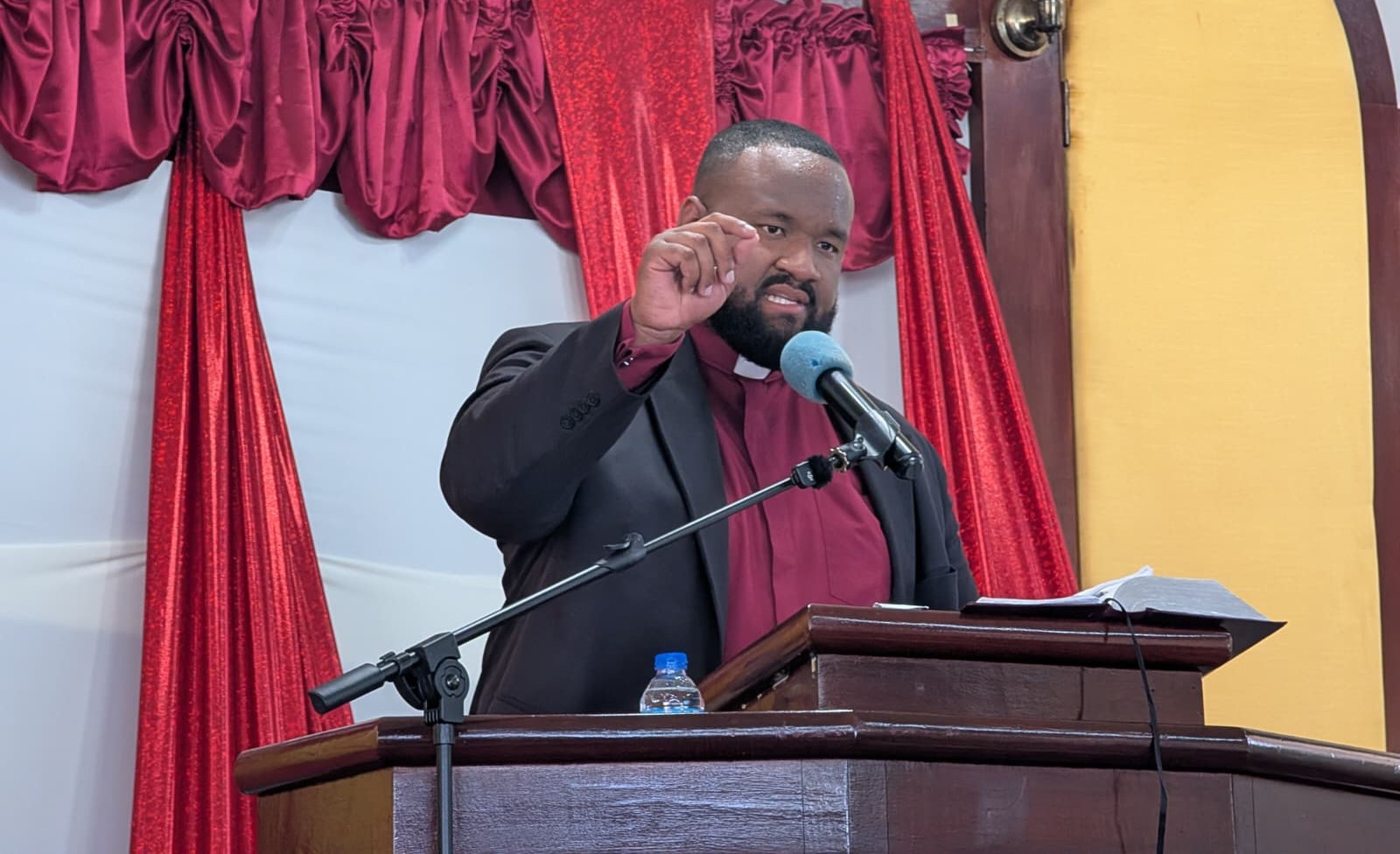
    At the historic Ann Gill Memorial Methodist Church, the air hung thick with contemplation, broken only by the soft strains of traditional hymns and the gentle cadence of collective prayer. Leading the service was Reverend Nicholas Chambers, whose sermon wove personal struggle, core Christian theology, and timeless encouragement into a cohesive message centered on perseverance, unshakable faith, and the promise of renewal that emerges even from life’s darkest chapters.

    Chambers opened his address by inviting every member of the congregation to turn inward, reflecting on their own personal battles and the universal human longing to bring seasons of hardship to a close. Grounding his teaching in these relatable, everyday experiences, he drew a striking parallel between modern struggles and the original events of Good Friday. He reminded those gathered that for Jesus’ disciples, his mother Mary, and the entire early community of followers, the crucifixion did not read as a sacred turning point—it looked like the final end of every hope they had held.

    “My dear friends, in life, all things come to an end, and for us today, as we celebrate Good Friday, for the disciples, Jesus’ mother, and for the nation of Israel, they thought that every good thing that they believed in came to an end,” Chambers told the assembled congregation.

    Yet the reverend emphasized that what appeared to be a final, crushing defeat was actually the starting line for something far greater than the community could have imagined. “But my dear brothers and sisters, even though they saw their master on a cross, even though they saw him and his body laid in a tomb, even though he himself said that it was finished, I want to submit to you that it was not finished simply in that moment. But it was finished to begin something new,” he said.

    Chambers challenged worshippers to carry this same perspective into their own daily lives, especially when navigating uncertainty, overwhelming hardship, or crippling despair. He explained that moments that feel like total endings often act as unrecognized turning points, paving the way for profound personal growth, deep transformation, and eventual victory over struggle.

    Drawing on the interconnected significance of Jesus’ crucifixion and resurrection, Chambers reminded attendees that the Good Friday story does not reach its conclusion at the cross. Instead, it extends forward through the promise of renewal and ultimate triumph over hardship. “I believe for us today as we celebrate Jesus’ death and his resurrection, and as we may be facing hopelessness and fear, we might be wondering, when will it be finished?” he said. “I want to submit to you that [in] life…that finish leads to victory.”

    He further encouraged believers to draw strength from Christ’s own journey of suffering and resurrection, noting that Jesus personally understands the full depth of human struggle and pain. “As we look at Jesus’ life and as we reflect on what he went through, we will have hope instead of hopelessness and courage instead of fear… because Jesus understands what it means to be at the end of the road,” Chambers said.

  • BESCO disputes union claim for Portvale factory

    BESCO disputes union claim for Portvale factory

    A bitter industrial dispute at Barbados’ only operational sugar manufacturing facility has deepened, with operator Barbados Energy and Sugar Company Inc. (BESCO) publicly rejecting the Unity Workers’ Union’s (UWU) core demand that the Portvale Sugar Factory be legally classified as a retail shop. In a paid public notice released Tuesday, the cooperative slammed the UWU’s classification argument as legally baseless, warning that forcing the change would saddle the already fragile sugar operation with untenable financial costs.

    The UWU, headed by organizer Caswell Franklyn, has pushed for Portvale to be brought under the nation’s labor legislation governing retail stores and shops, a change that would alter how overtime and working hours are calculated for factory staff. But BESCO pushed back against this framing, noting that independent industrial relations experts who reviewed the applicable law have concluded the union’s interpretation is incorrect. The company emphasized that Portvale is fundamentally an industrial manufacturing facility, not a retail outlet, and its current shift scheduling already adheres to all relevant health, safety, and industrial workplace regulations.

    This public clash comes amid months of simmering tensions between BESCO management and the UWU, centered on two core points: union recognition and working condition standards. The dispute has already spilled over into industrial action, with a multi-day work stoppage earlier this month grinding sugarcane harvesting to a halt across the entire island, disrupting operations for Barbados’ last working sugar mill.

    The root of the recognition conflict lies in competing claims: the UWU asserts it represents a majority of Portvale’s workforce, with more than 50 workers registered to the union, but BESCO disputes this count, putting the UWU’s membership at just 38. The operator already recognizes the Barbados Workers’ Union (BWU) as the official bargaining agent for employees, a status the UWU is actively challenging.

    Beyond recognition, the UWU has raised alarms about the facility’s current shift system and working hour structure, arguing the arrangements violate national labor standards. BESCO has pushed back against these claims, noting that the current shift framework was agreed upon in existing employment contracts, and includes structured premium compensation for non-standard working hours. Under the current system, workers earn a 15% shift premium added to their base hourly rate for shifts within a standard 40-hour work week, rising to 25% extra for weekend work that falls within an additional 16 hours of scheduled labor. Any time worked beyond a 56-hour weekly total is compensated at 1.5 times the regular base rate, the company confirmed.

    BESCO also provided context for the current employment structure, noting that many current Portvale workers were rehired after the sugar industry underwent restructuring and privatization, which included substantial severance packages for workers exiting the sector at that time. The new employment terms, including the shift and pay system, were put in place when these workers were brought back on staff, the company added.

    On the financial impact of the UWU’s demands, BESCO warned that reclassifying the factory as a retail shop to meet the union’s overtime restructuring demands would create unsustainable cost pressures that threaten the facility’s long-term viability. The company called the UWU’s overall demands “excessive, and financially unsustainable” for the business.

    Despite the ongoing standoff and public disagreement, BESCO struck a conciliatory final note, affirming that it remains committed to good-faith negotiations. The company stated it is still “ready to meet in good faith with the duly recognised bargaining agent and all relevant parties” to resolve the conflict. In a closing appeal, BESCO called on all stakeholders to center discussions on solutions that “protect workers’ livelihoods and the long-term future of sugar manufacturing in Barbados.”

  • Child health system assessed six years after $20m boost

    Child health system assessed six years after $20m boost

    On Monday evening, stakeholders from across Barbados and the global health community converged to celebrate and evaluate six years of groundbreaking work at the Shaw Centre for Paediatric Excellence, a landmark initiative that is positioning the small Caribbean nation as a regional trailblazer in child healthcare.

    Founded in 2019, the centre grew out of a transformative $10 million philanthropic donation from the Canada-based LesLois Shaw Foundation, with hands-on implementation support from Toronto’s world-leading SickKids hospital. Local partners including Barbados’ Ministry of Health, the Queen Elizabeth Hospital, and the University of the West Indies joined the collaboration to build a locally rooted paediatric care model from the ground up.

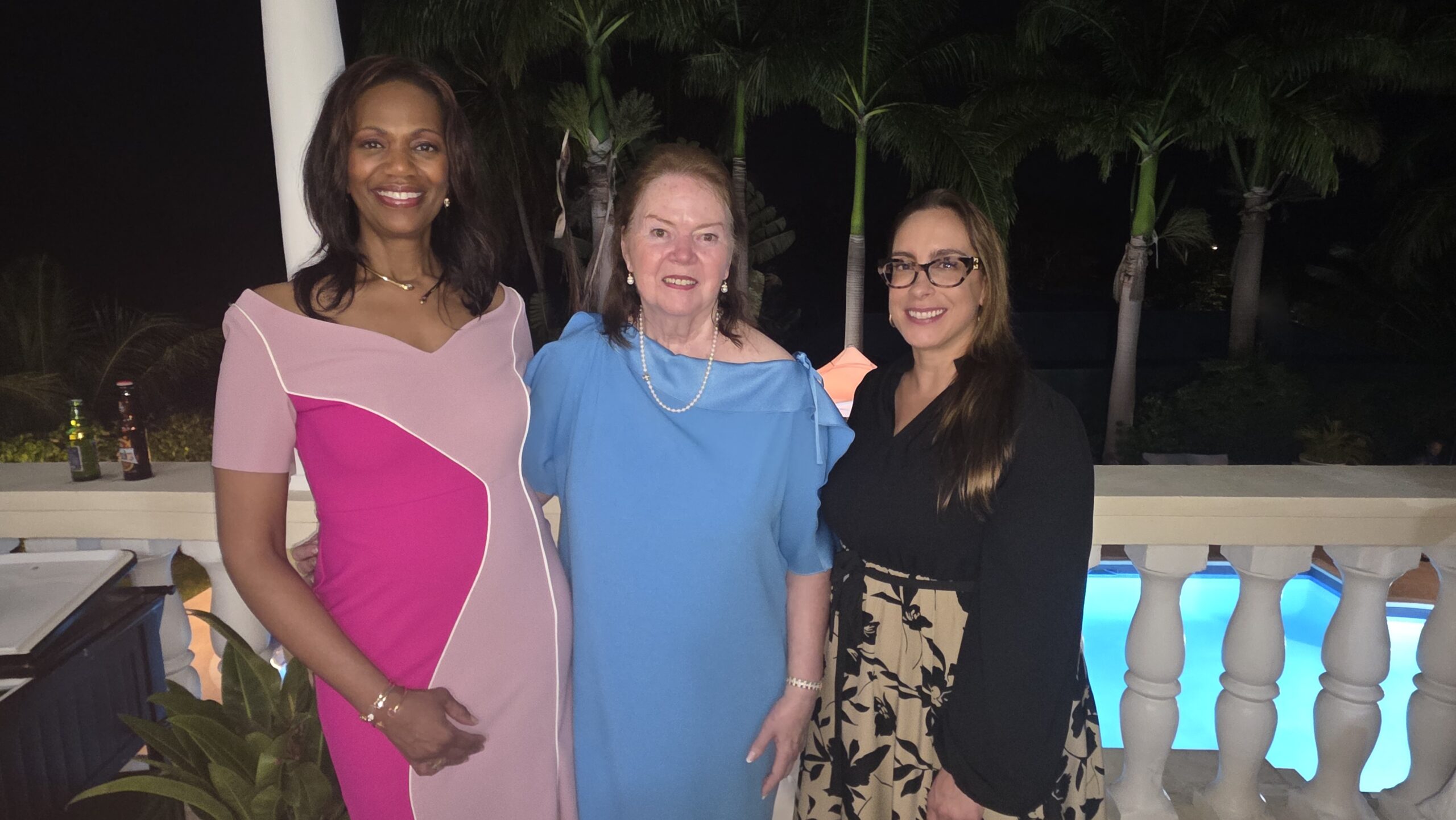
    At the commemorative reception hosted at the Canadian High Commissioner’s Holetown residence, Jennifer Bernard, President and CEO of the SickKids Foundation, outlined the far-reaching progress the partnership has delivered to date. Fifty nurses have completed specialized training in high-demand paediatric care fields, core clinical infrastructure at the Queen Elizabeth Hospital has undergone comprehensive upgrades, and cutting-edge specialized medical equipment has been rolled out to raise the standard of care across the island. A key priority has been shifting care toward proactive intervention, exemplified by a three-year newborn screening pilot program that is laying the groundwork for earlier detection and treatment of childhood health conditions.

    Bernard emphasized that the centre’s success defies assumptions about the capacity of small island states to deliver systemic public health change. “If we know we can do it in the West Indies, we can do it anywhere,” she noted, adding that the centre’s integrated cross-sector model – which unites government, academic institutions, and frontline healthcare providers – serves as a replicable blueprint for low- and middle-income countries working to strengthen their own child health systems.

    Dr. Clyde Cave, programme director of the Shaw Centre, explained that the initiative represents a fundamental paradigm shift from the traditional reactive model of healthcare delivery to a coordinated, prevention-focused framework. The programme adopts a life-course approach to child wellbeing, extending care from the pre-natal period all the way through adolescence, while addressing long-standing gaps in service access for young people. It has also grown local paediatric expertise: the number of home-grown specialized paediatric nurses has expanded significantly, and new clinical specializations including neonatology, adolescent gynaecology, and paediatric psychiatry have been established locally, eliminating the need for many families to seek costly care abroad.

    Research has also been a core pillar of the centre’s work. The Barbados Childhood Nutrition Study, the centre’s flagship research project, has established the first robust national baseline for childhood obesity rates, providing critical data that has shaped national public health policy, particularly the government’s school nutrition programme.

    Virginia Shaw, director of the LesLois Shaw Foundation, shared that the foundation’s involvement has always centered on delivering measurable impact rather than public recognition. She even revealed that she initially pushed back against the decision to name the centre after her family. A self-described “Bajan Canadian”, Shaw has deep personal ties to the island, noting that her parents were once patients at the Queen Elizabeth Hospital. She thanked the full network of partners and frontline staff for their work, stressing that progress has only been possible through collective collaboration and that the initiative’s work to improve child health outcomes remains an ongoing commitment.

    While celebrating six years of achievement, stakeholders also acknowledged the persistent challenges that lie ahead. Key among these is the need to build stronger, more robust systems to measure long-term programme impact and drive systemic cultural change within Barbados’ broader healthcare system, a priority the centre will continue to focus on in coming years.

  • High hopes as first athletes depart for CARIFTA

    High hopes as first athletes depart for CARIFTA

    As one of the most anticipated regional track and field competitions on the Caribbean sports calendar approaches, Barbados’ delegation to the 2024 CARIFTA Games has kicked off its journey to host nation Grenada, with athletes and coaching staff carrying strong morale and quiet confidence into the April 3-6 tournament.

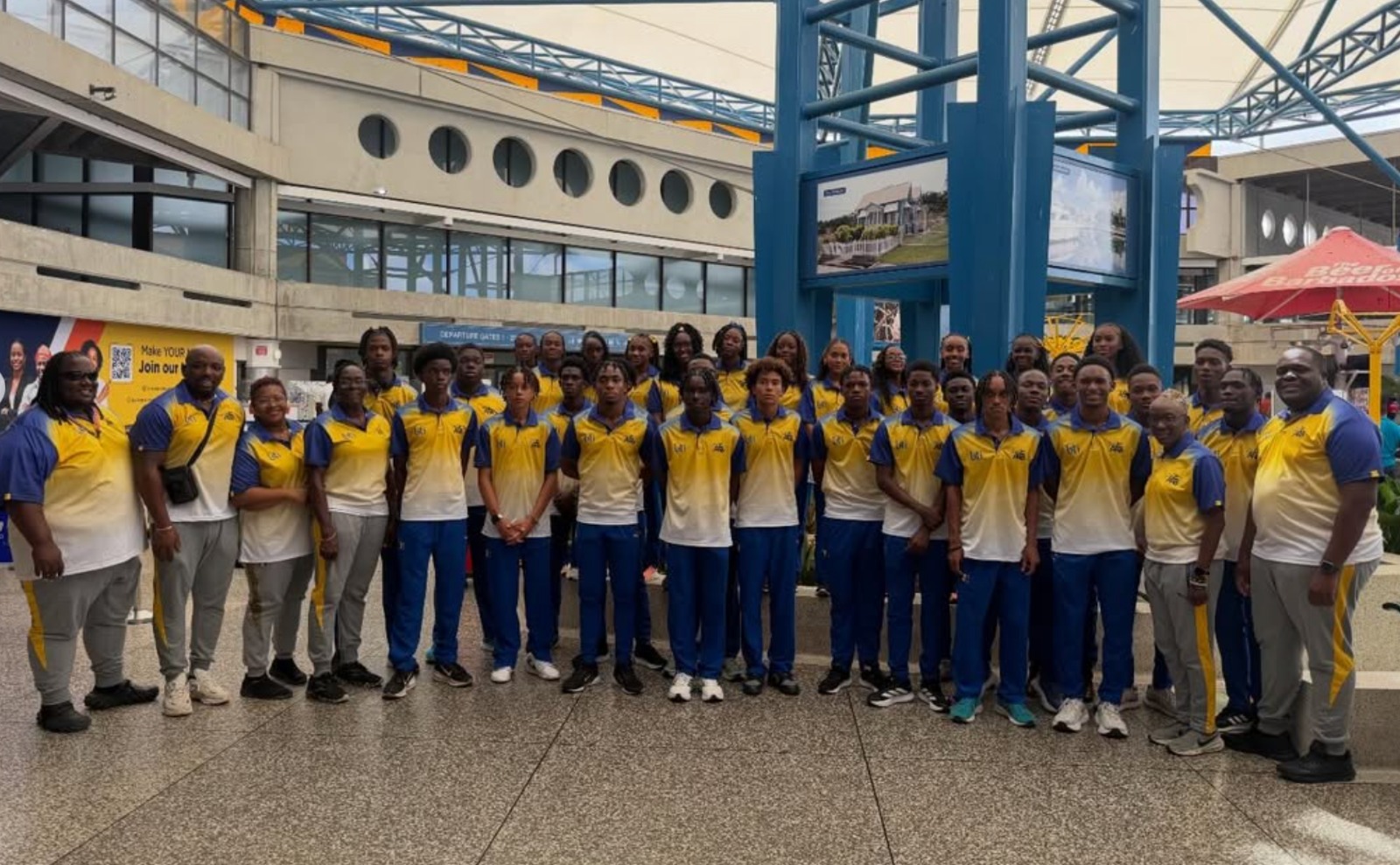
    Team manager Angela Jackson shared updates on the squad’s preparations and mindset with local outlet Barbados TODAY on departure day at Grantley Adams International Airport. The first contingent, made up of 42 competing athletes, departed Barbados on the scheduled timeline, while the remaining 18 team members are scheduled to arrive in Grenada within 24 hours to join the group. Jackson was among the officials accompanying the first batch, alongside co-manager Duante Harvey, Athletics Association of Barbados president Noel Lynch and multiple lead coaches. First-time and returning competitors alike completed their pre-departure check-in procedures, with many first-time athletes accompanied by family members as they prepared for the biggest regional meet of their young careers so far.

    Jackson emphasized that the entire squad is brimming with excitement to compete on the Grenada track, describing the overall team mood as consistently positive heading into the championships. “The mood is very good. The athletes are all excited and looking forward to arriving in Grenada and giving of their very best,” she noted.

    When asked about potential medal expectations for the Barbados team, Jackson declined to make any concrete predictions on the team’s final medal haul, but highlighted that the 2024 delegation has strong, well-balanced depth across events, particularly in the Under-20 division. Instead of focusing on pre-set medal targets, the coaching and management staff’s core goal is to encourage every athlete to perform to the best of their personal ability. “I can agree that the team is very strong in certain areas, and all that we can do is to expect them to give of their best. Of course, I am not going to touch on any medals prediction whatsoever. We are just encouraging each and everyone on the team to give of their best and once that is done we will be quite satisfied,” Jackson explained.

    She also reflected on the team’s preparation cycle, noting that the build-up to CARIFTA was largely smooth, despite facing minor time constraints caused by the tight gap between the Barbados Secondary Schools Athletics Championships (BSSAC) and this year’s regional tournament. Due to the compressed timeline, the team was only able to host one mandatory pre-competition workshop focused on anti-doping education, a critical session given that nearly a third of the squad are first-time CARIFTA competitors. Coaching staff have been working closely with these rookie athletes to help them adjust to the higher stakes of regional competition and get into the right competitive frame of mind before the opening event.

    Beyond the official delegation, dozens of parents, friends and local sports supporters were present at the airport to send off the team, with many of these well-wishers also planning to travel to Grenada in the coming days to cheer on the Barbados squad throughout the four-day championships.

  • Landmark housing bill to make tenants homeowners

    Landmark housing bill to make tenants homeowners

    On Tuesday, the Mia Mottley-led administration of Barbados enacted historic housing legislation that is poised to help thousands of low-income and working-class residents become first-time property owners, a step leaders frame as a radical intervention to break the crippling cycle of intergenerational poverty across the island nation.

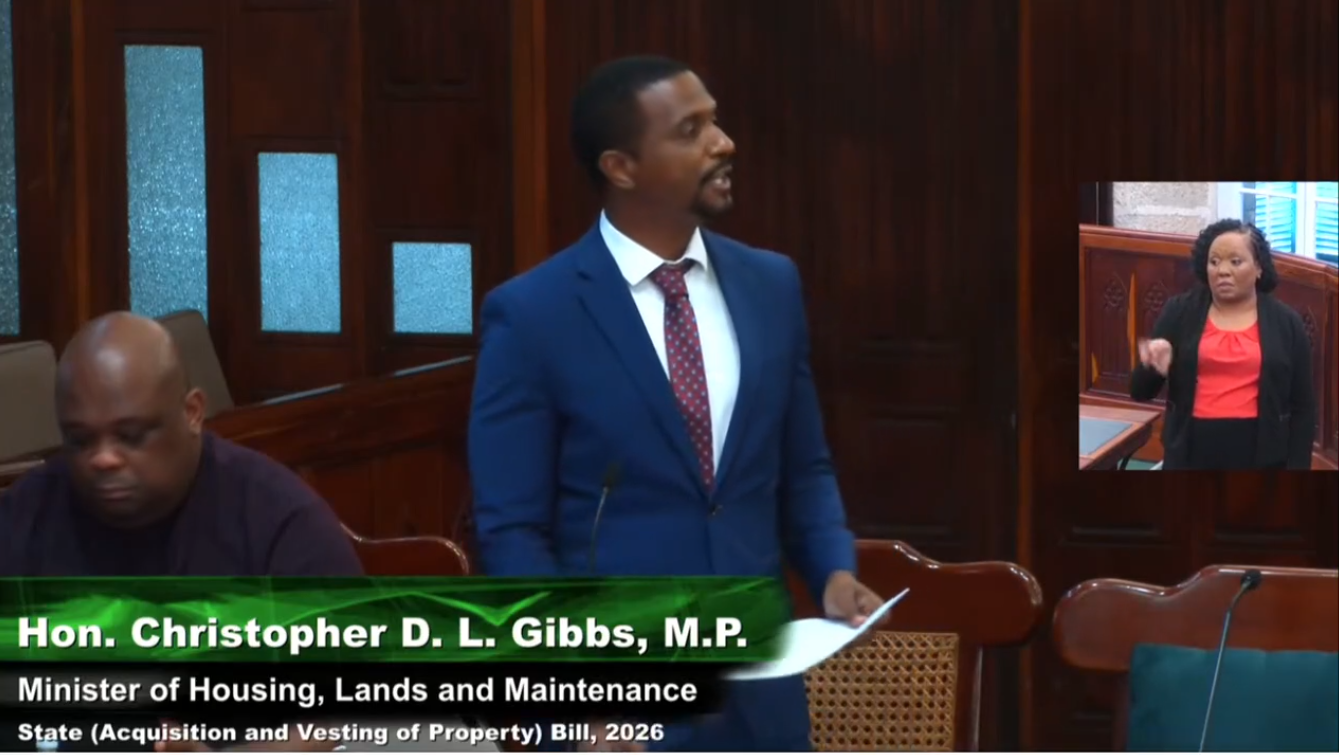
    Titled the State Acquisition and Vesting of Property Bill, the new law cuts through decades of bureaucratic gridlock to fast-track ownership transfers for thousands of long-term tenants occupying units managed by Barbados’ National Housing Corporation (NHC). Speaking during parliamentary debate in the House of Assembly, Minister of Housing Chris Gibbs positioned the bill as an overdue act of justice for residents who have met their financial obligations to the state over decades of tenancy.

    Gibbs recalled that a 2013 law already set out a framework to transfer ownership of terrace housing units to eligible tenants, but the process has been glacial at best. Over the past 11 years, only 500 of the nearly 4,000 qualifying properties have been successfully transferred. The backlog stems from exorbitant legal fees and administrative bottlenecks that require case-by-case approval, a process that can take years to complete. “This bill changes that decisively,” Gibbs stated. “It leverages constitutional authority to transfer ownership directly, eliminate administrative roadblocks, and deliver the property title that residents have already earned. The state takes formal possession of the land and immediately vests it in qualifying tenants. No endless delays, no stacks of complicated paperwork.”

    The housing minister stressed the legislation is not a political giveaway or patronage favor, but the fulfillment of a clear commitment to residents who meet two core eligibility requirements: 20 years of continuous occupancy, and a proven track record of consistent, on-time rent payments. A central pillar of the parliamentary debate centered on reframing housing from mere shelter to a buildable financial asset that can lift households across generations. Gibbs highlighted the systemic disadvantage faced by NHC tenants: even after decades of maintaining and paying for their homes, they held no legal title, leaving them unable to use the property as collateral for loans to start businesses, fund education, or cover medical costs, and unable to pass the asset down to their children after death. “A house without a title is just shelter. A house with a title is power,” Gibbs told the assembly. “Power to build, power to borrow, power to pass on security to the next generation. We are putting that power directly into the hands of the Barbadian people. This is not just a housing policy – this is a generational wealth-building strategy.”

    The bill also resolves longstanding uncertainty for families of deceased NHC tenants who were left in legal limbo, with no clear path to claim the home their family member occupied for decades. By regularizing ownership rights, the legislation enables seamless transfer of property to heirs, giving families clear title and access to mortgage lending that was previously out of reach.

    Aligning with a core policy priority of Prime Minister Mia Mottley, Gibbs argued that the long-standing culture of permanent public sector tenancy is unsustainable for both the state and individual residents. He described long-term rental payments as “dead money” that never build equity for the tenant, and signaled that this ownership transfer is the first step in a broader government shift toward expanding rent-to-own programs and innovative social mortgage products designed to narrow the gap between stagnant low wages and soaring property costs across Barbados. “This government is committed to helping Barbadians build equity, and we are rethinking how we spend public funds to deliver more meaningful value for people,” Gibbs noted. “We will pursue bold new partnerships to expand access to home ownership across the country.”

    The rollout of the program will be implemented in staggered phases to ensure smooth administration. The first phase covers approximately 200 qualifying units in communities including Deacons Farm and Haynesville, followed by a second phase that will add more than 600 additional units. Over time, the program will reach nearly 3,900 eligible properties across 27 NHC housing estates. To address public concerns about long-term community upkeep, Gibbs emphasized that new ownership comes with clear responsibilities. The legislation establishes a detailed covenant regime that requires properties to remain in residential use, mandates maintenance of community standards, and protects shared public access to core utilities.

    Closing debate ahead of the bill’s second reading, Gibbs framed the policy as a moral imperative for the Barbadian government. “After decades of waiting, the wait is over,” he said. “We are turning tenants into owners, we are turning housing into assets, and we are turning our communities into engines of intergenerational stability and national pride.”

  • Lester Vaughan unveils new cosmetology lab as education reform gathers pace

    Lester Vaughan unveils new cosmetology lab as education reform gathers pace

    In a significant advancement for Barbados’s educational modernization agenda, Lester Vaughan School has inaugurated a cutting-edge cosmetology laboratory through a strategic public-private partnership. This facility positions the institution as a pioneering center for technical and creative education, directly aligning with national efforts to equip students for emerging economic opportunities.

    Education Transformation Minister Chad Blackman conducted an inaugural tour of the facility, emphasizing its role in preparing students for the rapidly expanding global beauty industry. “The global cosmetology sector currently represents a $700 billion market, with projections indicating growth to $900 billion by 2027,” Minister Blackman stated. “Our fundamental question becomes how we strategically position Barbadian students to access this substantial global marketplace.”

    The minister articulated a transformative educational philosophy that moves beyond traditional technical training. “This initiative transcends basic hairstyling instruction,” he explained. “We’re cultivating business acumen within the beauty industry and developing the comprehensive skill sets required for international market leadership—grounded in professional values, confidence, and excellence.”

    This collaboration with #1 Beauty Supply exemplifies the government’s “Partners in Education” initiative, receiving particular commendation from Chief Education Officer Dr. Ramona Archer Bradshaw. The partnership extends beyond infrastructure development, incorporating a structured internship program that will place nine students within the company’s commercial operations.

    Dr. Archer Bradshaw addressed attendees with a powerful affirmation of diverse educational pathways: “This facility embodies our conviction that excellence manifests through multiple channels. Whether students pursue engineering, medicine, or cosmetology, the Ministry believes education must validate all professional trajectories.”

    Beginning September 2024, cosmetology and barbering will be formally integrated into the school’s Arts Department curriculum, alongside established programs in music, theater, and visual arts. This structural integration represents a deliberate response to the expanding creative sector, often termed the “Orange Economy,” where artistic innovation intersects with commercial enterprise.

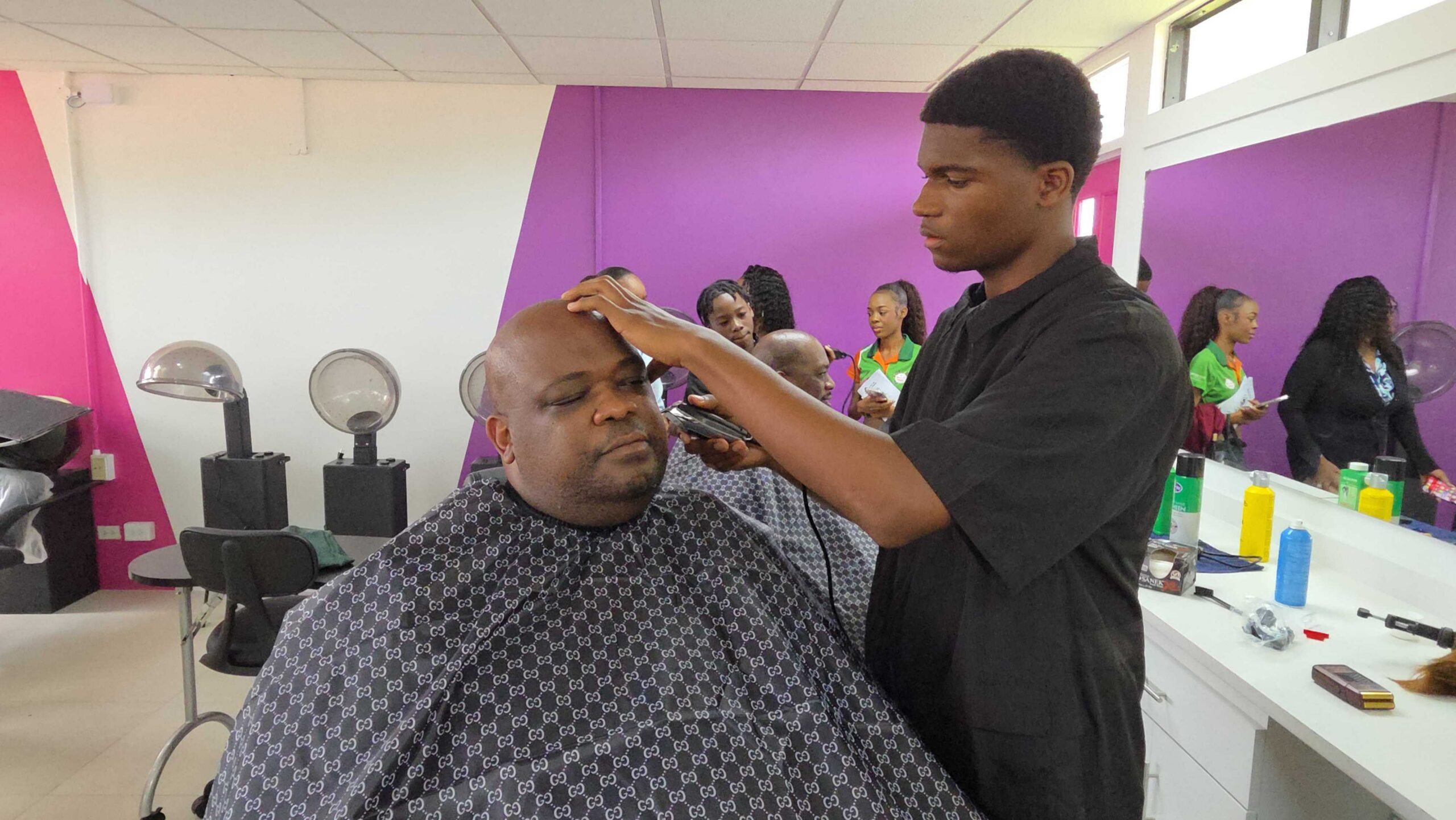
    The inauguration included a symbolic demonstration of student capability when Minister of Home Affairs Gregory Nicholls received professional grooming services from a student barber. This interaction visibly demonstrated the initiative’s core objective: providing tangible, confidence-building experiences that connect classroom learning with real-world application.

    Lester Vaughan School now joins ten other secondary institutions offering beauty education, distinguishing itself as one of only six nationwide providing comprehensive training in both cosmetology and barbering disciplines. As the fifth laboratory established through private sector collaboration, this project establishes a direct vocational pathway while advancing national priorities in sustainable development, entrepreneurship, and social well-being.