标签: Barbados

巴巴多斯

  • New calypso tent to spotlight young talent this Crop Over

    New calypso tent to spotlight young talent this Crop Over

    As Barbados prepares for its iconic annual Crop Over cultural celebration, a groundbreaking new calypso initiative centered entirely on elevating the next generation of musical talent is stepping into the spotlight. Founded and led by managing director Randy Eastmond, Rhythms of Legacy was formally introduced to the public this Thursday, built to serve as both a dynamic performance venue and a nurturing developmental hub for emerging Barbadian calypso artists.

    In an exclusive interview with Barbados TODAY, Eastmond laid out the dual purpose of the new venture: the project will operate as a full-fledged traditional calypso tent for the Crop Over season, while also systematically preparing participating young performers for the island’s most prestigious national calypso competitions. “This is a full calypso tent production built specifically for this Crop Over season, and many of our participants will be competing in the National Cultural Foundation’s flagship events – Pic O De Crop and the Junior Monarch competition,” Eastmond explained. “With the recent announcement of the new Party Monarch competition, I have no doubt our young artists, who are always eager to embrace fresh opportunities, will be keen to join that as well.”

    Beyond preparing contestants for competitive events, Eastmond stressed that long-term artistic growth is the unshakable core mission of Rhythms of Legacy. He framed the initiative as a purpose-built “developmental incubator” that fills a longstanding gap in the local cultural ecosystem by giving young creators a dedicated space to evolve their craft. Aligning with its dual focus on heritage and innovation, the tent has adopted the theme “Honouring our Musical Roots with Today’s Vocal Fruits.”

    “We have collaborated with hundreds of young aspiring artists over the decades, and it became clear that there was a critical need for a dedicated platform for them during Crop Over,” Eastmond said. “Young people deserve their own stage to shine, their own space to call their own – a sanctuary where they can refine their skills, experiment creatively, and grow as artists. Development is not just a priority for this initiative; it is the entire foundation of what we are doing here.”

    The upcoming calypso season will see around 17 performers take the Rhythms of Legacy stage, with ages ranging from 13 to 35. The lineup includes both first-time artists trying calypso for the first time and more experienced young acts looking to advance their careers. Hands-on skills workshops are a central component of the program, designed specifically to give new performers the tools and confidence they need to succeed. Adding star power to the opening lineup, reigning Junior Calypso Monarch Mr. Showman will appear as a featured guest performer across the tent’s opening events.

    Rhythms of Legacy has planned two major public performance nights ahead of the official judging event later in the Crop Over calendar. The opening night is scheduled for June 4 at the Daphne Joseph Hackett Theatre, kicking off at 8 p.m., with a second showcase set for June 18. The official judging night, held in partnership with the National Cultural Foundation, will take place on July 19 at the UWI Big Tent.

    While competitive wins are a welcome outcome for participating artists, Eastmond emphasized that the initiative’s greatest goals go far beyond trophies and rankings. “Our focus is not on finishing position in competitions,” he noted. “What matters most is the work our artists put forward, the legacy they build through their music, and the messages they share with audiences. Each of them is hard at work writing lyrics that reflect what they see happening in our society right now – and as calypsonians, that is exactly their role: to serve as thoughtful social commentators for our time.”

  • Central Bank breaking collateral barrier for MSMEs

    Central Bank breaking collateral barrier for MSMEs

    Micro, small and medium-sized enterprises (MSMEs) across Barbados are set to gain unprecedented access to critical capital, after the Central Bank of Barbados officially launched the Enhanced Credit Guarantee Fund (ECGF) – a risk-sharing initiative designed to break down long-standing barriers to business financing.

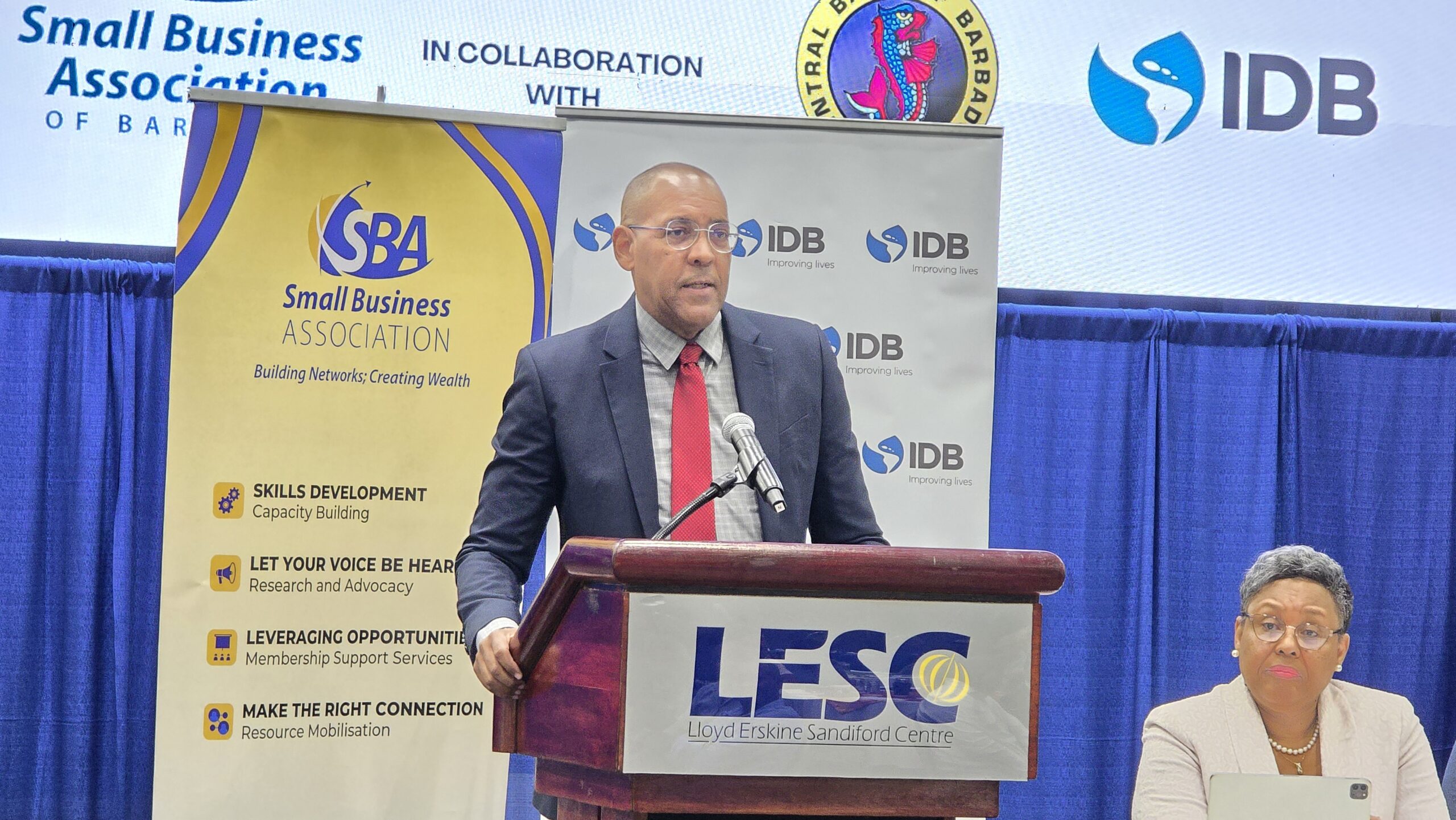
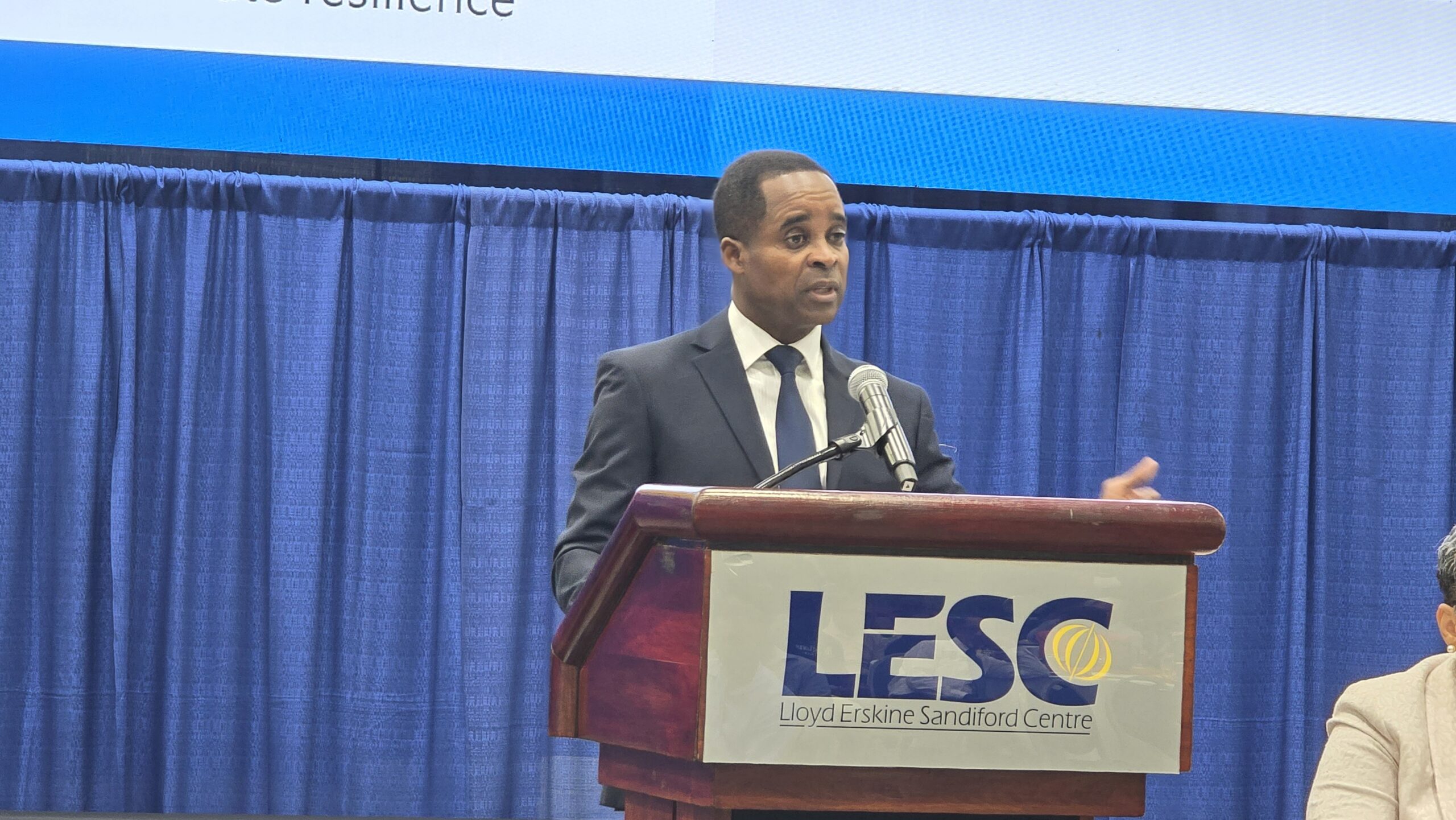
    The formal announcement was delivered Wednesday by Darrin Downes, Director of Foreign Exchange and Fund Management at the Central Bank, during the annual State of the Sector conference hosted at the Lloyd Erskine Sandiford Centre. The program directly addresses a well-documented structural gap in Barbados’ small business economy: a 2024 study led by University of the West Indies management scholar Professor Dwayne Devonish found that the majority of local MSMEs are locked out of commercial lending simply because they lack the traditional collateral that banks require to approve loans.

    Rather than issuing loans directly to businesses, the ECGF operates as a partial guarantee scheme administered by the Central Bank. Under the model, the fund shares a large portion of the default risk with commercial financial institutions, shifting the sector’s historic approach to small business lending from risk aversion to collaborative risk sharing. This reduction in lender risk is intended to encourage banks to approve credit for viable MSME projects that would otherwise be rejected due to insufficient collateral.

    Capital accessed through the ECGF can be allocated to a wide range of productive business uses, including purchasing new equipment, acquiring commercial property, expanding operational infrastructure, and upgrading digital technology. To clear up common public misconceptions about the program, Downes emphasized that the Central Bank does not evaluate loan applications or issue funds directly to borrowers. All application and underwriting processes remain in the hands of commercial banks, where existing customers can discuss their eligibility and loan needs with their account managers.

    The program has clear eligibility requirements designed to target formally operating legitimate MSMEs. To qualify, businesses must be incorporated entities holding all required operating licenses and permits to conduct business in Barbados. Currently, around 45 percent of Barbados’ micro-enterprises meet the incorporation requirement, making them immediately eligible to access the program via their financial institution. Additional caps on size limit participation to businesses with no more than $20 million in annual assets and revenue, and fewer than 200 full-time employees.

    To streamline processing, the entire application workflow is digital, managed through a custom Central Bank platform called CBD Flows. After a commercial bank collects all required documentation from the applicant, the bank submits the request electronically through the portal. The Central Bank reviews the submission and issues a formal decision to the bank within seven business days, creating a fast turnaround for participating businesses.

    Loan sizes under the program start at just $20,000, with total cumulative support per business capped at $6 million. The fund guarantees up to 80 percent of an outstanding loan balance, with a maximum guarantee of $2 million per individual loan. Guarantees have a 10-year tenure, and a 0.7 percent fee is charged on outstanding guaranteed balances, covered by the participating financial institution. Crucially, the program only applies to new loans, not existing outstanding debt.

    Rules are in place to preserve the long-term sustainability of the fund. If a borrower defaults on a loan and the bank submits a successful guarantee claim, the borrowing business becomes permanently ineligible for future support through the ECGF. In the event of default, the Central Bank pays out 100 percent of the guaranteed portion of the loan immediately, and the commercial bank retains responsibility for recovering the remaining 20 percent of the outstanding balance through its standard debt recovery processes.

    The initiative marks a major policy shift to support Barbados’ MSME sector, which forms the backbone of the local economy, addressing one of the most commonly cited barriers to small business growth and job creation across the country.

  • Pro Shottas lead BFA Division One table

    Pro Shottas lead BFA Division One table

    A midweek round of matches in the Barbados Football Association’s Division One delivered its fair share of twists and turned-up table dynamics, with the league’s leading side dropping unexpected points but still clinging to their position at the top of the standings. On Wednesday, title contenders Pro Shottas were held to a goalless draw by Fitts Village, the lowest-ranked team in the 12-club division that has struggled for form all season. Despite dropping two valuable points in the upset result, the side still holds a narrow one-point advantage over their closest challengers as the campaign progresses. The result left Pro Shottas on 18 points overall heading into the next set of fixtures, one clear of second-placed Empire, who entered the round on 17 points. Third place is occupied by Pinelands, who secured a solid 2-0 win over Technique in their most recent outing to bring their points total to 16. Fourth spot belongs to Notre Dame, who put in a dominant performance to run out 4-0 winners against the Barbados Soccer Academy, pushing their points tally to 15. They hold their placing over Technique on goal difference alone, leaving the fifth-placed side still well in the hunt for a higher position. In other results from the matchweek, Parish Land and Deacons played out an entertaining 1-1 draw, with neither side able to clinch all three points after full time. The clash between Silver Sands and Greens also ended level, finishing 2-2 after 90 minutes of play, while Potential Ballers claimed a narrow 1-0 victory over Whitehall to secure three crucial points. After the latest round of matches, newly relegated side Deacons, who dropped down from the Premier League at the end of last season, sits sixth in the table on 15 points. They are followed by Parish Land in seventh on 14 points, with Potential Ballers moving up to eighth on 12 points after their recent win. Whitehall holds ninth place in the current rankings on eight points, while Silver Sands sits 10th with six points accumulated so far this campaign. The battle at the bottom of the division remains tight, with three sides occupying the relegation places at this stage of the season. Barbados Soccer Academy sits in 11th position on five points, just one point above 12th-placed Greens United, who have four points. At the foot of the table, Fitts Village remains rooted to the bottom spot on just two points, despite earning a valuable hard-fought draw against the league leaders this round.

  • Barbados Reggae Weekend set for global streaming as ticket sales surge

    Barbados Reggae Weekend set for global streaming as ticket sales surge

    Barbados’ highly anticipated annual Reggae Weekend is gearing up for its 2025 run from April 24 to 26, and organizers have announced a game-changing expansion that will bring live performances from the iconic Kensington Oval to reggae fans across three continents via a pay-per-view streaming platform. Early ticket sales have already outperformed expectations, with purchases recorded from as far-flung European markets as Germany and Ireland, signaling the event’s rapidly growing global footprint.

  • Farley rues missed opportunity for Knight at table tennis championships

    Farley rues missed opportunity for Knight at table tennis championships

    As the ITTF-Americas Central American and Caribbean Table Tennis Championships continue in the Dominican Republic, the head of Barbados’ national table tennis governing body has offered a measured assessment of his team’s performance, highlighting both a heart-breaking near-miss and encouraging progress across the squad. Trevor Farley, president of the Barbados Table Tennis Association (BTTA), who is onsite managing the national delegation, says leading Barbadian competitor Tyrese Knight was simply unlucky to exit the men’s singles draw in the Round of 16 earlier this week.

  • Barbados power past Antigua to stay unbeaten

    Barbados power past Antigua to stay unbeaten

    The Jean Pierre Under-16 Netball Championships, hosted in Trinidad, has seen one undisputed standout through its first four rounds of competition: Barbados’ junior national squad, nicknamed the Baby Gems. The team has maintained a perfect unbeaten streak, closing out their latest match with a statement victory that underscores their early dominance in the regional tournament.

    In their fourth outing of the competition, the Baby Gems delivered a commanding 39–13 win against Antigua and Barbuda. From the opening whistle, Barbados seized full control of the court, never once ceding the lead to their opponents. They set an aggressive pace early, building a 12–3 advantage by the end of the first quarter, and steadily expanded their gap over the following two periods. By halftime, the scoreboard read 23–7 in favor of Barbados, which stretched further to 32–9 heading into the final quarter, allowing the team to close out the match comfortably without any late-game pressure.

    This latest win follows a series of solid performances that have kept the squad’s unbeaten record intact. Just one day before their defeat of Antigua and Barbuda, the Baby Gems notched their third victory against the Cayman Islands, finishing with a 42–17 final score. Mirroring their consistent pattern of play, Barbados held the lead from start to finish in that match, going up 8–4 after the first quarter, 21–6 at the half, and 33–11 by the end of the third period before wrapping up the win.

    On the opening day of competition, held at the University of the West Indies St. Augustine campus, the Baby Gems kicked off their campaign with two back-to-back wins. On Monday, they secured a 23–15 triumph over Dominica after a controlled, steady performance. Though their lead narrowed slightly to 11–8 at halftime and 18–13 after three quarters, Barbados pulled away in the final frame to seal the result. Their tournament opener, played against Grenada, ended in a 20–12 win to launch the squad’s undefeated run.

  • Exclusive: Side-hustle boom pushes motor numbers past 181k

    Exclusive: Side-hustle boom pushes motor numbers past 181k

    Against the backdrop of a growing national push for self-employment and alternative income streams, the Caribbean island nation of Barbados is now devoting more of its limited foreign exchange reserves to importing passenger cars than to critical pharmaceuticals and commercial shipping, new data and senior officials have confirmed. As of 2024, imported motor vehicles rank as the third-largest category of goods entering the country by total import spending, according to data from the Observatory of Economic Complexity (OEC), a leading international platform that compiles and visualizes global trade and economic activity data for analysts across public, private and academic spheres.

    OEC figures show that Barbados spent $111 million on car imports in 2024. Only two categories – refined petroleum at $520 million and crude petroleum at $234 million – exceeded that total. By contrast, the nation spent just $42.9 million on imported packaged medications and $42.5 million on passenger and cargo ships, marking car import spending as nearly 2.6 times higher than spending on either of those two critical categories. Total national imports for 2024 reached $2.58 billion, while overall export revenue for the year amounted to just $443 million, highlighting the country’s ongoing trade imbalance that puts additional pressure on foreign exchange reserves.

    Treca McCarthy-Broomes, chief licensing officer for Barbados, shared exclusive new insight with Barbados TODAY on the underrecognized driver of this trend: the booming culture of entrepreneurship and side-hustling that has swept the country in recent years. As of the latest count, the total number of registered vehicles on Barbados’ roads has surpassed 181,500, a figure that has grown steadily alongside the push for alternative income generation. Many Barbadians are turning to second jobs and small business ownership to cover rising living costs, from supporting children and aging parents to paying monthly bills, and that demand for extra income has directly translated to more vehicle purchases.

    “Persons are seeking side-hustles…other forms of revenue, and they are seeking to get permits, or they open up small businesses and they are buying vehicles to use as hirers or taxis or commercial vehicles. You will find that a lot of that is occurring,” McCarthy-Broomes explained in the interview. “The push for entrepreneurship, you are really seeing the results of the push for entrepreneurship.”

    She added that multiple new patterns of vehicle ownership have emerged tied to this economic shift, including groups of family members or siblings pooling resources to purchase a single commercial vehicle together, which they then register for commercial hire to generate shared income. Even as new vehicle purchases for commercial use rise, many vehicles bought for this purpose remain unsold at dealerships and stored on private lots, pastures, and under roadside trees, a visible marker of the gap between growing demand for commercial vehicle permits and market absorption. McCarthy-Broomes noted that while entrepreneurship is not the only factor driving vehicle growth, it is a far more significant contributor than previously acknowledged.

    This surge in registered vehicles has exacerbated a long-running traffic management crisis that the Barbadian government is still working to address. Officials have proposed constructing new highway flyovers as one core infrastructure solution, and the government has already held a series of national public consultations dubbed “The Way Forward” to gather community input on solving gridlock. Ideas collected from the public span a wide range of policy areas, from improved infrastructure and updated urban planning to reformed school transportation systems, investment in alternative transit modes, expanded public transport services, targeted measures to reduce overall vehicle volume on roads, strengthened safety enforcement, and upgraded road quality standards.

    In addition to tackling congestion, the Barbados Licensing Authority has partnered with the Barbados Police Service and local insurance industry to crack down on the parallel problem of uninsured vehicles operating on public roads, a growing issue that has accompanied the rise in overall vehicle numbers.

  • Uncle remembers ‘quiet’ young man after fatal shooting

    Uncle remembers ‘quiet’ young man after fatal shooting

    A quiet Caribbean community in Barbados is reeling from senseless violence after a 26-year-old University of the West Indies law student was killed in a late-night drive-by shooting Tuesday, leaving his grieving family struggling to process their sudden, devastating loss. Daquan Roberts, a third-year law student who lived with his two uncles in Christ Church while his mother resided overseas, was caught in the barrage of gunfire on Spruce Street in Bridgetown, The City, during a family gathering to mark his grandmother’s 63rd birthday.

    Speaking exclusively to local media Barbados TODAY on Wednesday, Anthony Ifill, Roberts’ great-uncle, said the entire family remained paralyzed by shock just 12 hours after the attack. Still visibly shaken by the trauma of the previous night’s events, Ifill described his great-nephew as a reserved, focused young man who dedicated most of his time to his legal studies and rarely went out socializing. “He was quiet and he didn’t go anywhere. He was studying law in school,” Ifill said, calling the young student’s untimely death “unfortunate.”

    The shooting unfolded just after 10:50 p.m., when Roberts and dozens of his relatives had gathered outside the family home on Church Hill Road, Gall Hill, Christ Church, to celebrate the birthday milestone. According to preliminary law enforcement accounts, a white motor van approached the gathering from the direction of Beckwith Street, before unidentified assailants inside opened fire on the crowd in a clear drive-by attack. “It actually was a drive-by, right, it’s a drive-by,” Ifill confirmed in an interview, recalling the moment chaos erupted. “When I hear the shots, I actually run, I fall over the table.”

    In the immediate panic of the attack, Roberts and his father attempted to flee to safety down a narrow gap near the home. It was only during the escape that Roberts’ father realized his son had been struck by gunfire, Ifill explained. “He and his ran… straight down the gap. But then when the father realised that he had been shot, he started screaming out,” Ifill said. “He ran from here to the end of the gap… and then he fell.”

    Roberts was rushed by private car to the island’s main Queen Elizabeth Hospital, where medical staff were unable to save him, and he was pronounced dead shortly after arrival from his gunshot injuries. On Wednesday, when Barbados TODAY reached out to Dr Ronnie Yearwood, deputy head of the Faculty of Law at UWI Cave Hill, the senior academic was too distraught over the loss of one of his students to comment on the incident.

    Barbadian law enforcement officials have confirmed that this shooting marks the 19th fatal shooting recorded on the island since the start of the calendar year. Investigators from the local police force have launched a full probe into the attack, and are continuing to canvass for witnesses and review evidence as they work to identify and apprehend the perpetrators behind the killing.

  • Barbados bids to host new global Borrowers’ Platform secretariat

    Barbados bids to host new global Borrowers’ Platform secretariat

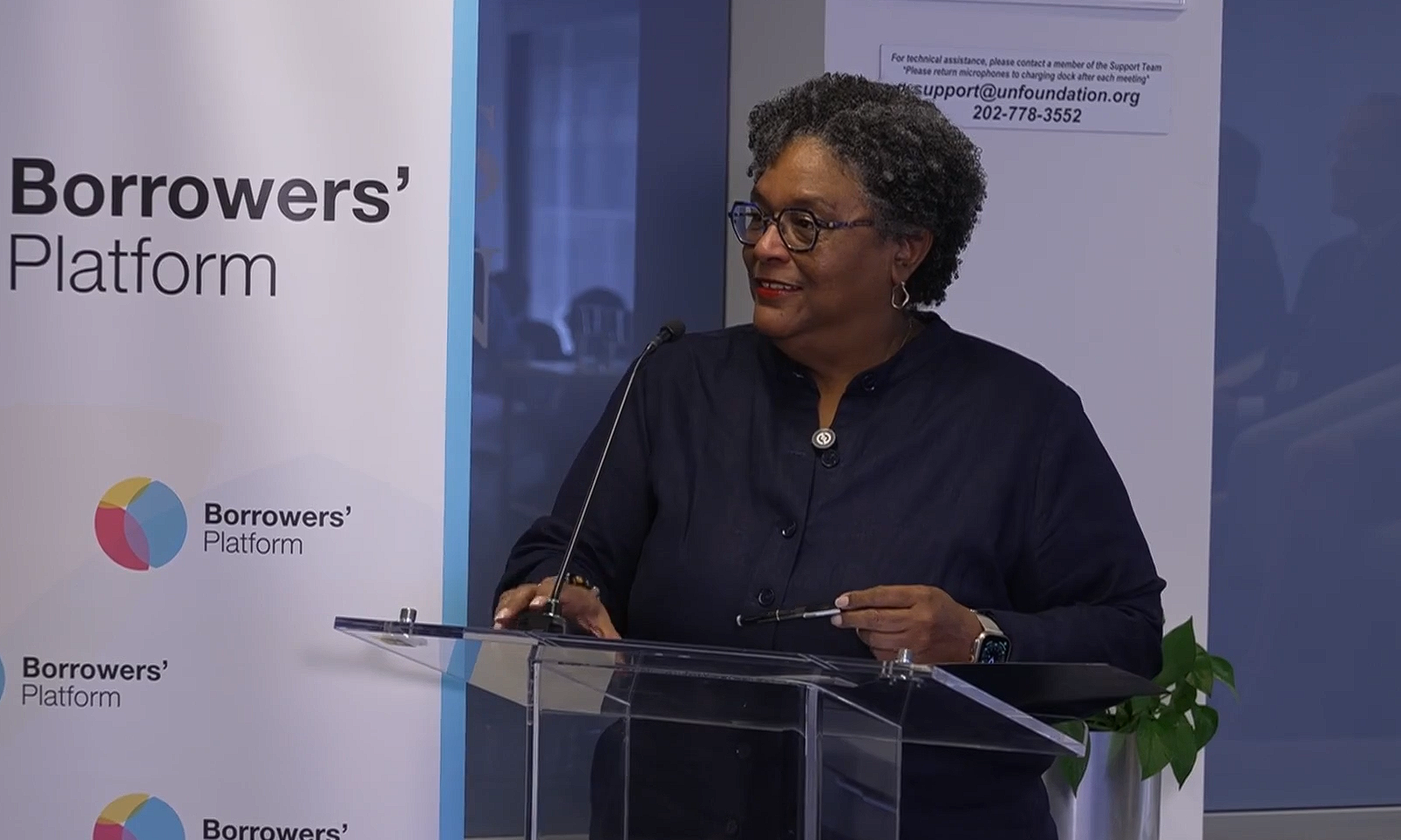
    As developing nations rally to challenge a long-unbalanced global financial order they argue is systematically stacked against low-income and vulnerable economies, Barbados has formally thrown its name forward to host the secretariat of the landmark new Borrowers’ Platform. Prime Minister Mia Mottley made the announcement Wednesday during the annual Spring Meetings of the World Bank and International Monetary Fund in Washington D.C., where the initiative was officially launched on the conference’s sidelines.

    First agreed by member states at the 2025 Fourth International Conference on Financing for Development, the Borrowers’ Platform was designed to tackle deep-rooted systemic inequities by strengthening coordination, amplifying collective representation, and delivering targeted technical support for borrowing countries across the Global South. The launch comes at a moment of soaring debt vulnerability across developing economies, with the initiative focused on advancing more responsible debt sustainability practices and pushing for fairer financing outcomes that serve the needs of low-income nations rather than wealthy global stakeholders.

    In her announcement, Mottley emphasized that Barbados’ lived experience with the harms of the existing global financial system makes it the ideal host for the platform’s administrative core. “We make formal our interest as Barbados to host the Secretariat of the Borrowers’ Platform because we have walked it, we have lived it, we are breathing it and we are prepared to continue to advocate for the change in rules and circumstances such that countries can find their way as independent sovereign nations to be able to finance development for their people,” she stated.

    Mottley framed the new platform as a make-or-break step toward correcting systemic failures that disproportionately disadvantage small and economically vulnerable states. She argued that the current global architecture is structured to favor powerful, wealthy nations, leaving low-income countries locked in a cycle of growing inequality: “We have ended up in this position largely because we have a system that does not favour the weak, nor the different. Without reform, global inequalities will continue to widen. The rich are getting richer and the poor are getting poorer.”

    She also pushed back against the dominant global approach to sovereign borrowing, noting that countries facing debt distress are too often penalized rather than supported through structural challenges. “Countries need assistance. They are not begging. They need space. They need assistance,” she said, calling for a far more balanced, human-centered approach to international debt management.

    The platform is designed to deliver tangible benefits to participating nations: it will deepen South-South cooperation, boost global debt transparency, provide customized technical and advisory support to developing economies, and raise the collective voice of borrowing countries in high-stakes global financial governance discussions. Mottley stressed that the initiative must expand rapidly beyond its founding 28 member states and be backed by strong, principled leadership to deliver meaningful change. “I do believe that the chief executive officer ought to be appointed as soon as possible if we are going to see further progress,” she said, adding that the ideal leader would combine “credibility but conscience.”

    Warned that the confluence of overlapping global crises leaves no time for incremental action, Mottley noted “We are running against the clock.” The cumulative shocks of the COVID-19 pandemic, the ongoing war in Ukraine, and escalating geopolitical tensions have already pushed many vulnerable economies to the brink of debt collapse, she explained. For Mottley and the participating developing nations, the platform represents more than a coordination body: it is an opportunity for Global South countries to take ownership of their own financial futures. “We have come not to ask for permission. We have come to execute in the interests of the people whom we have been elected to serve,” she said.

  • Govt pushes for collateral registry to unlock small biz lending

    Govt pushes for collateral registry to unlock small biz lending

    Barbados’ small business sector is facing a deep-rooted financial barrier that is stifling growth, according to the island nation’s Business Development Minister Kerrie Symmonds. Speaking at the State of the Sector Conference hosted Wednesday at the Lloyd Erskine Sandiford Centre, Symmonds unveiled a landmark new national MSME survey – the first comprehensive assessment of the sector in a decade – that lays bare the scale of the challenge. The study confirms a stark reality for Barbados’ business landscape: 98% of all domestic enterprises qualify as micro, small or medium enterprises (MSMEs), yet more than half of these businesses generate annual revenues of no more than $100,000. Symmonds traced this stagnation directly to a systemic flaw in the country’s lending framework: commercial banks uniformly require land as a condition for approving loans, and the vast majority of small business owners do not hold this traditional form of collateral. Without access to affordable capital, MSMEs cannot expand their operations, hire additional staff, or invest in new infrastructure, trapping most small enterprises in a cycle of low revenue. “The problem isn’t that small business owners lack valuable assets entirely – the system is built to only recognize one type of security, that most of these entrepreneurs simply do not have,” Symmonds explained. He pointed to small-scale local farmers as a key example: many cultivate productive, profitable plots on government-leased land, and own heavy farming equipment and growing crops that hold clear tangible value. But because they do not own the land they work, they are automatically disqualified from accessing bank loans, under current rules. Symmonds noted that this gap between available assets and lending eligibility is not unique to agriculture: emerging tech entrepreneurs, retail operators, and service providers often invest heavily in specialized equipment, intellectual property, and inventory that could serve as security – if the regulatory framework allowed for alternative collateral. The government, which campaigned on addressing MSME access to finance during the last general election, has already begun moving to fix the issue, Symmonds confirmed. In the most recent national budget, the administration introduced factoring services as an interim solution, and the government now plans to move forward urgently with the establishment of a national collateral registry. This system would allow entrepreneurs to pledge non-traditional assets – from farm equipment and harvested crops to business machinery and intellectual property – as security for loans, unlocking capital that is currently inaccessible to small operators. Symmonds emphasized that the collateral registry model is already proven to drive inclusive MSME growth across the developing world. Similar systems are already operational across Latin America, including Colombia, and have been rolled out in multiple regions across Africa, from North Africa to Central, East and West Africa. “Developing economies around the globe have recognized that unlocking access to capital for ordinary people with good business ideas is how broad-based economic development happens,” he said. Beyond giving entrepreneurs a path to growth, Symmonds noted that the reform would also benefit lending institutions by reducing their risk exposure. A properly regulated collateral registry would create a clear secondary market for pledged assets, allowing banks and other lenders to recoup their investment if a borrower defaults on a loan. “This is not a handout to small businesses – it is a rethinking of our lending framework that works for both entrepreneurs and financial institutions,” he added. “We are fully prepared to put in place the necessary regulatory and legislative framework to make this reform a reality for Barbados.”