标签: Barbados

巴巴多斯

  • Police warrant issued for ‘Shots’

    Police warrant issued for ‘Shots’

    Barbados law enforcement has initiated a public search operation for Livardo Rogelio Hinds, a 35-year-old male known by the alias ‘Shots,’ who remains at large after failing to appear before the No. 3 Supreme Court. The Barbados Police Service (TBPS) confirms Hinds is wanted in connection with multiple serious criminal offenses currently under judicial review.

    Authorities have outlined proper surrender protocols, indicating Hinds may present himself voluntarily at either the No. 3 Supreme Court or the Central Police Station, provided he is accompanied by legal representation of his choosing.

    The TBPS has established multiple communication channels for information regarding Hinds’ whereabouts, directing citizens to contact the Central Police Station at 430-7676, Police Emergency services at 211, Crime Stoppers anonymously at 1-800-8477, or any nearby police precinct.

    In a stern warning to the public, the police service emphasized that harboring or providing assistance to wanted individuals constitutes a criminal offense under Barbadian law, with prosecutable consequences for those found aiding fugitives from justice. This development highlights the ongoing collaboration between law enforcement and community members in maintaining public safety and judicial accountability.

  • Accessibility, healthcare top priorities for disabled ahead of Budget

    Accessibility, healthcare top priorities for disabled ahead of Budget

    As Barbados prepares for Monday’s national budget announcement, disability advocates are intensifying calls for substantive government measures to improve accessibility, foster inclusion, and expand support systems for persons with disabilities. This mobilization comes despite the landmark passage of the Rights of Persons with Disabilities Act in 2025, which advocates acknowledge as significant progress but emphasize requires robust enforcement mechanisms to realize its full potential.

    At a recent Health Fair organized by the Social Empowerment Agency, numerous individuals with disabilities articulated specific challenges and expectations. Christopher Gilkes, living with Spina Bifida and Hydrocephalus, highlighted the prohibitive cost and complex processes involved in obtaining essential assistive devices. “The bureaucratic hurdles and financial burden to acquire something as basic as a wheelchair remain overwhelming,” Gilkes stated.

    Accessibility in public infrastructure emerged as a recurring concern. Quadriplegic Christopher Rouse noted the partial progress in transportation, acknowledging some wheelchair-accessible buses while criticizing the persistent inadequacy of supporting infrastructure. “From inaccessible bus terminals to sidewalks that force disembarkation onto roads, the challenges remain substantial,” Rouse explained, emphasizing that transportation solutions require comprehensive infrastructure overhaul.

    Healthcare accessibility beyond basic services was another priority. Suzanne Haewood, who has Rheumatoid Arthritis, advocated for expanded coverage to include dental and vision care in the upcoming budget. Amputee Meldine Norville brought attention to the critical need for prosthetic support, describing the financial and systemic barriers that prevent individuals from regaining mobility. “Prosthetic legs are prohibitively expensive, and government support for restoring mobility remains insufficient,” Norville asserted.

    Norville further detailed systemic employment discrimination and physical barriers in public spaces, noting that many establishments lack adequate facilities, ramps, or even accessible restrooms, effectively excluding disabled individuals from routine activities. This sentiment was echoed by Afeefa Manjra, who is blind and partially deaf, calling for increased braille implementation in public areas and prescription labeling.

    Pedro Belgrave emphasized the need for policies promoting independence through improved access to housing, sports, and educational opportunities. Acting Director of the Social Empowerment Agency, Wayne Nurse, acknowledged these concerns while outlining the government’s commitment to healthcare accessibility in new policy frameworks. “Our recently passed policy specifically addresses equitable healthcare access for persons with disabilities, ensuring they receive care equivalent to other citizens,” Nurse stated, though concrete budgetary allocations remain to be seen.


  • Govt ‘lighting up’ playing fields – sports minister

    Govt ‘lighting up’ playing fields – sports minister

    The Barbadian government is executing a comprehensive national strategy to enhance community sports infrastructure through an extensive field lighting initiative. Minister of Sports and Community Empowerment, Charles Griffith, announced the program’s details during the ongoing Parliamentary Estimates debate on Friday, emphasizing its role in broadening sports participation at the grassroots level.

    Minister Griffith, responding to inquiries from government backbencher William Duguid, revealed that the systematic program has already seen several locations retrofitted with new lighting systems and decayed poles replaced. The initiative specifically targets state-owned playing fields, though the government acknowledges the need to extend lighting to certain non-state facilities, such as the YMCA’s dedicated football field.

    “Our methodical approach ensures we will systematically reach all fields,” Griffith stated from Parliament. “This lighting initiative represents a fundamental strategy for sports development by enabling greater community involvement. By broadening the base of our sports pyramid, we create opportunities for raw talent to emerge and excel.”

    Despite ambitious plans, budget limitations have presented challenges. Nicholas Matthias, Senior Superintendent of Works at the National Sports Council, identified seven locations that require completion outside the original project scope: Ignatius Byer Primary School and Crab Hill (both in St Lucy), YMPC on Beckles Road, Queen’s Park, The Lodge School in St John, Proute in St Thomas, and Gemswick in St Philip.

    The government is simultaneously addressing community facility needs beyond lighting infrastructure. In response to concerns raised by St James South MP Sandra Husbands regarding community spaces in St James, officials confirmed several potential venues are under consideration, including the former St John the Baptist School on Holders Hill, though final decisions remain pending.

    Chief Community Development Officer John Hollingsworth confirmed budgetary allocations specifically for addressing facility shortages in St James South and St James Central, noting: “We recognize the urgent need for this facility, as the closest community centers currently available are Weston and Eden Lodge, which underscores the significance of this project.”

    Minister Griffith further assured Parliament that maintenance structures are being implemented alongside new installations. The National Sports Council is establishing center management committees at all pavilions to create formal channels for community feedback regarding property and playing field conditions, ensuring sustainable upkeep of the enhanced facilities.

  • Nurses unveil Budget Day wish list

    Nurses unveil Budget Day wish list

    As Barbados prepares for its annual budget announcement, the Barbados Nurses Association (BNA) has outlined urgent priorities requiring government attention and funding. With Minister of Finance Ryan Straughn set to deliver the financial blueprint on Monday afternoon, healthcare professionals await concrete measures addressing long-standing workforce challenges.

    The BNA’s comprehensive agenda centers on three fundamental pillars: finalization of extended leave arrangements, resolution of job evaluation procedures, and expansion of nursing positions across both clinical and educational settings. Association President Dr. Fay Parris confirmed ongoing discussions with government ministries throughout the past year, expressing optimism that budgetary allocations would address these critical needs.

    At the forefront of negotiations is the long-awaited long leave agreement, which would establish clear parameters for extended time off for nursing professionals. The association simultaneously anticipates conclusive outcomes from the protracted job evaluation exercise that will determine appropriate salary structures and career progression pathways.

    Compensation adjustments form another crucial component, with the BNA advocating for significant elevation of entry-level nursing positions from the current Z23 grade to Z16. This recalibration aims to enhance recruitment prospects and recognize the professional demands placed on nursing staff.

    Beyond remuneration concerns, Dr. Parris emphasized the dual need for expanded clinical staffing and reinforced academic capacity. The current shortage of nursing educators threatens the nation’s ability to sustain pipeline development, potentially compromising long-term healthcare delivery. The association seeks budgetary ratification for additional posts that would strengthen both service delivery and educational infrastructure simultaneously.

  • Minister ensures swimmers’ training ahead of CARIFTA

    Minister ensures swimmers’ training ahead of CARIFTA

    In a decisive move to protect the competitive prospects of national athletes, Barbados Sports Minister Charles Griffith has authorized emergency training arrangements for the national swim team following the abrupt closure of the National Aquatic Centre. The shutdown, implemented by the Ministry of Health on Thursday afternoon, occurred mere hours before scheduled training sessions and threatens to extend for a minimum two-week period according to officials.

    Sharon Small, Vice President of the Barbados Aquatics Sport Association, identified critical malfunctions within the facility’s filtration infrastructure as the primary reason behind the closure. This development posed a significant threat to athletic preparations with the prestigious CARIFTA Aquatic Championships scheduled for April 3–8 in Martinique.

    Minister Griffith swiftly intervened to secure exclusive access to the swimming pool at the Ursuline Convent for the national squad. This arrangement will remain in effect continuously until the team departs for the regional championships. Emphasizing the strategic importance of the event, Griffith stated, ‘Our swimmers must not be disadvantaged in any way in their bid for podium places on the regional swimming stage, which serves as crucial preparation for the 2028 Los Angeles Olympics.’

    The 31-member Barbadian team, which achieved an impressive haul of 32 medals at the previous championships, will be led by a seasoned coaching staff comprising Dave Farmer, Antonio Petrolanda, and Damien Thorne. The delegation will be managed by Kay Chandler, with Dawn Boxill providing physiotherapy support. Andre Johnson and Tikeisha Pounder will fulfill chaperone responsibilities for the athletes competing at the Pierre Samot Aquatics Centre.

  • Business leader calls for joint approach to cost-of-living crisis ahead of budget

    Business leader calls for joint approach to cost-of-living crisis ahead of budget

    Ahead of Barbados’ national budget announcement, prominent private sector leader Eddy Abed has issued a compelling appeal for collaborative action between government and businesses to address the island’s escalating cost of living challenges. The Managing Director of Abed & Company Ltd emphasized that current economic pressures demand more than isolated policy measures, advocating instead for a unified strategy to tackle systemic issues affecting consumers.

    Central to Abed’s concerns is Barbados’ current method of calculating import duties, which incorporates both merchandise costs and freight charges into the taxable base. This compounding effect, he argues, artificially inflates retail prices by 15-20%, creating an unnecessary burden on both retailers and consumers. The business leader pointed to international alternatives, specifically noting that the United States calculates duties solely on the Free On Board (FOB) value of goods, excluding transportation and insurance costs.

    With global oil prices threatening to push freight costs even higher, Abed warned that without structural reforms, these increased logistics expenses would inevitably transfer to consumers through elevated retail prices. Beyond immediate fiscal adjustments, he highlighted broader systemic improvements needed in Barbados’ business environment, particularly regarding regulatory approvals for development projects requiring substantial capital investment.

    Abed specifically proposed creating an “expedited window” for large-scale investments, suggesting that establishing clear thresholds would demonstrate government commitment to valuing private sector contributions while maintaining necessary oversight.

    The business leader also addressed Barbados’ energy infrastructure, emphasizing the critical need to accelerate renewable energy adoption and reduce dependence on volatile fossil fuel markets. He expressed particular concern about the island’s vulnerability should oil prices reach $150-200 per barrel, noting that current dependency creates damaging ripple effects throughout the economy.

    Abed revealed that technical projects for energy transition have already gone to tender but stressed that ensuring grid reliability requires coordinated public-private effort. “It needs to be a joint approach towards storing this energy so it works efficiently for the grid in Barbados,” he stated, underscoring the interconnected nature of economic and energy reforms needed to build sustainable economic resilience.

  • Serial killer gets at least three decades behind bars

    Serial killer gets at least three decades behind bars

    In a landmark ruling that balanced psychiatric considerations with public safety, the Barbados High Court has sentenced Ramario Antonio Roach to life imprisonment for the brutal killings of three individuals during a five-week period in 2018-2019. The now 24-year-old, who was 18 at the time of the crimes, will serve a minimum of 33 years before becoming eligible for release.

    Justice Laurie-Ann Smith-Bovell delivered the sentence following Roach’s admission to manslaughter by reason of diminished responsibility. The court accepted psychiatric evidence indicating Roach suffers from schizophrenia and cannabis use disorder, though the judge emphasized his retained awareness and responsibility during the commission of the crimes.

    The victims included Tyrone Austin, 68, murdered on December 18, 2018; Roach’s own mother, Joanne Roach, killed between January 18-21, 2019; and American national Dr. Sarah Sutrina, 68, slain between January 20-22, 2019. Each killing demonstrated exceptional brutality, with the court detailing unprovoked attacks involving rocks, knives, and mutilation.

    In her ruling, Justice Smith-Bovell noted the particular vulnerability of the victims and the calculated nature of the attacks, especially against Dr. Sutrina whom Roach had surveilled and ambushed. The judge referenced psychiatric testimony indicating Roach’s conscious refusal to take medication and his high risk of reoffending.

    Despite the defendant’s last-minute apology and plea for mercy, the court prioritized societal protection. After accounting for time served and guilty pleas, the final sentence mandates concurrent life terms with varying tariffs: 16 years for Austin’s death, 23 years for his mother’s killing, and 33 years for Dr. Sutrina’s murder.

    The court additionally ordered Roach to participate in rehabilitation programs focusing on academic development, vocational skills, and intensive psychotherapy during his incarceration.

    The prosecution was led by Acting Director of Public Prosecutions Alliston Seale SC, while Senior Counsel Andrew Pilgrim represented the defendant in proceedings that have gripped the Caribbean nation.

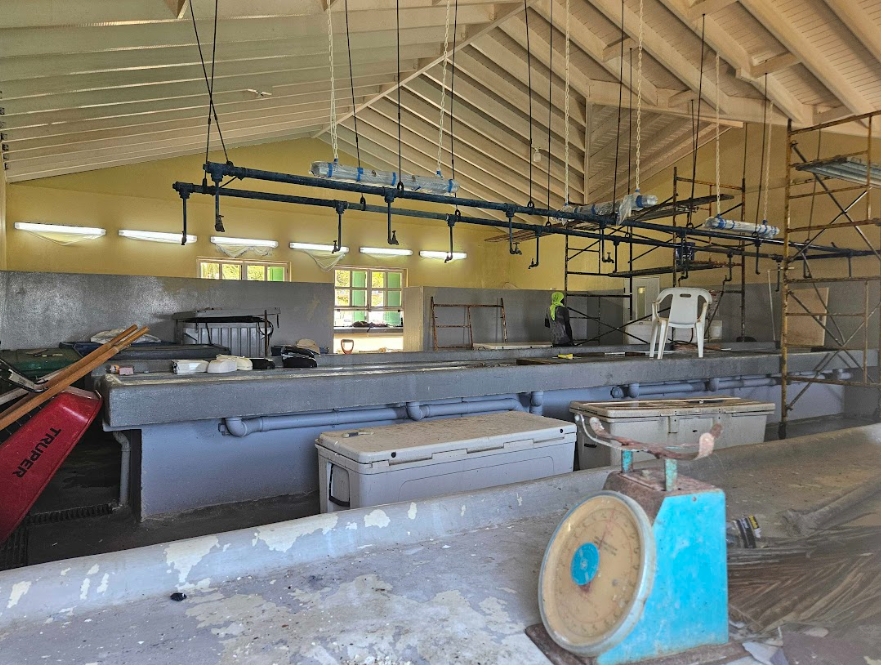
  • Consett Bay fisherfolk upset over unannounced market repairs

    Consett Bay fisherfolk upset over unannounced market repairs

    Fishermen and vendors at Barbados’ Consett Bay Fish Market are expressing profound frustration over poorly timed facility renovations that have severely disrupted their operations just weeks before the critical Easter season. The unexpected maintenance work, initiated without prior notification, has forced seafood processors to operate outside designated areas, compromising both workflow efficiency and hygiene standards.

    According to seasoned market operators with over two decades of experience, the disruptive renovations commenced unexpectedly following a two-week fishing hiatus caused by rough sea conditions. Vendors returned to the market anticipating resumed operations, only to discover painting and improvement activities already in progress within essential processing zones, including ice storage and fish preparation areas.

    The timing of these renovations has drawn particular criticism from the fishing community. Industry representatives note that the July-October seasonal fishing closure would have presented an ideal window for conducting maintenance with minimal operational impact. Instead, the current timing coincides with the pre-Easter period when seafood demand traditionally surges, creating significant economic pressure on vendors.

    While acknowledging the necessity of market improvements, vendors emphasize the critical importance of coordinated planning. “We fully support facility enhancements,” stated one representative, “but implementation must consider our livelihood requirements. This is our daily sustenance, and disruptions during peak season directly affect our economic stability.”.

    In response to these concerns, Eric Lewis, Senior Manager of Fish Markets, provided reassurances regarding the project’s limited scope and duration. Characterizing the work as primarily cosmetic painting following recent roof repairs, Lewis emphasized that vendors would experience minimal dislocation. “This is a brief process requiring just a few days,” he stated, “with designated work areas remaining available. The improvements constitute minor enhancements rather than major structural work, ensuring no significant operational interruptions.”

    Despite these assurances, vendors remain apprehensive about potential Easter season impacts. The community continues advocating for improved communication protocols and strategic scheduling of future maintenance activities to balance infrastructure improvements with economic considerations.

  • UWI economists differ on govt’s fiscal path

    UWI economists differ on govt’s fiscal path

    As Barbados’ Mia Mottley administration prepares to unveil its 2026 Financial Statement and Budgetary Proposals, prominent economists from the University of the West Indies present contrasting visions for the nation’s fiscal direction. The debate emerges alongside recognition that several measures from last year’s budget have successfully reached ordinary citizens.

    Dr. Ankie Scott-Joseph, economics lecturer at Cave Hill, advocates for prioritizing revenue generation through productive industries rather than over-relying on tourism. She emphasizes tourism’s vulnerability to geopolitical uncertainties, citing the recent departure of Trinidadian conglomerate ANSA McAL as evidence of sector instability. Dr. Scott-Joseph warns that this over-reliance will inevitably pressure value-added tax (VAT) and tourism income, necessitating accelerated investment in renewables and manufacturing to build economic resilience.

    The economist acknowledges positive trickle-down effects from the 2025 Budget, specifically highlighting workers’ empowerment initiatives that increased job opportunities and wages, thereby enhancing purchasing power for lower-income earners. She also recognizes improvements in public health infrastructure, though notes these focused more on physical facilities than disease control.

    In contrast, Dr. Antonio Alleyne identifies crime reduction as the paramount priority, arguing that without addressing security concerns, all other economic initiatives will prove ineffective. He contends that crime directly threatens tourism revenue and consequently undermines diversification efforts. While acknowledging debt management progress—with levels now below 100% of GDP—Dr. Alleyne urges authorities to exploit this favorable window for strengthening social programs and maintaining currency stability.

    The 2025 Budget introduced several significant measures including: a Resilience and Regeneration Fund replacing the Catastrophe Fund; new taxes on salted snacks alongside duty-free fruits; reduced corporation tax on residential mortgages; enhanced union fee allowances and automatic minimum wage increases; extended reduced VAT on household electricity; and cuts to regional travel charges.

  • CXC completes first fully digital exam cycle despite storm disruption

    CXC completes first fully digital exam cycle despite storm disruption

    The Caribbean Examinations Council (CXC) has successfully concluded its inaugural fully digital and hybrid examination series, overcoming significant challenges posed by Hurricane Melissa in Jamaica. With 10,481 candidates across 17 Caribbean territories completing 17,695 subject entries, the January cycle represents a watershed moment in the region’s educational technology transformation.

    At a recent press briefing in Barbados, CXC Registrar Dr. Wayne Wesley celebrated the achievement as demonstrating both technological robustness and institutional adaptability. The examination period, originally scheduled from January 5-29, was extended by four days to accommodate the electronic administration of high-volume subjects including Mathematics and English.

    The council implemented special humanitarian provisions for Jamaican centers affected by Hurricane Melissa, authorizing 708 subject entries across 29 centers to utilize traditional paper-based testing. Dr. Wesley emphasized the organization’s commitment to equitable treatment, stating: “This reflects our commitment to equity and compassion in the face of natural disasters.”

    While acknowledging isolated technical challenges including internet connectivity issues and power outages, Operations Director Dr. Nicole Manning confirmed that no candidate was penalized for circumstances beyond their control. The council maintains collaborative partnerships with regional utility providers to ensure service stability during critical examination windows.

    Performance data revealed encouraging outcomes, with nine of thirteen administered subjects showing improved results compared to previous years. Notable gains were recorded in Social Studies, English A, English B, and Physics. Mathematics demonstrated a modest one-percent improvement, which the council has identified as a priority for upcoming educational conferences.

    The hybrid implementation achieved a 96 percent adoption rate among registered candidates, with real-time incident logging and comprehensive audit trails ensuring examination integrity. Dr. Manning noted that digitally-native candidates performed with particular confidence, indicating strong infrastructure readiness for electronic assessment models.

    The council continues to address concerns regarding absenteeism, urging May/June examination candidates to recognize their preparation and seize the opportunity to demonstrate their capabilities.