标签: Bahamas

巴哈马

  • Former photographer faces eviction, blindness in battle with kidney failure

    Former photographer faces eviction, blindness in battle with kidney failure

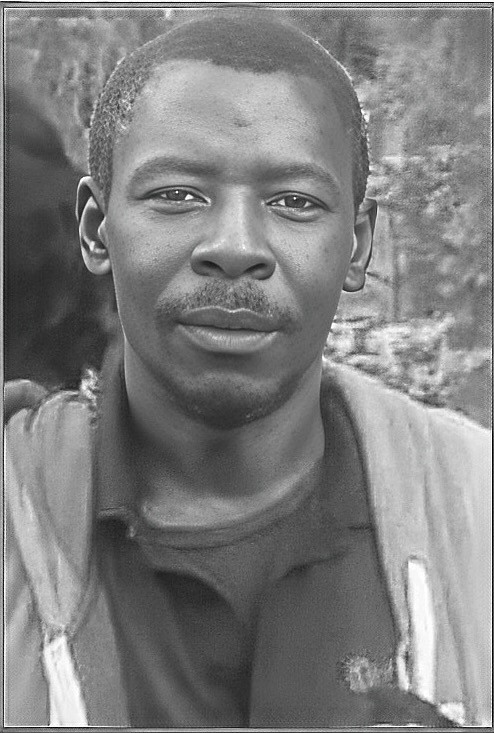
    For a Bahamian family building a life in Jacksonville, Florida, what began as a routine health scare has spiraled into a crisis that threatens their home, their stability and their future. Terrel Carey, a 37-year-old father of five and former photojournalist, now faces an overwhelming combination of end-stage kidney disease, advanced diabetes and permanent severe vision loss—conditions that have robbed him of his ability to work and pushed his family to seek public support to avoid losing their home.

    Before his health declined, Carey worked as a professional photographer and videographer, creating visual content and covering events to support his growing household. For years, he and his wife Waydelle were both working breadwinners, able to cover their expenses and care for their five children: a 15-year-old from Carey’s previous relationship, an 8-year-old son, a 5-year-old daughter, and 2-year-old twin girls. That two-income stability collapsed as Carey’s health worsened, leaving the family dependent on a single income at the worst possible moment.

    Carey’s health crisis first emerged in summer 2024, when persistent severe headaches sent him to the hospital. Doctors quickly diagnosed uncontrolled hypertension and clear signs of progressive kidney failure, admitting him for several days after abnormal test results raised urgent red flags. A follow-up biopsy confirmed end-stage kidney disease, with clinicians projecting his kidneys would fail completely by December 2024. The situation escalated to a life-threatening emergency when excess fluid built up in Carey’s body, leaving him constantly exhausted, short of breath, and with persistent chest pressure.

    The devastating diagnosis came at a moment Carey never could have predicted: he was on assignment photographing a wedding in Tallahassee when his primary care provider called with his lab results, urging him to seek emergency care immediately. “The doctor told me I was at risk of dying if I didn’t get to a hospital right away,” Carey recalled.

    After returning to Jacksonville, Carey began urgent dialysis treatment via a catheter placed near his neck, before undergoing surgery to create a vascular fistula in his left arm for ongoing hemodialysis. He later transitioned to peritoneal dialysis, which allows him to complete treatment sessions at home rather than at a clinical facility. Unlike in-center hemodialysis, which left Carey completely drained after every session, struggling with slurred speech and difficulty walking, home-based treatment is far less physically taxing. “When you finish in-center treatment, you feel completely wiped out,” he explained. “All I could manage after getting home was eat something small, then go straight to sleep.”

    For Carey, the cruelest blow of his illness has not been the repeated dialysis sessions or the constant physical discomfort—it is the permanent vision loss that has stripped him of his independence and his ability to earn a living. Today, his right eye is completely blind, while his left eye only allows him to distinguish basic light and shadow. He compares his remaining vision to trying to see through a sheet of wet wax paper. He initially tried to document his health journey online, posting videos of his dialysis sessions, medical appointments and transplant evaluations to generate much-needed income, but further deterioration of his left eye’s vision forced him to abandon the project.

    As medical bills pile up and a broken rent repayment plan has put the family at imminent risk of eviction, the Careys have launched a public GoFundMe campaign to cover gaps in their insurance coverage and basic household costs. A previous rent repayment plan requiring monthly payments of over $2,000 fell through recently, leaving the family facing possible displacement from their rented home. Out-of-pocket costs for care not covered by insurance add up quickly: appointments with low-vision specialists alone cost between $200 and $300 per visit, and Carey needs ongoing care to learn to navigate with a white cane and adjust to life with severe vision impairment.

    Asking for public help has not been easy for Carey, who spent his entire adult life providing for his family independently. While relatives have stepped up to offer what support they can, many have limited resources of their own, and assistance from friends has been inconsistent. The strain has touched every member of the extended family, and Waydelle Carey said the family has put aside pride to ask for help. “Pride aside, we need help,” she shared in a public Facebook post. “I’m putting myself out here in this vulnerable position just to ask for some support, some help to get us through this.”

    Even amid nightly dialysis treatments and declining health, Carey still stays active in caring for his young twin daughters, and his children have become a critical source of emotional support. During family outings, his 8-year-old son and 5-year-old daughter often step in to guide him, holding his hand when he needs help turning or navigating new spaces. “They remind me that they love me, that I’m a good dad,” Carey said. “That encouragement is what keeps me going some days.”

    Still, the emotional weight of losing his independence, his livelihood and his vision has taken a severe toll. Carey has struggled with depression and even suicidal thoughts, recalling many mornings where he would cry before dialysis, overwhelmed by the physical and emotional burden of his condition. “It gets heavy sometimes,” he acknowledged. Therapy has helped him manage his depression, and transitioning to home dialysis has reduced some of his daily stress, but he says the emotional impact of chronic kidney disease is often long-lasting.

    “A lot of people think depression only hits right after you get the diagnosis,” he explained. “But this is a life change. The first period is the hardest, but many people live with this depression for years, even decades, while dealing with kidney disease. Treatment keeps you alive, but it doesn’t fix the disease.”

    Carey is currently undergoing evaluation for a combined kidney and pancreas transplant, a procedure that could address both his end-stage kidney disease and his diabetes. He holds out cautious hope that the transplant could also improve the remaining vision in his left eye, even as he acknowledges that his blindness may be permanent. “At the end of the day, I just want to be able to live a long life and still enjoy time with my kids,” he said. “I know my vision might not come back, but that doesn’t mean I’m not going to hope that it can.”

  • Mom of crash victim speaks on heartbreak and grief

    Mom of crash victim speaks on heartbreak and grief

    Four weeks have passed since the devastating July 10 plane crash near San Andros Airport that claimed 10 lives, including Giovanni “Geo” McKenzie – the only son of Apostle Dr. Jan Jones. Today, the heartbroken mother continues to be swallowed by overwhelming waves of grief, saying she is adrift in a fog of sorrow that she cannot navigate on her own. “We pray, but this is not easy,” Dr. Jones shared in a recent interview. “We may start laughing and talking like everything is normal, but the pain is always there, cutting through any moment of lightness.”

    The family alternates between small moments of calm and days crippled by sadness, clinging to their faith to carry them through, even as unanswered questions about the crash continue to hang over them. Dr. Jones revealed that McKenzie’s youngest sister – a teenager he helped raise – constantly asks why her brother had to die that way. The young girl also struggles to accept that he will not be there to walk across the stage with her at her high school graduation next year.

    For Dr. Jones, the void left by her son’s death is a permanent, aching absence. “If you let this grief consume you, you could literally lose your mind,” she explained. “Some days I don’t eat. Some nights I can’t sleep. I’m just… gone. I don’t know how to explain it – I’m in a place where even I don’t know where I am right now.”

    Dr. Jones described her bond with McKenzie as unbreakable. Her three daughters often teased that McKenzie was her favorite child, and while the mother of four says she loves all her children equally, she acknowledged McKenzie held a unique place in her heart. The two shared endless common ground, and countless first experiences together. “We talked about everything,” she said. “Even though his father was in his life, he always came to me with everything. I taught him how to drive. I bought him his very first musical instruments.”

    The way Dr. Jones learned of her son’s death only added more trauma to the tragedy. She first saw the news on social media, as friends messaged her telling her to check Facebook for updates on the crash, rather than receiving an official notification from government or airline authorities. “It was wrong,” she said of the experience. “We should have gotten a call from officials first, not finding out that your only son is dead from a random Facebook post and people messaging you about it.”

    When the news hit, she said the pain felt identical to the labor contractions she experienced when giving birth to McKenzie. “I couldn’t even cry at first,” she recalled. “All I could do was speak in tongues – that was the only language my body and soul knew in that moment. I just asked God what His answer was to all this pain. I just needed to hear something from Him in the middle of that horror.”

    Now, as the family prepares to lay McKenzie to rest this weekend, her symptoms of grief have only intensified, with many sleepless nights and lost meals. At 35 years old, McKenzie was a talented keyboardist and beloved bandleader with big dreams for his future. In one of their final conversations before he boarded the doomed Flamingo Air flight, he shared his ambitious plans for the year, all centered on his lifelong passion for music. He had recently purchased new instruments, was developing his music project Da Pond with dreams of touring internationally, and hoped to open a music school alongside launching several other small businesses.

    “Wherever music was, that’s where you’d find him,” Dr. Jones said of her son. “He was always so ambitious, he always believed he would make it to the top – that’s how I raised all my children, it comes from the work I do too.”

    The crash has also left a deep gap in McKenzie’s church family at Revolution Church, where he worshipped regularly and played keyboard for services. Congregation members remember him as a warm, kind person fully devoted to his faith. Dr. Jones remembers her son as a visionary and a builder of people, someone who dedicated himself to bringing out the best in everyone around him.

    To this day, Dr. Jones says she still has many lingering questions about the crash that killed her son – some she is not ready to share publicly. So far, representatives from Flamingo Air have not reached out to meet with the families of the victims, but Dr. Jones says she holds onto hope that she will get the answers she seeks eventually. “The only thing I need to do right now is lay my son to rest, give him peace,” she said. “Anything else I have to handle can wait until after that.”

  • Grand Cay generator repair delayed until end of week

    Grand Cay generator repair delayed until end of week

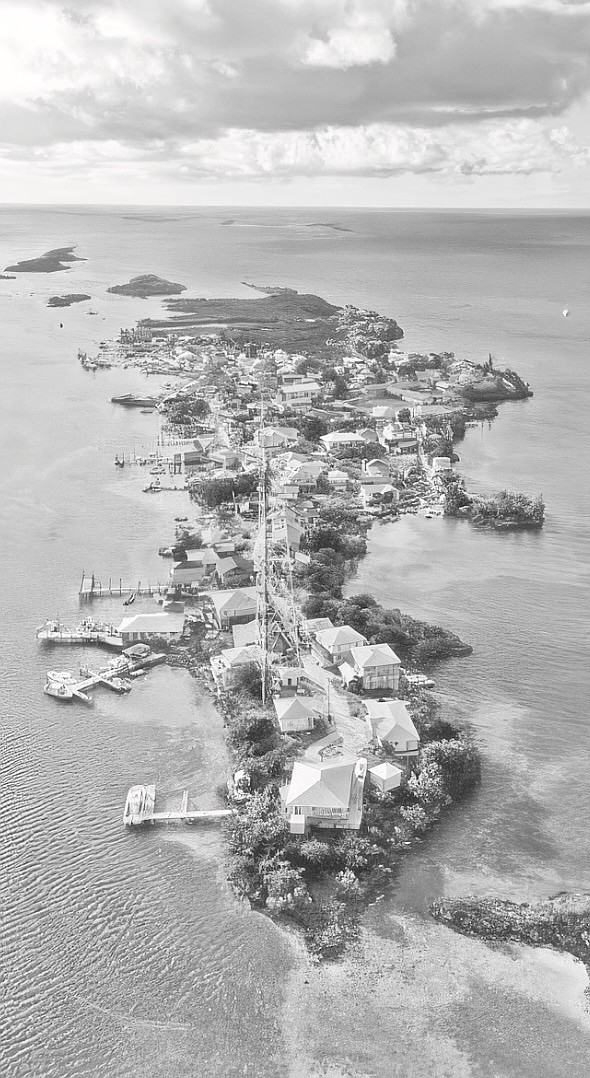
    For residents of Little Grand Cay, a small Bahamian island, the long wait for restored electricity has grown even longer. Bahamas Power and Light (BPL) recently announced that repairs to a rented replacement generator have been pushed back to August 21, marking the latest setback in a weeks-long crisis that has upended daily life for the island’s community.

    According to BPL’s official update, the third-party rental generation firm notified the utility that mechanical fixes would take longer than initially projected. Once repairs are completed at the Grand Bahama facility, the generator will immediately be shipped to Little Grand Cay to resolve the outage. In a statement, BPL issued a formal apology to customers for the extended disruption and expressed gratitude for their ongoing patience amid the challenging circumstances.

    This newest delay delivers a fresh blow to residents who have navigated harsh living conditions since the full island outage began on August 5, triggered by the failure of the island’s primary generator. Even before the total blackout, the community had struggled with chronic, frequent rolling blackouts that disrupted normal activity. Since the full outage, Little Grand Cay has been left without not just electricity, but also working phone service and running water, leaving residents dependent on small, portable personal generators to meet basic power needs.

    The cost of running these portable units has strained household budgets significantly. Multiple residents report spending between $90 and $100 daily on fuel to keep their generators operating, with one local resident putting their total cumulative fuel costs at nearly $1,000 already through the outage. As these expenses mount, many residents are now pushing for formal reimbursement or bill credits from BPL to offset the unexpected costs they have been forced to pay.

    Kirk Cornish, the Member of Parliament for North Abaco, which includes Little Grand Cay, clarified the government’s ongoing efforts to resolve the crisis. He explained that the national government had already deployed two new generators to the island, but both units developed unexpected mechanical defects that forced them out of service. A third generator sourced from Walker’s Cay also suffered operational issues, leading officials to arrange for the current repaired rental unit from Grand Bahama.

    “ No effort has been spared. We are trying to address the issue as best as we can, ” Cornish said, adding that he keeps constituents updated on developments through a dedicated WhatsApp community group. “ I sent a voice note that I’m fully aware and we are fully working on it and we continue to face the challenges. ”

    Cornish pointed to the government’s ongoing investment in the island’s power infrastructure as proof of its commitment, noting that at least four or five new generators have been deployed to Little Grand Cay over the past five years alone. He also highlighted a recent policy move to address a long-standing financial grievance for the community: a more than $500,000 accumulated utility arrears that stemmed from a decision by the previous administration to instruct residents to use utility services without paying their bills. The current government has fully forgiven that outstanding debt, a move Cornish framed as a correction of an unfair policy.

    When asked about residents’ calls for fuel cost reimbursement, Cornish acknowledged that residents have every right to make the request, but noted that the decision falls outside of his direct control. BPL has confirmed that it will issue new public updates as more information becomes available on the generator repairs and shipping timeline.

    The repeated delays have deepened long-running concerns among Little Grand Cay residents about the overall reliability and sustainability of the island’s power infrastructure, with many calling for more permanent solutions to prevent future extended outages from disrupting daily life.

  • PM on BPL Crisis ‘The buck stops here’

    PM on BPL Crisis ‘The buck stops here’

    The ongoing crisis engulfing the Bahamas’ state-owned electricity provider Bahamas Power and Light (BPL) has moved into a new phase, with Prime Minister Philip “Brave” Davis stepping forward to publicly defend his Energy Minister JoBeth Coleby-Davis, who has faced growing criticism for her public silence amid the escalating overtime abuse scandal. Davis asserted clear accountability, stating bluntly that “the bucks stops here” when addressing questions from reporters during a post-school-tour media interaction. The Prime Minister made these remarks alongside Education Minister Chester Cooper, after completing a scheduled visit to several Bahamian schools. Reporters pressed Davis on three key points of public tension: the explosive revelations of inflated overtime claims at BPL, the work-to-rule industrial action launched by the utility’s two major unions, and the conspicuous lack of public comment from Coleby-Davis, the cabinet member directly overseeing the power provider. When asked repeatedly about the minister’s absence from public debate on the scandal, Davis repeated his accountability line, declining to elaborate further on his minister’s silence. Davis also refused to answer questions about whether senior BPL management would face disciplinary or legal consequences for failing to prevent the alleged overtime abuse, but sought to downplay the disruption caused by the unions’ industrial action. “I gave a national address on the subject matter. I laid out what I perceive to be the issues and they’ll be dealt with,” the Prime Minister told reporters. The controversy first broke last week when The Tribune published an exclusive investigation revealing that three senior staff in BPL’s Fuel and Performance Department collected a combined total of more than $600,000 in overtime payments between May 2025 and April 2026. The report showed two of the three employees took home over $200,000 each in overtime alone, with some individual monthly payouts exceeding $20,000. One employee was even recorded working 90 consecutive hours over a four-day Christmas holiday period, a schedule that safety experts have flagged as inherently dangerous. In a national address delivered earlier this week, Davis joined in condemning the payments as systemic abuse of public funds. “It is not credible that a person works twenty-four hours straight, three days running, and does safe work,” Davis said in the address. “It is not fair to the ratepayer, who funds every dollar. And it is not fair to the honest worker, whose profession is tarnished by it.” The revelations of mass overtime abuse have triggered fierce pushback from BPL’s two main labor groups: the Bahamas Electrical Workers Union (BEWU) and the Bahamas Electrical Utility Managerial Union (BEUMU). Both unions have now ordered their members to adopt a work-to-rule mandate, meaning staff will only perform the exact duties outlined in their contracts, leading to widespread delays in maintenance and outage response across the islands. Two BPL employees have already been suspended over allegations of gross misconduct, though the connection to the overtime scandal remains unconfirmed. Local newspaper The Nassau Guardian identified the suspended staff as Senior Mechanical Technician Wellington Porter and Manager Melvin Babb. However, The Tribune’s review of payroll records does not list Porter as the employee who logged the controversial 90-hour Christmas week shift. BEUMU President Chris Hanna confirmed that the suspension letter issued to Babb does not reference the overtime abuse investigation, leaving the reason for his administrative leave unclear. With no clear timeline for a full investigation into the overtime claims, and industrial action disrupting power services across the country, the Davis administration now faces growing pressure from the public to resolve the scandal and restore accountability at BPL.

  • Family of missing Andros man offers $2,000 reward for answers

    Family of missing Andros man offers $2,000 reward for answers

    For more than 30 days, the family of a 45-year-old Andros resident who vanished without a trace has held out hope, even as dread has begun to settle over their search. Antonio \”Doe Doe\” Bastian, who was last spotted on July 13 walking along Queen’s Highway between the communities of Love Hill and Fresh Creek, has yet to be found, prompting his loved ones to put forward a $2,000 reward for any tip that leads to his location.

  • FNM leader blames government for $600k BPL overtime payouts

    FNM leader blames government for $600k BPL overtime payouts

    A deep political rift has erupted in The Bahamas over the country’s worsening electricity crisis, with Opposition Leader Michael Pintard launching a scathing attack on Prime Minister Philip Davis this week, accusing the ruling administration of using a controversial $20 million annual overtime scandal at state-owned Bahamas Power and Light (BPL) to deflect public anger from years of unreliable power service.

    The clash followed a national address delivered Monday by Davis, who drew public attention to exorbitant overtime payouts at BPL to frame the issue as a long-unaddressed failure he was now moving to fix. During his speech, the prime minister highlighted staggering irregularities in a single BPL department, where three employees collected a combined $600,000 in overtime pay over one year. Records show one employee logged 18 hours of work on Christmas Day, followed by 24-hour shifts across the next three consecutive days – a set of claims that has raised widespread questions about payroll oversight.

    In response to the revelations, Davis announced new strict oversight measures: going forward, overtime for technical staff will face heightened scrutiny if it exceeds 30% of an employee’s base salary. The prime minister also used the address to defend his administration’s broader energy reform agenda, laying out a roadmap for grid upgrades and generation capacity improvements. He acknowledged that the BPL system was inherited in severe financial and physical disrepair, warned that persistent outages would not be resolved overnight as aging infrastructure is gradually replaced, and outlined long-term plans to cut reliance on costly rented power generation, introduce liquefied natural gas to the national energy mix, and strengthen financial controls over BPL spending. In a striking moment that underscored the ongoing crisis, however, a national blackout interrupted Davis’s address before he could finish his remarks on energy reform.

    But Pintard rejected the prime minister’s framing outright, dismissing the focus on BPL overtime as a “despicable distraction” designed to draw attention away from the ruling party’s failure to resolve power outages after almost five years in office. The Opposition leader argued that all ultimate responsibility for approving the excessive overtime rests with BPL’s management, board, and executives, all of which were appointed by the current Davis administration.

    Pintard pressed for clear accountability, asking: “The question is: if there are problems with scheduling, whose responsibility is it, and what penalties are going to be put in place to make sure that they do their job? Who will be held accountable?” He added that the government’s framing of the overtime issue as a standalone crisis is a deliberate tactic to shift focus away from broader unaddressed problems, including sky-high cost of living, stagnant wages, and the persistent power instability that has disrupted daily life across the archipelago.

    The Opposition leader pointed to widespread outages that have plagued major islands including Grand Cay, Abaco, Eleuthera, and New Providence, noting that the disruptions go far beyond mere inconvenience. For residents who rely on electric refrigeration for critical medication or power-dependent medical equipment, persistent blackouts pose direct risks to health and safety. Pintard also questioned the results of more than $430 million in infrastructure spending allocated to BPL over the past three years, asking “Where has the money gone, and why are the results worse, not better?”

    Seizing on Davis’s own statement that “the buck stops with me” as prime minister, Pintard argued that the line also requires Davis to accept full responsibility for BPL’s current dysfunction. He noted that Davis has held direct oversight of BPL as either prime minister or deputy prime minister for nearly 14 years across different tenures, saying “If the buck truly stops with him, so does the responsibility for the mess that BPL is in.”

    Pintard also highlighted the ironic blackout that interrupted Davis’s national address, saying the moment perfectly encapsulates the daily frustration felt by millions of Bahamians. “That moment captures what so many Bahamians feel every single day,” he said, “the frustration, the helplessness, and the loss of confidence across our country.” While Davis has framed his reform agenda as the most ambitious infrastructure challenge The Bahamas has faced since gaining independence 50 years ago, with the goal of building a more affordable, reliable power system to support long-term economic growth, Pintard dismissed the administration’s promises and issued a blunt call for action: “You are in the chair. Fix it.”

  • Scotiabank promises new ATMs amid Exuma cash access crisis

    Scotiabank promises new ATMs amid Exuma cash access crisis

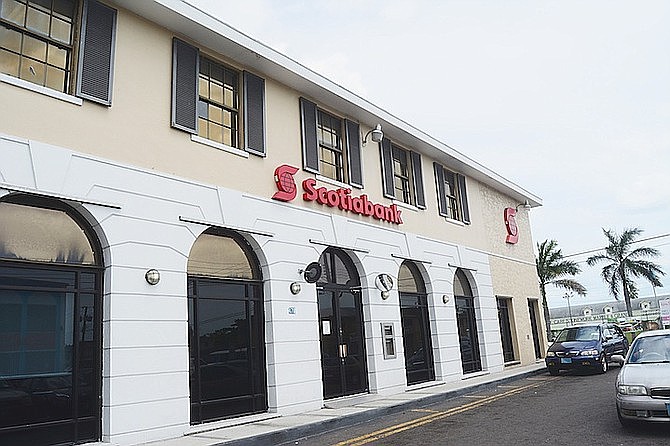
    A growing crisis over restricted banking and cash access on the Bahamian island of Exuma has spurred Scotiabank to take emergency action, after a popular resort cut off public entry to its on-site ATM, worsening months of service failures for local residents and businesses.

    The trouble began long before the latest restriction, with two other Scotiabank ATMs across Exuma already out of commission for an extended period, leaving locals dependent on the machine located within the Sandals Emerald Bay resort. When the resort implemented new rules barring non-guest public access to the ATM, the already limited cash access options on the island collapsed entirely, triggering urgent pushback from local political leaders and community members.

    Days after Exuma and Ragged Island Member of Parliament Chester Cooper raised the alarm over the steady decline of banking services across the Bahamas’ Family Islands, and held direct talks with Scotiabank Chief Executive Roger Archer over the persistent ATM failures, the bank has released an official update on its response.

    Scotiabank confirmed this week that it has partnered with an undisclosed local telecommunications provider to deploy alternative ATM units across Exuma, to restore basic cash access for clients. In addition to rolling out new machines, the bank stated that it is actively negotiating with its partner at Sandals Emerald Bay to reach a mutually acceptable solution that would reopen access to the existing on-site ATM. The institution declined to share further details, including the identity of the telecom partner, the locations of the new alternative machines, or a timeline for when the new units will be operational for public use.

    Cooper’s intervention comes against a backdrop of growing regional concern over the gradual withdrawal of full-service commercial banking from smaller, outlying Family Islands, leaving local communities and small business owners reliant on just a handful of working cash machines to meet daily transaction needs. Local residents have reported significant disruptions to commerce and personal finance as the cash shortage has dragged on for months, with the latest resort restriction pushing the situation to a breaking point.

    In its statement, Scotiabank reaffirmed its commitment to maintaining convenient, reliable banking services across its national ATM network. “We regret any inconvenience caused to our clients in Exuma, and will continue to keep the public updated as progress is made on resolving this situation,” the bank said.

  • Family mourns slain teacher as attackers remain free

    Family mourns slain teacher as attackers remain free

    On Friday, hundreds of grieving family members, friends, colleagues and community members gathered to lay Jillian Pinder, a 56-year-old primary school teacher, to rest, celebrating a life defined by devotion to education, deep faith, and radical love for her inner circle — even as unresolved questions about her brutal killing continue to hang over the mourning community.

    Pinder’s life was cut short on July 13, more than six weeks after she was attacked by two unidentified assailants on June 4. According to initial reports, the men confronted Pinder at knifepoint, claiming a close associate of hers owed them an unpaid debt before forcing her to an undisclosed location. There, they stabbed her in the throat and left her for dead. In a remarkable display of resilience, Pinder managed to escape and drove her vehicle to a public area, where she collided with another car; the occupants of that vehicle immediately called for emergency help and got her to care.

    Pinder was first admitted to a hospital’s intensive care unit, and after an initial recovery that led to her discharge, she was readmitted for ongoing complications before ultimately succumbing to her injuries. To date, no suspects have been arrested or charged in connection with the attack, leaving the Pinder family without the answers they have long begged for.

    At Friday’s funeral service, loved ones pushed past the agony of her unresolved death to share warm, vivid memories of the woman they knew and adored. Anna Capron, Pinder’s niece, told the crowd that even in her final days in the hospital, Pinder’s thoughts never strayed from her family. “Towards the end, even while she was in the hospital, she was thinking about family,” Capron shared. “She was so grateful for everyone that showed up for her. She said to me specifically, ‘Tell the family thanks.’” Capron remembered her aunt as a fun-loving, ever-present relative who dedicated herself to building lasting, joyful memories with every generation of the family, adding: “if Auntie Jill never got the chance to tell you herself how grateful she was, know that she was grateful for each and every one of us.”

    The family has repeatedly pushed for answers and justice in the months since the attack, with Pinder’s older sister Judith Rahming launching a public appeal last month for any information that could lead to arrests. In a viral Facebook post, Rahming wrote: “Lord, we are asking You for justice. We pray that You would reveal everything hidden in darkness. Give investigators, our family, or someone out there a sign – something that leads to the truth and to the person responsible.”

    Charliese Bevans, Pinder’s best friend of nearly 50 years, delivered a tearful tribute to their decades-long bond, recalling silly childhood adventures and quiet moments of support that shaped their friendship. Bevans described Pinder as a fiercely strong, protective, and unshakably loyal person who only let a small handful of people into her inner circle. “I am humbled and I am grateful to have been one of them,” Bevans said, noting that Pinder found more joy in quiet gestures of love and thoughtful, personal gifts than in expensive, flashy possessions.

    Beyond her family and friendships, mourners highlighted Pinder’s decades of devotion to her students at TG Glover Primary School, and her active, meaningful role in her local church community. Keisha Taylor, director of the Bahamas Harvest Small Group Sisters, said Pinder grew from a regular group member to a beloved spiritual sister whose gentle presence transformed the community. “She brought something different to our small group,” Taylor said. “She brought quietness, gentleness. She brought a different perspective.” Taylor remembered Pinder as an intentional, empathetic listener who always showed up for the people around her whenever they needed support.

  • Relatives reject false reports of mom’s death

    Relatives reject false reports of mom’s death

    As search operations enter their second week for missing Eleuthera resident Katrina Kelly, her family has issued a urgent public plea demanding an end to the spread of baseless, harmful false rumors circulating across social media platforms, while reaffirming their persistent hope that Kelly will be found alive.

    Keith Kelly, the missing woman’s uncle, spoke publicly to dismantle a string of unsubstantiated claims that have gone viral in local communities. Among the most damaging false reports were assertions that Kelly’s bullet-ridden, badly burned body had been recovered, and that her remains had been located at Preachers Cave. Kelly confirmed that law enforcement officials have explicitly refuted all of these claims, telling reporters that lead investigators confirmed no evidence has been found to back up any of the viral rumors.

    “When the first rumor broke yesterday, our whole family was gathered at my sister’s home waiting for updates,” Keith Kelly recalled in an interview. “Out of nowhere, someone got a text message claiming they’d found a body shot in the head and burned. It was all a complete lie. Later that same day, another fake story popped up saying she’d been found at Preachers Cave — that was another lie, too.”

    The family says the steady stream of misinformation has added unnecessary emotional strain at a time when they are already grappling with fear and uncertainty over Kelly’s disappearance. “If any credible discovery had been made, we would be the first to know — most of our family was on site with search teams yesterday,” Kelly said. “We can’t understand why anyone would choose to spread these cruel lies when we’re just trying to find our loved one. Whoever is behind these rumors needs to stop, immediately.”

    Kelly, a 34-year-old assistant manager at the popular Pink Sands Hotel who also runs a local car rental small business, vanished from her Bluff home on the night of last Tuesday. Her 11-year-old daughter, who was with her before she left, has told investigators that Kelly stepped out between 9 p.m. and 10 p.m. to drop off friends and pick up takeout food. The child told police she witnessed three unknown men dressed in dark clothing exit a vehicle, speak with Kelly, and that she left with the group. No contact from Kelly has been reported since that night.

    Family members previously told reporters that they did not immediately raise a full alarm, noting that Kelly often steps away from home around the anniversary and birthday of her late brother, Ashantio Clevorn Johnson, a 23-year-old trainee correctional officer who was fatally stabbed at a local restaurant and bar last year. Johnson’s birthday would have fallen on the Wednesday immediately after Kelly’s disappearance. What made family members grow deeply concerned, however, is that Kelly never reached out to confirm her safety — a routine she always follows when she steps away. Alarms were raised after she failed to pick her mother up from the airport following her mother’s return from a trip to the United States, and stopped responding to all text and call attempts.

    To incentivize public tips that could help locate Kelly, a combined reward of $52,500 is currently on offer, with $50,000 of that total contributed by the Fox Foundation. Search operations continued on yesterday, focused heavily on the Current Island region, with dive teams scheduled to survey the waters surrounding the search zone for any clues. Loretta Cash-Pierre, Kelly’s cousin, best friend and godsister, said she has turned over all of Kelly’s electronic devices to investigators, as well as information on renters of a white Nissan Cube linked to her car rental business.

    Authorities issued an official missing person bulletin for Kelly on Friday, and community members have been sharing missing person appeals across local networks. While relatives have previously acknowledged they fear Kelly may have been the victim of foul play or is being held against her will, they have not given up hope that she will be brought home safely.

    “If you’re seeing this, Kat, we’re out here looking for you,” Keith Kelly said. “We want you home, we want to see you alive, we just need to know you’re safe. Her mother is already grieving the loss of my nephew, and this is almost more than she can bear — but even she says ‘I know she’s alive.’”

    As search teams continue their work, the family is renewing two requests: anyone with any information that could assist the investigation is urged to contact the Royal Bahamas Police Force immediately, and anyone sharing or considering sharing unconfirmed reports about the case is asked to stop to avoid inflicting further harm on the already strained family.

  • Govt vows ‘firm response ’to tackle stray dog crisis

    Govt vows ‘firm response ’to tackle stray dog crisis

    A growing public safety crisis centered on unregulated stray dogs across the Bahamas has pushed national agricultural officials to roll out an aggressive, multi-pronged intervention in the coming week, targeting everything from dangerous free-roaming packs to illegal unregistered breeding operations. Minister of Agriculture and Marine Resources Jomo Campbell confirmed that authorities have spent weeks coordinating with animal welfare groups, law enforcement, and other key stakeholders to craft a tangible response to what he has labeled a full-blown “plague of stray dogs”, following a string of high-profile, devastating attacks that have left one child severely injured and an elderly man hospitalized.

    Campbell noted that cross-stakeholder planning predates the most recent high-profile attack, with the national Animal Control Board holding strategy sessions as recently as this week to finalize the framework of the new initiative. Speaking to reporters, he declined to preview specific policy details ahead of the official unveiling, but promised that the upcoming announcement will deliver far more than rhetoric: next week, the ministry will host press representatives to showcase concrete, actionable steps already underway to address the crisis.

    The intervention will not only target loose stray dog populations, Campbell said. It will also crack down on the root causes of the crisis: unregulated backyard breeding, unlicensed pet ownership, and irresponsible pet stewardship that allows dangerous animals to enter public spaces. The minister added that the entire animal control sector is undergoing a comprehensive modernization and overhaul to ensure the new framework can deliver on its promises, emphasizing that the coordinated cross-agency response “actually has teeth”. Going forward, he said, pet owners will face tangible legal accountability for irresponsible handling of animals that contributes to the stray dog public safety threat.

    The announcement comes on the heels of two horrific attacks that have drawn national outrage over the lack of consistent animal control regulation across the country. Most recently, nine-year-old American tourist Beau Brattain suffered more than 100 separate bite wounds when he was mauled by a pack of dogs while vacationing on Bimini. In the wake of the attack, Brattain’s family launched a public crowdfunding campaign on GoFundMe to cover the staggering costs of emergency medical care, long-term rehabilitation, travel, and reconstructive surgery, with projected total expenses ranging from $2 million to $4 million, depending on the extent of ongoing treatment the boy will require.

    Harrington Rolle, the 34-year-old dog owner linked to the Bimini attack, has already pleaded guilty to three criminal charges: negligently causing grievous harm, allowing a dangerous dog to roam at large, and owning an out-of-control dangerous animal that caused harm to a member of the public. He was sentenced to 12 months in prison by Acting Chief Magistrate Ancella Evans during his arraignment in New Providence.

    Just one month before the Bimini attack, 66-year-old Kemp Road resident Don Smith was hospitalized after being mauled by a pack of roughly 10 dogs – including four pit bulls, according to his daughter Carmetta Butler – while crossing a local road. The consecutive high-profile attacks amplified public pressure on the Bahamas government to implement decisive action to address the long-unresolved stray dog crisis that has threatened local communities and tourist safety alike.

    Campbell thanked the Animal Control Unit staff, the Royal Bahamas Police Force, and leading local animal welfare organizations including the Bahamas Humane Society and the Bahamas Alliance for Animal Rights and Kindness (BAARK) for their collaboration in developing the new intervention strategy, noting that coordinated input from all parties has been critical to building a response that balances public safety with humane animal welfare standards.