标签: Bahamas

巴哈马

  • PM blasts overtime amid grid overhaul

    PM blasts overtime amid grid overhaul

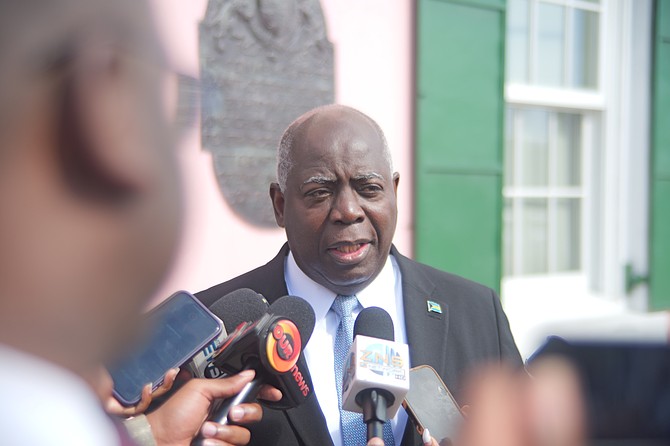
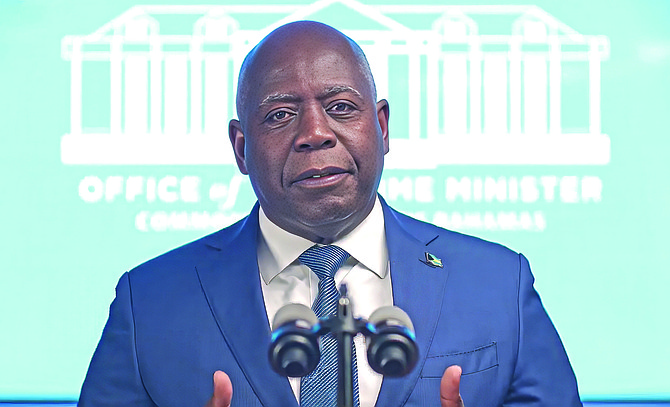
    Amid a summer of crippling, widespread power outages that have upended daily life for thousands of Bahamians, Prime Minister Philip “Brave” Davis has delivered a candid national address acknowledging no immediate end to disruptions, while laying out a sweeping multi-year plan to rehabilitate the country’s crumbling electricity system and confronting a growing overtime scandal at state-owned Bahamas Power and Light (BPL).

    Weeks of persistent interruptions, capped by a July 30 island-wide blackout across New Providence and five straight days of power cuts in parts of western New Providence, forced Davis to address public anger over unreliable service that has left residents sleeping in cooled cars, discarding tons of spoiled groceries and spending hundreds of dollars on emergency generator fuel. In his remarks, the prime minister refused to offer empty guarantees of restored service overnight. “I am not going to stand here and tell you that every light will stay on tomorrow,” he stated plainly, noting that decades of neglected infrastructure have created a crisis that cannot be resolved overnight.

    A core focus of Davis’ address was the explosive overtime controversy that has roiled BPL in recent days, after Tribune reporting revealed three senior employees in BPL’s Fuel and Performance Department collected a combined $601,295 in overtime between May 2025 and April 2026. Two of those workers earned more than $200,000 each in overtime alone, with some monthly overtime checks exceeding $20,000. Davis specifically called out records showing one employee logged 18 hours of work on Christmas Day, followed by 24 straight hours of work for three consecutive days — a total of 90 hours over four days.

    Calling the arrangement a blatant abuse of public funds, Davis argued it is impossible for any worker to safely perform critical utility work after working 24 straight hours for three days in a row. “It is not fair to the ratepayer, who funds every dollar. And it is not fair to the honest worker, whose profession is tarnished by it,” he said. The prime minister emphasized that the blame lies with a broken system of management oversight that persisted across multiple previous administrations, not BPL’s frontline workforce. “The overwhelming majority of BPL’s workers are decent, skilled Bahamians who keep our lights on and go out in storms when the rest of us are told to stay inside,” he noted. “This is not about them. This is about a system that permitted this type of abuse.”

    New overtime regulations imposed by the administration have already sparked a confrontation with the Bahamas Electrical Workers Union, which has filed a formal trade dispute and instructed members to only work scheduled standard hours until the conflict is resolved. Union president Kyle Wilson has accused the government of using the overtime scandal to distract from its own failures to resolve the electricity crisis, a charge the prime minister implicitly rejected by tying the abuse to longstanding systemic mismanagement.

    Turning to the broader power crisis, Davis outlined a clear timeline for restoring generation capacity and upgrading the country’s transmission and distribution network, which he noted has been pushed to breaking point by record heat, surging demand that has broken peak usage records twice this summer, and infrastructure that largely predates Bahamian independence. When his administration took office, more than 60 percent of generation capacity in New Providence and 80 percent in the Family Islands required replacement, Davis said, with BPL carrying more than $500 million in debt, $100 million in unfunded pension obligations, and facing an estimated $500 million in critical upgrades needed to avoid total system collapse. For years, BPL has relied on costly rented generation capacity — costing more than $40 million annually — to patch gaps left by its ageing, failing fleet.

    Davis clarified that the July 30 island-wide blackout, which lasted seven hours or more in many communities, was not caused by a generation shortage, but by an underground cable fault that triggered a critical transformer failure at Blue Hills. He explained that underground faults are far more difficult and time-consuming to locate and repair than overhead line issues, noting that crews often have to excavate and trace faults section by section. “It is not an excuse. It is an explanation, because you are entitled to know why – although it does not ease the misery we all felt,” he said.

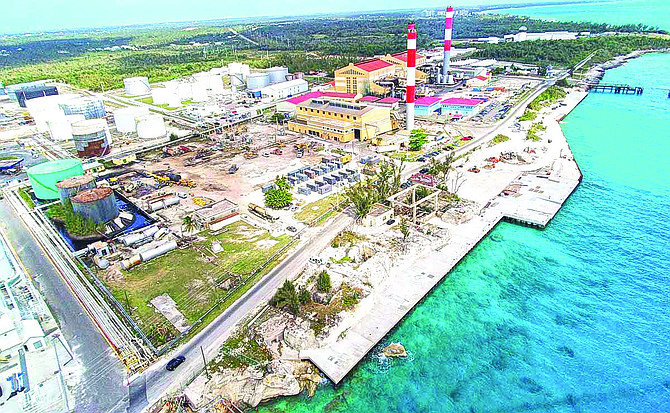
    In the near term, Davis confirmed that the Blue Hills GT2 generator, out of service since spring, is returning to operation alongside a battery storage system designed to ease strain during evening peak demand periods. Two engines at the Clifton Pier generation facility are scheduled to be back online by the end of September, with a Blue Hills turbine undergoing major inspection returning to service in the first quarter of 2026. The administration plans to begin phasing out 40 megawatts of expensive rented generation in January 2026, but only after permanent replacement capacity has been tested and confirmed operational. All failed substation equipment, transformers and switchgear that failed this summer are being fully replaced rather than patched, Davis added, and remote monitoring systems will go live at Clifton Pier by the end of 2025, followed by Blue Hills, allowing crews to diagnose faults faster using real-time data.

    Longer-term infrastructure plans include the first phase of a new liquefied natural gas (LNG) generation facility coming online by the end of 2025, which will scale to 190 megawatts of cleaner, lower-cost gas-fired capacity by late 2027. A 40-year-old natural gas pipeline will be replaced, and new combined-cycle generation plants at Blue Hills are scheduled to be commissioned in 2027 and 2028. Davis said the overhaul will eventually cut fuel costs for power generation to a fraction of current levels, but warned that temporary disruptions are still likely as old infrastructure is decommissioned and new systems are connected. “There will be setbacks. There will be equipment failures,” he said.

    The Bahamas Grid Company, which manages transmission and distribution for New Providence while BPL handles generation, has already completed a $130 million upgrade that included new steel poles, larger power conductors, protection devices, fiber communications, a looped transmission system and three new high-voltage substations. Those substations reached mechanical completion in July and are now in final testing. Davis said work completed in 2025 has already reduced outage frequency by 45 percent and outage duration by 35 percent compared to historical averages, but acknowledged that those gains have not been felt by all residents amid this summer’s severe disruptions. “Those gains are real. But the outages Bahamians are experiencing now are also real,” he said, noting that the upgrade process remains incomplete and benefits have not been evenly distributed across all communities.

    In addition to generation and transmission upgrades, Davis announced plans to reform rules for residential solar systems, working alongside the Utilities Regulation and Competition Authority, BPL, consumer advocates and local solar installers to simplify application processes, set predictable approval timelines, expand access to bi-directional meters, and clarify policies for compensating homeowners for excess power supplied back to the grid. The administration will also accelerate the rollout of advanced smart meters that allow for faster outage detection and give consumers more detailed data on their energy use.

    Davis framed the electricity overhaul as the most difficult infrastructure challenge the Bahamas has faced in its 50 years of independence, rejecting the longstanding practice of patching failed equipment and renting temporary generation to simply get through another summer. “We are not here to manage decline. We are not here to defend the status quo,” he said. Acknowledging that Bahamians have already waited far too long for reliable power, he ended with a commitment to leave a vastly improved system for future generations: “What we inherited is not what we will leave behind.”

  • GB mom overcomes stage two breast cancer

    GB mom overcomes stage two breast cancer

    For 30-year-old Desire Sands of Grand Bahama, the past year has been defined by parallel grief and grit: just seven months after laying her mother to rest following a breast cancer battle, she received a diagnosis of stage two breast cancer herself. Now, after months of grueling treatment, Sands is celebrating the milestone of being declared cancer-free, a win she calls nothing short of a second chance at life.

    When Sands received her diagnosis in April 2025, her daily routine shifted dramatically. What had been days spent playing with her three-year-old young son turned into a grueling cycle of regular trips from Grand Bahama to New Providence, where she underwent chemotherapy appointments at Princess Margaret Hospital’s Oncology Clinic. Through every step of the treatment process, she carried the memory of her mother, who had lost her own fight with the same genetic-linked disease just months prior.

    The life-changing confirmation of her remission came on August 10, when a close friend accompanied her to a routine appointment with her oncologist on Grand Bahama. As her care provider reviewed her pathology reports and blood work, he delivered the news Sands had waited months to hear: she was officially cancer-free. “My initial reaction was emotional because that’s something I’ve been waiting to hear,” Sands shared in an interview. “I’m still processing it honestly, and I was excited to give the good news to the same persons I gave the bad news to when I first got diagnosed.”

    Sands says the clean bill of health feels like a new beginning, an opportunity to live with even more intentionality than she did before her diagnosis. Her oncologist echoed that sentiment, encouraging her to pursue new goals from going back to school to learning a new skill, reminding her it was finally time to embrace the next chapter.

    But Sands’ road to remission was far from easy. A person living with sickle cell disease, she faced amplified complications during her final four rounds of chemotherapy. The powerful treatment triggered severe joint pain that was hard to distinguish from a sickle cell crisis, leaving her struggling to cope with unrelenting discomfort. She was admitted to hospital twice during this period, and at one point required three blood transfusions to stabilize her health.

    Even at her lowest points, however, Sands never allowed fear of death to take root. “I never allowed negative thoughts to overwhelm me,” she explained. “Anytime something happened I just took it as “I’m not going to rush my process” even though I wanted to be done quickly.”

    One of the hardest parts of her journey, she said, was maintaining a sense of strength for her young son, who often noticed when she was fatigued or unwell. Sands made a deliberate effort to explain her illness to her son in age-appropriate terms, and he soon developed a gentle understanding of what she was going through. After treatments, he would kiss her treatment port and check in to ask how she was feeling. That small, consistent support kept her going, she said: “I know I needed to keep going for him because he saw me at my lows and I wanted him to see the good too.”

    Sands credits her unwavering faith in God as a core source of strength throughout her battle, alongside the support of friends and family. Cancer has touched multiple generations of her family, and even as she grieved her mother’s death while fighting her own diagnosis, she said her mother’s memory remained a constant inspiration.

    Now stepping into what she calls her new chapter, Sands wants to share a message of hope with other women navigating breast cancer treatment. Too often, she said, society frames a cancer diagnosis as an automatic death sentence, and doesn’t celebrate enough the stories of people who fight and win. But that narrative doesn’t have to hold, she said: “Cancer isn’t a death sentence. Once you lean on God’s strength and do as your doctor says your journey will be a good one.”

  • Bahamian dad seeks answers after teen son drowns in US

    Bahamian dad seeks answers after teen son drowns in US

    A devastating accidental drowning has claimed the life of a 16-year-old Bahamian-American teenager, a skilled and passionate swimmer whose death has left his family grappling with shock and unanswered questions about the tragedy that unfolded on a popular Michigan lake.

    Kaden Dean Smith was enjoying a family gathering at Gun Lake, located in Orangeville Township, when he went missing while swimming on August 12. After a two-day search conducted by local emergency crews, his body was recovered from the lake on August 14 by response teams working with Michigan State Police out of Barry County. Initial official records note the teen was last seen swimming on the evening of August 12.

    For Kaden’s father Audley Dean, a resident of Grand Bahama with years of professional experience in the diving industry, the tragedy feels unfathomable. He describes his son as a confident, experienced swimmer who spent countless hours in and around water, and who knew Gun Lake well from regular family trips to the area. He says he has yet to receive a clear, full account of the incident; Kaden’s mother, who was at the gathering when the accident occurred, was too overwhelmed by distress to share a detailed timeline of events.

    Dean shared that Kaden was swimming with a group of friends when trouble struck as the teen was heading back to shore. “They tried to get to him in time,” Dean said in an interview, his voice heavy with grief.

    Born in the U.S. to an American mother and Bahamian father, Kaden maintained a deep, meaningful connection to his father’s home in Grand Bahama. That bond grew even stronger during a summer visit just last year, when Kaden spent months staying with Dean on the island. The pair spent nearly all their free time together on local beaches, with Dean never once worrying about his son’s water safety thanks to his proven swimming ability and the teen’s obvious love for the ocean.

    “It was awesome,” Dean recalled of their time together, pulling out photographs of the pair’s summer outing. He had hoped this annual trip would become a beloved family tradition, with Kaden returning to Grand Bahama every one to two years to reconnect with his Bahamian roots.

    Now, Dean is left to reconcile his deep confidence in his son’s skills with the sudden loss. He reflected on the unforgiving, unpredictable nature of open water, a truth he has learned from decades of working around the ocean that makes this tragedy no less devastating.

    “It’s just one of those freaky things,” he said. “The ocean and water in general just don’t respect anybody, I can tell you that. I mean, I’ve watched people drown in shallow water. It’s tough.”

  • Fears grow for missing mother

    Fears grow for missing mother

    A growing wave of anxiety has swept through the close-knit community of Eleuthera as the search enters its seventh day for Katrina Kelly, a local entrepreneur and hospitality professional who vanished under suspicious circumstances last Tuesday night. Kelly, who serves as assistant manager at the popular Pink Sands hotel and runs a small independent car rental business, left her Bluff neighborhood home in the company of three unknown men, and no one has heard from her since.

    Her 11-year-old daughter, the last person to see Kelly, gave a detailed account of the night of her disappearance to local outlet The Tribune, speaking with the full consent of her family. The child recalled that between 9 and 10 p.m., Kelly told her she was stepping out to drop off friends and collect food for the family. When the girl looked out moments later, she saw three unidentified men exit a vehicle, speak briefly with her mother, before Kelly got into the car with the group and drove away. The 11-year-old told reporters she did not recognize any of the three men, and Kelly did not share any details about who the visitors were or when she planned to return.

    For Kelly’s family, this disappearance carries a devastating extra layer of grief: just 12 months prior, Kelly’s 23-year-old brother Ashantio Clevorn Johnson, a trainee officer with the Bahamas Department of Correctional Services, was fatally stabbed in an incident at the Blu Ice Restaurant and Bar. What would have been Johnson’s birthday fell just one day after Kelly vanished, adding a grim timing to the family’s ongoing nightmare.

    Relatives initially did not sound the alarm immediately after Kelly went missing, as they explained she had a pattern of stepping away from daily life to grieve privately around the anniversary of her brother’s death and birthday. But in previous instances, she always informed family members of how long she would be gone and checked in to confirm she was safe. This time, there has been complete silence.

    Loretta Cash-Pierre, Kelly’s cousin, lifelong best friend and godsister, told reporters that a key detail has deepened the family’s suspicion of foul play: a white Nissan Cube connected to Kelly’s car rental business is also missing. Pierre explained that the vehicle was actually Kelly’s personal car, which she only rented to people she knew and trusted. According to Pierre’s account, the three men who arrived at Kelly’s home on Tuesday night had rented the car and were returning it, which is why Kelly agreed to meet them. Pierre has already turned over all information she has about the renters to investigating officers, and also handed over Kelly’s personal electronic devices to help with the search.

    Red flags began to pile up quickly: by Wednesday, Kelly failed to pick up her mother from the airport after her parent returned from a trip to the United States, a responsibility she had confirmed she would handle. By Thursday, Pierre still had not received a reply to a message she sent Kelly the night of her disappearance, and other family members – including Kelly’s 18-year-old daughter – began reaching out to report they had also not heard from the missing woman.

    Weeks before her disappearance, Pierre added, Kelly posted a public social media status referencing ongoing conflict with clients who had refused to pay for their car rentals. It is unclear if that conflict is connected to her disappearance, but the detail has added to the family’s concerns.

    The tragedy has left Kelly’s already grieving parents shattered, Pierre said. Just one year after losing their son, the couple now faces the nightmare of having their daughter missing, and Kelly’s father has been particularly overwhelmed by the stress of the situation. Kelly’s mother, too, has been unable to handle inquiries about the search, and asked Pierre to speak on the family’s behalf. Even her 11-year-old daughter has spoken about the relentless stress of the past week, noting that while her mother had stayed away before, she always checked in with loved ones.

    Local law enforcement released an official missing person poster for Kelly on Friday, two days after she was last seen, and Pierre said investigators have been cooperative and responsive to the family’s tips. Despite the growing fears and the suspicious circumstances surrounding her disappearance, Kelly’s relatives have not given up hope, and are clinging to the belief that she will be found alive and unharmed. Speaking to reporters, Pierre emphasized that violent disappearances of this kind are deeply out of character for the small, tight-knit island community. “Eleuthera is supposed to be a safe place where you let your hair down. These kind of things don’t happen in Eleuthera,” she said.

  • PM Davis to address nation amid worsening BPL crisis

    PM Davis to address nation amid worsening BPL crisis

    The Bahamas is facing a growing public crisis over persistent, widespread power disruptions across New Providence and multiple Family Islands, prompting Prime Minister Philip Davis to deliver a nationally televised address Wednesday night to address ongoing reliability failures at the country’s sole electricity provider, Bahamas Power and Light (BPL).

    The announcement comes at the end of another weekend of rolling blackouts, capping a brutal summer that has seen BPL grapple with repeated service failures, soaring public anger, and internal labor unrest that has further strained grid operations.

    No community has been hit harder than Grand Cay, where residents have endured near-constant power loss for nearly two weeks. A seven-day outage last week was only temporarily resolved when partial service was restored early Tuesday, only for the island to fall back into full blackout Thursday night. As of Tuesday, power had not been restored, forcing most households to rely on costly gasoline-powered generators to keep refrigerators, medical equipment and other essential devices running.

    Local residents describe the crisis as the worst electrical failure they have ever experienced, with the added financial burden of constant generator use pushing household budgets to the breaking point. One resident told local outlet The Tribune that the average household spends around $40 per day on gasoline, with larger properties paying far more. Barry, a long-time Grand Cay resident who powers three properties — his own home, a rental unit, and his stepmother’s residence — told reporters he spends roughly $150 daily on fuel alone. He called the ongoing situation an absolute nightmare.

    The outages are not just disrupting daily life: they are also derailing back-to-school preparations for local families and hurting the island’s critical tourism sector. Barry noted that he recently lost a tourist booking after the prospective visitors learned of the ongoing power problems. “We have so many tourists that love this place, but you can’t blame them because they want to be comfortable. The power situation has put us in a chokehold,” he said.

    BPL has attributed Grand Cay’s prolonged outage to a catastrophic mechanical failure of the island’s primary existing generator. The company had planned to bring a replacement generator online to restore full service, but announced over the weekend that the replacement unit requires additional repairs and extensive safety testing before it can be deployed, leaving residents in limbo with no clear timeline for full restoration.

    Grand Cay is far from the only affected community in Abaco. Nearby Guana Cay has also experienced extended outages, which BPL traced to two separate cable faults, including a damaged subsea cable that serves the southern end of the island. As of Tuesday, BPL announced that repairs to the subsea cable have been completed, but work on an underground cable fault in North Guana Cay remained ongoing. BPL also reported unplanned outages in Dundas Town Tuesday evening, with no official cause identified as of press time.

    Widespread outages were also reported across multiple communities in New Providence over the past weekend. BPL noted that some outages were pre-planned to allow for critical system upgrades in areas including Cowpen Road, Faith Gardens, Golden Gates and Carmichael Road. Other unplanned disruptions were blamed on tripped feeders, pre-scheduled tree-trimming work, and proactive outages designed to prevent dangerous system overloads during peak summer demand.

    The ongoing reliability crisis has unfolded against a backdrop of deep internal turmoil at BPL, sparked by a new overtime policy implemented by the Davis administration. The controversy began last week when The Tribune exclusively reported that three senior employees in BPL’s fuel and performance department collected a combined total of more than $600,000 in overtime pay between May 2025 and April 2026. The administration currently spends roughly $20 million per year on employee overtime for BPL, a figure senior officials have called “unacceptable” and financially unsustainable for the public utility.

    In response to the excessive overtime payouts, the administration introduced new rules that cap scheduled overtime, require formal management review for employees who repeatedly hit the overtime cap, and mandate senior leadership approval for any worker whose overtime exceeds a set percentage of their base annual salary. The Bahamas Electrical Workers Union has opposed the new policy, arguing it violates the terms of its existing collective bargaining agreement with the company. The union has already filed a formal trade dispute over the change and has instructed all members to work strictly to rule, meaning employees only work their standard scheduled hours with no voluntary overtime until the dispute is resolved.

  • Bahamasair flight lands safely after gear failure

    Bahamasair flight lands safely after gear failure

    On a routine Friday morning commute that was supposed to take just 35 minutes, passengers aboard Bahamasair flight UP136 faced an unexpected hour-long scare when a malfunction in the aircraft’s primary landing gear forced the crew to circle the Bahamian capital before a successful emergency landing.

    The flight, which carried Abaco resident Jade Adderley, his wife, and their six-year-old son, had departed Marsh Harbour without incident and was nearing its destination at Lynden Pindling International Airport (LPIA) in New Providence when the problem emerged. Adderley, a passenger who shared his firsthand account of the incident, told local media he first sensed something was wrong when he failed to hear the familiar sound of the landing gear deploying as the plane began its descent.

    “The pilot lowered the nose and lined up for landing, then suddenly we climbed back into the air,” Adderley recalled. The aircraft circled back and attempted a second approach, but the primary landing gear still failed to extend. That is when fear began to spread among aware passengers, Adderley said, who spent the next 45 minutes circling the airport as the crew worked to resolve the issue.

    For Adderley, the long delay in the air brought traumatic memories to the surface: a recent aviation tragedy in Andros that had already claimed lives. “A lot was running through my mind the entire time we were airborne,” he said. “I kept praying the whole time. I thought, is this how it ends for us?”

    Many passengers remained unaware of the severity of the issue through much of the ordeal: Adderley’s six-year-old son slept through part of the incident, and other travelers stayed occupied or napped as the plane diverted farther out to sea before returning for a final landing attempt. Adderley only quietly informed his wife of the potential danger as the plane continued to circle.

    In a statement released following the incident, Bahamasair confirmed that the crew immediately followed established emergency protocols after the primary landing gear failed, activating the plane’s backup alternative landing gear system and notifying local emergency authorities as a standard precaution. Emergency responders including ambulances and police vehicles were deployed to the runway to stand by, though the landing went off without incident, and no emergency medical or rescue assistance ended up being needed.

    After the plane touched down safely, Adderley thanked both the pilot and the on-ground team at LPIA for their calm, professional handling of the emergency. “God was good, we all got out safe,” he said, praising the crew’s steady response throughout the hour-long crisis.

    Following the safe evacuation of all passengers, the aircraft was taken in for immediate repairs. Bahamasair confirmed that the plane was fixed, inspected, and cleared to return to regular passenger service shortly after the incident. No injuries were reported among any crew members or passengers on board.

  • Sister says jealousy led to Fire Trail Road murder

    Sister says jealousy led to Fire Trail Road murder

    A 30-year-old father of two, gunned down in a targeted shooting last week on Fire Trail Road East, left behind two young children — an eight-year-old and a six-month-old infant — and a shattered family still reeling from a recent previous loss. According to his older sister Daphnee Sera, jealousy over her brother’s hard-won progress and new vehicle purchases may have pushed an attacker he likely knew to take his life.

    The deadly attack unfolded on Wednesday night, when a suspect dressed in a black hoodie approached Abdul Zidor’s vehicle and opened fire as Zidor attempted to escape. Police shared surveillance footage of the incident with Sera, which she says confirms the attack was premeditated and specifically targeted her brother. The footage shows Zidor sitting in his recently bought car with a friend when the gunman ran across the road toward the vehicle and began shooting. Though Zidor ran to get away, the suspect chased him down and killed him, a scene Sera described as horrific to watch.

    Sera, 32, explained that the family suspects resentment over Zidor’s work ethic and recent success drove the killing. Just before the attack, Zidor had purchased two vehicles: one he planned to repair and give to the mother of his children, and the second new car he was sitting in when the gunman approached. “He was a hustler,” Sera said. “That’s what they didn’t like.”

    Contrary to assumptions that may come with the public killing, Sera described her brother as a man who avoided conflict at all costs, preferring to resolve disagreements immediately rather than let lingering grudges develop. “Everybody who knew him personally knew he do not bother,” she said. “If you have a problem with him, he rather squash it so y’all don’t have no lingering beef.”

    Sera was on the island of Eleuthera when the shooting happened, resting at her cousin’s home when Zidor’s girlfriend called with the devastating news. She recalled the frantic call: “She was like, ‘Sister, sister, sister, they kill him for me’. And I was like, ‘What?’ She said they kill Abdul and I scream my cousin’s name.” Grief-stricken and inconsolable, Sera traveled back to New Providence the next morning to be with the rest of the family.

    The killing is the second devastating blow the family has endured in just over a year: they are still mourning the murder of a cousin killed in 2023. “Everybody take that hard and everybody trying to cope as best as we can cope because that just hit us suddenly,” Sera said. “I literally just stopped crying.”

    Of eight siblings, Daphnee and Abdul were the closest, having grown up together after the pair lost their mother more than 10 years ago. They remained in constant contact as adults, and Zidor often spoke of his commitment to providing for his sister and his two young children. “He was very family-oriented,” Sera said.

    The day before the shooting, the siblings joined a video call with another brother, laughing and joking like usual. Sera remembered her brother as a lighthearted, bubbly person who loved making people laugh and teasing his older sister. “Everything like he don’t take nothing serious?” she said. “He loved to get off and get on people’s nerves especially mine.”

    One thing Sera said she is particularly proud of is how Zidor turned his life around after a run-in with the law in his 20s. He served a one-year prison sentence for a drug offense, but never had further legal trouble after his release. “From the one time he went to jail,” Daphnee Sera said, “that was it.” He had since dedicated himself to supporting his family and lifting up the people around him, she added.

    According to tracking by The Tribune, Zidor’s murder pushes the Bahamas’ national murder count to 48 for the current calendar year. Police have not yet announced an arrest or official motive for the killing as the investigation continues.

  • Families gather to honour 10 victims of fatal plane crash

    Families gather to honour 10 victims of fatal plane crash

    One month has passed since a commercial aircraft operated by Flamingo Air crashed into dense shrubbery just outside the runway of San Andros airport, claiming the lives of all ten people on board. On Friday, heartbroken relatives, friends and community leaders gathered at a solemn memorial service to celebrate the lives cut tragically short, honoring each victim’s unique legacy, dreams and the lasting impact they left on those who loved them.

    The memorial, hosted by The Bahamas Christian Council at Bahamas Faith Ministries International, paid tribute to each of the ten victims. The group included five members of the popular local band Da Pond: Giovanni “Geo” McKenzie, Rashad Storr, Mateo Winder, Toniquea Gilot and Tra’vis Johnson. They were joined by veteran Bahamian entertainer Melvin Henfield, known professionally as DJ Fresh. Two Andros Island natives, Quintin Myers and Macaro Rolle, experienced 27-year veteran pilot Franklyn Cambridge, and 16-year-old Nicholas Oliver Jr. also died in the July 10 crash.

    The ceremony blended hymns, communal prayers, and raw, emotional reflections as family members shared personal tributes, many delivered through pre-recorded video messages. For Captain Cambridge, who piloted the doomed flight, his parents shared that his lifelong passion for aviation began in childhood, when he constantly requested toy planes as gifts. That childhood passion grew into a nearly three-decade professional career, during which he consistently pursued advanced certifications in aviation techniques, safety policies and operational procedures. His parents shared one of his most cherished personal mantras: “Falling doesn’t make you a failure. Staying down makes you a failure. Don’t ever give up.” They closed their tribute by noting that Cambridge died doing what he loved most in the world.

    Archbishop Dr Elton Major and Reverend Dr Michelle Major remembered their son Melvin Henfield, recalling that his natural talent as an entertainer had the power to energize any room and create unforgettable moments for audiences. “While DJ Fresh’s music may have stopped here,” they reflected, “his song plays on in our stories, in our laughter, in every beat that reminds us of it.”

    For Quintin Myers, sister Tamara Myers struggled through tears to describe her brother as the constant source of joy and connection that held their entire family together. She shared that Myers had been looking forward to an upcoming summer cruise, had recently purchased a new car and already secured his ticket for the trip—dreams that would never be realized. “He had so many aspirations that I think he never even got to realize,” Ms Myers said, “and I think a lot of people are going to miss that bubbly energy in Quinton. He was the glue for the family. He changed the room and connected all of us in such a special way.”

    Giovanni McKenzie’s sister Shandera McKenzie-Nottage honored her brother through an original poem she wrote, titled A Moment of Silence. “A moment of silence for the friend who became family to so many,” the poem reads, “the encourager, the listener, the steady one, the quiet spring that held others together without ever asking who was holding him.”

    In remarks to the gathered families, Bahamian Prime Minister Philip “Brave” Davis offered words of comfort, emphasizing that no family was walking this path of grief alone. “Each has gone on home too soon,” Mr Davis said. “10 seats, 10 families.” He urged attendees to not let the tragic circumstances of the crash overshadow the full lives the victims lived. “Their final journey does not define their lives,” he said. “We honor them for the happiness they brought to others, the work they performed, the friendships they nurtured, and the love that they shared.”

    Opposition leader Michael Pintard echoed this sentiment, encouraging those in attendance to preserve the victims’ legacies by leaning into joy in their own daily lives. “And so I encourage all of us, as I encourage myself,” Mr Pintard said, “that we have to suck some joy out of this life every single day because we have no idea when it is our last.”

  • $20m overtime ‘unacceptable’

    $20m overtime ‘unacceptable’

    The Davis administration of the Bahamas has publicly acknowledged that Bahamas Power and Light (BPL), the country’s primary electricity provider, has been spending roughly $20 million annually on overtime costs. Following a internal review that uncovered irregular patterns and suspicious anomalies in overtime allocation practices, the administration has labeled the current spending levels as both unacceptable and financially unsustainable.

    This official confirmation comes on the heels of an exclusive investigative report by The Tribune, which obtained internal BPL records revealing that three senior staff members in the utility’s fuel and performance department collected a combined total of more than $600,000 in overtime payments between May 2025 and April 2026. The records, generated during a company-wide probe into overtime expenses, show that the three employees received between $20,000 and $25,000 in overtime pay every single month – sums that are multiple times larger than their annual base salaries.

    Despite the administration rolling out new regulatory measures intended to prevent similar extreme overspending from occurring in the future, key questions remain unanswered. It is still unclear which senior official authorized the excessive payments already issued, how the amounts were allowed to climb to such unprecedented levels, and whether any individual will face disciplinary action or accountability for the irregularities. The Tribune reached out to multiple senior BPL executives and board members for comment on the controversy; however, those who were available declined to speak on the record, while others failed to respond to repeated calls and messages as of press time.

    In an official statement, the government noted that any suspected misconduct will undergo a full investigation, and legal action will be taken against any party found to have engaged in wrongdoing, negligence, or failed oversight – regardless of whether the party involved is a frontline employee, manager, director, or other senior officer. At the same time, the administration emphasized that BPL will not pre-judge any individual or draw premature conclusions before all relevant facts are fully verified.

    The exposure of these excessive overtime payments has amplified public and regulatory scrutiny of BPL’s labor practices, and has sparked broader debate about the effectiveness of management oversight at the state-owned utility. Desmond Bannister, former Works Minister who oversaw BPL during the previous Minnis administration, attributed the crisis to deep-seated management failures and questioned whether the company possesses sufficient professional expertise to operate effectively.

    “There is no scenario where that level of overtime could accumulate at BPL if the organization did not have fundamental management challenges,” Bannister stated. He added that the sheer scale of the overspending also points to major shortcomings in BPL’s ability to maintain consistent, reliable operations. “If the company had the professional skills and workforce capacity it needed, this situation would never have arisen,” he said. Bannister acknowledged that minor overtime irregularities may have occurred during his time in office, but stressed that nothing approached the scale of the practices now being exposed.

    The Davis administration explained that it has spent several months working through BPL’s board and executive leadership to engage with key stakeholders, including the Bahamas Electrical Workers Union (BEWU) and the Bahamas Electrical Utility Managerial Union (BEMU), on the need to build a more transparent, accountable, and financially sustainable overtime system. Administration officials recognize that overtime is sometimes unavoidable: it is often needed to maintain reliable electricity service, respond to unexpected outages and emergencies, and protect public safety. Even so, they argue that an annual overtime bill nearing $20 million places an unreasonable financial strain on BPL’s budget, and ultimately passes that burden on to the Bahamian public.

    Officials clarified that the proposed reforms are not intended to block legitimate overtime or deny workers earned compensation that has been properly approved. Instead, the core goal is to ensure all overtime is truly necessary, fairly distributed across staff, formally authorized by appropriate leadership, and fully documented, while also cutting back on excessive working hours that create fatigue-related safety risks for employees, their coworkers, and the general public. The government emphasized that the review process is focused on strengthening BPL’s internal systems and protocols, not targeting individual employees, and that the primary responsibility for preventing future irregularities will rest with BPL’s management team moving forward. Managers and directors will be held accountable for properly authorizing, documenting, tracking, and reporting all overtime within their respective departments.

    The proposed overtime reforms have sparked fierce opposition from the BEWU, which has issued an official instruction to all its members to work only their scheduled regular hours and leave the workplace immediately once their shift ends. The union has also filed a formal trade dispute, arguing that the new regulations violate existing industrial agreements between the union and BPL. “We will not stand for these injustices,” the union said in a formal notice to its membership, repeating its directive for workers to perform “NORMAL WORKING HOURS ONLY” and “GO HOME” after their shifts conclude.

    The BEMU, which represents BPL’s middle management cohort, has also pushed back against narratives that place blame for the excessive overtime on rank-and-file workers. “Employees should not bear the public blame for overtime that was required, authorized, approved, monitored and paid through established management processes,” the union stated. While BEMU says it supports accountability, robust oversight, and responsible management, the organization argues that these principles must be applied equally at every level of the organization. BEMU also raised objections to the public release of sensitive personal employee information, insisting that such data must be handled in full compliance with existing privacy and data protection regulations.

    The managerial union further noted that BPL operates 24 hours a day, 365 days a year to provide an essential public service, meaning overtime is unavoidable in some scenarios to address emergencies, unexpected system failures, post-outage restoration work, scheduled maintenance, persistent staffing shortages, and other unplanned operational demands. When departments are chronically understaffed and employees have been forced to work consistent excessive overtime for months or even years, BEMU argues that the appropriate policy response is to address understaffing by reassessing overall staffing levels, workload distribution, and long-term manpower needs – not to blame frontline and managerial workers for systemic failures.

    The Davis administration says it recognizes the right of union leadership to voice opposition and raise concerns about the reforms, and that it will not speculate on the motives of union representatives who disagree with the changes. The administration says “constructive dialogue” with all stakeholders will continue, and that all legitimate concerns will be taken into consideration. At the same time, officials insist the government has a non-negotiable responsibility to protect workers, safeguard public funds, and ensure BPL operates safely, transparently, and in the best interests of the Bahamian people. The administration expects the reforms to be implemented consistently and fairly across all departments of BPL, and calls for full cooperation from management, employees, and union representatives throughout the rollout.

    The current dispute comes at a particularly challenging time for BPL, which has already faced widespread public criticism over repeated unplanned power outages and poor electricity service reliability across New Providence this summer. It also unfolds against a shifted operational landscape for the Bahamas’ electricity sector: the newly created Bahamas Grid Company (BGC) now manages New Providence’s transmission and distribution network, while BPL retains responsibility for power generation and continues to work alongside BGC. This split in responsibility has raised questions about what impact the BEWU’s work-to-rule action could have on post-outage power restoration efforts.

    BEWU President Kyle Wilson argues that the separation between BPL and BGC does not mean BPL employees are no longer involved in transmission and distribution work. He noted that a large share of the overtime paid to BPL employees comes from work the staff has done to assist BGC with its new responsibilities. Former minister Bannister also defended workers against being scapegoated for broader systemic operational failures, and criticized the Davis administration’s decision to terminate its agreement with Wärtsilä and bring in BGC, an organization he says had no prior experience operating transmission and distribution networks in the Bahamas.

    “So you have these minimal number of BPL workers who have to fill in on all these things,” Bannister explained. “These guys are going there, they’re doing their best in circumstances that are not good at all.” He added that management should have identified and addressed these issues long before the current controversy erupted. “They [workers] should not be scapegoats,” he said. “And if there was challenges, people who manage them ought to have known that a long time ago. It doesn’t come up overnight.”

  • Mother meets house in flames

    Mother meets house in flames

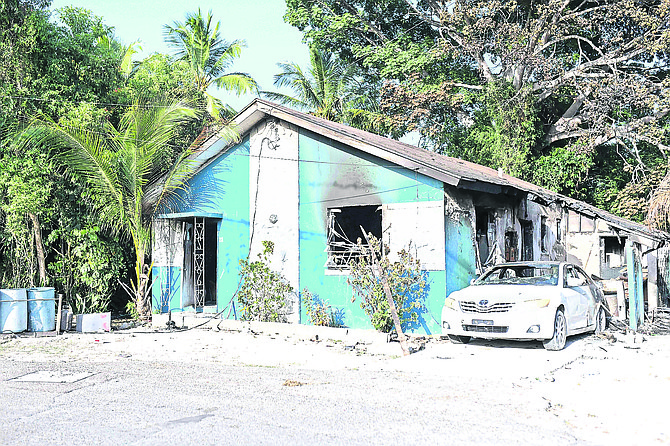
    An unexpected residential fire has left a Johnson Road family of five homeless just days before two young children are set to begin the new school year, turning a routine day of work and back-to-school preparation into a devastating crisis. Diana Desir, a mother of two young children who had lived in the three-bedroom family home since 2019, recounted how a random good Samaritan’s quick thinking saved all the people inside the property when the blaze broke out, even as the incident left her family facing an uncertain future.

    When the fire ignited on Wednesday, Desir was already at her workplace, and her two young children were not at the property. Inside the home at the time were Desir’s boyfriend’s mother and two young nieces. None of the people inside initially detected the fire, which started in the property’s external meter box. That changed when a passing motorist noticed the flames and repeatedly honked their car horn to alert those inside.

    Desir shared that the woman inside initially ignored the repeated horn blasts, as she was not expecting any visitors. It was only when the driver exited their vehicle and began shouting that the entire home was at risk that the group realized the danger. Immediately, the woman gathered the two nieces from a back room and rushed everyone out of the building to safety, moments before the fire spread deeper into the structure. The quick-acting driver then placed emergency calls to local police and fire response teams to contain the blaze.

    Desir did not receive any news of the fire until she returned home around 3 p.m., after finishing a morning of work, picking up her children, and completing back-to-school shopping for the upcoming term. When she pulled up to her home and saw the extent of the fire damage, she broke down in tears. She told reporters that there had been no sign of trouble when she left for work that morning, and she had even spent part of the morning giving thanks for her home and family. To go from that gratitude to having nowhere to stay overnight was a devastating shock that she never could have anticipated.

    Right now, Desir’s biggest worry is securing permanent, suitable housing for her family, which includes her 1-year-old and 2-year-old children. In the current tight housing market, finding affordable, child-friendly rental properties has become a major challenge, she explained. While the fire destroyed most of the family’s belongings—including clothing, irreplaceable family photos, personal documents, and many of the children’s new school supplies—there have been small moments of luck: the family was able to recover the oldest child’s school shoes and backpack, and after a search of the damaged property the day after the fire, they found all the children’s birth certificates completely undamaged by smoke or flames.

    In the wake of the disaster, community support has poured in to help the family get back on their feet. Local community members have donated clothing and school supplies to make sure the two children can start the school year as planned: the oldest is set to begin his second year of schooling, while the youngest will attend school for the first time. Desir’s employer has stepped up to cover the cost of a hotel stay for the family for their first week displaced, and the local Department of Social Services has provided additional support for temporary shelter.

    Despite the devastating loss of the home they built together, Desir said she is remaining optimistic and focused on staying strong for her children. Most importantly, she emphasized, all of her family members escaped the fire without injury. She expressed deep gratitude for the outpouring of support from the community, and the family is now working to secure a new permanent home to rebuild their lives.