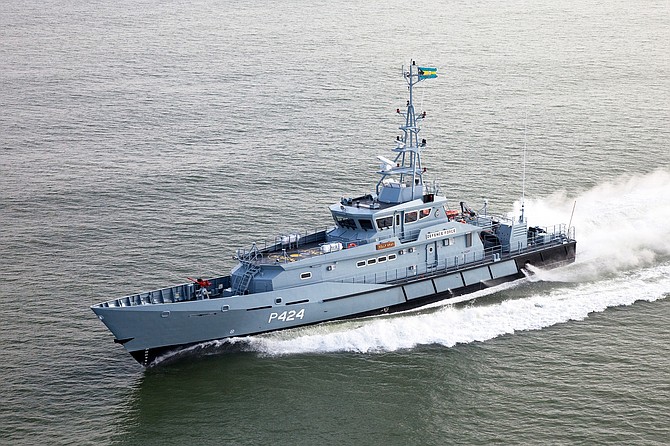
The Bahamian government has formalized $17 million in binding contracts to carry out comprehensive repairs and technological retrofits for four key vessels belonging to the Royal Bahamas Defence Force, a major initiative that National Security Minister Myles LaRoda says will dramatically reinforce the nation’s maritime security capabilities and bring critical patrol ships back into active operational service. Speaking on the sidelines of a public event, Minister LaRoda emphasized that the extensive overhaul work is a critical investment for the country, which is tasked with safeguarding more than 100,000 square miles of territorial waters from a rising array of transnational maritime threats, including unregulated poaching, unauthorized irregular migration, and other illicit activities that put national sovereignty and public safety at risk. The $17 million price tag covers refurbishment work across all four vessels, with an updated timeline that points to the HMBS Rolly Gray returning to Bahamian waters before the close of 2024. The remaining three vessels are set to undergo far more extensive structural and technological upgrades, with project durations varying based on the size and scope of work required. Outlining the timeline for the larger overhauls, LaRoda noted that HMBS Arthur Dion Hanna, the largest vessel in the Royal Bahamas Defence Force fleet, is expected to require approximately 75 weeks of repair work, while work on HMBS Cascarilla is projected to wrap up after 55 weeks. The overhaul project goes beyond basic structural repairs to fully update outdated onboard systems, according to LaRoda: obsolete electrical infrastructure will be fully replaced, and outdated navigation technology will be upgraded to modern standards, leaving the refurbished vessels effectively equivalent to new ships once work is complete. The contract scope includes three vessels currently stationed in the Netherlands – HMBS Arthur Dion Hanna, HMBS Rolly Gray, and HMBS Cascarilla – while the fourth vessel, HMBS Lawrence Major, will undergo its scheduled repairs at the Cotecmar Shipyard based in Colombia. The official signing ceremony took place on July 22 in the Netherlands, where Bridget Hepburn, Permanent Secretary for the Ministry of National Security, formalized the agreements alongside Bastin Kubbe, the Caribbean Regional Manager for Damen Services, the contractor leading the project. Addressing attendees at the signing event, Minister LaRoda underscored that the vessel overhaul program is a clear demonstration of the current administration’s unwavering commitment to three core national priorities: strengthening the country’s border protection infrastructure, elevating overall national security, and restoring full operational readiness to the Royal Bahamas Defence Force’s entire fleet of maritime vessels.
标签: Bahamas
巴哈马
-

Furloughed Flamingo Air workers seek jobs as airline’s future dims
In the wake of a deadly July 10 plane crash near San Andros Airport that claimed all ten lives on board, furloughed staff from regional carrier Flamingo Air are scrambling to plot new career paths, as lingering questions about the airline’s ability to resume operations grow more urgent.
The Bahamas’ aviation regulator immediately suspended Flamingo Air’s Air Operator Certificate following the crash, putting 35 employees on indefinite unpaid leave pending the final outcome of the official investigation into the disaster. With no clear timeline for a resolution, workers have been forced to draw down personal savings to cover basic living expenses while waiting for official guidance from airline leadership.
Many are still waiting on promised unemployment support from the country’s National Insurance Board, with multiple employees confirming they have only just completed the required application paperwork and have yet to receive any financial assistance. One worker, who spoke on condition of anonymity, told local outlet The Tribune, “We haven’t received anything yet. We were just filling out forms and getting our documents.”
While the sudden suspension has left most employees in professional and financial limbo, some have reframed the uncertainty as an opportunity to pivot to new careers or pursue long-held entrepreneurial goals. One furloughed staff member noted, “I’m quite fine. I’ve actually been looking into avenues to do my own thing so I don’t know if this is the avenue here.”
Not all workers have been able to secure alternative income, however. Another employee shared that she has yet to find a new role, adding, “We’re trying to figure out what’s going on.” Despite the lack of communication from Flamingo Air’s management in the weeks since the crash, many employees still hold out hope that the carrier will eventually be cleared to restart operations.
A new layer of controversy has emerged around the crash following revelations that Flamingo Air had been linked to at least 14 publicly recorded safety incidents and accidents over the previous 20 years, long before the July 10 disaster. Energy, Utilities and Aviation Minister JoBeth Coleby-Davis has previously acknowledged that regulators have not yet explained why the airline’s operating certificate was not suspended years earlier, given its long track record of safety issues.
Aviation authorities have committed to releasing a preliminary investigative report on the crash no later than August 10, a document that will shape both the future of Flamingo Air and the fates of its 35 out-of-work employees.
-
Parents of autistic children overwhelmed and fearful due to limited resources
Amid harrowing accounts of systemic failures and crippling financial burdens from families of autistic people across The Bahamas, the nation’s Ministry of Education, Science and Technology has committed to fast-track the creation of a national autism registry to address unmet needs across education, therapy and post-graduation support.
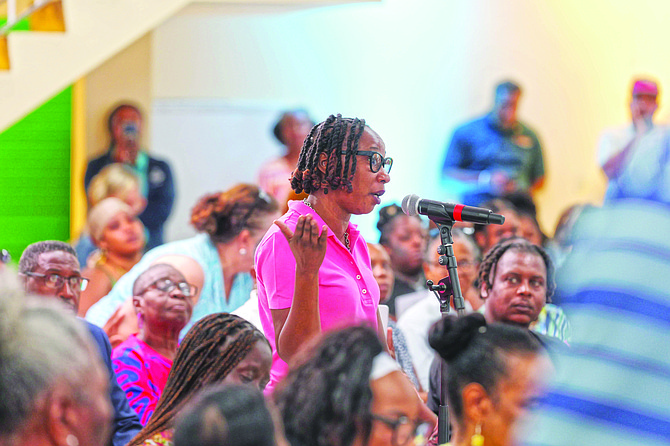
The urgent policy shift came out of a community town hall hosted at Stephen Dillet Primary School, organized in partnership with local advocacy group Resources and Education for Autism and Related Challenges. At the meeting, dozens of parents, guardians and providers shared years of struggles navigating broken support systems that have left countless families teetering on the edge of crisis.
One mother shared a devastating perspective on the lack of post-secondary support, noting that for families of autistic young people, high school graduation is far from a milestone to celebrate — it is a moment of existential fear. Many parents, she said, shared that they pray their autistic child dies before them, because no formal support systems exist to care for autistic adults after their parents pass away. “When your child reaches 12th grade, that’s usually the happiest day in a parent’s life, but when you have a special needs child, that’s your worst day, because you don’t know where your child is gonna go, you don’t know who’s gonna keep your child,” she told attendees.
Multiple caregivers shared accounts of being pushed into bureaucratic dead ends when seeking basic services. The grandmother of a 5-year-old autistic child explained she followed all required Ministry of Education procedures to enroll her grandson in public schooling, only to be turned away by public clinics due to his age, and receive no response after submitting a required online application. After months of being given “the runaround,” she only secured support through personal government connections — a solution that is out of reach for most low-income working families. She noted that while her grandson is now thriving in a specialized program, many parents cannot afford private therapy or leave full-time work to provide round-the-clock care. “If I went and I followed the proper procedures that the ministry asked me to do, why aren’t you calling us back? Where do you want the kids to go? I have to work a nine to five,” she said.
Speech-language pathologist Alicia Thompson, a Bahamian specialist who returned home after earning her undergraduate degree in 2013, highlighted another critical gap: the nation is failing to leverage its own trained workforce, leaving families stuck on months-long waitlists for services even as qualified local professionals struggle to find work. Thompson told the meeting she went months without a job offer from the Ministry of Education or Public Hospitals Authority after returning, and could not practice independently because the system failed to provide required professional supervision. She was forced to leave the field for a decade before returning to complete her master’s degree. “In a country where I wanted to help people who had the same issues as my parents, I was limited, and I had a degree that cost thousands of dollars that I could not use because there was no one to oversee me,” she said.
Even high-achieving autistic students face crippling barriers to accessing higher education, attendees shared. Reginald Wells, a top honors high school graduate and currently enrolled in culinary and hospitality studies at the University of The Bahamas, has been unable to complete his degree because he cannot pass required English and mathematics exams, and cannot access the formal accommodations he needs. Wells’ guardian explained it took 18 months to secure a required educational assessment because the family could not afford the $2,500 fee, leaving the program stalled indefinitely. “We are stuck. We can’t move forward, so he cannot graduate with a degree. All the effort and the time that we have spent – years. It took me a year and a half to get an assessment to get him into UB. I didn’t have the $2500 to assess him,” the guardian said.
Multiple parents called out predatory pricing for special needs services, noting that many private schools automatically raise tuition once they learn a child is autistic, and insurance only covers a tiny fraction of required therapy costs. One father said his family has spent thousands of dollars out of pocket on care and schooling, and questioned why so many Bahamian families are forced to relocate abroad to access affordable, comprehensive support. “I don’t think I should uproot my whole family to go to Canada where the care is free,” he said. “Why don’t we have it here? What about the parents that don’t have it at all?”
In response to the widespread calls for action, Deputy Prime Minister and Education Minister Chester Cooper announced he had already instructed ministry leadership to draft a formal white paper outlining requirements for the national autism registry, with implementation set to begin within four weeks following inter-agency consultations with the Attorney General’s Office, Ministry of Health and other key stakeholders. “This is not a talking shop. This is not a commission, and therefore I anticipate that within four weeks, after consultation with the Attorney General’s Office, the Ministry of Health and other stakeholders we will begin in earnest the process of implementation,” Cooper said.
Director of Education Dominique McCartney-Russell added that preliminary work on the registry is already underway, and the database will first be used to count how many autistic students are currently enrolled in the country’s public school system to inform future resource allocation. The ministry has also laid out broader plans to expand special education access across the country: it will launch the nation’s first formal special education diploma training program, with the first cohort of graduates expected in 2027, and extend specialized services to underserved communities across Grand Bahama, Eleuthera, Long Island and Harbour Island.
McCartney-Russell acknowledged that the ministry has made measurable progress over the past four years, including partnering with Barry University to train 14 special education teachers at the master’s level, hiring more than 40 new special education instructors, and growing the total number of special education teachers across the public system to more than 120. Still, she admitted significant gaps remain, including overcrowding at Beacon School in Grand Bahama and limited on-island support for students in the Family Islands. She outlined the ministry’s core priorities moving forward: “Earlier identification, shorter and better coordinated referral pathways, continued teacher training, increased specialist capacity, which I would say we are struggling with, stronger access for family islands, and improved transition planning.”
Cooper emphasized that early intervention will remain a top government priority, and stressed that access to life-changing support should never depend on which island a child calls home. “A child’s future should never depend on the island where that child happens to live,” he said. He added that the government’s responsibility does not end when a student graduates, noting that autism support is a lifelong commitment. “Autism is a lifelong journey. Young people need opportunities to continue learning. They need access to technical and vocational education. They need pathways into employment. They need opportunities for entrepreneurship, independent living, and meaningful participation within their communities,” Cooper said.
-
PMH ruled negligent in newborn baby’s death
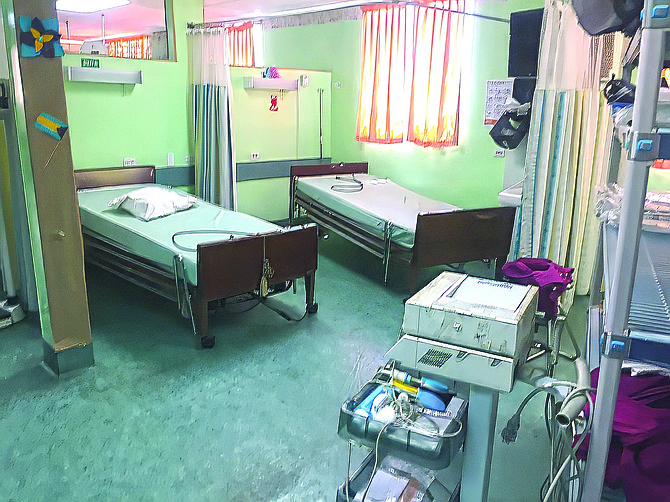
A landmark medical negligence ruling from the Bahamas Supreme Court has held Princess Margaret Hospital (PMH) legally responsible for the 2022 death of a newborn baby girl, finding critical gaps in maternal and foetal monitoring during a 27-minute wait for an emergency caesarean section directly caused the infant’s fatal injury.
Acting Justice Raynard Rigby KC delivered the judgment last week in a wrongful death claim brought by Widline Guillaume, whose daughter Elizabeth Lundy died just two hours after birth on August 2, 2022. The ruling followed a three-day bench trial in June that pitted competing expert testimony against one another, debating whether the newborn died from undiagnosed congenital heart disease or preventable oxygen deprivation.
Guillaume first arrived at PMH’s public maternity ward late on August 1, 2022, at 39 weeks and three days gestation, after reporting regular contractions and abdominal cramping. She began active pushing at approximately 2:05 a.m., with initial assessments conducted by Dr. Azaria Clare around 3:30 a.m. Lead obstetrician Dr. Agatha Foulkes-Mackey arrived shortly before 4 a.m., and the medical team quickly determined a caesarean section was necessary after labour stalled.
By 4:10 a.m., Guillaume had reached the entrance to the operating theatre, but a mandatory COVID-19 test requirement delayed her admittance until 4:37 a.m. The test result was finalized at 5:10 a.m., the surgical incision was made five minutes later, and Elizabeth was delivered alive at 5:20 a.m. Justice Rigby explicitly cleared the medical team of unreasonable delay in scheduling or executing the emergency procedure, noting Dr. Clare and Dr. Foulkes-Mackey acted promptly to move Guillaume toward surgery. But he drew a clear line between the timeliness of the procedure itself and the complete lack of monitoring during the 27-minute waiting period.
Prior to the decision to order an emergency caesarean, cardiotocography readings had already recorded a T1 deceleration in the foetus’s heart rate, a clear indicator of early foetal distress that required ongoing continuous monitoring. Despite this, no medical staff recorded any data on Elizabeth’s condition between 4:10 a.m. and 4:37 a.m. Justice Rigby rejected the defence’s argument that limited hospital resources left no handheld monitoring devices available for use during the wait, calling the explanation unconvincing and legally inadequate. He emphasized that the need for an emergency caesarean alone created a binding obligation on the hospital to maintain consistent monitoring of both mother and child, even while waiting for test results. Additional evidence from a prenatal ultrasound two months prior to delivery had shown no foetal abnormalities, with normal amniotic fluid levels and healthy foetal movement and function.
After birth, Elizabeth received relatively healthy Apgar scores of seven and eight at the one-minute and five-minute checks, respectively. But her condition declined rapidly while being transported from the operating theatre: nursing records document that she grew pale, developed cyanosis (a blue-gray discoloration of the skin caused by oxygen deprivation) in her face, hands and feet, and required urgent transfer to the Neonatal Intensive Care Unit. Despite immediate resuscitation efforts including chest compressions, the newborn died later that same morning.
In his ruling, Justice Rigby repeatedly criticized gaps in the evidence presented by the defence. No staff members involved in post-delivery care testified to explain the rapid deterioration of Elizabeth’s condition, and no detailed records of post-birth monitoring were entered into the court record. Most notably, an autopsy was never performed to confirm the cause of death, a step both expert witnesses agreed would have clarified the fatal outcome. Defence expert Dr. Paul Ward argued Elizabeth’s death was the result of an undiagnosed congenital heart defect, but claimant expert Dr. Carlos Athlestan Chase testified the death stemmed from perinatal asphyxia, or oxygen deprivation, consistent with the cause of death listed on the infant’s death certificate.
Justice Rigby ultimately sided with the claimant’s expert, noting Guillaume’s prenatal records showed no indication of a congenital heart condition, and all prior cardiovascular screenings were normal. He concluded that, on the balance of probabilities, the 27-minute gap in monitoring caused the fatal oxygen deprivation that killed Elizabeth.
The ruling also pointed to broader procedural failures in the case: key clinical guidelines from the American College of Obstetricians and Gynecologists and the Royal College of Obstetricians and Gynaecologists, which were widely discussed during the trial, were never formally entered into evidence. PMH’s official COVID-19 testing protocols for surgical patients, which directly caused the waiting period that led to the monitoring gap, were also not produced for the court. Justice Rigby further criticized both parties for failing to pursue mediation or out-of-court settlement before proceeding to trial, noting the amended claim for only $10,950 in special damages (covering medical fees, medication, and funeral costs) was not excessive, and the case was well-suited for alternative dispute resolution. “This case is an ideal one for mediation,” the judge wrote. “A qualified mediator would more likely have led the parties to a sensible compromise.”
Moving forward, the Supreme Court has ordered that total damages owed to Guillaume be assessed by the Registrar of the Supreme Court, and ruled that the hospital and Dr. Foulkes-Mackey will be responsible for covering Guillaume’s legal costs if the two sides cannot agree on a final damage amount.
Robert Dupuch Carron, who served as deputy chairman of the Public Hospitals Authority (PHA) at the time of the incident, called the outcome a tragedy, saying he was deeply distressed that the case took as long as it did to reach a resolution. He added that he has confidence in the current PHA board leadership to address systemic gaps in care and implement changes to reduce the risk of similar preventable deaths in the future.
-
Boys from viral school video reconcile and work together
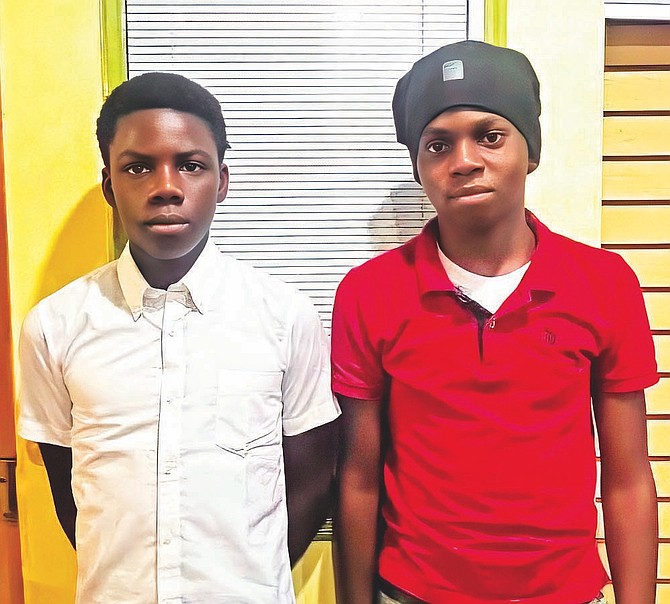
A shocking viral video capturing a bullying incident at CH Reeves has ended in an extraordinary show of forgiveness, bringing two feuding teenagers together in a shared summer youth employment program after a coordinated intervention by local advocacy groups, law enforcement, and both boys’ families.
The widely circulated clip, which spread rapidly across social media platforms in recent days, showed a 13-year-old student surrounded by a crowd of peers who pressured another teen to assault him. Rather than engaging in the confrontation, the targeted teen refused to fight and eventually fled the group. The footage sparked widespread public outrage, but it also spurred Khandi Gibson, founder and president of the Bahamas-based advocacy organization Families of All Murder Victims (FOAM), to step in before the conflict escalated into further harm.
“I was disturbed about the video, and I asked if anybody knew this young man’s parents to please have them reach out to me because I would like to personally get him ready for school,” Gibson explained in an interview. “We have other people who saw the video and didn’t do anything. But God just tell me, ‘Man, I have to step in. I can’t be seeing something like that and don’t intervene.’”
After members of the public shared contact information with Gibson, she connected with Genal Bodie, the targeted teen’s mother, on a Saturday night and met the entire family the very next morning. She offered Bodie’s son a spot in one of FOAM’s two annual summer youth programs: a skill-building summer camp with classes in math, English, arts and crafts, gardening, and educational field trips, or the “Our Community Matters” junior workforce program, which provides hands-on work experience for young people. The teen opted for the workforce placement.
Hours later, the father of the teen identified as the aggressor reached out to Gibson to seek a peaceful resolution. Gibson proposed a joint conflict-resolution meeting at the Grove Police Station, with senior officers agreeing to host and support the discussion. On the day of the meeting, something unexpected happened: the 13-year-old bullying victim asked Gibson to give his alleged aggressor a spot in the same workforce program he had just joined.
Gibson recalled the moment with awe: “The funniest thing about it is, the little boy who was actually getting bullied — and he still called him his friend — he said ‘Ms Gibson, you can’t give my friend a job where I work at FOAM too?’ I am saying to myself, this boy just [had someone try] fight him and he had to break off running and he asking for a job for him.”
Gibson granted the request, and both boys started work at FOAM’s headquarters the same day. Their daily tasks include answering incoming phone calls, greeting office visitors, and supporting other administrative and operational tasks. Through the program, both teens earn a weekly stipend and receive free daily lunch, in addition to building foundational professional skills.
Gibson says the pair have already put their prior conflict behind them. “You should see those two working together today. They’re like nothing ever happened,” she said.
The outcome offers a powerful lesson in the capacity of young people to extend forgiveness even in the wake of harm, Gibson noted, echoing a religious framing to emphasize the moment: “I said that’s why the Bible tells us, unless we become as these little ones, we can’t enter the kingdom of God, because little children are forgiving.”
Gibson extended public gratitude to the Grove Police Station’s senior leadership team, led by Chief Superintendent Christlyn Skippings, for their collaboration in facilitating the mediation. Moving forward, police plan to identify the other teens who appear in the viral video and organize a separate roundtable discussion with their families to address the incident and prevent future conflict.
Gibson says she hopes this community-centered intervention will serve as a replicable model for addressing youth conflict across the region, proving that early, collaborative action can stop disputes from escalating into serious violence. “Let’s start the trend somewhere,” she said.
-

‘Damning conflicts’ sink ex-Water Corp manager’s bid for $1m firing damages
A decades-long senior leader at the Bahamas’ Water & Sewerage Corporation (WSC) has failed in his high-stakes legal bid to secure nearly $1 million in damages for alleged unfair dismissal, after a Supreme Court justice backed the utility’s decision to terminate his employment over damning evidence of undisclosed personal profit and systemic conflict of interest.
Trevor Roberts, who spent 38 years climbing the WSC ranks from an entry-level semi-skilled laborer to senior superintendent of road reinstatement, was terminated in October 2020 following an internal audit that uncovered his hidden ties to multiple third-party contractors awarded millions in public works contracts from the utility. Investigators found Roberts used his position to steer maintenance and construction contracts to businesses he secretly controlled, with friends, neighbors, relatives, and even WSC contract staff serving as nominee owners to mask his involvement. Multiple linked firms shared the same physical address as Roberts’ personal residence, court documents confirmed.
By the time the audit was finalized in August 2020, investigators documented that WSC had paid $912,315 to just four of the contractors connected to Roberts, all without his mandatory disclosure of any ownership stake. In his 92-page Supreme Court judgment, acting justice Raynard Rigby KC described the audit’s conclusions as damning, ruling that Roberts’ clear drive for personal enrichment created an unavoidable conflict of interest that provided full just cause for immediate summary dismissal.
The trial also uncovered significant allegations of procedural irregularities during the 2020 internal investigation, led by WSC lead auditor Krystal Ferguson. Ferguson testified that within 24 hours of the probe launching, then-WSC executive chairman Adrian Gibson, a former Long Island MP, pressured her to accelerate the investigation and interview Roberts prematurely, contradicting standard investigative protocol that waits to interview the subject until all evidence has been gathered. Ferguson further claimed Gibson personally contacted key witness Kimley Ferguson, a nominee owner for one of Roberts’ linked firms, promising she would not face criminal prosecution if she cooperated with the board. The auditor argued this board interference compromised the investigation’s impartiality and integrity, but Justice Rigby ultimately declined to weigh these concerns in his final ruling.
Roberts launched his wrongful dismissal suit in 2023, arguing WSC violated its own disciplinary processes by failing to provide him a copy of the audit findings and a fair opportunity to defend himself against the allegations. At the time of his termination, he earned an annual salary of $75,000 and received just $20,369 in a final net payout, while the utility withheld his full retirement benefits. Roberts told the court the unproven criminal allegations that followed his termination have upended his entire family’s life: he lost his eligibility for U.S. pre-clearance travel, barring him from visiting his daughter who resides in the U.S., and his son has declined to pursue higher education in America out of fear he will face similar travel restrictions. Financially, he claims he now owes more than $30,000 in back rent, cannot pay the nearly $254,000 medical bill for his wife’s needed surgery, and has been forced to let his children’s life insurance coverage lapse. As of the trial, no criminal charges have been filed against Roberts, though a Royal Bahamas Police Force probe remains open.
WSC countered that Roberts was lawfully terminated, and that he and his former legal counsel were provided a full copy of the audit report in late 2020, with more than a month to prepare a formal response before the termination decision was made. The utility’s defense confirmed its investigation uncovered widespread irregularities across six contractor firms, including two that received $702,619 in WSC payments between 2010 and 2020 and shared Roberts’ home address. Evidence showed Roberts personally signed and collected check payments made out to one linked firm, Shalom Development Company, and altered invoice dates and numbers on two other contractor submissions. When interviewed by investigators in 2020, he initially denied holding any financial or personal interest in any of the contracting firms.
Kimley Ferguson, Shalom’s registered nominee owner, confirmed to investigators she had no involvement in the firm’s actual operations: she could not confirm any of the billed work was completed, had never visited any work sites, did not know the names of any employees, and only prepared invoices using information Roberts provided. She stated she kept just $500 from every WSC payment, with the vast majority of funds going directly to Roberts, and had provided her government identification to Roberts so he could register the firm in her name. Under cross-examination, Roberts admitted he knew Kimley Ferguson through his wife’s former workplace at Commonwealth Bank, but could not explain why she deposited more than $5,500 into a personal bank account he controlled. He argued the shared residential address for his linked firms was a result of all units in his apartment complex sharing a single postal address, and claimed altering invoices did not harm WSC’s interests.
Investigators also found a complete lack of documentation and audit trail for 15 invoices totaling $54,000 in contractor payments, and that WSC halted its full third-party filter changing program due to the inability to verify completed work. The audit also found excess stockpiling of 13,921 filter cartridges with inadequate inventory controls, and that Roberts continued to carry out filter changes for customers using WSC vehicles even after being transferred out of the distribution maintenance division responsible for that work.
In his final ruling, Justice Rigby found Roberts to be an untruthful witness, confirming he was fully aware he was the target of the investigation and that WSC provided adequate time and access to the audit to mount a defense. The judge ruled the evidence of misconduct was overwhelming, noting that Roberts’ arrangement to front contracts through nominees and siphon the majority of proceeds constituted dishonesty that repugnant to WSC’s organizational interests. “He placed himself in a position of conflict between his duty to the Corporation as an employee and his desire for personal enrichment,” Rigby wrote, adding the conduct rose to the level of justifying immediate dismissal under Bahamian employment law.
-
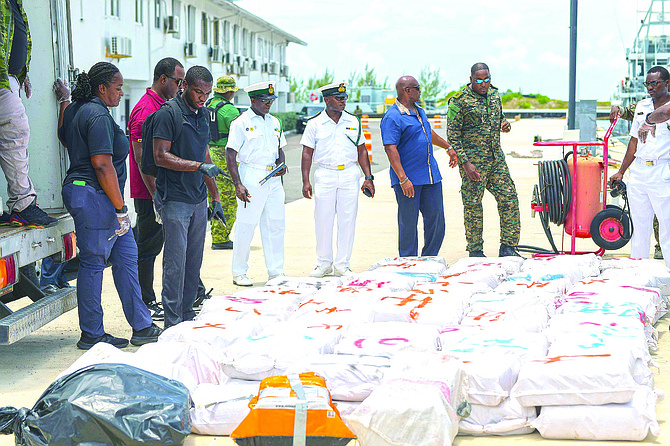
$5.9m in marijuana seized in joint operation
A sweeping 72-hour transnational anti-narcotics operation led jointly by law enforcement agencies from the Bahamas and the United States has yielded one of the region’s recent high-profile drug seizures, with authorities intercepting a speedboat in Bahamian territorial waters and taking three Bahamian nationals into custody. Authorities confirmed the illicit cargo recovered from the vessel has an estimated street value of $5.9 million.
According to Captain Derrick Ferguson, Staff Intelligence Officer for the Royal Bahamas Defence Force, the coordinated mission kicked off on July 24, after intelligence analysts received a tip that a Bahamian-flagged vessel transporting a massive shipment of illegal narcotics was en route to Bahamian waters. In the pre-dawn hours of July 25, a United States aerial surveillance asset picked up the vessel’s location, activating a coordinated response under two existing regional security frameworks: Operation Bahamas, Turks and Caicos, and the Bahamas Maritime Operations Coordination Working Group. The response brought together the Royal Bahamas Defence Force, the Royal Bahamas Police Force, and multiple U.S. law enforcement units.
Ferguson outlined the deployment of resources for the intercept: U.S. authorities provided critical airborne surveillance, the RBPF mobilized its specialized drug enforcement teams, and the Defence Force repositioned two of its vessels, HMBS Kamalamee and HMBS Durward Knowles, to cut off the target’s escape route. As the operation unfolded, the crew of the targeted go-fast vessel realized they had been detected shortly after entering Bahamian territorial waters, and immediately attempted to alter course to flee back into unregulated international waters, Ferguson explained.
With Bahamian defence vessels still repositioning to intercept, the Royal Bahamas Defence Force granted official authorization to a nearby U.S. Coast Guard cutter to board and search the vessel on its behalf. The boarding operation was completed without incident, and search teams uncovered the large cache of suspected marijuana hidden aboard the vessel, leading to the immediate detention of the three Bahamian men on board.
Following the intercept, all three suspects, the seized narcotics, and the go-fast vessel were transferred to a Royal Bahamas Defence Force ship and transported to the HMBS Coral Harbour base for processing. While the initial estimated value of the seizure has been pegged at $5.9 million, authorities have declined to release further details on the exact volume of the drug shipment, noting that the investigation is still in its early stages.
Next steps in the case will see the detainees and the suspected narcotics turned over to the RBPF’s Drug Enforcement Unit to continue the probe. Superintendent Wendy Pearson of the Drug Enforcement Unit confirmed that the intercepted go-fast vessel has also been seized, and will be subject to formal forfeiture under Bahamian drug law.
In a statement emphasizing the strength of bilateral security cooperation, Ferguson stressed that the partnership between the two nations remains robust in the fight against transnational drug trafficking. “Be there no mistake. The US and the Bahamian partnership is strong, and we remain committed to detecting, disrupting, deterring, and denying any transnational criminal activity that may seek to enter and transit the Bahamian maritime jurisdiction, and as well as the US maritime jurisdiction,” he said.
-

Union says PMH flooding managed as FNM blasts govt
When severe thunderstorms swept across New Providence, Bahamas, on Sunday, an unexpected incident unfolded at the country’s flagship Princess Margaret Hospital: floodwater breached the freshly completed Accident and Emergency (A&E) Department, just weeks after officials declared its long-delayed renovation finished and fully operational. While hospital authorities and the Bahamas Nurses Union quickly moved to contain the issue and restore services, the flooding has ignited a sharp political debate over the government’s management of public health infrastructure.
Muriel Lightbourne, president of the Bahamas Nurses Union, confirmed that the incident caused no major disruption to critical care services. According to reports from frontline staff, the water did not penetrate through flaws in the newly renovated building structure, as some critics later claimed. Instead, an extraordinary volume of rainfall overwhelmed local drainage around the facility, causing surface flooding that seeped into the department through the open ambulance bay entrance.
Immediately after flooding began, clinical teams moved patients and staff out of the affected zones, while cleanup crews were deployed to pump out standing water. Lightbourne noted that when she reached out to hospital leadership shortly after learning of the incident, staff were already midway through clearing the affected areas. Though nurses raised understandable concerns about the risk of standing water interacting with nearby electrical medical equipment, Lightbourne said the situation was handled swiftly and professionally, with no formal complaints submitted by union members.
Visual evidence of the flooding, shared widely across social media Sunday, showed sections of the A&E with shallow standing water, with staff and visitors traversing affected zones in disposable protective shoe covers. Hospital officials echoed Lightbourne’s account, emphasizing that the flooding did not stem from roof or ceiling defects, and clarified that Princess Margaret Hospital sits in a low-lying area that experienced widespread inundation during the extreme storm. Neighboring commercial buildings and private properties also flooded amid the record rainfall, they added.
To prevent disruption to care, hospital administration immediately relocated all critical services from the affected area, placed temporary barriers at the impacted ambulance bay entrance, and diverted incoming ambulance traffic to an alternate access point while safety assessments were conducted. Within hours, all core A&E services had resumed normal operation. Hospital officials added they will collaborate with government and construction partners to identify additional mitigation measures that can reduce the risk of future flooding during severe weather events, to better protect patients, staff and visitors.
The timing of the incident, coming just weeks after Health and Wellness Minister Dr Michael Darville announced the completion of the years-long, repeatedly delayed A&E redevelopment project, created an opening for political opposition. Free National Movement chairman Dr Duane Sands launched a scathing attack on the governing Progressive Liberal Party administration, framing the flooding as symptomatic of widespread systemic failures in the country’s public health sector.
Sands argued that the incident directly contradicts the government’s public claims of progress on upgrading public health infrastructure. He questioned the hospital’s explanation that the site is located in a natural flood zone, asking sarcastically whether the hospital’s location had changed after the multi-million dollar renovation. Sands linked the A&E flooding to a pattern of what he called ongoing infrastructure failures under the current administration, pointing to recurring nationwide power outages, persistent operating room disruptions at both Princess Margaret Hospital and Grand Bahama’s Rand Memorial Hospital, and widespread shortages of essential prescription medications. He accused the government of prioritizing elite perks over meeting the basic public health needs of ordinary Bahamian citizens.
-
Family pleads for police help in Andros search
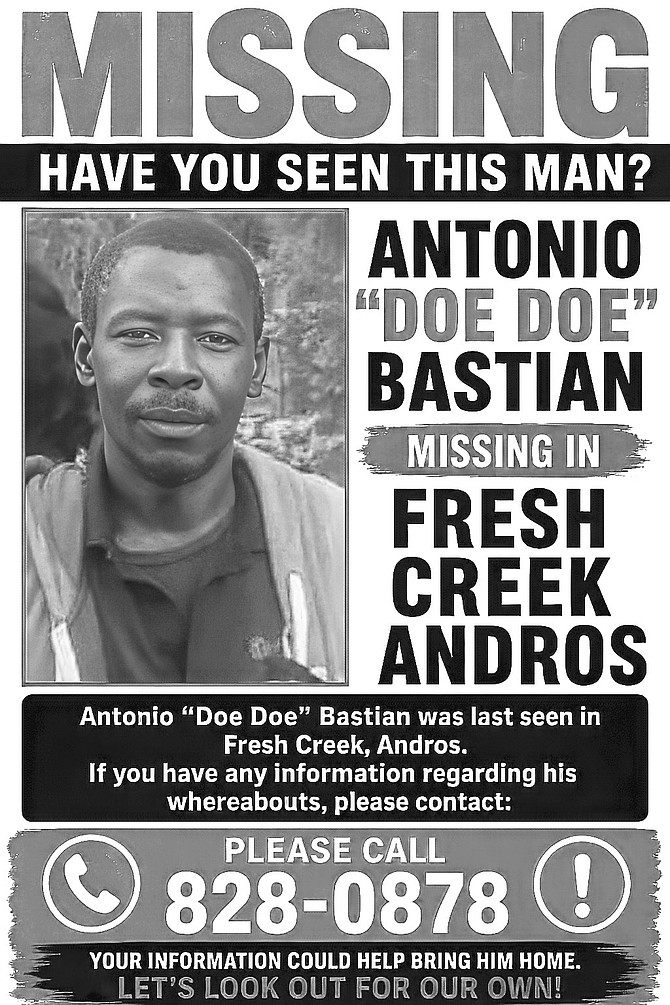
For a week, the family of Antonio “Doe Doe” Bastian, a 45-year-old resident of Andros, The Bahamas, has clung to hope while growing increasingly desperate. With no trace of their missing loved one found, they are calling on authorities to deploy additional search resources from New Providence to ramp up efforts to locate him.
Bastian was last spotted on July 13, as he walked along Queen’s Highway between the communities of Love Hill and Fresh Creek. According to his sister, Hanna Mott, Bastian was en route to a scheduled medical appointment when he vanished.
Mott shared that her brother lives with a mental health condition that causes hallucinations, for which he receives regular injectable treatment. Bastian has a history of inpatient care at Sandilands Rehabilitation Centre, but Mott said he had made significant progress in his recovery in recent years, earning a steady income washing cars for local residents.
Concern grew when Bastian failed to return to his home by July 14, an absence that his family says is completely out of character. Mott explained that Bastian only goes extended periods without reaching out “once in a blue moon”, making a full week without contact deeply alarming. After waiting 48 hours for any sign of him, the family officially filed a missing person report with police on July 16.
Mott says she holds an unconfirmed suspicion that Bastian may have been targeted by foul play or moved against his will to another location. She traced the onset of her brother’s mental health challenges to a past incident where she believes he was given a drugged, contaminated substance by a third party. Bastian has received ongoing care at Sandilands for roughly four to five years, with periods of inpatient treatment interspersed with time living at home.
Local law enforcement has already carried out extensive search operations across Central and North Andros since the report was filed, including deploying the Criminal Detection Unit’s drone team to cover hard-to-reach terrain. Mott was quick to praise the work of on-island officers, who have stood with the family from the first day of the search, joining search teams both early in the morning and late into the evening.
“As much as the police can do in Andros, from Central to North, they are doing, but they need more help,” Mott said of the ongoing effort. So far, all searches have turned up no clues to Bastian’s whereabouts.
Police released an official missing person poster with Bastian’s description on July 19. He is characterized as a slim man with a dark brown complexion, standing approximately five feet six inches tall. The Tribune reached out to the Royal Bahamas Police Force for additional comment on the search and the family’s request for extra resources, but had not received a response as of press time.
-
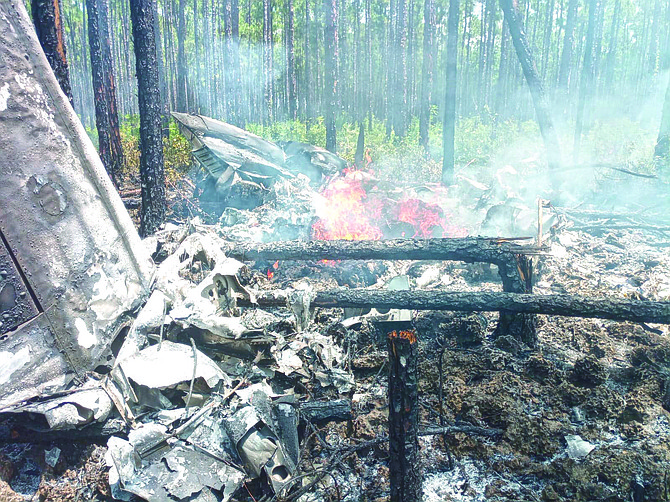
Engines from fatal flight sent to US investigators
One of the deadliest civilian aviation incidents in recent Bahamian history, which claimed 10 lives during an Independence Day flight, has entered a critical new phase of investigation, with recovered wreckage now shipped to the United States for detailed forensic examination. The Air Accident Investigation Authority (AAIA), the national body leading the probe, confirmed this week that all salvaged aircraft components—including both of the plane’s engines—have been transported for analysis at two separate U.S. facilities: a secure investigative site in Jacksonville, Florida, and the engine manufacturer’s dedicated assessment center in Mobile, Alabama.
These technical examinations form a core pillar of the AAIA’s ongoing safety-focused investigation, designed to help experts piece together the exact sequence of events that led to the crash and identify any underlying factors that contributed to the disaster. In a public statement clarifying the scope of its work, the AAIA emphasized that the probe’s sole mandate is to advance aviation safety: by pinpointing existing safety gaps, the authority will develop targeted corrective recommendations to prevent similar tragedies from occurring in the future.
Crucially, the AAIA noted that its safety investigation is completely separate from any parallel probes conducted by the Bahamas’ judicial, legal, or regulatory bodies, and it is not intended to assign blame or establish civil or criminal liability for the crash.
The recovery of wreckage from the crash site was completed between July 22 and 24, carried out by the AAIA with technical support from SouthEast Air Recovery, a Florida-based firm specialized in aviation accident recovery. The downed aircraft was a Flamingo Air Cessna 402C, which was operating a scheduled passenger route from New Providence to North Andros when it crashed close to San Andros Airport on Independence Day.
Initial witness and on-site evidence confirms the plane first collided with trees before traveling a short distance and coming to a stop in a heavily wooded area, where the wreckage was subsequently destroyed by post-crash fire. Of the 10 people on board, one individual survived the initial impact and escaped the damaged aircraft, but later succumbed to their injuries, bringing the total death toll to 10.
The investigation remains in its opening phase, which is focused on the systematic collection, documentation, and preservation of all available evidence, the AAIA confirmed. Once this evidence-gathering stage is concluded, the probe will advance to its second phase: comprehensive data analysis, during which investigators will evaluate every piece of factual material, including results from the wreckage examinations, flight recorded data, aircraft operational records, maintenance logs, weather data from the day of the crash, witness testimony, and all other relevant evidence.
The third and final phase of the investigation will be the presentation of findings, which will conclude with the preparation and publication of a full final report. This document will include any safety recommendations the AAIA deems necessary to strengthen national and regional aviation safety.
In a timeline update, the authority announced that a preliminary report into the crash is expected to be released on or before August 10. In line with international aviation investigation standards, a full final report is projected to be published approximately one year after the date of the crash, though the AAIA cautioned that this timeline may be adjusted if additional investigative work is required to resolve outstanding questions.