标签: Antigua and Barbuda

安提瓜和巴布达

  • LIAT Air Launches Direct Antigua-Guadeloupe Service

    LIAT Air Launches Direct Antigua-Guadeloupe Service

    Caribbean-based regional carrier LIAT Air has marked a key milestone in its network expansion strategy with the launch of its first-ever nonstop service connecting Antigua and Guadeloupe, a move set to strengthen travel links across the Caribbean archipelago and open up new opportunities for both leisure and business travelers. The new cross-regional route officially entered operation on Friday, with the maiden direct flight taking off from V.C. Bird International Airport in Antigua promptly at 8 a.m., according to the airline’s official announcement. Going forward, the service will maintain a consistent twice-weekly schedule, giving travelers a reliable new option to move between the two popular Caribbean destinations. Beyond just adding a new flight route, the introduction of this direct connection eliminates the need for inconvenient layovers at intermediate Caribbean hubs that travelers previously had to rely on to travel between Antigua and Guadeloupe. “Passengers can now enjoy direct flights between Antigua and Guadeloupe two times a week, opening the door for seamless business travel, weekend escapes, cultural exchange, and unforgettable Caribbean adventures,” the airline stated in a press release outlining the new service. The launch of this route is part of LIAT Air’s broader push to rebuild and expand its regional network following a period of restructuring, with the carrier aiming to reconnect key tourism and business hubs across the Caribbean that have long lacked convenient direct air links. In closing, LIAT Air extended its gratitude to its loyal passenger base, regional industry partners, and community supporters who have stood by the airline throughout its growth journey, enabling the company to continue rolling out new connectivity options across the Caribbean region. Industry analysts note that the new route is expected to bring tangible benefits to both destinations, boosting cross-border tourism, supporting small business trade across the islands, and making it easier for local communities to maintain personal and professional connections across the Caribbean Sea.

  • Dredging Barge Arrives in Antigua for Crabbs Peninsula Energy Project

    Dredging Barge Arrives in Antigua for Crabbs Peninsula Energy Project

    The long-awaited dredging barge tasked with supporting major coastal preparations for the Crabbs Peninsula energy project has arrived at Antigua’s St. John’s Harbor, marking a key milestone in the country’s ambitious plan to expand its renewable energy capacity and upgrade national energy infrastructure.

    Project officials confirmed that the 120-meter coastal dredging vessel reached its destination early Wednesday morning, after a two-week voyage from its previous deployment in Trinidad and Tobago. Over the next 12 weeks, the barge and its on-site crew will carry out extensive seabed dredging work along the 2.5-kilometer coastline adjacent to the project site. The work is designed to deepen coastal channels, clear sediment buildup, and prepare the seabed for the installation of undersea cables and onshore construction access routes that will support a new 70-megawatt solar-wind hybrid energy facility.

    The Crabbs Peninsula energy project, a joint initiative between the Antiguan government and a regional renewable energy developer, is projected to meet nearly 40 percent of Antigua and Barbuda’s total domestic electricity demand once completed. It is also expected to create over 200 local construction jobs and reduce the country’s reliance on imported fossil fuels, which currently account for more than 90 percent of its energy generation.

    Project manager Carlos Mendez told reporters on Thursday that the timely arrival of the dredging barge keeps the entire project on track for its scheduled completion in late 2025. “This is more than just an energy project; it’s a foundational step for Antigua and Barbuda’s transition to cleaner, more affordable energy independence,” Mendez said. “The dredging work we’re about to undertake eliminates a major bottleneck for the rest of construction, so we’re pleased to be moving forward as planned.”

    Local business leaders have welcomed the development, noting that the project’s infrastructure upgrades will also open new opportunities for coastal tourism development along the Crabbs Peninsula. Environmental monitoring teams have already been deployed to the area to ensure dredging activities comply with regional marine protection standards, with measures in place to minimize disruption to local coral reef systems and fish populations.

  • Prime Minister Gaston Browne Appoints 22-Year-Old to Senate in Blend of Youth and Experience

    Prime Minister Gaston Browne Appoints 22-Year-Old to Senate in Blend of Youth and Experience

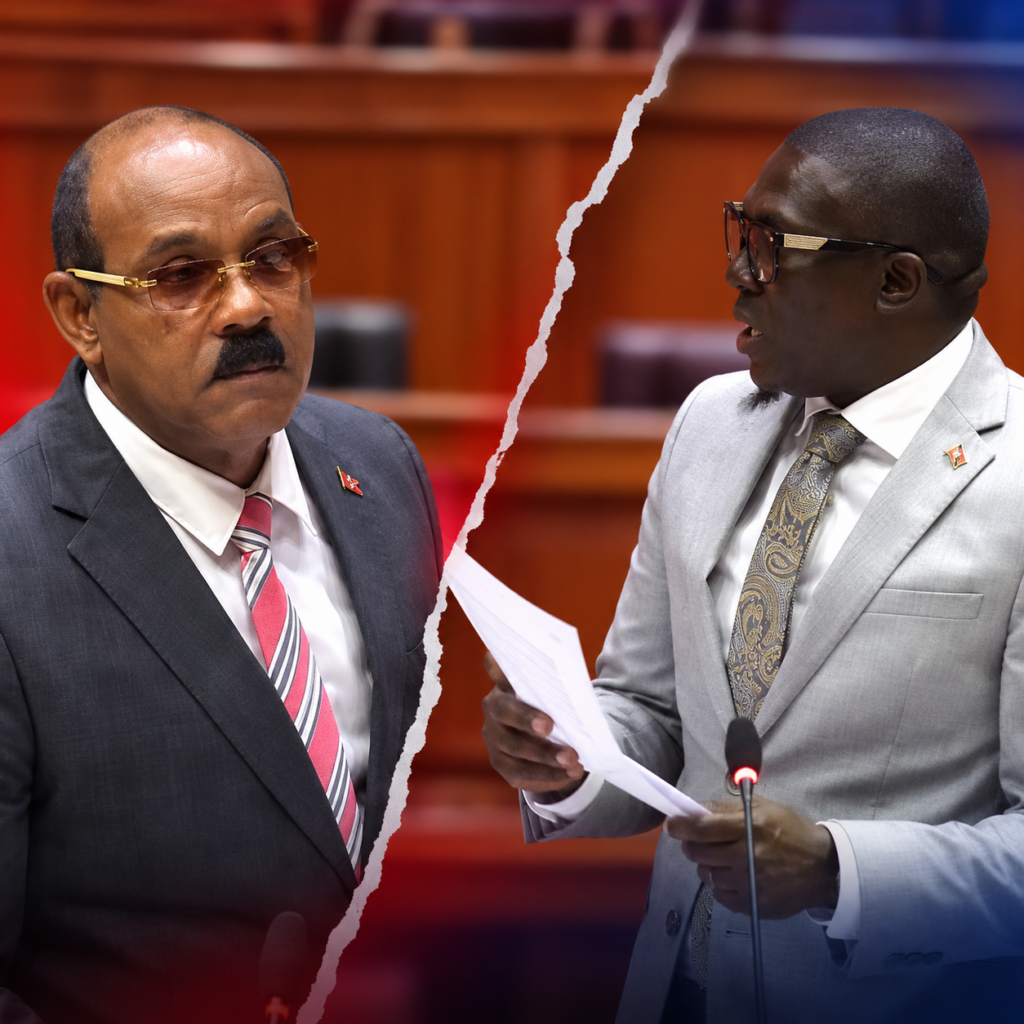
    In a significant reshaping of Antigua and Barbuda’s Upper House of Parliament, Prime Minister Gaston Browne has announced 10 new senate appointments, a move that brings fresh faces and institutional continuity to the country’s legislative upper chamber. The appointment that has drawn widespread attention is that of 22-year-old Shaquan O’Neil, a serving Youth Ambassador, who will now enter the history books as the youngest person ever to take a seat in the nation’s Senate.
    Beyond O’Neil’s landmark appointment, the new cohort of senators includes Kendra Beazer, who previously stood as the Antigua Barbuda Labour Party (ABLP) candidate for the Barbuda constituency in the April 30 general election, ultimately falling short of a winning result. Three other first-time senators will also take their seats: Angelica O’Donoghue, Abena St. Luce and Joel Rayne, expanding the range of new perspectives in the upper legislative body.
    Alongside the incoming new members, Prime Minister Browne has reappointed five senators who held seats in the previous legislative term, ensuring a balance between fresh representation and institutional experience. Among the returning legislators is Alincia Williams-Grant, who is set to take on the role of Senate President in the new session. The returning cohort also includes Lamin Newton, an ABLP candidate who unsuccessfully contested the All Saints East & St. Luke constituency in the recent general election, as well as Colin O’Neil Browne, Phillip Shoul and Shenella Govia.
    The appointments mark a key post-election restructuring of the national legislature, blending youth representation, new political talent, and experienced incumbency to shape the upper house’s work ahead.

  • Governor General Sir Rodney Williams Pays Tribute to the late Mary-Clare Hurst

    Governor General Sir Rodney Williams Pays Tribute to the late Mary-Clare Hurst

    Against the backdrop of a landmark ceremonial sitting for newly elected senators following Antigua and Barbuda’s recent general election, Governor General Sir Rodney Williams opened the official swearing-in proceedings this week with a moving, heartfelt tribute to one of the nation’s most groundbreaking public servants: the late former Senator Mary Clare Hurst, who passed away earlier this week.

    Before administering oaths of office to the incoming Upper House members, Sir Rodney paused the formal agenda to shine a light on Hurst’s decades of cross-sector contributions that shaped Antigua and Barbuda’s political, tourism, parliamentary, and public administration landscapes. He stressed that honoring her legacy amid the induction of new lawmakers was a fitting tribute to a figure who dedicated her life to national progress.

    “Miss Hurst devoted many of the years of her life to public service and national development, serving Antigua and Barbuda with commitment, discipline, and distinction,” Sir Rodney told attendees gathered in the parliamentary chamber.

    Across a decades-long career, Hurst built a reputation for excellence that earned respect from every corner of national life, Sir Rodney noted. Among her most historic achievements was her trailblazing role as the first woman to hold the position of General Secretary of the Antigua and Barbuda Labour Party — a milestone that drew spontaneous applause from attendees when it was highlighted.

    Hurst’s public service extended across multiple senior leadership roles, including stints as a government senator, Leader of Government Business in the Senate, Minister of State in the Ministry of Tourism and Economic Development, and chairman of the Antigua and Barbuda Tourism Authority. Beyond her formal titles, Sir Rodney emphasized that Hurst leaves behind a far-reaching legacy centered on lifting up the next generation: she was a dedicated mentor to young people, a passionate advocate for youth development, and a relentless champion for strengthening Antigua and Barbuda’s public institutions.

    He remembered Hurst as a leader defined by resilience, compassion, and unwavering professionalism, with a lifelong commitment to advancing the interests of Antigua and Barbuda. As the nation welcomes a new cohort of senators to the Upper House, Sir Rodney argued that reflecting on Hurst’s contributions is a critical reminder of the work that has built the country’s parliamentary institutions today. Her work laid critical groundwork for the nation’s modern democratic and parliamentary development, he added.

    Closing his tribute, Sir Rodney extended sincere condolences on behalf of himself and Her Excellency Lady Williams to Hurst’s family, friends, colleagues, and supporters. “May her contribution to national life continue to inspire future generations, and may she rest in peace,” he said.

    Following the tribute, the ceremony proceeded to mark the official swearing-in of the new senators, an occasion Sir Rodney framed as a pivotal moment in Antigua and Barbuda’s constitutional history. The induction, he said, reflects core values of continuity, stability, public service, and public confidence in the institutions that undergird the nation’s parliamentary democracy.

  • UAE President, VPs congratulate Prime Minister of Antigua and Barbuda on re-election

    UAE President, VPs congratulate Prime Minister of Antigua and Barbuda on re-election

    ABU DHABI — The United Arab Emirates’ top leadership has extended formal congratulations to Prime Minister Gaston Browne of Antigua and Barbuda after he secured re-election for another term in office.

    Sheikh Mohamed bin Zayed Al Nahyan, the President of the UAE, was the first to deliver the message of goodwill, marking the official recognition of Browne’s new electoral mandate. In a demonstration of the unified diplomatic stance of the UAE’s highest governing bodies, two of the nation’s most senior leaders followed with identical congratulatory communications.

    These messages came from Sheikh Mohammed bin Rashid Al Maktoum, who holds three key roles as UAE Vice President, Prime Minister, and Ruler of Dubai, and Sheikh Mansour bin Zayed Al Nahyan, who serves as Vice President, Deputy Prime Minister, and Chairman of the Presidential Court. The exchange of congratulations underscores the diplomatic goodwill between the UAE and the Caribbean nation, reinforcing the ongoing bilateral relationship between the two countries ahead of Browne’s new term.

  • Survey Launched in Barbuda to Help Council Determine Most Pressing Social and Economic Concerns

    Survey Launched in Barbuda to Help Council Determine Most Pressing Social and Economic Concerns

    After securing a landmark legal victory that protects collective land ownership on the Caribbean island of Barbuda, local governing body the Barbuda Council has launched a widespread outreach effort, urging both on-island residents and Barbudans living in the global diaspora to contribute to a new community survey.

    The court ruling, announced last week in collaboration with the Global Legal Action Network (GLAN), reaffirmed a long-standing core principle of Barbudan society: that land on the island cannot be privately sold. In an official public statement released online alongside GLAN, the Council framed the ruling as nothing short of a turning point for the island community. ‘Last week marked an important moment for Barbuda,’ the statement read, emphasizing that the outcome was a testament to collective action. The win serves as a powerful reminder of what marginalized island communities can accomplish when they unify around shared priorities, the Council added.

    Moving past the legal victory, the Council is now turning its focus to long-term community-led planning, turning to the island’s people to map out the most pressing social and economic priorities for the future. The 2026 Barbuda Council Survey is designed to capture direct feedback from all segments of the Barbudan population, whether they currently reside on the island or live abroad. By participating, community members will directly shape how local leaders approach development, infrastructure, public services, and governance decisions for years to come.

    ‘Wider participation will strengthen the voice of the Barbudan community in discussions surrounding development and governance,’ the statement explained. For decades, outside development proposals have threatened the island’s collective land model, so centering community input is seen as a critical step to ensuring any future progress aligns with the needs and values of Barbudan people themselves. The Council has called on respondents to not only complete the survey themselves but also share the official link with other members of the diaspora to ensure broad representation.

    Closing the statement, the Council reiterated its commitment to community self-determination, noting: ‘The future of Barbuda must be shaped by Barbudans.’

  • IMF Calls for Stronger Oversight of Credit Unions in Antigua and Barbuda

    IMF Calls for Stronger Oversight of Credit Unions in Antigua and Barbuda

    The International Monetary Fund (IMF) has issued a formal call for stricter regulatory oversight of credit unions operating across Antigua and Barbuda, framing the reform as a critical pillar of broader work to shore up stability and resilience in the Caribbean nation’s financial sector. In its recently released Article IV consultation report, the global financial body confirmed that Antigua and Barbuda’s overall financial system remains on solid footing, with healthy levels of liquidity and sustained stability. Even so, the organization has pushed for continuous regulatory and supervisory overhauls to strengthen sector-wide governance. IMF executive directors put forward targeted recommendations, urging local authorities to shift toward a risk-focused model of supervision for the credit union industry. This shift, they argue, should be paired with targeted actions to improve loan loss provisioning practices and shore up capital buffers across credit unions, closing existing gaps in financial preparedness. The IMF emphasized that robust financial sector oversight is particularly vital at this juncture, as Antigua and Barbuda continues to navigate post-shock economic recovery and works to build long-term defenses against external volatility and structural domestic vulnerabilities. Beyond credit union reform, the report also underlined the urgent need for sustained progress on two key financial priorities: deepening the country’s financial markets to support greater access to capital, and updating frameworks to counter money laundering and terrorist financing, bringing them in line with evolving global standards. The nation’s high-profile Citizenship by Investment Programme was also flagged as an area requiring ongoing regulatory scrutiny, a key component of the government’s broader push to upgrade national financial governance. These policy recommendations come alongside the IMF’s latest economic forecasts for the twin-island nation, which confirm that Antigua and Barbuda’s economy kept expanding through 2025. Growth was driven largely by a boom in domestic construction activity, which offset a marked slowdown in the critical tourism sector. The IMF estimates that real gross domestic product grew by 3% for the year, while inflation cooled dramatically to 1.4% — a significant improvement from previous higher levels. Despite the positive growth trajectory, the report warned that notable downside risks remain on the horizon. Persistent global economic uncertainty, swings in global commodity prices, and domestic capacity constraints all threaten to derail progress moving forward. Strengthened financial oversight and targeted structural reforms, the IMF concluded, would position Antigua and Barbuda to lock in long-term economic stability and lay the groundwork for sustained inclusive growth. As the nation continues to build out its economic foundations, these regulatory updates are framed as a critical investment in both financial security and long-term prosperity.

  • LETTER:  Upholding Integrity in the Civil Service: The Need for Fairness, Accountability, and Due Process

    LETTER:  Upholding Integrity in the Civil Service: The Need for Fairness, Accountability, and Due Process

    As the foundational backbone of effective governance across every sovereign nation, the civil service bears the critical mandate of sustaining administrative continuity, delivering equitable public services, and entrenching the rule of law. Rooted in core values of fairness, professionalism, and impartiality, this institution’s credibility stands or falls based on how it upholds these principles in every day operational practice. Yet growing evidence of flawed processes and embedded bias in handling internal allegations has sparked widespread concern over systemic vulnerabilities that erode both individual well-being and public confidence.

    In recent discourse, growing attention has centered on gaps in how complaints and internal reports are managed across multiple branches of the civil service. All allegations, whether filed through formal channels or raised informally, carry outsized weight that can shape career trajectories, destroy professional reputations, and foster toxic, hostile working climates for those targeted. This inherent impact demands that every complaint be processed with the utmost rigor, professionalism, and unwavering fairness—an expectation that too often goes unmet in current practice.

    One of the most pressing flaws identified is the trend of advancing complaints and compiling official reports without comprehensive, impartial investigation and fact-checking. In far too many cases, unfounded assumptions, personal prejudices, or unresolved workplace rivalries have skewed the official narrative presented to disciplinary bodies. When these unvetted claims form the basis of administrative action, the entire process is fundamentally compromised. Unverified or inadequately investigated allegations can wrongfully stain an individual’s professional standing, triggering unwarranted disciplinary penalties that have no basis in verifiable fact.

    Equally troubling is the persistence of discriminatory behavior—whether hidden in implicit bias or expressed openly—in the adjudication of internal complaints. Preferential treatment or unfair targeting based on personal connections, institutional rank, gender, or other extraneous factors has no place in any professional setting, and it is especially corrosive in the civil service, where all decisions are required to be guided exclusively by evidence and formally established procedures.

    At its core, upholding the integrity of internal processes requires unwavering commitment to the principle of natural justice. This foundational legal and ethical standard demands three non-negotiable safeguards: every individual must be given full opportunity to respond to allegations brought against them, all investigations must be conducted by impartial parties free from conflicting interests, and all final conclusions must be drawn solely from verified, corroborated facts. Without these guardrails in place, the civil service’s accountability mechanism risks transforming into a tool for personal retaliation and arbitrary victimization, rather than a system to uphold institutional standards.

    Leaders and senior officials within the civil service carry a unique responsibility to model ethical practice when documenting incidents and adjudicating complaints. Official incident reports must be objective, unambiguous, and fully supported by tangible evidence. Personal conjecture and unsubstantiated claims must never be allowed to form the foundation of official government documentation. After all, the integrity of the entire process depends entirely on the integrity of the public servants tasked with overseeing it.

    To rebuild and sustain public trust in the civil service, institutions must renew their collective commitment to transparency, procedural fairness, and accountability. Systemic reform requires prioritizing comprehensive training for all staff on ethical conduct, rigorous investigative protocols, and identifying and mitigating unconscious bias that can skew decision-making. Beyond training, clear and proportionate consequences must be enforced for public servants who deliberately abuse the internal complaints system to file false or misleading allegations for personal gain.

    Critically, the goal of these reforms is not to discourage legitimate reporting of misconduct. Instead, it is to ensure that all reporting is conducted responsibly, in line with ethical and procedural standards. A genuinely fair and just civil service protects both parties: the individual bringing forward a complaint of misconduct, and the individual who has been accused. This balance ensures that truth triumphs over unfounded assumption, and that justice is not only carried out, but is visibly seen to be carried out by the public.

    Public confidence in the civil service is constructed on a foundation of trust. That trust can only be maintained over time when internal systems are structurally fair, processes are open to transparent scrutiny, and every person interacting with the institution is treated with inherent dignity and respect. Only once these reforms are fully implemented can the civil service fully deliver on its core mandate: serving as a steadfast guardian of the public interest and a national model of uncompromising integrity.

  • LETTER: Antigua and Barbuda Cannot Sustain the One-House, One-Plot Dream Forever

    LETTER: Antigua and Barbuda Cannot Sustain the One-House, One-Plot Dream Forever

    For decades, political candidates across Antigua and Barbuda have ridden a popular campaign promise into office: pledges of more available land and more standalone housing to help working families achieve the long-held dream of property ownership. This pledge resonates deeply with populations that have long tied personal and financial security to owning a stretch of land and a detached home, but the small twin-island nation can no longer ignore the growing unsustainability of its current approach to residential development.

    Antigua and Barbuda’s total land supply is inherently finite, yet national development policy has clung stubbornly to a decades-old model: one plot of land, one single-family home per household. Across the islands, entire unspoiled communities are being split into thousands of tiny residential lots, paved road networks are cutting deeper into untouched natural terrain, and successive governments continue to open new swathes of land for private residential sale, acting as though crippling land scarcity remains a distant problem rather than a rapidly approaching crisis.

    This fragmented, low-density model may have made practical sense generations ago, when Antigua and Barbuda’s population was far smaller, land was abundant and affordable, and the pressures of rapid development were minimal. Today, that equation no longer adds up. Every new low-density subdivision requires major public investments in extended infrastructure: new roads, expanded power grids, longer water pipelines, upgraded drainage systems, new schools, and improved highway access to connect far-flung neighborhoods to urban centers. This kind of urban sprawl places unnecessary, long-term financial strain on taxpayers, while inflicting severe environmental harm on a small island nation already on the frontlines of climate change, facing heightened risks of flooding, chronic water scarcity, and coastal erosion.

    Most critically, this approach is fundamentally unsustainable for future generations. If current consumption patterns hold, what will be left of Antigua and Barbuda’s undeveloped land in 30 or 40 years? What becomes of the nation’s domestic agricultural sector when all prime farmland is converted to residential lots? How will young working people ever afford to buy property when the limited land supply is either exhausted or concentrated in the hands of a small number of private owners? These are questions the nation can no longer afford to put off answering, writes contributor Marcus Jeffers.

    To avoid this bleak future, Antigua and Barbuda must immediately begin pursuing intentional, well-planned higher-density housing solutions as a core part of national housing policy. The country’s future cannot rely on endless low-density subdivisions creeping further into rural and natural landscapes. Instead, sustainable housing policy must embrace a range of alternative options: multi-unit apartment buildings, attached townhouses, condominium complexes, and even thoughtfully designed high-rise residential developments in appropriate, well-located urban zones.

    For too long, cultural attitudes across many Caribbean societies have framed multi-unit apartment living as a less desirable, inferior alternative to owning a standalone single-family home on a private plot. But Jeffers points to a clear global precedent: densely populated, developed nations around the world have already adapted to limited land supplies by embracing vertical, high-density living as a pragmatic, practical solution.

    Well-designed higher-density housing delivers widespread benefits that align with both affordability and sustainability goals. It makes homeownership accessible to more low- and middle-income families while preserving large tracts of open, undeveloped land. Shared infrastructure for multi-unit developments is far more cost-efficient than building separate, extended networks for sprawling subdivisions, supporting cheaper utility costs for all residents. Public transit systems become far more feasible and cost-effective to operate when more people live in concentrated areas, and residents gain easier access to jobs, schools, and essential services without the need for long commutes from far-flung neighborhoods.

    This call for policy change is not an attack on the dream of homeownership, Jeffers emphasizes. It is a push for pragmatic, sustainable planning that preserves that dream for future generations rather than allowing it to be destroyed by short-term overconsumption. The dream of owning a home should not turn into a collective nightmare where the entire nation’s land supply is exhausted, putting property ownership out of reach for all coming generations.

    As a small island state, Antigua and Barbuda cannot sustainably apply the sprawling land-use models designed for much larger, land-rich nations indefinitely. Opening this conversation about shifting to higher-density development may be politically uncomfortable, and may challenge long-held cultural attitudes about property and housing. But it is a conversation that cannot wait, Jeffers argues. If the nation continues to consume land at its current pace without reforming how it develops residential housing, future Antiguans and Barbudans will inherit an island where the dream of land ownership is permanently out of reach.

  • ABLP to Hold Thanksgiving Service on May 17 Following Election Victory

    ABLP to Hold Thanksgiving Service on May 17 Following Election Victory

    The Prime Minister of Antigua and Barbuda, Gaston Browne, has officially notified the national Cabinet of plans for a special Service of Thanksgiving to celebrate the Antigua and Barbuda Labour Party’s (ABLP) recent electoral success. Scheduled for Sunday, May 17, the religious gathering will take place at the St. John’s Pentecostal Church House of Restoration, a central venue in the country’s capital.

    In his address to Cabinet members, Browne extended a wide invitation to multiple groups to participate in the upcoming service. He specifically encouraged sitting Cabinet ministers, elected parliamentarians, longstanding party supporters, and general members of the public to join the ceremony. Beyond a simple celebration, the service carries two core purposes, according to the prime minister.

    First, the event will serve as a collective moment of gratitude for the public trust that the people of Antigua and Barbuda have placed in the ABLP administration to lead the nation for another term. Second, the gathering will be an opportunity for the incoming government to seek spiritual guidance and collective strength as it prepares to tackle the policy priorities and challenges of its new tenure. The announcement frames the service as a unifying moment for both the ruling party and the broader national community following the conclusion of the country’s general election.