标签: Antigua and Barbuda

安提瓜和巴布达

  • The UWI Global Campus Alumni Office Marks a Decade of Excellence in Youth Development

    The UWI Global Campus Alumni Office Marks a Decade of Excellence in Youth Development

    Over the past ten years, the Alumni Office of The University of the West Indies (UWI) Global Campus has built a decades-long legacy of empowering young people across the Caribbean and beyond, marking a major milestone of sustained excellence in youth-focused development work.

    Founded a decade ago with a clear mission to bridge the gap between graduating students and professional opportunities, the office has evolved far beyond its initial scope. What began as a small team focused on basic networking has grown into a comprehensive support system that nurtures young talent from their first year of study through their early career trajectories. Leveraging the vast network of over 50,000 UWI Global Campus alumni spread across 60+ countries, the office has designed a suite of targeted programs that address the most pressing barriers young people face in entering today’s competitive workforce.

    Key initiatives include structured mentorship pairings that connect early-career young graduates with seasoned industry professionals, annual youth leadership summits that bring together emerging changemakers from across the region, and seed grant programs that support young entrepreneurs turning their innovative ideas into sustainable businesses. To date, the office has facilitated more than 3,000 mentorship matches, distributed over $2 million in startup funding for youth-led ventures, and helped more than 12,000 young people secure full-time employment or advance their academic journeys.

    Regional education leaders note that the office’s work fills a critical gap in Caribbean higher education. Many small island developing states in the region struggle with high youth unemployment and brain drain, as young talent often leaves for opportunities in North America and Europe. By creating tangible local opportunities and fostering a culture of alumni giving back, the UWI Global Campus Alumni Office has helped retain thousands of young professionals in the region, contributing to local economic growth and community development.

    In a statement marking the 10th anniversary, Director of the UWI Global Campus Alumni Office highlighted that the milestone is as much a tribute to the alumni community as it is a celebration of the office’s work. “Our success has always depended on the willingness of graduates to lift the next generation up,” she said. “For ten years, alumni have given their time, their resources, and their expertise to help young people navigate the transition from education to career. That culture of support is what has made our work so impactful.”

    Looking ahead, the office has announced an expanded five-year strategy that will introduce new digital mentorship platforms to reach remote young learners across smaller island territories, expand the seed grant program to focus on climate tech and sustainable development ventures, and partner with regional governments to develop national youth employment frameworks. The goal, leaders say, is to double the number of young people served over the next decade and solidify the program as a model for alumni-led youth development across the global higher education landscape.

  • Hopeful Hearts Foundation Youth Group Requests Donations for Youth-Led Back to School Initiative

    Hopeful Hearts Foundation Youth Group Requests Donations for Youth-Led Back to School Initiative

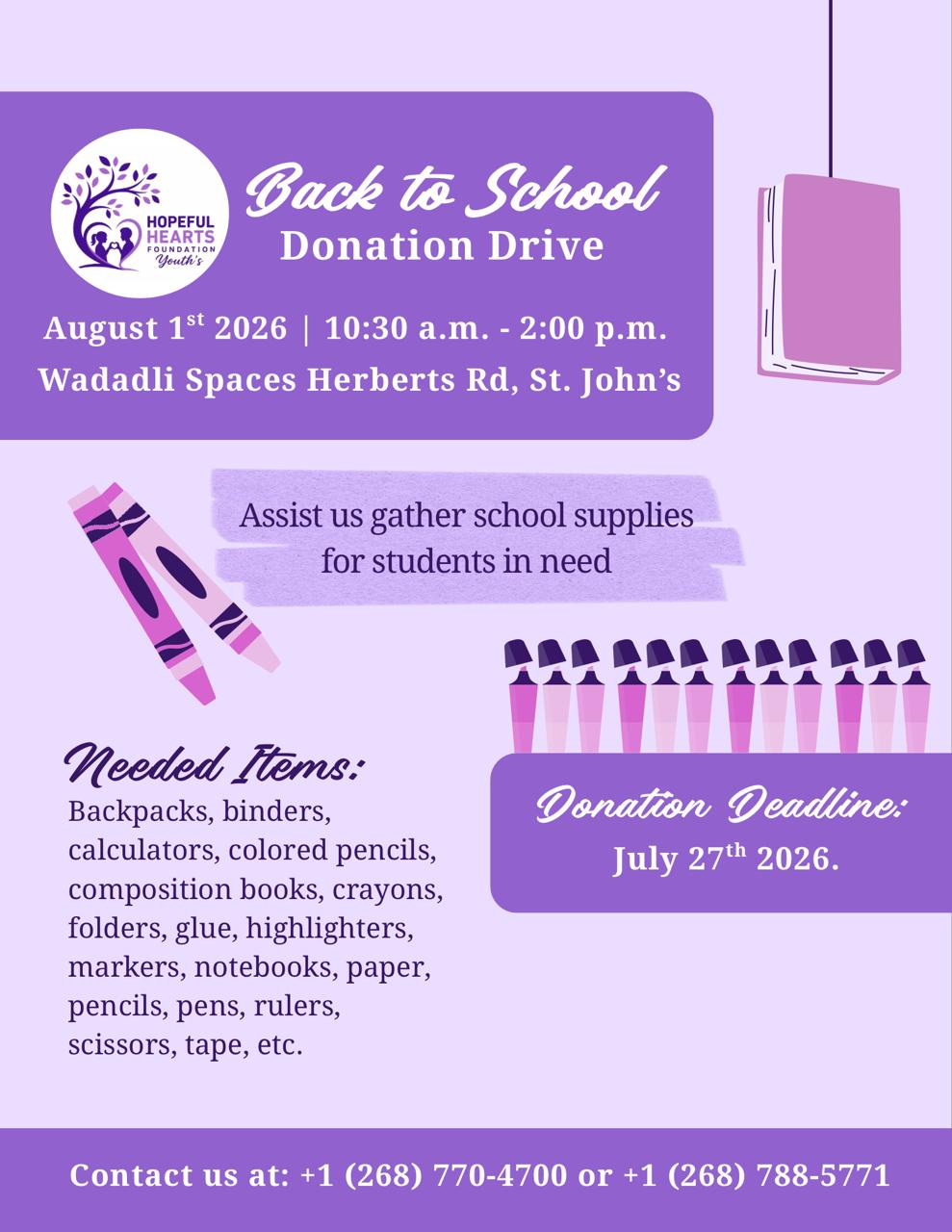
    As a new academic year approaches, young leaders from the Hopeful Hearts Foundation Youth Group are stepping up to address unmet needs in their local community, launching a fully youth-organized Back to School Donation Drive and calling on area residents, businesses and organizations to rally behind their effort.

    Unlike many community charity initiatives led by adult organizers, this project was conceived, planned and will be executed entirely by the youth members of the foundation. The group designed the drive specifically to create a meaningful opportunity for young people to give back directly to their peers, positioning youth leaders at every stage of the process: from identifying local households struggling to afford school essentials to coordinating outreach campaigns that connect donors with families in need. For the young participants, the initiative is as much about building community leadership as it is about supporting students heading back to the classroom.

    The core goal of the drive is to collect essential school supplies that will set low-income students up for success from the first day of classes. The group is prioritizing donations of practical items including durable backpacks, lined notebooks, pencils, pens, erasers, rulers and other core educational materials, ensuring that every student receiving support can start the school year feeling prepared, confident and equal to their classmates.

    In a statement shared by the Hopeful Hearts Foundation, representatives highlighted the deeper meaning behind the youth-led project: “This initiative perfectly captures the essence of what youth leadership should be: young people seeing a gap in their community, refusing to wait for others to solve it, and taking decisive action to create tangible change. When local residents and organizations support this drive, they aren’t just giving school supplies — they are investing in and empowering the next generation of community leaders.”

    The foundation is open to contributions from all segments of the local community, from individual residents looking to clear out unused gently used or new school supplies to local businesses and community partners interested in making bulk donations or sponsoring the distribution event. Every contribution, no matter how small, is noted as adding up to meaningful support that directly benefits local students who would otherwise face the school year without key learning resources.

    For families and students in need of supplies, the distribution event will be held on August 1st, 2026, running from 10:30 AM to 2:00 PM at Wadadli Spaces, located on Herberts Road in St. John’s. Donors have until July 27th, 2026 to drop off or submit their contributions to the drive, giving the youth organizers time to sort and prepare items ahead of the distribution day.

  • LETTER: Nowhere Else to Turn

    LETTER: Nowhere Else to Turn

    In a heartfelt open letter addressed to a local editor, an anonymous non-established government worker has lifted the lid on years of uncertainty and unfair working conditions stemming from a lack of transparency around their employment terms. The worker, who has served in the public sector since graduating from secondary school in 2018, said they originally took on the role believing it would follow standard public service working arrangements. But in a sudden shift, management recently reclassified their position as a special role on the basis of the duty allowance they receive, granting agency leadership broad authority to summon them for work at any time – including public holidays, for any length of shift and to complete any assigned task.

    Under the terms of the national Collective Bargaining Agreement for government workers, management claims the worker’s total compensation is limited to their base salary plus this duty allowance, with no additional overtime or entitlements for on-call work. What makes the situation particularly unacceptable, the worker argues, is that no party has been able to provide them with a copy of the agreement to verify these claims themselves. When they approached their labor union to request access to the document, representatives refused to share it. A subsequent inquiry to their government ministry directed them to the national Government Printery, which told the worker it no longer held copies of the agreement.

    The worker stressed that they are not refusing to carry out their assigned duties and have a long track record of hard work in their role. They simply believe that all employees have a fundamental right to full transparency around the terms of their employment. “Workers deserve to know what they sign up for and what the rules really say,” they wrote. “To just pop up with new rules after years of work is unreasonable. If the agreement really does grant the government these far-reaching powers, the very least workers should get is the chance to read it for themselves.”

    The ongoing uncertainty and unpredictable on-call schedule have already taken a major toll on the worker’s personal and financial life. They told the editor they still do not earn enough to afford building a adequate family home, and the constant risk of being called into work has left them with almost no personal time. This lack of work-life balance has even put the possibility of starting a family or maintaining a normal social life out of reach. “It feels like the people at the bottom always have to carry the burden while nobody in charge is listening,” they added.

    Now, the worker is issuing a public appeal to anyone who holds a copy of the 2010–2020 Collective Bargaining Agreement for non-established government workers to share the document with them. They argue that it is fundamentally wrong that working people should have to beg for access to the legal agreement that governs every aspect of their employment. The letter closes with a plea for public attention and meaningful change, calling on leaders to address the lack of transparency and unfair working conditions faced by low-level non-established public servants across the country.

  • Caribbean Unions Urged to Place Greater Focus on Human Rights and Discrimination

    Caribbean Unions Urged to Place Greater Focus on Human Rights and Discrimination

    Across the Caribbean region, trade unions are facing a growing call to expand their traditional mandate beyond negotiating wages and improving working conditions to prioritize human rights protections and guard workers against systemic discrimination. This urgent appeal emerged as a central takeaway from a recently completed three-day capacity-building workshop hosted in Antigua, which gathered union leaders and representatives from marginalized interest groups to assess the rollout of the International Labour Organization (ILO) Convention 190.

    Organized collaboratively by global labor federation Public Services International (PSI) and the FNV Rainbow Network, the workshop was designed to equip public service trade unions across the Caribbean with the tools to tackle violence and harassment in workplaces, while advancing equal rights for LGBTIQA+ workers in the region.

    In a post-workshop interview, Sandra Massiah, PSI’s Sub-Regional Secretary for the Caribbean, outlined that a persistent gap in the Caribbean labor movement is the lack of sustained attention to human rights issues, particularly systemic discrimination against marginalized worker groups.

    “Having delivered these workshops across multiple Caribbean islands, I’ve seen firsthand that many unions still do not devote the level of focus to human rights issues that these problems demand,” Massiah explained. She noted that deep-seated cultural and religious conditioning often acts as a barrier to union representatives recognizing the full spectrum of discrimination, with many biased acts stemming from unconscious prejudice that goes unaddressed.

    “Deeply ingrained indoctrination, whether rooted in religious beliefs or cultural norms, often clouds understanding of what constitutes discrimination. In most cases, this bias is unconscious, and addressing that hidden prejudice is the first critical step we need to take,” she said.

    Massiah emphasized that building truly inclusive workplaces and representative union movements requires more than just a working knowledge of formal labor legislation. It demands intentional investment in developing the awareness, open-minded attitudes and practical skills necessary to confront entrenched prejudice and guarantee that every worker is treated with dignity and equal respect.

    The three-day workshop delivered specialized training on the provisions and requirements of ILO Convention 190, with the specific goal of boosting the training and leadership capacity of local trade unionists. This targeted upskilling will enable Caribbean unions to independently educate their own membership on anti-discrimination and anti-harassment standards moving forward, reducing reliance on external support.

    Attendees also participated in a detailed review of Antigua and Barbuda’s draft legislation aimed at preventing sexual harassment and violence in workplaces. The draft bill was compared side-by-side with Convention 190 and its official accompanying recommendations to identify gaps and areas for improvement before the legislation is brought to a vote in the national parliament.

    Massiah noted that the timing of the workshop was uniquely opportune, giving regional union representatives a chance to draft evidence-based recommendations and build advocacy strategies to push for final legislation that aligns fully with the international standards Antigua and Barbuda already committed to uphold when it ratified Convention 190.

    She also commended the high level of engagement from all attendees, which included shop stewards and executive leaders from the Antigua and Barbuda Workers’ Union. Massiah highlighted that the open dialogue observed during the event signals a growing willingness within the regional labor movement to tackle topics that were long considered off-limits.

    “Conversations are happening now. People are openly discussing issues that were once taboo in trade union circles. That means we are making tangible progress, and this is a foundation we will keep building on,” she said.

    Looking ahead, Massiah expressed optimism that this workshop represents another important milestone in the journey to help Caribbean trade unions evolve into stronger, more inclusive advocates. Beyond fighting for better compensation and working conditions, she said, the shift toward a broader human rights focus will help create workplaces that are free from violence, harassment, and discrimination for every worker, regardless of identity.

  • Reported Shark Sighting at Ffryes Beach

    Reported Shark Sighting at Ffryes Beach

    On Sunday, a reported shark sighting just meters from Ffryes Beach’s shoreline has sparked urgent safety alerts for local and visiting beachgoers, urging heightened vigilance across all coastal water activities. Multiple eyewitnesses confirmed the predator was spotted swimming in shallow, near-shore waters – a development that immediately stoked anxiety among swimmers already on edge following a recent high-profile shark attack off the same region’s coast.

    That prior incident left a local fisherman from the nearby community of Urlings with severe, life-altering injuries after the encounter while he was working out at open sea. As of the latest updates, the fisherman remains in recovery, with no additional details released on his current condition by local medical authorities.

    In response to the new sighting, regional coastal safety officials have issued formal guidance for all water users, including recreational swimmers, snorkelers, and paddleboarders, to keep a constant watch for sharks or any out-of-the-ordinary marine behavior. The advisory stresses that anyone who spots a shark or detects unusual activity should immediately exit the water without delay and alert local lifeguards or coastal management teams.

  • APUA Cooperative Credit Union Staff Stage Sit-In Over Workplace Concerns

    APUA Cooperative Credit Union Staff Stage Sit-In Over Workplace Concerns

    On a Monday morning, employees of the APUA Cooperative Credit Union launched a peaceful sit-in demonstration, stepping forward to raise a series of longstanding concerns about their working conditions that have yet to be addressed by institutional leadership.

    When local press reached out to Office Manager Melissa Southwell for an official statement on the industrial action, Southwell immediately declined to provide any comment. After offering only a brief “no comment” response, she ended the media conversation abruptly, leaving core questions about the employees’ grievances and the institution’s planned next steps unanswered.

    A key point of context that clarifies the structure of this dispute is the independent status of the credit union. While it bears the APUA name, the organization operates entirely separate from the management framework of the Antigua Public Utilities Authority. It is structured as a member-owned institution, with all shares held by the APUA employees who make up its base of account holders and stakeholders.

    This collective action comes a little more than 12 months after a significant milestone for labor relations at the credit union: management and the Antigua and Barbuda Workers’ Union, the official body that represents the credit union’s employees in collective bargaining, signed their first ever formal collective agreement. That agreement was intended to set clear terms for working conditions, compensation, and dispute resolution moving forward, making the current unrest a notable setback for the nascent labor framework at the institution.

    As of Monday, the situation remains unresolved and developments are ongoing. Media outlets are continuing to monitor the standoff between employees and leadership, with additional details expected to emerge as negotiations or further actions unfold.

  • OPINION: The Monsters Are Not the Migrants

    OPINION: The Monsters Are Not the Migrants

    In late May 2026, three CARICOM nationals from Jamaica and Belize made an unexpected landing in Basseterre, the capital of Antigua and Barbuda. Transferred under a bilateral arrangement with the United States, these three men were not violent offenders or security threats — they were simply individuals caught in the wrong place at the wrong time, marked for removal by U.S. immigration authorities. This quiet arrival has sparked a urgent regional conversation about power imbalance, national sovereignty, and the growing pressure on small Caribbean nations to absorb other countries’ unresolved policy problems.

    Today, Antigua and Barbuda’s government has released a formal White Paper outlining strict, conditional terms under which it might consider accepting a strictly capped number of third-country nationals removed from U.S. territory. To understand how the Caribbean reached this defining moment, it is useful to turn to a decades-old observation from Italian philosopher Antonio Gramsci, who wrote from a Fascist prison in the 1930s that political crisis emerges when the old order collapses, a new order has not yet taken root, and dangerous, corrupting pathologies fill the void. That pattern is familiar to Caribbean nations, which have long been framed as a dumping ground for other countries’ unwanted burdens: from toxic industrial waste to decommissioned vessels, the packaging of these problems changes, but the lopsided power dynamic between large global powers and small island states remains the same.

    We are now living through that exact interregnum. The post-Cold War global order is fraying at the edges, and no new power bloc — whether a rising China, a fractured European Union, or an increasingly inward-focused United States — has emerged to establish a broadly legitimate new framework. What we have instead is a fragmented multipolar world that looks less like a balanced system of global governance and more like an unregulated brawl without a referee. The monsters Gramsci wrote of are not coming; they are already here, and four distinct threats to small-state sovereignty are now on full display in the debate over U.S. deportation policy.

    The first and most obvious monster is the policy of outsourced deportation itself. The United States is pressuring small Caribbean states to help advance its domestic migration goals by accepting third-country nationals who often have no familial, cultural, or linguistic ties to the Caribbean, no clear lawful status, and no path to a durable future. While policymakers frame this as a collaborative partnership, it is in reality nothing more than the U.S. offloading its policy challenges onto smaller, more vulnerable nations.

    The second monster is the dehumanizing rhetoric used to sell this policy to the public. During a 2025 Cabinet meeting, U.S. Secretary of State Marco Rubio declared that the U.S. was seeking countries to take in what he called the “most despicable human beings,” adding that “the further away from America, the better.” The contradiction of this framing could not be clearer when compared to the three individuals who landed in Basseterre: all three were transferred solely for immigration violations, with not a single criminal conviction between them. Rubio’s inflammatory language was crafted for a domestic U.S. political audience conditioned to view migrants as inherent threats, but Caribbean nations have no obligation to adopt this dehumanizing framework. Deported people are not abstract disposable cargo; they are parents, siblings, neighbors, people who made mistakes in the search for a better life. While upholding the rule of law does not require accepting dangerous individuals, it also does not require dehumanization. True security is built on fact-based sovereign assessment, not lazy, dehumanizing labels.

    The third monster is the raw diplomatic asymmetry at the heart of this arrangement. As of July 2026, Antigua and Barbuda is being asked to take on the legal, financial, and social risk of hosting U.S. deportees, even as the U.S. maintains strict new restrictions on visa issuance for Antiguan and Barbudan nationals. The double standard is impossible to ignore: the island nation is considered good enough to absorb Washington’s deportation backlog, but its own citizens are required to pay additional bonds and jump through extra hurdles just to be granted the privilege of travel to the U.S. This is not a minor side issue; it cuts directly to questions of reciprocity, national dignity, and sovereign interest. If Washington demands that Antigua and Barbuda shoulder risk for U.S. policy goals, Washington must address the unfair treatment of Antiguan and Barbudan travelers. This is not about trading human beings for visa access — people can never be reduced to bargaining chips — but it is about demanding fair, measurable benefits for a nation that is being asked to take on U.S. problems.

    To the Antigua and Barbuda government’s credit, its published White Paper acknowledges many of these core concerns. The document rejects a permanent open-ended monthly transfer program, preserves full sovereign discretion over which individuals may be accepted, and proposes a capped pilot of no more than ten deportees in 2026, followed by a full policy review in 2027. It also sets strict exclusion criteria and requires binding written guarantees for legal status, full financial coverage, healthcare, social support, and return arrangements before any transfer can proceed. Most critically, the White Paper emphasizes that these minimum protections are not reciprocal concessions, but non-negotiable prerequisites for any cooperation, and it explicitly calls for the lifting of blanket visa restrictions on Antiguan and Barbudan nationals as a core condition of any agreement.

    This stance must be reinforced. The visa issue cannot be sidelined to separate diplomatic negotiations; it must remain a core part of this discussion. Antigua and Barbuda should never accept open-ended risk in exchange for vague promises of future favor, and any proposed transfer agreement must receive full parliamentary scrutiny before it can be implemented.

    Small Caribbean states are not powerless. The United States itself refers to the region as its “third border,” a phrase that implicitly acknowledges the Caribbean’s strategic importance to U.S. national security. That status gives small nations the standing to negotiate as equals, not just accept terms dictated by Washington. Sovereignty is not a gift granted by large powers; it is a muscle that atrophies if it is not exercised. The imbalance of diplomatic power must be addressed head-on.

    The fourth and final monster is the instinct to reduce this debate to partisan domestic politics. This issue cannot be reduced to a simple test of whether one supports or opposes the sitting government. The government has a duty to be fully transparent with the public, the opposition has a duty to conduct rigorous scrutiny, and citizens have a duty to demand seriousness from both sides of the political divide. Across party lines, there should be a clear shared minimum set of principles: no permanent standing transfer program, no automatic admission of deportees, no transfers without full biographical, biometric, criminal, and medical background information, no acceptance of individuals with criminal convictions beyond minor immigration violations, no transfers before binding written guarantees for cost coverage, legal status, and return responsibility are secured, and no agreement without full parliamentary scrutiny and the inclusion of visa restriction reform on the negotiating table.

    This stance is not anti-American. It is pro-Antigua and Barbuda. Friendship between sovereign states does not require obedience. Mature diplomacy allows a small nation to say: we value our relationship with the United States, we recognize the balance of power between us, we will listen respectfully to your concerns, but we will not become a dumping ground for your unresolved migration challenges. We will not accept one-sided risk while our own citizens are treated as presumptive threats and restricted from travel.

    The real danger extends beyond the demands coming from Washington. It lies in how we respond to one another. These dangerous pathologies thrive when compassion is mocked as weakness, caution is dismissed as disloyalty, scrutiny is labeled sabotage, and foreign political rhetoric is adopted as local common sense. We should not adopt Marco Rubio’s dehumanizing framing, but we also should not build our diplomatic posture on anger alone. We must be clear-eyed, firm, and united around core principles: respect for the rule of law, strict limits on any cooperation, full funding for any accepted deportees, complete vetting, parliamentary oversight, reciprocal visa treatment, and the sovereign right to say no.

    Let us be clear: the monsters in this debate are not the migrants. They are the four pathologies that threaten small-state sovereignty: outsourced deportation dressed up as bilateral partnership, dehumanization dressed up as national security, diplomatic imbalance dressed up as friendship, and partisan division dressed up as patriotism. We defeat all four by remembering who we are: we are a small state, yes, but we are not a small people. We are a friend of the United States, yes, but we are not a subordinate. We are a nation prepared to cooperate, yes, but only on terms that protect our citizens, our laws, our institutional capacity, and our national dignity.

    The test we face today is not whether we accept ten deportees. It is whether we accept a framework where ten becomes twenty, twenty becomes an open-ended flow, and our own citizens continue to wait years for visas and pay costly bonds just to visit family abroad. That threshold is where sovereignty begins. And for small states everywhere, sovereignty is not for sale.
  • Car Catches Fire on All Saints Road

    Car Catches Fire on All Saints Road

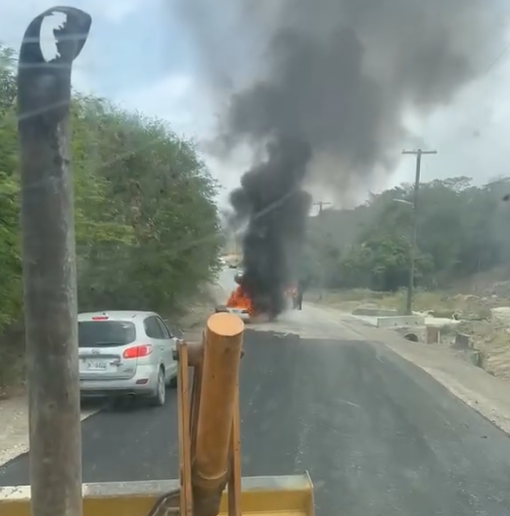
    A sudden vehicle blaze brought morning commuter chaos to All Saints Road on Wednesday, as local fire crews rushed to extinguish the flames before they could spread to nearby structures or moving traffic. Witnesses reported seeing thick black smoke billowing from the engine compartment of a silver four-door sedan just after 8 a.m., during the peak rush hour period when thousands of local residents travel to work and school along the busy arterial route.

    The 42-year-old driver, who has not been named by local authorities, told first responders they noticed unusual engine overheating just a few minutes before pulling over to the side of the road and escaping unharmed. A passing bus driver attempted to douse the initial flames with a portable fire extinguisher, but the blaze quickly spread to engulf the entire passenger compartment before fire crews arrived on scene within seven minutes of the first emergency call.

    Firefighters fully extinguished the fire within 15 minutes, and confirmed that no other vehicles or pedestrians were caught in the incident. All lanes of All Saints Road between 5th Street and Oak Avenue were closed for nearly two hours while emergency crews cleared the charred vehicle wreckage and cleaned up fluid leaks from the road surface. Local police redirected traffic through surrounding residential side streets, leading to minor delays that lasted until just before 11 a.m.

    Investigators with the local fire marshal’s office say preliminary evidence points to a mechanical failure in the vehicle’s old wiring system as the most likely cause of the blaze. Authorities are reminding motorists to keep up with regular vehicle maintenance, especially cooling system and electrical inspections, to prevent similar fires during warm weather months. No injuries were reported in connection with the incident, authorities confirmed Wednesday afternoon.

  • ECCB Backs Regional Airline to Improve Caribbean Connectivity

    ECCB Backs Regional Airline to Improve Caribbean Connectivity

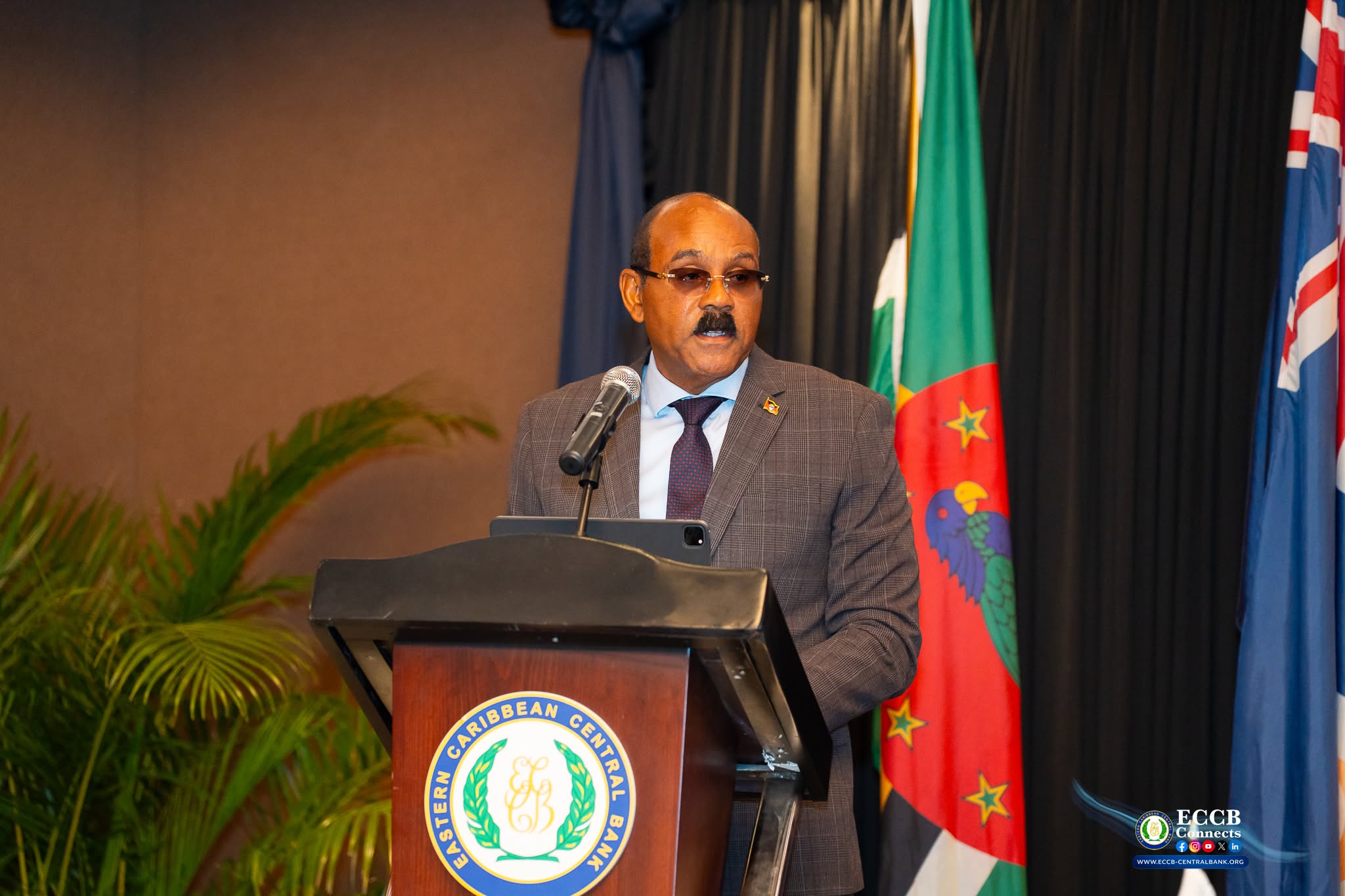
    Against a backdrop of stubbornly elevated travel costs that continue to drag on economic development across the Eastern Caribbean, the Monetary Council of the Eastern Caribbean Central Bank (ECCB) has formally pledged its full support for ongoing initiatives to launch OECS Air, a dedicated regional airline. This endorsement was delivered in an official communiqué released at the conclusion of the Council’s 113th quarterly gathering, hosted this week in Dominica, where regional finance ministers and territorial premiers gathered to assess the bloc’s current economic trajectory and align on core growth priorities. During deliberations, Council members acknowledged that the Eastern Caribbean Currency Union’s (ECCU) tourism sector has retained surprising resilience in recent months, but highlighted that fragmented and inadequate air links between neighboring islands remain a persistent bottleneck that limits the expansion of intraregional travel. The official statement emphasized that the body welcomes ongoing multi-stakeholder discussions focused on bringing OECS Air to operational status, noting that enhanced regional connectivity is a non-negotiable foundation for unlocking growth in cross-border trade, tourism, and the free movement of labor across the bloc. The Monetary Council went further to frame improved interconnectedness as an indispensable pillar for maintaining long-term economic expansion and boosting the Eastern Caribbean’s global competitiveness. It reaffirmed its long-standing position that delivering widespread, shared prosperity to member states requires coordinated progress across multiple critical fronts: raising overall productivity, deepening institutional regional integration, expanding affordable transportation infrastructure, rolling out accessible, low-cost energy, attracting higher levels of private sector investment, and sustaining consistent macroeconomic policy coordination across all member governments. In a positive update on the region’s core tourism industry, the Council confirmed that visitor arrivals across the ECCU saw a robust 9% uptick in the first quarter of 2026, climbing from 2.3 million to 2.5 million compared to the prior comparable period. Correspondingly, total visitor spending across the bloc also grew by 4%, rising from 2.7 billion Eastern Caribbean dollars to 2.8 billion Eastern Caribbean dollars. The uptick in both arrival numbers and spending signals that global traveler demand for the Eastern Caribbean as a leading leisure and vacation destination remains steady, countering broader headwinds facing the global travel sector.

  • Hon. E.P. Chet Greene Summer Camp Welcomes More Than 200 Children

    Hon. E.P. Chet Greene Summer Camp Welcomes More Than 200 Children

    One of the most anticipated community-focused youth events in Antigua and Barbuda, the annual Hon. E.P. Chet Greene Summer Camp, has opened its doors to welcome more than 200 children from across the country. The summer camp, named in honor of the prominent Antiguan politician who currently serves as the country’s Minister of Foreign Affairs, International Trade, and Immigration, has become a beloved seasonal tradition that combines learning, recreation, and community building for young residents. Unlike traditional academic programs, the camp is designed to provide a safe, engaging space for children aged 6 to 16 to explore new interests, build meaningful social connections with peers from different neighborhoods, and stay active during the extended summer school break. Camp organizers have put together a diverse schedule of activities that caters to a wide range of interests, including outdoor sports like soccer and volleyball, creative arts and crafts workshops, introductory STEM sessions that introduce young participants to basic coding and robotics, and life skills training focused on topics like financial literacy and personal safety. Local community leaders, volunteer educators, and youth development workers have partnered to staff the camp, with many donating their time to ensure the program remains accessible to children from all socioeconomic backgrounds. In a opening address to campers and their families, representatives of the ministry highlighted that the camp aligns with the government’s broader youth development goals, which prioritize expanding opportunities for young people to grow and thrive outside of the formal classroom setting. Many parents have expressed appreciation for the program, noting that it provides a affordable, supervised option for children while many working parents remain on the job during the summer months. Camp officials confirmed that the 2024 session will run for four weeks, concluding with a closing ceremony that will showcase camper projects and award certificates of participation to all attendees.