标签: Antigua and Barbuda

安提瓜和巴布达

  • Sazeek Joseph Jailed Four Years for Attempted Rape of 18-Year-Old Woman

    Sazeek Joseph Jailed Four Years for Attempted Rape of 18-Year-Old Woman

    A local man has been handed a four-year custodial sentence following a guilty verdict on charges of attempted rape and serious indecency against an 18-year-old woman. Sazeek Joseph was found guilty by a unanimous jury verdict back in March, with the court ordering his separate sentences to be served concurrently: four years behind bars for the attempted rape count and an additional one-year term for the second charge of serious indecency.

    The legal case traces back to a traumatic incident that unfolded in June 2022, according to testimony and evidence presented during the trial. Prosecutors laid out the sequence of events, explaining that Joseph had driven the young victim to an isolated, out-of-the-way location before launching his attempted sexual assault. The teen fought back against Joseph’s attack, and after the incident, she recorded a portion of a subsequent conversation between the two, in which he explicitly acknowledged that he had damaged her clothing during the encounter.

    Prosecutors further told the court that Joseph carried out a second assault on the victim before she was finally able to escape from his presence. The victim did not delay in reporting the crime, contacting local law enforcement and filing an official report the very same day she managed to get away.

    During the trial, jurors were presented with a robust body of evidence to consider, including text message exchanges, the audio recording made by the victim, and tangible physical evidence tied to the crime. Throughout the legal proceedings, Joseph provided multiple conflicting, inconsistent accounts of the June 2022 encounter, explanations that the jury ultimately rejected when delivering their guilty conviction. Following the guilty verdict in March, Joseph was taken into custody and held in remand, with his final sentencing hearing held this Tuesday to formally issue the prison term.

  • VACANCY: Assistant Maintenance Manager

    VACANCY: Assistant Maintenance Manager

    A leading multinational manufacturing organization with established operations across the United Kingdom has announced an opening for the position of Assistant Maintenance Manager at its Midlands production facility. This full-time, permanent role offers an attractive compensation package ranging from £45,000 to £52,000 annually, depending on the successful candidate’s level of experience and professional qualifications.

    The core mandate of this position is to support the Head of Maintenance in overseeing all upkeep operations for the facility’s extensive production lines, industrial equipment, and on-site infrastructure. Key responsibilities include coordinating scheduled preventive maintenance programs, troubleshooting unplanned equipment breakdowns to minimize production downtime, managing a team of on-site maintenance technicians, and ensuring full compliance with UK health and safety regulations across all maintenance activities.

    Ideal candidates will hold a nationally recognized qualification in mechanical or electrical engineering, have a minimum of three years of experience working in a maintenance role within a fast-paced manufacturing environment, and demonstrate strong leadership and problem-solving capabilities. Experience with computerized maintenance management systems (CMMS) is listed as a highly desirable qualification for interested applicants.

    The company highlights that it is committed to investing in employee professional development, offering clear pathways for career progression within the organization’s broader maintenance and operations division. Applications are being accepted through the company’s official careers portal, with a closing deadline set for four weeks from the date of this vacancy announcement.

  • Pringle Calls for Unity and Respect for Workers at ABWU Labour Day Rally

    Pringle Calls for Unity and Respect for Workers at ABWU Labour Day Rally

    On Labour Day in Antigua and Barbuda, United Progressive Party (UPP) Leader and opposition head Jamale Pringle delivered a keynote address to crowds gathered at the Antigua and Barbuda Workers’ Union (ABWU) rally, centering his remarks on honoring working people and pushing for cross-group unity to drive national progress. Opening his speech with formal greetings to the union’s executive branch, president, and general secretary, Pringle first extended his sincere praise to all members and organizers who dedicate their time and effort to sustain the union’s operations in service of the working class. Pringle emphasized that Labour Day carries far deeper meaning than a simple day off from work. He framed the annual observance as a living tribute to the generations of effort and sacrifice that workers across every sector of the country have poured into national growth. “Labour Day is not just a holiday. It is a celebration of dedication, skill, and the countless hours that keep our industries, businesses, and neighborhoods thriving,” he told the gathered crowd. Going beyond purely economic contributions, Pringle highlighted the far-reaching social impact of working people’s daily labor. He noted that workers’ effort does more than boost national output—it lays the foundation for strong families, nurtures individual and collective dreams, and builds the long-term future of Antigua and Barbuda. In his remarks, Pringle also acknowledged the persistent daily challenges that working people across the country face, while commending their consistent resilience in navigating and overcoming those barriers. A core policy-focused point of his address centered on workplace justice, with the UPP leader stressing that fair, respectful treatment must be non-negotiable for every worker. “Every worker deserves respect, fair treatment, and opportunity,” he stated, reaffirming his party’s commitment to advancing worker rights. The central throughline of Pringle’s speech was a urgent call for national unity, framing collective action as the only sustainable path toward meaningful national progress. “Progress is made together… we have to be united,” he told attendees, urging workers, union members, and political allies to align around shared goals for national development. Closing his address, Pringle reiterated unwavering solidarity between his party, the national labor movement, and all working people, closing with three rousing declarations of support: “Long live the United Progressive Party. Long live the working class. Long live the Antigua Barbuda Workers Union.”

  • PM Orders Back Pay to Be Cleared: ‘Every Single Worker Must Be Paid’

    PM Orders Back Pay to Be Cleared: ‘Every Single Worker Must Be Paid’

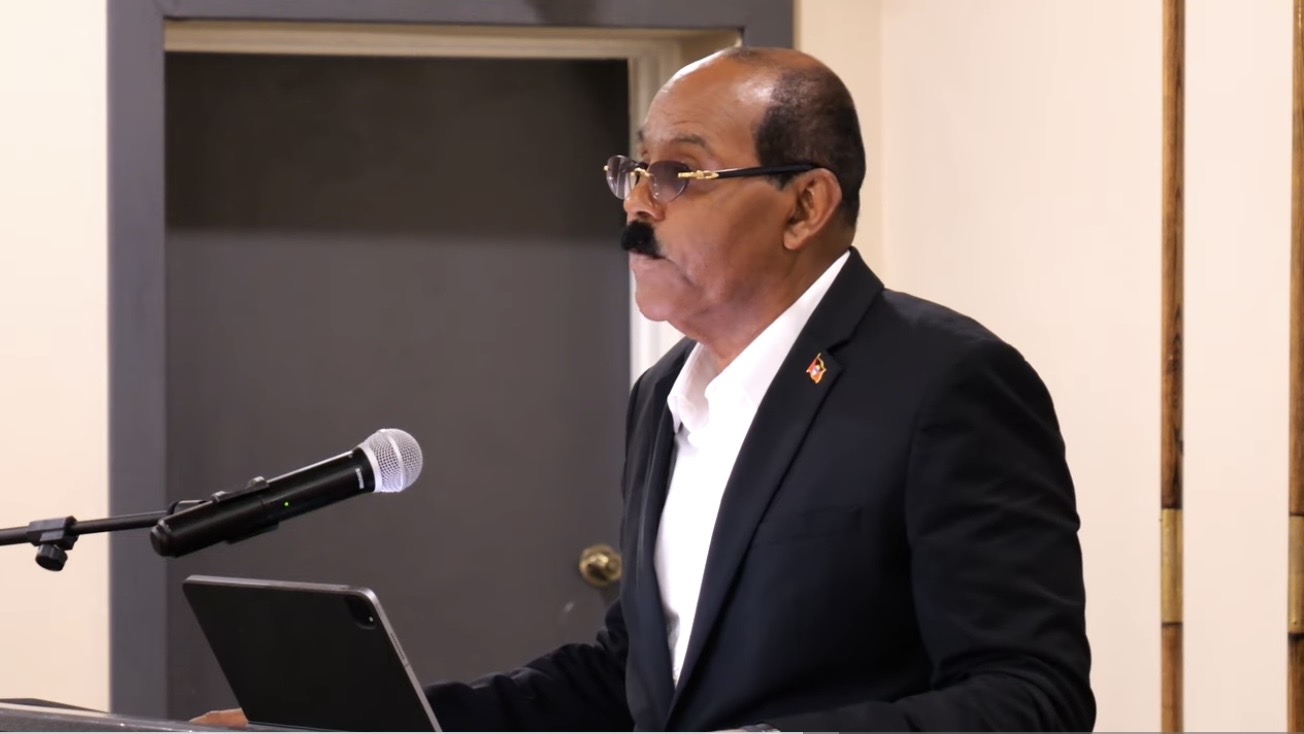
    Fresh off his administration’s return to power following the April 30 general election, Prime Minister Gaston Browne of Antigua and Barbuda has delivered a forceful mandate to public sector leadership: clear all lingering back pay owed to public workers immediately, with no further delays or excuses.

    Speaking at the annual Labour Day rally jointly hosted by the Antigua Trades and Labour Union (AT&LU) and the Antigua and Barbuda Labour Party, Browne centered his address on upholding labor rights and fulfilling commitments to the nation’s workforce. Among his top priorities is resolving longstanding unpaid wage disputes, including those accumulated during the period of the COVID-19 vaccine mandate, when dozens of workers faced suspended pay over compliance requirements.

    The prime minister made clear that the administrative ball is now firmly in the court of senior public sector officials, who he has tasked with taking direct ownership of processing all outstanding claims. “When we said to you that they must process their back pay, we expect you to do so and to make sure that every single worker is paid,” Browne stated in his address. He went on to emphasize that funding for the payments is already secured and held in the national treasury, removing any financial justifications for continued hold-ups. “Do the research… provide the documentation, the money is in the treasury. Every single worker must be paid,” he added.

    Browne’s hardline stance comes in response to persistent complaints from public sector workers across multiple departments, who have reported months-long delays in receiving owed back pay. Beyond the immediate financial issue, the prime minister warned that failing to address workers’ legitimate grievances erodes public trust in governmental institutions, stressing that all laborers deserve dignified, respectful treatment from their public sector employers. “Treat the workers with respect,” he said.

    This order forms a core plank of the new administration’s broader labor agenda, which centers on raising wages, strengthening workplace protections, and improving overall working conditions for all workers across Antigua and Barbuda. Browne reaffirmed that securing full entitlements for the nation’s labor force will remain a top priority for his government as it works to deliver on the campaign commitments that secured its renewed mandate last month.

  • ABWU: $11.50 Not Enough — Workers Need $13.50 Now

    ABWU: $11.50 Not Enough — Workers Need $13.50 Now

    Thousands of workers and union representatives gathered in St. John’s this Labour Day for a rally organized by the Antigua and Barbuda Workers’ Union (ABWU) that turned into a forceful call for urgent, meaningful wage reform amid a crippling cost-of-living crisis. Union leadership opened the event with sharp criticism of the government’s glacial timeline for wage adjustments, rejecting the recently proposed minimum wage hike to $11.50 as wholly inadequate to meet the basic needs of working families.

  • De Nully Calls for ‘Livable Pensions’ for Workers

    De Nully Calls for ‘Livable Pensions’ for Workers

    As the Antigua and Barbuda Trades and Labour Union (AT&LU) marked its 75th year of advocating for working people, union president Bernard De Nully used the platform of a joint Labour Day rally with the Antigua and Barbuda Labour Party to center a critical demand: pension systems must deliver real, livable retirement benefits that guarantee long-term financial security for former workers.

    De Nully pushed back against the common treatment of pensions as an afterthought or bureaucratic formality, arguing that after decades of dedicated service to workplaces across Antigua and Barbuda, retirees deserve a meaningful safety net that supports their quality of life. For him, the conversation around pensions is never just about receiving regular checks — it is about ensuring benefits keep pace with rising cost of living, and allow retired workers to retain a dignified, reasonable standard of living that matches their years of contribution.

    The call for livable pensions was the centerpiece of a broader address focused on advancing workers’ rights and social welfare across all sectors of the national economy. De Nully used the 75th anniversary milestone to reaffirm the union’s core mission of standing up for working people, emphasizing that under his leadership, the AT&LU will not back down from pushing for tangible improvements to workplace conditions and employee benefits.

    “The AT&LU will fight for you until results are achieved,” De Nully told assembled rally attendees.

    He also signaled a shift toward a more aggressive, results-focused approach to advocacy, noting that the union is prepared to leverage stronger collective action when negotiations and public appeals fail to deliver progress. “All this talk… is finished. It is time for action,” he said.

    De Nully’s demand comes as workers and labor organizers across Antigua and Barbuda continue to advance a wider public conversation about fair wages, safe working conditions, and long-term financial stability that supports working people from onboarding through retirement.

  • Daniel Warns Workers Not to Squander Their Money

    Daniel Warns Workers Not to Squander Their Money

    As the Antigua and Barbuda Trades and Labour Union (AT&LU) marks its 75th anniversary, the organization’s top leader is calling on the nation’s workers to build two critical foundations for navigating coming economic headwinds: intentional personal savings and continuous skills development through lifelong education.

    AT&LU General Secretary Alrick Daniel delivered the appeal during a joint Labour Day rally co-hosted by the union and the Antigua and Barbuda Labour Party, framing preparedness as non-negotiable for working people facing an unpredictable global economic landscape. He pressed attendees to leave reckless, wasteful spending habits behind, urging a shift toward deliberate, responsible financial planning that benefits both individual workers and their families.

    “Hardship is not a question of if—it is a question of when,” Daniel emphasized, explaining that consistent saving creates a critical financial buffer to weather unforeseen difficulties that can arise at any point in a person’s career. Beyond financial discipline, he placed equal weight on ongoing education, arguing that learning has no age limit and that workers of all backgrounds and life stages should prioritize expanding their skill sets.

    For those who left formal schooling early, Daniel pushed back against the idea that age or past circumstances create insurmountable barriers to continued learning. He also challenged workers to reframe their relationship with employment, moving beyond the narrow view of a job as simply a place to earn a paycheck. Instead, he described work as a foundational tool that supports family survival and drives long-term improvements in living standards.

    In the face of a rapidly evolving global economy, Daniel encouraged workers to cultivate professionalism, boost productivity, and pursue upward mobility—all of which make workers more competitive in shifting labor markets. His remarks anchored the union’s 75th anniversary Labour Day message, which centers on equipping working people to navigate uncertainty and build sustainable, long-term professional and financial growth.

  • Greene Predicts By-Election in All Saints East & St. Luke as Pressure Mounts on Pringle

    Greene Predicts By-Election in All Saints East & St. Luke as Pressure Mounts on Pringle

    In a fiery address to supporters at a joint Labour Day rally hosted by the Antigua Trades and Labour Union (AT&LU) and the ruling Antigua and Barbuda Labour Party (ABLP) this Monday, ABLP Chairman E.P. Chet Greene has made a bold prediction: a by-election will be called in the swing constituency of All Saints East & St. Luke within six months, driven by mounting internal unrest within the opposition United Progressive Party (UPP) that he claims will force UPP leader Jamale Pringle to step down from his parliamentary seat.

    Greene doubled down on his claim that the opposition bloc is entering a period of accelerating collapse, telling assembled rally attendees that internal factions within the UPP are growing increasingly vocal in their opposition to Pringle’s leadership. This growing pressure, he argued, will leave the UPP leader with no choice but to resign his parliamentary seat, triggering a fresh contest for the constituency that has remained a key battleground between the two major parties since the April 30 general election.

    In that general election, ABLP’s candidate Lamin “Lammy” Newton lost the All Saints East & St. Luke seat by only a narrow margin. Greene framed a potential by-election as a critical second chance for Newton, telling supporters he expects the ABLP candidate to secure victory in a fresh vote. This win, he added, would help the ruling party complete what he described as a “clean sweep” of parliamentary seats across the nation.

    Beyond his prediction of an imminent by-election, Greene used the high-profile Labour Day platform to launch a pointed critique of the UPP’s recent performance as the official opposition. He argued that the party has failed entirely to fulfill its core democratic role as a check on ruling party power, pointing to high-profile internal disagreements over key policy issues including the national government’s COVID-19 public health response and its cruise ship tourism regulations as evidence of the UPP’s ineffectiveness. “None of us in this country can honestly claim that the UPP has been an effective opposition,” Greene stated.

    Notably, even amid his sharp criticism of the current opposition, Greene stopped short of rejecting the role of opposing political voices in a functional democracy. He emphasized that robust democratic governance requires a credible, effective opposition, and rejected any push to eliminate dissenting political views from national discourse.

    Greene also used the rally to outline a new transparency and engagement pledge for the ruling ABLP, announcing that all elected ABLP parliamentary representatives will now be required to host quarterly public town hall meetings in their respective constituencies. The policy, he explained, is designed to keep elected officials directly connected to the constituents they represent, reinforcing the government’s commitment to democratic accountability. “That’s the balance we strike for democracy: constant engagement with the people,” Greene said.

    As of Tuesday, the UPP has not issued any public response to Greene’s claims and predictions, leaving open questions about the actual level of internal pressure facing Pringle and the party’s future in the constituency.

  • Editorial Independence at Risk in OECS as Political Influence Grows — 2026 Report

    Editorial Independence at Risk in OECS as Political Influence Grows — 2026 Report

    The 2026 World Press Freedom Index has delivered a mixed assessment of media freedom across the Organisation of Eastern Caribbean States (OECS), finding that the bloc continues to uphold broadly free working conditions for journalists while warning of accelerating threats to editorial independence from political interference, structural economic vulnerabilities and digital intimidation.

    While the report acknowledges that reporters in the region generally operate without the severe physical violence that endangers journalists in many parts of the world, it outlines a cascade of systemic challenges that are gradually eroding the core principles of independent media across OECS member states. One of the most pressing issues flagged in the analysis is concentrated media ownership, with multiple islands reporting that major political parties hold controlling equity stakes in leading local media companies. This direct financial ties have sparked widespread questions about whether outlets can deliver impartial, unbiased coverage, especially when reporting on the parties that own them. Beyond private ownership, the report documents that state bodies regularly exercise informal and formal influence over a wide range of media platforms, from traditional print newspapers and radio stations to digital and online news outlets.

    This political leverage becomes particularly acute during national election cycles, when control over media narratives can shape electoral outcomes. For many small regional media outlets, state advertising contracts represent one of the steadiest and most critical sources of operating revenue. The report highlights that governments can pull this funding abruptly if coverage is deemed unfavorable, creating chronic financial vulnerability that gives officials implicit power to sway editorial decisions.

    Concrete case studies from across the region illustrate how these pressures play out in practice. In 2024, Grenadian authorities faced widespread criticism after restricting press access to a public cabinet swearing-in ceremony, closing off a key government event to independent scrutiny. In a separate incident in the country, a local media outlet received formal legal threats over a published investigative story, ultimately forcing the outlet to remove the content from its platforms even after the outlet’s editorial team stood by the accuracy of the reporting.

    Outdated and overbroad legal frameworks also create persistent risks to press freedom in some member states. In Saint Vincent and the Grenadines, a 2016 national cybercrime law includes provisions tied to online defamation that critics argue grant authorities excessive power to restrict independent digital reporting, opening the door to arbitrary enforcement against critical outlets.

    Cultural and economic headwinds further weaken the sustainability of independent journalism across the bloc. In most OECS societies, the report finds that the public does not view journalism as a prestigious or financially viable career path, leading to high turnover and a lack of new talent entering the sector to support independent outlets.

    On the issue of journalist safety, the report offers one small positive note: while there have been no killings, long-term detentions or imprisonments of media workers in the OECS recorded so far in 2026, psychological and digital intimidation is on the rise. The growth of social media and digital news platforms has exposed journalists to sustained harassment, much of it orchestrated by individuals aligned with major political parties seeking to discredit critical reporting.

    In its concluding assessment, the report emphasizes that the OECS still ranks among the stronger regions globally for overall press freedom. But it warns that the cumulative impact of growing political influence, lingering economic instability and evolving digital pressures is putting the long-term independence and sustainability of regional journalism to an increasingly severe test.

  • APUA Shop Steward Pushes for Better Mental Health Support for Workers

    APUA Shop Steward Pushes for Better Mental Health Support for Workers

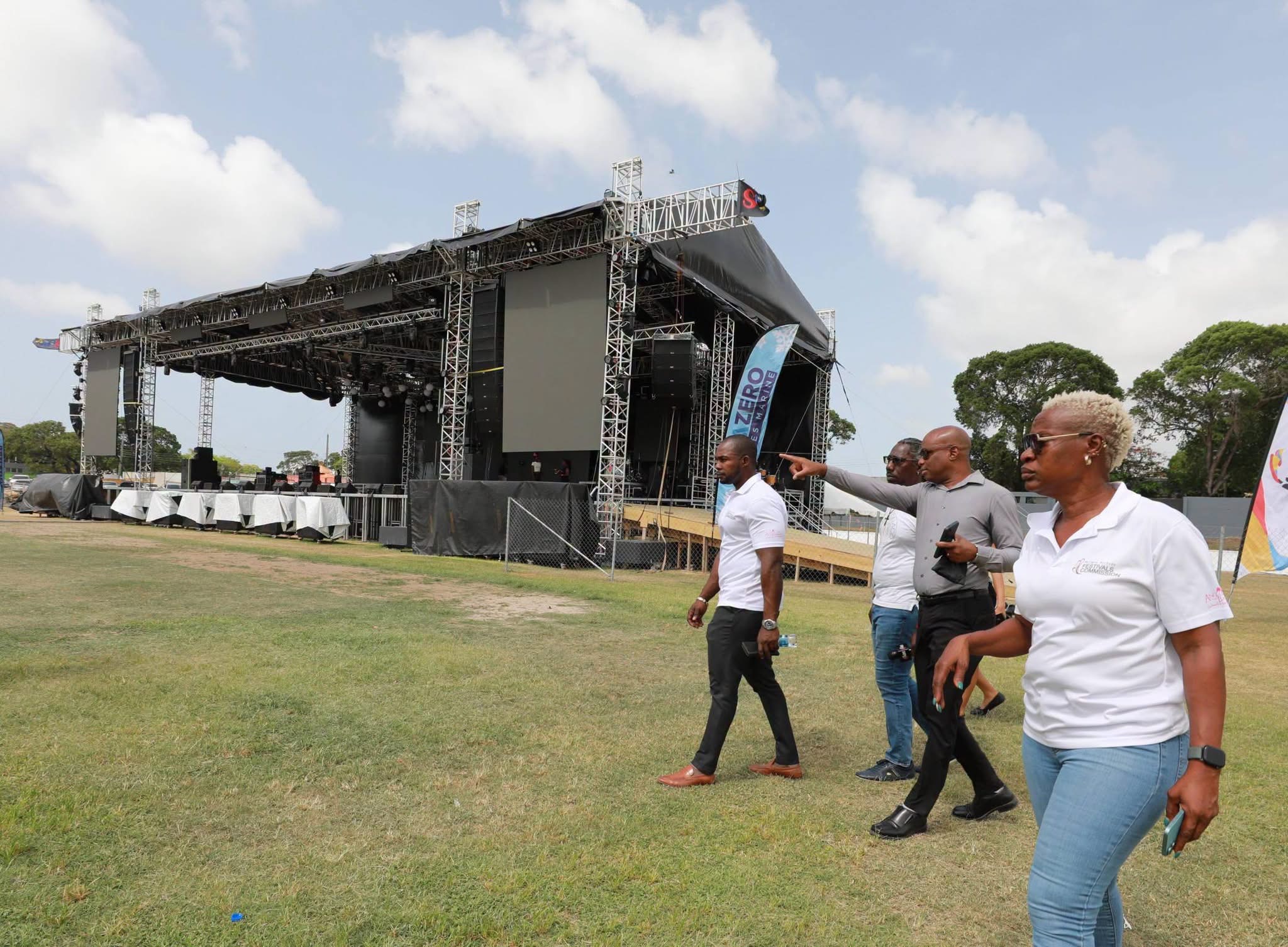
    At a joint rally hosted by the Antigua and Barbuda Labour Party and the Antigua and Barbuda Trades and Labour Union, held at the site of the V.C. Bird bust, a leading Antigua Public Utilities Authority (APUA) workers’ representative put workplace mental health at the top of the national labor advocacy agenda, calling for sweeping policy changes to prioritize frontline worker well-being.

    Zabina Nicholas, APUA’s elected shop steward, used the public gathering to press for stronger, more comprehensive worker protections across all sectors of the island nation’s economy. She opened her address by emphasizing that ongoing, organized advocacy for workers’ rights cannot slow down, pointing to outdated employment contracts that fail to address the modern challenges of rising workplace stress and persistent staffing shortages that have left workforces stretched thin.

    “Change the contract… because we care about the mental health,” Nicholas told the assembled crowd. She highlighted that stress levels among Antiguan and Barbudan workers have stayed critically high in recent years, arguing that workers are long overdue for formal employment policies that explicitly recognize and prioritize their holistic well-being, rather than only focusing on output and operational demands.

    Nicholas laid out an ambitious, time-bound national goal: to establish permanent, binding mental health frameworks in every Antiguan and Barbudan workplace by 2027. The plan outlines three core foundational requirements to make these frameworks effective: visible, sustained commitment from organizational leadership, dedicated budget and personnel resources to support mental health initiatives, and full integration of mental health protocols into routine human resource management practices.

    The specific proposals contained in the roadmap cover a range of worker-focused changes: mandatory mental health literacy and de-escalation training for all people managers, accessible flexible work arrangements tailored to help employees manage personal and mental health needs, strict privacy protections for workers who disclose mental health conditions to avoid stigma and discrimination, guaranteed paid medical leave for workers seeking ongoing mental health treatment, and structured, supported return-to-work systems for employees returning to their roles after extended mental health leave.

    Drawing on global public health and labor research to back her calls, Nicholas noted that work-related mental health disorders are not just a local challenge, but a growing global public health crisis. International studies consistently link excessive working hours and unchecked workplace pressure to a range of severe negative outcomes, including increased rates of anxiety, depression, and chronic physical illness, she explained.

    Speaking to rally supporters, Nicholas reinforced the movement’s commitment to protecting workers: “We will not allow our people to succumb to this cycle.” The end goal of the proposed reforms, she clarified, is to reposition workplace mental health as a core component of overall workplace safety and organizational productivity, rather than an afterthought added only after crises occur. This push for mental health reform is part of a broader national campaign to improve working conditions and quality of life for all workers across Antigua and Barbuda.

    Closing her address, Nicholas framed the movement as an investment in the nation’s future: “A strong mind makes a strong worker, but many strong minds make a great nation.”