标签: Antigua and Barbuda

安提瓜和巴布达

  • Driver Loses Consciousness, Crashes Into Airport Fence on Airport Road

    Driver Loses Consciousness, Crashes Into Airport Fence on Airport Road

    A sudden medical incident disrupted traffic along Airport Road on [date undisclosed] when a female operating a passenger vehicle experienced an unexpected loss of consciousness behind the wheel. The brief blackout caused her car to drift off its intended travel path, leaving the road before colliding with the outer perimeter fencing of the adjacent airport.

    Local emergency response teams including Emergency Medical Services were dispatched immediately to the crash site following reports of the incident. First responders assessed the driver’s condition at the scene and made the decision to transport her to a nearby hospital for further evaluation and mandatory medical treatment.

    As of the latest public updates, no additional details regarding the driver’s current health status, the underlying cause of her unconscious episode, or the extent of damage to the airport fence have been released to media outlets. Authorities confirmed that they will issue new statements to the public as more facts about the incident are gathered and confirmed.

  • Antigua Government Absorbing Fuel Costs While SVG Raises Electricity Surcharge

    Antigua Government Absorbing Fuel Costs While SVG Raises Electricity Surcharge

    Against a backdrop of soaring global fuel prices driven by Middle Eastern geopolitical conflict, tight supply chains, and ongoing market volatility, two Eastern Caribbean nations have adopted starkly different policy approaches to protect their populations from rising cost-of-living pressures. Antigua and Barbuda’s government has committed to shouldering the burden of spiking international fuel costs through targeted subsidies and consumption tax cuts, aiming to insulate domestic households from steep increases in both electricity tariffs and transportation expenses. In sharp contrast, neighboring St. Vincent and the Grenadines (SVG) has opted to pass nearly all additional fuel costs directly to end users via a raised electricity surcharge, a decision that has already drawn attention to the trade-offs small island developing states face amid global economic uncertainty.

    Under Antigua and Barbuda’s current cost stabilization strategy rolled out by Prime Minister Gaston Browne, the state provides a $1.67 per gallon subsidy for all fuel, including the petroleum products used to power the country’s electricity generation infrastructure. On top of this direct subsidy, the government has also cut the consumption tax applied to retail fuel to keep pump prices consistent for motorists and commercial transport operators. This dual policy intervention has succeeded in keeping domestic fuel and energy prices relatively stable even as global benchmark prices continue to climb, according to local government reports.

    Despite these near-term wins for consumers, Antiguan officials have openly acknowledged the significant fiscal strain this policy places on public budgets. If international fuel prices continue their upward trajectory in the coming months, the current subsidy regime will not be financially sustainable indefinitely, Browne confirmed in public comments. Prime Minister Browne has also noted that sustained global market volatility could force the government to revisit the policy even amid its commitment to keeping household costs manageable.

    Meanwhile over in SVG, the state-owned national utility St. Vincent Electricity Services Limited (VINLEC) has implemented a measurable increase to its monthly fuel surcharge, effective April 2026. The surcharge will climb from $0.5490 per kilowatt-hour to $0.6650 per kilowatt-hour, representing a $0.116 per kWh jump that will be reflected directly on residential and commercial customer bills. VINLEC officials framed the adjustment as an unavoidable response to two overlapping pressures: rising global fuel costs, driven largely by ongoing conflict in the Middle East, and reduced output from the country’s renewable energy generation facilities. The utility emphasized that the fuel surcharge is a pass-through mechanism designed exclusively to recoup actual fuel expenses, and does not generate any additional profit for the state-owned enterprise. VINLEC has also urged domestic customers to prioritize energy conservation where possible to reduce the overall impact of the higher surcharge on their monthly bills.

    The contrasting policy choices highlight a growing dilemma for governments across the Caribbean region, where nearly all small island economies rely heavily on imported fossil fuels to meet their energy and transportation needs. While consumer-facing subsidies deliver immediate relief and help prevent broader inflation across the domestic economy, economists widely note that these measures carry significant long-term fiscal risks, particularly for nations with limited public revenue streams. Subsidies can strain national budgets, crowd out funding for other critical public services like healthcare and education, and create market distortions that slow the transition to domestic renewable energy generation. Passing costs to consumers, on the other hand, eases immediate fiscal pressure but drives up cost-of-living burdens for working-class and vulnerable households, potentially increasing economic hardship in the short term. For Caribbean leaders navigating global economic forces outside of their control, there remains no universally popular or risk-free solution to the ongoing challenge of volatile global fuel prices.

  • PM Browne Warns of ‘Zero Tolerance’ on Crime, Says ABLP Brought Violence Under Control

    PM Browne Warns of ‘Zero Tolerance’ on Crime, Says ABLP Brought Violence Under Control

    As the April 30 general election in Antigua and Barbuda enters its final stretch of campaigning, incumbent Prime Minister Gaston Browne has placed public safety at the center of his administration’s re-election bid, promising a hardline “zero tolerance” policy on criminal activity during the official launch of the Antigua and Barbuda Labour Party (ABLP) electoral manifesto.

    In his address to gathered party supporters, Browne drew a sharp contrast between the current state of national security and the conditions the country faced before his ABLP administration took office in 2014. He characterized the pre-2014 period as a time of widespread social instability, driven by high unemployment that fueled pervasive crime and violence. Browne specifically cited rampant sexual violence and general public disorder as defining features of that earlier era.

    According to the prime minister, his government has already delivered measurable progress in addressing these security challenges, successfully stabilizing public safety and bringing violent criminal activity under consistent control. Browne emphasized that these gains were accomplished by leveraging domestic expertise and local talent, rather than relying heavily on external support. He went so far as to claim that Antigua and Barbuda now stands as one of the safest jurisdictions not just across the Caribbean region, but globally.

    Notably, Browne did not use this portion of his manifesto launch address to lay out new, detailed policing or crime-reduction strategies. Instead, he framed the debate over crime and national security as part of a broader argument about proven leadership and national stability amid ongoing global uncertainty. Browne questioned voters to consider which political team has the demonstrated capacity to guide the nation through turbulent times, asking “Which leader and team is strong enough, steady enough to see our country through?”

    The prime minister issued a clear warning to voters against electing an untested opposition government, arguing that switching leadership at this juncture would represent an unnecessary and dangerous gamble. “Do not take a risk on a leader and a team that’s just not ready,” he cautioned attendees.

    Closing his address, Browne made a direct appeal for electoral continuity, urging constituents to re-elect his administration to keep the nation secure. “Let’s keep Antigua and Barbuda in strong and safe hands,” he said. The comments come as all political parties ramp up their campaign outreach in the final days before voters head to the polls.

  • U.S. military strike kills three in Caribbean anti-drug operation

    U.S. military strike kills three in Caribbean anti-drug operation

    On April 19, the U.S. Southern Command (SOUTHCOM) confirmed it conducted a deadly targeted strike against a maritime vessel operating in the Caribbean Sea, resulting in the deaths of three men the command has labeled “narco-terrorists” as part of a broader mission to dismantle transnational drug trafficking routes.

    According to an official statement released by the command, the operation was executed by Joint Task Force Southern Spear, under the direct leadership of SOUTHCOM Commander General Francis L. Donovan. Military officials confirmed that pre-operation intelligence linked the targeted vessel to formally designated terrorist organizations, and confirmed the craft was actively involved in moving illicit narcotics through regional shipping lanes.

    At the time of the strike, the vessel was traveling along one of the Caribbean’s most well-documented illicit drug trafficking corridors, SOUTHCOM officials said. In addition to confirming the three fatalities among the vessel’s occupants, the statement noted that no U.S. military service members were harmed during the course of the operation.

    As of initial reporting, key details surrounding the strike remain undisclosed: the exact geographic coordinates of the incident, as well as the full identities of the three men killed, have not been released to the public. Military officials have not yet indicated when additional information may be made available.

    This latest action highlights the continuous, long-standing commitment of the U.S. government to disrupting and dismantling illicit trafficking networks operating throughout the Caribbean. For decades, the region has been recognized as a primary transit hub for illegal narcotics headed to consumer markets in the United States and other North American countries, making counter-narcotics operations a top priority for U.S. Southern Command’s regional security mission.

  • Antigua and Barbuda secures increased cruise calls

    Antigua and Barbuda secures increased cruise calls

    At this year’s Seatrade Cruise Global, the Caribbean island nation of Antigua and Barbuda turned a three-day schedule of targeted business meetings into a landmark win for its cruise tourism sector, locking in substantial growth in vessel calls and strengthening its status as a top destination in the Eastern Caribbean.

    The country’s official delegation held 16 high-level discussions with 12 of the world’s leading cruise operators, ranging from mass-market brands like Carnival Cruise Lines and Royal Caribbean Group to luxury yachting and expedition lines including The Ritz-Carlton Yacht Collection, Emerald Cruises and Sea Cloud Cruises. The talks delivered tangible, multi-year growth commitments from major industry players that will reshape the nation’s cruise landscape through the end of the decade.

    Italian cruise giant MSC Group anchored one of the biggest announcements, confirming it will ramp up calls from 12 in 2026 to 41 annually by 2027. Thirteen of those 2027 calls will come from MSC’s high-end luxury division Explora Journeys, a major boost to the country’s luxury tourism segment. The nation will also mark a historic milestone in December 2026, when the MSC World Europa makes its first revenue-producing stop in Antigua and Barbuda on its maiden voyage, carrying roughly 5,250 passengers to the islands.

    Other leading brands have also upped their commitments: Royal Caribbean Group will send 112 vessels to the islands during the upcoming cruise season, while boutique cruise operator Oceanus will maintain a year-round weekly presence with 52 annual calls. Ongoing partnership work with The Ritz-Carlton Yacht Collection has further cemented Antigua and Barbuda’s standing as a go-to luxury cruise stop, a high-value market that the nation has prioritized in recent years.

    The flood of new commitments comes on the heels of consistently strong performance that has made Antigua and Barbuda a favorite among both cruise lines and passengers. The nation holds an average guest satisfaction score of 88 out of 100, with visitors consistently highlighting local hospitality and personal safety as top draws — two factors that cruise operators rank among their highest priorities when selecting ports of call and planning long-term deployment.

    Heading into the next cruise season, Antigua and Barbuda projects it will welcome more than one million cruise passengers, with over 400 total vessel calls annually. To accommodate this growth and keep visitor satisfaction high, the nation is pursuing a value-focused growth strategy that leans into its unique natural and cultural assets: 365 white-sand beaches, rich colonial and Caribbean heritage, and immersive cultural experiences. Sustainability has also emerged as a core pillar of the country’s long-term plan, as cruise lines and travelers increasingly prioritize eco-friendly destinations.

    A key throughline of the nation’s strategy at Seatrade Cruise Global was regional collaboration. Antigua and Barbuda partnered with neighboring destination Montserrat and other public and private sector stakeholders across the region to market the Eastern Caribbean as a unified, multi-destination experience that appeals to both mass-market and luxury cruise travelers. This collaborative approach has helped the entire region attract more cruise traffic while highlighting each destination’s unique offerings.

    The outcomes of the 2026 Seatrade Cruise Global participation confirm Antigua and Barbuda’s clear upward trajectory: the nation is on track to add more strategically positioned calls, grow its luxury cruise footprint, expand potential for homeporting operations, and retain steady confidence from the global cruise industry as one of the Caribbean’s most reliable and desirable cruise destinations.

  • Antigua and Barbuda Cricket Association Mourns Passing of Jennifer Anthony

    Antigua and Barbuda Cricket Association Mourns Passing of Jennifer Anthony

    The Antigua and Barbuda Cricket Association (ABCA) is in mourning this week following the passing of Jennifer Anthony, a longstanding figure widely respected across the island nation’s cricket community. In an official statement released to the public, the governing body for cricket in Antigua and Barbuda celebrated Anthony’s deep and lasting impact on the local sport, emphasizing that her contributions and warm presence within the fraternity will never leave the collective memory of those who worked alongside her. The association noted that Anthony’s death leaves an enormous void that will be felt by every person who had the opportunity to know her, both within cricket circles and beyond. As the cricket community comes to terms with this heartbreaking loss, the ABCA has officially extended its deepest condolences to Anthony’s family, close friends, and the broader network of cricket stakeholders across the country, asking for privacy for the Anthony family as they navigate this difficult period of grief.

  • Healthcare Is a Right, Not a Privilege, Says ABLP Candidate Michael Joseph

    Healthcare Is a Right, Not a Privilege, Says ABLP Candidate Michael Joseph

    At the official launch of the Antigua and Barbuda Labour Party’s (ABLP) landmark “Renaissance” election manifesto, held at the American University of Antigua Conference Centre, St. John’s Rural West candidate and Minister of State for Health, Wellness and the Environment Michael Joseph laid out the ruling administration’s sweeping policy priorities, centered on three core pillars: redefining healthcare as a universal human right, confronting the urgent threat of climate change, and elevating youth voices in national leadership.

  • LETTER: Poor internet connection at Public Library

    LETTER: Poor internet connection at Public Library

    For years, a long-running technical issue at a local public library has created significant frustration for visitors who rely on the institution’s digital resources. In a public appeal highlighting the severity of the problem, patron Mya has called attention to the consistently unacceptable state of the library’s internet connection, pushing for immediate intervention to resolve the persistent outage-related problems.

    According to Mya’s account, the network fails to deliver the stable service that community members depend on. The connection cuts out roughly every 30 seconds, a frequency of disruption that makes completing any substantive work effectively impossible. What many might dismiss as a small everyday annoyance has far more serious consequences for the library’s core role as a public space for learning and work.

    Public libraries serve as critical accessible hubs for people across all walks of life: students conducting academic research, job seekers updating applications and preparing for interviews, remote workers without access to home internet, and community members pursuing personal learning projects. The chronically unstable internet undermines this entire mission, turning what should be a productive, supportive public resource into a space where basic digital tasks cannot be completed.

    Mya’s appeal emphasizes that this is not a new, temporary glitch, but a problem that has persisted for years. She is calling on library administration and local municipal authorities to prioritize addressing the issue, implement the necessary repairs or infrastructure upgrades, and restore a reliable internet connection that serves the community’s needs as intended.

  • Active Fire at the Cook’s Sanitary Landfill

    Active Fire at the Cook’s Sanitary Landfill

    A large fire broke out at Cook’s Sanitary Landfill on the evening of the reported incident, starting around 10:00 p.m. local time, according to updates from Jamaica’s National Solid Waste Management Authority (NSWMA). In the hours since the fire was first detected, NSWMA crews have been working around the clock to fully extinguish the blaze and bring the site back under control.

    The authority has issued a formal apology to nearby residential communities, acknowledging that the ongoing fire has disrupted daily life for local residents and created hazardous air quality conditions across the area. Health officials are advising individuals with pre-existing respiratory conditions to remain indoors whenever possible and to follow all recommended safety precautions to avoid exposure to toxic smoke.

    While the landfill site will remain operational for the time being, NSWMA is urging all visitors and waste haulers to exercise extreme caution when entering the property. The agency says it will issue a follow-up public statement immediately if fire conditions worsen, and will implement site closures if necessary to protect public and worker safety.

    Looking ahead, the NSWMA has reaffirmed its commitment to upgrading safety protocols across all of its managed facilities, pledging to take all possible steps to reduce the frequency of hazardous events like landfill fires in the future.

  • PM Browne Uses Manifesto Launch to Urge Stability, Warns Voters Against ‘Risk’ Ahead of April 30 Election

    PM Browne Uses Manifesto Launch to Urge Stability, Warns Voters Against ‘Risk’ Ahead of April 30 Election

    As the governing Antigua and Barbuda Labour Party (ABLP) enters the final phase of campaigning ahead of the April 30 general election, Prime Minister Gaston Browne used the official unveiling of the party’s 2026 election manifesto to issue a clear, urgent appeal to voters, casting the upcoming ballot as a defining choice between continued steady governance and untested uncertainty amid global turbulence.

    Speaking to a gathering of party supporters, Browne rooted his campaign message in the harsh realities of today’s unstable global landscape, emphasizing that cross-border chaos is already trickling down to impact daily life for Antigua and Barbuda residents. “My friends, we all feel it when we go to the grocery store,” he told the audience, linking ongoing international conflicts and geopolitical unrest directly to rising consumer prices and growing economic anxiety across the twin-island nation.

    Browne positioned the 2026 election as a critical turning point for the country, challenging voters to evaluate which leadership bloc has the proven capacity to navigate a rapidly shifting global order. “When you step into the voting booth on election day, you have to ask yourselves one question: Which leader and which team is strong enough, steady enough to steer our country through these turbulent times?” he said.

    The core of Browne’s pitch centers on the ABLP’s overarching campaign theme of a national “renaissance” — a framing that casts the administration’s time in office as a period of intentional forward progress, rather than merely post-crisis recovery. “The world is stepping into a completely new era, and Antigua and Barbuda is stepping into that new era right alongside it,” Browne said, noting that his government offers voters a clear path to national renewal amid global change.

    To back up his claims of progress, Browne walked through a lengthy list of the ABLP administration’s economic and social policy achievements, all designed to put more disposable income into household budgets and ease widespread financial strain. Among the accomplishments he highlighted were the full repeal of personal income tax, multiple rounds of increases to the national minimum wage, salary hikes for public sector workers, and upward adjustments to both social security and occupational pensions. “Every one of these measures was designed to put more money directly into your pockets,” he explained.

    He also pointed to expanded social safety net programs that have rolled out under his watch, including an expanded food voucher initiative, the removal of consumption tax on staple food items, and the rollout of subsidized broadband internet access to make connectivity more affordable for ordinary families.

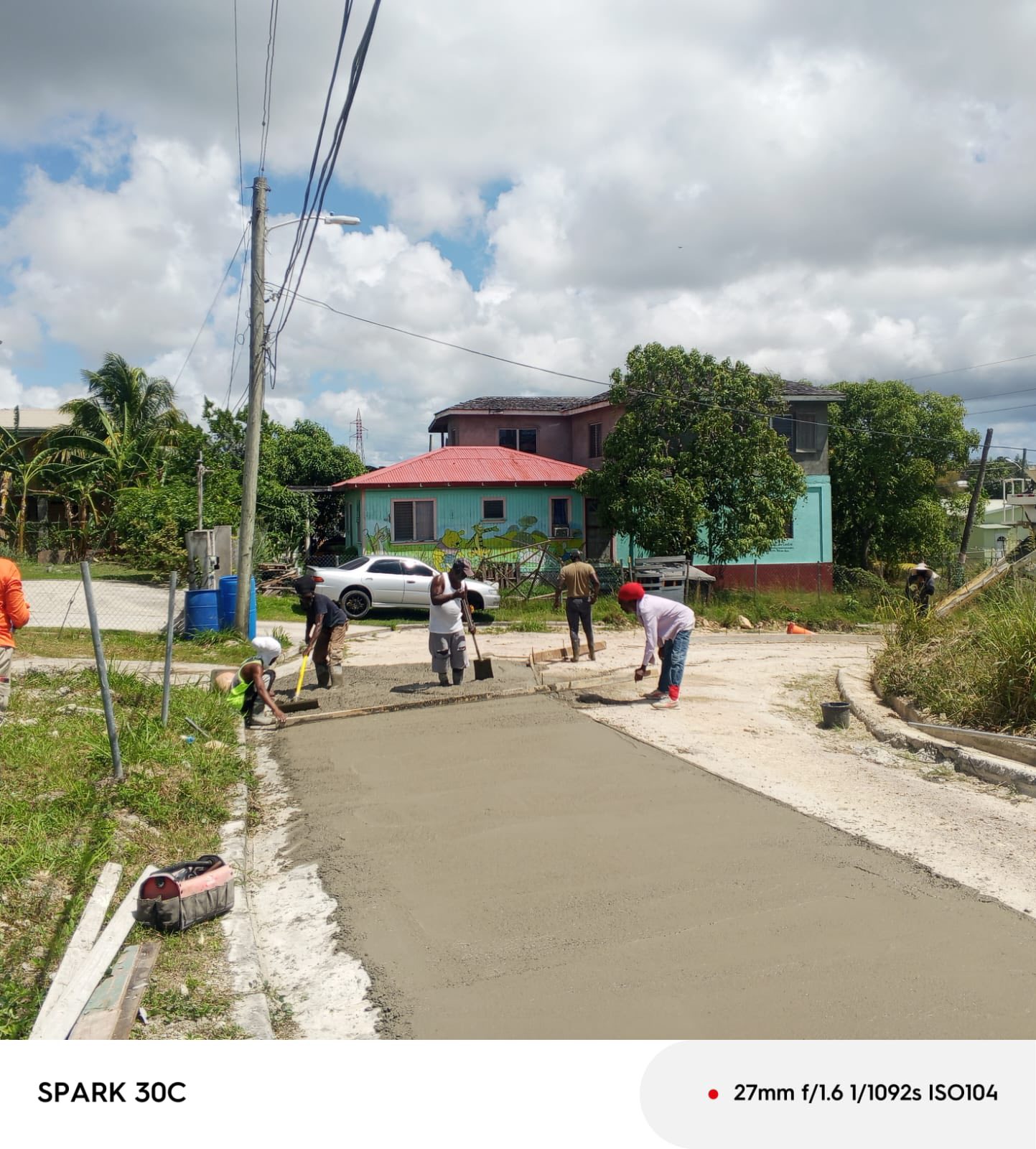
    Beyond social and economic policy, Browne outlined the government’s ongoing infrastructure and development projects, which span multiple key sectors of the national economy. On the tourism front, he noted that several new hotel developments are currently under construction, while critical public infrastructure upgrades are moving forward across every electoral district. “We have expanded our reverse osmosis desalination plants to boost the nation’s water supply and address longstanding access issues,” he said, adding that “extensive roadworks are currently underway in every single constituency across the country.”

    Throughout his speech, Browne repeatedly circled back to the central campaign message of policy continuity, warning voters that switching leadership at a moment of heightened global instability would be a dangerous gamble. He portrayed the incumbment ABLP administration as the only safe, experienced option for voters looking to weather ongoing global headwinds. “On election day, do not take an unnecessary risk on a leader and a team that is simply not prepared to govern,” he cautioned.

    Closing his address at the manifesto launch, Browne issued a direct closing appeal for voter support, urging the electorate to retain the steady leadership he says the country needs to navigate uncertain times. “Let’s keep Antigua and Barbuda in strong, safe hands,” he said.

    The launch of the 2026 manifesto marks a key milestone in the ABLP’s broader re-election push. Party officials have confirmed that their campaign will be built around three core pillars: proven economic performance, expanded public infrastructure, and expanded social support programs for working- and middle-class households.