标签: Antigua and Barbuda

安提瓜和巴布达

  • Pringle blames visa restrictions affecting Antiguans squarely at the feet of PM Gaston Browne

    Pringle blames visa restrictions affecting Antiguans squarely at the feet of PM Gaston Browne

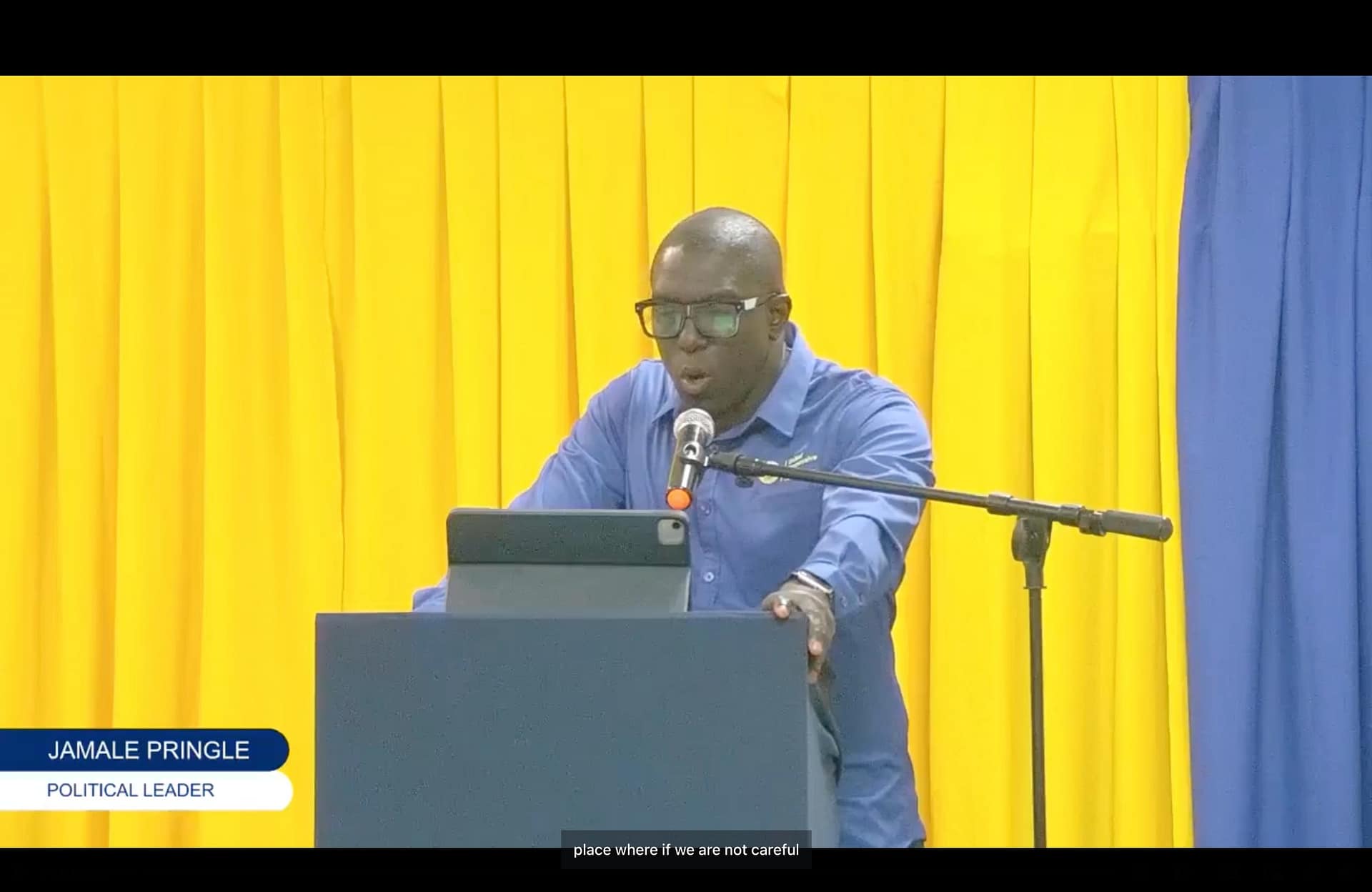
    In a sharply worded critique, Opposition Leader Jamale Pringle has placed direct responsibility for the United Kingdom’s visa restrictions on Antiguan citizens at the feet of Prime Minister Gaston Browne. The political confrontation centers on diplomatic relations between Antigua and Barbuda and the UK, with Pringle asserting that Browne’s governance approach has triggered the stringent visa requirements currently affecting Antiguans seeking to travel to Britain.

    The controversy emerges against the backdrop of the UK’s evolving immigration policies toward Caribbean Commonwealth nations. Pounding his critique, Pringle highlighted how the visa constraints have created substantial hurdles for Antiguans pursuing educational opportunities, family visits, and business engagements in the United Kingdom. The opposition leader characterized the development as a diplomatic failure that demands immediate governmental accountability.

    Pringle further contended that Browne’s administration has neglected crucial bilateral discussions that might have prevented the imposition of stricter travel requirements. This diplomatic stance, according to Pringle, has left Antiguans disproportionately affected compared to citizens from other Caribbean territories who enjoy more favorable travel arrangements with the UK.

    The escalating tension underscores deeper political divisions within Antigua and Barbuda’s parliamentary landscape, with the opposition mounting pressure on the sitting government to address what they term as ‘diplomatic mishandling’ of international relations. The visa issue has now evolved into a significant point of political contention, potentially influencing future bilateral discussions between the two Commonwealth nations.


  • Residents raise alarm over possible dengue surge as officials deny outbreak

    Residents raise alarm over possible dengue surge as officials deny outbreak

    A growing health concern is emerging in Antigua and Barbuda as local residents report a significant rise in suspected dengue fever cases, creating a tense divide between community accounts and official government statements. Multiple citizens from areas including Yorks and Urlings have come forward describing severe flu-like symptoms and laboratory-confirmed diagnoses, with some alleging that medical facilities are experiencing unusually high patient volumes for dengue-related treatment.

    Despite these widespread community reports, health authorities maintain there is no active outbreak occurring. The Ministry of Health has not released updated case numbers or issued formal public advisories regarding dengue transmission as of Tuesday evening.

    The discrepancy has sparked frustration among residents who argue that the lack of official acknowledgment is hindering preventative measures. Communities are urgently calling for enhanced mosquito-control initiatives—including widespread fumigation—and clear public guidance about protective precautions. Dengue fever, a mosquito-borne viral illness, can develop into severe complications without proper medical attention.

    Public health experts emphasize that early detection, vector control, and public awareness are critical to containing transmission. The current situation highlights the challenges of balancing official surveillance with community-reported data during potential health crises.

  • LETTER: Viral Trumpism Cannot Infect the Cuban Internationalism

    LETTER: Viral Trumpism Cannot Infect the Cuban Internationalism

    The enduring legacy of Cuban internationalism, rooted in the revolutionary principles of 1959, continues to shape global healthcare diplomacy despite unprecedented economic challenges. Following the revolution that overthrew the Batista regime, Cuba confronted severe healthcare disparities and mass emigration of medical professionals reluctant to serve under a socialized system. This crisis prompted the revolutionary government to initiate massive medical training programs, transforming the nation into an unexpected medical powerhouse.

    The internationalist vision, championed by revolutionary figures like Argentinian physician Ernesto ‘Che’ Guevara, evolved into systematic policy through decades of consistent implementation. Guevara’s sacrifice in Bolivia and medical missions across Africa exemplified Cuba’s commitment to global liberation struggles beyond mere symbolic solidarity. Today, this tradition manifests through extensive medical education programs hosting thousands of international students—particularly from developing nations—and the deployment of Cuban healthcare professionals to over 60 countries worldwide.

    Remarkably, these achievements occur despite the continuous economic and financial blockade that has constrained Cuba’s resources for generations. The nation’s ability to maintain both domestic healthcare excellence and international medical assistance represents a extraordinary case study in resilience and ideological commitment.

    Recent criticisms from the Trump administration regarding Cuba’s medical missions have been met with strong rebuttals from beneficiaries of Cuban medical internationalism. The contrast between Cuba’s COVID-19 response—including the deployment of medical brigades to pandemic hotspots—and the struggles of wealthier nations has highlighted the continuing relevance of Cuba’s alternative model of international cooperation. This ongoing commitment to medical solidarity continues to define Cuba’s unique position in global health diplomacy, challenging conventional paradigms of international development assistance.

  • Opposition Leader Jamale Pringle Meets EU Ambassador

    Opposition Leader Jamale Pringle Meets EU Ambassador

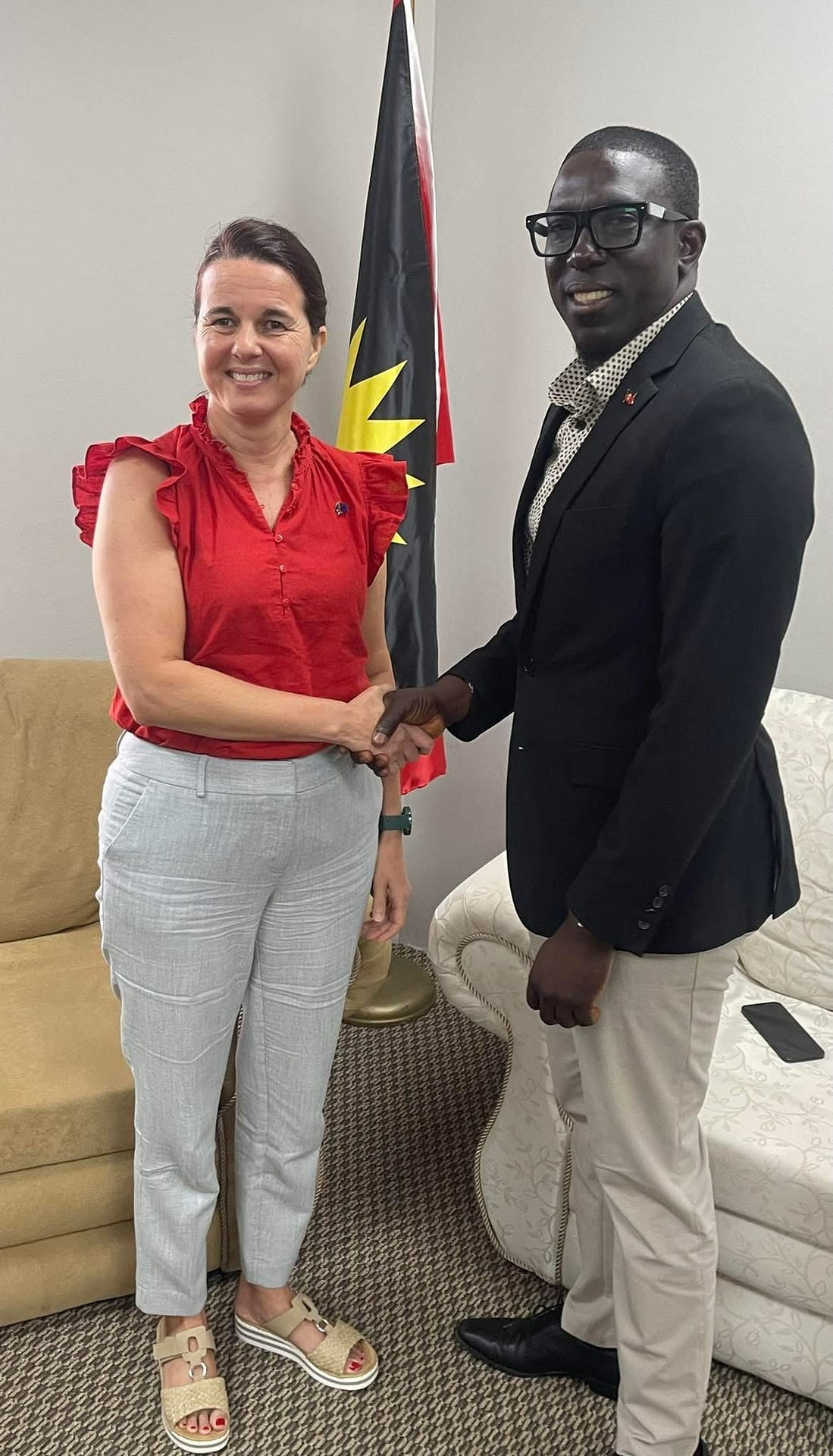
    In a significant diplomatic engagement, Jamale Pringle, Leader of the Opposition in Antigua and Barbuda, convened substantive talks with Fiona Ramsey, the European Union’s newly inaugurated Ambassador to the Eastern Caribbean. The high-level discussion centered on evolving geopolitical dynamics and pressing concerns regarding travel accessibility for citizens of Antigua and Barbuda.

    This strategic dialogue forms part of Ambassador Ramsey’s comprehensive introductory tour of regional leadership, following recent courtesy calls with Prime Minister Gaston Browne and Foreign Affairs Minister E. P. Chet Greene. These successive meetings have reinforced the enduring bilateral partnership between the Caribbean nation and the European bloc.

    Pringle characterized the timing of these consultations as particularly crucial given escalating global tensions and increased examination of mobility constraints affecting Caribbean nationals. The opposition leader emphasized the necessity of sustained diplomatic engagement to address these challenges effectively.

    The meeting underscores the continuity of diplomatic protocols regardless of domestic political divisions, demonstrating both government and opposition’s shared commitment to maintaining robust international relationships. Ambassador Ramsey’s outreach to multiple stakeholders signals the EU’s comprehensive approach to regional diplomacy in the Eastern Caribbean.

  • LETTER: Towards Constitutionalized AI Governance in the Commonwealth Caribbean

    LETTER: Towards Constitutionalized AI Governance in the Commonwealth Caribbean

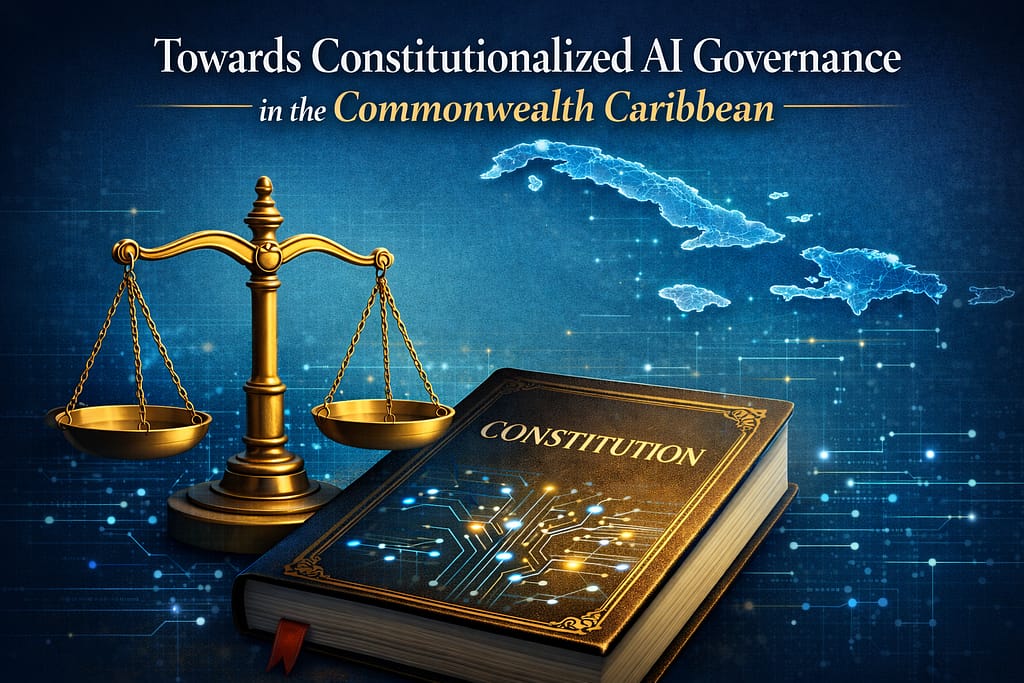
    A groundbreaking movement is emerging within the Commonwealth Caribbean as legal scholars and policymakers advocate for the constitutionalization of artificial intelligence governance. This initiative represents a proactive approach to embedding AI regulatory frameworks directly into the constitutional architecture of Caribbean nations.

    The proposed constitutional model addresses the unique socio-economic and cultural context of the Caribbean region while establishing comprehensive safeguards for digital rights, algorithmic transparency, and ethical AI development. By elevating AI governance to constitutional status, these nations would create permanent legal protections against algorithmic discrimination, data exploitation, and unauthorized surveillance practices.

    This constitutional approach distinguishes itself from conventional legislation by providing stronger judicial enforcement mechanisms and creating immutable citizen rights in the digital domain. The framework emphasizes regional cooperation while allowing for jurisdictional adaptations based on individual national requirements.

    Legal experts highlight that constitutionalized AI governance would position the Commonwealth Caribbean at the forefront of technological regulation, potentially establishing international standards for democratic digital governance. The movement reflects growing recognition that AI’s transformative potential requires equally transformative legal frameworks to ensure these technologies serve rather than undermine democratic values and human rights.

    The initiative has sparked regional dialogue about the intersection of technology law, constitutional theory, and post-colonial legal development, representing a significant innovation in how emerging technologies are governed within democratic systems.

  • Rotary Club of Antigua Donates 500 Laptops to Antigua and Barbuda College of Advanced Studies

    Rotary Club of Antigua Donates 500 Laptops to Antigua and Barbuda College of Advanced Studies

    In a significant boost for digital education, the Rotary Club of Antigua has substantially enhanced technological resources for higher education students by donating 500 laptops to the Antigua and Barbuda College of Advanced Studies (ABCAS). This contribution was made through the club’s ongoing Education Through Technology Programme, which aims to bridge the digital divide in tertiary education.

    The official handover ceremony was attended by key figures including Hon. Daryll Matthew, Minister of Education, Sports and the Creative Industries, alongside Rotarians and ABCAS leadership. Minister Matthew publicly acknowledged and commended the Rotary Club for its sustained dedication to advancing educational opportunities throughout the nation.

    Rotary Club of Antigua President Elisa Graham emphasized the critical nature of digital proficiency in contemporary society during her address. “Digital literacy has evolved into an essential competency, equally vital as traditional reading and writing skills,” Graham stated. “Our program is strategically designed to prepare students for full participation in an increasingly digitalized global environment, ensuring they remain competitive and equipped for future challenges.”

    Dr. E. Jonah Greene, President of ABCAS, highlighted the practical implications of this donation, noting that numerous students historically struggled with inconsistent access to computers, adversely affecting their ability to complete coursework and engage actively in their studies. To maximize equitable distribution, the college will implement a structured loan system for the new devices, a approach expected to significantly improve academic engagement and performance outcomes.

    This educational initiative is bolstered by a enduring international partnership with the Bellevue Breakfast Rotary Club based in Washington State, USA, whose multi-year support has been instrumental in sustaining the technology program. The Rotary Club of Antigua further reiterated its commitment to collaborative efforts with educational institutions and government bodies, emphasizing education’s pivotal role in national development strategies.

    As a constituent member of Rotary International, the Antigua chapter aligns with the global organization’s mission focused on humanitarian projects, educational advancement, and sustainable community development worldwide.

  • Rotary Club donates 500 laptops to support tertiary education in Antigua and Barbuda

    Rotary Club donates 500 laptops to support tertiary education in Antigua and Barbuda

    In a significant boost for digital education access, the Rotary Club of Antigua has partnered with Washington state’s Bellevue Breakfast Rotary Club to deliver 500 laptops to students at the Antigua and Barbuda College of Advanced Studies. This initiative represents the latest phase of Rotary’s enduring Education Through Technology programme, which has been providing critical computer resources to educational institutions throughout Antigua and Barbuda since 2008.

    The technology donation comes at a pivotal moment as the college experiences substantial enrollment growth following the government’s decision to eliminate tertiary education fees. College administrators have developed a strategic deployment plan that will distribute the devices across all five campus locations through an organized loan system. This approach specifically targets students who lack personal computing equipment, ensuring equitable access to digital learning resources.

    Rotary officials have confirmed that this initial donation represents just the beginning of their expanded commitment, with an additional 1,500 laptops anticipated to arrive in the near future. This substantial technology infusion aims to dramatically enhance digital infrastructure throughout the tertiary education sector.

    Education authorities have enthusiastically endorsed the contribution, recognizing its transformative potential for digital accessibility, online learning capabilities, and comprehensive student support services. The partnership demonstrates how international service organizations can effectively collaborate to address educational technology gaps in developing nations, creating meaningful opportunities for students who would otherwise face digital exclusion in their academic pursuits.

  • Former U.S. Navy Sailor Sentenced to 200 Months for Spying for China

    Former U.S. Navy Sailor Sentenced to 200 Months for Spying for China

    In a landmark espionage case, former U.S. Navy sailor Jinchao Wei, also known as Patrick Wei, has been sentenced to 200 months imprisonment following his conviction on multiple national security charges. The 25-year-old machinist’s mate was apprehended in August 2023 while reporting for duty aboard the amphibious assault ship U.S.S. Essex at Naval Base San Diego.

    The sentencing concludes an extensive investigation that revealed Wei systematically compromised American naval security by transmitting sensitive defense information to a Chinese intelligence operative. Over an 18-month period, Wei provided thousands of pages of technical manuals, operational documents, and classified materials in exchange for financial compensation totaling approximately $12,000.

    Justice Department officials emphasized the severity of Wei’s violations. Deputy Attorney General Todd Blanche stated: “This active-duty U.S. Navy sailor betrayed his country and compromised the national security of the United States. The Justice Department will not tolerate this behavior.”

    Evidence presented during the five-day trial demonstrated that Wei maintained encrypted communications with his handler, whom he referred to as “Big Brother Andy.” Their correspondence revealed sophisticated tradecraft techniques, including the use of multiple encrypted applications, digital dead drops, and deliberate obfuscation methods to evade detection.

    Notably, Wei acknowledged his misconduct during post-arrest interviews, admitting to FBI agents that he recognized his actions constituted espionage. Despite receiving recent Navy training on identifying foreign recruitment attempts, Wei continued his illicit activities, even researching previous espionage cases involving U.S. Navy personnel.

    The case represents the first prosecution under U.S. Code Section 794 in the district, a statute reserved for the most severe national defense violations. The investigation was conducted jointly by the FBI and Naval Criminal Investigative Service, with support from multiple federal agencies including the Department of State and Homeland Security Investigations.

  • U.S. Embassy Bridgetown Condemns Cuban Medical Program as Exploitative

    U.S. Embassy Bridgetown Condemns Cuban Medical Program as Exploitative

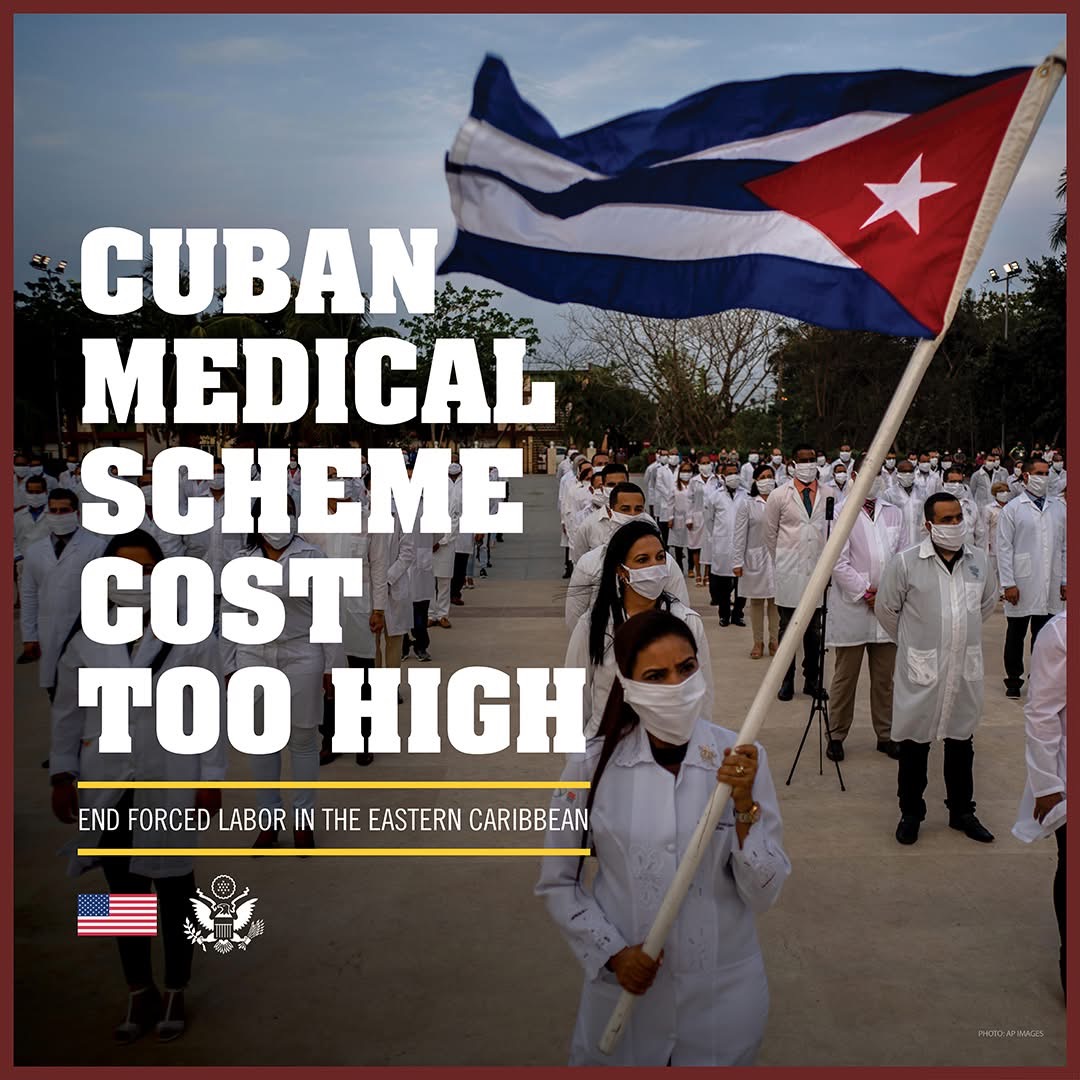
    The U.S. Embassy in Bridgetown has launched a sharp critique against Cuba’s international medical mission program operating in Caribbean nations, characterizing the initiative as fundamentally exploitative. Diplomatic officials asserted that the arrangement imposes severe financial and ethical consequences on participating countries while systematically undercompensating medical professionals.

    According to embassy statements, the operational structure directs the majority of compensation—estimated between 80-95% of total doctor salaries—directly to the Cuban government rather than the healthcare workers providing services. This financial model was explicitly labeled a ‘modern-day forced labor scheme’ ultimately subsidized by local taxpayers in host nations.

    The criticism extended beyond financial concerns to encompass human dignity considerations. Embassy representatives emphasized that physicians receive merely a fractional share of what partner nations pay for their expertise, creating what they termed a dual burden of economic strain and moral compromise for participating countries.

    The United States government declared solidarity with affected medical professionals and committed to ongoing diplomatic efforts aimed at terminating these alleged exploitative practices. This position aligns with broader U.S. policy objectives regarding labor rights and human dignity in international cooperation programs.

  • National Bar Association  Host 2026 Midwinter Convention in Antigua and Barbuda

    National Bar Association  Host 2026 Midwinter Convention in Antigua and Barbuda

    In a landmark decision signaling a new era for international legal discourse, the National Bar Association (NBA) has announced Antigua and Barbuda as the host nation for its prestigious 2026 Midwinter Convention. This selection marks a significant moment, representing the first time the prominent organization will hold its key annual gathering within the Caribbean region.

    The convention, scheduled for early 2026, is anticipated to draw a distinguished assembly of legal professionals, including attorneys, judges, scholars, and policymakers from across the African diaspora and the global legal community. The event will serve as a premier platform for critical dialogue on pressing international legal issues, professional development, and the advancement of judicial excellence.

    This strategic choice by the NBA underscores a deliberate effort to foster greater inclusivity within the global legal landscape and to highlight the vibrant professional communities within the Caribbean. Hosting the event is expected to provide a substantial economic boost to Antigua and Barbuda’s tourism and hospitality sectors, while simultaneously elevating the nation’s profile as a center for serious international conferences and diplomatic engagement.

    The week-long convention will feature an extensive agenda comprising continuing legal education (CLE) seminars, judicial panels, networking receptions, and community outreach initiatives. Key topics for discussion are projected to encompass transnational law, climate justice, international trade agreements, and the evolving role of technology in legal practice.