标签: Antigua and Barbuda

安提瓜和巴布达

  • Antigua and Barbuda Parliament Sitting Postponed to September 28

    Antigua and Barbuda Parliament Sitting Postponed to September 28

    A last-minute schedule shift has altered plans for the next parliamentary sitting in Antigua and Barbuda, pushing the gathering from its original September 18 date to September 28, according to an official announcement from Maurice Merchant, the nation’s Director General of Communications. Merchant confirmed the adjustment during a press briefing held immediately after this week’s Cabinet meeting on Thursday, but offered no public explanation for why the delay was ordered.

    Despite the change in timeline, the upcoming sitting is set to tackle a slate of high-priority policy issues touching public safety, social welfare and public health that have been in preparation for months. Among the most closely watched items is a planned review of the country’s Child Justice Act, where government officials are expected to outline updated positions on a divisive policy question: whether juveniles charged with firearms violations and other major violent offenses should face trial in adult court, rather than being routed away from formal judicial processes through diversion programs.

    Lawmakers will also deliberate on sweeping changes to sexual offense sentencing rules, designed to crack down on repeat offenders. The Cabinet has already thrown its support behind a proposal tabled by Prime Minister Gaston Browne to consider chemical castration as a sentencing option for serial sexual offenders, alongside discussions of stiffer prison terms and heavier financial penalties for these crimes.

    In addition to justice reform, Social Transformation Minister Rawdon Turner will update parliament on progress toward establishing a new dedicated care facility. The site is intended to house children removed from unsafe household environments and women fleeing intimate partner abuse, addressing a longstanding gap in the country’s social support infrastructure.

    Mental health system overhaul is another key item on the tentative agenda. The Cabinet has recently approved a $95,000 USD contribution to a technical cooperation partnership with the Pan American Health Organization (PAHO) that will back the rollout of new national mental health legislation, expand community-focused treatment programs, train clinical and administrative workforces, and upgrade national mental health crisis response capacity. Merchant noted that drafting work on a new, updated Mental Health Bill has already advanced substantially, bringing the reform effort closer to a parliamentary vote. As of the post-Cabinet briefing, the full formal agenda for the September 28 sitting has not been made public.


  • Falcons Storm Into First CPL Final With Nine-Wicket Rout of Guyana

    Falcons Storm Into First CPL Final With Nine-Wicket Rout of Guyana

    BRIDGETOWN, Barbados — In a stunning display of controlled aggression and clinical execution that has rewritten Caribbean Premier League (CPL) record books, the Antigua and Barbuda Falcons have secured their maiden berth in the tournament’s grand final after steamrolling the Guyana Amazon Warriors by a nine-wicket margin in Thursday night’s Qualifier 1 at Kensington Oval.

    The clash, which will go down as one of the most one-sided playoff matches in CPL history, saw the Falcons’ bowling attack tear through Guyana’s batting line-up to dismiss the Amazon Warriors for a paltry total of 76 all out. The Falcons then chased down the tiny target in just 5.2 overs, ending the contest at 77 for one with a staggering 88 balls left unused in their innings. This lopsided win marks the second-fastest completed victory in the 10-year history of the CPL.

    Two Pakistani international stars spearheaded the Falcons’ bowling demolition: Shadab Khan and Sufyan Moqim combined to claim all but two of the ten Guyana wickets, with each bowler finishing with four wickets apiece.

    The match started deceptively for the Amazon Warriors, who reached 34 for the loss of just one wicket by the end of the mandatory Powerplay overs. But the bottom fell out of their innings in spectacular fashion after Shadab Khan triggered a historic collapse, claiming a hat-trick by removing key batters Shimron Hetmyer, Mehidy Hasan Miraz and Quentin Sampson off three consecutive deliveries.

    From a relatively stable 40 for two, Guyana crumpled to 49 for nine in quick succession. A late-order 27-run stand between pace bowlers Romario Shepherd and Shamar Joseph pushed the final total past 75, but the damage had already been done. Shadab closed his devastating spell with figures of four wickets for just 16 runs, while Moqim was even more economical, taking four wickets for 13 runs to round out the attack’s dominance.

    When it came to chasing the modest target, Antigua and Barbuda opening batter Rahkeem Cornwall made sure the Falcons did not spend any unnecessary time at the crease. The home-grown talent bludgeoned 49 runs off only 16 deliveries, smashing six sixes and three fours to take the Falcons to the brink of victory. He fell just one run short of a half-century, but by that point the Falcons had already reached 76 on the scoreboard, leaving just one run to get.

    Opener Evin Lewis closed out the chase unbeaten on 23, wrapping up the victory after only 32 deliveries from the Falcons’ batters.

    The lopsided win guarantees the Falcons a direct spot in Sunday’s CPL final, which is scheduled to take place on September 20 at Kensington Oval. They will await the winner of Qualifier 2, which will be contested between the defeated Guyana Amazon Warriors and the Jamaica Kingsmen for the second final spot.

  • Police Investigating Possible Links Between Adult Criminals and Juvenile Offenders

    Police Investigating Possible Links Between Adult Criminals and Juvenile Offenders

    Authorities in Antigua and Barbuda have launched a formal investigation into a troubling potential link: that adult actors are recruiting and manipulating minors to participate in firearm-related offenses and other high-severity criminal acts. The update on the inquiry was shared publicly by Director General of Communications Maurice Merchant during a post-Cabinet media briefing held Thursday, when Merchant was pressed for details on rising youth involvement in illegal activity across the nation.

    Merchant told reporters that law enforcement is currently working to unpack a key question: are juveniles carrying out these crimes acting on their own initiative, or are adults behind the scenes encouraging or directing their criminal behavior? According to Merchant, investigating teams have already identified specific connections between minors and adult actors that could help crack open multiple open criminal cases. However, he cautioned that no further specifics can be released at this stage, as the details remain sensitive and premature disclosure could jeopardize the ongoing probe.

    To protect the integrity of the investigation, Merchant declined to name any suspects, whether adult or juvenile, and also did not elaborate on the specific cases that are under active review. He did note that law enforcement has grown particularly concerned about the pattern of repeat offending among juvenile criminals.

    As an example, Merchant referenced a recent arrest made in connection with a major felony; court documents for that individual showed a long record of serious criminal activity dating back to when the suspect was still a minor. This case, among others, has prompted the national Cabinet to take unprecedented action: officials have ordered a full top-to-bottom review of the country’s Child Justice Act, to reevaluate whether minors accused of gun crimes and other serious offenses should still qualify for diversion programs that steer them away from formal adult court proceedings.

    The Attorney General’s Office has received formal instructions to conduct a comprehensive analysis of the existing legislation, with a specific focus on restricting access to diversion for juveniles charged with the most severe offenses. The end goal of the review, Merchant explained, is to create clearer guidance for both law enforcement and judicial bodies on when minors accused of firearm-related or other serious crimes should be processed and tried through the adult criminal justice system.

    At this stage, no official timeline has been released for the completion of the review. Policymakers have indicated that additional details and potential updates could be presented to the public when the Antigua and Barbuda Parliament convenes for its next session on September 28.

  • Tourism strengthens MICE Strategy with SITE membership and first Certified Incentive Specialist

    Tourism strengthens MICE Strategy with SITE membership and first Certified Incentive Specialist

    The global tourism industry is making strategic moves to elevate its Meetings, Incentives, Conferences, and Exhibitions (MICE) segment, marking a key milestone with new membership in the Society of Incentive Travel Executives (SITE) and the graduation of the region’s first-ever Certified Incentive Specialist (CIS). This development signals a deliberate push to raise professional standards, expand global market access, and tap into the high-value incentive travel market that has long been a growth driver for the global MICE sector.

    SITE, the leading international body dedicated to advancing the incentive travel industry, brings a wealth of resources, industry connections, and standardized certification frameworks to its members. By joining this global network, the local or regional tourism authority gains access to cutting-edge insights, best practices, and direct connections with international event planners, corporate travel managers, and leading MICE industry stakeholders. This membership bridges the gap between local tourism providers and the global demand for high-quality incentive travel programs, which are designed to reward employee performance, boost team morale, and drive business outcomes.

    The launch of the first CIS credential in the region is equally significant. The rigorous CIS certification program trains candidates in core competencies including incentive program design, budget management, stakeholder negotiation, risk assessment, and sustainable event planning. Holding this certification not only validates the specialist’s professional expertise but also builds greater trust among international clients looking to source incentive travel services in the destination. It sets a new benchmark for professional skills in the local MICE workforce, paving the way for more professionals to pursue industry-recognized certification in the future.

    Industry analysts note that the MICE sector, and incentive travel in particular, delivers far higher per-visitor economic benefits compared to traditional leisure tourism. Corporate clients invest heavily in custom incentive programs, generating revenue for local hotels, event venues, transportation services, food and beverage providers, and cultural attractions. This strategic alignment with SITE and investment in certified specialists is expected to attract more international incentive travel business, create new job opportunities in the tourism sector, and strengthen the destination’s competitive position in the global MICE market.

    As the global MICE industry continues to recover and evolve post-pandemic, with growing demand for unique, purpose-driven incentive experiences, this move positions the destination to capitalize on emerging market trends. It reflects a long-term vision for sustainable, high-value tourism growth that prioritizes professional development and global industry integration.

  • Antigua and Barbuda Students Eligible for Fully Funded King’s Commonwealth Undergraduate Fellowships

    Antigua and Barbuda Students Eligible for Fully Funded King’s Commonwealth Undergraduate Fellowships

    A new life-changing scholarship opportunity has opened for emerging young leaders from small developing island nations across the Commonwealth, aiming to equip the next generation to tackle some of the most pressing challenges facing their home regions.

    The Association of Commonwealth Universities (ACU) is now accepting applications for the King’s Commonwealth Fellowship Programme (KCFP) Undergraduate Fellowships, a fully funded initiative tailored specifically for students from Commonwealth Small Island Developing States (SIDS). The program covers all costs for undergraduate study in fields directly tied to building climate resilience and advancing inclusive sustainable development in beneficiaries’ home countries.

    Conceptualized around the lifelong work of His Majesty King Charles III, who has spent decades championing expanded access to opportunity and urgent action on pressing global crises ranging from climate breakdown to systemic inequality, the KCFP responds directly to the overlapping economic, social, and environmental threats that disproportionately endanger SIDS. These low-lying island nations are widely recognized as being on the front lines of anthropogenic climate change, facing existential threats from sea-level rise, extreme weather events, and ecosystem disruption, while often grappling with critical gaps in skilled local labor to address these challenges.

    To directly target these skills shortages, the 11 available fellowships support full-time undergraduate study across four high-priority sectors: education, engineering, health, and sustainable tourism. Each of these fields was selected to build local capacity that can directly strengthen community resilience and long-term development in SIDS.

    Eligibility for the fellowships is open to citizens of 24 Commonwealth SIDS, encompassing Caribbean nations including Antigua and Barbuda, Bahamas, Barbados, Belize, Dominica, Grenada, Guyana, Jamaica, St Kitts and Nevis, St Lucia, St Vincent and the Grenadines, and Trinidad and Tobago; Indian Ocean states including the Maldives, Mauritius, and Seychelles; and Pacific island nations including Fiji, Kiribati, Nauru, Papua New Guinea, Samoa, Solomon Islands, Tonga, Tuvalu, and Vanuatu. Applicants must be planning to begin their eligible undergraduate degree program between January 2027 and December 2027.

    In a statement announcing the opening of applications, ACU Secretary General and Chief Executive Professor Colin Riordan emphasized the urgency and purpose of the initiative. “Small Island Developing States are on the frontline of climate change,” Riordan said. “Through the King’s Commonwealth Fellowship Programme Undergraduate Fellowships, we are investing in the next generation of professionals who will help their communities adapt to environmental challenges, strengthen essential services and drive sustainable development.”

    The ACU, which brings decades of specialized expertise managing international scholarship and fellowship programs across the Commonwealth, is leading the design and implementation of the KCFP. Applications will remain open until the closing deadline of 14 October 2026. Full details on eligibility criteria, application guidance, eligible host institutions, and approved degree programs are hosted on the official KCFP Undergraduate Fellowships webpage.

  • Where Organised Crime Is Most Likely to Take Root in the Caribbean

    Where Organised Crime Is Most Likely to Take Root in the Caribbean

    Organised crime is far more than a public safety challenge—it is fundamentally an economic burden that undermines long-term growth, discourages foreign and domestic investment, skews competitive market dynamics, and siphons billions in public resources that would otherwise fund critical infrastructure, social programs, and community development. While the overall prevalence of criminal activity is an important metric to track, experts emphasize that the true scale of damage a nation sustains from organised criminal networks depends not on crime levels alone, but on the ability of public and governmental institutions to counteract and contain these groups.

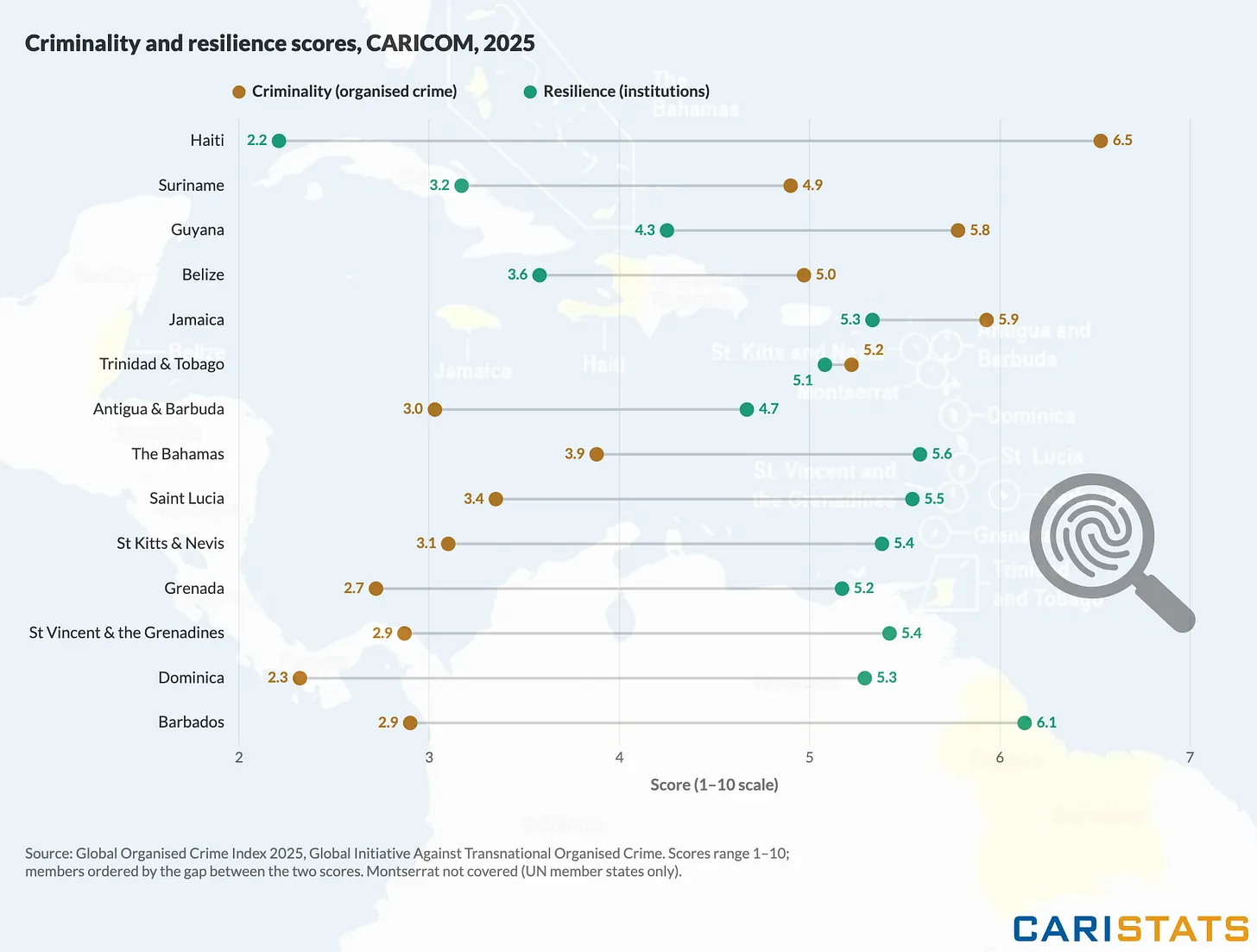
    To capture both dimensions of this complex issue, the Global Organised Crime Index developed by the Global Initiative Against Transnational Organised Crime measures two key metrics for every nation: a criminality score that ranks the scale and scope of organised criminal activity on a 1 to 10 scale, and a resilience score that assesses the strength of anti-crime institutions, also on a 1 to 10 scale. A new 2025 analysis of CARICOM (Caribbean Community) member states reveals a sharp divide across the bloc, with many nations seeing stark gaps between their criminality levels and institutional resilience.

    The 2025 data shows that most CARICOM member states fell into a low-risk category in 2025, combining relatively low levels of organised criminal activity with reasonably strong institutional resilience. Barbados posted a criminality score of just 2.9 alongside a resilience score of 6.1, with neighboring Grenada, Dominica, and other smaller Eastern Caribbean states recording nearly identical profiles. For higher-risk states including Jamaica, which scored 5.9 for criminality and 5.3 for resilience, and Trinidad and Tobago, which notched 5.2 for criminality and 5.1 for resilience, elevated crime levels were offset by strong institutional performance: both nations posted resilience scores above the regional average, keeping their institutional capacity roughly aligned with the threat they face.

    However, a second, far higher-risk group of CARICOM nations faces the dangerous combination of elevated organised criminal activity and severely underdeveloped institutional resilience. This group includes Haiti, which recorded a 6.5 criminality score and just a 2.2 resilience score; Guyana, with 5.8 criminality and 4.3 resilience; Belize, at 5.0 criminality and 3.6 resilience; and Suriname, with 4.9 criminality and 3.2 resilience.

    This particular pairing is what generates the most severe long-term consequences for affected nations. When institutional capacity cannot keep pace with the growth of organised criminal networks, these groups gradually embed themselves into both the formal economy and the structures of state power, becoming a chronic, systemic problem that is far more difficult and costly to root out than it would have been to prevent in its early stages.

    Overall, the 2025 Organised Crime Index data offers targeted insight for policymakers across the Caribbean, identifying regions where organised crime is most likely to become deeply entrenched rather than merely highlighting where criminal activity is most prevalent. This framework allows regional and international stakeholders to direct targeted support to high-need nations, addressing institutional gaps before they lead to irreversible systemic damage.

  • MISSING: 35-year-old Keisha Connor

    MISSING: 35-year-old Keisha Connor

    The loved ones of 35-year-old Keisha Connor have launched a public appeal for assistance after the woman was officially reported missing, with growing anxiety over her well-being spreading among her inner circle.

    A missing person announcement shared widely by Connor’s relatives confirms that the last confirmed sighting of the woman was by her own daughter, which took place on Saturday, September 12. In the days following that encounter, Connor has not made contact with any members of her family, and all attempts to reach her—including phone calls and messages sent through the WhatsApp platform—have remained completely unanswered.

    As more days pass without any sign of Connor, her family’s worry over her safety has intensified dramatically. In a statement shared through the public notice, the family pressed members of the community who may have any information about Connor’s recent whereabouts or current location to step forward, stressing that even seemingly insignificant details could prove critical to locating her safe and sound.

    Anyone who can offer any relevant information is asked to contact the family or relevant authorities at the tip line 788-1930.

  • Ministry To Undertake Tourism Carrying-Capacity Study To Guide Sustainable Growth

    Ministry To Undertake Tourism Carrying-Capacity Study To Guide Sustainable Growth

    As one of the world’s most tourism-dependent small island nations, Antigua and Barbuda is taking a proactive, data-driven step to balance industry expansion with environmental and cultural preservation. The country’s Ministry of Tourism, Civil Aviation, Transportation and Investment has launched an ambitious new planning initiative designed to ensure that the sector’s future development remains sustainable, inclusive, and aligned with the Caribbean nation’s long-term national priorities.

    At the core of this forward-looking agenda is a comprehensive national tourism carrying-capacity study, a first-of-its-kind assessment for the destination that will quantify the maximum level of tourism activity the islands can support without eroding the core assets that draw millions of visitors each year. Unlike traditional growth metrics that focus solely on increasing visitor numbers, this study centers protection of the natural ecosystems, cultural heritage, and local communities that form the irreplaceable foundation of Antigua and Barbuda’s tourism brand.

    The assessment will generate critical empirical data to guide all future tourism planning and development decisions, at a time when the country is seeing consistent expansion across key sector areas: rising air passenger volumes, growing cruise ship calls, expanding hotel room inventory, and rising foreign and domestic investment in tourism infrastructure. Beyond just measuring visitor volume limits, the study will also evaluate the current capacity of core public infrastructure, the ability of local communities to absorb growth without disrupting quality of life, and the carrying capacity of fragile natural resources ranging from coral reefs to coastal beaches. It will also analyze how much economic value from tourism expansion is retained locally, to ensure host communities see tangible benefits from growth.
    Minister Charles Fernandez emphasized that sustainable tourism growth cannot be measured by annual visitor arrival counts alone. “Our beaches, our coral reefs, our unspoiled coastlines, our rich cultural heritage, and our vibrant communities are not just amenities — they are the very reason visitors choose Antigua and Barbuda over hundreds of other destinations,” he noted. “Protecting these assets is non-negotiable if we want our tourism industry to thrive for decades to come.”

    Fernandez added that the study is a key part of long-term strategic planning that looks out 10, 20, and even 30 years, with intentional consideration of how development will impact infrastructure needs, air connectivity, future investment opportunities, product diversification, climate resilience, and environmental protection. The minister reaffirmed that tourism will remain a top national priority for Antigua and Barbuda, as it continues to be the single largest driver of GDP, employment, and national development. But he stressed that all future growth must be rooted in evidence-based policy, empirical data, and intentional strategic planning, rather than unfettered expansion.

    Moving forward, the Ministry will continue to strengthen its policy and planning frameworks to support balanced sustainable growth, with the explicit goal of safeguarding the natural and cultural resources that will underpin the industry and deliver shared prosperity for current and future generations of Antiguans and Barbudans.

  • APUA to Complete St. John’s Repiping Work This Week

    APUA to Complete St. John’s Repiping Work This Week

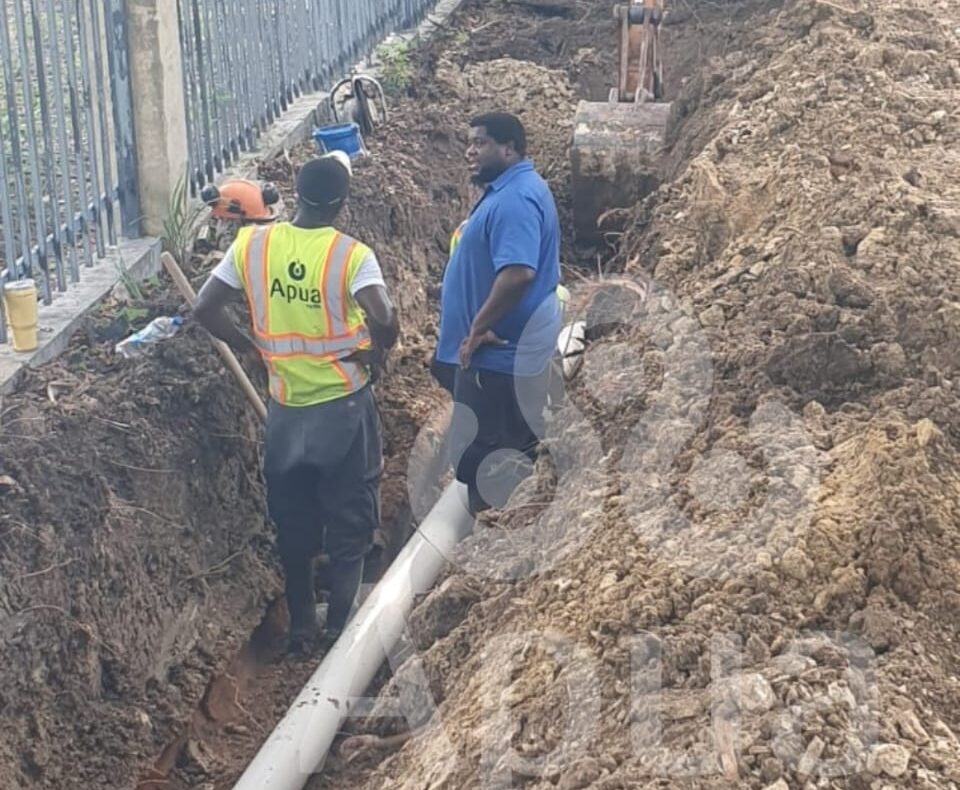
    A major infrastructure upgrade project in central St. John’s, Antigua is moving closer to its key milestone, with the Antigua Public Utilities Authority (APUA) projected to wrap up all critical repiping work by the close of this week. Once finished, the handover will clear the path for the Ministry of Works to resume long-planned road rehabilitation across the construction-impacted zones.

    Maurice Merchant, the Director General of Communications, shared this official update during the weekly post-Cabinet media briefing held on Thursday. According to Merchant, this upcoming week marks the final phase of APUA’s pipe replacement work across downtown St. John’s, with active crews operating along three major city thoroughfares: High Street, St. Mary’s Street, and Newgate Street. Barring any unforeseen disruptions to the established work schedule, APUA will formally transfer control of the affected streets back to the Ministry of Works by the end of the weekend.

    Merchant did, however, issue a note of caution regarding potential timeline shifts, noting that recent unseasonable rainfall has already impacted open work sites, creating delays that could push back the completion date if wet conditions persist. The current repiping initiative is not an isolated project: it is a core component of a broader national push to upgrade Antigua and Barbuda’s aging, outdated water distribution network. By coordinating pipe replacement alongside ongoing road rehabilitation work, project planners aim to cut down on redundant construction and long-term disruption for local residents and commuters.

    To achieve this goal, APUA and the Ministry of Works have ramped up inter-agency coordination, with the explicit goal of reducing how often newly resurfaced roads have to be dug up again to address unexpected pipe leaks. Even with this improved coordination, Merchant openly acknowledged that unexpected leaks can still develop after road resurfacing work is complete. He explained that heavy vibrations from the large compaction rollers used during road paving can put additional stress on older existing pipes, triggering leaks that were not detectable before construction started. He added that APUA teams are also adapting their installation practices to exercise greater care when placing new replacement lines to mitigate this risk.

    The full scope of the repiping work involves multiple stages: removing corroded old pipes, clearing out contaminated or loose surrounding soil, properly compacting the ground to create a stable base, and laying the new water lines before the road restoration process begins.

    In closing, Merchant made a public appeal for understanding from motorists, pedestrians, and other regular road users who have navigated detours and congestion throughout the course of the dual water infrastructure and road improvement projects. He emphasized that the coordinated work will deliver long-term, more reliable water service and safer, smoother roads for the entire community once completed.

  • Anthony Smith: Government Building Dams and Ponds to Improve Water Access for Farmers

    Anthony Smith: Government Building Dams and Ponds to Improve Water Access for Farmers

    The government of Antigua and Barbuda has launched a series of ongoing national initiatives designed to expand reliable water access and upgrade critical infrastructure for the country’s agricultural community, according to Agriculture Minister Anthony Smith.

    Under the scope of these projects, the Ministry’s Agriculture Heavy-Duty Equipment Department has been tasked with core on-ground work, including the construction of new dams and retention ponds, alongside systematic clearing of overgrown agricultural plots and clogged water transportation channels. These hands-on efforts are already underway across multiple regions of the twin-island nation.

    Minister Smith emphasized that insufficient and inconsistent water supply has long ranked as the most pressing barrier to growth for Antigua and Barbuda’s agriculture sector, a challenge that undermines production stability and limits the industry’s ability to meet domestic demand and expand export opportunities. The current infrastructure upgrades form a core pillar of the current administration’s targeted policy response to this longstanding issue.

    Looking ahead to further support domestic agricultural output, the government has already planned a second phase of larger-scale developments, including bigger dam facilities and additional water-retention and conservation projects that will expand the nation’s overall water storage capacity to support long-term agricultural resilience.