标签: Antigua and Barbuda

安提瓜和巴布达

  • Natacki Goodwin-Roberts Fined $6,500 for Driving Without Licence or Insurance

    Natacki Goodwin-Roberts Fined $6,500 for Driving Without Licence or Insurance

    A Barbadian woman from Freeman’s Village faces severe financial and legal consequences after being convicted of multiple driving offenses while transporting an infant. Natacki Goodwin-Roberts, 29, admitted guilt to operating a vehicle without a valid driver’s license and without proper insurance coverage during a recent court proceeding.

    Chief Magistrate Ngaio Emanuel delivered the judicial ruling, imposing substantial penalties totaling $6,500 in fines. The court mandated complete payment within a strict six-month timeframe. Failure to satisfy the financial penalty will result in significant incarceration terms—nine months imprisonment for the unlicensed driving charge and an additional four-month sentence for the insurance violation.

    The case emerged after law enforcement officials intercepted Goodwin-Roberts during routine traffic monitoring. Authorities noted the particularly concerning circumstance of an infant being present in the vehicle during the unlawful operation, adding gravity to the regulatory violations.

    This judicial decision underscores Barbados’ stringent approach to traffic regulation enforcement, particularly when minor passengers are involved. The dual penalty structure—combining substantial financial consequences with potential imprisonment—demonstrates the legal system’s serious stance on unlicensed and uninsured driving offenses.

  • Cadean Tonge Fined $800 for Dangerous Driving on All Saints Road

    Cadean Tonge Fined $800 for Dangerous Driving on All Saints Road

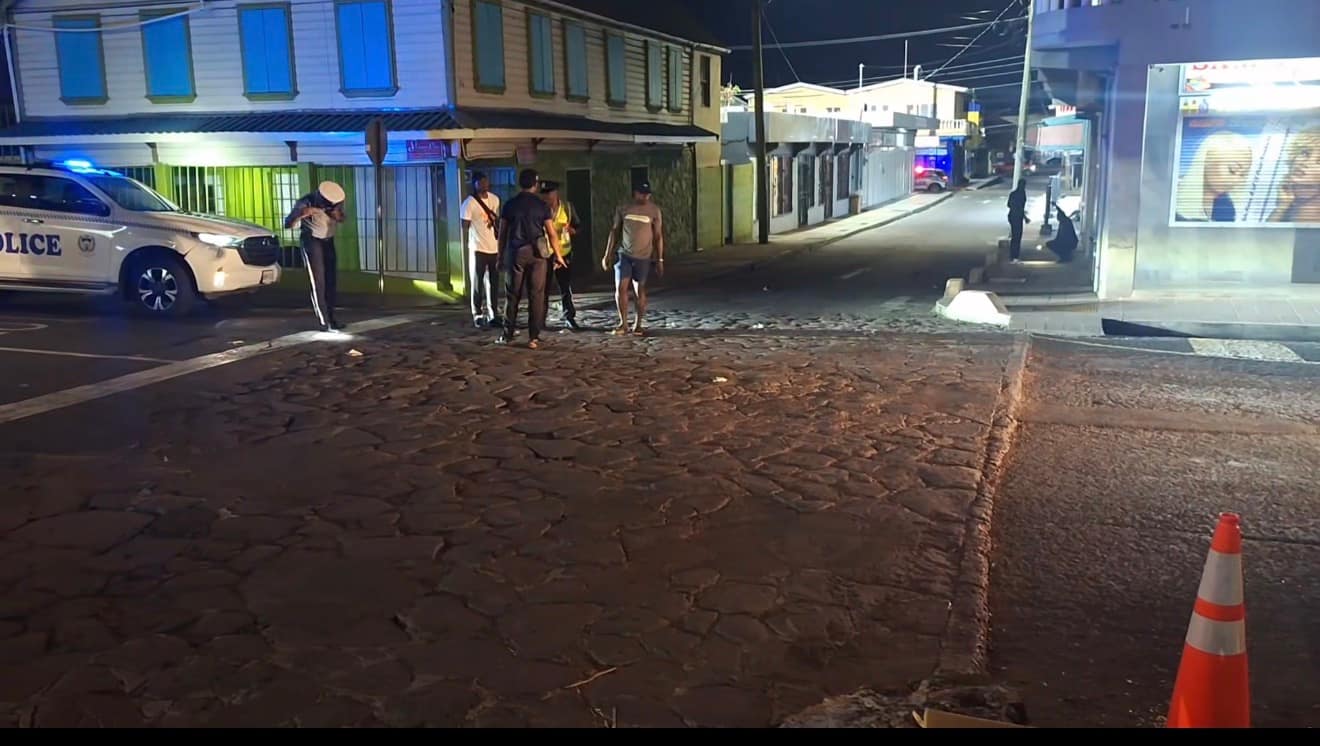
    A resident of Briggins has been sentenced for reckless driving after executing a perilous overtaking maneuver that put multiple road users at risk. Cadean Tonge appeared in court on Wednesday, where he admitted to charges of dangerous driving on All Saints Road.

    The court heard that Tonge overtook four stationary vehicles and an emergency ambulance in a single dangerous maneuver, creating what police described as a significant hazard to public safety. The incident prompted immediate law enforcement response due to the extreme nature of the violation.

    Magistrates handed down an $800 financial penalty against Tonge, while also issuing a stern warning about the consequences of repeat offenses. The defendant received a substantial reduction in his fine—approximately one-third—for entering an early guilty plea, which the court acknowledged as demonstrating responsibility for his actions.

    The sentencing includes a strict 14-day payment window, after which Tonge faces alternative custodial sentencing of up to 30 days imprisonment for non-payment. Local authorities have emphasized that this case serves as a reminder about the serious consequences of endangering public safety through reckless driving behaviors.

  • Dorsett Recalls Sir Gerald Watt as Fearless Advocate, Demanding Mentor and Builder of Legal Legacy

    Dorsett Recalls Sir Gerald Watt as Fearless Advocate, Demanding Mentor and Builder of Legal Legacy

    In a moving tribute delivered at the Cathedral of St. John the Divine, attorney David Dorsett commemorated the extraordinary life and legacy of the late Sir Gerald Owen Anderson Watt, who passed away on December 13, 2025, just six days before his 87th birthday. Drawing from more than two decades of collaborative legal practice, Dorsett painted a portrait of a legal titan whose profound impact extended far beyond the courtroom.

    Dorsett framed his memorial around the philosophical framework of Psalm 90, noting that Sir Gerald’s 31,771 days of life were characterized by purposeful action and institution-building. The senior counsel was celebrated as an architect of enduring legal structures, having established a law firm grounded in principles rather than convenience. His approach to jurisprudence rejected opportunistic financial gain in favor of championing difficult cases that others avoided, viewing the law primarily as an instrument for aiding those in distress.

    The tribute highlighted Sir Gerald’s exacting professional standards, emphasizing his commitment to rigorous preparation, precise legal drafting, and unwavering respect for judicial procedure. Dorsett revealed that his mentor selectively engaged in legal battles guided by strategic principle rather than pragmatism, famously advising that ‘conceding under pressure is an ill-advised course’ unless grounded in fundamental values.

    Beyond his professional accomplishments, Sir Gerald demonstrated remarkable personal investment in his colleagues’ welfare. Dorsett recounted instances during the COVID-19 pandemic when the senior counsel personally ensured his firm’s members received vaccinations and accompanied colleagues to medical appointments. His leadership style blended firm expectations with genuine paternal concern, treating younger attorneys as family members while maintaining the highest standards of professional conduct.

    Sir Gerald’s distinguished public service portfolio included roles as Attorney General, parliamentarian, Speaker of the House, and chairman of the Electoral Commission. In each position, he brought characteristic diligence, thoroughly studying parliamentary procedure and refusing to accept responsibility for matters beyond his control. Despite health challenges in his later years, he remained actively engaged in legal discourse, maintaining clear visions for his firm’s future and the broader legal profession.

    Dorsett concluded that Sir Gerald’s most enduring quality was his deep commitment to honor, leaving behind a blueprint for professional excellence that would continue to guide generations of legal practitioners in Antigua and Barbuda and beyond.

  • Pensioners land lots sold out as locals snap up beachfront property

    Pensioners land lots sold out as locals snap up beachfront property

    A remarkable surge in demand for coastal real estate has resulted in the complete sell-out of pensioner-allocated beachfront land lots, with local buyers driving an unprecedented purchasing frenzy. The phenomenon reflects growing market dynamics where retirees’ property investments are being rapidly acquired by domestic purchasers seeking prime waterfront locations.

    Market analysts attribute this explosive sales activity to multiple converging factors: rising appreciation potential for coastal properties, post-pandemic reevaluation of lifestyle priorities, and strategic investment moves anticipating long-term value growth. The transaction velocity exceeded all projections, with available parcels being acquired within remarkably short timeframes.

    Real estate professionals report exceptional competition for these properties, highlighting their unique combination of scenic positioning, development potential, and investment security. The sell-out pattern demonstrates shifting property ownership trends where traditional retirement holdings are being absorbed by broader market participants.

    The market movement carries significant implications for regional development planning, housing affordability, and retirement asset management. Local authorities are now examining the broader consequences of this rapid property transfer and its impact on community composition and economic development.

  • Community drainage work underway in Urlings, Senator says

    Community drainage work underway in Urlings, Senator says

    Senator Dwayne George has demonstrated his commitment to grassroots political engagement by personally participating in drainage cleanup operations in the community of Urlings. The hands-on initiative, aimed at mitigating flood risks, saw the senator actively clearing gutters and waterways to improve drainage infrastructure ahead of anticipated heavy rainfall.

    In an official statement released Thursday, Senator George emphasized that direct community service constitutes a fundamental aspect of his representation philosophy. “We continue to serve the constituency with dedication and purpose, taking action where it matters most,” he stated, characterizing his approach as “hands-on representation” that involves working directly alongside constituents.

    The drainage maintenance forms part of a broader environmental preparedness strategy focused on maintaining clean waterways and enhancing community resilience against water-related challenges. Senator George highlighted the dual objectives of protecting residential areas while preserving environmental cleanliness through proactive measures.

    This intervention addresses persistent flooding concerns that plague multiple communities during peak rainfall seasons, where obstructed drainage systems frequently contribute to localized flooding incidents. The senator’s participatory approach underscores a political methodology that prioritizes visible, practical action alongside policy-level solutions to constituent concerns.

  • COMMENTARY: Should A Political Party Drink Bush Tea For A Person’s Fever

    COMMENTARY: Should A Political Party Drink Bush Tea For A Person’s Fever

    In a compelling examination of political praxis, the fundamental question arises: should a political party intervene to address the suffering of its constituents, even when they remain silent? The unequivocal answer is yes. This analysis argues that a party’s refusal to ‘drink bush tea for a person’s fever’—a metaphor for addressing societal ailments—constitutes a profound failure in its core mission to mobilize, empathize with, and galvanize the masses into political action.

    True political leadership demands sound judgment, deep empathy, and an authentic connection to the lived realities of ordinary citizens. For any party, particularly an opposition group aspiring to govern, to withhold advocacy because people do not vocalize their grievances is not only unwise and counterproductive but fundamentally irrational. This stance ignores the complex socio-political dynamics at play, especially within small societies like Antigua and Barbuda, where government tentacles reach deeply as the largest employer. Here, fears of retaliation, social pressure, and job insecurity understandably silence many, making it the party’s duty to become the voice for the vulnerable rather than scolding their silence.

    The responsibility falls upon political organizations to canvass, engage, and mobilize the amorphous masses for democratic advancement, advocating for reforms and acting on behalf of the people regardless of their awareness of their own dilemmas. History consistently demonstrates that parties gain substantial support when leaders exhibit genuine understanding, empathy, and initiate actions to address public problems.

    Drawing from Leninist theory, the concept of the Vanguard Party provides a powerful framework. As developed in Lenin’s 1902 pamphlet, this centralized group of disciplined revolutionaries was designed to provide practical and political leadership on behalf of the entire working class, engaging them in revolutionary politics to ultimately secure power. Crucially, the Vanguard Party would never dismiss ordinary workers for failing to speak out against capitalism or demonstrate against their problems; rather, its raison d’être was to educate, motivate, and galvanize them into action.

    This concept remains broadly applicable today: any political party worthy of the name should operate as a vanguard, focusing on the interests of all people, particularly the vulnerable, poor, powerless, and voiceless. Finally, addressing recent commentary referencing biblical scripture to argue against political advocacy, the analysis concludes with a powerful counterpoint: the ultimate act of drinking bush tea for everyone’s fever was exemplified through sacrifice for the greater good, reinforcing the moral imperative for political parties to champion their constituents’ causes unconditionally.

  • Three-day Urban Search and Rescue Training Underway at Crabbes

    Three-day Urban Search and Rescue Training Underway at Crabbes

    A critical three-day intensive training program for Urban Search and Rescue (USAR) personnel is currently in progress at the Crabbes training facility. This rigorous exercise is designed to simulate high-stakes disaster scenarios, equipping first responders with the advanced skills necessary for locating, extracting, and providing life-saving medical aid to victims trapped in collapsed structures.

    The training curriculum encompasses a comprehensive range of technical disciplines, including shoring and stabilization of unstable wreckage, strategic breaching of concrete and rebar, and the delicate art of tunneling through debris. Participants are also drilled in the deployment of sophisticated electronic search equipment, such as seismic listening devices and fiber-optic scopes, to detect signs of life. The program emphasizes a multi-agency, collaborative response, mirroring the complex coordination required in real-world catastrophes like earthquakes, major industrial accidents, or terrorist attacks.

    Held at the strategically chosen Crabbes site, which offers varied and challenging terrain, the exercise serves as a vital component of regional disaster preparedness. The initiative underscores a continuous commitment to enhancing operational readiness, ensuring that elite rescue teams remain at peak proficiency to mitigate loss of life and suffering when communities are faced with unimaginable crises.

  • Gail Christian to Assume Chairmanship of the Caribbean Consular Corps in Toronto

    Gail Christian to Assume Chairmanship of the Caribbean Consular Corps in Toronto

    In a significant diplomatic development, Ms. Gail Christian, the Consul General of Antigua and Barbuda based in Toronto, has been selected to chair the Caribbean Consular Corps (CCC) for the 2026 term. This appointment positions her at the helm of a coalition comprising thirteen Caribbean diplomatic and consular missions operating within Toronto’s international landscape.

    The Caribbean Consular Corps functions as a pivotal coordinating entity that facilitates collaborative efforts and unified advocacy on issues pertinent to Caribbean nations and their diaspora communities residing in the Greater Toronto Area. The leadership role, which rotates among member nations, carries the responsibility of providing strategic direction and serving as the consolidated representative voice for Caribbean interests during official functions and ceremonial events.

    During her forthcoming tenure, Consul General Christian has outlined a comprehensive agenda focused on four key pillars: fostering substantive economic partnerships, promoting education and skills development initiatives, enhancing engagement with the Caribbean diaspora community, and strengthening the Corps’ institutional framework. Among the proposed structural enhancements is the implementation of a Troika system designed to ensure greater continuity and operational consistency within the organization’s leadership structure.

    In her official statement regarding the appointment, Consul General Christian characterized the position as “both an honour and a responsibility to serve the wider Caribbean family in Canada.” She further emphasized her commitment to collaborative leadership, stating, “Together, we will amplify our collective voice and advance initiatives that benefit our people and our region.” This appointment reflects the ongoing diplomatic cooperation among Caribbean nations and their representative missions in Canada.

  • Ministry urges respect for road signs after fresh concrete driven into

    Ministry urges respect for road signs after fresh concrete driven into

    Authorities have issued an urgent public appeal following repeated incidents of trespassing at active construction sites across the nation. Current infrastructure work, including the Jennings Extension Road project leading toward Hermitage Bay, is experiencing significant disruptions due to public non-compliance with safety measures. Despite clearly visible signage and physical barriers, individuals have been bypassing designated detours, leaving behind bicycle tracks, footprints, and vehicle tire impressions in freshly poured concrete. This reckless behavior not only compromises structural integrity but also poses serious safety hazards and causes costly delays. Officials emphasize that alternative routes have been strategically established to ensure both public safety and construction efficiency. The ongoing projects represent critical investments in national infrastructure, and community cooperation is deemed essential for their successful and timely completion. While appreciation is extended to the majority of citizens for their continued patience, this reminder serves as a critical plea for universal adherence to established safety protocols.

  • Greene says shifting global trade environment has made stronger Africa Union-CARICOM economic relations an urgent necessity

    Greene says shifting global trade environment has made stronger Africa Union-CARICOM economic relations an urgent necessity

    In a significant address on the evolving global economic landscape, a prominent voice has highlighted the pressing need for strengthened economic cooperation between the African Union (AU) and the Caribbean Community (CARICOM). The call to action is framed as a direct response to fundamental transformations within international trade frameworks and supply chain dynamics.

    The current geopolitical climate, characterized by increasing protectionism and regional realignments, has created both challenges and opportunities for emerging economies. This shifting environment necessitates the formation of strategic economic partnerships that can enhance collective bargaining power and foster sustainable development. The proposition emphasizes that deeper AU-CARICOM collaboration is no longer merely advantageous but has become an imperative for economic resilience.

    Such a partnership would potentially encompass expanded trade agreements, joint investment initiatives in key sectors like agriculture and renewable energy, and enhanced cultural and technological exchanges. This South-South cooperation model aims to reduce historical economic dependencies and create new pathways for shared prosperity. The argument posits that by uniting their considerable market potential and resources, these blocs can better navigate the complexities of contemporary global commerce and secure more favorable positions within it.