标签: Antigua and Barbuda

安提瓜和巴布达

  • First Drawdown of $100M Road Loan Expected Within Weeks, Browne Says at Manifesto Launch

    First Drawdown of $100M Road Loan Expected Within Weeks, Browne Says at Manifesto Launch

    Antigua and Barbuda is set to access the first installment of a $100 million infrastructure loan dedicated to national road rehabilitation projects within the next several weeks, Works and Housing Minister Maria Browne confirmed in a recent public announcement. The funding will accelerate the government’s long-running push to modernize the country’s aging transportation network, she confirmed.

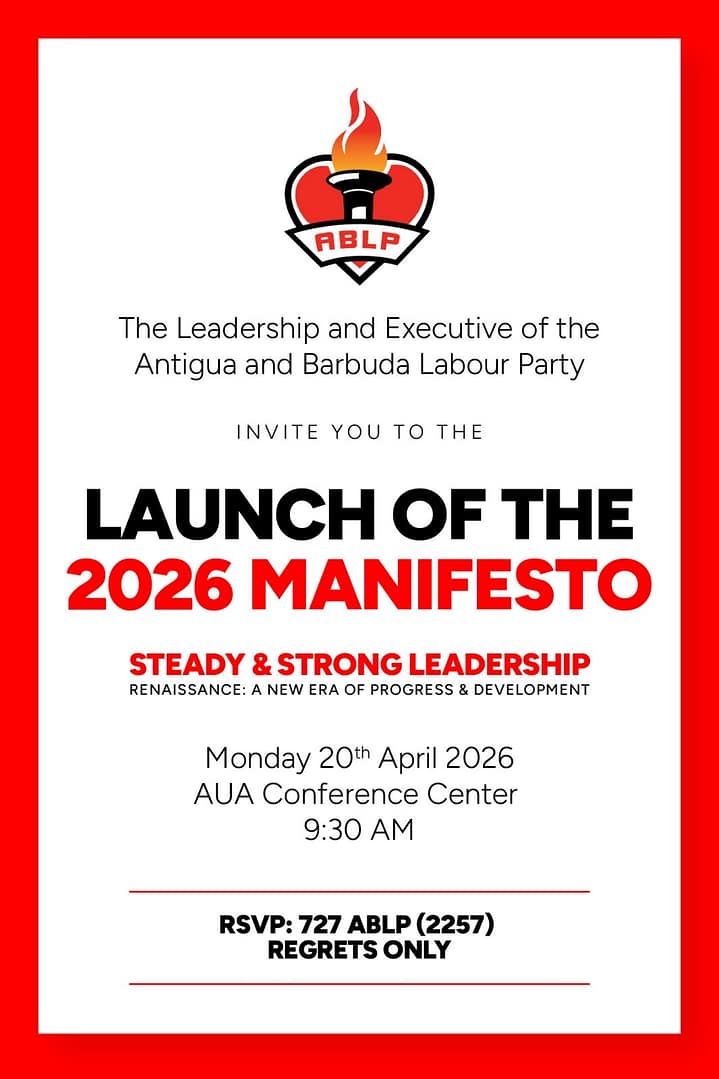
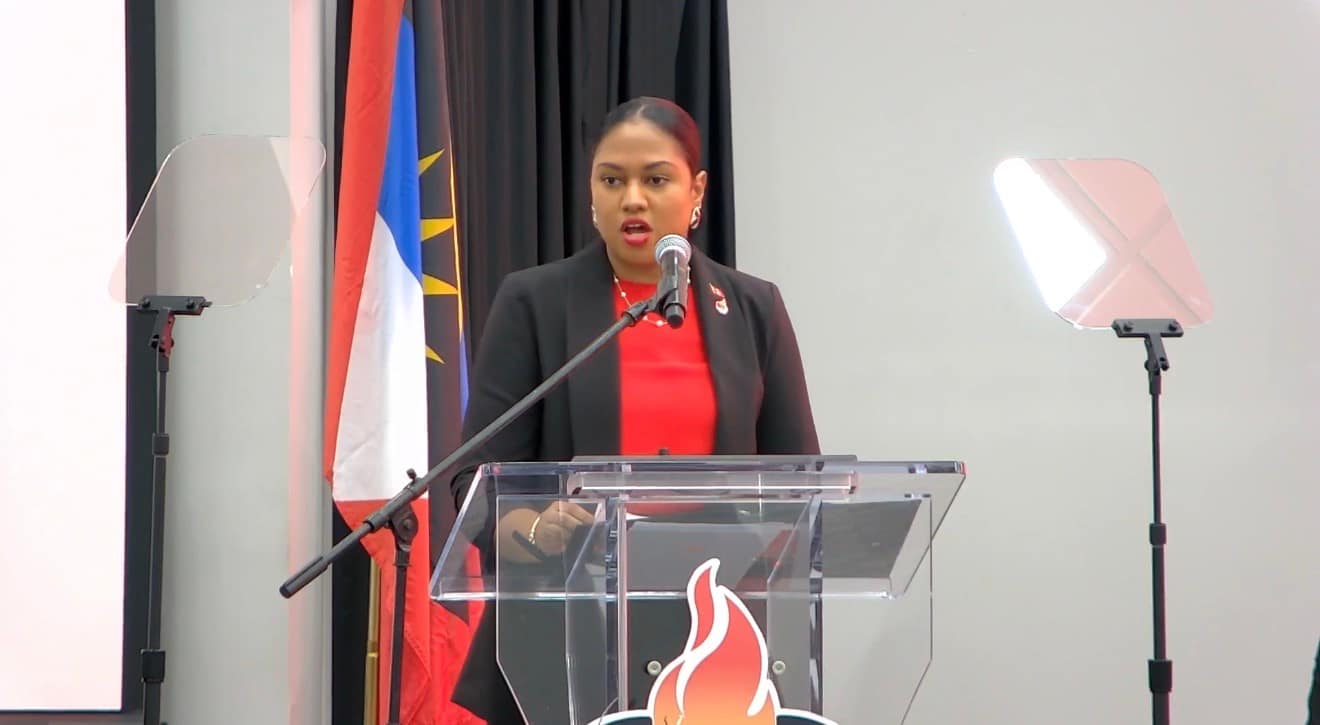
    Browne made the announcement during the official launch of the Antigua and Barbuda Labour Party (ABLP)’s election manifesto, held at the American University of Antigua Conference Centre. She outlined that the secured financing will not only continue the long-delayed redevelopment of All Saints Road, one of the country’s high-priority infrastructure projects, but also support a broad range of drainage and road improvement works across both main islands of the nation.

    “ A $100 million loan is already finalized to keep moving forward with All Saints Road’s redevelopment and rehabilitate roads and drainage systems across the country, and we will access the first drawdown within a matter of weeks,” Browne told assembled party supporters. She positioned the multi-million dollar infrastructure investment as a core component of the ABLP’s sweeping national “Renaissance” agenda, emphasizing that upgraded transportation infrastructure is an indispensable foundation for broad-based economic growth and long-term national development.

    Browne went on to highlight the progress the current administration has already made in upgrading the country’s roads, noting that visible construction work is already ongoing across multiple districts. She listed a host of major thoroughfares that have already received upgrades through prior government investment, including Sir George Walter Highway, Friars Hill Road, Anchorage Road, Valley Road, and Factory Road. To date, she said, the ongoing infrastructure program has reached communities across the country, delivering tangible improvements to both road safety and overall mobility for residents and commercial operators.

    “Our extensive road works program has already reached communities across this nation, bringing relief to drivers who have navigated poorly maintained roads for years, improving safety for all travelers, and restoring pride in our public infrastructure,” Browne said.

    While acknowledging the gains the government has already delivered, the minister stressed that considerable work remains to bring the entire road network up to modern standards. The newly secured $100 million financing, she explained, will allow the government to expand both the pace and the geographic scope of repair and upgrade works across the country.

    “We know much has been achieved, but we are mindful that much is to be done,” she said.

    Browne also linked strategic infrastructure investment to the everyday economic experiences of Antigua and Barbuda’s residents, explaining that reliable, well-maintained roads are critical to reducing transportation costs for households and businesses, while opening new economic opportunities for communities across the country. She added that the current government’s approach prioritizes proven, results-driven infrastructure investment rather than untested policy experimentation, noting that the ongoing road program has already demonstrated clear success.

    “We’re not experimenting, we are expanding a system that is already working. The proof is in the pudding,” she said.

    The national road rehabilitation program stands as one of the central pillars of the ABLP’s re-election platform, alongside other key policy pledges focused on expanding affordable housing access and advancing community development initiatives across the country.

  • Voter ID Replacements Surge Past 30,000 as Election Nears

    Voter ID Replacements Surge Past 30,000 as Election Nears

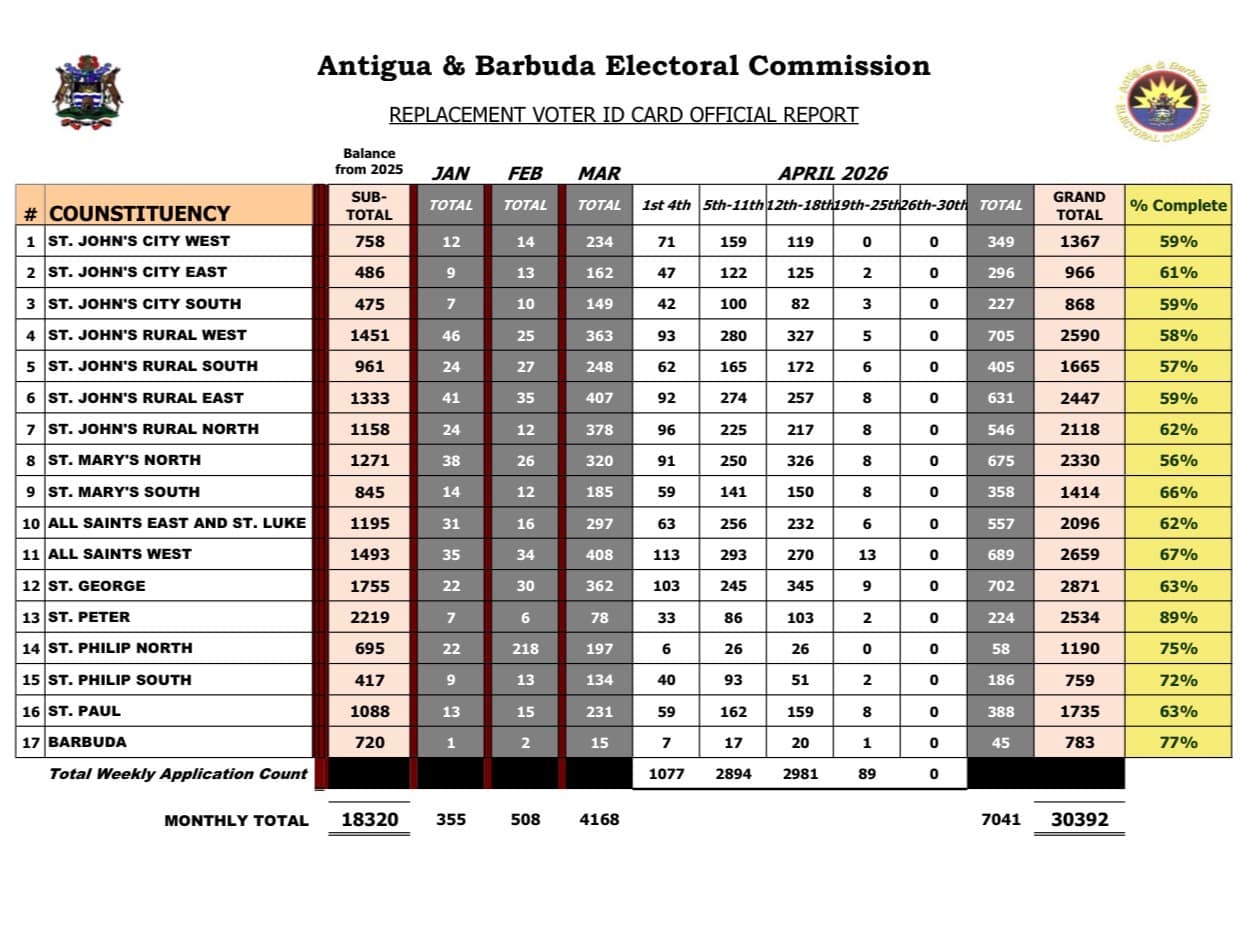
    As the clock counts down to Antigua and Barbuda’s upcoming April 30 general election, official data from the Antigua and Barbuda Electoral Commission (ABEC) confirms that replacement requests for voter identification cards have surged past the 30,000 threshold, bringing most electoral districts close to full compliance with pre-election voter registration requirements.

    The commission’s official *Replacement Voter ID Card Report* documents that a total of 30,392 replacement applications had been processed by the end of April 2026, a figure that highlights a dramatic acceleration in voter activity over the past month. Activity began at a measured pace at the start of the year, with just 355 applications submitted in January and 508 in February. The first major uptick came in March, when applications jumped to 4,168, and momentum has only grown as polling day approaches.

    April has emerged as the busiest month for the replacement drive by far, with 7,041 applications processed in the month to date. The highest demand was recorded in the middle of April: between April 5 and 11, the commission handled 2,894 requests, and the following week (April 12 to 18) saw an even higher 2,981 applications, making these two weeks the most active period of the entire pre-election replacement campaign.

    When broken down by constituency, progress varies across the country but every district has already crossed the 50% completion mark. The rural constituency of St. Peter leads all districts with an 89% completion rate, followed by the island of Barbuda at 77% and St. Philip North at 75%. Other constituencies including All Saints West (67%), St. Mary’s South (66%), and St. George (63%) have also posted solid participation rates. The slowest progress has been recorded in more densely populated urban constituencies around the capital St. John’s: St. John’s Rural South stands at 57% completion, while St. John’s Rural West is at 58%.

    For weeks, ABEC has run a public outreach campaign urging all eligible voters to replace or update their existing voter ID cards ahead of polling day, a step the commission says is critical to preventing delays and ensuring voting runs smoothly on election day. With the April 30 vote just days away, the latest data shows a sustained nationwide push by voters to complete the ID process ahead of the general election.

  • COMMENTARY: “Constitutional Reform Is All In The Design And Not Just Form”

    COMMENTARY: “Constitutional Reform Is All In The Design And Not Just Form”

    Constitutional reform debates across the Caribbean are frequently shaped by a persistent, flawed argument put forward by critics and some legal practitioners: that foundational constitutional documents are unchanging, set in stone, and ought to be treated like unalterable last wills and testaments. This misinterpretation directly contradicts long-standing guidance from leading jurists, including Lord Bingham, who ruled in the 2002 case *Reyes v. R* that while constitutional text deserves respect, it should never be read as narrowly as a private will, commercial deed or shipping charterparty. Instead, constitutions demand generous, purpose-driven interpretation that adapts to the evolving needs of the societies they govern.

    This does not mean that constitutions should be tinkered with at every parliamentary session, of course. But the critique that borrowed amendments from Western democracies are inherently incompatible with Caribbean constitutional systems, and thus must be discarded entirely, misses a critical point: the compatibility of imported reforms relies not on their superficial form, but on the intentionality of their design to fit local governance needs. Indigenous or borrowed amendments alike are valid if well-crafted, regardless of how closely they align with the traditional Westminster model that frames most Caribbean constitutions.

    This debate has come to a head in Antigua and Barbuda, where commentator Gavin Emmanuel recently argued that two prominent reform proposals – fixed election dates and term limits for prime ministers – are both structurally incompatible with the Westminster system enshrined in the country’s 1981 constitution. This claim, however, rests on a harmful colonial-era trap that requires all Caribbean constitutional changes to hew closely to the original Westminster blueprint, effectively placing legal handcuffs on independent nations’ constitutional evolution. This uncritical acceptance of the status quo echoes the outdated logic endorsed by figures like Sir Eric Williams, who claimed if the British constitution worked for Britain, it would automatically work for the Caribbean – framing the region as what V.S. Naipaul called “Mimic Men” and calypsonian Mighty Gabby termed “Choir Boys”, unthinking imitators of colonial governance structures rather than independent architects of their own democracies.

    The reality of constitutional change tells a different story. If all amendments had to align strictly with original Westminster principles, the Caribbean would never have replaced the Judicial Committee of the Privy Council with the Caribbean Court of Justice, removed the British monarch as head of state in several nations, or expanded fundamental human rights protections through judicial interpretation. All of these changes departed from traditional Westminster assumptions, and all were successfully implemented because they were designed for local needs, not because they fit a colonial mold. Independence demands that Caribbean nations shape their own constitutional trajectories, not lock them into 20th-century colonial frameworks.

    On the specific question of fixed election dates, Emmanuel’s claim of incompatibility overlooks a key precedent: other Westminster systems, including Canada and Australia, have already adopted fixed election dates without triggering constitutional crisis. To argue that Antigua and Barbuda cannot do the same is to perpetuate a colonial standard that holds Caribbean nations to a different, more restrictive rule than established Western democracies.

    Emmanuel correctly notes that Section 60(1) of Antigua and Barbuda’s constitution grants the Governor General the power to dissolve parliament on the prime minister’s advice ahead of elections. But if the public and parliament endorse fixed election dates as part of constitutional reform, this section can simply be amended or repealed. A constitution is not an unchangeable will: adjusting core provisions to reflect the public’s democratic will is a routine part of constitutional reform. If the constitution mandates a fixed election date, the old provision granting unfettered prime ministerial power to call elections no longer serves a purpose, and its removal is straightforward constitutional drafting, not activist overreach.

    Critics who argue fixed dates eliminate needed flexibility for political crises also miss the mark, because flexibility can be baked directly into the design of the reform. The constitution can explicitly outline well-defined emergency scenarios – such as the collapse of a government after a successful no-confidence motion, when the sitting prime minister refuses to resign or a successor cannot be formed – that allow the Governor General to dissolve parliament early. These exceptions can be clearly defined with specific thresholds, such as a supermajority vote in the House of Representatives, to prevent partisan abuse.

    Contrary to Emmanuel’s claim that fixed dates force governments and voters to wait for an election even when confidence has collapsed, the design of the reform can explicitly accommodate these scenarios. What is more, the current system of unfixed election dates is far from the neutral, crisis-driven mechanism its defenders claim. In practice, sitting prime ministers almost always call snap elections for strategic partisan advantage, when they believe their party is most likely to win, rather than in response to a genuine collapse of public confidence. When confidence actually does decline, incumbents often cling to power as long as possible, gambling that political fortunes will improve before they are forced to call an election. The supposed flexibility of the current system thus serves strategic partisan gain far more than it serves democratic fairness, predictability, or equity.

    Emmanuel also argues that fixed election dates would create a conflict with the Governor General’s constitutionally mandated reserve power to dissolve parliament after a no-confidence motion, claiming that a statutory fixed date would be overridden by the constitution’s supremacy clause and thus be rendered void. This ignores the core point that proponents of fixed election dates in Antigua and Barbuda have always proposed embedding the reform directly in the constitution, not enacting it as a conflicting standalone statute. Unlike the United Kingdom, which operates with an unwritten constitution, Antigua and Barbuda has a codified supreme constitution, so fixing election dates as an amended constitutional provision eliminates any conflict between statute and constitutional law. Exceptions for early dissolution can be written directly into the amended constitutional text, along with clear guidance on whether the electoral term clock resets after an early election or returns to the original fixed schedule.

    Multiple design options are available to achieve the core goal of reform: reducing the prime minister’s prerogative power to call snap elections for partisan gain. The most straightforward approach would amend the constitution to remove the existing power to call early elections, replace it with a clear mandate for general elections every five years on a fixed date, and add enumerated exceptions for defined emergencies and no-confidence scenarios. This structure aligns with democratic priorities of fairness and transparency while retaining flexibility for genuine political crises.

    In conclusion, the Caribbean must urgently move past the outdated idea that the traditional Westminster system is an immutable constitutional structure that cannot be adapted to local needs. Decades of academic analysis, official constitutional reform commission reports, and public calls for change have made clear that the region needs a brand of constitutionalism that reflects its own democratic values, not colonial-era norms. Whether reforms are borrowed from other democracies or designed from home, what matters most is not alignment with an inherited model, but intentional, thoughtful design that fits the needs of Caribbean people. At the end of the day, constitutional reform in the region always comes down to one core principle: it is all in the design.
  • LETTER: Ay Ya me born!

    LETTER: Ay Ya me born!

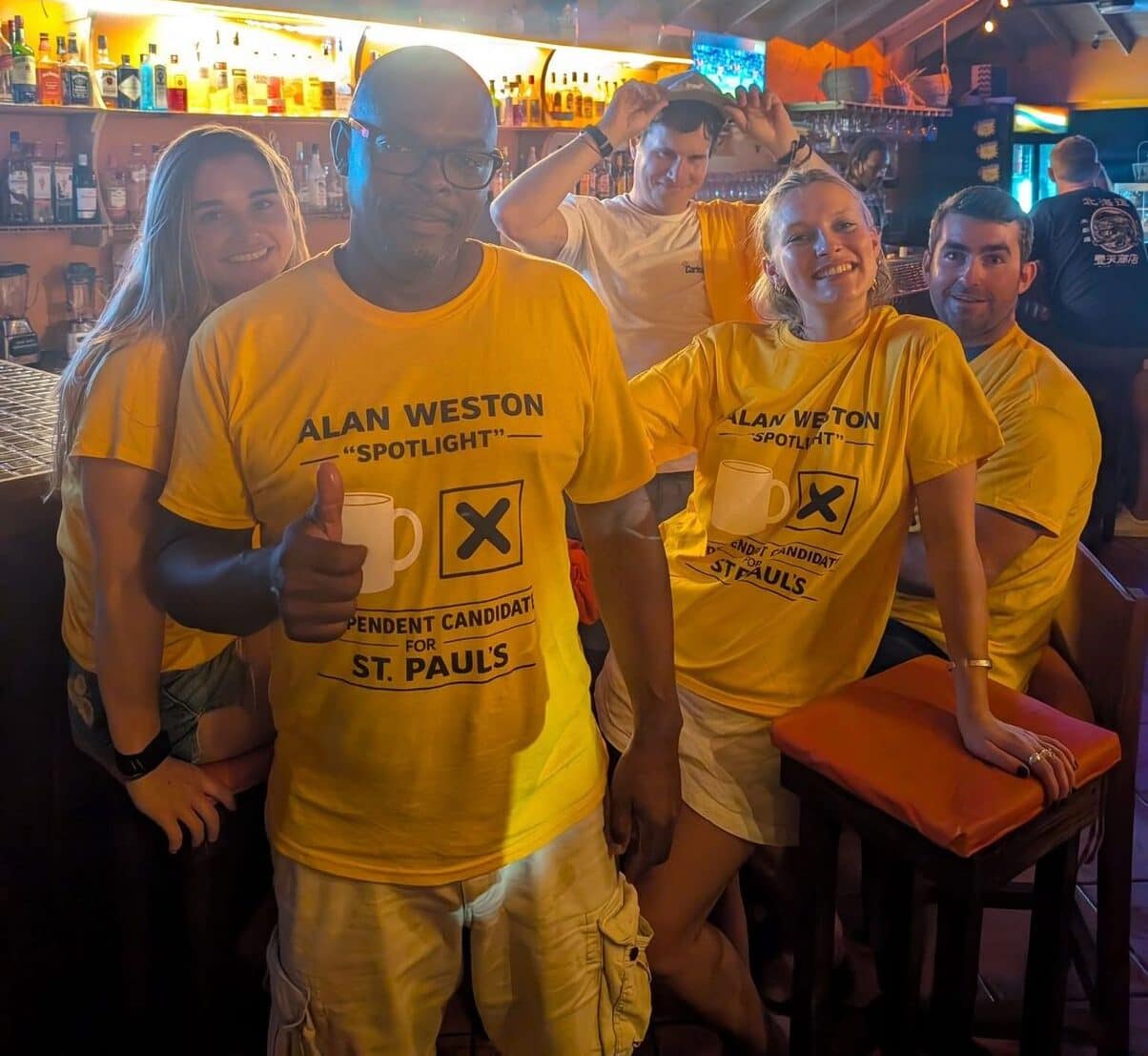
    In an open letter to the editor published on ANR’s opinion platform, a born-and-raised Antiguan has broken a long-held personal commitment to stay out of local St. Paul political affairs, leveling serious accusations against independent candidate Alan Weston and his backers that have stirred fresh tension around foreign influence in Antigua and Barbuda’s domestic politics.

    The author, who has long publicly opposed the gradual Caucasianisation of the popular tourist district English Harbour, says recent developments tied to Weston’s campaign left them no choice but to speak out. At a time when Antigua and Barbuda is part of the global movement demanding reparations for the transatlantic slave trade, the writer argues the alleged foreign control of Weston’s campaign evokes a harmful modern resurgence of the exploitative mentality that defined chattel slavery.

    Multiple visits past Weston’s campaign headquarters on Dockyard Drive revealed a foreign white national running daily operations, according to the letter. The unnamed author claims this same foreign individual, who hails from South Africa – the country that institutionalized apartheid under white minority rule – attempted to seize control of the local Sailing Academy to advance private business interests. After being denied formal approval for that takeover, the writer alleges, the foreign figure instead used financial leverage to back Weston, a local candidate, as a proxy to challenge the existing political system.

    The author questions whether the South African national holds the required legal work permit or permanent residency status to operate in Antigua, highlighting what they frame as a violation of local immigration and business regulations. To back up the claims of foreign backing, the letter includes attached photographs showing key Weston supporters. Among these backers, the author notes, is a Citizenship by Investment (CIP) passport holder who traveled specifically to Antigua to add their name as an official nominator for Weston’s candidacy – a move the author says proves the candidate is controlled by outside interests with deep financial ties to the campaign.

    A second flashpoint for the author was public commentary from prominent local figure Eli Fuller, who publicly described Weston as both a brave person and a patriot. The writer pushes back sharply against that characterization, arguing that Weston has essentially sold out his national heritage to the highest bidder. Adding a layer of familial irony to the situation, the author points out that Weston’s own grandfather, John Meade, was a staunch, lifelong supporter of the Antigua Labour Party and a trusted right-hand ally of former Prime Minister Vere Cornwall Bird Sr. The writer concludes that Meade would be deeply ashamed of his grandson’s actions, spinning in his grave at the idea of Weston accepting backing from foreign interests.

    The publication notes that all opinions expressed in platform contributor content, including this letter, are solely those of the author and do not represent the official views of ANR.

  • UPP’s plan to expand basket of goods will apply to luxury foods for the rich and won’t benefit the poor, PM says

    UPP’s plan to expand basket of goods will apply to luxury foods for the rich and won’t benefit the poor, PM says

    ST. JOHN’S, Antigua — A sharp political clash has erupted over tax policy in Antigua and Barbuda, as sitting Prime Minister and head of the Antigua and Barbuda Labour Party Gaston Browne has leveled serious accusations against the opposition United Progressive Party (UPP). Browne claims the UPP is pushing a disguised tax overhaul that would hand unintended benefits to wealthy industry groups and international tourists by eliminating sales taxes on premium goods, all while framing the plan as broadened cost-of-living relief for everyday residents.

    Speaking during a recent segment of the *Browne and Browne Show* on local radio outlet Pointe FM, Browne outlined the steps his administration has already taken to ease financial strain on ordinary citizens. His government has fully removed the Antigua and Barbuda Sales Tax (ABST) from all core essential food items, including fresh produce, to bring down household grocery costs. “We already eliminated all of the taxes… for all essential foods, including foods and vegetables,” Browne confirmed during the interview.

    The prime minister argued that the UPP’s plan to expand the list of tax-exempt zero-rated goods stretches far beyond basic necessities, and is intentionally structured to eliminate tax obligations for high-end luxury food products. “They’re trying to use some backdoor mechanism to untax the high-end foods,” Browne stated, pointing to iconic premium items like imported Wagyu beef and caviar as clear examples of the products that would benefit from the policy change.

    According to Browne, this proposed tax elimination would not deliver meaningful relief to the general public. Instead, the biggest winners would be high-end hospitality businesses, upscale restaurants and wealthy consumers, many of whom are international visitors visiting the island nation. “When the tourists come here… they want Wagyu and they want caviar, they must pay the taxes,” he emphasized.

    Beyond the unequal distribution of benefits, Browne warned that extending tax exemptions to luxury goods would create a significant gap in government revenue that funds critical national development projects across the country. “That would be to the detriment of our revenues to develop the country,” he said.

    The prime minister also tied the opposition’s policy position to behind-the-scenes lobbying from powerful private sector groups, including luxury car dealers, prominent hoteliers and upscale restaurant operators. “I know where that’s coming from… the same people approach them,” Browne said, noting that he turned down identical lobbying requests during his time in office.

    Browne ultimately dismissed the UPP’s proposal as deeply misguided, leaving the judgment of the plan up to Antigua and Barbuda’s voters ahead of any upcoming electoral contest. “If the people want to buy into that type of foolishness… they can so decide,” he said. As of press time, the United Progressive Party has not issued any public statement responding to Browne’s accusations made during the radio broadcast.

  • Ottos Comprehensive School Dominates National Theatre Arts Awards

    Ottos Comprehensive School Dominates National Theatre Arts Awards

    Ottos Comprehensive School has cemented its status as a leading training ground for young theatrical talent after a historic, category-topping performance at the 2024 National Theatre Arts Awards, where the institution walked away with top honors across every major segment of the competition.

    What began as another year of participation turned into a record-breaking showing for the school’s student body and faculty creative team. In performance categories, Ottos took home three of the most coveted individual awards: Best Actor, Best Actress, and Best Supporting Actor. This clean sweep of top performance honors left no question about the depth and skill of the school’s acting program, with student performers delivering standout work that impressed judges and audiences alike.

    The school’s success extended far beyond the stage, however. Its in-house creative team earned critical acclaim for their behind-the-scenes work, capturing awards for Most Outstanding Directing, Most Outstanding Original Script, and the specialized honor of Most Outstanding Teenage Script. The trio of writing and directing awards underscored the institution’s commitment to nurturing original creative voices, not just refining performance technique.

    Even technical production, a segment often overlooked in general coverage, became another area of dominance for Ottos. The school’s technical crew took home two top prizes: Most Outstanding Sound Effects and Most Outstanding Set Design, showcasing the full range of theatrical skill cultivated across the student body, from front-of-stage actors to back-of-house production teams.

    The crowning achievement of Ottos’ historic night came in the festival’s special recognition awards, where the school claimed the entire trio of Spirit of the Festival honors: the Spirit of the Festival – Drama School Award, the Spirit of the Festival – Overall Contingent Award, and the overarching, overall Spirit of the Festival Award. These awards, which honor collective contribution, community spirit, and overall impact on the festival event, highlighted how the school’s entire contingent lifted the entire competition through their work and collaboration.

    Festival organizers emphasized that this year’s event drew record participation and unprecedented levels of creativity from schools across the country, making Ottos’ sweep all the more notable. In a statement following the awards ceremony, organizers praised all participating institutions and young performers for pushing creative boundaries and delivering a week of unforgettable theatrical work. They noted that the high bar of competition seen this year bodes well for the future of youth theatre across the nation, with Ottos’ performance setting a new benchmark for what young theatrical artists can achieve.

    For Ottos Comprehensive School, the sweep of awards reinforces a long-held reputation as a national hub for young artistic development. The school’s program, which prioritizes hands-on experience across every aspect of theatrical production, has consistently produced talented artists, but this year’s showing marks one of the most dominant performances in the award’s recent history.

  • ABS accused of bias as UPP candidates cancel appearances on ‘Know Your Candidates’

    ABS accused of bias as UPP candidates cancel appearances on ‘Know Your Candidates’

    In a sharp rebuke of a public broadcaster’s election outreach initiative, Antigua and Barbuda’s main opposition bloc, the United Progressive Party (UPP), has moved to withdraw all its remaining candidates from ABS TV’s widely publicized “Know Your Candidates” program. The decision, finalized over the weekend, comes on the heels of widespread complaints from party participants and audience members, who have flagged perceived partisan bias and aggressive, confrontational conduct from the program’s host, as well as consistently negative framing in post-interview news coverage of UPP candidates’ appearances.

    Party leadership formally notified ABS TV of its withdrawal on Sunday evening, just hours before two of its remaining scheduled participants — Johnathan Joseph and Malaka Parker — were set to appear for their segments on Monday morning. Just one week prior, the UPP had agreed to the program’s terms and committed to fielding its slate of candidates for the voter education initiative. Last Friday, two UPP hopefuls, Ashworth Azille and Kelvin Simon, already completed their scheduled on-air interviews as part of the program.

    ABS TV has pushed back forcefully against the opposition’s allegations, flatly rejecting any claims of biased or tendentious reporting tied to the election program. According to the broadcaster, “Know Your Candidates” was designed as a nonpartisan voter education tool: incumbent office-holders seeking re-election are given space to defend their legislative records, while first-time challengers can outline their policy platforms to create a public benchmark for voters to reference throughout the campaign season.

  • Backlash, debate follow viral photo of woman posing on V.C. Bird monument

    Backlash, debate follow viral photo of woman posing on V.C. Bird monument

    A photograph showing a female tourist reclining in a suggestive pose on a national monument honoring Antigua and Barbuda’s founding father has exploded across social media platforms, igniting a fierce, divided public conversation over cultural respect, public reaction, and the protection of heritage sites. The monument stands as a tribute to Sir Vere Cornwall Bird, a towering figure in the Caribbean nation’s modern history who guided Antigua and Barbuda to full independence from colonial rule in 1981. Widely celebrated as the country’s “Father of the Nation,” Bird’s legacy is a core source of national collective pride, imbuing the site with profound historical and cultural meaning that makes the viral photo all the more controversial.

    In the wake of the image’s widespread circulation, thousands of online commenters have voiced sharp condemnation of the tourist’s actions, labeling them disrespectful, offensive, and deeply inappropriate for a site of such national significance. Many argue that sacred national landmarks demand universal reverence from all visitors, regardless of their origin. Some have gone further, demanding formal consequences for the woman, ranging from financial fines to deportation, while others have raised pointed questions about site management, asking how such a photo could be taken without intervention from on-site staff.

    A consistent thread among critical voices emphasizes the responsibility of international travelers: all guests should take the time to research local cultural norms and sensitivities before visiting important heritage sites, especially those honoring revered national figures. This perspective argues that ignorance of local customs is not an excuse for behavior that insults a nation’s shared history.

    However, a growing contingent of online users has pushed back against the widespread outrage, arguing that the response to the incident has been disproportionate. Supporters of this view note that the tourist herself has already taken accountability: she voluntarily removed the original image from her social media and issued a public expression of regret after seeing the scale of the negative reaction. Many argue that the woman’s willingness to correct her mistake should de-escalate the situation, and that the continued mass sharing of the photograph is actually what amplifies the disrespect to Bird’s legacy, rather than addressing it.

    One social media user summed up this position, writing, “She’s a tourist taking a picture by a statue… she was respectful enough to remove the picture after she saw comments.” Multiple commenters have also criticized users who continue to repost the viral image, arguing that the ongoing circulation unnecessarily drags out the controversy and amplifies division for clout. Others have called for a more measured, constructive approach, framing the incident as a learning opportunity to educate travelers on cultural sensitivity rather than a moment for blanket condemnation.

    Some members of the public have even downplayed the entire incident, describing it as either a harmless misstep or a lighthearted mistake that has been blown far out of proportion. This group also points to far more pressing systemic issues facing Antigua and Barbuda that deserve far more public attention and resources than a tourist’s bad photo op.

    Beyond the immediate debate over the tourist’s actions, the incident has prompted broader institutional questions: it has forced policymakers and heritage site managers to reexamine how public monuments are protected, and whether clearer on-site signage, formal visitor guidelines, or enhanced staff training are needed to prevent similar missteps from happening in the future.

  • ABLP to Launch Manifesto Today as Campaign Enters Final Phase

    ABLP to Launch Manifesto Today as Campaign Enters Final Phase

    As the Caribbean nation of Antigua and Barbuda heads toward its upcoming general election, the ruling Antigua and Barbuda Labour Party (ABLP) is set to take a major step in its campaign on Monday, April 20, with the official launch of its election manifesto at the American University of Antigua. This confirmation came directly from Gaston Browne, the nation’s current Prime Minister and ABLP leader, during an appearance on Pointe FM’s popular Browne and Browne Show.

    During the live broadcast, Browne framed the manifesto rollout as a cornerstone of the party’s final campaign push, designed to crystalize the party’s policy agenda for voters ahead of polling day. Beyond confirming the logistics of the launch, the Prime Minister issued a public call to action for all registered voters, urging them to complete pre-election preparations well in advance to ensure they can cast their ballots without issue. Specifically, he reminded residents to check the validity of their voter identification cards, a critical step for participating in the general vote.

    Browne also emphasized that the ruling party has seen a steady uptick in grassroots support across the country in recent weeks, positioning the manifesto launch as a strategic move to build on this growing momentum as the campaign enters its final stretch. This optimistic assessment of the party’s standing was echoed by other contributors to the broadcast, who pointed to tangible indicators of ABLP’s strong organizational capacity heading into the vote.

    Among those contributors was Comrade Donna Shire, who highlighted that campaign activity has been robust and well-coordinated across every electoral constituency. Shire specifically noted that the party’s events have drawn high levels of visible, energetic participation from young voters, a trend that has boosted the campaign’s overall energy and expanded its reach to new demographics. High turnout at recent ABLP rallies and public events was also cited as further evidence of the party’s growing traction with the electorate.

    The manifesto launch arrives at a time when all political parties in Antigua and Barbuda are ramping up their outreach efforts to win over undecided voters. All competing parties are expected to center their electoral platforms on three core policy areas: economic growth strategy, expanded social welfare programs, and large-scale infrastructure development projects. While Browne stopped short of revealing specific policy pledges from the ABLP manifesto during his radio appearance, he confirmed that the document will lay out the party’s comprehensive roadmap for continuing national development and stable governance if the ABLP retains power after the election.

  • WATCH: PM Browne Says New CMC Complex Will Cut Food Imports, Lower Prices

    WATCH: PM Browne Says New CMC Complex Will Cut Food Imports, Lower Prices

    In a recent interview on Pointe FM’s popular Browne and Browne Show, Prime Minister Browne of Antigua and Barbuda outlined an ambitious government-led initiative to transform the country’s existing food distribution network through the development of a new Central Marketing Corporation (CMC) complex, a project he says will cut national food import volumes, stabilize consumer prices and strengthen long-term food security.\n\nBrowne emphasized that the core goal of the overhaul is to expand domestic food production and processing capacity, while making consistent, high-quality, affordable staples and animal products accessible to all households across the nation. “We have to prepare ourselves to make sure that we can sustain ourselves, and at the same time to make sure that we can produce good quality and affordable produce and meats,” he told listeners.\n\nAt the heart of the initiative is the conversion of the CMC into a fully integrated, one-stop “food emporium” that connects local smallholder farmers, independent food vendors and end consumers through a centralized distribution and processing hub. To accommodate this major expansion, the Antigua and Barbuda government has already invested $9 million to acquire the 5.5-acre former Kennedy’s Club property in Cassada Gardens, which will serve as the site for the main complex. “We have already bought the facility, it’s on five and a half acres,” Browne confirmed.\n\nThe new campus will host a full range of food-focused infrastructure, including a public supermarket, open-air farmers’ market, temperature-controlled cold storage, dry storage for non-perishable goods, and dedicated agro-processing units built exclusively to handle locally grown produce and harvested livestock. With these new facilities in place, Browne explained, local producers will be able to bring their goods directly from farm to market, cutting out unnecessary middleman markup that raises costs for consumers.\n\nA critical pillar of the plan to expand domestic meat production is the construction of new chicken and pork abattoirs in Piers, work on which is already progressing. Browne noted that these modern facilities will be capable of processing livestock into consumer-ready cuts, including fresh split chicken portions, and will be open for use by small-scale local livestock farmers who currently lack access to professional processing infrastructure.\n\nTo further reduce production costs for local meat producers, the government also plans to build a dedicated domestic feed mill. This facility will cut the sector’s reliance on expensive imported animal feed, bringing down input costs and making locally raised meat far more price-competitive with imported alternatives. “We also will be establishing a feed mill to drive down the costs,” Browne said.\n\nWhile long-term expansion of domestic production is the core focus, Browne outlined immediate short-term measures to deliver price relief to consumers: the CMC has already partnered with a United Kingdom-based supplier to import lower-cost staple food products, with the first shipments scheduled to arrive within a few months. “That should start within a matter of months,” he confirmed.\n\nBrowne argued that this dual strategy—ramping up local food output while securing more affordable imported goods in the near term—will stabilize domestic food prices and shield consumers from volatile global price shocks, including the impact of rising tariffs in major international export markets. He warned that without developing competitive local food alternatives, the country would remain vulnerable to worsening external price pressures as import volumes continue to climb. “Imports continue to increase, and you never can tell,” he said.\n\nBeyond immediate price relief, the expanded CMC network is designed to cut the country’s total food import bill, improve strained foreign exchange balances, and build a more resilient, reliable national food supply chain. To illustrate the untapped potential of scaling local production, Browne pointed to his own private agricultural operation, which currently produces roughly 150 pigs per year raised to modern food safety standards.\n\n“This is just going to be quite a beautiful food emporium to accommodate our farmers and to have CMC import more produce and meats at an affordable price,” Browne said, adding that the CMC overhaul forms one part of a wider government agenda to modernize Antigua and Barbuda’s agricultural sector, support small and medium local food businesses, and raise overall living standards for residents across both islands.