
A hantavirus outbreak on a commercial cruise ship has triggered an emergency response that has spilled into public controversy, as three passengers have been evacuated for medical care while local communities push back against the vessel’s planned itinerary. The incident unfolded after the virus was detected aboard the ship, prompting health authorities to order the immediate evacuation of the three affected individuals to onshore medical facilities for monitoring and treatment.
标签: Antigua and Barbuda
安提瓜和巴布达
-

UPP Chair D. Gisele Isaac Claims Election Was Influenced by State Power, Cash Handouts
Weeks after the ruling Antigua and Barbuda Labour Party secured its fourth consecutive term in the April 30 general election, the chair of the main opposition United Progressive Party (UPP), D. Gisele Isaac, has raised explosive allegations that systemic advantages, misuse of state assets, and direct voter bribes skewed the final result.
In a scathing opinion piece published Tuesday in the Daily Observer, Isaac delivered a damning indictment of the country’s electoral landscape, labeling Antigua and Barbuda’s democracy “plywood-built” – a fragile structure that inherently favors sitting governments through unfair constitutional and institutional advantages.
At the core of Isaac’s criticism is the argument that incumbent administrations hold an unbeatable advantage thanks to their unilateral control over all state institutions and resources. She specifically named key state bodies including the national Treasury, Immigration Department, Port Authority, Public Works Department, the Antigua Public Utilities Authority (APUA), ABS-TV and even the independent Electoral Commission as entities the ruling party leveraged for electoral gain. Unlike challengers, sitting leaders hold full authority over when, where, and how state resources are deployed during election cycles, creating a fundamentally uneven playing field that opposition groups can never overcome, she argued.
Beyond institutional bias, Isaac detailed what she claims was widespread and deliberate vote-buying during the recent campaign. She cited direct cash handouts to voters, campaign motorcades that paired promises of road repairs with free gasoline giveaways, and distribution of supermarket vouchers, personal gifts, and free concerts to sway voter sentiment. Isaac framed these tactics as exploitative of widespread economic hardship facing the country, arguing that the ruling party’s short-term inducements undercut opposition plans for long-term economic improvement.
“To thousands of families, scrunting because of the high cost of groceries and living with termites, the cash in hand and plywood were more attractive than the Opposition’s plans to make life better, healthier and more affordable,” Isaac wrote, acknowledging that widespread economic distress left many voters with little choice but to accept immediate assistance over future policy gains. She added that the cycle of vote-buying perpetuates poverty, leaving voters dependent on ruling party handouts rather than building sustainable economic growth.
Isaac also openly addressed internal instability that weakened the UPP in the lead-up to the election, confirming reports of high-profile party defections, infiltration by “double-agents” aligned with the ruling party, and internal disagreements over key campaign decisions. Despite these challenges, she defended the UPP’s campaign performance, arguing that the opposition overcame massive resource disadvantages to mount a credible challenge. “Without apology I will say, again, that the Opposition — with its small resources but great goodwill and superior talent — pulled off an election campaign that was A+,” she wrote.
The veteran political leader also pulled no punches on the outsized role of corporate and private donor influence in national politics. She argued that election outcomes and subsequent government policy are ultimately controlled not by voters, but by wealthy interests that fund political campaigns. “Vote all you want — whether for a political leader or a party; it is those who open the purse — or keep it closed — that determine the outcome,” she wrote.
Isaac closed her column with a sober warning about the long-term health of Antigua and Barbuda’s democratic system, admitting that she struggles to encourage public trust and electoral participation when the principle of “one man, one vote” does not align with the reality of how elections are run in the country. Her comments represent one of the most high-profile critiques of the island nation’s electoral system from a major opposition leader in recent years, opening new conversation about the need for electoral reform to level the political playing field.
-

Bank Warns Customers About Surge in Phishing Scams
A leading financial institution has issued a pressing public alert to its customer base, warning account holders to steer clear of potential scammers and take immediate action if they encounter any suspicious activity linked to their accounts. In the official advisory released by the bank, security officials stressed that avoiding interaction with bad actors is the first critical step to preventing financial loss and unauthorized account access. Any individual who suspects they have already shared sensitive personal or financial details with unconfirmed third parties has been given clear guidance on how to proceed: they must reach out to the bank directly using the dedicated customer service phone number printed on the reverse side of their official ATM or debit card. This contact method ensures customers connect with verified bank representatives rather than potential scammers posing as bank staff, cutting down the risk of further exploitation. The bank’s dedicated Fraud Team is the central point of contact for all reports of suspicious activity, with analysts standing by to investigate claims, freeze compromised accounts if necessary, and help customers mitigate potential damage to their finances and credit standing. The advisory comes amid a steady rise in phishing scams, social engineering attacks, and fraudulent outreach targeting banking customers globally, as bad actors adapt new tactics to steal personal data and siphon funds from unsuspecting account holders. Bank security officials have reiterated that maintaining vigilance and reporting unusual activity quickly is the most effective defense against consumer financial fraud.
-
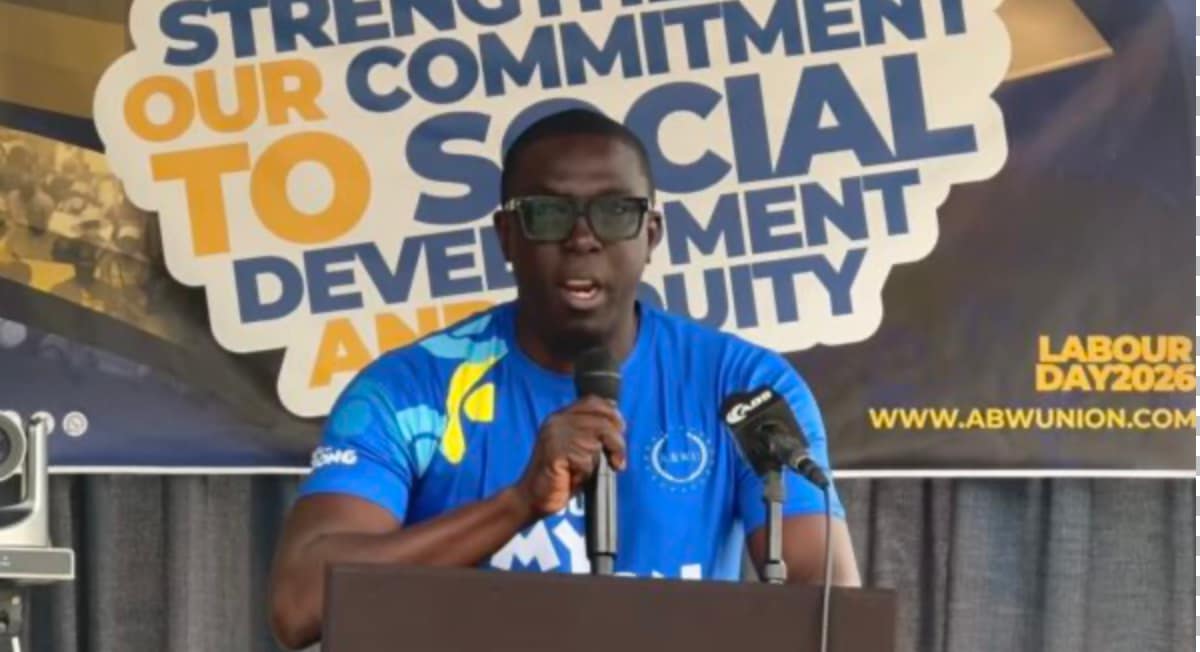
All Saints East & St. Luke MP Thanks Constituents After Election Victory
Fresh off the 2026 general election results, the incumbent Member of Parliament for All Saints East and St. Luke has moved quickly to extend heartfelt appreciation to the voters who delivered him another term in office. In a widely shared public statement following the announcement of poll outcomes, the legislator emphasized that his electoral success was not a personal victory, but a reflection of the deep-rooted trust, sustained backing and shared commitment that define his relationship with the constituency he represents.
Acknowledging the weight of the mandate handed to him by residents, the MP has pledged to raise the bar for his service moving forward. Contrary to speculation that post-election engagement would taper off, he made clear that his on-the-ground presence and regular outreach to constituents will only grow stronger in the coming term. Centering his policy priorities on accountable, responsive governance, the legislator reaffirmed his commitment to collaborative lawmaking, noting that every decision he advances will be shaped by direct input from the communities he serves.
Looking ahead, the MP outlined his core overarching goal: to work hand-in-hand with residents of All Saints East and St. Luke to drive inclusive, sustained growth across Antigua and Barbuda. Closing his message, he repeated his sincere gratitude to every constituent who cast a ballot, offered support, or placed their confidence in his leadership ahead of the 2026 poll.
-

ILO report links labour rights to journalist safety and press freedom
To commemorate World Press Freedom Day on May 3, the International Labour Organization (ILO) has published a groundbreaking report that centers a long-overlooked angle of journalist protection: the fundamental role of labor rights in safeguarding media workers around the globe. For decades, the global community has debated threats to press freedom through the lens of free expression, but the ILO’s new analysis argues that this framework is incomplete — journalists are first and foremost workers, and their ability to do their jobs safely depends entirely on whether they can access the core labor protections guaranteed to workers in every other sector. Alarmingly, the risks facing media personnel have grown steadily worse over the past three decades. Data from UNESCO’s Observatory of Killed Journalists confirms that more than 1,850 journalists have lost their lives while on the job since 1993. For the vast majority of these killings, no perpetrators have been held to account, leaving a pervasive culture of impunity that emboldens further attacks. Beyond lethal violence, hundreds more journalists today are arbitrarily detained, disappeared, or targeted with sustained threats. Legal harassment, physical violence, and widespread digital and gender-based abuse — which disproportionately harms women journalists — add layers of insecurity that force many to censor their work or leave the profession entirely. The ILO report makes a clear, evidence-backed case: the safety of journalists does not rely solely on protecting freedom of speech. It is inextricably linked to their ability to exercise core labor rights, from fair working conditions to collective bargaining. The analysis explores how the ILO’s own fundamental principles of work rights, paired with established international labor standards, can be leveraged to strengthen existing safety frameworks. It also offers actionable guidance for governments, media outlet employers, labor unions, and journalist associations to build tailored, sustainable protection strategies that address the unique risks the sector faces. “Journalists are key defenders of human and labor rights across the world,” noted Frank Hagemann, Director of Sectoral Policies at the ILO, in comments accompanying the report’s release. “But they are also workers themselves, and the framework of labor rights provides an underutilized, powerful tool to protect them while they carry out their critical work.” The ILO has long been engaged in global efforts to protect press freedom, and it is a core partner in the United Nations Plan of Action on the Safety of Journalists and the Issue of Impunity. That plan, first adopted by the United Nations System Chief Executives Board for Coordination back in 2012, established a coordinated cross-UN approach to tackling rising violence against media workers and ending the cycle of impunity for attacks on journalists. This new report builds on that decade-long initiative, bringing a fresh labor-focused perspective to a growing global crisis that shows little sign of abating.
-

Barbuda Caribana 2026 Set for May 21-25
One of Antigua and Barbuda’s most anticipated cultural celebrations, Barbuda Caribana, is officially making its comeback in 2026, with a full five-day schedule of immersive cultural experiences set to run from May 21 to 25 across the scenic sister island of Barbuda.
The festivities will kick off on the afternoon of Thursday, May 21, starting with a vibrant opening parade stepping off at 2 p.m. Shortly after the parade wraps up, the event shifts focus to younger attendees with Kids Fest kicking off at 3 p.m., giving local and visiting children a chance to join in the celebratory fun. The first day’s headline event will be the Junior Calypso Monarch competition, which is scheduled to begin at 8 p.m., showcasing the island’s emerging young calypso talent.
Activities pick up again on Friday, May 22, with the casual community gathering Wheels United – Park & Lime opening at 11 a.m., offering attendees a laid-back space to socialize ahead of the evening’s main event. That night, the highly competitive Calypso/Soca Monarch competition will get underway at 8:30 p.m., drawing top performers from across the region to compete for the coveted title.
Saturday, May 23, brings a diverse lineup of activities for foodies, outdoor enthusiasts, and party-goers alike. From 10 a.m. to 5 p.m., two popular events will run in tandem: the Spritz & Sun Seafood Fest, which highlights the island’s world-class fresh coastal cuisine, and the annual Johnny DeSouza Fishing Tournament, a longstanding fan favorite that attracts anglers of all skill levels. When the sun goes down, the high-energy Caribana Colors Fete takes over, running from 10 p.m. through 4 a.m. the next morning.
Horse racing enthusiasts will get their turn on Sunday, May 24, when the Caribana Classic Horse Racing event starts at 1 p.m., bringing together local jockeys, owners, and crowds of spectators for a day of thrilling competition.
The 2026 celebration will wrap up on Monday, May 25, with the iconic early-morning J’Ouvert celebration, a beloved Caribbean festival tradition that runs from 4 a.m. to 10 a.m. The final closing event of the festival will be the Last Lap festivities, scheduled to take place from 6 p.m. to 10 p.m., giving attendees one last chance to celebrate before the festival draws to a close.
As one of the largest and most prominent cultural festivals on the island, the 2026 Caribana is projected to draw a diverse crowd of attendees, including local residents, international tourists, and Barbudan nationals returning home to take part in the multi-day celebration of Caribbean heritage.
-
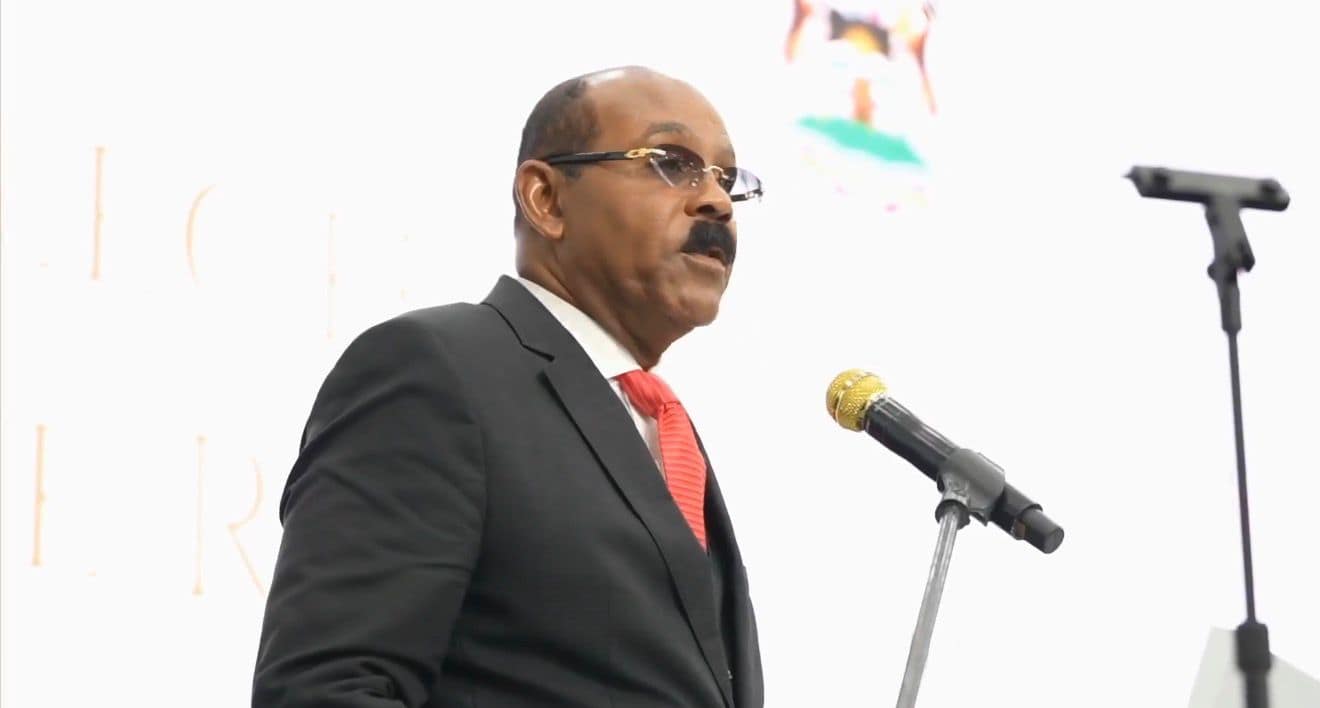
Browne Says Antigua and Barbuda Can Become ‘Lifestyle Superpower’
Fresh off a historic landslide win in the April 30 general election, Prime Minister Gaston Browne has laid out an ambitious new national vision for Antigua and Barbuda, positioning the country to evolve from a growing economy to what he calls a global “lifestyle superpower” that delivers widespread, tangible benefits to all citizens.
Browne laid out this policy framework during his official swearing-in ceremony on Tuesday, where he emphasized that the new administration’s development strategy rejects the narrow focus on gross economic expansion that has guided many small island nations. Instead, his government will center national progress on simultaneous growth of the national economy and improvement of everyday quality of life for Antigua and Barbuda’s residents.
“We have to continue the transformational build of this country,” Browne told attendees gathered for the inauguration. He went on to explain that the administration’s holistic vision encompasses far more than GDP gains, covering eight core pillars of development: modern infrastructure, investment in people, enhanced national competitiveness, renewed national pride, environmental stewardship, and comprehensive public safety and security.
Browne argued that Antigua and Barbuda has already built a strong foundation of steady economic progress and political stability, and now it is time to leverage those advantages to build a nation that appeals equally to international visitors and domestic residents. “We have to position Antigua and Barbuda as a lifestyle superpower,” he declared to the audience.
The Prime Minister tied this bold ambition to a series of ongoing and planned public investments across key sectors, including transportation and utility infrastructure, affordable housing, public education, and core public services. Alongside these infrastructure and social spending commitments, he stressed that national pride and inclusive social development are just as critical to achieving the “lifestyle superpower” goal.
His administration’s core mission, he said, is to continue building a cohesive society that guarantees widespread access to opportunity, personal security, and a steadily improving quality of life for all citizens. “We must work boldly,” Browne stated, urging both public officials and private citizens to join in sustained efforts to boost the country’s global competitiveness and long-term resilience to economic and climate challenges.
Browne also placed a particular focus on youth investment, noting that empowering young Antiguans and Barbudans is critical to creating the stable, enabling conditions needed for long-term economic and social advancement. He reiterated that for his administration, economic expansion is not an end in itself: the ultimate goal is to ensure that every community across both islands sees tangible, measurable improvements from national development.
Browne’s Antigua and Barbuda Labour Party secured a dominating mandate in last week’s general election, winning 15 out of the 17 available parliamentary seats, clearing the way for the administration to advance its full policy agenda over the coming term.
-
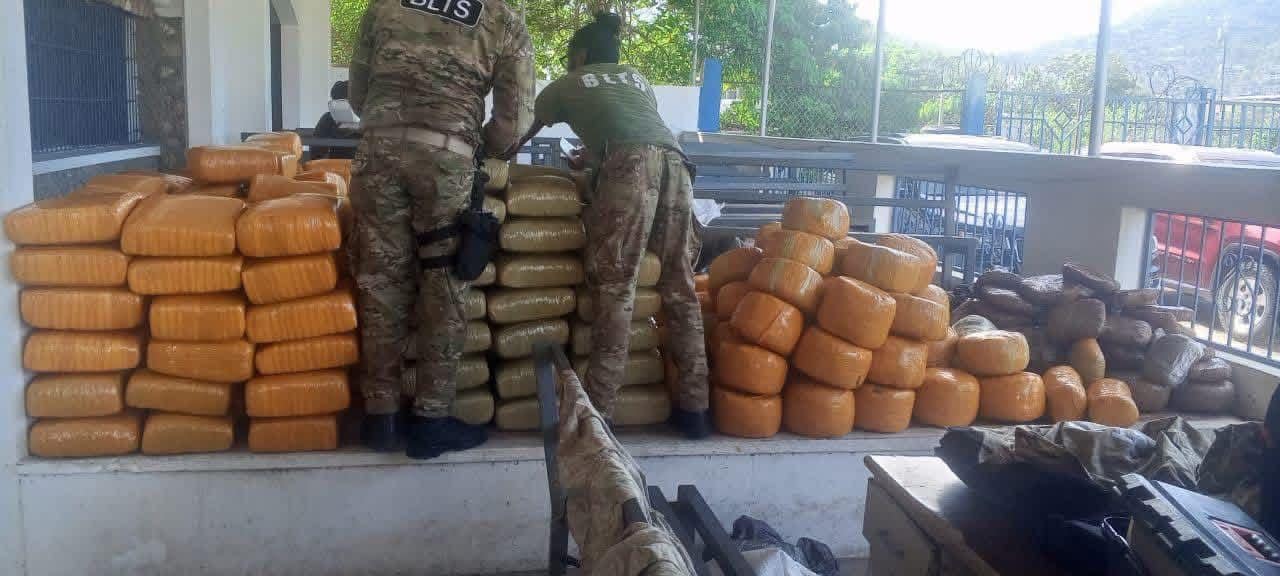
U.S. Coast Guard Intercepts Drug Vessel Near Haiti, Seizes $3.8M in Marijuana
A coordinated anti-narcotics operation carried out by a U.S. Coast Guard law enforcement detachment deployed on a U.S. Navy vessel has successfully intercepted a vessel suspected of smuggling illegal drugs in waters off Haiti’s northern coast. The operation resulted in the seizure of approximately 3,200 pounds of marijuana, with an estimated street value of $3.8 million, U.S. officials confirmed.
Based on an official statement released by U.S. Coast Guard Southeast, the interception occurred Thursday approximately eight nautical miles off the coast of Mole Saint-Nicolas, a coastal town in Haiti’s northwestern department. During the boarding and inspection of the suspect vessel, the enforcement team took one individual into custody. Three days after the interception, on Sunday, both the seized contraband and the detained suspect were handed over to Haitian law enforcement officials for further processing and prosecution.
Lt. Cmdr. Cory Arsenault, the U.S. Coast Guard’s liaison officer to Haiti, emphasized the ongoing commitment of U.S. forces to collaborative regional security. “In close coordination with the Haitian government, the U.S. Coast Guard remains steadfast in our shared mission to safeguard the maritime approaches of the Caribbean,” Arsenault said. “Together, we are strengthening joint operations to disrupt the illegal flow of narcotics, protect vulnerable communities, and uphold the security and stability of the region.”
The successful interdiction was not a solo effort: it drew on coordination and intelligence support from a network of multiple U.S. and regional security agencies, including Joint Interagency Task Force South, the multi-national body tasked with countering illicit trafficking in the Caribbean and Eastern Pacific, and U.S. Southern Command, which oversees U.S. military operations in the region. Transnational drug trafficking has long been a persistent security challenge for Caribbean nations, with unpatrolled maritime routes often used by smuggling networks to move contraband between North, Central, and South America, fueling domestic instability and organized crime in the process.
-
The boxer on the ropes – an analysis of the Antigua and Barbuda 2026 General Elections | Part II
When the final votes were tallied in Antigua and Barbuda’s 2026 general election, the Antigua and Barbuda Labour Party (ABLP) secured a historic fourth term in office. But to understand the true weight of this victory, one must look beyond raw seat counts and vote totals to the deeper shifts in party identity, national vision, and democratic practice that it reveals. This election win is more than a political triumph—it is a case study in intentional institutional renewal, reconnection to core roots, and the resilience of democratic governance in an era of global democratic backsliding.
One of the most striking markers of ABLP’s success is its deliberate commitment to generational rebuilding rather than superficial cosmetic change. Ahead of the poll, the party fielded 10 new candidates, a large share of whom are under 40 years old, bringing fresh perspective and energy to the political landscape. This blend of seasoned veteran leadership and emerging young talent sends a clear message: the ABLP is no static relic of the nation’s independence era, but a dynamic, evolving institution adapting to the demands of a new age.
The party has redefined leadership as a relay race rather than a permanent throne—prioritizing the smooth passing of the baton to the next generation over clinging to power. This marks a tangible shift away from the individualistic politics and personality cults that have eroded democratic institutions in many parts of the world, refocusing instead on collective responsibility and long-term institutional continuity. It is a reminder that robust democracies are built on robust, self-renewing parties that survive not by centering individual personas, but by refreshing their values, updating their leadership, and staying rooted to the communities they exist to serve.
Beyond internal renewal, the 2026 election also revealed a stark shift in national vision between Antigua and Barbuda’s two major parties. Where the ABLP’s historic opposition, the United Progressive Party (UPP), once built its brand on a “broad tent” philosophy of inclusive politics, the party has gradually drifted from that founding ethos in recent years: its outreach has shrunk, its policy focus has narrowed, and its appeal has become far more limited. The ABLP, by contrast, has returned to its foundational roots as a working-class movement, expanding the modern “House of Labour” to reflect the diverse reality of work in the 21st century.
Today’s working class encompasses far more than the traditional labor movements of the past: the ABLP recognizes that teachers, hotel workers, young coders, fishermen, nurses, technicians, and small business owners are all workers contributing to Antigua and Barbuda’s national progress. The party’s flagship policy push for a living wage is not just a campaign slogan—it is a reflection of its core belief that democracy must deliver more than just the right to vote; it must deliver tangible, improved quality of life for all citizens.
Any analysis of ABLP’s present must acknowledge the weight of its storied past. The legacy of Sir Vere Cornwall Bird, the father of Antigua and Barbuda’s independence, remains a cornerstone of the nation’s identity. Bird’s lifelong sacrifice, unwavering commitment to working people, and steady leadership through the transition from colonial rule to self-governance are etched permanently into the country’s history. But national progress does not end with political independence: today’s unfinished work lies in securing economic independence—narrowing systemic inequality, expanding access to opportunity, and ensuring that free education, quality healthcare, and dignified employment are universal guarantees, not privileges reserved for a select few.
That legacy of working-class empathy lives on in the leadership of current Prime Minister Gaston Browne, who carries forward Bird’s vision into the complex landscape of 21st-century global competition and technological change. Like U.S. President Franklin D. Roosevelt’s iconic fireside chats, Browne prioritizes open, direct communication with the public, explaining policy and direction in plain, honest language. His regular “Browne and Browne” public affairs program, a frequent, unscripted space for national conversation, represents a modern iteration of this accessible leadership tradition, embodying the democratic principle that leadership requires visible, accountable connection, not distant authority.
This election was not only a test for the ABLP—it was a test for Antigua and Barbuda’s democracy as a whole, and the nation passed with flying colors. At a time when democratic norms are under growing strain across the globe, Antigua and Barbuda delivered a calm, peaceful, transparent election that fully honored the will of the people. Voters turned out in force, cast their ballots freely, and accepted the outcome unified, reaffirming the core democratic truth that sovereign power belongs to the people.
Citizens evaluated the competing visions on offer, and chose the path they believed best aligned with their hopes, needs, and national ambitions. They made clear that while they do not expect perfection—no government is without flaw—they approve of the country’s current direction, the leadership’s willingness to adapt and adjust, and its commitment to inclusive national development.
To frame this moment in sporting terms: the ABLP once found itself backed against the ropes, weathering heavy criticism and electoral setbacks. Instead of collapsing, it absorbed the blows, learned from its mistakes, and rebuilt itself from the inside out: it restructured internal party institutions, elevated new generational talent, returned to its working-class roots, and put forward an inclusive national vision big enough to unify all corners of the country. What we see today is a party that has stepped off the ropes and back to the center of the ring, ready for a new term of leadership.
Now the question turns to what the ABLP will do with this historic mandate. The party won the right to lead for a fourth term, and it must approach this responsibility with humility, responsiveness, and courage. The core questions that will define this term are straightforward: Will the ABLP deepen democratic participation? Will it expand economic opportunity for all? Will it transform national institutions to ensure that future generations never have to choose between dignity and economic survival?
Early signs point to a positive path forward—if the party retains the lessons that brought it to this moment: why it was once written off by political observers, and why the people of Antigua and Barbuda chose to give it a renewed mandate. If this lesson is fully embraced, the 2026 election will stand as a defining turning point for the nation: a moment when a party, a people, and a democracy chose transformation over complacency, and forward-looking leadership over stagnation.
As former U.S. President John F. Kennedy famously noted, the future is not inherited—it is built, and the challenges we face as people can be solved by people. The charge ahead for the ABLP and the people of Antigua and Barbuda is clear: now that the party has returned to the center of the political ring, it must use this mandate not just to hold power, but to continue the collective work of building a more just, more inclusive, and more prosperous nation. As iconic Antiguan calypso artist Short Shirt long urged, nation-building requires collective effort: “put your shoulder to the wheel,” he urged, and remember that work, not empty talk, is what builds a strong nation—progress demands relentless, shared toil.
-

Congratulatory Message from CARICOM Chair to the Prime Minister of Antigua and Barbuda
Following the conclusion of Antigua and Barbuda’s general elections on April 30, the Chairman of the Caribbean Community (CARICOM) has issued a formal message of warm congratulations to Prime Minister Gaston Browne, who secured a historic fourth consecutive term in national office.
Browne’s landslide win at the polls is widely interpreted as a clear demonstration that the electorate of Antigua and Barbuda retains unwavering confidence in his leadership style and long-term development blueprint for the twin-island nation. The outcome of the election has not only cemented Browne’s political legacy but also reaffirmed the public’s commitment to the regional democratic norms that the Caribbean has long prioritized.
In the congratulatory statement, the CARICOM Chairman also extended praise to the people of Antigua and Barbuda for upholding the region’s longstanding, proud tradition of conducting free, fair, and peaceful democratic elections. This peaceful transition of power through the ballot box stands as a testament to the maturity of the country’s democratic institutions, the statement added.
Looking ahead, the Chairman expressed sincere well wishes for a productive and impactful new term, highlighting hopes that Browne’s leadership will drive continued social and economic progress across Antigua and Barbuda. The statement also underscored CARICOM’s eagerness to maintain close collaborative work with Browne’s administration, as both sides work together to tackle the wide range of cross-border challenges that impact the entire Caribbean region.