标签: Antigua and Barbuda

安提瓜和巴布达

  • Antigua Yacht Club Sailors Depart for BVI Dinghy Championship

    Antigua Yacht Club Sailors Depart for BVI Dinghy Championship

    Two promising young Optimist-class sailors from Antigua Yacht Club (AYC) — Lluc Agusti and Ruben Van Hest — are set to depart their home base on Wednesday for the British Virgin Islands, where they will compete in the 2026 BVI Dinghy Championship. Hosted by the Royal BVI Yacht Club, the event will run across May 16 and 17 on the waters off Tortola.

    The high-profile regional regatta draws the most talented youth sailing prospects from every corner of the Caribbean, giving up-and-coming competitors a chance to test their skills against peers with similar competitive ambitions. Agusti and Van Hest do not travel to the championship alone: they are accompanied by Karl James MBE, AYC’s head coach and a two-time Olympian who brings decades of elite racing and coaching experience to the team.

    In the weeks leading up to the event, the pair completed an intensive period of tactical preparation on the water in Falmouth Harbour, tailoring their training to the specific conditions they expect to face at the championship. Under James’s guidance, the sailors have focused heavily on mastering boat handling and decision-making in the strong currents and variable, shifting winds that are characteristic of the Sir Francis Drake Channel, the venue where the regatta will be held.

    For the young Antiguan competitors, this championship is far more than just another race on the calendar. It acts as a key benchmark of performance ahead of the full summer regatta circuit, allowing the sailors to gauge their current progress, identify areas for improvement, and build race experience ahead of higher-stakes events later in the season.

  • Senator Says Spanish Initiative Will Help Antigua and Barbuda Compete Globally

    Senator Says Spanish Initiative Will Help Antigua and Barbuda Compete Globally

    A senior lawmaker from the Antigua and Barbuda Labour Party (ABLP) has publicly backed the administration’s controversial plan to position Spanish as the nation’s official second language, framing the policy shift as a critical strategic step to boost cross-border commerce, deepen Caribbean-Latin American integration, and insulate the small island nation against global economic volatility.

    In a public statement outlining her support for the proposal, Senator Abena St. Luce pushed back against unspoken critics of the plan, emphasizing that developing proficiency in a second language delivers broad national benefits rather than posing a risk to local culture or identity. “Being bilingual is an advantage, not a threat,” she emphasized in her written remarks.

    St. Luce grounded her argument in recent trade uncertainty that rattled the Caribbean region earlier this year, when the Trump administration’s tariff proposals put existing trade relationships with North America at risk. She reminded stakeholders of the widespread regional consensus that emerged in response to that threat: to diversify trade partnerships by expanding economic ties with Latin American economies as a buffer against inflation and sudden market shifts.

    As global trade routes and commercial alliances continue to evolve away from historic patterns, St. Luce argued that Antigua and Barbuda cannot afford to miss the opportunity to build new capacity to connect with fast-growing neighboring markets. “The country must improve its ability to communicate, compete, and collaborate beyond traditional borders,” she said, adding that tangible progress in strengthening regional connections starts with cultural and linguistic engagement. “Strengthening ties with Latin America starts with understanding and yes, embracing its language,” St. Luce added.

    The senator’s intervention comes just weeks after the Antigua and Barbuda Cabinet formally approved the plan to codify Spanish as the nation’s second official language. As part of the policy rollout, the cabinet has issued a directive to the Ministry of Education, Science and Technology to overhaul the national K-12 education curriculum, expanding Spanish language education starting as early as preschool and extending through primary and secondary school to build a new generation of bilingual workers and leaders.

  • Politician and Community Activist Emanuel Peters Honors More Than 175 Teachers on Appreciation Day

    Politician and Community Activist Emanuel Peters Honors More Than 175 Teachers on Appreciation Day

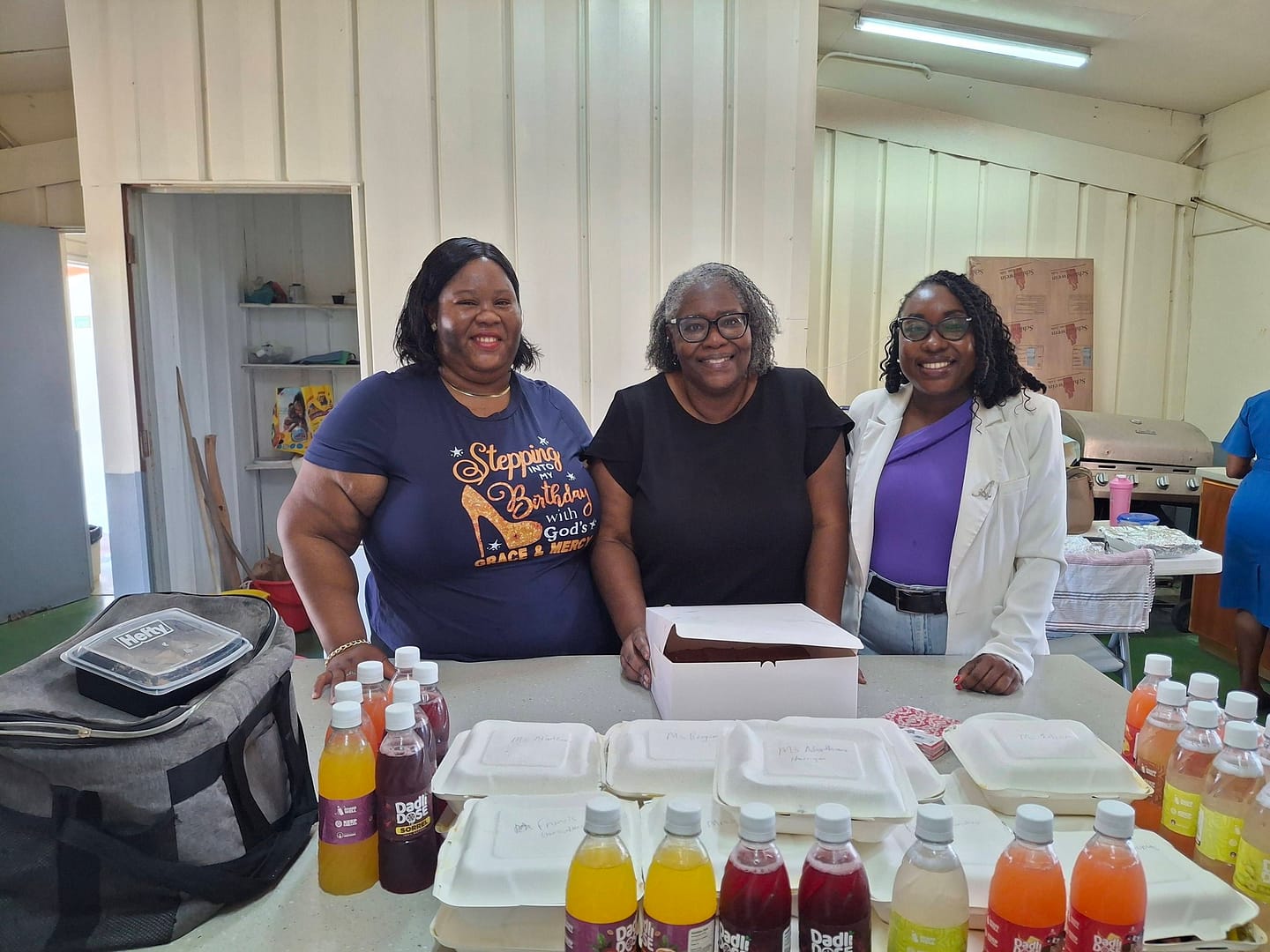
    On Teachers’ Appreciation Day in Antigua and Barbuda, local politician and long-time community advocate Emanuel Peters turned a national moment of recognition into a tangible gesture of gratitude, personally serving warm meals to more than 175 educators and school staff across three campuses in the St. John’s Rural East region.

    Peters’ outreach brought him first to Ottos Comprehensive Secondary School, where he joined forces with the school’s principal and a group of graduates, including local cultural figure Queen Singing Althea, to cater to more than 90 teaching and non-teaching staff at the institution. Following his stop at the secondary school, he traveled to two area elementary campuses: Golden Grove Primary School, where he recognized more than 40 educators, and Mary E. Pigott Primary School, rounding out his day of service across the district.

    In remarks shared after the event, Peters emphasized the irreplaceable role that educators play in communities across the country. “Teachers dedicate their lives to shaping minds, building confidence, and inspiring the next generation,” he noted. “Teachers deserve to feel special, valued, and appreciated every single day.” Reflecting on the opportunity to engage directly with staff across all three schools, he called the experience “an absolute honor and pleasure.”

    Peters went on to reaffirm his commitment to centering educator appreciation in his community work, even amid constrained local resources. “Today we celebrate the incredible educators who pour their hearts into shaping futures, inspiring greatness, and making a lasting impact every single day,” he said.

    The initiative led by Peters was one of dozens of recognition events held across Antigua and Barbuda this Teachers’ Appreciation Day, all organized to honor the relentless service and quiet dedication that teaching professionals bring to their work year-round.

  • At least eight dead, 25 injured in train collision that sparked bus fire in Thailand

    At least eight dead, 25 injured in train collision that sparked bus fire in Thailand

    A devastating multi-vehicle collision involving a passenger train triggered an intense fire that tore through a public passenger bus in central Bangkok on Saturday, killing at least eight people and leaving 25 others wounded, according to senior Thai rescue and law enforcement officials.

    The crash did not only involve the train and the bus, but also damaged multiple private cars and motorcycles that were in the immediate area at the time of the impact, authorities confirmed in on-site statements to reporters. First responders including municipal firefighters and specialized urban rescue teams were immediately dispatched to the busy crash site shortly after emergency calls flooded local dispatch centers around the time of the incident.

    In a high-stakes race against the spreading blaze, rescue workers mounted urgent operations to extract trapped and injured survivors from twisted wreckage of the collided vehicles, while firefighters battled the growing inferno with high-pressure water hoses to stop the fire from spreading to adjacent structures. The intense flames quickly consumed the entire public bus, and also spread to nearby parked and damaged vehicles, according to visual evidence from the scene.

    As of Saturday evening, emergency command confirmed that the fire has been fully contained. Crews have remained on site to cool overheated wreckage, vent accumulated flammable gas from the crash area, and conduct a systematic search for any additional unaccounted-for victims. The circumstances and root cause of the accident remain under active investigation by Thai transportation safety and law enforcement authorities, with no preliminary findings released to the public as of the latest update.

    This is an ongoing developing story, and further details will be released as official investigations progress and new information becomes available.

  • Magnitude 3.6 Earthquake Recorded Northeast of Antigua

    Magnitude 3.6 Earthquake Recorded Northeast of Antigua

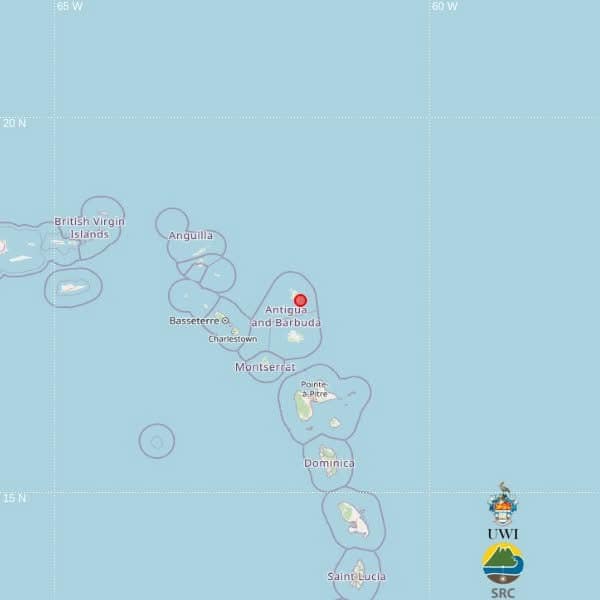
    A light 3.6-magnitude earthquake has been confirmed in waters northeast of Antigua by the University of the West Indies Seismic Research Centre (UWI SRC), the region’s leading authority on seismic activity, in a statement released over the weekend.

    According to the UWI SRC’s initial monitoring data, the tremor struck at roughly 9:10 p.m. local time on Friday, registering a depth of 14 kilometres beneath the ocean surface. Preliminary geolocation calculations place the epicenter at coordinates 17.57 degrees north latitude and 61.73 degrees west longitude.

    This positioning puts the earthquake approximately 52 kilometres north-northeast of St. John’s, the capital city of Antigua and Barbuda. Beyond Antigua’s territorial waters, the epicenter also sits 101 kilometres northeast of Brades, the administrative center of Montserrat, and 115 kilometres east-northeast of Basseterre, the capital of St. Kitts and Nevis.

    The UWI SRC emphasized that the current epicenter location was generated automatically by pre-programmed computer processing algorithms. Before final data is published, the location and other key parameters of the earthquake will undergo manual review and potential adjustment by the center’s team of expert seismologists as part of standard quality control processes.

  • ECCB Holds Regional Attorneys General and Financial Secretaries Meeting in Antigua and Barbuda

    ECCB Holds Regional Attorneys General and Financial Secretaries Meeting in Antigua and Barbuda

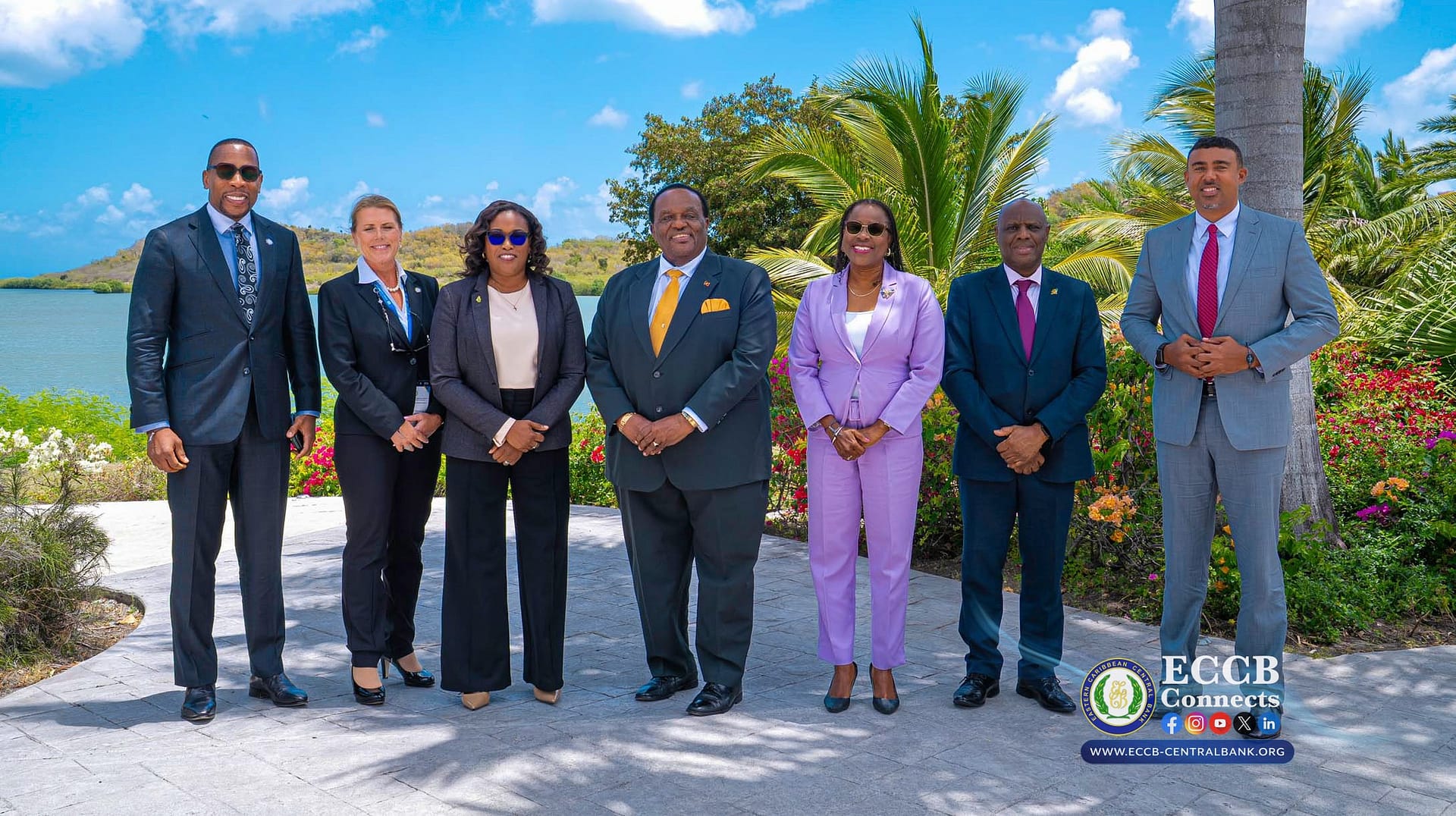
    Top legal and finance leaders from all member states of the Eastern Caribbean Currency Union (ECCU) have converged on Antigua and Barbuda this week for the eighth annual joint gathering of Attorneys General, Chief Parliamentary Counsel, and Financial Secretaries.

    Hosted by the Eastern Caribbean Central Bank (ECCB), the two-day policy conference ran from May 14 to 15, centered on advancing coordinated legislative and financial industry reforms across the entire Eastern Caribbean region. Throughout the meeting, delegates delved into a wide range of priority policy initiatives designed to reinforce financial governance and oversight across the currency union. These included draft updates to regional insurance and pension regulations, new licensing frameworks for digital and traditional payment systems, updated data protection governance standards, and enhanced cross-border crisis management protocols to mitigate systemic financial risk.

    In addition to general regional policy discussions, the meeting featured dedicated presentations on country-specific and institution-focused modernization projects. Attendees were briefed on Grenada’s upcoming Cooperative Societies Bill, which aims to update regulation of the island’s cooperative sector, as well as Saint Vincent and the Grenadines’ progress rolling out its new Single Window for Land and Property Transactions, a digital initiative designed to cut red tape and speed up real estate processing across the country. Delegates also reviewed proposed legislative changes to update the Eastern Caribbean Home Mortgage Bank (ECHMB), centered on a new draft agreement that would formalize changes to ECHMB’s capital structure to support its modernization and expansion.

    Per statements from the ECCB, this week’s gathering is a core component of the central bank’s long-term strategic agenda laid out in its 2026-2031 Strategic Plan, which identifies strengthening regional regulatory and supervisory systems as a key priority to support sustained financial stability and economic growth across the ECCU. The annual cross-sector meeting has long been one of the ECCB’s flagship collaborative events, creating a structured space for regional legal leaders and financial regulators to align on shared legislative priorities that shape the future of the Eastern Caribbean’s financial sector.

  • Diabetes Association Plans 40th Anniversary Hike to Body Pond

    Diabetes Association Plans 40th Anniversary Hike to Body Pond

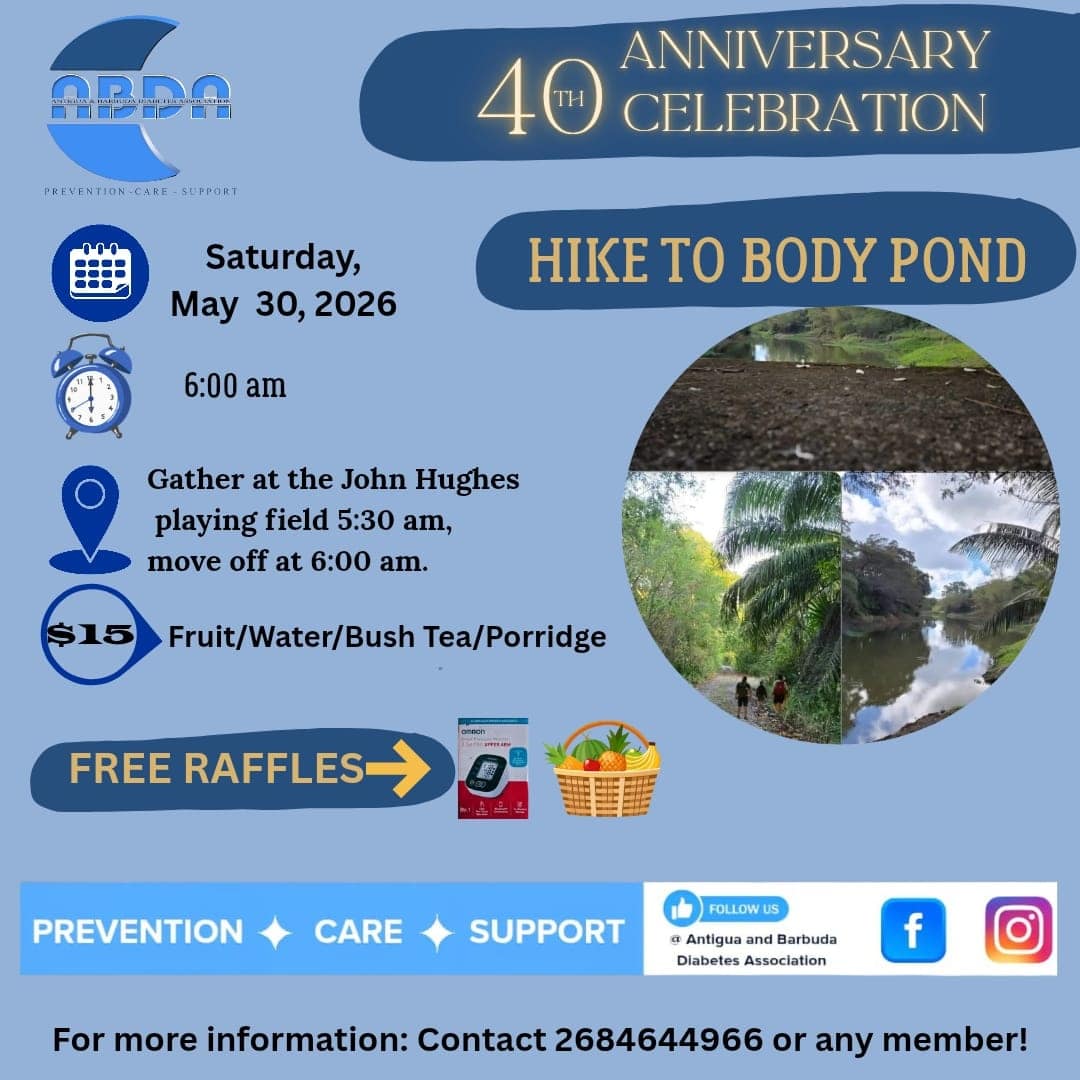
    As the Antigua and Barbuda Diabetes Association prepares to mark four decades of critical work in the community, organizers have unveiled a unique public engagement initiative: a scenic group hike to Body Pond, one of the destination’s beloved natural spots. This outdoor adventure forms a core part of the association’s year-long 40th anniversary calendar, which features 40 distinct events centered on the organization’s long-standing mission of diabetes prevention, clinical care, and community support for people living with the condition.

    The scheduled hike will kick off on Saturday, May 30, 2026, with a clear timeline for participants. All attendees are asked to assemble at the John Hughes Playing Field by 5:30 a.m., and the group will depart for the trail promptly at 6:00 a.m. To ensure hikers stay energized and comfortable throughout the journey, event planners have arranged complimentary refreshments including fresh fruit, bottled water, locally prepared bush tea, and hearty porridge. Beyond the physical activity and natural scenery, attendees will also have the chance to take part in free raffle draws held during the event, adding an extra element of community fun to the anniversary celebration.

    Founded four decades ago, the Antigua and Barbuda Diabetes Association has built its reputation on expanding access to diabetes education, supporting affected families, and advancing public health initiatives to reduce the condition’s prevalence across the twin-island nation. This anniversary event is designed not only to celebrate the organization’s decades of service but also to encourage public engagement with diabetes awareness, promoting physical activity — a key component of diabetes prevention and management — as an accessible, enjoyable community activity.

  • Cedar Grove Primary Teachers Honoured for Their Dedication and Service

    Cedar Grove Primary Teachers Honoured for Their Dedication and Service

    In a heartfelt ceremony held earlier this week at Cedar Grove Primary School, a cohort of dedicated teaching staff was celebrated for their unwavering commitment to student success and years of exceptional service to the local education community. School administrators, parent representatives, and local education officials gathered to honor the educators, highlighting the profound impact each has made on the lives of hundreds of young learners over their tenures at the campus.

    Many of the honored teachers have served the school for more than two decades, guiding generations of students through foundational learning milestones, from early literacy and numeracy to social-emotional development. During the event, several current and former students shared personal anecdotes of how these teachers went above and beyond their formal job duties, offering extra support after school, mentoring struggling learners, and fostering inclusive classroom environments where every child feels seen and valued.

    Local school board chair Margaret Hale presented the educators with custom service awards and praised their work as the backbone of the community’s public education system. “Great primary school teachers don’t just teach lessons from a textbook—they shape the trajectory of young lives,” Hale said in her remarks. “Their dedication shows up every single day, in small acts of patience and big investments in student potential, and it is past time we give them the public recognition they deserve.”

    Parent-teacher association president James Torres noted that the commitment of these educators has helped build Cedar Grove Primary’s reputation as a welcoming, high-performing campus that serves as a cornerstone of the neighborhood. “When families move to this area, one of the first things they hear about is how caring and dedicated the teaching staff is here,” Torres said. “That reputation is built entirely by the work of these men and women who have given so many years to our kids.”

    Following the award presentation, the honored teachers thanked the school community for the recognition, emphasizing that their work is a collaborative effort that relies on support from families, administrators, and fellow staff members. Many reflected on how seeing their former students go on to achieve their own goals is the most rewarding part of their career in education.

  • Health Authorities says we are consuming way too much salt

    Health Authorities says we are consuming way too much salt

    As rates of hypertension and cardiovascular disease continue climbing across Caribbean nations, the Caribbean Public Health Agency (CARPHA) is sounding the alarm on excessive salt consumption, urging coordinated action from governments, food industry stakeholders, and individual consumers to reverse a growing public health crisis. Current data shows that between 21% and 27% of all Caribbean adults live with hypertension, and regional populations consume nearly twice the maximum daily salt intake recommended by the World Health Organization (WHO). This public health threat is not unique to the Caribbean: globally, high sodium intake is linked to roughly 1.89 million premature deaths every year, and the worldwide average adult salt intake sits at 10.78 grams per day—more than double the 5 gram (under 1 teaspoon) daily limit updated by the WHO in 2025. Alarmingly, only a handful of countries worldwide have rolled out comprehensive national salt reduction strategies to address the crisis.

    CARPHA has long prioritized sodium reduction as a core component of its regional non-communicable disease (NCD) prevention efforts, working in close partnership with regional Ministries of Health, the Pan American Health Organization (PAHO), and other local public health stakeholders to drive evidence-based change. The agency provides targeted technical guidance on food labeling systems, designs and executes public education campaigns, tracks NCD risk factors through ongoing surveillance, and leads advocacy and research to support scalable, effective interventions.

    In line with these ongoing efforts, CARPHA will join the global observance of World Salt Awareness Week 2026, held from May 11 to 17 under the global theme “Salt It Out”. This international campaign aims to amplify public understanding of the life-threatening harms of excess sodium intake, and push for stronger policies and public health interventions that reduce the population-level burden of cardiovascular diseases including hypertension, heart attack, and stroke. A 2025 PAHO report underscores the severity of this burden: cardiovascular diseases alone account for 30.8% of all NCD-related deaths in the region.

    In a statement on the urgent need for sodium reduction action, CARPHA Executive Director Dr. Lisa Indar emphasized that excess salt consumption is a “silent but significant contributor” to the region’s rising rates of hypertension, heart disease, and stroke. Dr. Indar noted that a common misconception among the public leads many to underestimate their sodium intake: most salt consumed in daily diets does not come from salt added during cooking or at the table, but from processed and ultra-processed food products that dominate modern grocery shelves. “Through stronger policies, food reformulation, better labelling, and public education, we can reduce sodium intake and save lives,” Dr. Indar said. “World Salt Awareness Week reminds us that reducing salt is one of the simplest and most cost-effective actions we can take to improve public health and protect future generations.”

    CARPHA has already laid the regulatory and programmatic groundwork for regional salt reduction through two key frameworks. First, the agency introduced the Six-Point Policy Package (6-PPP), a regional blueprint for building healthier food environments and improving food security to address childhood obesity and the growing NCD crisis. One of the package’s core recommendations calls for establishing unified regional standards and time-bound salt reduction targets for high-risk food product categories. Building on this foundation, CARPHA launched the CESA Regional Sodium Reduction Framework in 2020 to guide national governments in developing their own localized sodium reduction strategies. The framework is organized around four core pillars captured in the acronym CESA: Change the food environment through targeted policies and legislation; Educate the general population on the risks of excess sodium; Strengthen systems capacity through ongoing research, monitoring, and evaluation; and Assess national progress toward intake reduction targets.

    Updating the framework to align with 2025 WHO benchmarks, CARPHA has outlined a suite of priority measures for regional adoption. These include integrating nutrition education into school curricula, enforcing restrictions on advertising high-sodium foods to children, and launching widespread public media campaigns to raise awareness. The agency also identifies mandatory front-of-package nutrition labeling, updated nutrition facts panels, enforced regional nutrition standards, and widespread product reformulation by food manufacturers as critical, non-negotiable actions to cut population sodium intake across the Caribbean.

    The CESA framework sets an ambitious long-term goal: a healthier Caribbean where average adult salt intake falls below the WHO global target of under 5 grams (one teaspoon) per day, with even lower intake targets for children. To support early adoption of low-sodium eating habits, CARPHA has also developed supplementary public-facing resources, including *Kids Can Cook Too*, a recipe book featuring nutritious, kid-friendly meals with little to no added salt, fat, or sugar. More information on the Regional Sodium Reduction Framework is available on CARPHA’s official website: https://carpha.org/What-We-Do/NCD/Nutrition/Knowledge-Banks/CESA/Regional-Sodium-Reduction-Framework

  • UWI Pays Tribute to Business Leader Dennis Lalor Following His Passing

    UWI Pays Tribute to Business Leader Dennis Lalor Following His Passing

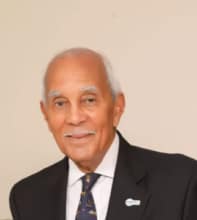
    KINGSTON, Jamaica – May 15, 2026 – The University of the West Indies (UWI) has announced the passing of the Honorable Dennis Hugh Lalor O.J., LLD, a towering figure in Jamaican public and private life who died on May 14, 2026. In an official statement released from UWI’s Regional Headquarters, Vice-Chancellor Professor Sir Hilary Beckles led the university community in extending heartfelt condolences to Lalor’s family, friends, colleagues, and all those impacted by his decades of service.

    Described by the UWI community as a gentle giant of Caribbean public life, Lalor combined incisive intellectual skill, sharp wit, and a magnetic personality that made him a respected leader in boardrooms across Jamaica and the entire Caribbean region. Throughout his entire professional career, he stood as a benchmark for ethical leadership and civic duty, maintaining an unwavering commitment to advancing growth and opportunity for Jamaica and its people.

    While Lalor built a distinguished career in the private sector, his contributions to public institutions extended deeply into the academic sphere, particularly at the UWI. He served on multiple key management and governance committees for the university, leaving a lasting institutional legacy through his work following 1988’s Hurricane Gilbert. Partnering with then-Vice-Chancellor Sir Alister McIntyre, Lalor leveraged private sector support to conceptualize, found, and grow the UWI Development and Endowment Fund at the Mona Campus. The innovative public-private partnership model he helped create has since been expanded to all of UWI’s campuses across the Caribbean, setting a standard for collaborative institutional development that endures today.

    Lalor’s long-held belief in the interconnected fates of the university and the region was captured in remarks he delivered when UWI awarded him an Honorary Doctor of Laws degree in 1993: “If the University fails the region fails. If the region succeeds, it is because the University has succeeded.”

    The UWI community expressed deep gratitude for Lalor’s lifelong commitment to the institution’s mission, noting that his life was defined by purpose, dignity, and service to the public good. “We share in their grief and celebrate a life that was lived with purpose, dignity, and service,” the statement reads. “May his soul rest in peace.”

    Founded in 1948 as a small affiliated university college of the University of London with just 33 medical students based in Jamaica, the UWI has grown over 75 years into a leading global higher education institution serving nearly 50,000 students across five campuses: Mona in Jamaica, St. Augustine in Trinidad and Tobago, Cave Hill in Barbados, Five Islands in Antigua and Barbuda, and the UWI Global Campus. It also partners with leading academic institutions across North America, Latin America, Asia, Africa, and Europe to deliver global academic programming.

    Today, the university offers more than 1,000 certificate, diploma, undergraduate, and postgraduate degrees across eight core academic areas, from culture and the arts to engineering, law, medical sciences, and technology. As the Caribbean’s leading higher education institution, it hosts the region’s largest concentration of research and expertise focused on solving the most pressing challenges facing the Caribbean and the world. The UWI has been featured in the Times Higher Education (THE) global rankings since 2018, and is the only English-speaking Caribbean university to hold placements across four prestigious THE ranking lists: the World University Rankings, Golden Age University Rankings, Latin America and Caribbean Rankings, and Impact Rankings, which measure contributions to the United Nations Sustainable Development Goals. This global recognition supported the launch of UWI’s International School for Development Justice, a global online graduate business school training future leaders to advance equitable sustainable development.