博客

  • Youth Cadets March Forward After Week of Training and Teamwork

    Youth Cadets March Forward After Week of Training and Teamwork

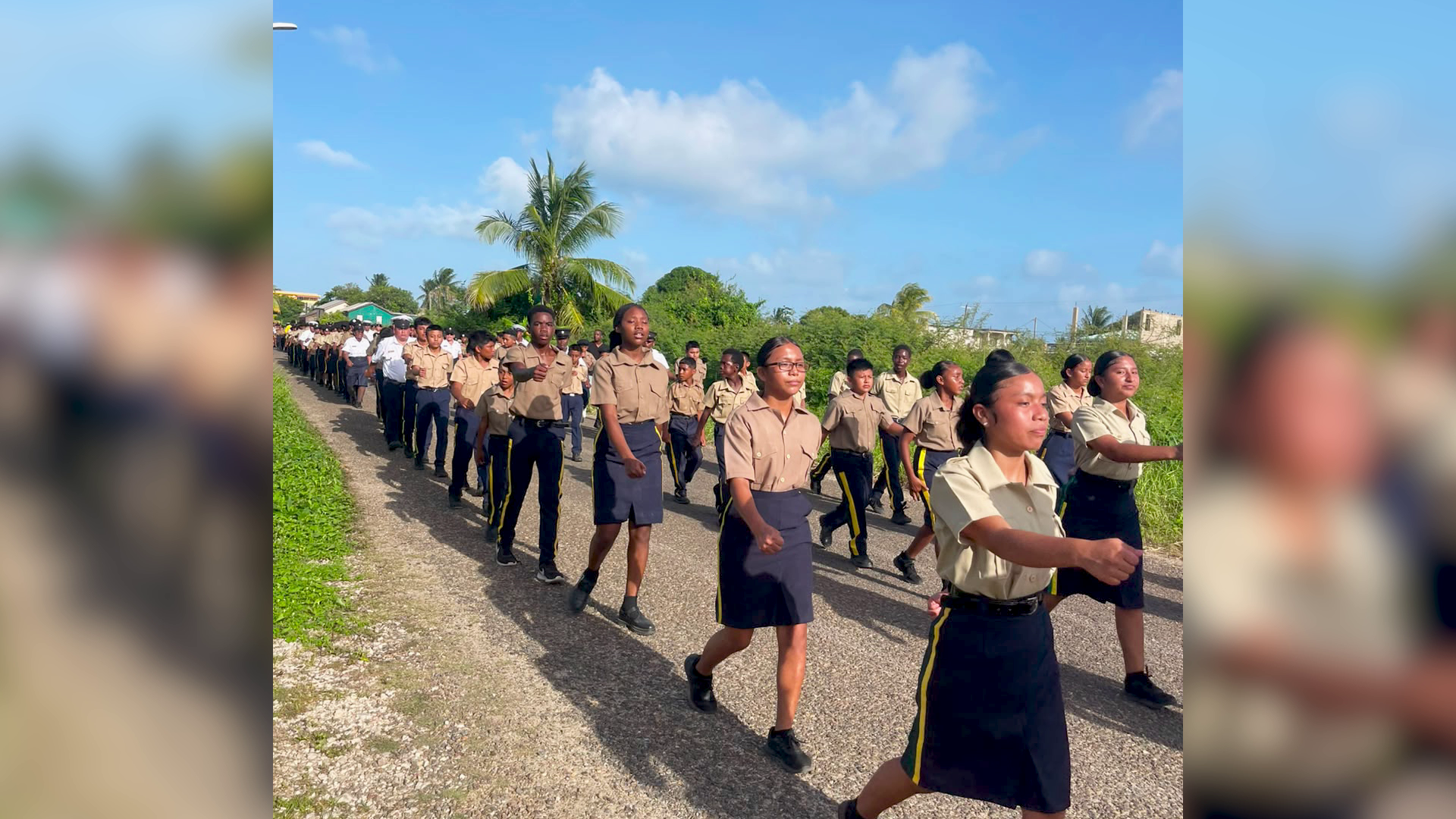
    DANGRIGA, Belize – August 3, 2026 – One of Belize’s longest-running youth development initiatives has wrapped up its 2026 iteration, bringing together nearly 300 young people from across the nation for a week of immersive training, collaborative team building, and values-based learning.

    The 27th National Police Youth Cadet Corps Summer Camp ran from July 25 to August 1 in Dangriga Town, carrying forward a decades-long mission to nurture responsible, service-focused young leaders for the country. Unlike traditional training camps that focus solely on discipline and drills, this annual program prioritizes building transferable life skills: from public confidence and collaborative problem-solving to intentional leadership and a deepened commitment to community and national service.

    This year’s gathering brought 279 cadets together with 80 instructors, a mix of active police officers from across Belize and civilian community volunteers. Under the 2026 theme “Command with Honor, Inspire Action, Teaching Young Minds for a Successful Tomorrow,” participants engaged in a packed, diverse schedule that extended far beyond basic drills. The week included structured leadership development workshops, educational sessions on civic responsibility, inter-region competitive sports, cultural exchange activities, and organized community service projects that gave cadets hands-on experience giving back to their host community.

    In a formal statement following the camp’s conclusion, Assistant Superintendent of Police Stacy Smith, Staff Officer for the initiative, outlined the program’s key outcomes. Alongside core training activities, cadets took part in promotional competency examinations and inter-regional competitions. A total of 69 cadets successfully earned promotions through the program’s ranking structure, recognizing their growth in skill and leadership over the week. In the competitive events, the Northern Region claimed top honors in both football and foot drill, while the Eastern Region took first place in the basketball and volleyball tournaments.

    The week-long program closed with a formal award ceremony honoring top-performing cadets and teams, followed by a celebratory public parade through the streets of Dangriga that showcased the cadets’ new skills and discipline to local residents. Smith emphasized that the camp reaffirms the Belize Police Department’s long-standing commitment to nurturing the next generation of Belizeans, prioritizing the development of disciplined, responsible, and community-oriented young leaders. She also extended gratitude to the department’s Community Policing Unit and all local community partners who donated time, resources, and support to make the 2026 camp a success.

    As a signature youth development program run by the Belize Police Department, the annual summer camp continues to serve as a critical pipeline for building civic engagement and leadership capacity among young Belizeans, now in its 27th year of shaping the country’s future leaders.

  • Inspector Ester Cal Graduates Valedictorian in Regional Police Course

    Inspector Ester Cal Graduates Valedictorian in Regional Police Course

    In a milestone achievement that highlights both individual excellence and growing regional cooperation in Caribbean law enforcement, Belize Police Inspector Ester Cal has graduated as valedictorian of the 2026 inaugural Junior Officers’ Course hosted by the Guyana Police Force Academy. The intensive two-month training program brought together 31 law enforcement and security professionals from 10 Caribbean nations, all gathered to sharpen leadership skills, boost professional capabilities, and strengthen collaborative ties across the region.

    Cal not only claimed the top graduating honor but also shared the prestigious Best Academic Paper Award with Assistant Superintendent Chatram of the Guyana Police Force, a dual recognition that underscores her exceptional academic and practical performance throughout the course.

    As Deputy Commander of the Belize Police Department’s Mobile Interdiction Unit, Cal’s success is being celebrated as more than a personal win. Assistant Superintendent Stacy Smith, a staff officer with the Belize Police Department, emphasized that the achievement reflects both Cal’s unwavering commitment to ongoing professional development and Belize’s expanding role as a respected leader in regional public safety.

    In an official statement released following the graduation, the Belize Police Department and the Ministry of Home Affairs extended formal congratulations to Cal. Officials noted that her outstanding performance showcases the professionalism, dedication, and commitment to excellence that define Belize’s law enforcement community, while bringing national pride to the small Central American nation on the Caribbean regional stage.

    This accomplishment comes as Caribbean law enforcement agencies increasingly prioritize joint training and cross-border collaboration to address shared transnational security challenges, from organized crime to illicit trafficking. Regional training programs like the Junior Officers’ Course are designed to build a unified, skilled network of law enforcement leaders equipped to tackle these complex issues across national borders.

  • Art Becomes a Call to Protect Placencia Lagoon

    Art Becomes a Call to Protect Placencia Lagoon

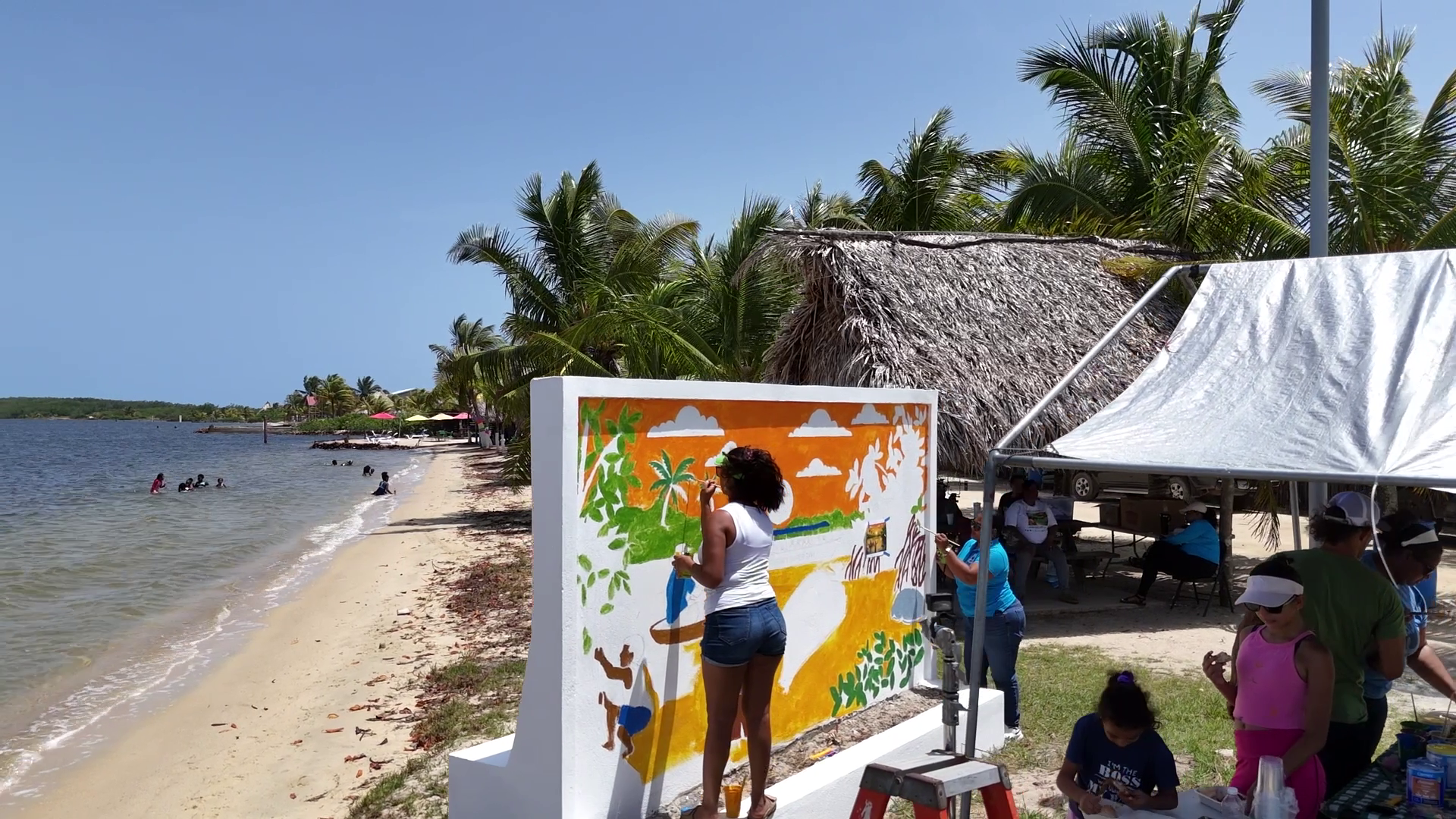
    Nestled along the southern coast of Belize, the waters of Placencia Lagoon have been the quiet backbone of local livelihoods for generations. For small-scale fishermen, it provides daily catches to feed their families; for tour guides and local tourism operators, it draws visitors eager to experience its rich mangrove ecosystems and unique marine wildlife; for generations of residents, it has been a gathering space for recreation and cultural connection. But today, this vital coastal ecosystem faces growing pressures that threaten both its ecological health and the communities that depend on it, prompting a creative new approach to conservation that centers local voices. On August 3, 2026, residents of Independence Village unveiled a large, community-created mural on the village shore, marking the official launch of a new public awareness campaign to protect the iconic lagoon.

    The campaign is a collaborative effort between the World Wildlife Fund (WWF) and Belize’s Southern Environmental Association (SEA), tied to the broader Reef Guard Project: Sustaining Life and Livelihoods initiative. This project works to strengthen management of four key marine protected areas across southern Belize, including South Water Caye Marine Reserve, Glover’s Reef Marine Reserve, Laughing Bird Caye National Park, and Gladden Spit and Silk Cayes Marine Reserve. Unlike top-down conservation campaigns that often exclude local input, this effort centers the experiences and needs of communities that have lived alongside the lagoon for decades.

    Abigail Parham Garbutt, a marine conservation officer with WWF, explained that the mural project is the first step of the new communications campaign, with more public art installations planned for other communities bordering the lagoon, including Placencia and Stann Creek. “These murals are meant to capture the layered history of how people have interacted with this lagoon, from generations past to the present day,” Garbutt said. “They hold the personal memories and lived livelihoods that tie this community to the water, and make clear just how critical this ecosystem is to everyone who lives here.”

    Unlike many conservation efforts that frame protection as separate from community needs, the Placencia Lagoon campaign works to strike a balance between ecological health and economic survival, emphasizing that successful long-term conservation cannot leave behind the people who depend on the lagoon’s resources. Community liaison Diego Lozano, based in Independence Village, notes that local buy-in is the foundation of any effective protection effort. “So many different people rely on this lagoon every single day: tour guides earning a living, small-scale fishermen bringing food home to their families, residents coming here to relax and recreate,” Lozano explained. “That’s why we need to protect it, but we have to do it in a way that respects all of these needs and finds a sustainable balance.”

    The threats facing the lagoon are multi-fold, according to conservation leaders. Calvin Gonzales, senior project manager at SEA, outlined the key challenges threatening the ecosystem: unsustainable and illegal fishing practices, including both local and transboundary illegal fishing, harvesting of undersized or out-of-season marine life, unregulated coastal development, and the global pressure of climate change, which has driven coral bleaching across Belize’s reef systems that are connected to the lagoon. Gonzales added that lasting protection will require both stronger enforcement of existing conservation rules and ongoing scientific monitoring to track ecosystem health over time.

    The Independence Village mural was painted collectively by more than 20 community members, ranging from local school children to professional conservationists, overseen by local artist Anton Leslie. Leslie explained that the design draws directly from the real experiences of people who live in the village, rather than a generic vision of coastal nature. The work depicts the lush mangrove habitats that form the foundation of the lagoon’s food web, alongside iconic local touches: the Hokie Pokie water taxi that serves the village, native manatees that frequent the lagoon’s shallow waters, and a child climbing through mangrove roots, capturing the intergenerational connection local people have to the ecosystem. “It covers all the different parts of life that happen here in this lagoon habitat,” Leslie said.

    This first mural is just the opening step of the wider campaign, which aims to build a grassroots, community-led movement for conservation across the Placencia Lagoon region. By turning personal stories and lived connection into public art, organizers hope to inspire more local residents to join protection efforts and build widespread public support for policies that will safeguard the lagoon for future generations. The event was covered by News Five’s Britney Gordon on location in Independence Village.

  • Kadooment delivers spectacular start

    Kadooment delivers spectacular start

    A short hold-up at the opening of the 2026 Flow 5G+ Grand Kadooment did nothing to dim the electric excitement of attendees packed along the route to witness one of Barbados’ most beloved cultural celebrations. As masqueraders, performers, and spectators filled Princess Alice Highway, the day officially got underway at 8:40 a.m. when the stirring strains of Barbados’ National Anthem filled the air, drawing a respectful hush over the crowd.

    Moments after the anthem concluded, Walk Holy Band stepped forward as the first of 22 planned processions, opening the event with a soulful, spirited performance that set a tone of joyous reverence, asking for divine blessing over the day’s festivities. Right on their heels came Blue Box Cart and Salt, whose dazzling presentation delivered a thoughtful, artful tribute to the Barbados Landship, honoring and preserving one of the island nation’s most treasured cultural traditions. The high-octane masqueraders of Krave then took the spotlight, raising the energy for the gathered onlookers.

    One of the standout moments for captivated attendees was the long-awaited return of the iconic King and Queen costume display. Curated by the National Cultural Foundation (NCF) Large Mas Costumes and paired with the rhythmic, soulful melodies of the Drummers Federation, the showcase was a visual feast for every person in attendance. Intricately crafted pieces including *Keeper of the Canes*, *Queen of Crop Over*, and *Mr Harding’s Fiery March* stirred nostalgia among long-time festival-goers, who recalled decades of Grand Kadooment parades led by these majestic regal displays.

    Boasting more than 1,000 masqueraders, Vida by Esquire was the largest procession of the day, dominating the route as a sprawling, vivid sea of color divided into six elaborately designed sections. The massive contingent took nearly 10 minutes to pass the judges’ pavilion before continuing its rhythmic procession toward Mighty Grynner Highway.

    Through the early morning, brief gaps between processions left spectators waiting for the next performance, with several minutes often passing between bands arriving at the judging stage. Explaining the minor delays, NCF Festival and Events Planner Stacia Bryan noted the pauses were primarily caused by revellers putting the final touches on their looks before heading to the route.

    “You know us ladies, we like to make sure that the make-up is on and the eyelashes are on. We realised that the bands will be a little bit delayed because y’all still at home putting on the finery to come and jump because it has shifted because people like to play Pretty Mas and want to be on Instagram and social media pages and we love that because it will help to promote the festival,” Bryan told Barbados TODAY shortly after noon. She added that despite the gaps, the event had progressed smoothly, confirming that half of all registered bands had already completed the judging segment, with strong momentum continuing through the day.

    “I am very pleased with the productions. Everything has been moving smoothly along the streets. All of the water stations are in place. The revellers are well hydrated, the music trucks are moving and comfortable because the police and the BDF are on the ground to make sure we have a safe Grand Kadooment,” Bryan said.

    As the midday sun climbed, bringing sweltering temperatures that matched the intensity of the performances, attendees sought relief from the heat from local vendors, with lines forming at sno-cone carts for a quick cool-down. Both spectators and masqueraders were spotted clutching portable fans and full water bottles, determined not to let the heat cut into their celebration.

    Through the afternoon, the stage became a dazzling blur of feathers, hand-sewn beads, and shimmering sequins, as elaborate costumes from troupes including Aura, Colorz Entertainment, Haus of Mas, and Mondé Mas left judges and onlookers mesmerized. One particularly standout piece, Carla Gittens’ *The Echo of Legends* worn by Zahira Bayley, drew gasps from the crowd for its intricate design and cultural resonance.

    Veteran bandleader Betty West delivered one of the day’s most moving presentations, leading her 158-member small band in a heartfelt tribute to fallen Grand Kadooment legends, including Winston Jones, Renee Ratcliff, Gwyneth Squires, Roseann Lewis, and Reggie Cave. Her performance highlighted the immeasurable contributions these icons made to shape the festival into the world-renowned cultural event it is today.

    The formal judging segment came to a spectacular close just after 1 p.m., when the final procession, Fifth Element, crossed the stage. With official proceedings complete, revellers fully embraced the festive spirit, winding, dancing, and chipping their way along the route to Mighty Grynner Highway for the iconic main jump-up celebration that closes out the annual festival.

  • Simons: Meer tijd nodig om schade te herstellen

    Simons: Meer tijd nodig om schade te herstellen

    One year after taking office, Suriname’s President Jenny Simons delivered a frank progress update to reporters during a Monday press conference, acknowledging the slow pace of national recovery while outlining upcoming policy changes to tackle long-running systemic challenges.

    Addressing public expectations for rapid change, Simons noted that repairing decades of damage accumulated over five years cannot be completed in just 12 months. She emphasized that at least a two-year transition period is required to put the country on a stable path, but added that the government cannot indefinitely claim limited financial resources as a barrier to action.

    A core priority of the Simons administration remains reforming the country’s tax system, with five major tax reform bills currently under review by the National Assembly. Simons singled out unregulated gold mining, both legal and illegal, as a key area where the nation has failed to capture fair economic benefits. She admitted that fixing issues in the gold sector is far from straightforward, and the existing Gold Sector Ordering Commission has not delivered the results the government expected. To address this gap, the administration plans to establish a dedicated national gold authority, with draft enabling legislation expected to be submitted to parliament by the fourth quarter of the year.

    Simons also drew attention to the severe environmental and public health harms caused by unregulated gold extraction, pointing out that toxic chemicals including cyanide and mercury have flowed into the country’s ecosystems unimpeded for years, with the problem growing progressively worse. She stressed that a turning point is urgently needed, and the government is drafting new legislation to push the sector toward less harmful, more sustainable extraction methods. “This is a path we will pursue with full seriousness,” Simons said.

    The president highlighted an ongoing acute environmental crisis in the community of Pikin Saron and surrounding areas, where toxic pollutants have contaminated the Saramacca River. Initial investigations point to a leak from a local gold mining operation, possibly linked to local miner Grassalco or a Chinese mining firm operating in the region. Simons confirmed that investigative agencies have been ordered to deliver a full report with clear findings within two weeks.

    Looking back on the first year of her administration, Simons said the national recovery phase is now underway. More than 50 corruption and misconduct cases have been submitted to the Public Prosecution Service, and state-owned enterprises have now been restructured with new executive boards tasked with stabilizing operations and driving long-term growth.

    The president did not shy away from acknowledging setbacks. “Not everything we set out to do has been accomplished,” she said, noting that not all missing state vehicles have been recovered to date. Despite these challenges, public works and green space agencies have made progress on infrastructure repairs, the education sector has launched school renovation projects, and policymakers are working to address systemic flaws in the education system, including the persistent national shortage of qualified teachers.

    Looking ahead, Simons announced that the government’s temporary fuel price cap, implemented to protect households from rising energy costs, cannot remain in place indefinitely. The measure currently costs the government 350 million Surinamese dollars per month to maintain, and will be phased out in the coming period. Simons did not provide a specific timeline or details on how the phase-out will be implemented, but confirmed that the government plans to introduce a moderate increase in civil servants’ salaries to offset upcoming cost of living adjustments.

  • Roadside snackettes to be relocated to new Zeelugt market

    Roadside snackettes to be relocated to new Zeelugt market

    On Monday, August 3, 2026, Guyana’s President Irfaan Ali outlined sweeping community improvement plans under the government’s new model villages initiative during two public consultations held in Zeelugt, West Coast Demerara and Tuschen, East Bank Essequibo, promising transformative upgrades to quality of life for residents across Region Three.

    During a meeting at Zeelugt Primary School, President Ali confirmed that the village’s popular but hazardous roadside snackettes – small food vendors that currently operate directly along the main public thoroughfare – will be relocated to a purpose-built new public market. The new facility will feature a dedicated section for these vendors, alongside a clean, safe, hygienic, and visitor-friendly food court designed to draw local patrons and tourists alike. Complementing the market development, the government has a large-scale waterfront regeneration project in the works that will add a public park and dedicated event spaces designed to host community gatherings without disrupting residential areas. Beyond food vendors, the plan also calls for consolidating spray-painting workshops, mechanic garages and other similar businesses into a single zoned location that minimizes noise, traffic and pollution impacts on nearby residential neighborhoods.

    For Tuschen, located across the Essequibo River on the East Bank, the government plans to build a dedicated centralized logistics hub that will serve as a large-scale truck parking lot to remove heavy commercial vehicles from residential streets. Minister of Public Utilities and Aviation Deodat Indar, a Tuschen resident himself, detailed the breadth of infrastructure upgrades planned for the community: 89 kilometers of newly expanded, deep concrete drains that will double as water reservoirs to address flooding and water storage needs; reinforced road shoulders for all two-lane routes; pre-installed ducts for future utility service expansions; and a new bypass road connecting Tuschen to Windsor Forest that will redirect through traffic away from the village’s crowded residential core.

    A centerpiece of the Tuschen upgrade is a GY$1.5 billion, 32,000 square-foot modern public market to be constructed at the rear of the village. Indar emphasized that the new facility will replace the informal, makeshift pallet-built stalls that currently serve vendors, raising community living and commercial standards long-term. Additional public safety and infrastructure upgrades include 168 new security cameras to support local law enforcement in crime reduction, the installation of new fire hydrants for improved emergency response, and 1,500 new street lights to boost nighttime safety and visibility. Maintenance of the upgraded community spaces will fall jointly to the Region Three administration and the Ministry of Local Government, Indar confirmed.

    Housing Minister Collin Croal added clear expectations for community standards under the model villages initiative, stating that the government will not allow ongoing issues including derelict vehicles abandoned on public land, unregulated improper garbage disposal, long-term open storage of construction materials on public rights-of-way, and poorly maintained drainage systems that contribute to flooding. President Ali framed the model villages project as a holistic effort to improve resident quality of life, addressing not just physical infrastructure but also social cohesion, environmental cleanliness, and noise pollution reduction. “The quality of life that we experience in the community depends on the quality of our values, our culture, the way we treat the environment, the way we dump our garbage and the way in which we look out for each other,” he told attendees.

  • NCF declares Crop Over 2026 a success

    NCF declares Crop Over 2026 a success

    Barbados’ iconic annual Crop Over festival has wrapped its 2026 season to widespread acclaim, with National Cultural Foundation (NCF) Chairman Dr. Jasmine Babb declaring the celebration an unqualified success that demonstrated enduring public passion for the island’s cultural heritage.

    Speaking exclusively to Barbados TODAY, Babb highlighted record turnout across the festival’s full slate of events, from the highly anticipated Pic-O-De-Crop Finals to the high-energy Pandemonium showcase and family-focused Junior Kadooment. Every ticketed fete and public gathering sold out completely, she confirmed, with even spontaneous vendor participation far exceeding expectations. “All of the fetes and all of the events have been sold out. The Pic-O-De-Crop final was absolutely full. We also had Pandemonium which was well attended and Junior Kadooment. Everything was well attended, and everybody is coming out including the vendors. All in all this year has been an excellent year,” Babb stated.

    The 2026 season faced one unexpected logistical hurdle, however: the need to relocate the Pic-O-De-Crop Finals just weeks before the event, after Kensington Oval – the competition’s traditional home – was booked to host the state funeral of Barbados’ beloved National Hero Sir Garfield Sobers. Organizers first moved the finals to CARIFESTA Island, but after consulting with participating performers, the event was shifted to the more spacious, scenic National Botanical Gardens. The last-minute change proved to be a hit with attendees, and the event went off without a hitch. “In the end, we came to an agreement among the parties and that event went excellently,” Babb added.

    As the festival heads into its final stretch, all attention is now turning to Tuesday’s Cohobblopot, a historic cultural showcase returning to the Crop Over calendar after more than 10 years off the lineup. Like the repositioned Pic-O-De-Crop Finals, the revived event will also be hosted at the National Botanical Gardens. This revival marks a deliberate effort to reconnect with Crop Over’s roots while reimagining the celebration for a new generation. Traditionally held on the Sunday before the headline Grand Kadooment parade, Cohobblopot has long been a core part of Crop Over, blending theatrical performance, elaborate traditional costume displays, and live music into a one-of-a-kind cultural showcase. For this year’s revival, organizers are bringing back rare heritage costumes, with plans to expand the showcase further in the 2027 festival.

    Minister of State Shane Archer, who oversees youth and cultural policy in the Prime Minister’s Office, originally announced the event’s return earlier this year, framing it as a balancing act: creating an engaging, contemporary experience for younger attendees while evoking nostalgic memories for long-time Crop Over fans who enjoyed the event in past decades.

    Beyond attendance and programming, NCF festival organizers credited on-the-ground partners with keeping the 2026 season safe and running smoothly. NCF Festival and Events Planner Stacia Bryan singled out the island’s security services for particular praise, noting that the entire festival remained largely incident-free thanks to early, coordinated planning. “We worked very early this year with the team from The Barbados Police Service and we have a new commissioner and have also been working with Assistant Commissioner Christine Stanford. She is amazing and has worked with us for about three to four Crop-Overs, so we have a well-oiled machine happening. The Barbados Defence Force — thank you to Brigadier Carlos Lovell and all the support we get,” Bryan said. She also extended gratitude to the Barbados Water Authority for installing critical hydration stations along the Grand Kadooment parade route, ensuring attendees stayed cool and safe through the day’s celebrations.

  • Friend Discovers Body of Pregnant Belize City Woman

    Friend Discovers Body of Pregnant Belize City Woman

    On a Sunday morning in Belize City, a grim discovery unfolded at a Vernon Street apartment building that has left the local community reeling. Law enforcement officials confirmed during a midafternoon press briefing that 22-year-old Kimane Garbutt, who was pregnant, was found dead in an advanced state of decomposition at the property.

    The sequence of events that led to the discovery began the previous day, when Garbutt was last spotted alive by a close friend at approximately 7:00 a.m. At that time, Garbutt told her friend she was feeling unwell, prompting growing concern when she did not reach out again in the following hours. After multiple attempts to contact Garbutt via phone went unanswered, the friend made the decision to travel to her Vernon Street residence to check on her wellbeing shortly after 9:30 a.m. Sunday.

    Upon entering the apartment, the friend made the tragic discovery of Garbutt’s body, and immediately contacted local police to report the incident. Police Commissioner (or lead investigator) Smith stated that at this early stage of the investigation, law enforcement does not suspect foul play was involved in Garbutt’s death. The body has been transported to a forensic facility, where it is currently awaiting a full post-mortem examination to confirm the exact cause and timeline of death, with official results expected to be released in the coming days once forensic analysis is complete. Local community members have expressed shock and sorrow over the death of the young pregnant woman, as the investigation continues to move forward.

  • Bandleaders investing the future of Crop Over

    Bandleaders investing the future of Crop Over

    As one of Barbados’ most iconic cultural celebrations, the annual Crop Over festival’s flagship Grand Kadooment event faces growing pressure to preserve its indigenous craft roots amid shifting industry trends. To safeguard the centuries-old tradition of masquerade costume making for future generations, a cohort of veteran bandleaders has launched targeted youth training initiatives and long-term succession plans to keep the cultural heart of the festival beating.

    Kathy-Ann Scott, founder of Haus of Mas who has built her brand over 11 years in the industry, made youth skills development a core priority for her 2024 band entry. Speaking with Barbados TODAY on the sidelines of the Flow 5G+ Grand Kadooment event, Scott explained that while running a mas band has grown increasingly challenging in recent decades, the shifting landscape has created a critical opening to rebuild local artistic capacity. This year, every costume displayed by her troupe was crafted entirely in Barbados by local artisans, with 15 and 16-year-old trainees joining the production line to learn core skills including feather work and costume framing.

    Scott emphasized that nurturing local craft is not just a matter of heritage preservation—it is key to building long-term investment in the festival. “If we keep exporting all our costume production overseas, we lose the core art of costume making and masquerade itself,” she noted. “When people help create the celebration, they feel a sense of ownership, and that makes them far more committed to keeping the tradition alive.”

    For 35-year industry veteran Betty West, the push to pass on her craft changed plans for her planned retirement. West announced last year that 2023 would mark her final year leading a Grand Kadooment band, but she has extended her tenure to train a new generation of creators. “I said this year would be my last, but that changed,” she shared. “I have young people now learning the craft, so I’ll stay on for two more years to make sure they’re ready.”

    Henderson Jones, a master wirebender with more than 30 years of experience creating costume structures, warned that core traditional skills—including wire bending, costume shaping, and structural piece fabrication—are at risk of dying out completely. He is calling for formal integration of masquerade craft into national school curricula to build a sustained pipeline of new talent. Right now, Jones explained, schools only teach basic fabric decoration, not the advanced structural skills that are the backbone of authentic Grand Kadooment costume design. If production continues to shift to overseas manufacturers in Trinidad and China, he added, costume prices will skyrocket past the reach of most local participants, pricing communities out of the tradition they created.

    Quincy Jones, bandleader of the popular troupe Zenobia, is preparing a gradual handover of leadership to a younger generation, framing succession as a natural and necessary step for the festival’s evolution. While he plans to step back in the near future, he emphasized the need to keep the festival’s cultural heritage at the center of its growth, even as the event evolves to meet modern tastes.

    Veteran bandleader Christopher Williams, who returned to Grand Kadooment in 2023 after a 10-year hiatus, shares that concern. He stepped back into the festival specifically to help reverse what he sees as an erosion of the event’s indigenous cultural identity. Williams’ band Salt continues to center its performances around tributes to the Barbados Landship, a unique Indigenous cultural movement with roots in Barbadian working history, and he has already laid out plans for multiple iterations of this cultural tribute over the coming years. “I fully embrace change, but we need to maintain consistency around what is indigenous, what is creatively ours, and what defines our cultural identity,” he said.

    Collectively, these veteran leaders’ efforts aim to ensure that Grand Kadooment grows not just as a popular tourist event, but as a living, locally rooted cultural practice that belongs to generations of Barbadians to come.

  • Coast Guard Continues Search for Missing Samuel Chi

    Coast Guard Continues Search for Missing Samuel Chi

    On August 3, 2026, search and rescue operations led by the Belize Coast Guard entered a new phase after teams recovered one of two men who went missing during a weekend boating trip off the coast of Caye Caulker. However, efforts are still intensifying to locate the second missing person, Samuel Chi, and the small vessel the pair were traveling in.

    The incident began when Albert Vacarro and Samuel Chi failed to return to shore from their recreational outing on Sunday night, prompting an immediate missing persons report to local authorities. Assistant Superintendent Stacy Smith officially confirmed the details of the report during a scheduled police briefing held on the afternoon of August 3.

    Within hours of the report being filed, search operations launched around 10:00 p.m. on Sunday, covering hundreds of nautical acres across the waters surrounding Coffee Caye and the adjacent smaller island chains. After more than 12 hours of coordinated searching, search teams made a breakthrough: around 11:30 a.m. on August 3, a Belize Coast Guard patrol vessel spotted Vacarro floating adrift in open water, Lieutenant Mark Choc, Operations Officer for the Belize Coast Guard, confirmed in an interview with local outlet News Five.

    First responders conducted an on-site medical evaluation immediately after pulling Vacarro from the water. The assessment found that Vacarro was suffering from severe dehydration and significant disorientation as a result of his time stranded at sea. “He was dehydrated and disoriented, whereby he was not able to confirm what really transpired,” Choc explained in his statement, noting that Vacarro’s condition left investigators unable to immediately piece together the sequence of events that led to the pair going missing.

    As the search for Chi dragged on through the day, the Belize Coast Guard expanded the operation by activating a joint task force with two additional local agencies: the Belize Port Authority and the national Fisheries Department. The combined team has deployed additional surface vessels and expanded the search grid to cover more distant coastal areas in the region.

    As of the afternoon of August 3, Chi remains unaccounted for, and the vessel the two men departed on has still not been located by search teams. The Belize Coast Guard has confirmed that search and rescue efforts will continue around the clock until Chi is found, and investigators will launch a full review to identify the root cause of the incident once all parties are recovered.