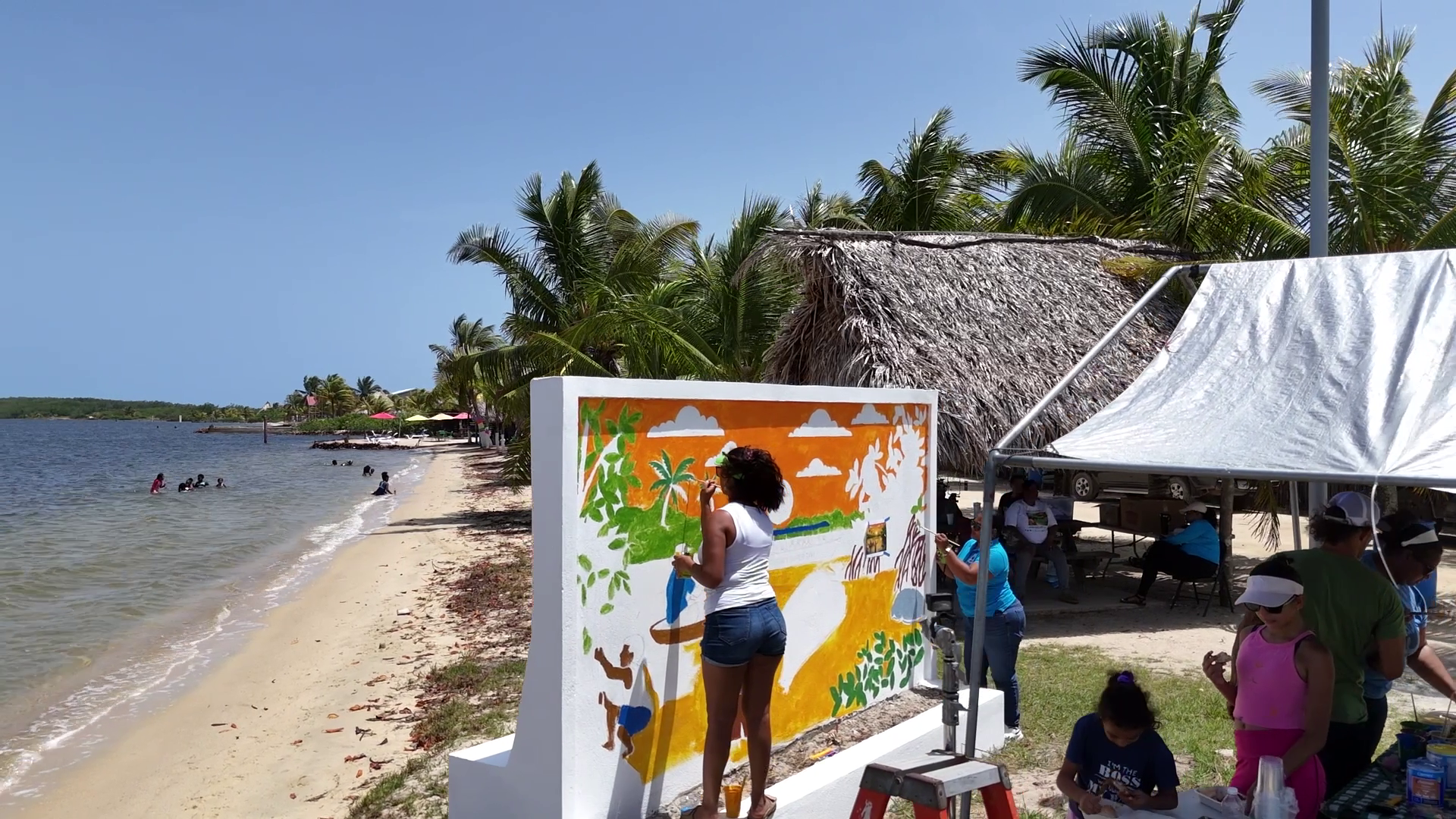
Nestled along the southern coast of Belize, the waters of Placencia Lagoon have been the quiet backbone of local livelihoods for generations. For small-scale fishermen, it provides daily catches to feed their families; for tour guides and local tourism operators, it draws visitors eager to experience its rich mangrove ecosystems and unique marine wildlife; for generations of residents, it has been a gathering space for recreation and cultural connection. But today, this vital coastal ecosystem faces growing pressures that threaten both its ecological health and the communities that depend on it, prompting a creative new approach to conservation that centers local voices. On August 3, 2026, residents of Independence Village unveiled a large, community-created mural on the village shore, marking the official launch of a new public awareness campaign to protect the iconic lagoon.
The campaign is a collaborative effort between the World Wildlife Fund (WWF) and Belize’s Southern Environmental Association (SEA), tied to the broader Reef Guard Project: Sustaining Life and Livelihoods initiative. This project works to strengthen management of four key marine protected areas across southern Belize, including South Water Caye Marine Reserve, Glover’s Reef Marine Reserve, Laughing Bird Caye National Park, and Gladden Spit and Silk Cayes Marine Reserve. Unlike top-down conservation campaigns that often exclude local input, this effort centers the experiences and needs of communities that have lived alongside the lagoon for decades.
Abigail Parham Garbutt, a marine conservation officer with WWF, explained that the mural project is the first step of the new communications campaign, with more public art installations planned for other communities bordering the lagoon, including Placencia and Stann Creek. “These murals are meant to capture the layered history of how people have interacted with this lagoon, from generations past to the present day,” Garbutt said. “They hold the personal memories and lived livelihoods that tie this community to the water, and make clear just how critical this ecosystem is to everyone who lives here.”
Unlike many conservation efforts that frame protection as separate from community needs, the Placencia Lagoon campaign works to strike a balance between ecological health and economic survival, emphasizing that successful long-term conservation cannot leave behind the people who depend on the lagoon’s resources. Community liaison Diego Lozano, based in Independence Village, notes that local buy-in is the foundation of any effective protection effort. “So many different people rely on this lagoon every single day: tour guides earning a living, small-scale fishermen bringing food home to their families, residents coming here to relax and recreate,” Lozano explained. “That’s why we need to protect it, but we have to do it in a way that respects all of these needs and finds a sustainable balance.”
The threats facing the lagoon are multi-fold, according to conservation leaders. Calvin Gonzales, senior project manager at SEA, outlined the key challenges threatening the ecosystem: unsustainable and illegal fishing practices, including both local and transboundary illegal fishing, harvesting of undersized or out-of-season marine life, unregulated coastal development, and the global pressure of climate change, which has driven coral bleaching across Belize’s reef systems that are connected to the lagoon. Gonzales added that lasting protection will require both stronger enforcement of existing conservation rules and ongoing scientific monitoring to track ecosystem health over time.
The Independence Village mural was painted collectively by more than 20 community members, ranging from local school children to professional conservationists, overseen by local artist Anton Leslie. Leslie explained that the design draws directly from the real experiences of people who live in the village, rather than a generic vision of coastal nature. The work depicts the lush mangrove habitats that form the foundation of the lagoon’s food web, alongside iconic local touches: the Hokie Pokie water taxi that serves the village, native manatees that frequent the lagoon’s shallow waters, and a child climbing through mangrove roots, capturing the intergenerational connection local people have to the ecosystem. “It covers all the different parts of life that happen here in this lagoon habitat,” Leslie said.
This first mural is just the opening step of the wider campaign, which aims to build a grassroots, community-led movement for conservation across the Placencia Lagoon region. By turning personal stories and lived connection into public art, organizers hope to inspire more local residents to join protection efforts and build widespread public support for policies that will safeguard the lagoon for future generations. The event was covered by News Five’s Britney Gordon on location in Independence Village.