博客

  • Bahamian teen named Beyoncé to sing at US Embassy event

    Bahamian teen named Beyoncé to sing at US Embassy event

    A once-in-a-lifetime performance opportunity is putting a young Bahamian emerging vocalist with a famous name in the global spotlight ahead of this week’s U.S. Independence Day celebrations in Nassau. Fifteen-year-old Beyoncé Knowles – a native of New Providence, not the world-famous American entertainment icon who shares her full name – has been tapped to perform the Bahamian national anthem to kick off the U.S. Embassy’s flagship Independence Day event this Friday. The celebration will launch Freedom 250 Week, a multi-day series of activities marking the 250th anniversary of American independence and celebrating the longstanding bilateral relationship between the United States and The Bahamas.

    The invitation-only reception, themed around “American Icons,” will be hosted on the grounds of the U.S. Embassy in Nassau. Attendees will enjoy creative Junkanoo-style interpretations of iconic American landmarks, including the Hollywood Sign and the Washington Monument. Top dignitaries from both nations are scheduled to address the crowd: U.S. Ambassador to The Bahamas Herschel Walker will lead remarks, joined by Bahamian Prime Minister Philip Davis and Governor General Dame Cynthia Pratt. Pastor Mario Moxey, president of the Bahamas Christian Council, will deliver the opening invocation. The U.S. national anthem will be performed by Danielle Dorsett, a member of the popular Bahamian group Shaad Collie & The VIP’s, and the entire formal program will be streamed live for remote audiences on the U.S. Embassy’s official Facebook page.

    For the 15-year-old headline vocalist, the performance marks the latest milestone in a music career that began more than a decade ago. Knowles first discovered her love for performance at age four, when she stepped onto the stage for a school talent show – a moment that launched her ongoing journey to refine her craft. She has already performed across the United States in Fort Lauderdale and Atlanta, earning early international exposure as she works toward her big career goal: to follow in the footsteps of her superstar namesake and build a reputation as a world-renowned vocalist.

    Beyond the formal opening program, the event will also highlight the deep cultural and historical ties between the two countries. Guests will get an exclusive first look at a teaser for *Bringing Her Home: The Story of Sloop John B*, an upcoming documentary that explores the little-known Bahamian origins of the Beach Boys’ iconic 1960s hit. Producers David House and Edgar Seligman will present the project, and attendees will be treated to a preview of a new Bahamian recording of the classic track.

    Two major components of the celebration will be open and visible to the general public. The first is a ceremonial military flyover scheduled for approximately 7:00 p.m., featuring four U.S. Marine Corps F-35B Lightning II aircraft from VMFA-542, based at Marine Corps Air Station Cherry Point in North Carolina. The formation will circle New Providence twice, passing over the embassy grounds during the event; the planes will be visible to spectators from beaches and open public spaces across the island. The U.S. Embassy noted the flyover is intended to honor the 250th anniversary of U.S. independence, recognize decades of bilateral military cooperation, and celebrate the shared security commitments between the two nations.

    Following the flyover, a public fireworks display is scheduled to begin at 9:55 p.m., launched from the embassy grounds and visible across the surrounding Shirley Street area.

    Freedom 250 Week will run through July 5, with additional public activities planned across Nassau. The Global Illumination Initiative will light up Nassau’s skyline and harbor in the red, white, and blue of the American flag, and a curated Founders Museum exhibit will be open to all visitors at the Nassau Cruise Port from June 29 through the end of the celebration on July 5.

  • Cop charged 9 years after traffic death

    Cop charged 9 years after traffic death

    It has been more than nine years since 21-year-old Phillip Daniel Clare Jr. lost his life after being struck by a vehicle while crossing Tonique Williams Darling Highway, a case that the victim’s parents refused to let go cold. Now, a serving police corporal has finally been formally charged in connection with his death, marking a long-awaited turning point in a case marked by years of delays and unrelenting advocacy from the victim’s family.

    Forty-one-year-old Corporal Samuel Rolle, 3847, was granted $8,500 in bail during a hearing before acting Chief Magistrate Ancella Evans on Wednesday. He faces one count of causing Clare’s death through dangerous driving. This development comes nearly two full years after a Coroner’s Court inquest delivered a verdict of gross negligence manslaughter in the case, a finding that cleared the way for formal criminal proceedings.

    According to prosecution allegations, Rolle was off duty on January 10, 2017, when he was operating a 2008 Suzuki Swift at excessively high speed. The vehicle struck Clare as the young man attempted to cross the highway to reach Pressure Point Bar to purchase food. Clare sustained catastrophic traumatic injuries in the collision and died shortly after the incident.

    During the 2024 coroner’s inquest, the court heard critical details that were not publicly disclosed until that point: responding officers confirmed that Rolle’s vehicle was both unlicensed and uninsured at the time of the crash, yet no traffic-related charges were filed against him in the immediate aftermath of the incident. No plea was required from Rolle during his recent initial appearance before Magistrate Evans, and the case is on track to advance to the Supreme Court via a voluntary bill of indictment (VBI), a procedural path for serious criminal matters.

    Prosecuting inspector Deon Barr did not raise any objections to the request for bail. In granting bail, Magistrate Evans ordered that Rolle secure one to two financially responsible sureties, and required him to check in daily at the East Street South Police Station every Thursday before 7 p.m. She also directed the prosecution to move quickly to set an early date for service of the voluntary bill of indictment, specifically noting the extraordinary length of time that Clare’s family has already waited to see the case heard in a court of law. Rolle is scheduled to reappear in court on September 3 to receive the official VBI documentation.

    This long-awaited charge is the direct result of years of unrelenting pressure from Clare’s family, who have repeatedly spoken out about the agonizingly slow progress of the case and demanded accountability since the day of the crash. After the coroner’s inquest concluded its work, the full case file was forwarded to the Office of the Director of Public Prosecutions to review and make a final determination on whether formal charges would be filed.

    When contacted by The Tribune for comment on the years-long delay in advancing the case to court, police press liaison Superintendent Sheria King deferred questions about the timeline to the lead investigator assigned to the matter.

    The case first captured widespread public attention back in 2018, when Clare’s parents made a public statement that they were prepared to launch a private prosecution if state prosecutors failed to take action. At that time, The Tribune reported that a memorial wreath honoring Clare sat atop a small stunted tree along the side of Tonique Williams Darling Highway, a quiet but constant public reminder of the fatal crash and the ongoing grief of his parents.

    Clare’s mother, Ms. Reckley, shared at the time that she still listened to old WhatsApp voice notes from her son to cope with her overwhelming grief. His father, Phillip Clare Sr., said he still regularly visits his late son’s old bedroom, keeping it largely unchanged from when Phillip lived there. “The room is him,” he said in that 2018 interview. “I just go in the room and look.”

    At the time, Ms. Reckley said justice had remained out of the family’s reach for years, and that no one could understand the pain her family had endured. “All I want is justice for Phillip,” she said then, a statement she has repeated consistently in the years since the crash. “No one is getting what I am feeling. My child was knocked down, and they’re like, it’s finished, we’ll just get over it. How can we get over it?”

    Kevin Armbrister is representing Rolle in the proceedings.

  • Watson details national drug strategy in maiden speech

    Watson details national drug strategy in maiden speech

    In their first addresses to the Bahamas Senate yesterday, two first-term legislators threw their support behind the Davis administration’s governance record, while outlining ambitious new policy plans to address pressing national challenges.

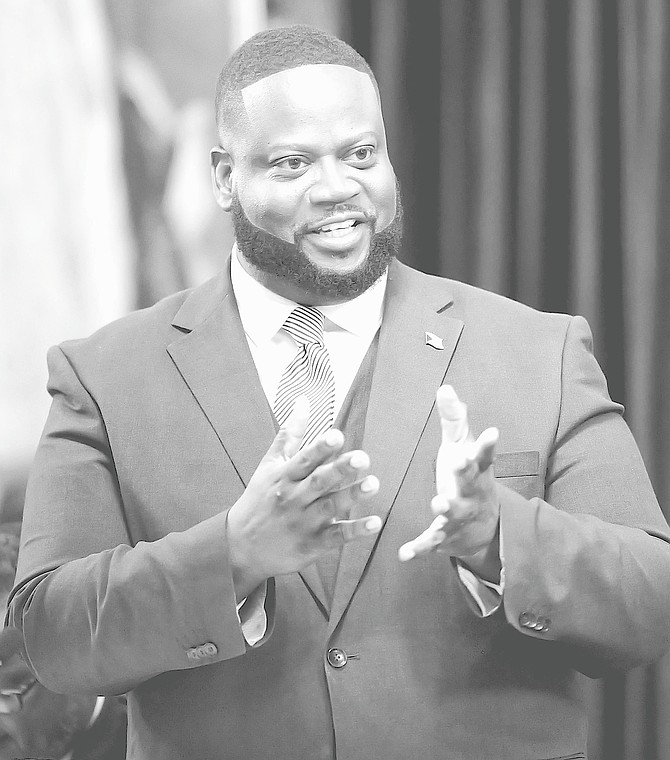
    Senator Clint Watson used his maiden speech to unveil the government’s upcoming overhaul of the country’s approach to combating drug abuse, replacing the long-standing fragmented system with a unified, data-led national strategy. Under the new framework, former Commodore Raymond King has been tapped to lead the creation of a coordinated agency that brings together cross-sector stakeholders, ranging from public health practitioners and educators to social workers and law enforcement teams.

    Watson emphasized that for decades, Bahamas’ drug policy has been disjointed, with inter-agency coordination reliant on individual relationships rather than sustained institutional structures. The government’s reforms are designed to correct this gap, shifting the country toward evidence-based drug policy that proactively responds to emerging threats. Key components of the plan include the establishment of a national drug observatory, a centralized national drug information network, and an early warning system to quickly identify and flag dangerous new illicit substances.

    “This is a declaration that the fight against drugs is a national issue requiring a whole of government and a whole of society response,” Watson stated. “Drug abuse does not only destroy individuals. It damages families, it weakens communities, it steals futures.”

    Fellow first-term Senator Latrae Rahming echoed Watson’s backing of the administration, arguing that the government is well-positioned to guide The Bahamas through a period of rapid global economic and social transformation. Rahming noted that shifting global dynamics, evolving technology, changing energy markets, and shifting citizen expectations are testing governments across the world. “The question before us is whether The Bahamas will meet this moment with the old habits or the new courage. I believe this Davis administration is up for the task,” he said, pointing to the administration’s positive economic track record since taking office.

    Third Senator Robyn Lynes used her remarks to focus on the growing crisis of the high cost of living facing Bahamian households. She acknowledged existing government measures to ease financial pressure, including cuts to value-added tax, expanded food assistance programs, and new concessions for residential homeowners. However, she called for additional targeted reforms to the country’s real property tax system and subsidized housing programs to better support low- and middle-income families.

    Lynes pointed out that rising property values, often driven by new surrounding development, do not always correspond to increased household income, and in many cases, rental income only covers basic costs like mortgages and utility bills. To address this inequity, she proposed an overhaul of the tax structure that accounts for household income and ability to pay, rather than relying solely on property valuations. The reform would allow eligible homeowners to apply for property tax reductions, or even full exemptions in qualifying circumstances.

    On the topic of subsidized housing, Lynes argued that the program should introduce clear timelines for recipients and structured support to help families achieve long-term housing independence. She also added her support for expanding economic opportunities for women in business, increasing access to affordable childcare, and exploring options for evening childcare services to accommodate working parents.

  • Mitchell defends Cuba’s right to global economic access

    Mitchell defends Cuba’s right to global economic access

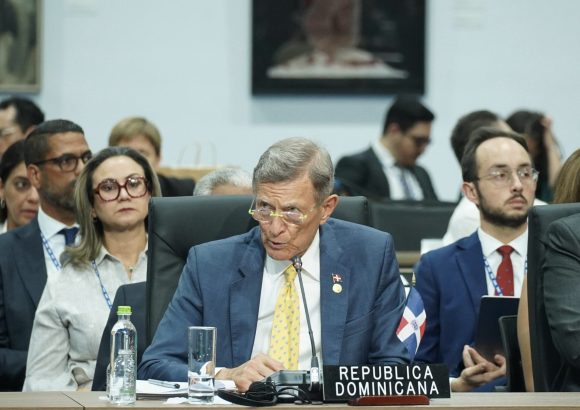
    At the ongoing Organisation of American States General Assembly hosted in Panama City, The Bahamas’ Foreign Affairs Minister Fred Mitchell has delivered a clear rebuke of Washington’s decades-long pressure campaign against Cuba, standing firmly in defense of the island nation’s right to full participation in the global economy. Mitchell outlined the Bahamas’ official position: the Caribbean nation unwaveringly supports Cuba’s sovereignty, territorial integrity, unimpeded access to critical supplies including food and medicine, and its right to take part in all hemispheric affairs.

    Washington has long justified its sweeping sanctions regime against Cuba by citing claims of political repression, human rights violations, and alleged threats to US national security and foreign policy interests. But for Cuba, this sustained pressure has contributed to one of the most severe economic crises the country has faced in 30 years. Today, the island grapples with acute shortages of food, fuel, and essential medications, widespread prolonged power outages, and a public healthcare system pushed to the breaking point. United Nations human rights experts have specifically highlighted that recent US restrictions on fuel imports have further tightened the screws on Cuba’s energy grid, putting access to even basic life-sustaining services at grave risk. Beyond international criticism of US policy, the Cuban government has also faced ongoing global scrutiny over its own human rights practices, particularly the mass detention of demonstrators who participated in widespread anti-government protests in July 2021.

    In a public voice note shared during the assembly, Mitchell noted that what was expected to be a routine, low-key session of policy resolutions has devolved into high-stakes political drama, unfolding against a backdrop of a growing conservative ideological shift across the Americas. He argued that recent political shifts within the United States are directly driving much of the current tension in OAS discussions. While the OAS was originally founded to help member states collaborate on problem-solving while upholding shared values of democratic governance, human rights, human dignity, peace, security, and the rule of law, Mitchell argued the body has a far from perfect track record on delivering on these promises. “There is a sharp divide on ideological grounds between left and right, and the issue of economic dominance and political dominance by the United States of America,” he told delegates.

    Mitchell connected the Bahamas’ stance on Cuba to its approach to another long-troubled Caribbean nation, Haiti, saying the same core principles guide the country’s position on both crises. Haiti, which made history as the first independent Black republic led by formerly enslaved people of African descent, remains trapped in a catastrophic cycle of gang violence, mass forced displacement, and widespread hunger that has strained the response capacity of the Caribbean Community (CARICOM), the OAS, and the broader international community working to restore stability there. “We apply the same values to Haiti that struck the first blow for African people in the world for freedom,” Mitchell said. “We agree that there is still a need in this world for affirmative action and reparations for past discrimination against people of African descent.”

    As ideological rifts widen across the hemisphere, Mitchell said small CARICOM member states are deliberately avoiding getting drawn into crossfire between larger ideological blocs, but their collective numerical weight in the OAS gives them outsize influence despite their small physical and population size. “Even as small island developing states, low-lying coastal states, our votes predominate by the numbers in the OAS forum,” he explained.

    Beyond the debate over Cuba, Mitchell confirmed that the Bahamas is currently assessing what role it can play in addressing the unfolding crisis in Bolivia, where the right-wing national government recently declared a national state of emergency amid escalating mass civil unrest. The Bahamas has received an invitation to join an official OAS delegation that will travel to Bolivia to explore opportunities for constructive mediation that can resolve tensions and prevent a descent into large-scale violent conflict. Mitchell also mapped the current ideological split across South America, noting that nations including Brazil and Mexico now sit on the left of the political spectrum, while Argentina and Chile are led by right-wing governments.

    Mitchell also used his platform at the assembly to press for urgent global action on climate change, framing the crisis as an existential threat to small island nations like the Bahamas in particular. He urged all member states to accept the overwhelming scientific consensus on human-caused climate change, invest in adaptation and mitigation measures, and transition away from fossil fuel dependency to avoid the worst impacts of rising temperatures and sea levels.

    Closing his remarks, Mitchell drew a parallel between modern hemispheric politics and a popular cultural reference: the Star Wars film trilogy. He called the franchise’s core narrative a “moral tale” about the careful and ethical use of power, noting that the trilogy’s central arc demonstrates that even the most powerful actors can be challenged by smaller, less powerful groups. “That is why we in The Bahamas argue for the judicious use of power, and there is this aphorism: People who say that a small voice doesn’t matter have obviously never spent the night in a dark room with a mosquito,” he said.

  • Operation Quisqueya Solidaria 2026 sends Dominican rescuers to Venezuela

    Operation Quisqueya Solidaria 2026 sends Dominican rescuers to Venezuela

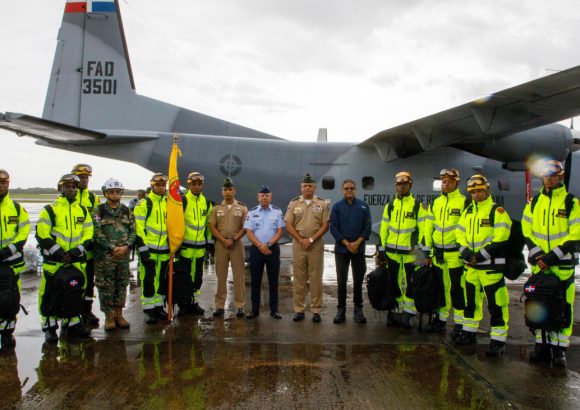
    In the wake of a devastating earthquake that hit Venezuela, the Dominican Republic has activated a large-scale humanitarian relief mission, Operation Quisqueya Solidaria 2026, to support the South American nation’s ongoing emergency response efforts.

    The deployment was formally ordered by Dominican President Luis Abinader, with joint coordination carried out by the country’s Ministry of Defense and Ministry of Foreign Affairs as the centerpiece of the Dominican Republic’s official humanitarian contribution. The mission was arranged following a direct diplomatic conversation between President Abinader and Venezuela’s acting President Delcy Rodríguez, during which Abinader extended profound solidarity to all those affected by the disaster and reiterated his administration’s readiness to deploy critical support to aid on-the-ground rescue work.

    The team being sent to Venezuela is drawn entirely from the Specialized Emergency and Disaster Mitigation Corps (CEMED), a specialized unit purpose-trained to carry out urban search and rescue (USAR) operations in high-risk collapsed building scenarios. Alongside their specialized training, the contingent is fully outfitted with cutting-edge technical search equipment and dedicated logistical supplies to sustain their operations. Per mission planning, the team will integrate directly into emergency response activities organized by Venezuelan national authorities immediately upon completing their arrival procedures.

    CEMED, the unit leading the deployment, was established under Dominican Law 28-24 and operates as an attached body under the Ministry of Defense. The corps is mandated to lead non-combat military operations focused on disaster response, proactive risk management, and cross-border humanitarian assistance. This deployment to Venezuela marks one of the first international mission assignments for the young unit, and it serves as a tangible demonstration of the Dominican Republic’s expanding technical and operational capacity to respond to large-scale disasters across the region.
    Dominican government officials emphasized that the mission underscores the country’s longstanding commitment to multilateral international cooperation, targeted humanitarian action, and regional solidarity between Caribbean and South American nations. To date, liaison officials from both governments maintain constant close communication to coordinate logistics, ensure the safety of the deployed Dominican team, and guarantee the mission delivers effective support as Venezuela continues its broader rescue and recovery operations in the aftermath of the earthquake.

  • Multiple earthquakes strike the Pacific Ring of Fire in 24 hours

    Multiple earthquakes strike the Pacific Ring of Fire in 24 hours

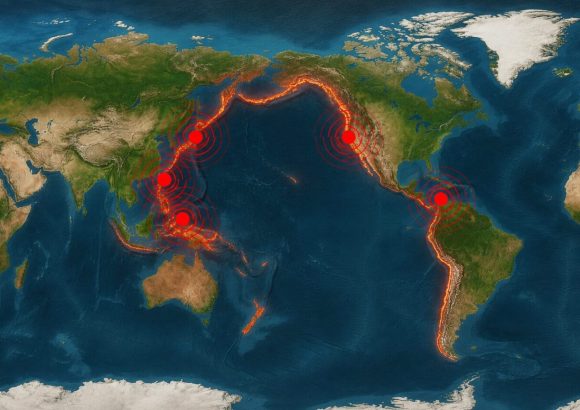
    Over a single 24-hour window, an unusual cluster of significant seismic events unfolded across six continents, triggering widespread global attention and leaving one South American nation grappling with widespread destruction. The string of geological activity kicked off with a magnitude 5.2 tremor that shook parts of China, followed closely by a 5.6-magnitude quake in Northern California, United States, and a 4.6-magnitude seismic shift off the coast of Peru. Local emergency management teams in all three regions quickly conducted damage assessments, confirming that no critical infrastructure collapses or fatalities had occurred, despite widespread public unease.

    The situation escalated dramatically when Venezuela was hit by back-to-back powerful earthquakes, registering 7.1 and 7.5 on the Richter scale within minutes of one another. The twin quakes leveled buildings, cracked critical road networks, and forced widespread evacuations across multiple affected Venezuelan states. The national government immediately declared a national emergency, activated all emergency response units, and issued a call for international search-and-rescue support and humanitarian aid. Ranking among the strongest seismic events recorded globally this year, the Venezuelan quakes quickly became the center of global concern over the unexpected surge in activity.

    The wave of tremors did not end there. Hours after the Venezuelan disaster, a 6.9-magnitude earthquake struck southern Japan, leaving multiple people injured and damaging local transportation infrastructure. Two additional smaller quakes were also recorded in the Philippines and Papua New Guinea—both nations that sit squarely within the Pacific Ring of Fire, the geologically active horseshoe-shaped zone that circles the Pacific Ocean basin and is notorious for frequent tectonic activity.

    Widespread speculation that the clustered quakes were linked by a global tectonic chain reaction quickly spread across social media platforms, but leading seismologists have moved to calm public fears. Experts explain that each of the six quakes occurred along completely separate fault lines and tectonic plates, separated by thousands of kilometers of ocean and landmass. While clusters of major earthquakes within short time windows do occur periodically, seismologists emphasize that such groupings do not automatically signal the start of a larger, global seismic event.

    Beyond the immediate human and infrastructure damage, the recent cluster of quakes has reignited global discussion about the persistent natural hazard risks faced by communities along major tectonic boundaries. The Pacific Ring of Fire alone is responsible for roughly 90% of the world’s annual seismic activity and 75% of all active volcanoes on Earth. As affected nations continue to monitor for dangerous aftershocks and complete full damage assessments, the recent events stand as a stark reminder of how quickly geological forces can disrupt communities, and the ongoing need for robust disaster preparedness in high-risk regions.

  • Greater Santo Domingo moves to organize motorcycle taxi stands under new security strategy

    Greater Santo Domingo moves to organize motorcycle taxi stands under new security strategy

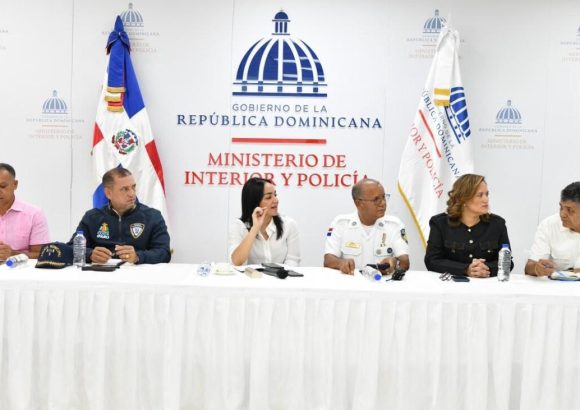
    In Santo Domingo, Dominican Republic, a high-stakes inter-institutional working meeting focused on overhauling motorcycle taxi regulation was convened this week, led by Minister of the Interior and Police Faride Raful. The gathering brought together top leadership from the General Directorate of Traffic and Land Transportation Security (DIGESETT), headed by General Pascual Cruz Méndez, municipal delegates from across the Greater Santo Domingo region, and representatives from five key government bodies to finalize a coordinated strategy for regulating informal motorcycle taxi operations. This initiative forms a core pillar of the national government’s broader push to strengthen citizen safety and bring better organization to chaotic urban transport networks.

    The session built on preliminary negotiations held at the Ministry of the Interior and Police on May 26, uniting stakeholders from the National Police, the National Institute of Transit (INTRANT), DIGESETT, the National Drug Control Directorate (DNCD), and the General Directorate of Migration. Senior officials stressed during the meeting that fragmented, uncoordinated enforcement has long undermined efforts to rein in unregulated motorcycle taxi activity, making cross-agency collaboration non-negotiable for meaningful reform.

    Under the proposed regulatory framework, local municipal governments will take on key on-the-ground responsibilities: managing existing bus and motorcycle taxi stop infrastructure, approving land use permits for new operating zones, and maintaining a public registry of all authorized service areas. To streamline monitoring and quickly identify authorized operators, the plan requires all registered motorcycle taxi drivers to wear province-specific color-coded identification vests that will be visible at all times during operations.

    Additional eligibility requirements will raise standards for anyone seeking to operate legally: all drivers must hold a valid, unrestricted Dominican driver’s license and pass a criminal background check to prove they have no recent or relevant convictions. Officials also announced plans to develop a tiered classification system for all designated motorcycle taxi stands, which will be used to evaluate applications for new stops based on local traffic capacity, pedestrian safety, and community need. The overarching objectives of these reforms are to reduce chronic traffic congestion in Greater Santo Domingo’s densely populated urban corridors and improve overall safety for drivers, passengers, and pedestrians sharing city streets.

    Municipal delegates from four key jurisdictions — Santo Domingo Oeste, the National District, Santo Domingo Norte, and Santo Domingo Este — joined technical working groups from INTRANT and DIGESETT to refine the plan during the meeting. By the close of discussions, all participating stakeholders reaffirmed that sustained inter-agency coordination will be critical to rolling out the reforms successfully. Officials framed the project as a foundational step toward building a more transparent, organized, and secure public transportation system that advances both public order and national crime prevention goals.

  • Bávaro Adventure Park launches new Sacred River night experience in Punta Cana

    Bávaro Adventure Park launches new Sacred River night experience in Punta Cana

    The Dominican Republic’s booming adventure tourism sector has gained a one-of-a-kind new addition, with Bávaro Adventure Park launching an innovative nighttime excursion titled *Sacred River at Night: Magic Mystic Memories* in the popular coastal destination of Punta Cana.

    Tucked within the park’s protected natural reserve, the attraction reimagines the site’s existing underground river and dense jungle terrain as a fully immersive after-dark journey. As visitors traverse the route guided by warm torchlight and carefully curated artistic lighting installations, they encounter dramatic ancient rock formations, transparent glistening waters, and otherworldly subterranean landscapes that come alive under illumination, crafting a uniquely mystical, cinematic atmosphere unavailable during daytime visits.

    A standout centerpiece of the journey is the iconic Blue Lagoon Cenote, where custom-designed underwater lighting amplifies the striking natural beauty of this open-air cavern, creating a visually breathtaking photo opportunity and standout moment for all participants. From conception, the entire experience was engineered to blend raw natural exploration, high-adrenaline adventure, and full sensory immersion, all within a strictly controlled, safety-focused environment.

    Beyond the river expedition, the full nighttime experience extends into post-tour entertainment and dining. After emerging from the underground route, guests are invited to a sunset-inspired cocktail hour adjacent to a tranquil waterfall pool, accompanied by live DJ sets that set a relaxed yet energetic tone. The experience continues with a hearty surf-and-turf dinner served al fresco in the heart of the jungle, before wrapping up with an open bar and lively jungle-themed celebration for all attendees.

    To ensure maximum accessibility and comfort for travelers from around the world, the full package includes all required safety gear, bilingual professional guides, and round-trip transportation from any Punta Cana area hotel, eliminating logistical stress for visitors.

    Héctor Ureña, commercial director of Bávaro Adventure Park, noted that the new attraction is designed to solidify Punta Cana’s standing as a top global hub for experiential tourism. By combining the Dominican Republic’s world-renowned natural beauty, legendary hospitality, and innovative entertainment, the park caters to a growing base of international travelers searching for unique, memorable nighttime activities that go beyond standard beach and resort offerings.

    With this launch, Bávaro Adventure Park further cements its position as a leader in the Caribbean adventure tourism market, and stakeholders expect the new attraction to drive incremental visitor interest and growth in experiential travel across the Dominican Republic.

  • Dominican Republic reelected to OAS Inter-American Juridical Committee

    Dominican Republic reelected to OAS Inter-American Juridical Committee

    During the 56th Ordinary Session of the Organization of American States General Assembly, hosted this year in Panama City, delegates voted overwhelmingly to reelect the Dominican Republic to a second consecutive term on the organization’s influential Inter-American Juridical Committee (CJI) via acclamation. This outcome cements the Dominican Republic’s ongoing role in shaping critical legal and diplomatic dialogue across the Western Hemisphere.

    The Dominican Republic will be represented on the committee by distinguished jurist Julio José Rojas Báez, who already holds two key leadership positions within the CJI: current committee president and special rapporteur focused on the legal ramifications of sea level rise across the inter-American region. Alongside the Dominican Republic, candidates from Brazil and Mexico also secured seats on the committee during the same electoral process.

    In an official statement following the vote, the Dominican Republic’s Ministry of Foreign Affairs emphasized that the reelection is far more than a routine procedural outcome: it signals the country’s expanding clout in global multilateral governance, and serves as international recognition of the high level of expertise held by Dominican legal practitioners.

    As the primary advisory body to the OAS on all legal matters, the CJI plays a foundational role in advancing the evolution and formal codification of international law across the Americas. It also works to strengthen cross-border legal cooperation and advance political and legal integration among the 35 member states of the Organization of American States.

  • Tobacco exports generate $1.359 billion for Dominican Republic in 2025

    Tobacco exports generate $1.359 billion for Dominican Republic in 2025

    Santo Domingo – The Dominican Republic’s iconic tobacco sector has delivered another year of solid expansion, closing 2025 with total export revenue hitting $1.359 billion. This marks a $19 million year-over-year increase, reaffirming the industry’s standing as one of the nation’s most valuable export-focused sectors.

    Industry leader Iván Hernández Guzmán shared new details on the sector’s broad economic footprint, noting that it currently supports more than 122,000 direct jobs across the country and maintains an annual output of roughly 330,000 quintals of raw tobacco. Currently, 130 tobacco and tobacco-derived product companies operate within the nation’s free zone regime, with 93% of these facilities concentrated in the country’s northern agricultural heartland.

    Long-term trend data underscores the sector’s consistent momentum: since 2019, total tobacco exports have surged 41%, pulling in a wave of new private investment and driving dramatic job growth. The total direct workforce has expanded from just under 97,500 workers in 2019 to more than 122,000 entering 2026.

    Hernández attributed the sector’s sustained growth to targeted government support programs designed to strengthen smallholder producers and boost global market access. These initiatives include hands-on technical assistance for farmers, free distribution of improved tobacco seeds and seedlings, support for land preparation, advanced pest control frameworks, and sustained international marketing campaigns that highlight the quality of Dominican tobacco.

    He went on to reaffirm that tobacco remains the Dominican Republic’s third-largest export category, trailing only gold and medical devices in total export value. Meanwhile, premium Dominican cigars continue to hold an unrivaled global reputation for craftsmanship and quality, anchored by world-renowned brands including Arturo Fuente and Davidoff that dominate the global premium cigar market.