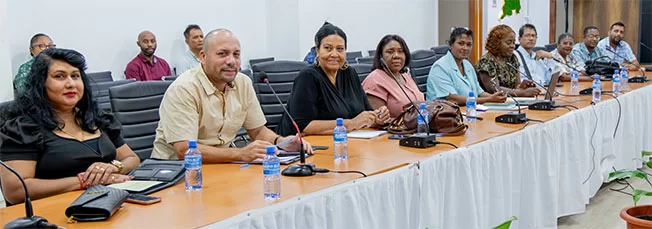
On a recent Friday in August, multiple education unions across Suriname held a formal meeting at the Presidential Cabinet with President Jennifer Simons to advocate for the reversal of a controversial 2025 decision to scrap the B-track within lower vocational education (LBO). The unions, which include major education representative bodies such as the Federation of Organizations of Teachers in Suriname (FOLS), the Union of Teachers in Technical Education (BLTO) and BvL/ALS, presented detailed concerns about how the elimination of the B-track is harming practice-oriented learners and undermining the country’s pipeline of skilled tradespeople, according to government communications from the Suriname Communication Service.
BLTO Chair Jennifer Ballo, who led the delegation on the issue, emphasized that the call to bring back the B-track was the central focus of the talks with the president. The B-track was officially terminated in October 2025 as part of a broader restructuring of the country’s lower vocational education system, which replaced the former three-tier A, B and C track framework with a new structure.
Under the former system, the A, B and C tracks were designed to cater to different learner needs and talents, not to rank students by intelligence, Ballo explained. The C-track focuses on academic, cognitive learning aligned with pre-university secondary education, while the B-track was specifically built to train aspiring skilled tradespeople. Unlike the current shortened P-track that replaced the former A-tier, the B-track gives learners critical flexibility: graduates can enter the workforce immediately after earning their LBO B diploma, but they also retain a clear pathway to pursue further education through evening schooling to advance their qualifications.
The unions warn that the current post-restructuring setup carries major risks for young Surinamese learners. While the new shorter P-track allows students to gain basic practical skills quickly to enter the workforce sooner, this structure pushes many young people to leave formal education early to earn income, permanently closing off opportunities for upward mobility and advanced skills development. Ballo stressed that keeping learners within formal education for as long as possible is critical to meeting Suriname’s economic and labor needs, noting that the country needs more than just entry-level labor—it requires fully qualified, skilled trade experts to drive growth.
Beyond just reinstating the B-track, the unions also stated they are open to reviewing and returning to the full former four-year LBO system, which they argue has a proven track record of supporting diverse learners effectively. “We are ready not only to bring back the B-level but also to return to the old LBO system, which we believe can function effectively again for our students and our country,” Ballo said.
In response to the unions’ presentation and concerns, President Simons committed to opening discussions with the Minister of Education on the issue in the short term. The unions are optimistic that the upcoming talks will lead to a constructive solution that addresses the gaps created by the 2025 restructuring.