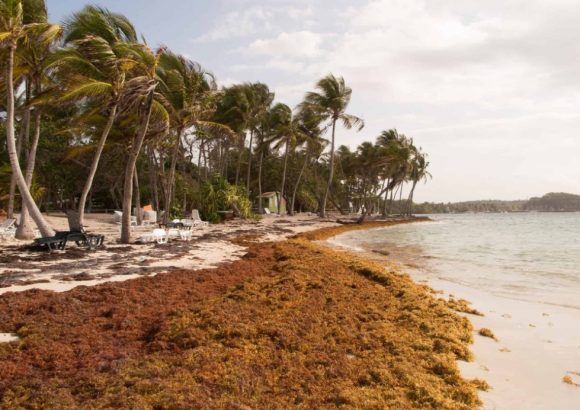
SANTO DOMINGO — As the Caribbean region grapples with one of its most persistent marine ecological challenges, a leading tourism industry official in the Dominican Republic is pushing for a holistic, community-centered approach to tackling the growing sargassum invasion threatening the nation’s iconic coastlines. Aguie Lendor, Executive Vice President of the Dominican Hotel and Tourism Association (Asonahores), has emphasized that any long-term strategy to address the influx of brown seaweed along the country’s shorelines must deliver shared benefits to both the $10 billion-a-year tourism sector and the local coastal communities that depend on healthy marine ecosystems for their livelihoods.
In a public interview on the popular local morning news program *El Despertador*, Lendor issued a clear warning: climate and ocean current projections indicate that exceptionally large volumes of sargassum will drift to Dominican shores by 2026, making urgent, proactive planning non-negotiable to mitigate damage to popular beaches and ecologically sensitive coastal zones. Without sustained, coordinated action now, she argued, the incoming seaweed surge could erode the country’s reputation as a top tropical travel destination and disrupt the daily lives of residents who live along affected coastlines.
Already, many private tourism operators have moved ahead with independent mitigation measures to protect their guest-facing beachfronts. Lendor confirmed that a large number of the country’s major hotels have deployed layered containment systems, including dual offshore barriers engineered to block massive clumps of sargassum from reaching the recreational beaches used by tourists. While these private efforts have proven effective for individual properties, Lendor noted that they do not solve the broader, nationwide problem, highlighting the need for coordinated public sector leadership.
She added that a dedicated inter-ministerial government cabinet is currently assessing a range of potential long-term management solutions, from innovative harvesting technologies to offshore diversion strategies and commercial repurposing of collected sargassum for products like fertilizer, biofuel, and construction materials. Throughout the evaluation process, Lendor stressed, policymakers must center a balanced approach that prioritizes both the economic needs of the tourism industry — which supports more than half a million jobs across the country — and the health, safety, and economic well-being of local coastal communities and the general public. Any successful strategy, she argued, cannot protect tourist beaches at the expense of leaving residential and public coastlines buried under tons of rotting seaweed.