博客

  • Guyana bringing robotic surgery- Ali

    Guyana bringing robotic surgery- Ali

    In a landmark announcement that positions Guyana at the forefront of medical innovation, President Irfaan Ali declared the nation’s commitment to implementing robotic surgery systems during the inauguration of Balwant Singh Hospital’s Outpatient Pavilion and East Street Promenade in Georgetown on Saturday.

    President Ali revealed he has directly challenged Health Minister Dr. Frank Anthony and his team to establish Guyana as the Western Hemisphere’s pioneer in transatlantic robotic surgeries. “We are going full robotics. No turning back,” the President stated emphatically, highlighting how robotic systems would overcome human surgical limitations and fatigue that compromise procedural quality after multiple operations.

    The technological advancement aligns with global medical trends documented by institutions like the Mayo Clinic, which confirms robotic assistance enhances surgical precision, flexibility, and control during complex procedures performed through minimally invasive techniques.

    Beyond surgical robotics, President Ali outlined additional healthcare innovations including AI-powered drug supply chain management systems to eliminate shortages and reduce waste. The government further plans to establish an integrated medical manufacturing platform positioned to serve the entire Caribbean region.

    This initiative complements existing regional efforts by the Caribbean Community (CARICOM), supported by the European Union through Lithuanian facilitation, to develop medicine and vaccine production capabilities in Guyana and Barbados.

    The newly opened Balwant Singh Hospital facility itself represents a significant healthcare upgrade, with CEO Dr. Madhu Singh reporting approximately 400 daily patients across specialized floors dedicated to women’s health, dermatology, ophthalmology, surgical services, and a state-of-the-art IVF center meeting international standards.

    The accompanying East Street Promenade development, created in collaboration with First Lady Arya Ali, signals additional urban infrastructure partnerships between government and private entities aimed at community enhancement.

  • Puerto Rico records second consecutive week of influenza cases below epidemic threshold

    Puerto Rico records second consecutive week of influenza cases below epidemic threshold

    Puerto Rico’s public health landscape shows significant improvement as health authorities confirm influenza cases have remained below the epidemic threshold for the second consecutive week. During epidemiological week 6 (February 8-14, 2026), the island documented 2,070 new influenza infections, bringing the seasonal total to 52,713 cases in the 2025-2026 season.

    Health Chief Víctor M. Ramos Otero celebrated the milestone, stating this trend represents a crucial step toward officially declaring an end to the epidemic. ‘If we continue this trend into the fourth week, we will meet the other epidemiological criteria,’ Ramos Otero announced in an official statement.

    The substantial vaccination campaign appears to be driving this positive development, with 426,008 doses administered this season—representing 76,332 more inoculations than the same period last year. This increased participation reflects strengthened public health strategies and community engagement efforts.

    Despite overall improvement, authorities reported concerning data points: 47.8% of cases occurred in the pediatric population (ages 0-19), while the hospitalization rate held steady at 4.2%. The season has accumulated 162 confirmed influenza fatalities, including 12 new deaths reported in the latest weekly data. Additionally, 23 school outbreaks were identified during week 6, primarily concentrated in the Bayamón (8), Arecibo (4), and Mayagüez (3) regions.

    The Health Department’s community-focused approach has included 103 outreach events across municipalities, bringing vaccines directly to vulnerable populations. New vaccination initiatives are scheduled for March 2-6 across various island regions.

    Health officials continue emphasizing preventive measures including frequent handwashing, respiratory etiquette, mask-wearing when symptomatic, and avoiding close contact with infected individuals.

  • Rijstboeren krijgen padieprijs aangeboden van SRD 500–550 per baal

    Rijstboeren krijgen padieprijs aangeboden van SRD 500–550 per baal

    In a significant development for Suriname’s agricultural sector, rice farmers have secured substantially improved pricing following government-mediated negotiations. Minister Mike Noersalim of Agriculture, Livestock, and Fisheries (LVV) successfully facilitated an agreement that will see rice millers offering between SRD 500–550 per bale, a notable increase from the previously proposed SRD 300–400 range.

    The breakthrough emerged from comprehensive consultations involving multiple stakeholders, including Agriculture Minister Noersalim, Economic Affairs Minister Andrew Basaaron, parliamentary representative Ebu Jones, and Edmund Duiker, Chairman of the NOFA Fund. The discussions focused not only on immediate pricing concerns but also on establishing sustainable solutions for subsequent harvesting seasons.

    Ashwin Jagmohansing, President of the Nickerie Rice Farmers Interest Group Association (VBPN), expressed satisfaction with the outcome, stating he would return to his members with positive news. Approximately 20,000–22,000 hectares of rice have been planted for the current season.

    Minister Noersalim emphasized that while LVV maintains a mediator role in price determinations, the rice sector operates under a free-market system where prices are ultimately determined by supply and demand dynamics. The ministry’s intervention aims to streamline negotiations ensuring both producer satisfaction and continued rice production stability.

    Infrastructure improvements were also addressed, with Minister Noersalim confirming resolution of pumping station issues at Wakay and ongoing efforts to upgrade irrigation systems through public tenders.

    The pricing dispute represents a longstanding challenge in global agricultural markets, as noted by Economic Affairs Minister Basaaron, who highlighted regional developments influencing price structures. The current administration has committed to establishing comprehensive cost-calculation methodologies with broad stakeholder support.

    Parliamentarian Ebu Jones praised the collaborative approach, contrasting it with previous administrations’ priorities. He emphasized that fair pricing for farmers would ultimately benefit consumers through potentially lower market prices for rice products, creating a win-win scenario for both producers and the broader society.

  • Guyana condemns Iran’s “unprovoked” attack on Gulf States

    Guyana condemns Iran’s “unprovoked” attack on Gulf States

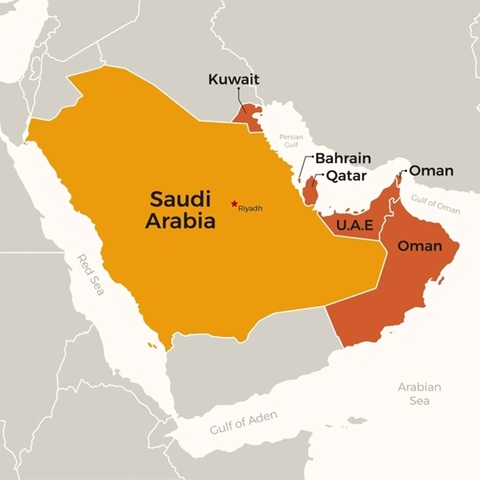
    In a firm diplomatic stance issued on Saturday, February 28, 2026, the Government of Guyana formally condemned the Islamic Republic of Iran for its missile strikes against multiple sovereign nations in the Persian Gulf. The targeted states included the Kingdom of Bahrain, the United Arab Emirates, Qatar, and Kuwait.

    The Guyanese Ministry of Foreign Affairs characterized the offensive as an ‘unprovoked and unjustified’ act that constitutes a clear violation of established international law. The official statement carefully refrained from commentary on the preceding military action by the United States and Israel, which resulted in the death of Iran’s Supreme Leader Ayatollah Ali Khamenei and several other high-ranking officials, effectively concluding his nearly four-decade authoritarian regime.

    Reiterating its commitment to regional stability, the Guyanese government called for immediate de-escalation from all involved parties. It expressed ‘full solidarity’ with the governments and civilian populations of the attacked Gulf Cooperation Council (GCC) member states. This position aligns with Guyana’s established close diplomatic and economic relations with both the United States and several Arab Gulf nations. The statement concluded by emphasizing the urgent and sustained pursuit of a lasting peaceful resolution for the broader Middle East region.

  • Abinader on power outages: “They are unacceptable. They concern us and we are addressing them.”

    Abinader on power outages: “They are unacceptable. They concern us and we are addressing them.”

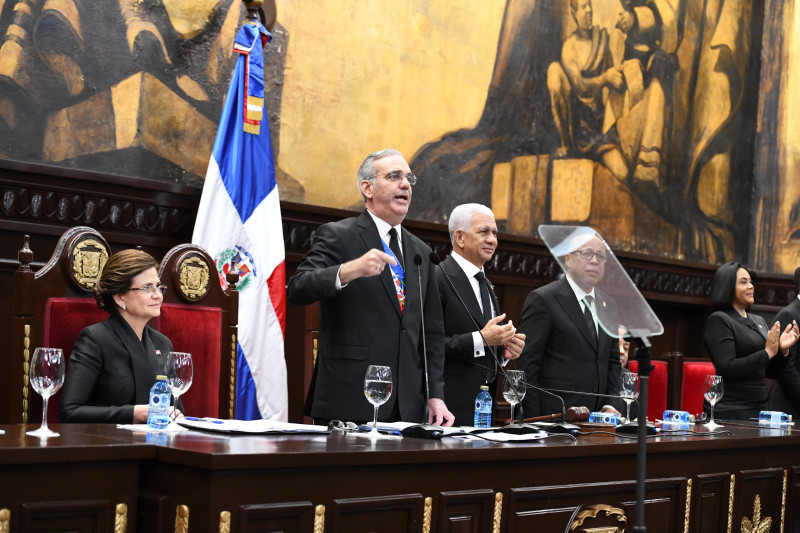
    Dominican President Luis Abinader delivered a stark assessment of the nation’s ongoing electricity crisis during his sixth accountability address, acknowledging that systemic power failures have presented a formidable challenge for successive governments, including his current administration. The president confronted the issue head-on, characterizing recent blackouts as “unacceptable” while outlining corrective measures underway.

    Substantial capital investments are being channeled into modernizing the national grid, with international engineering firms contracted to enhance system security and operational stability. This strategic move aims to fortify an increasingly complex and diversified power infrastructure that has repeatedly failed to meet national demand.

    The most recent nationwide outage occurred Monday morning, triggering widespread disruption across transportation networks including the Santo Domingo Metro and cable car systems. The cascading failure paralyzed daily life for millions of citizens, highlighting the grid’s critical vulnerabilities.

    Energy Minister Joel Santos provided technical clarification, noting the incident stemmed from an equipment explosion rather than human error. “This was a breakdown caused by an explosion,” Santos stated, emphasizing the need to investigate both the root cause and the failure’s propagation mechanism through the grid.

    The National Interconnected Electric System (SENI) Failure Committee has scheduled a crucial working session for March 11 to present preliminary findings and implement corresponding corrective measures. This development follows a similar November outage that similarly crippled public transportation services, then attributed to unauthorized personnel intervention at the San Pedro de Macorís substation.

  • Staatstelevisie Teheran bevestigd dood Ayatollah Ali Khamenei

    Staatstelevisie Teheran bevestigd dood Ayatollah Ali Khamenei

    In a seismic development that has shaken the Middle East’s geopolitical landscape, Iranian state television has officially confirmed the death of Supreme Leader Ayatollah Ali Khamenei, 86, along with several family members during coordinated airstrikes on his residence. The announcement marks an unprecedented moment in Iran’s modern history, ending Khamenei’s 37-year reign as the Islamic Republic’s highest authority.

    American President Donald Trump initially disclosed the operation, characterizing it as a successful joint mission between United States and Israeli forces. According to Trump’s statement, Khamenei and associated Iranian officials were unable to evade sophisticated American intelligence tracking systems. Israeli Prime Minister Benjamin Netanyahu subsequently reinforced these claims, citing mounting evidence confirming the Supreme Leader’s demise.

    The tragedy extends beyond political implications, with confirmation that Khamenei’s daughter, son-in-law, and granddaughter also perished in the attack. Iranian media delivered the news through solemn programming, withholding specific operational details while acknowledging the multidimensional loss.

    Following constitutional protocols, Iran has declared 40 days of national mourning alongside seven days of official holiday periods. Regional analysts anticipate intense political maneuvering within Iran’s religious hierarchy as the Assembly of Experts convenes to select Khamenei’s successor—a process that could fundamentally reshape Iran’s domestic policies and international relations.

    Global observers are monitoring Tehran’s transition with heightened alertness, recognizing Iran’s substantial influence across Middle Eastern affairs and global energy markets. The unprecedented nature of this event suggests potential volatility in regional stability, with particular attention on Iran’s proxy networks and nuclear policy trajectory.

  • SEOB waarschuwt: economie blijft fragiel, strikte discipline en hervormingen noodzakelijk

    SEOB waarschuwt: economie blijft fragiel, strikte discipline en hervormingen noodzakelijk

    The Suriname Economic Oversight Board (SEOB) has issued a stark warning about the nation’s ongoing economic fragility in its latest February 2026 bulletin. While acknowledging certain stabilizing factors including robust banking institutions and relatively strong reserve positions, the independent monitoring body highlighted several critical concerns that continue to threaten macroeconomic stability.

    The report reveals accelerating inflation rates, persistent government deficits, and national debt levels soaring significantly above the internationally accepted threshold of 60% of GDP. This elevated debt ratio presents substantial risks to economic stability according to the oversight board’s analysis.

    In response to these challenges, the SEOB has presented comprehensive recommendations centered on implementing strict fiscal discipline. Key proposals include enhancing fiscal transparency, developing coherent medium-term tax policy frameworks, establishing five-year government financial plans with expenditure ceilings, and implementing sustainability targets for total public debt.

    The board specifically addressed concerns regarding substantial government subsidies, particularly in the electricity sector. Recommendations call for transparent divestment of non-strategic, loss-making state enterprises that require significant subsidies and the formal proclamation of procurement legislation to ensure transparency and cost control in government contracts.

    Looking toward anticipated offshore oil revenues, the SEOB emphasized the urgent need to strengthen and operationalize critical institutions including the Savings and Stabilization Fund (SSFS). The organization stressed that transparency and anti-corruption mechanisms must be fully established before substantial revenue inflows begin.

    To reduce mining sector dependency, the report advocates for active economic diversification efforts prioritizing agricultural development (including fisheries and processing), service sector expansion, ecotourism, and collaborative production and export growth strategies between government and private enterprises.

    The bulletin also addressed debt management and monetary policy coordination, highlighting the necessity of active debt management given current debt levels and ensuring proper alignment between fiscal and monetary policies to contain inflationary pressures and stabilize the Surinamese dollar. Maintaining central bank independence in accordance with the 2022 Central Bank Act remains paramount.

    Finally, the SEOB underscored that sustainable economic recovery depends not merely on statistical improvements but equally on building confidence through consistent policy implementation and clear communication regarding socioeconomic strategy for the coming years.

  • Jérémie : The health and humanitarian situation at the prison is worrying

    Jérémie : The health and humanitarian situation at the prison is worrying

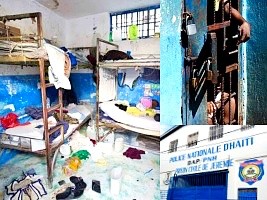
    A recent inspection of Jérémie Prison in Haiti has revealed a severe humanitarian crisis unfolding within its walls. The Association of Volunteers for the Reintegration of Prisoners in Haiti (AVRP), following their February visit, documented alarming conditions that threaten the wellbeing of all detainees.

    The correctional facility currently houses 470 inmates, comprising 435 adults, 18 women, and 17 minors under age 18. The intermingling of juvenile detainees with adult prisoners raises significant concerns regarding child protection standards and compliance with international human rights protocols.

    Security remains critically understaffed with merely 25 officers responsible for all detainees, creating a volatile environment where tensions frequently escalate into physical altercations between inmates.

    Sanitation systems have completely broken down. Despite the presence of an artesian well, power failures prevent consistent water access, forcing inmates to wash in the prison yard under unsanitary conditions. Waste management is virtually nonexistent, with meal preparations over charcoal fires leaving residues that accumulate throughout the facility.

    Nutritional provisions fall dramatically short of basic requirements, with inmates receiving just one meal daily. The medical situation proves even more dire: while 11 health staff members remain on duty, they lack essential medications including pain relievers, antibiotics, and treatments for chronic conditions. This shortage has reportedly contributed to multiple fatalities over the past three years, though official statistics remain undocumented.

    Living conditions continue to deteriorate with insufficient bedding, torn sheets, and deteriorated prisoner uniforms. The complete absence of social workers eliminates any meaningful psychosocial support or rehabilitation programs, though administrative functions through a registry office maintain minimal operational structure.

    AVRP officials emphasize that immediate intervention is required to address water access, medical supplies, security reinforcement, segregation of minors, and implementation of reintegration initiatives.

  • LHF National Championship : New organizational and disciplinary measures

    LHF National Championship : New organizational and disciplinary measures

    The Haitian Football League (LHF) has announced a comprehensive overhaul of organizational and disciplinary protocols for its National Championship, marking a significant step toward modernizing the country’s premier football competition. This strategic initiative targets fundamental aspects of match administration and club conduct through an institutional strengthening program.

    The newly implemented framework establishes a harmonized regulatory system designed to address multiple dimensions of championship operations. Central to these reforms are mandates for strict compliance with official match protocols, enhanced protection measures for match officials, and reinforced security for both team delegations and spectators. The league has additionally prioritized standardization and transparency in sanction enforcement procedures.

    Key provisions include the rigorous implementation of pre-match countdown procedures, a unified disciplinary scale with progressive penalty structures, and automatic escalation mechanisms for recurrent violations. Notably, the regulations formally prohibit superstitious practices deemed potentially compromising to sporting integrity. Clubs will now bear objective responsibility for actions committed by their players, management, delegations, and supporter groups.

    League officials emphasized that these measures represent not arbitrary restrictions but essential evolution toward structured governance aligned with international football standards. The LHF statement clarified that championship credibility fundamentally depends on disciplined conduct, consistent rule adherence, and equitable treatment of all participants.

    Positioning this regulatory transformation as a collective ambition for Haitian football, the league has issued a call for unified commitment from clubs and supporters. The success of this professionalization initiative reportedly requires collaborative engagement with the new framework, emphasizing shared responsibility in elevating the championship’s stature and operational integrity.

  • Technology : The Ministry of Tourism reaches a decisive milestone

    Technology : The Ministry of Tourism reaches a decisive milestone

    In a groundbreaking technological advancement for Caribbean tourism, Haiti’s Ministry of Tourism has unveiled an ambitious digital transformation initiative titled ‘Klike sou Ayiti’ (Click on Haiti). This comprehensive digital infrastructure marks a strategic pivot in how the nation presents itself to global visitors, investors, and its widespread diaspora community.

    The initiative represents a fundamental shift in Haiti’s approach to tourism competitiveness, emphasizing that a nation’s appeal now fundamentally depends on its digital visibility and interactive capabilities. As stated by ministry officials, this project transcends conventional tourism development, instead constituting a structural transformation of territorial access and national representation.

    Central to this digital revolution are four interconnected platforms designed to serve diverse audiences:

    The National Tourism Map (welcometohaiti.ht) provides an immersive visual interface for exploring Haiti’s attractions through categorized site listings and regional tours. iTouris offers a comprehensive trip planning system that converts travel intentions into secure, actualized itineraries. Kwonik Ayiti establishes a digital memory platform preserving Haitian heritage while strengthening narrative sovereignty. Finally, Touris Hub creates a professional networking space for industry operators and young entrepreneurs to develop skills and business connections.

    Following the functional demonstration phase, the Ministry has now opened a public testing period, inviting citizens, tourism professionals, and Haiti enthusiasts worldwide to explore and help optimize these digital tools. Early adopters can register through the Ministry’s official form to participate in refining the platforms before full public deployment.

    This initiative positions Haiti at the forefront of digital tourism innovation in the Caribbean region, potentially establishing new standards for how developing nations leverage technology for economic development and cultural preservation.