博客

  • Qasim Henry Wins 2025 WOW Factor Award for Transportation and Tours

    Qasim Henry Wins 2025 WOW Factor Award for Transportation and Tours

    The global tourism industry is full of small, passionate operators that redefine how travelers experience new destinations, and one Caribbean professional has now earned top-tier recognition for his innovative approach to cultural immersion. Qasim Henry, founder and owner of the boutique tour company Antigua Inside Out, has been officially announced as the 2025 recipient of the WOW Factor Award for Transportation and Tours, an honor that celebrates excellence in visitor experience and destination promotion.

    Unlike generic mass-market sightseeing packages, Henry’s work centers on crafting authentic, customized travel experiences that shine a spotlight on the layered history, vibrant living culture, and breathtaking natural landscapes of the twin-island nation of Antigua and Barbuda. Award organizers explained that Henry stood out from nominees across the region for his commitment to moving beyond surface-level tourism. Instead of just guiding visitors through popular landmarks, he weaves local oral histories and community-centered cultural activities into every tour, helping guests form deep, meaningful connections to the islands and their people.

    Through years of consistent focus on narrative-driven storytelling, exceptional customer care, and intentional promotion of Antigua and Barbuda’s unique heritage, Henry has grown Antigua Inside Out from a small local operation into one of the destination’s most trusted tourism brands. Organizers note that the company now serves as an unofficial, yet highly respected, ambassador for the islands, shaping how international visitors perceive and engage with the Caribbean nation.

    In response to the announcement, Henry shared that the award is far more than a personal honor—it is a reflection of the years of relentless work, consistent dedication, and unwavering commitment that his entire team puts into creating unforgettable, one-of-a-kind experiences for every guest that walks through their doors. The leadership of the WOW Factor Awards officially extended their congratulations to Henry, emphasizing that his infectious passion for showcasing all that Antigua and Barbuda has to offer continues to inspire not just the tourists who visit his tours, but also local residents who work in the island nation’s critical tourism sector.

  • Pawiroredjo zet vraagtekens bij omvang personeel kabinet vp; Rusland geeft uitleg

    Pawiroredjo zet vraagtekens bij omvang personeel kabinet vp; Rusland geeft uitleg

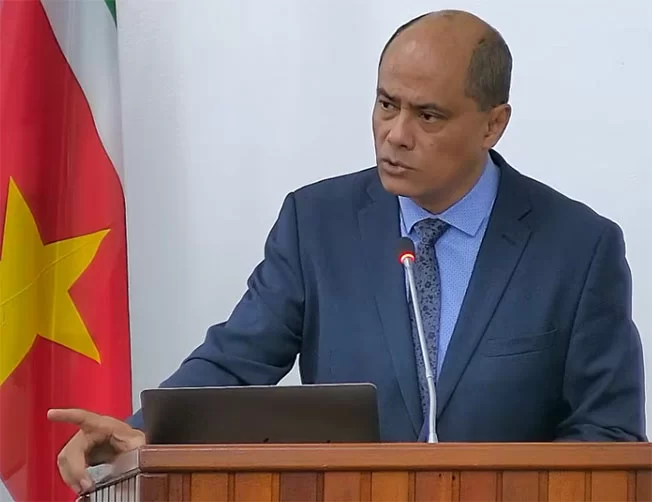
    A heated debate over public sector staffing efficiency has erupted in Suriname during ongoing national budget deliberations, with the leader of the opposition NPS party raising sharp questions about bloated headcount at the Vice President’s office. Jerrel Pawiroredjo, NPS parliamentary group leader, told lawmakers Friday that approximately 500 people are currently listed on the Vice President’s cabinet payroll, but widespread reports suggest many of these workers are not present for daily work duties.

    Pawiroredjo centered his critique on fiscal responsibility, arguing that the government must prioritize more careful stewardship of taxpayer funds amid a period of tight national public finances. He questioned whether the current size of the Vice President’s cabinet workforce aligns with the actual workload of the office, noting that Surinamese society has a clear right to a streamlined, efficient public sector when financial resources are so constrained. The opposition leader called for a full review of government organizational structure to confirm that all public spending delivers clear value to citizens.

    Vice President Gregory Rusland pushed back partially against Pawiroredjo’s claims, clarifying that the 500 total headcount does not exclusively refer to staff based directly in the Vice President’s core cabinet. Rusland explained that the payroll figure includes employees from multiple independent institutions that fall under the Vice President’s portfolio, including two major state media outlets: the Suriname Television Foundation (STVS) and the Suriname Broadcasting Foundation (SRS). The aggregated total, he stressed, does not accurately reflect the number of staff working full-time in the central Vice President’s office.

    Rusland did acknowledge that the Surinamese government as a whole faces challenges with an oversized public workforce, confirming that the current administration is fully aware of the issue and is actively pursuing targeted reforms to boost the efficiency of the entire public apparatus. He emphasized that any restructuring must be implemented carefully and gradually, as thousands of Surinamese households rely on public sector employment for their livelihoods. “These are not processes you can implement overnight,” Rusland told parliament.

    The exchange over the Vice President’s cabinet staffing is not an isolated incident. Multiple parliamentary factions from across the political spectrum have used this year’s budget debate to call for broader public sector reform, unified in pushing for more prudent management of public funds. Lawmakers across parties have stressed that structural reforms are necessary to put Suriname’s public finances on a sustainable long-term footing, without eroding the quality of public services that Surinamese citizens depend on.

  • $641,000 in targeted ATM

    $641,000 in targeted ATM

    What was shaped up to be a carefully coordinated large-scale robbery has ended in an embarrassing failure for five masked suspects, after a critical piece of their stolen heavy equipment broke down just as they were poised to escape with hundreds of thousands of dollars in cash, newly released official police reports have confirmed.

    The botched plot kicked off shortly before midnight on a Wednesday, when two on-duty security guards at Courland Beach Sports Arena were ambushed by two attackers clad in dark clothing. One of the assailants was armed with a loaded firearm, and the pair immediately restrained and searched the guards, demanding they hand over keys for a white Mitsubishi work truck and a yellow Caterpillar backhoe. When the guards explained they did not carry the keys for the equipment, the gunmen ransacked on-site storage and personal bags, before tying the guards’ hands and feet and forcing them to lie face-down on the ground. In a striking detail that has drawn public attention, one of the suspects was wearing a cape and hood that matched the iconic costume of comic book hero Batman. Before leaving the scene, the attackers warned the guards that a third accomplice was posted as a lookout along the nearby fence line, and that any attempt to move or call for help would be met with force.

    Minutes after the assailants departed, the guards heard the stolen truck and backhoe being driven off the property. It took the guards nearly an hour to free themselves from their restraints; once loose, they counted their losses and found that only $200 in cash had been stolen from one guard’s personal wallet. The value of the two stolen pieces of equipment, however, far outstripped that small take: the Mitsubishi truck was appraised at $412,000, and the Caterpillar backhoe was valued at $850,000, bringing the total value of stolen property from the arena to $1.262 million.

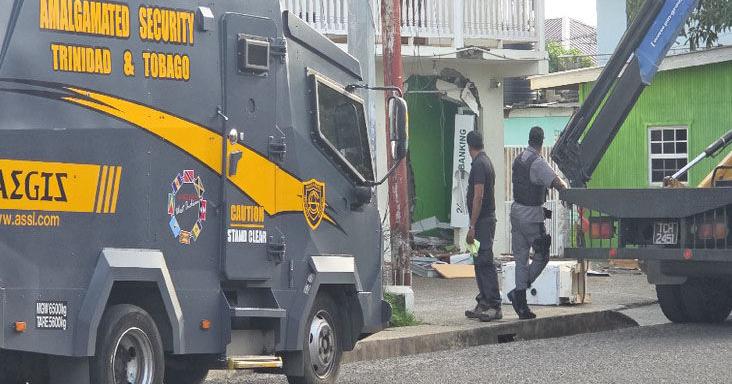
    Just over two hours after the initial ambush, at approximately 2:05 a.m., a resident living in an upper floor of the Supreme Plaza building in Plymouth, overlooking a First Citizens Bank ATM on Shelbourne Street, was jolted awake by a loud noise that sounded like a vehicle ramming into the commercial structure. Curious, the resident looked out from an upstairs office window and spotted a masked man operating the stolen backhoe, which had already smashed a large hole in the exterior wall that housed the ATM’s reinforced vault. Parked nearby, a white three-tonne truck – the same stolen Mitsubishi from the arena – waited with four more masked suspects, ready to carry the vault away.

    The witness immediately placed a call to local law enforcement, and watched from his vantage point as the backhoe wrenched the entire ATM vault free from the building’s foundation. The gang then made repeated attempts to hook the heavy vault to the backhoe and lift it onto the waiting truck – but that is where their carefully laid plan fell apart. The backhoe had sustained critical structural damage during the wall-demolition process, and it completely broke down mid-lift, leaving the suspects with no way to load the 238,000 vault onto their escape truck.

    Trapped and with police already en route, the five suspects were forced to abandon their entire operation. They fled the scene in the stolen Mitsubishi truck, leaving behind the disabled backhoe, the damaged building, and the untouched ATM vault that still held their intended target: $641,000 in cold, hard cash. Law enforcement later assessed the damage to the bank and plaza building, estimating that structural repairs would cost $185,000, plus an additional $40,000 to replace two destroyed First Citizens Bank signs.

    After securing the scene, investigators pulled surveillance footage from nearby cameras that clearly captured the five masked suspects during the attempted robbery. Police confirmed this week that they have already identified two persons of interest connected to the failed heist, and the investigation remains active as officers work to track down the remaining suspects and recover the stolen Mitsubishi truck that the gang escaped in.

  • Venezuela death toll crosses 900

    Venezuela death toll crosses 900

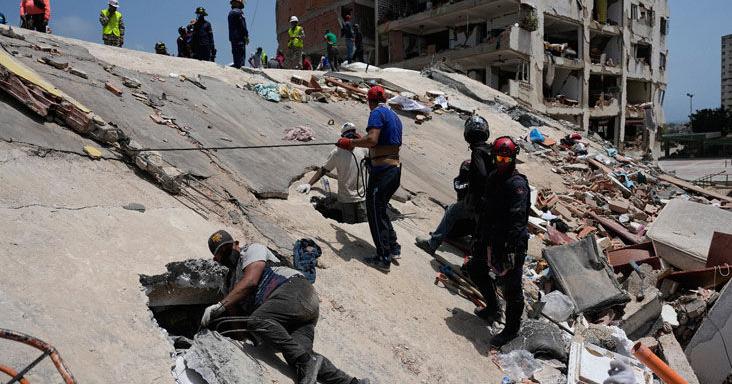
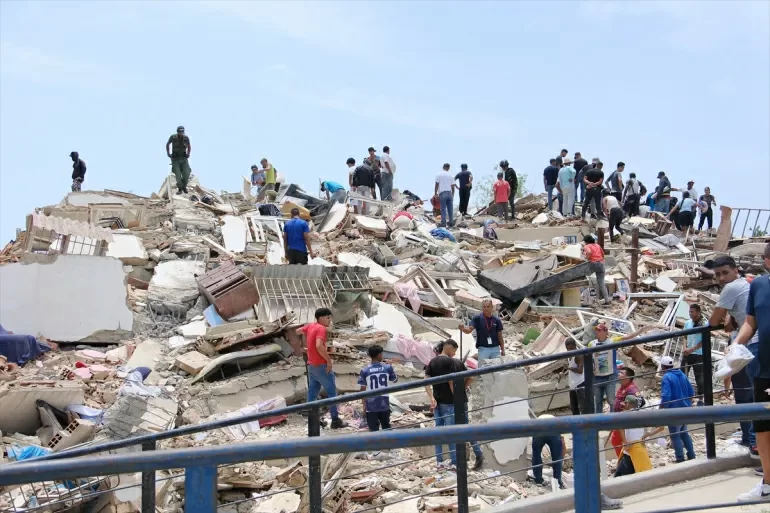
    Just days after two powerful back-to-back earthquakes tore through northern and coastal regions of Venezuela, updated official figures have pushed the confirmed death toll past 900, marking one of the deadliest seismic events to strike the South American nation in modern history. The disaster has also left tens of thousands unaccounted for, thousands injured, and hundreds of critical infrastructure sites damaged or destroyed, triggering a large-scale international relief effort as local communities and neighboring nations rush to support response operations.

    National Assembly Leader Jorge Rodriguez announced the updated casualty figures in a nationwide televised address Thursday, correcting earlier, far lower estimates that excluded data from the hardest-hit region. The twin quakes, registered at magnitudes 7.2 and 7.5, struck on June 24; initial reports put the death toll at just over 30, but as search and rescue teams reached isolated impact zones, that number rose to 920 confirmed fatalities by Thursday afternoon. To date, more than 51,000 people remain listed as missing, 3,360 have sustained injuries, and at least 3,000 people have been displaced from their destroyed homes, Rodriguez confirmed.

    Earlier public estimates from interim President Delcy Rodriguez had fallen far short of the updated toll, as those figures did not include data from La Guaira state, the small coastal district adjacent to the capital Caracas that bore the brunt of the disaster. In La Guaira alone, hundreds of residential structures ranging from single-family homes to multi-unit apartment buildings have been leveled or severely damaged, prompting authorities to declare a state of emergency and deploy full military control across the region. The most heavily impacted communities within the state include Caraballeda, Macuto, Los Corales, Catia La Mar, and the Playa Grande sector.

    Across the entire country, the disaster has damaged more than 1,400 critical infrastructure sites, including 1,012 general structures, 13 hospitals, and 25 commercial centers, per official counts. In the 48 hours following the initial two major quakes, Venezuela’s geologic monitoring services recorded an additional 302 aftershocks along three active fault lines running through the country. Rodriguez noted that the magnitude of the initial quakes placed them among the most powerful seismic events recorded on the planet in the last thousand years.

    As civilian solidarity efforts swelled across the country in the days after the disaster, with ordinary Venezuelans organizing spontaneous convoys to carry aid into La Guaira, Rodriguez urged civilians to avoid traveling to the impacted region to prevent congestion that would slow official emergency operations. “We understand the desire to help others has been overwhelming and heartfelt on the part of all of you,” he stated. “However, this also causes congestion on the roads we are using to evacuate affected residents and transport the injured either to shelters or to hospitals in the capital city and in Miranda state. The best way you can help, the greatest support you can provide is by not congesting the roads, so that medical teams can transport patients quickly and so that the armed forces, police, and rescue teams can carry out their work more effectively.” Rodriguez added that the Bolivarian National Armed Forces maintain full control of La Guaira to uphold public security and support around-the-clock rescue operations.

    The international community has rapidly mobilized to support Venezuela’s relief efforts, with hundreds of specialist rescue workers from the United States, El Salvador, Colombia, Mexico, Spain and other nations already deployed to the impact zone. The disaster comes as Venezuela’s diplomatic relations with the United States continue to thaw following the deposition of former president Nicolas Maduro, and the U.S. Southern Command announced Thursday it would expand its military presence in the region to support relief operations. Two U.S. Air Force C-17 Globemaster aircraft carrying search and rescue teams and heavy load-movement equipment landed in Caracas Thursday evening, and the USS Fort Lauderdale (LPD 28) – an amphibious warship that recently took part in a large Caribbean military buildup – arrived in Venezuelan coastal waters Thursday to begin supporting response efforts. The United Nations also announced Thursday that $15 million from its Global Emergency Fund has been allocated to support Venezuelan relief operations, and top Venezuelan diplomatic officials have held multiple calls with international leaders to coordinate solidarity and aid pledges.

    Neighboring Trinidad and Tobago has launched a coordinated national relief campaign to support affected Venezuelans, following an initial solidarity pledge from Prime Minister Kamla Persad-Bissessar. The country’s Ministry of Foreign and Caricom Affairs announced a formal national humanitarian response after a coordinating meeting with senior officials from defense, health, and disaster management agencies, alongside representatives of major local business groups including the Trinidad and Tobago Chamber of Industry and Commerce, the Trinidad and Tobago Manufacturers’ Association, the American Chamber of Commerce of Trinidad and Tobago, the Energy Chamber, and SEWA International TT.

    The Trinidadian government is partnering with the private sector to run a national donation collection drive kicking off Monday, accepting contributions at Port of Point Lisas’ Warehouse Sheds 1 and 2 between 8 a.m. and 4 p.m. every day, in partnership with all 14 of the country’s municipal corporations. Monetary donations can be made to the dedicated Disaster Relief Fund-Venezuela at any First Citizens branch or via online transfer to account number 3209042. Authorities are specifically requesting over-the-counter medical supplies, personal hygiene products including feminine hygiene items, non-perishable food and bottled water with a minimum three-month shelf life, and mattresses and cots.

    Independent organizations have also launched their own relief initiatives: SEWA TT has launched a standalone Venezuela Earthquake Relief Campaign to raise funds for impacted families, partnering with seven major local supermarket chains including Xtra Foods Supermarket, Better Deal Supermarket, and Low Cost Supermarket to allow customers to add voluntary donations to their grocery bills, with all proceeds going directly to relief efforts. Venezuelan migrant communities based in Trinidad and Tobago have also organized grassroots aid efforts, planning to ship collected donations to Venezuela by boat as early as Monday. Activist groups have set up donation drop-off points across six population centers, accepting high-demand items including diapers, non-perishable food, and common medications including paracetamol, antibiotics, and first aid supplies. “Right now everybody is sad and distressed. It is a difficult situation that caused a big shock to the community here,” local Venezuelan activist Yesenia Gonzales told local outlet the Express. “We are asking for prayer and donations to help. All the Venezuelans here have banded together to put together donations. We have places to donate clothes; there is a boat that goes and we are willing to take it there. We are trying to raise funds because this is very bad. We are putting things together.”

  • Judge to new attorneys: Put integrity over money

    Judge to new attorneys: Put integrity over money

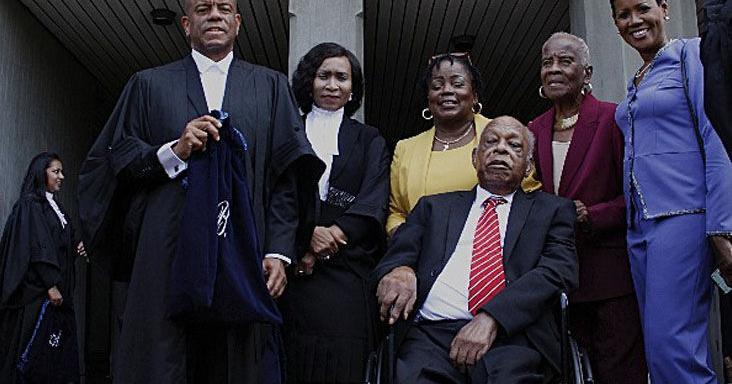
    At a formal admission ceremony held yesterday at Port of Spain’s Hall of Justice Convocation Hall, a senior High Court judge delivered a stark, principled address to 60 newly minted legal practitioners, calling on them to center professional integrity over personal ambition and financial profit. Justice Frank Seepersad emphasized that gaining entry to the Bar is far more than a capstone to years of academic study—it marks the assumption of a weighty, enduring public trust that underpins the nation’s democratic framework.

    In his remarks, Justice Seepersad framed the legal profession as a foundational constitutional pillar tasked with upholding the rule of law. Attorneys, he explained, hold a uniquely critical role in defending individual rights, mediating societal disputes, and maintaining public faith in the entire justice system. “This admission is not simply the end of your academic journey,” he told the assembled group. “It is the start of a lifelong commitment to upholding the core principles that make fair administration of justice possible.”

    The judge went on to note that while the law is designed to be applied evenly and without bias, its real-world impacts are deeply personal and far-reaching. “From today forward, you must understand that even when the law is applied neutrally, it is never neutral in its effects,” he said. “The work you do will shape legal outcomes, vindicate wronged parties, protect fundamental liberties, and alter the long-term trajectories of individual lives, families, local businesses and entire communities.”

    Centering his address on the non-negotiable role of integrity in legal practice, Justice Seepersad stressed that this core value is not an abstract ideal—it is the very foundation of the profession. He pointed out that most clients seek legal support during periods of profound vulnerability, uncertainty and crisis, making unwavering honesty an absolute requirement rather than an optional virtue. He urged the new attorneys to base their counsel and practice on established law and ethical principle, rather than chasing convenience, public approval, or higher financial rewards. A lawyer’s professional reputation, he reminded them, is built one small decision at a time: from the arguments they present in court, to the fees they charge clients, to the way they treat the people who trust them with their most pressing legal problems.

    Justice Seepersad also issued a clear warning that professional obligations will often clash with personal goals for advancement. “When those moments come, you must reject the temptation to trade your principles for short-term gain,” he said. “The fair administration of justice relies on lawyers who can exercise fairness, professional independence and sound judgment, even when that commitment requires personal sacrifice.”

    He pushed back against the common framing of law as a pathway purely to wealth or social standing, arguing that the practice of law is fundamentally a vocation of public service. “The privilege of joining this profession must always come with the recognition that its core purpose can never be reduced to personal advancement, financial accumulation, or higher social status,” he said.

    The judge noted that this cohort of new attorneys is entering the field at a moment when public trust in democratic institutions is being tested both locally and across the globe. Citizens increasingly turn to the justice system not just to resolve individual legal disputes, but to find reassurance that fairness, due process and the rule of law will be protected for all. A truly civil society, he argued, is sustained not only by economic growth or political power, but by the public’s confidence that core institutions will operate fairly, objectively, and in strict adherence to the law. Today, he added, many Trinbagonian citizens look to the courts not just for dispute resolution, but for stability, reassurance, and principled leadership that can hold national cohesion together.

    In closing, Justice Seepersad urged every new attorney to guarantee that every client—regardless of social status, economic means, or personal circumstance—receives fair, ethical representation within the bounds of the law. Public confidence in democratic institutions depends entirely on legal professionals who carry out their duties with unwavering integrity, consistent competence, strict discipline, and professional independence, he said. “If we uphold these principles consistently and courageously, the administration of justice will remain an enduring safeguard of constitutional democracy, and a constant source of reassurance for the citizens it exists to serve.”

  • Pregnant woman stabbed, slashed

    Pregnant woman stabbed, slashed

    A brutal early-morning attack left a pregnant woman hospitalized in critical condition on Thursday, after a man she personally knew stabbed and cut her 15 times inside her second-floor apartment in the Mt Lambert neighborhood, according to local law enforcement and witness accounts.

    Following the assault, the 31-year-old suspect, identified by police sources as a security officer assigned to the Customs and Excise Division at Port of Spain, locked himself inside the apartment and attempted to die by suicide. Police were able to detain him before he could succeed, and he remained in police custody overnight as investigators carried out questioning.

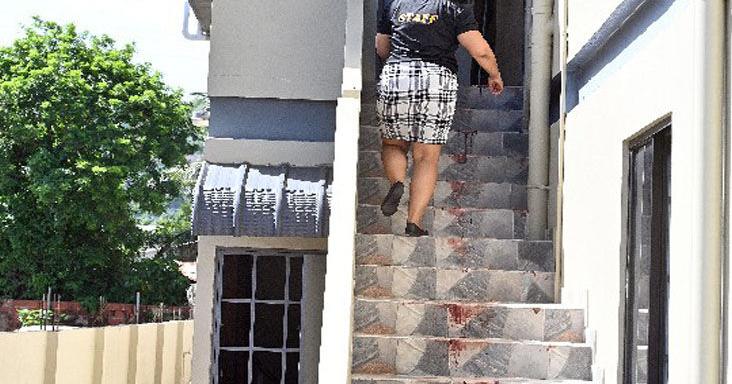
    Neighbors in the apartment complex described the chaotic scene that unfolded shortly after 8 a.m. One resident, who spoke to local outlet the Express on condition of anonymity, said she first noticed something wrong when loud screams cut through the morning quiet. “I turned down my television and all I could hear was screaming, over and over,” she recalled. “When I peered out my window, I saw a woman running down the apartment stairs. I’d already heard she was pregnant, and that he had stabbed her multiple times.”

    The witness added that the injured woman was clutching her abdomen heavily as blood seeped from her wounds. By the time she reached the bottom of the stairwell, she was able to take shelter in a ground-floor apartment occupied by an off-duty police officer. The attacker chased her down the stairs before retreating back to the upper floor, where neighbors heard him shouting demands for her to return to the original apartment.

    Word of the attack spread quickly through the complex, and within minutes most residents had stepped outside their homes to observe the unfolding emergency. Someone contacted the Barataria Police Station, and three police vehicles were dispatched to the scene within a short response window.

    Officers immediately prioritized getting the injured woman to care, transporting her to the Eric Williams Medical Sciences Complex in Mt Hope. As of Thursday night, medical teams reported her condition remained stable but critical. The victim’s family has declined to release her name to the public, with one relative noting she has always been an intensely private person.

    While first responders tended to the victim, negotiators on scene attempted to convince the suspect to exit the locked apartment, but he refused all repeated requests to surrender. Officers ultimately used a crowbar to force entry into the unit, where they found the man mid-attempt to take his own life. They took him into custody immediately and transferred him to the Barataria Police Station for ongoing interrogation as of Thursday night.

  • Venezolanen zoeken zelf naar vermisten terwijl dodental snel stijgt

    Venezolanen zoeken zelf naar vermisten terwijl dodental snel stijgt

    Two days after a pair of powerful back-to-back earthquakes rocked northern Venezuela, the disaster’s death toll continued to climb sharply Friday, with public anger and desperation growing over slow government response to the crisis. The quakes, measuring magnitude 7.2 and 7.5 respectively, struck Wednesday evening off the country’s Caribbean coast, leaving widespread destruction across coastal communities near the capital Caracas, most notably the hard-hit port town of La Guaira, where hundreds of structures have collapsed.

  • Derde helft WK 2026: VAR dooft Iraans feest: Egypte en Iran eindigen in dramatische 1-1

    Derde helft WK 2026: VAR dooft Iraans feest: Egypte en Iran eindigen in dramatische 1-1

    The 2026 FIFA World Cup Group G clash between Iran and Egypt delivered one of the tournament’s most devastating last-minute twists, as a late winning goal for Iran was ruled out by VAR, leaving the tie locked at 1-1 and altering the entire complexion of the group’s knockout round qualification.

    Iran thought they had secured their place in the tournament’s knockout stage when they found the back of the net in the closing minutes of the fixture. Celebration swept through the Iranian camp: players rushed to embrace each other in jubilation, fans in the stands roared with delight, and the entire nation appeared on the cusp of celebrating a decisive victory that would confirm their progression to the next round. That joy lasted only minutes, however, before the video assistant referee (VAR) intervened to overturn the decision, ruling the goal out for an infraction. When the final whistle blew moments later, the scoreboard still read 1-1.

    The first half had already ended with both sides level at one goal apiece. As the second half unfolded, the match evolved from an open contest into a tense battle of nerves, tactical discipline, and survival. Egypt entered the closing stages knowing a draw would leave them on five points, keeping them in a strong position to claim a knockout spot. Iran, by contrast, needed all three points to guarantee their progression out of the group stage. Elsewhere in Group G, Belgium had already secured all three points against New Zealand, confirming that the Iran-Egypt tie would decide who took the group’s second automatic qualification spot behind the Belgians.

    The final 1-1 result keeps Egypt above Iran in the group standings, allowing the North African side to progress directly to the knockout round with five points. Iran, meanwhile, finishes the group stage on three points, and now faces an agonizing wait to see if their result will be good enough to qualify as one of the best third-placed teams across all groups.

    That wait is made all the more bitter by how close Iran came to securing automatic qualification. The Asian side opened their tournament with a 2-2 draw against New Zealand, followed by an impressive 0-0 stalemate against tournament favorites Belgium. Against Egypt, they looked to have finally taken the decisive step required to lock in their knockout place, only for one VAR decision to flip certainty into agonizing uncertainty.

    This was no ordinary 1-1 draw. It was a classic football rollercoaster of contrasting emotions. Egypt, a side with a deep, storied football heritage across the African continent, held on through experience and tight organization to cling to the result they needed. Iran, long one of Asia’s most consistent top football nations, played with relentless discipline, unshakable belief, and incredible passion, only to see their immediate qualification dream shattered by a VAR review.

    For Egypt, the overriding emotion is sheer relief after avoiding late heartbreak. For Iran, the result leaves only tears, frustration, and endless questions about what could have been. While the scoreboard reads a draw, for Iran’s national team, this match will always feel like a defeat snatched from the jaws of a already-secured victory.

  • Derde helft WK 2026: België walst over Nieuw-Zeeland en wint groep G

    Derde helft WK 2026: België walst over Nieuw-Zeeland en wint groep G

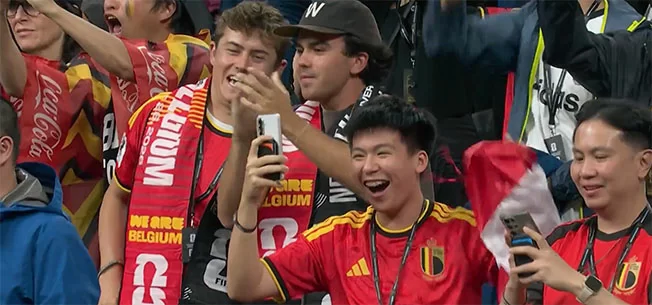
    Vancouver, June 27 – A do-or-die World Cup group stage clash at BC Place ended in a lopsided 5-1 victory for Belgium, who secured their place in the tournament’s knockout round and topped Group G after a dominant second-half display against New Zealand.

    Entering the final round of group matches, both sides sat level on two points from their first two outings, meaning neither had already locked in progression. A draw would not have been enough for either nation to advance, setting up a must-win contest where an early exit was on the line for the loser. For Belgium, a side packed with elite international talent, the match also marked a chance to break a pattern of underperformance at major global tournaments.

    Officiated by Jordanian referee Adam Makhadmeh, the first 45 minutes delivered no shortage of goal-scoring opportunities, but a lack of clinical finishing kept the scoreline tight. Belgium seized control of possession and territory from the opening whistle, pinning New Zealand deep in their own half. In the 20th minute, Leandro Trossard had a golden chance to open the scoring, but his effort deflected off New Zealand defender Finn Surman’s hand and sailed over the crossbar. Belgium appealed for a penalty, but neither Makhadmeh nor a VAR review overturned the on-field decision, leaving the score level.

    Trossard did not have to wait long to find the breakthrough, however. Eight minutes after the disallowed penalty appeal, the winger found the back of the net to put Belgium ahead 1-0, a lead that reflected their early dominance.

    As halftime approached, Belgium squandered multiple chances to double their advantage. Kevin De Bruyne rushed a shot inside the penalty area and sent it high over the goal, while Charles de Ketelaere failed to beat New Zealand goalkeeper Max Crocombe with his chance. Jeremy Doku was the standout playmaker for the Belgian attack, constantly stretching New Zealand’s defense with his pace and dribbling, but he could not add to the score. Despite relentless pressure and a string of clear goal-scoring chances, Belgium’s wasteful finishing meant the sides went into the halftime break with the score still stuck at 1-0.

    New Zealand came out after halftime looking to find an equalizer to keep their knockout stage hopes alive, but their attacking push left huge gaps open at the back, which Belgium quickly capitalized on. Trossard struck again in the 50th minute to extend his side’s lead to 2-0. Fifteen minutes later, New Zealand had a rare chance to pull a goal back, but Callum McCowatt failed to convert.

    Just minutes after that missed opportunity, De Bruyne put the game beyond any doubt with Belgium’s third goal. New Zealand continued to push for a consolation, and they got their reward in the 84th minute when Elijah Just blasted a loose ball from outside the six-yard box into the net to cut the deficit to 3-1. However, Belgium re-established their four-goal lead only a minute later: substitute Romelu Lukaku, who came on in the 85th minute, scored within 60 seconds to make the score 4-1. In the final action of the match, Alexis Saelemaekers added a fifth goal for the Belgians, capping off a dominant performance.

    With the resounding 5-1 win, Belgium finished the group stage as the undefeated winners of Group G, securing their spot in the next round of the World Cup.

  • Column: Crycensio’s keuze

    Column: Crycensio’s keuze

    It has been more than two weeks since the 2026 FIFA Men’s World Cup kicked off in Mexico, and I still have not caught the World Cup fever that grips most football fans this time of year. There are a handful of possible reasons for my detached view of the tournament. First, the match times are scheduled at awkward late hours for fans in my time zone, making it hard to build the routine of gathering to watch games. Second, I have been forced to follow matches through glitchy laptop livestreams on the road, which never delivers the same electric atmosphere as watching on a big screen with fellow fans.

    But the biggest source of my apathy, I think, is the highly questionable pairing of the president of the tournament’s largest host nation and the equally narcissistic head of FIFA. This uncomfortable combination is already setting up an awkward dilemma that star forward Kylian Mbappé could face after the final on July 19. Mbappé is one of the few global football superstars who has openly spoken out on political issues and called out systemic racism. If France lifts the World Cup trophy and Mbappé, as captain, is forced to accept the cup from the two controversial leaders, what will he do?

    That is not to say I have avoided all tournament action entirely. I often catch the second half of matches or watch highlight reels after the fact, and even from that distance, there is no shortage of compelling storylines to grab my attention. I have felt sympathy for the Belgian team, cheered on Ghana, rooted for the plucky Haitian side who defend their national colors with far fewer resources than top teams, and been amused by the blue fever dream of a Curaçao run stoked by Dutch travel giants TUI and Corendon.

    There is still plenty to enjoy even from the sidelines. Global superstars have lived up to the high expectations placed on them, underdog teams have won widespread public sympathy, Scottish fans turned their nation into a giant celebration, and the stands are full of joyful, energetic crowds. One player who has stood out particularly is Crystal Palace turned Bayern Munich midfielder Michael Olise, whose fluid movement and sharp game reading have been a joy to watch. He is also a fascinating case study when it comes to nationality, heritage and identity: he represents France at the tournament thanks to his French mother, despite speaking not a single word of French, and he could just as easily have chosen to play for England (his country of birth), Nigeria (where his father was born), or even Germany, the country where he plies his club trade.

    Olise’s choice of national team brings to mind the messy debate around nationality that surrounded the Suriname national team ahead of this World Cup cycle. What would have happened if winger Crycensio Summerville had chosen to represent the country of his parents’ origin, instead of the Netherlands? This is no abstract question: in the lead-up to the World Cup qualifying play-offs, Summerville received calls from two managers – Henk ten Cate, then head coach of Suriname, and Ronald Koeman, boss of the Dutch national team. But a hamstring injury a few weeks before the international break meant Summerville never had to make the final call at that time.

    It is a shame things turned out that way. I have long argued that a Suriname side stacked with players of Surinamese descent like Ridgeciano Haps, Gleofilo Vleugel, Melayro Bogarde, Djavan Anderson and Myenty Abena more than deserves a spot at a World Cup. If Summerville had joined the side, Suriname would almost certainly have beaten Bolivia and Iraq in March’s qualifying matches and booked their place in the 26-team tournament. Unfortunately, things went wrong, and after Suriname’s defeat in Monterrey, Summerville was left with only one path to the World Cup: the Dutch national team. Now, he is in spectacular form for the Netherlands, having been completely written off by Dutch football pundits until just two weeks ago.

    One lingering question hangs over this decision: did Summerville know at the start of this year what the consequences of choosing a Suriname cap would be? Did he already suspect that neither the Suriname Football Association nor the Surinamese government would do anything to protect Suriname players who hold Dutch passports?

    Maybe that unfulfilled potential is the real reason I have not been able to fully embrace this World Cup. It could all have been so different, so magical. I would have loved to see how Myenty Abena would have calmly kept Erling Haaland off the score sheet. I would have loved to watch Tjarron Chery nutmeg French playmaker and Manchester City star Rayan Cherki like it was nothing. I would have loved to see Ridgeciano Haps shut down all of Sadio Mané’s tricky dribbles. And to top it all off, I would have loved to see Renske Adipi Kanté come on as a late substitute 10 minutes before full time, a fun ironic twist to contrast with the fact that France left his famous namesake N’Golo Kanté on the bench.

    It is a nice daydream to get lost in, for a little while. But I suspect even if Suriname had qualified, they would not have fared much better against Norway, France and Senegal than Iraq did. That is just the reality of international football, but the what-if still lingers.