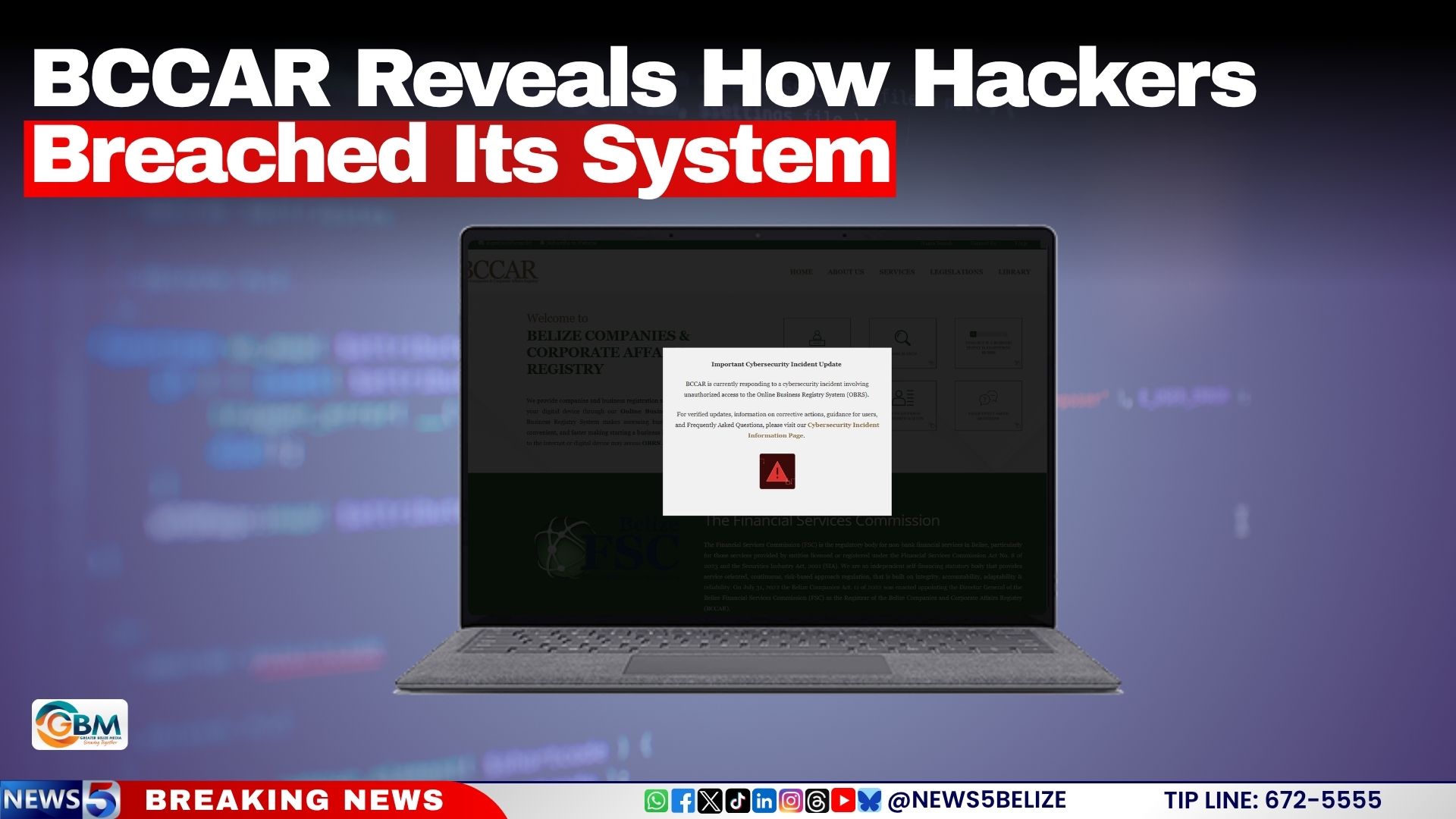
In a final public update addressing a recently disclosed cybersecurity incident, the Belize Companies and Corporate Affairs Registry (BCCAR) has shed light on how unauthorized actors gained access to sensitive company records stored on its Online Business Registry System (OBRS). According to the agency’s official findings, hackers exploited an unpatched security vulnerability in the platform’s passport-based user registration workflow to break into the system and access confidential corporate documentation.
The investigation, conducted internally in partnership with external cybersecurity experts, traced the breach directly to a weakness in the process used to generate limited-access public user accounts. Since discovering the root cause of the incident, BCCAR has moved quickly to mitigate risks: the vulnerability has been fully patched, core system access controls have been upgraded, and the problematic passport-based registration pathway has been temporarily taken offline to prevent further exploitation.
To further harden the platform against future unauthorized access attempts, BCCAR has implemented several new operational safeguards. A strict new hourly limit of 100 document views and downloads per individual user account has been put in place to slow potential bulk data exfiltration attempts. The agency has also completed a full review of user authentication protocols, expanded system logging capabilities, and upgraded real-time monitoring infrastructure to flag and respond to anomalous activity far earlier than was possible before the breach.
As an additional transparency measure for system users, all documents that were downloaded during the window of unauthorized access have been marked with a prominent warning icon within the OBRS interface, allowing registered users and agents to quickly identify compromised records.
Notably, BCCAR has declined to disclose key details about the scope and origin of the attack. The agency has not released information on how many user accounts or corporate documents were impacted by the breach, what specific categories of corporate information were exposed to unauthorized actors, whether any suspects have been identified as responsible, or whether the attack originated from within Belize or from an overseas location.
The OBRS platform was taken offline immediately after the breach was detected, and full service was restored to users on August 10. BCCAR confirmed that it is still working with independent cybersecurity specialists to conduct a third-party validation of the incident’s full scope, with final findings expected to be released internally in the coming weeks.
Moving forward, the agency has shifted its operational approach to prioritize proactive cybersecurity prevention over full public transparency around the incident. BCCAR outlined a long-term plan to build out enhanced continuous monitoring capabilities, including automated alerts for unusual bulk activity, periodic mandatory access reviews for all user accounts, regular third-party vulnerability scanning, recurring penetration testing, and updated, more robust incident response protocols to contain future breaches faster.
In closing, BCCAR has issued an official advisory urging all OBRS customers and registered corporate agents to conduct a thorough review of their account records and report any suspicious activity to the agency’s cybersecurity team immediately.