博客

  • Zapping Haiti of June 28, 2026

    Zapping Haiti of June 28, 2026

    On June 28, 2026, multiple developments across Haiti and related international policy drew public attention, spanning law enforcement action, public sector infrastructure investment, aviation progress, judicial training, and fierce criticism of a recent U.S. Supreme Court decision affecting Haitian migrants.

    In a significant victory for local community safety, Haitian law enforcement completed a targeted major operation in the Pèlerin 5 district of Pétion-ville, successfully dismantling a criminal gang that had long targeted local residents through systematic kidnappings and home burglaries. Seven members of the criminal network are now in police custody following the operation.

    In a push to modernize the country’s public education system, Haiti’s Minister of National Education Déméro announced sweeping infrastructure upgrades set to launch in October 2026. The initiative will deliver broadband internet connectivity to all public primary schools, secondary high schools, and public universities across the nation. Complementing the digital rollout, all participating public education institutions will also receive the necessary electrical infrastructure to support new educational technologies, with the project backed by both technical expertise and funding from international partner organizations.

    For Haiti’s growing aviation sector, private carrier Zed Airlines S.A. provided an update on its upcoming Montreal route launch. The airline confirmed that the start of passenger operations to and from the Canadian city remains on hold pending final completion of synchronization protocols between the carrier and the Canada Border Services Agency (CBSA). Once this final regulatory step is finalized, the airline will immediately publish its full official flight schedule for the new route.

    The most contentious development of the day came in response to a recent U.S. Supreme Court ruling that greenlit the Trump administration’s plan to revoke Temporary Protected Status (TPS) for hundreds of thousands of Haitian residents living in the United States, opening the door to mass deportations. U.S. Catholic bishops have emerged as prominent critics of the decision, warning of severe humanitarian harm that will impact both Haiti and the United States.

    Mgr. Brendan Cahill, Bishop of Victoria, Texas and Chair of the U.S. Conference of Catholic Bishops’ Committee on Migration, framed the policy shift as a fundamental moral failure. “Revoking the legal status of hundreds of thousands of people residing in our country creates a moral crisis,” he stated, “as returning them to their country of origin is neither safe nor reasonable.” Archbishop Thomas Wenski of Miami, whose archdiocese serves one of the largest concentrations of Haitian and Haitian-American communities in the U.S., called the planned deportations an act of unconscionable cruelty. “It would be an act of unspeakable cruelty for the United States to send families back to Haiti, where dangerous and unsanitary conditions prevail,” he told Miami Archdiocese Radio, urging Congress to extend TPS and grant Haitian migrants at least a three-year reprieve from deportation.

    Haiti’s own Fusion Party of Haitian Social Democrats (FUSION/PFSDH) has echoed this outcry, expressing deep concern over the ruling that puts nearly 350,000 Haitian TPS beneficiaries at risk of deportation. The party has issued a formal call on the Haitian national government to formally request a temporary moratorium on all mass deportations of Haitian TPS holders from the U.S. government. FUSION argues the moratorium should remain in place until the Haitian government’s newly formed Gang Suppression Force (GSF) is fully deployed across the country and delivers measurable improvements to national security.

    In domestic judicial news, Haiti’s Superior Council of the Judiciary (CSPJ) announced the deployment of a new cohort of judicial trainees on June 26, 2026. Forty-nine trainee magistrates from the 8th graduating class of Haiti’s National School for the Judiciary (EMA) have been assigned to 11 different courts of first instance to complete a mandatory six-month practical internship, which is required before they can be formally inducted into the Haitian national judiciary. The Port-au-Prince Court of First Instance will host the largest share of trainees at 21, followed by the Les Cayes court with 15. The remaining 13 trainees are distributed across smaller regional courts: 3 to Miragoâne, 2 to Jérémie, 2 to Gonaïves, and one each to Cap-Haïtien, Ouanaminthe, Petit-Goâve, Saint-Marc, Hinche, and Croix-des-Bouquets. The cohort of 49 trainees includes 13 women, all of whom took their formal oath of office the week prior before the dean of the Port-au-Prince Court of First Instance.

    In public health development, Haiti’s Ministry of Public Health, working in partnership with the Prime Minister’s Office and external stakeholders, is continuing ongoing work to acquire a new hospital facility on the grounds of the former Haitian Community Hospital. Health Minister Bertrand Sinal moved to clarify a point of public concern, confirming that the new hospital project will not require the relocation of Haiti’s largest public medical facility, the State University Hospital of Haiti (HUEH).


  • Aanpak Van ’t Hogerhuysstraat begint; weg wekenlang deels afgesloten

    Aanpak Van ’t Hogerhuysstraat begint; weg wekenlang deels afgesloten

    After months of drawn-out legal battles and mounting public frustration over a crumbling key thoroughfare, infrastructure rehabilitation work on Paramaribo’s busy Van ’t Hogerhuysstraat is finally set to get underway Sunday, June 28, following the recent signing of a contract between the Surinamese government and selected contractor Kuldipsingh Infra.

    The project, one of the most high-priority infrastructure upgrades in the Surinamese capital, has been stalled for months due to a procurement dispute launched by losing bidder Baitali, which challenged its disqualification from the tender process through the courts. In a recent ruling, the canton judge rejected all of Baitali’s claims, further suspended the enforcement of an earlier partial ruling and concluded that the company had abused its right of legal execution to block the project.

    While Baitali has publicly stated it will accept the court’s ruling and drop immediate barriers to construction, the firm confirmed it will pursue separate legal proceedings to continue contesting what it frames as an unfair disqualification from the original bidding process. The resolution of the immediate impasse cleared the way for the government to sign off on the contract with Kuldipsingh Infra earlier this week, ending months of uncertainty over the critical upgrade.

    Kuldipsingh Infra will launch with preliminary preparatory work on Sunday, scheduled to run from 8 a.m. to 5 p.m. Following this initial phase, all construction will shift to overnight shifts through July 15, running nightly from 8 p.m. to 5 a.m. to minimize disruption to peak commuter traffic on this vital artery. The work zone covers the stretch between Leningenweg and Molenpad, including three major intersections at Molenpad, Nieuwe Haven (Willem Campagnestraat/Havenlaan), and Surmac (Slangenhoutstraat).

    During construction, portions of the route will be fully closed to destination traffic. Road users will be guided through detours marked by signage, barriers, and on-site direction from local police. The Ministry of Public Works and Spatial Planning (OWRO), which is overseeing the project, issued an urgent appeal to all drivers and other road users to plan alternate routes, adjust travel schedules, and strictly follow instructions from on-site construction staff and police to avoid unnecessary delays.

    Van ’t Hogerhuysstraat serves as a critical connection between southern neighborhoods of Paramaribo, the city’s port districts, and the central business district. For years, the poor condition of its road surface has caused persistent traffic congestion and costly damage to private and commercial vehicles, making the rehabilitation a long-awaited project for both commuters and local businesses. Once completed, the upgrade is expected to improve traffic flow, reduce vehicle damage, and support continued economic activity connected to Paramaribo’s busy port areas.

  • Derde helft WK 2026: Colombia neemt groepswinst, Portugal treft Kroatië

    Derde helft WK 2026: Colombia neemt groepswinst, Portugal treft Kroatië

    A tense, tightly-contested Group K World Cup clash between Colombia and Portugal at Miami Stadium ended in a scoreless 0-0 draw on June 27, locking in both teams’ knockout stage positions: Colombia finished the group stage undefeated to claim the top spot, while Portugal settled for second place and will face Croatia in their upcoming round of 16 matchup.

    The match kicked off with immediate attacking pressure from Colombia, who produced the first dangerous chance of the game just two minutes in, firing a shot over Portugal’s goal. Portugal responded quickly, with Ruben Neves testing the Colombia defense with a long-range attempt that went off target. João Félix played a cross toward Pedro Neto at the far post, but the ball rolled past the byline before Neto could connect. After a frantic opening 10 minutes, the pace of the game settled slightly as both teams adjusted to the intense heat and physicality of the contest.

    Colombia remained a constant offensive threat, with striker Jhon Córdoba and winger Luis Díaz stretching Portugal’s backline with repeated runs into dangerous areas. In the 17th minute, Portugal goalkeeper Diogo Costa pulled off a spectacular save to deny a powerful close-range effort from Córdoba, keeping the game scoreless. Midway through the first half, Portugal earned a well-placed free kick just outside the 18-yard box, but Cristiano Ronaldo’s strike was comfortably caught by Colombia goalkeeper Camilo Vargas.

    A mandatory hydration break brought a pause to the action halfway through the first half, and it was during this stoppage that a notable milestone was highlighted: Colombia captain James Rodríguez was playing his 11th World Cup match, a remarkable achievement for the veteran playmaker. The atmosphere inside the packed stadium was heavily influenced by a raucous crowd of Colombian supporters, who brought loud, vibrant South American energy to every attacking moment.

    In the 32nd minute, Ronaldo was played through on goal by a long pass, but the offside flag went up – marking the 22nd time the Portuguese star had been caught offside in World Cup matches, an unusual record for any player at the tournament. The two sides remained deadlocked through the remainder of the half: just before halftime, Bruno Fernandes saw his close-range effort saved by Vargas, while Ronaldo missed the target with an acrobatic bicycle kick attempt. Ruben Neves launched another long-range shot in stoppage time, but it sailed over the crossbar to keep the score 0-0 at the break.

    Portugal made two attacking adjustments at halftime, bringing on João Neves and Diogo Dalot to replace Ruben Neves and João Cancelo, while Colombia opted to keep their entire starting lineup on the pitch, content with how their first-half performance had shaped up. Portugal immediately pushed for an opening goal after the restart, but Ronaldo struggled for early rhythm, giving away possession in a promising attacking position. Dalot delivered a pinpoint cross to João Félix minutes later, but the winger’s header went just over the crossbar.

    Colombia continued to create chances of their own, with Jefferson Lerma and Jhon Arias both testing Costa from outside the box, but the Portugal goalkeeper held firm to keep the clean sheet intact. Portugal had a golden opportunity to break the deadlock when Ronaldo found himself one-on-one with Vargas, but the five-time Ballon d’Or winner pushed his shot just wide of the far post, and a later attacking run from the forward was ruled out for offside.

    Colombia made their first two substitutions just past the hour mark, bringing on Richard Rios and Luis Suárez to replace Lerma and Córdoba. Suárez made an immediate impact, getting a shot off in the penalty area that was blocked by the Portugal defense before it could reach the goal. Portugal responded with two substitutions of their own, bringing on Samu Costa and Rafael Leão to freshen up their midfield and attack. Later in the half, Colombia appealed for a penalty after Suárez went down under a challenge from Nuno Mendes inside the box, but the referee correctly waved away the calls after a quick on-pitch check.

    In the final 10 minutes of regulation, Diogo Dalot fired a long-range effort that went just inches wide of Vargas’ goal, leaving the packed crowd roaring as they waited for a late winner. Tension built steadily through the five minutes of stoppage time, with both teams throwing players forward in search of a late goal that would earn them the group’s top spot.

    Colombia came closest to a dramatic late winning goal in stoppage time, with Suárez forcing two outstanding saves from Diogo Costa in quick succession. A late header from defender Davinson Sánchez appeared to give Colombia the win, but after a lengthy VAR review, the goal was disallowed by the narrowest of offside calls, keeping the scoreline intact.

    When the final whistle blew, the 0-0 result confirmed Colombia’s undefeated run in the group stage to finish top of Group K, while Portugal will advance to the knockout stage as group runners-up, set to face Group J winners Croatia in the first knockout round.

  • Day of discussions with Catholic leaders on the accreditation of Haiti’s educational institutions

    Day of discussions with Catholic leaders on the accreditation of Haiti’s educational institutions

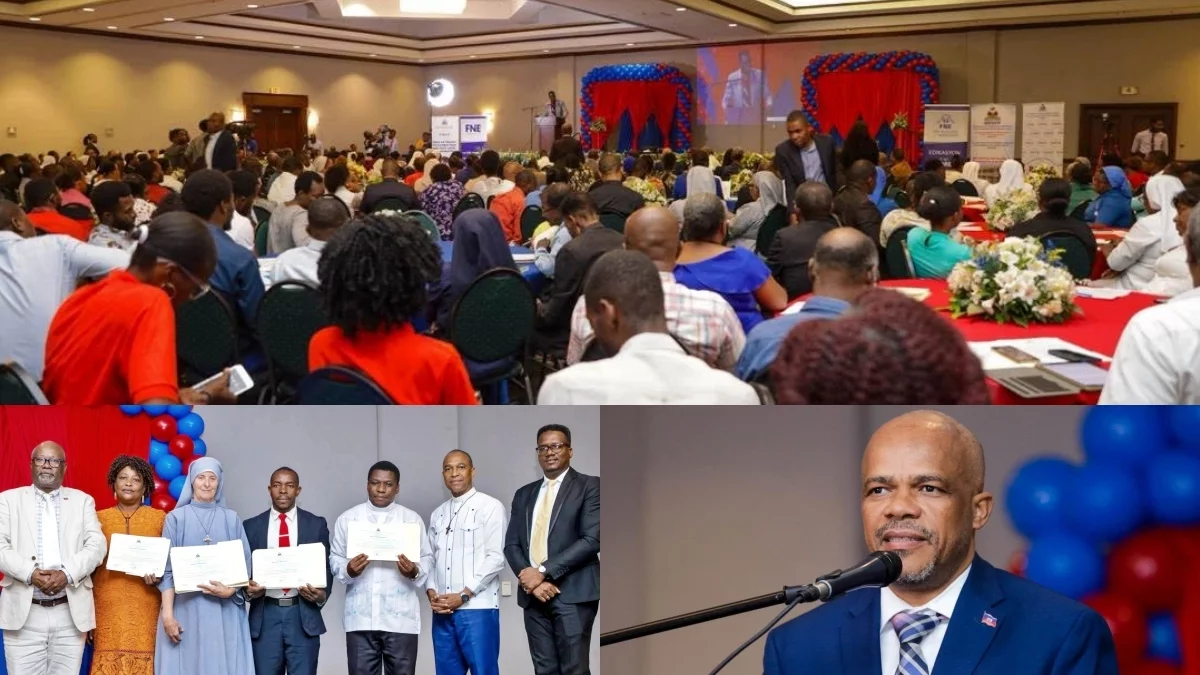
    Following a June 10 stakeholder consultation with Protestant education leaders, Haiti’s Ministry of National Education and Professional Training (MENFP) gathered Catholic education representatives for a full day of focused dialogue on June 24 in Pétion-ville. The meeting centered on advancing the National Policy for the Accreditation of Private Schools, Technical Training Centers, and Private Universities, bringing together senior officials from the national education system and leadership from the Episcopal Commission for Catholic Education (CEEC).

    Opening the summit, Education Minister Dr. Vijonet Déméro framed the gathering as both a privilege and a core democratic responsibility, emphasizing the outsized role Catholic institutions play in Haiti’s education landscape. “The Catholic Church has built a vast, essential portion of our national education infrastructure, establishing centers of academic excellence even in the most isolated rural communities across our country,” Déméro stated, extending sincere gratitude to the church for its decades-long commitment to expanding knowledge access across Haiti. The minister went on to frame the Catholic education sector as a linchpin for national educational progress: successful modernization of Catholic schools would drive systemic transformation across all Haitian education, he argued, and full sector commitment to reform would propel the entire nation forward.

    Déméro also used the opportunity to outline his administration’s sweeping portfolio of planned education reforms, ranging from foundational curriculum overhauls and the rollout of a standardized single textbook to expanded digital learning initiatives, updated civic education curricula, and new programs focused on financial literacy and student mental health and well-being. Beyond curriculum changes, the administration is advancing infrastructure and access goals, including opening dozens of new public schools, constructing new campus facilities, and expanding the reach of the National School Canteen Program (PNCS), which provides critical meals to vulnerable students.

    CEEC President Bishop Pierre André Dumas echoed the minister’s emphasis on education as a catalyst for national change, noting that education remains one of the most powerful tools for social transformation and collective liberation in Haiti. “Education cultivates the critical awareness that communities need to make thoughtful choices and advance equitable social action,” Dumas explained, adding that formal accreditation of educational institutions is a foundational step to strengthening system-wide quality and accountability. “This process isn’t just regulatory—it directly lifts the standard of learning for every student across the country,” he said.

    After opening remarks, the meeting moved into technical working sessions, where senior agency leaders walked attendees through accreditation procedures and available support programs. Walex Pierre, Director of the Directorate for Support to Private Education and Partnerships (DAEPP), opened the technical portion with a detailed presentation of the core provisions of the National Policy for the Accreditation of Private Schools (PONAEP). Next, Franck Lauture, Director General of the National Institute for Vocational Training (INFP), outlined the formal recognition process for private vocational training centers, while Jean Judson Joseph of the National Agency for Higher Education and Scientific Research (ANESRS) covered equivalent protocols for private universities.

    Elysé Colagène, Director General of the National Education Fund (FNE), followed with a breakdown of the application process for institutional school subsidies, addressing a key financial concern for many private Haitian schools. Ulrick Edouard, Director of Programming and Monitoring at the National School Canteen Program, then walked attendees through the steps required for institutions to join the national meal program, which supports food security for thousands of students.

    To close the day-long consultation, MENFP Director General Osny Jean Marie presided over a ceremonial presentation, awarding formal operating and management permits to a cohort of school leaders from the West Departmental Directorate of Education, marking a tangible first outcome of the national accreditation policy rollout.

  • Derde helft WK 2026: Congo verslaat Oezbekistan, 3-1 en mag hopen op plek als beste derde

    Derde helft WK 2026: Congo verslaat Oezbekistan, 3-1 en mag hopen op plek als beste derde

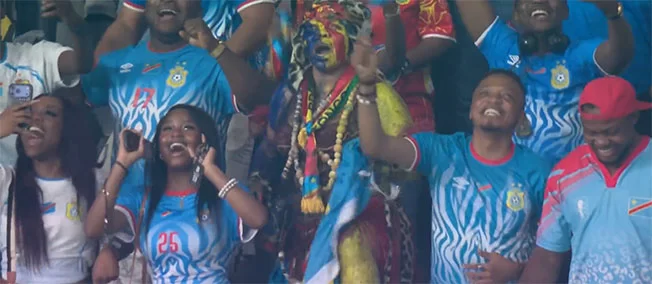
    In a dramatic Group K World Cup clash on June 27, the Democratic Republic of Congo pulled off a spectacular second-half comeback to defeat Uzbekistan 3-1, keeping their knockout stage qualification dreams alive while eliminating their Central Asian opponent.

    Uzbekistan got off to a flying start in the first half, capitalizing on DR Congo’s lack of attacking sharpness to take a 1-0 lead into the halftime break. At that point, the Asian side looked on course to pull off a major upset against their Central African opponent, with their first-half performance putting them in a strong position to claim their first points of the group stage.

    But DR Congo emerged from the locker room a transformed side after the break. upping their pressing intensity, showing greater attacking courage, and introducing more dynamic movement up front that gradually pushed Uzbekistan deeper and deeper onto the back foot. The turnaround was fully deserved: where the Congolese side had wasted their few first-half openings, they converted their chances clinically in the second 45 minutes, turning a one-goal deficit into a comfortable 3-1 win. Uzbekistan could not cope with the sustained pressure, watching their halftime advantage slip away to a defeat that ended their tournament.

    The final Group K standings confirm Colombia as group winners with seven points, followed by Portugal in second place on five points. DR Congo finishes third with four points, while Uzbekistan closes out the group winless and point less, bowing out of the competition.

    For DR Congo, the third-place finish puts them firmly in the race to advance as one of the best third-placed teams across all group stages. With four points and a positive goal difference, the Leopards hold a strong position ahead of final group results from other pools, as many other third-placed sides currently sit below DR Congo on points or goal difference.

    Uzbekistan’s World Cup campaign ends in disappointment, with the side falling to three defeats from three group matches despite entering the final fixture with a chance to pick up points. Still, their participation at this World Cup marks a key milestone for the development of football in Central Asia. The country has invested heavily in youth development and gaining international experience for its players over recent years, though this tournament has shown that the squad still needs further improvement to compete consistently at the highest global level.

    DR Congo’s comeback, by contrast, reaffirms the strength and resilience that modern African football has become known for. The Leopards boast a mix of physical power, pace, and experience gained from players plying their trade across top European leagues. After an opening defeat to Colombia and a hard-fought draw with Portugal, their knockout stage hopes looked hanging by a thread heading into the final group match – but they delivered when it mattered most.

    This 3-1 victory is far more than just three points for DR Congo. It is a lifeline in one of the tournament’s toughest groups, drawn alongside two European and South American heavyweights. While DR Congo is not yet guaranteed a spot in the knockout round, their current standing puts them in pole position to advance as one of the best third-placed teams.

  • Football : Coach Migné clarifies his intentions regarding his future

    Football : Coach Migné clarifies his intentions regarding his future

    Following Haiti’s landmark appearance at the 2026 FIFA World Cup, French head coach Sébastien Migné has broken his silence on widespread speculation about his future, confirming he is eager to remain at the helm of the Caribbean nation’s men’s national team and honor his existing contract with the Haitian Football Federation (FHF).

    Migné took over the Grenadiers, Haiti’s senior national side, in March 2024. In just over two years on the job, he led the program to one of its most historic achievements: qualification for the 2026 World Cup, only the second time the country has ever earned a spot at the global tournament. Haiti’s first and only previous appearance at the World Cup dated all the way back to 1974, making Migné’s qualification run a milestone moment for Haitian football.

    Despite the historic success, uncertainty around Migné’s future grew quickly after Haiti exited the tournament in the group stage. Ranked 83rd in the FIFA global rankings, Haiti was drawn into one of the competition’s toughest groups, facing three elite opponents: 42nd-ranked Scotland, sixth-ranked Brazil, and seventh-ranked Morocco. Haiti dropped narrow-to-moderate losses in all three matches, falling 1-0 to Scotland, 3-0 to Brazil, and 4-2 to Morocco, ending their tournament run early and fueling questions about whether the FHF would opt to make a leadership change.

    In a press briefing addressing the speculation, Migné made his position clear. The French coach said he remains fully committed to his professional duties with the FHF and intends to see out his current contract. He acknowledged the significant resource gaps his program faces when competing against top-tier football nations, noting that while his squad was able to create pressure against their World Cup opponents, small individual errors at the highest level of the sport lead directly to costly outcomes.

    Migné added that while he wants to stay on, any final decision about his position rests exclusively with the FHF. For his part, he said his full focus remains on advancing the development of Haitian football and building on the momentum and experience the squad gained during their 2026 World Cup run.

    International football analysts widely back Migné remaining in the role, noting that retaining his leadership would provide the program with much-needed stability as the team prepares for upcoming regional qualifying tournaments. Consistent leadership is widely seen as critical to building on the progress Haiti has made under Migné’s tenure.

    To date, the FHF has not released any official statement on the future of the Grenadiers’ coaching staff. Federation leadership has indicated it will conduct a full, comprehensive review of the team’s 2026 World Cup performance before announcing any final decisions. While Migné has made clear he is prepared to continue leading the Haitian national side into its next chapter of international competition, the final call will be made by federation leadership.

  • Insecurity : The EU extends sanctions against gang violence in Haiti

    Insecurity : The EU extends sanctions against gang violence in Haiti

    On June 26, 2026, following a routine annual review of the ongoing crisis in Haiti, the European Union formally voted to extend its framework of restrictive sanctions against actors undermining peace, stability, and democratic governance in the Caribbean nation. The extended sanctions regime will remain in effect through July 29, 2027, a decision rooted in the EU’s deepening concern over unrelenting, destabilizing criminal activity that has torn apart Haitian communities and threatened security across the broader region. The measure targets 17 individuals and one criminal organization, all facing binding restrictions including asset freezes across EU jurisdictions, a ban on any direct or indirect provision of funds or economic resources, and entry bans for all listed natural persons. The sanctions regime traces its origins back to November 2022, when the EU Council adopted Decision (CFSP) 2022/2319 to align with a United Nations Security Council resolution addressing Haiti’s escalating crisis. A 2023 amendment to the framework granted the EU autonomous authority to impose sanctions on bad actors independent of UN designations, creating a complementary structure to the UN sanctions imposed in October 2022 that expands the bloc’s ability to hold destabilizing actors accountable. Among the highest-profile sanctioned figures is former Haitian President Michel Joseph Martelly, whom the EU accuses of arming and funding multiple criminal gangs to advance his political agenda, protect personal and business interests, and consolidate territorial control. Two former top Haitian politicians from Martelly’s inner circle—former Senate President and political advisor Youri Latortue, and former Senator Rony Célestin—are also named on the sanctions list. The roster of targeted individuals also includes many of Haiti’s most powerful and violent gang leaders, whose actions have driven a catastrophic humanitarian crisis across the country. These include Jimmy Chérizier, widely known by his alias “Barbecue,” who leads the Viv ansanm terrorist alliance; Micanor Altès, head of the Wharf Jérémie gang based in Cité Soleil; Jeff Larose, leader of the Canaan gang; and Wilson Joseph, alias “Lanmò San Jou,” head of the notorious 400 Mawozo gang. The only entity targeted by the sanctions is the 5 Segond Gang, a powerful armed faction based in Port-au-Prince’s Village-de-Dieu neighborhood. The list also includes former senior Haitian security official Dimitri Hérard, once head of the National Palace’s General Security Unit, and Kempes Sanon, a gang leader accused of coordinating armed takeovers of Port-au-Prince territory and unifying criminal networks to derail Haiti’s ongoing political transition. In announcing the extension, EU officials emphasized that the restrictive measures remain a critical tool to curb gang-related violence, hold perpetrators of destabilizing activity accountable, and support international efforts to restore democratic order and stability to Haiti.

  • Nog geen oorzaak gevonden voor massale vissterfte in Saramaccarivier

    Nog geen oorzaak gevonden voor massale vissterfte in Saramaccarivier

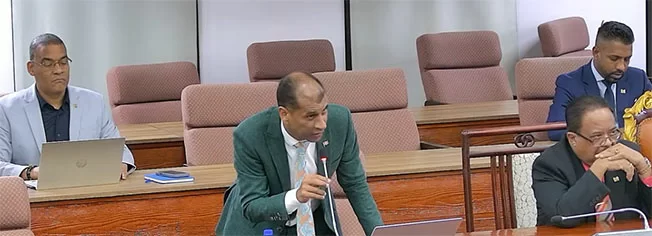
    A mysterious mass fish die-off in Suriname’s Saramacca River has left environmental authorities without immediate answers, as an initial inspection has failed to uncover any obvious triggers for the ecological event, according to Minister of Oil, Gas and Environment Patrick Brunings. The incident, first reported last Friday, is concentrated along the river’s middle reach near the Kamp area, around 100 kilometers from the river’s mouth and an equal distance north of Brokopondo.

    During a briefing to the National Assembly following calls from multiple assembly members for government attention to the crisis, Brunings outlined that the affected region has almost no major ongoing economic activity, with the only exception being small-scale gold mining operations in the broader Brokopondo area. This lack of industrial activity makes the large-scale fish mortality particularly unusual, requiring urgent in-depth investigation to identify its source.

    Within hours of receiving the first public report of dead fish, two national bodies—the National Environmental Authority (NMA) and the National Disaster Management Coordination Center (NCCR)—deployed teams to the area to conduct on-site assessments. Brunings confirmed that the first inspection found no visible pollution sources or obvious irregularities that could explain the die-off. Interviews with local residents also failed to generate any concrete leads about what may have caused the event.

    Environmental teams did collect samples of both river water and affected fish, which were immediately transported to a certified laboratory for comprehensive testing. Analysts will examine the samples for the presence of chemical contaminants, toxic substances, and other forms of pollution that could be responsible for the mass mortality.

    First test results are projected to be released no earlier than Monday, with a potential delay to Tuesday as laboratories process the samples. While authorities await these results, a public health warning remains in effect for all communities along the Saramacca River. Local residents are strongly advised against catching, consuming, or selling any dead or visibly diseased fish from the waterway. They are also urged to avoid using river water for drinking, cooking, or other household uses, and to minimize direct skin contact with the water until further notice.

    Brunings confirmed that the government has already mobilized emergency resources to provide clean, safe drinking water to all affected communities in the region. The NMA, NCCR, district commissioners, and traditional local leaders are maintaining continuous, close monitoring of the situation to track any spread of the event.

    Officials are also currently conducting additional surveys to determine whether the fish mortality is limited to the affected middle stretch of the river or has spread further upstream. Speaking to lawmakers, Brunings emphasized that while it is too early to draw firm conclusions about the cause or scale of the incident, authorities are prioritizing a rapid, thorough response. “It is still too early to draw conclusions, but we are on top of the situation,” the minister stated.

  • Three-time champs meet Country Meet Town in F15 finals

    Three-time champs meet Country Meet Town in F15 finals

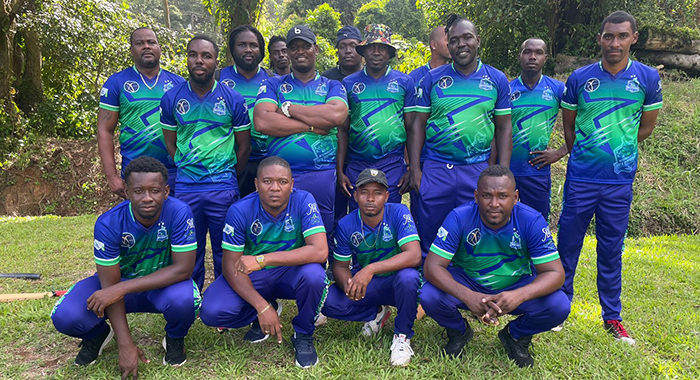
    The F15 Softball Cricket Tournament 4.0 reached a pivotal turning point in its 12th week, hosting the final set of preliminary round matches and the tournament’s first two semi-finals at the iconic Richmond Hill Playing Field. The packed match schedule delivered another weekend of high-stakes, edge-of-your-seat cricket action that set the stage for the upcoming championship decider.

    The first two preliminary matches of the weekend both ended in walkover victories for BOSVG All Stars. In Match 39 against Kentish Jacobs Prime Consulting Marriaqua C.C., the opponent side failed to assemble a team to take the field, handing BOSVG All Stars an automatic default win. The side’s fortunes repeated just hours later in Match 40 against East Kingstown United, who also were unable to appear for the fixture, giving BOSVG All Stars their second unopposed win of the day and a spot in the semi-final draw.

    The first semi-final of the tournament pitted three-time consecutive defending champions RS Production Kombat Warriors against two-time tournament finalists Fairban United, in what became a tightly contested thriller that lived up to pre-match expectations. Kombat Warriors captain won the pre-game toss and opted to bat first, posting a formidable total of 116 runs for the loss of 5 wickets across their allotted 15 overs. Top-order batsman Roderick John anchored the entire innings with a masterful, unbeaten knock of 62 runs off just 40 deliveries, a performance that earned him the Man of the Match honor. For Fairban United, the bowling unit put up a solid fight to limit the damage: Lenroy Dalzell finished with 1 wicket for only 7 runs across his 3 overs, while Akron Walker picked up 1 wicket for 10 runs in his 3-over spell.

    Chasing a target of 117 runs to claim a spot in the final, Fairban United put up a brave resistance, but they were eventually bowled out for 97 runs in the 14th over (13.5 overs to be exact). Dillon Douglas was the standout performer with the bat, scoring a well-crafted 40 runs off 27 deliveries, but he received too little consistent support from the rest of the batting order as Kombat Warriors’ bowlers tightened their control of the match. The defending champions’ bowling attack was near-unstoppable: Kamal Jackson claimed 3 wickets for 17 runs in 3 overs, Donaldson Harry took 2 wickets for just 6 runs in his 3 overs, and Ian Gonsalves picked up 2 wickets for only 7 runs in less than an over. With this 19-run victory, RS Production Kombat Warriors have secured a spot in their fourth consecutive F15 Softball Cricket Tournament final, earning the chance to defend their three-time championship title once again.

    The second semi-final brought together BOSVG All Stars and Country Meet Town Outah Trouble, who fought for the second remaining spot in the grand finale. Country Meet Town Outah Trouble won the toss and elected to field first, and their disciplined, well-coordinated bowling performance restricted BOSVG All Stars to 103 runs for 5 wickets at the end of 15 overs. Asquith Mapp led the scoring for BOSVG with a polished 34 runs off 27 balls. For the bowling side, Asif Hooper was the standout, taking 2 wickets for 23 runs in 3 overs, while Travis Cumberbatch supported with 1 wicket for 10 runs across 3 overs.

    In response, Country Meet Town Outah Trouble chased the target with confidence, reaching the required 104 runs for the loss of 6 wickets in 13.5 overs to secure a well-earned victory and a spot in the championship match. Captain Asif Hooper led from the front, scoring an unbeaten match-winning 29 runs off 19 deliveries, a performance that earned him the Man of the Match award. For BOSVG All Stars, Orlando Lavia turned in an impressive bowling display, claiming 2 wickets for only 7 runs in 1.5 overs, while Kody Horne picked up 2 wickets for 22 runs in 2 overs.

    Now, the stage is set for the grand final: three-time defending champions RS Production Kombat Warriors will go head-to-head with Country Meet Town Outah Trouble, as the former goes for a historic fourth consecutive title, while the challengers will aim to dethrone the reigning champions and claim the F15 Softball Cricket Tournament 4.0 crown for themselves.

  • Traffic police, firefighters in fracas after mishap that damaged minister’s vehicle

    Traffic police, firefighters in fracas after mishap that damaged minister’s vehicle

    On a Saturday morning in late June 2026, a routine on-site support mission turned into a public confrontation between two key emergency services in Guyana, raising serious questions about inter-agency protocol and legal jurisdiction. The incident unfolded at the Guyana National Stadium compound in Providence, located on Demerara’s East Bank, when a Guyana Fire Service water tender, deployed to provide water for stadium restrooms and other operational needs, accidentally snagged a cable connected to a portable floodlight generator. The tension pulled the supporting pole off balance, sending it crashing onto a parked vehicle assigned to Junior Housing Minister Vanessa Benn. Benn was not inside the vehicle at the time of the mishap, and no bystanders were injured.

    According to multiple informed sources familiar with the details of the incident, after the collision, responding traffic police moved to immediately arrest the fire tender’s 50-year-old driver, a Leading Fireman with the service. Videos of the encounter shared widely on social media captured fellow firefighters stepping in to block officers from taking the driver into custody. Multiple sources with knowledge of Joint Services standard operating procedures highlighted that the police’s approach deviated sharply from established inter-agency protocol.

    Critics of the police response have raised two core legal and procedural concerns. First, the accident occurred within the stadium compound, a space that qualifies as private property rather than a public roadway, placing the incident outside the scope of routine traffic law enforcement. Second, protocol dictates that rather than moving forward with an on-scene arrest, senior police leadership should first contact the Fire Service’s senior command or the Fire Chief directly to arrange for statements to be collected from involved personnel at a mutually convenient time.

    Complicating the situation further, responding officers were informed when they arrived that the fire crew and the driver could not leave the stadium, as they were on official standby duty with a second fire tender. One firefighter involved in the confrontation later attempted to seek a medical evaluation for injuries he claimed were sustained when officers forced him toward a police vehicle, but he ultimately left the hospital before being seen by a doctor to respond to an active fire call elsewhere.

    After the confrontation drew attention from onlookers who recorded the entire incident, officers ultimately left the scene without making any arrests. In an official statement released following the event, the Guyana Police Force confirmed the collision took place at 11:41 a.m. that Saturday, noting that the fire tender had made contact with the light pole while exiting an eastern gate on the stadium tarmac, resulting in damage to the right driver’s side door and fender of the minister’s vehicle. The official statement confirmed that a commotion broke out during the on-scene investigation over attempts to take the driver into custody for investigative processing, but added that the situation was successfully de-escalated before any further violence occurred. The force’s statement did not mention that the damaged vehicle was assigned to the junior housing minister.

    The confrontation has sparked new discussion about the need for clearer inter-agency coordination guidelines between Guyana’s emergency and security services, with observers noting that the incident highlights gaps in existing protocols that can lead to unnecessary public conflict between two services critical to public safety.