博客

  • Works Minister urges drivers to slow down

    Works Minister urges drivers to slow down

    A grim wave of fatal traffic collisions has swept across The Bahamas, leaving seven people dead over just four days ending Tuesday, prompting top transportation officials to issue urgent appeals for safer driving as grieving families cope with one of the deadliest stretches of road fatalities the nation has seen in recent years.

    The deadliest single incident unfolded early Sunday on Shirley Street in New Providence, near the intersection with Church Street. A vehicle carrying eight occupants veered off the road and slammed into a tree, killing four young women inside: 17-year-old Diamond Stubbs and 19-year-olds Betrica Brown, Stania Webb, and Evalena Johnson. Three male passengers and one additional female passenger were transported to local hospitals with injuries, and local reports confirm most of the group had been close friends since childhood.

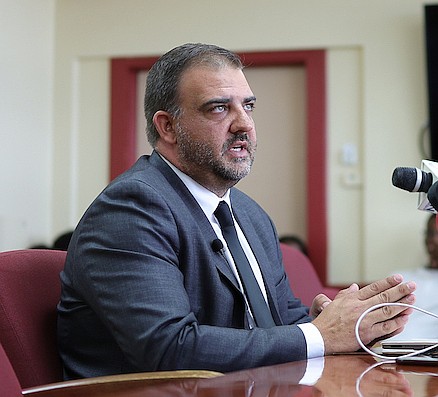
    The tragedy quickly sparked public scrutiny over the long-reported poor condition of Shirley Street’s pavement, with many residents questioning whether unaddressed road deterioration contributed to the crash. During press briefings following the incident, Works Minister Clay Sweeting pushed back against attempts to link the fatality to delayed infrastructure work, confirming that Shirley Street had already been prioritized for repaving prior to the crash. Sweeting emphasized that the string of recent deadly incidents across multiple islands points to excessive speeding as the core systemic issue driving the rise in fatalities, not underinvestment in specific roads.

    “I don’t think it’s fair to any of us, to the grieving families, to try to frame this tragedy as a blame game right now,” Sweeting told reporters, pushing back on questions about the timeline for Shirley Street repairs. “Families are mourning the loss of their loved ones, and right now that is what matters most. This is not a moment to assign blame.”

    Sweeting added that deadly crashes have not been isolated to New Providence, noting fatal incidents have been recorded across Abaco, Grand Bahama, and Andros in recent days. “This is a national concern centered on driver behavior and the dangerous speeds many motorists are traveling at,” he said. “I am strongly urging all drivers to slow down. We cannot afford to have more families grieving unnecessary deaths.”

    The most recent fatality was recorded Tuesday morning, when a 23-year-old male driver died in a head-on two-vehicle collision on Coral Harbour Road near Odyssey Aviation. Assistant Superintendent Lakeisha Sawyer, who spoke to reporters at the crash site, told journalists that preliminary investigation indicates the victim’s vehicle spun out before the driver was ejected from the vehicle. Based on the severe damage to both vehicles, investigators have marked speed as a likely contributing factor.

    Police confirmed that officers from the Western Division were called to the collision just before 7 a.m. The 23-year-old, driving a blue Suzuki Swift, was traveling south when he collided with a northbound black 2016 Kia Sorento operated by a 53-year-old woman. Emergency medical personnel pronounced the Suzuki driver dead at the scene, while the Kia driver was transported to a hospital for treatment; as of press time, her condition has not been updated. This crash brings The Bahamas’ total traffic fatalities for the year to 36, per records kept by The Tribune.

    The four-day fatal spree began Saturday, when 26-year-old Nica Julien died after her Ford Focus overturned and crashed into a concrete utility pole on East Sunrise Highway in Grand Bahama. The following day brought the Shirley Street tragedy, and a Monday collision on Ernest Dean Highway in Spring City, Abaco, killed a 30-year-old man in a two-vehicle crash.

    Unverified CCTV footage circulating widely on social media purports to capture the moments leading up to the Sunday Shirley Street crash. The footage shows a dark-colored vehicle traveling at high speed down a nearly empty stretch of road before hitting the tree, snapping the trunk and causing it to fall. Moments after impact, a man is seen exiting the vehicle with his head slumped forward, stumbling away from the wreck before bystanders approach to check on the remaining passengers. Police have not yet confirmed the authenticity of the video as the official investigation remains ongoing.

    Addressing broader public frustration over widespread potholes and poor road conditions, particularly worsened by the recent rainy season, Sweeting outlined the Ministry of Works’ ongoing infrastructure efforts. He confirmed that over the past two years, the government has ramped up repaving work across New Providence, which has more than 1,000 miles of road in need of maintenance. The ministry has launched a public-private partnership with Baha Mar and contracted more than a dozen small local paving contractors to complete work across the island since January.

    Looking ahead, Sweeting announced a new pothole patching method that will roll out within six months, boosting daily pothole repairs from the current five to 10 per day to 100 per day, dramatically increasing maintenance capacity to address longstanding road quality issues.

    Sweeting and law enforcement officials have both joined in the renewed call for motorists to adhere to posted speed limits and prioritize road safety practices, as the nation enters a period of mourning for the seven recent victims.

  • CND unveils plan to promote mental health in the workplace

    CND unveils plan to promote mental health in the workplace

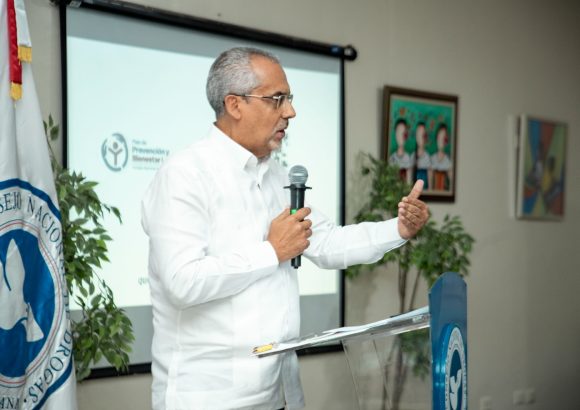
    In Santo Domingo, the Dominican Republic’s National Drug Council (CND) has unveiled an ambitious new public policy initiative aimed at transforming workplace wellness across the country: the Workplace Prevention and Wellbeing Plan, known locally by its Spanish acronym PPBL. This comprehensive technical framework has been crafted to equip both public sector institutions and private enterprises with the tools they need to prioritize worker mental health, proactively prevent substance use disorders, and cultivate work environments that are not only healthier for employees but also more productive for organizations.

    Alejandro de Jesús Abreu, President of the CND, outlined the multifaceted support structure the initiative will deliver to participating organizations. Under the plan, both digital resources and in-person training opportunities will be made available to upskill employees and human resources departments on evidence-based strategies for mental health promotion and addiction prevention. Abreu emphasized that the new workplace plan is intentionally aligned with the national mental health strategy introduced by Dominican President Luis Abinader, and it forms a core component of the far-reaching 2026–2036 State-Society Plan for Prevention and Coexistence, a decade-long framework focused on public health and social cohesion.

    The official launch event drew attendance from senior government officials and leading private sector representatives, nearly all of whom expressed enthusiastic support for the new initiative. Stakeholders highlighted the plan’s unique potential to address underrecognized psychosocial risks in Dominican workplaces, reduce rates of substance abuse in professional settings, and foster more inclusive, health-focused organizational cultures across all industries. The CND further confirmed that the plan has been developed to fully comply with the Dominican Labor Code, existing national public health regulations, and evidence-based guidelines issued by the World Health Organization (WHO), positioning it as a credible, internationally aligned approach to workplace wellness.

  • Transporters call for solution to preserve card payments at fuel stations

    Transporters call for solution to preserve card payments at fuel stations

    In Santo Domingo, a prominent transportation industry leader has sounded the alarm over a controversial proposal from Dominican Republic’s National Association of Gasoline Retailers (Anadegas) that would remove all card payment terminals from the nation’s fuel stations. Williams Pérez Figuereo, a veteran transportation businessman, argues that forcing drivers to rely exclusively on cash transactions would create significant new public safety risks for motorists across the country.

    Pérez Figuereo emphasized that requiring large cash withdrawals for fuel purchases would put transport workers and ordinary drivers at far greater risk of criminal robbery. He reminded stakeholders of a long history of violent attacks on drivers traveling to fuel stations when cash payments were the primary option, noting that the Dominican Republic has invested years of work and policy reform to lower violent crime rates and improve public safety. Rolling back electronic payment options, he warned, would undo years of hard-won progress on public security.

    The proposal put forward by Anadegas stems from longstanding frustration among fuel retailers over high card processing fees, which currently sit between 4% and 7% of each transaction. Rather than eliminating electronic payments entirely, Pérez Figuereo has called for multi-stakeholder dialogue between transportation industry representatives, fuel retailer groups, financial institutions, and national government authorities to craft a compromise solution. He pointed to a successful framework implemented in Mexico, where collaborative negotiations between merchant groups and banks led to reduced transaction fees, allowing retailers to cut costs without eliminating the convenience and safety of card payments for consumers.

  • Diplomatic Corps reaffirms ties with the Dominican Republic at luncheon with Abinader

    Diplomatic Corps reaffirms ties with the Dominican Republic at luncheon with Abinader

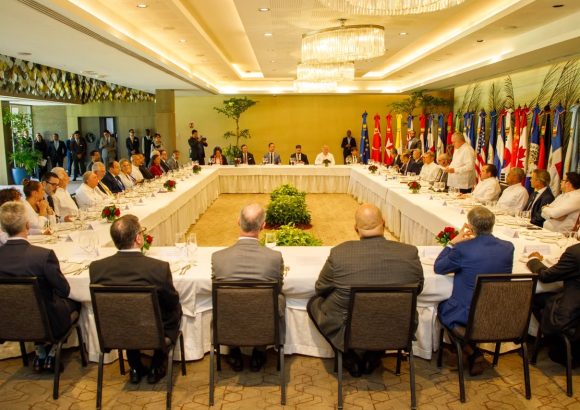
    In a key diplomatic gathering held in Santo Domingo, Dominican Republic President Luis Abinader was the guest of honor at a special luncheon organized by the body of foreign ambassadors and mission representatives accredited to the Caribbean nation. The event brought together top diplomatic officials from across the globe, creating a space for open engagement and mutual commitment to deepening collaborative ties between the Dominican Republic and the international community.

    Piergiorgio Bertoldi, who serves as both the Apostolic Nuncio to the Dominican Republic and the dean of the accredited Diplomatic Corps, delivered a keynote address during the luncheon that outlined shared priorities for global partnership. Bertoldi emphasized that coordinated work between the Dominican government and international stakeholders is critical to making tangible progress on three pressing global challenges: advancing inclusive sustainable development, cutting widespread poverty across the region, and tackling the underlying structural factors that drive irregular migration. Beyond these priority areas, the assembled diplomats also highlighted that sustained, open channels of dialogue form the foundation for launching and scaling joint initiatives in sectors that carry long-term strategic importance for both the Dominican Republic and their respective nations.

    The closed-door luncheon functioned as more than a ceremonial gathering: it centered its discussions on expanding bilateral cooperation across multiple sectors, and served as a clear public diplomatic signal reinforcing the Dominican Republic’s long-standing foreign policy framework. That framework is rooted in three core principles: constructive dialogue, cross-border collaboration, and the continuous strengthening of both bilateral partnerships and multilateral global ties.

  • Panama lifts visa requirement for Dominican travelers

    Panama lifts visa requirement for Dominican travelers

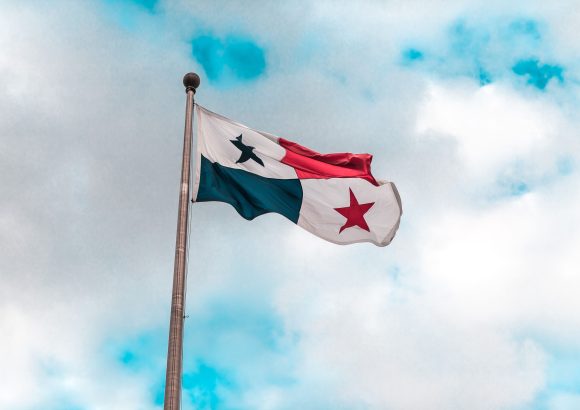
    Panama has lifted the decades-old stamped consular visa requirement for all Dominican citizens traveling to the country as tourists, following the formal signing of Executive Decree No. 12 by Panamanian President José Raúl Mulino Quintero. The policy change went into effect immediately after the decree was officially published in Panama’s Official Digital Gazette, bringing an end to a restrictive travel rule that had stood for nearly a decade.

    According to a statement released by the Panamanian government, the decision to eliminate the visa mandate came after a comprehensive interagency review that found no remaining security or technical justifications to keep the 2015 travel restriction in place. The statement also emphasized the deep, mutually beneficial diplomatic and commercial connections that have long bound the two Latin American nations, framing the policy shift as a reflection of the growing closeness of the bilateral relationship.

    The new executive order formally repeals the older Executive Decree No. 176 enacted in 2015, which had forced Dominican travelers to complete an in-person visa application process at Panamanian consulates prior to embarking on their trip. That requirement created significant administrative burdens and travel delays for Dominican citizens planning visits to Panama.

    Under the updated regulations, Dominican nationals can now enter Panama for tourist purposes without securing a pre-approved consular visa. Per existing Panamanian immigration law, eligible visitors can stay in the country for a maximum period of 90 days per entry. This adjustment moves the Dominican Republic into the growing group of countries whose citizens enjoy streamlined, favorable entry conditions into Panama, opening new opportunities for tourism, business travel, and people-to-people exchanges between the two nations.

  • Dominican Republic to host Americas Investment Forum 2026

    Dominican Republic to host Americas Investment Forum 2026

    Santo Domingo, Dominican Republic – The Caribbean and Latin American nation has been formally selected to host the 2026 Americas Investment Forum (AIF), a landmark regional gathering centered on expanding cross-border investment, accelerating bilateral trade, and fostering groundbreaking innovation across the Americas. When the event opens, it is expected to draw hundreds of senior stakeholders from more than 52 nations, including senior government representatives, C-suite leaders from multinational corporations, heads of global investment promotion agencies, and executives from leading international financial institutions.

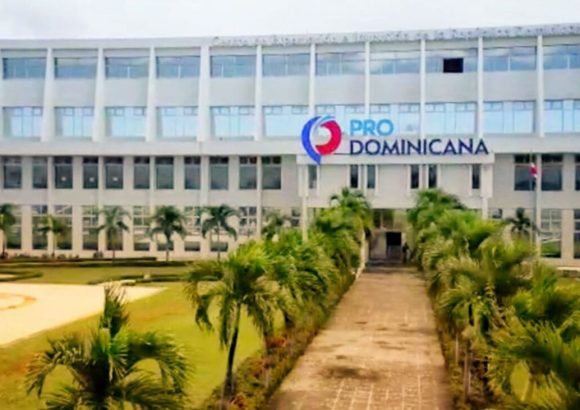
    The forum is a joint collaborative production of ProDominicana, the Dominican Republic’s national trade and investment promotion body, and the World Association of Investment Promotion Agencies (WAIPA), the global umbrella organization for investment promotion entities. Scheduled to speak at the opening ceremony are Dominican Republic President Luis Abinader alongside Harvard University Growth Lab’s prominent economist Ricardo Hausmann, a leading voice on global economic development and growth strategy.

    Organizers have laid out a packed agenda spanning the multi-day event, featuring a lineup of high-profile keynote addresses, closed-door high-level policy and business panels, targeted one-on-one business matchmaking sessions, and a formal awards ceremony. During the ceremony, the 2026 Dominican Republic Investment Recognition Award will be presented to international firms that have made significant, measurable contributions to the country’s sustained economic growth and development over recent years.

    In comments announcing the hosting agreement, ProDominicana Executive Director Biviana Riveiro Disla emphasized that the 2026 forum cements the Dominican Republic’s standing as the top investment destination in the entire Latin American and Caribbean region. The announcement comes on the heels of a historic year for foreign direct investment (FDI) in the country, with 2025 FDI inflows reaching a record-breaking $5.03 billion. Beyond showcasing the nation’s existing economic success, the forum will actively highlight and promote new strategic partnership and investment opportunities across high-griority, high-growth sectors. These include sustainable tourism, advanced manufacturing, utility-scale renewable energy, large-scale transportation infrastructure, integrated regional logistics, digital and creative industries, and artificial intelligence development and deployment.

  • Team Saint Lucia set for Pan Am Swimming in Colombia

    Team Saint Lucia set for Pan Am Swimming in Colombia

    As the second edition of the PanAm Aquatics Swimming Championships approaches, the Saint Lucia Aquatics Federation has announced its competitive roster: an eight-member delegation of talented swimmers primed to compete against the region’s best at the Hernando Arbeláez Jiménez Olympic Swimming Pools in Ibagué, Colombia. Running from July 8 to 12, this year’s tournament has attracted more than 500 athletes from 31 countries and territories across the Americas, marking one of the largest regional aquatics competitions on the 2026 calendar.

    Saint Lucia’s participation in the championships has grown dramatically since the island nation made its debut appearance in 2025. That year, then-rookie Jayden Xu made history by claiming a bronze medal in the men’s 50-meter backstroke, becoming the first Saint Lucian to podium at the event. Just 12 months later, the country’s national team has more than doubled in size, a shift that reflects growing investment and rising interest in competitive swimming across the island.

    For 2026, Xu returns to the championship looking to improve on his 2025 result, where he finished fourth in the 100m backstroke after his opening bronze. He will compete in the 50m and 100m backstroke, 200m backstroke, and 400m freestyle. Joining Xu on the men’s roster are Olympian Mikaili Charlemagne, CARIFTA gold medalist Tyler Dantes, Jase Daniel, and Caden Calderon, each bringing a diverse range of strengths across multiple strokes and distances.

    Charlemagne, who represented Saint Lucia at the Olympic Games, will focus on sprint events: the 50m and 100m freestyle and butterfly. Dantes, a rising young talent, carries the busiest individual schedule of any team member, with races scheduled in the 50m and 100m freestyle, 50m butterfly, and all three backstroke distances (50m, 100m, and 200m). Daniel will contest four freestyle events spanning 50m to 400m, plus three butterfly races from 50m to 200m, while Calderon will compete across freestyle, butterfly, breaststroke, and backstroke, closing out his individual schedule with the 200m individual medley.

    The women’s side of the delegation features three of the Caribbean’s most promising young swimming stars, all gold medalists from the recent CARIFTA Aquatics Championships: Sapphire Parks, Maya Andrew, and Fayth Jeffrey. At just 12 years old, Parks has already established herself as one of the region’s top young competitors, earning back-to-back high point honors in the 11-12 girls division at CARIFTA. For the PanAm Championships, she will compete in six events: 100m and 200m backstroke, 100m and 200m butterfly, 200m breaststroke, and both the 200m and 400m individual medley.

    Andrew will turn her focus to sprint freestyle and butterfly, plus multiple breaststroke distances, racing the 50m freestyle, 50m butterfly, and 50m, 100m, and 200m breaststroke. Jeffrey, who trains based in the United States, will compete in the 50m and 100m divisions of both freestyle and breaststroke.

    Beyond individual events, Saint Lucia will field two mixed relay squads for the tournament. Parks, Andrew, Dantes, and Daniel will team up for the 4x100m mixed medley relay on July 9, followed by the 4x100m mixed freestyle relay on July 11. Leading the delegation is head coach Brian Charles, supported by assistant coach Jonathan Calderon and chaperone Sariah Daniel, who will oversee the team’s preparations and logistics throughout the championship. For a small island nation with a fast-growing aquatics program, this year’s expanded roster represents a major milestone, with fans across Saint Lucia eager to see how their young athletes perform against elite regional competition.

  • WhatsApp to let users go by usernames, not phone numbers

    WhatsApp to let users go by usernames, not phone numbers

    One of the world’s most widely used messaging platforms, WhatsApp, is closing one of its longest-standing privacy vulnerabilities by rolling out a new feature that will allow users to connect with others exclusively through custom usernames, eliminating the mandatory requirement to share personal phone numbers to connect on the app. With over 3 billion active users across the globe, the Meta-owned social platform announced the update on Monday, opening up early reservations for unique usernames ahead of a full global rollout scheduled for later this year.

    WhatsApp product vice president Alice Newton-Rox told reporters that the new functionality has been built as a core privacy-focused feature, designed to put greater control of personal information into users’ hands. Unlike many social platforms that maintain public searchable directories of usernames and offer autocomplete search suggestions, WhatsApp’s system will be intentionally restricted: new contacts will only be able to reach a user if they know their exact username, cutting down on unwanted outreach from strangers who have obtained a user’s phone number through public or unscrupulous means.

    For years, WhatsApp has offered full end-to-end encryption for all communications across its smartphone, tablet and desktop versions, but the platform has carried a key privacy flaw: any user who possesses another person’s phone number can contact them directly on the app, regardless of whether they know the user personally. Up until this announcement, the platform’s only privacy tools to counter unwanted contact have been limited to blocking individual users and muting calls from unknown numbers, which many users have criticized as insufficient for protecting personal privacy.

    While the platform remains far less popular than native SMS texting in the United States, it has become a dominant communication tool across Europe, Asia, Latin America, Africa and most other regions globally, making this privacy update impactful for a huge swath of the global population. The company has already kicked off early reservations for usernames, a move designed to accommodate the expected rush for catchy, desirable handles that are highly sought after on digital platforms. Newton-Rox explained the decision to open early reservations, noting that high demand for popular usernames was the key driver for opening access ahead of the full feature launch.

    The platform has put rules in place to protect users from impersonation: usernames must fall between 3 and 35 characters, and the service will reserve high-profile handles for public figures, celebrities, government entities and notable organizations to prevent bad actors from impersonating prominent people or groups. No exact full launch date has been announced, with the company only confirming that the full functionality will roll out to all users in the coming months.

  • Suriname en Panama verkennen intensievere samenwerking op handel en investeringen

    Suriname en Panama verkennen intensievere samenwerking op handel en investeringen

    Two Latin American and Caribbean nations, Suriname and Panama, have laid the groundwork for deeper economic collaboration during a working visit by a Surinamese delegation to Panama’s investment and trade promotion body, ProPanama. The delegation was led by Melvin Bouva, Suriname’s Minister of Foreign Affairs, International Trade and Cooperation, who traveled to the country to explore new partnership opportunities across trade, logistics, cross-border investment, and special economic zone development. The entire visit was centered on strengthening bilateral economic ties and sharing specialized knowledge around trade expansion and logistics infrastructure growth. Minister Bouva opened discussions by highlighting Panama’s unique strategic value as a leading regional trade and logistics hub. For Suriname, which is currently entering a transformative new economic phase driven by the rapid expansion of its offshore oil and gas sector, Panama’s decades of experience in managing trade and logistics hubs offers critical, actionable insights, Bouva noted. “Panama’s progress over the years offers valuable lessons for nations like Suriname that are looking to expand their own trade-focused economic sectors,” the minister stated during the visit. A core highlight of the delegation’s itinerary was a guided tour and in-depth briefing at the Colón Free Trade Zone, one of the largest free trade zones in the entire Latin American and Caribbean region. During the stop, Suriname’s delegation gained first-hand insight into how the zone is organized, its advanced logistics infrastructure, and the strategies Panama has used to attract consistent foreign direct investment. Stretching across more than 1,064 hectares of land, the Colón Free Trade Zone currently has approximately 280 hectares of undeveloped space reserved for future expansion, and offers participating businesses a wide range of tax and customs incentives to operate from the location. Talks between the two sides also included a focus on building a formal partnership between ProPanama and the Suriname Investment and Trade Agency (SITA), Suriname’s national trade and investment promotion body. According to Suriname’s Ministry of Foreign Affairs, International Trade and Cooperation, the proposed partnership will prioritize four core areas: cross-institutional knowledge sharing, joint development of special economic zones, and collective efforts to boost two-way trade and cross-border investment between the two nations. This working visit aligns with both countries’ broader long-term strategy to expand and deepen their economic relations. The ministry emphasized that the discussions with ProPanama leadership and the on-site visit to the Colón Free Trade Zone mark a tangible, concrete step toward closer collaboration that will unlock new opportunities for entrepreneurs and investors based in both Suriname and Panama. Going forward, both sides are expected to continue working through their respective trade agencies to turn the initial agreements from the visit into actionable projects that deliver mutual economic growth.

  • Implementing on the Global Governance Initiative, Advancing a More Just and Equitable Global Governance System

    Implementing on the Global Governance Initiative, Advancing a More Just and Equitable Global Governance System

    In an op-ed shared with audiences in Antigua and Barbuda, H.E. Jiang Wei, China’s Ambassador to the Caribbean nation, outlined the core vision and practical progress of China’s approach to global governance, tied to the June 2026 release of China’s new white paper *More Just and Equitable Global Governance: China’s Principles, Proposals and Actions*.

    Today’s international order stands at an inflection point, shaped by the most profound systemic shifts in a century. Peace and development, long held as the shared goals of the global community, now face unprecedented headwinds. Geopolitical frictions have intensified, sparking armed conflicts across multiple regions, while growing global economic fragmentation has choked off inclusive development pathways. Compounding these challenges, overlapping crises are accumulating at an accelerated pace, with new threats emerging in rapid succession. Unilateral power grabs and hegemonic interference have inflicted deep damage on the global order, flagrantly flouting international law and the long-accepted basic norms that govern cross-border relations.

    Against this backdrop, anti-globalization sentiment and protectionist policies are gaining traction, as economic and trade issues are increasingly politicized, turned into strategic tools, and even weaponized for geopolitical gain. The existing global governance framework has failed to keep pace with shifting global demographics, rising power of the Global South, and emerging transnational challenges, leaving its structural gaps and inequities increasingly impossible to ignore.

    This moment demands a fundamental reset of global governance: a new model that is more inclusive, fair, and sustainable, one that centers the underrepresented voices of Global South nations that have long been sidelined in key global decision-making processes.

    The framework for this reset was first laid out in September 2025, when Chinese President Xi Jinping launched the Global Governance Initiative (GGI), a comprehensive Chinese proposal that addresses the two defining questions of our era: what kind of global governance system the world needs, and how this system can be reformed and improved to meet modern challenges.

    Since its launch, the initiative has quickly garnered broad international buy-in, earning the support of nearly 160 countries and international organizations, with more than 60 nations joining the GGI’s Group of Friends to advance collaborative implementation.

    At its core, the GGI is built on five foundational principles. First, it enshrines sovereign equality as the non-negotiable starting point for all global governance. Every nation, regardless of its size, military power, or economic wealth, is entitled to have its sovereignty and national dignity respected, and to have an equal voice in decision-making and an equal share of the benefits of global cooperation. Second, it upholds international rule of law as the fundamental safeguard for fair governance. Only a system rooted in consistent, universally applied rule of law can deliver a level playing field for all nations’ development and build a truly just international order. Third, it advances multilateralism as the core path forward, urging all countries to uphold the principle of extensive consultation, joint contribution and shared benefits, protect the central coordinating role of the United Nations in global affairs, and prioritize multilateral dialogue and cooperative problem-solving. Fourth, it anchors global governance in a people-centered value framework, recognizing that the citizens of all countries are the true actors in global governance, and that improving public well-being is the ultimate goal of all collective action. Reform of global governance must deliver greater fulfillment, security and well-being for people across every region. Fifth, it prioritizes practical problem-solving as a key guiding principle, emphasizing that effective global governance must deliver tangible solutions to the real challenges facing nations today.

    Unlike many global initiatives that remain only words on paper, China has positioned itself as both a leading advocate and active implementer of the GGI. In the area of common security, China is a major contributor to UN peacekeeping operations: it is the second largest contributor to the UN peacekeeping budget and the largest provider of peacekeeping troops among the permanent members of the UN Security Council, and has developed a distinctive, dialogue-centered approach to de-escalating long-running international flashpoints. In pursuit of greater global fairness, China has driven the historic expansion of the BRICS bloc, supported the growth of the Shanghai Cooperation Organization (SCO), backed the African Union’s gaining full membership in the G20, and launched and advanced a open, inclusive initiative for Global South cooperation. Through eight targeted support measures, China is helping Global South nations collectively advance along sustainable pathways to modernization. To foster greater global solidarity, China initiated and led the establishment of the International Organization for Mediation, filling a long-standing gap in global conflict mediation infrastructure. It has also convened the Conference on Dialogue of Asian Civilizations and the Ancient Civilizations Forum to build bridges of mutual understanding and learning across different cultural traditions. On the governance of emerging global challenges, China established the Kunming Biodiversity Fund to support global conservation action, and launched the Global Initiative on Data Security and the Global AI Governance Initiative to help develop inclusive, fair governance frameworks for these emerging domains.

    Global governance is a collective endeavor that requires constant forward progress; in an era of turbulence, standing still means falling backward. Today, as the world enters a new period of turbulent transformation, there is a greater need than ever to revitalize inclusive multilateralism, uphold universal international rule of law, and build a more effective global governance system. China stands ready to work side by side with the government and people of Antigua and Barbuda to deepen multilateral cooperation, advance the GGI’s goals through the principle of shared consultation, contribution and benefit, and jointly build a more just and equitable global governance system for all.