博客

  • TNR and Intabaco partner to modernize Dominican tobacco farming

    TNR and Intabaco partner to modernize Dominican tobacco farming

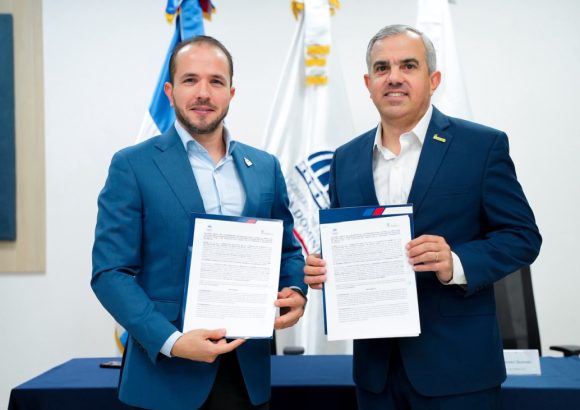
    SANTO DOMINGO — Two leading Dominican agricultural institutions have announced a new collaborative agreement designed to transform the country’s iconic tobacco export sector through targeted upgrades to irrigation infrastructure and farmer capacity building. The National Irrigation Technology Directorate (TNR) and the Tobacco Institute of the Dominican Republic (Intabaco) formalized the partnership this week, with shared goals centered on boosting productivity, cutting environmental harm, and embedding long-term sustainability across one of the nation’s top agricultural export industries.

    Under the terms of the agreement, TNR will take the lead on delivering specialized technical expertise and hands-on training for tobacco producers. This training will cover every stage of working with modern pressurized irrigation systems, from initial installation to ongoing operation and routine maintenance, to ensure farmers can leverage these tools effectively long-term. For its part, Intabaco will act as a liaison between independent producers, training opportunities, public and private financing options, and government subsidy programs designed to lower barriers to adopting new irrigation technology.

    A core component of the partnership is the development of on-ground demonstration plots scattered across key tobacco-growing regions of the country. These plots will serve as living test cases, allowing local farmers to see firsthand the performance and benefits of upgraded irrigation systems. They will also give researchers and institutions the opportunity to collect rigorous data on how modern irrigation impacts both total tobacco yields and the overall quality of the harvested crop, providing actionable evidence to guide future sector improvements.

    Dominican agricultural officials project the partnership will deliver far-reaching economic benefits beyond on-farm productivity gains. The Dominican tobacco sector already contributes more than US$1.3 billion to annual national exports, and institutional leaders expect the modernization push to strengthen the sector’s global competitiveness. Crucially, the partnership is also designed to drive widespread adoption of innovative, water-efficient farming practices that align with the country’s broader environmental sustainability goals, creating a balance between economic growth and responsible resource management.

  • Dominican resorts receive multiple 2026 Travvy Award nominations

    Dominican resorts receive multiple 2026 Travvy Award nominations

    The Caribbean tourism hub the Dominican Republic has earned widespread recognition on a global industry stage, scoring multiple nominations across key categories for the 2026 Travvy Awards. Organized by two leading travel industry outlets, TravelPulse and AGENT at HOME, the annual Travvy Awards stand as a prestigious honor that celebrates outstanding achievement and innovation across the global travel sector, shining a spotlight on destinations and hospitality providers that set new standards for visitor experiences.

    Beyond the national-level nominations, a slate of the Dominican Republic’s most elite resorts have also advanced to the final round of competition. The island nation itself is in the running for five high-profile awards: Best Caribbean Destination, Best Caribbean Culinary Destination, Best Caribbean Wedding and Honeymoon Destination, Best Caribbean Tourism Board, and Best Travel Agent Academy Program. These nominations span every core pillar of the Dominican Republic’s tourism strategy, from its world-famous cuisine to its status as a top romantic getaway and its investment in industry training for travel professionals.

    Four of the country’s newest hospitality offerings — Secrets Playa Esmeralda Resort & Spa, The St. Regis Cap Cana Resort, W Punta Cana Adult All-Inclusive, and Zemi Miches All-Inclusive Resort — have been named finalists for Best New Hotel in the Caribbean. Another well-established property, Club Med Punta Cana, picked up a nomination for Best Hotel Renovation for its recent guest-focused upgrades. Two of the nation’s top all-inclusive resorts, Cayo Levantado Resort and Sanctuary Cap Cana, are also competing for the coveted title of Best All-Inclusive Overall.

    Industry stakeholders and the public alike can cast their votes for the nominated destinations and properties through September 4. The full list of winners will be formally revealed on November 5 during an awards ceremony hosted at the Greater Fort Lauderdale Convention Center in Florida, capping off the annual selection process for one of travel’s most respected award programs.

  • Private clinics announce service suspension for Primera ARS and ARS Futuro patients

    Private clinics announce service suspension for Primera ARS and ARS Futuro patients

    Starting July 14, hundreds of private medical facilities across the Dominican Republic will halt a wide range of routine medical services for patients covered by two of the country’s largest health insurers, Primera ARS and ARS Futuro. The unprecedented service suspension, announced by the National Association of Private Clinics and Hospitals (ANDECLIP), will remain in place indefinitely until the long-running reimbursement dispute between the two sides is resolved.

    ANDECLIP president Rafael Mena confirmed that the controversial move was approved by leaders of roughly 130 private health centers after months of unproductive talks to raise insurer reimbursement tariffs. Mena explained that current payment rates set by the insurers have not kept pace with skyrocketing operational costs across the Dominican private healthcare sector. These growing costs span every core part of clinical operations, from electricity and water utility bills to imported medical supplies, routine equipment maintenance, and competitive staff salaries that have had to be adjusted to match rising inflation across the country. Under the current payment structure, Mena added, private providers are losing money on every patient covered by the two insurers, making continued full service unsustainable.

    Crucially, ANDECLIP has emphasized that life-saving care will not be interrupted amid the dispute. Emergency department services and intensive care unit admissions will remain fully operational for all patients, regardless of their insurance provider. However, the suspension will impact nearly all non-urgent care, including routine scheduled doctor consultations, laboratory and imaging diagnostic tests, elective surgical procedures, and other pre-planned medical services. The association has issued a public advisory urging patients covered by Primera ARS and ARS Futuro to confirm their appointment status directly with their chosen clinic and their insurance provider before arriving to seek non-emergency care.

    The Dominican regulatory body for social security patients, the General Directorate of Information and Defense of Social Security Affiliates (DIDA), has already responded to the announcement, calling for an urgent negotiated resolution that avoids harm to patients. DIDA warned that it will not hesitate to pursue formal legal action against any party that violates the constitutionally guaranteed right to health for Dominican affiliates. As of ANDECLIP’s public announcement, none of the key parties on the other side of the dispute – Primera ARS, ARS Futuro, and the national social health insurance supervisor SISALRIL – have issued any public comment on the planned service suspension.

  • Aircraft makes emergency landing in Haiti; no fatalities reported

    Aircraft makes emergency landing in Haiti; no fatalities reported

    On Wednesday, a small ZED Airlines aircraft registered as HI-1056 in the Dominican Republic was forced to conduct an unscheduled emergency landing in Haiti’s Lafito region, the carrier has officially confirmed. The flight, which was traveling between Haiti’s second-largest city Cap-Haïtien and its capital Port-au-Prince, involved a single-engine Cessna 402B model that carried only three people: one certified pilot and two passengers.

    Contrary to many emergency aviation incidents that result in severe harm or loss of life, this event ended with no fatalities or reported serious injuries among the plane’s occupants. Immediately after the aircraft touched down safely in the Lafito area, all three people on board were provided with on-site medical evaluations and support by response teams, as confirmed by airline representatives.

    As of the latest update from ZED Airlines, the root cause that triggered the emergency landing has not been officially identified. The company announced that it has partnered with national Haitian aviation authorities to deploy a joint investigation team made up of the airline’s own senior technical specialists and independent regulatory officials. This team will carry out a full, detailed review of all available evidence, including flight data, aircraft maintenance records, and pilot statements, to clarify exactly what led to the unexpected incident.

  • Public Health expands rapid tuberculosis testing with two new GeneXpert systems

    Public Health expands rapid tuberculosis testing with two new GeneXpert systems

    SANTO DOMINGO – The Dominican Republic has taken a major step forward in its fight against tuberculosis, upgrading the national public health system’s detection capabilities with the addition of two cutting-edge GeneXpert molecular diagnostic devices. This expansion brings the total number of these advanced testing tools in the country’s public health network to 36, covering communities across all regions of the nation.

    The two new systems were purchased with an investment of 3.38 million Dominican pesos, a strategic allocation of public health funding aimed at closing gaps in rapid TB diagnostics. Unlike traditional testing methods that can take days to deliver results, these molecular platforms can deliver an accurate tuberculosis diagnosis in mere hours. Critically, they can also rapidly identify strains of the disease that are resistant to first-line drug treatments, a breakthrough that removes long delays in connecting patients to appropriate care. By enabling earlier initiation of targeted treatment, the new equipment is expected to slow community transmission of the bacteria and improve long-term patient outcomes.

    Dominican Republic Minister of Public Health Víctor Atallah emphasized that expanding access to this high-end diagnostic technology is a cornerstone of the government’s work to improve early TB detection, which is widely recognized as the most effective intervention to curb the spread of the disease. Atallah noted that the expanded nationwide network of devices moves the country closer to its official public health goal of fully eliminating tuberculosis within its borders. Public health authorities also highlighted that the broader distribution of GeneXpert systems will improve equitable access to rapid, extremely accurate testing for at-risk populations in both urban centers and rural areas that previously faced longer wait times for results.

    This upgrade is an integrated component of the Dominican government’s comprehensive national strategy to strengthen every stage of tuberculosis care, from primary prevention and early diagnosis to targeted treatment and long-term patient follow-up. The national approach is fully aligned with the global tuberculosis elimination targets set by the World Health Organization, supporting international efforts to reduce TB incidence and mortality worldwide.

  • Renowned Dominican architect Cuqui Batista dies at 100

    Renowned Dominican architect Cuqui Batista dies at 100

    The Dominican Ministry of Culture has confirmed the passing of one of the nation’s most celebrated architectural figures, Francisco Manuel “Cuqui” Batista Bisonó, who died at the age of 100. Tributes have poured in from across the country’s cultural and political sectors, honoring the decades of transformative work that cemented his status as a cornerstone of Dominican architectural history.

    Widely regarded as the most influential architect in modern Dominican history, Batista built a portfolio of work that redefined the country’s urban landscape. Among his most iconic creations is the Palace of Fine Arts, a cultural landmark that remains a central hub for arts and performance in the Dominican Republic decades after its completion. Beyond his signature work, Batista contributed his expertise to a string of high-impact national projects, including the Livestock City Stadium, the former Supreme Court of Justice building, and the national headquarters of the Social Christian Reformist Party (PRSC). Each of these structures carries Batista’s distinct design sensibilities and has become a familiar part of daily life for Dominicans.

    Over the course of his century-long life and decades-long professional career, Batista earned widespread recognition for his contributions to Dominican culture and design. One of the most notable honors came in 2006, when he was officially named the “Living Heritage of Dominican Architecture” in acknowledgment of his ongoing impact and commitment to the field. Dominican cultural authorities note that Batista’s legacy will not fade with his passing. Instead, his body of work—particularly the landmark buildings that dot the nation’s cities—will continue to shape the Dominican Republic’s architectural and cultural identity for generations to come, standing as a permanent testament to his vision and skill.

  • Police probe viral video of officer slapping man

    Police probe viral video of officer slapping man

    A viral video of a police officer striking a restrained man during a high-profile international basketball game featuring the Bahamas National Team has sparked widespread public outrage and triggered an internal investigation by the Royal Bahamas Police Force (RBPF). Deputy Assistant Commissioner of Police Anthony Rolle has publicly stated that the RBPF does not tolerate the inappropriate conduct captured in the footage, which spread rapidly across social media platforms in the hours after Monday night’s game.

    The incident unfolded at a crowded gymnasium venue, where police had been called to intervene in a spectator altercation in the bleachers. Video footage shows two officers detaining the man in question: one officer holds both of the man’s wrists to restrain him, while a second officer in khaki uniform conducts a pat-down search of the man’s clothing. Seconds after the search begins, the uniformed officer slaps the man hard across the face, a move that prompts an immediate audible gasp from nearby spectators watching the confrontation.

    Prior to police arrival, the same man was filmed being attacked by multiple other spectators during the stands altercation, according to additional footage circulating online. Still, the use of force against an already restrained individual has drawn sharp criticism from social media users, many of whom have raised broader questions about excessive use of force by Bahamian law enforcement, particularly at an international event that was being watched by audiences outside the country.

    Online commentary has been uniformly critical of the officer’s actions. One user highlighted the awkward position of the incident on a global public stage, while another argued that the slap reflected a pattern of routine physical abuse among some members of the national police force. A third commentator noted that the officer involved appeared to be a senior member of the force, making the unprofessional conduct even more unacceptable given that the man posed no obvious threat while being held by a second officer.

    ACP Rolle confirmed that the RBPF’s Complaints and Corruption Unit has taken charge of the investigation into the incident. Speaking to reporters, he emphasized that the behavior shown in the video does not align with RBPF standards, saying, “It’s not something that we condone.” He declined to share additional details about the incident or the officer involved, noting that an open investigation requires fairness to all parties involved. Once the internal inquiry is complete, Rolle said investigative findings will be passed to the Commissioner of Police, who will review the full case file and determine what disciplinary or other action is appropriate.

  • Dominican Republic granted over 60,000 residency permits to Haitians since 2018

    Dominican Republic granted over 60,000 residency permits to Haitians since 2018

    Newly released government open data from the Dominican Republic reveals a striking dual approach to Haitian migration, as the Caribbean nation has approved more than 60,000 legal residency permits for Haitian citizens between 2018 and 2026 while carrying out large-scale deportation campaigns for undocumented migrants.

    According to figures from the Dominican central government’s Open Data portal, Haiti outranks every other country for the number of residency approvals granted to its nationals over the eight-year period. In total, 60,306 Haitian applicants received authorization to reside legally in the Dominican Republic, averaging 6,701 permits per year – or roughly 558 approved applications each month. The public database does not currently break down this total by residency type, leaving it unclear how many of the approvals were for temporary, permanent, or definitive legal status.

    These official residency numbers stand in sharp contrast to the Dominican government’s widely reported intensified immigration enforcement actions. Since 2024 alone, Dominican authorities have repatriated roughly 670,500 undocumented Haitian nationals, with the first six months of 2026 accounting for more than a quarter of that total at 196,321 deportations.

    The seemingly contradictory policies stem from the ongoing crisis gripping Haiti, which has been gripped by worsening political instability, prolonged economic collapse, and a deepening humanitarian emergency for years. These overlapping crises have pushed hundreds of thousands of Haitians to cross the border into the Dominican Republic in search of safety, work, and better living conditions. In response, the Dominican government has simultaneously pursued two separate paths: expanding targeted deportation operations to remove migrants without legal status, while continuing to operate established legal residency programs that grant approval to qualifying Haitian applicants.

  • Dog abandoned in washer with rock on lid

    Dog abandoned in washer with rock on lid

    On a Sunday when an entire country lost electrical power, an unlikely set of circumstances led to the life-saving discovery of an 8-month-old puppy trapped inside a discarded washing machine — an incident that has pulled back the curtain on a appalling animal abuse case and reignited demands for stricter enforcement against cruelty to animals.

    The young black-and-brown Bahamian potcake dog was located in dense brush adjacent to Charles Saunders Highway, after Sea Breeze resident Sharon Ferguson caught a faint whimpering sound while she and her family sat outside their home waiting out the blackout. With the constant hum of generators, traffic and household appliances silenced by the power failure, the quiet allowed Ferguson to pick up on the subtle cries for help that had gone unnoticed for days.

    Ferguson initially assumed the sound came from a neighbor’s pet, but the repeated faint cries convinced her an animal was in serious danger. “We were on the patio, just trying to stay cool and talking when I heard what sounded like a dog,” she recalled. “I kept hearing it, and I told my daughter we should go check it out because the noise seemed to come from deep in the bush.”

    Ferguson and her daughter drove to the remote area off the highway and spotted an old, abandoned washing machine tucked off a dirt path. Even though the whimpering had temporarily stopped, they cut their engine and quickly picked up the faint sound again. Uncertain what they would find inside, they went back to their home to gather protective gloves, food, water and Ferguson’s son before returning to the site.

    When the rescuers pried open the washing machine’s lid, they found the tiny puppy poking her shaking head out to greet them. “We were so emotional because we’re both huge animal lovers,” Ferguson said. The puppy, terrified and trembling, had to struggle to pull herself out of the confined space, where a heavy rock had been weighted on top of the lid to trap her inside. After escaping, the puppy initially fled back into the nearby bushes, but rescuers eventually coaxed her out and brought her to Ferguson’s home.

    Ferguson’s daughter convinced the family to keep the puppy safe until animal welfare groups could take over, arguing that whoever trapped her could do even more harm if she was found again. Despite her terrifying ordeal, Ferguson described the puppy as playful and friendly. She noted the puppy showed no signs of severe malnutrition, suggesting she had not been trapped for more than a few days, though she had a minor skin irritation on her abdomen.

    The puppy remained in Ferguson’s care until Tuesday morning, when the Bahamas Alliance for Animal Rights and Kindness (BAARK) took her into their custody. The Bahamas Humane Society also sent a team to check on the puppy’s health on Monday.

    Veterinarian Dr. Daniel Kats, who responded to the rescue after seeing video of the discovery circulating on social media, echoed Ferguson’s assessment that the blackout was directly responsible for saving the puppy’s life. The rescue site was just minutes from his home, so he rushed over to provide emergency medical care. “What saved this dog was the blackout,” Dr. Kats said. “When power went out, everything went completely quiet, and that’s when they could hear her whimpering.”

    Dr. Kats said he was horrified by what he found at the scene. Even with the central agitator taking up most of the space inside, there was barely enough room for the puppy to curl up — she could not even stand upright. “She had to squeeze into a little circle just to fit,” he explained, adding that he believes she was trapped for as many as three days.

    Local residents told Dr. Kats the puppy had been roaming the neighborhood for roughly two weeks, with multiple locals leaving food out for her. No one has come forward to claim ownership, and it remains unclear how she ended up locked in the washing machine. Dr. Kats noted the puppy was extraordinarily lucky to survive, given the extreme Bahamian heat that day. “It was piping hot outside,” he said. “The little bit of shade inside the machine probably kept her alive. If she’d been out in direct sun, she never would have made it past 24 hours.”

    Examination of the washing machine revealed bite marks on the plastic agitator, confirming the puppy had chewed frantically to try to escape. As of the latest update, the 8-month-old puppy is in stable condition at BAARK’s facility, with no major life-threatening health concerns. “She’s happy, she’s healthy, and we don’t have any concerns about her right now,” Dr. Kats said. “That said, everyone who’s heard about this is just shaken that an innocent little puppy could be put through something like this.”

    BAARK Vice-President Lissa McCombe issued a strong condemnation of the incident, calling it a “despicable crime.” She added that Bahamian law allows for legal penalties against those convicted of animal cruelty, and investigators are working to identify the person responsible. In the coming days, the puppy will be spayed, microchipped and placed into a foster home, before being matched with a permanent adoptive family.

    A video of the rescue posted by Ferguson to Facebook has quickly gone viral, earning more than 400 shares and 1,000 reactions as of Tuesday. Hundreds of social media users have commented, expressing outrage at the alleged cruelty and praising Ferguson and her family for their quick action that saved the puppy’s life.

  • OMSA to launch electric bus corridor in Santo Domingo’s Colonial City

    OMSA to launch electric bus corridor in Santo Domingo’s Colonial City

    Santo Domingo, Dominican Republic – The city’s public transport authority, the Metropolitan Bus Services Operator (known locally as OMSA), is launching a transformative new 100% electric bus route specifically designed to upgrade transportation access and accelerate revitalization work in the capital’s iconic Colonial City district.

    Dubbed the OMSA Colonial project, the new electric bus corridor will deploy five zero-emission vehicles, each engineered to carry up to 22 passengers at a time. These buses will traverse a 12.5-kilometer route that links the Colonial City’s most important central streets with two key outer destinations: the popular Plaza de la Cultura cultural complex and connecting stations of the existing Santo Domingo Metro.

    To improve accessibility for all riders, the corridor will be equipped with 30 to 35 wheelchair-accessible stops positioned throughout and around the perimeter of the historic district, with built-in accommodations for people living with reduced mobility. In a nod to advancing gender equity in the transport sector, OMSA has confirmed that all drivers for this new route will be women, as part of the agency’s broader employment inclusion strategy.

    Infrastructure preparations for the corridor are already well underway: modern, weather-protective bus shelters have been fully installed along high-traffic streets including Las Mercedes, Las Damas, Hostos, and Arzobispo Nouel, ahead of the route’s official opening.

    OMSA officials highlight that the nearly silent, zero-emission design of the electric buses delivers two core benefits aligned with the district’s revitalization goals: it cuts local air pollution to protect the historic neighborhood’s atmospheric charm, while also making public transit a more appealing option for both visitors and local residents. This electric bus corridor is just one component of a years-long, comprehensive revitalization program for the Colonial City, which has already delivered upgrades including buried overhead electrical lines, repaved and widened pedestrian sidewalks, improved street lighting, and the full restoration of dozens of public green spaces and gathering spots across the district.