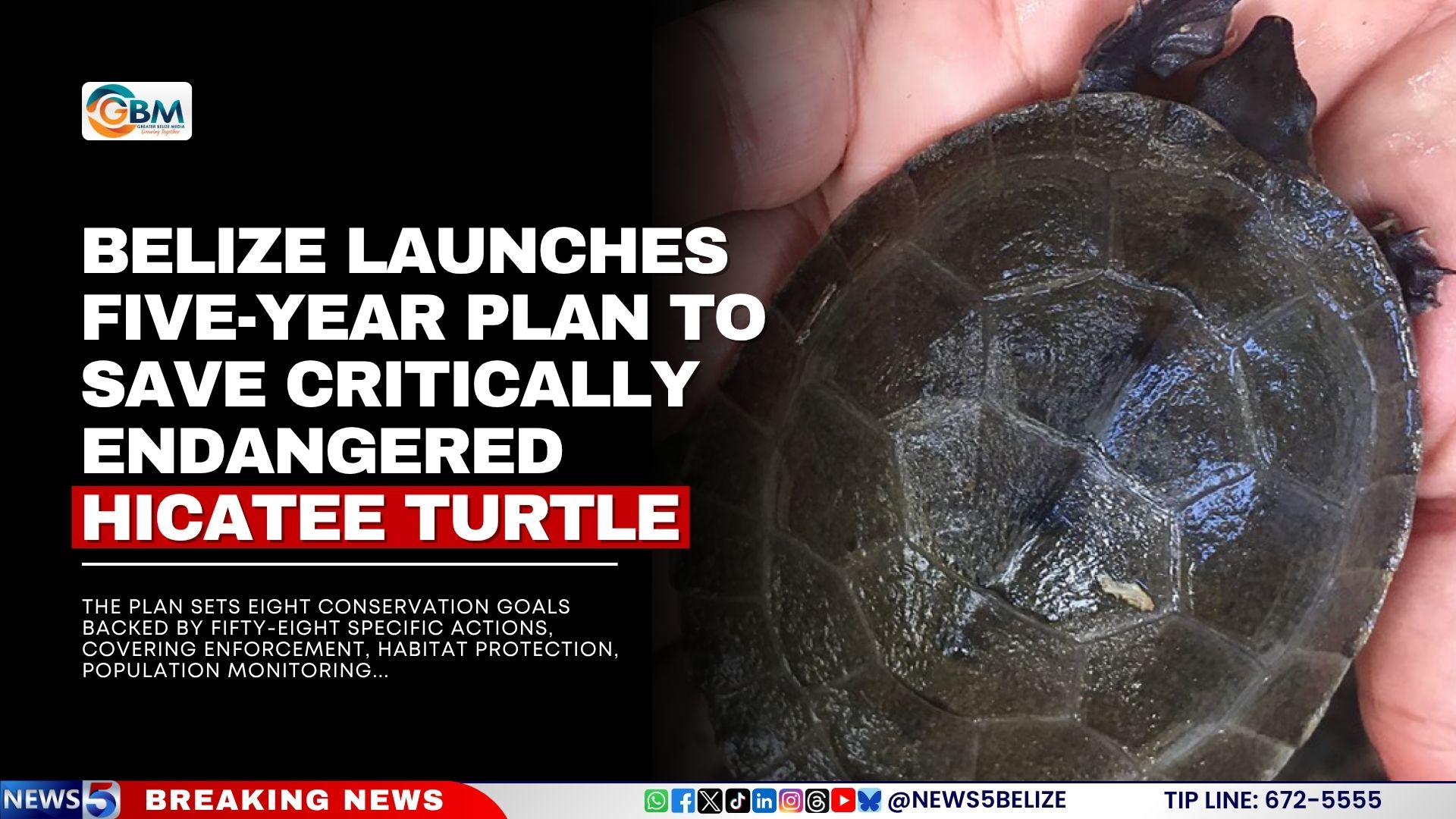
As part of ongoing conservation initiatives unveiled during Belize Climate Week, the Central American nation has launched an ambitious five-year national strategy to protect and rebuild wild populations of the Hicatee turtle, one of the planet’s rarest and most threatened freshwater turtle species.
The Hicatee Conservation and Action Plan 2026-2031 was formally introduced by Belize’s Ministry of Blue Economy and Marine Conservation in partnership with the country’s Fisheries Department, marking a landmark step in coordinated national efforts to prevent the extinction of a species that has teetered on the edge of disappearance for decades.
Known locally as Tortuga Blanca, the Central American River Turtle (Dermatemys mawii) holds a unique ecological place in Belize’s river and wetland ecosystems. It is currently listed as Critically Endangered by the International Union for Conservation of Nature (IUCN) Red List, and ranks among the 25 most at-risk turtle species globally.
This comprehensive new plan was developed through cross-sector collaboration between Belizean government agencies, leading local and international conservation organizations: the Belize Foundation for Research and Environmental Education, the Turtle Survival Alliance, and Zoo New England. To address the species’ steep population decline, the framework sets eight clear overarching conservation goals, supported by 58 specific, actionable initiatives that span five core priority areas: strengthened anti-poaching enforcement, critical habitat protection, systematic wild population monitoring, regulated captive breeding and management, and local community engagement in stewardship efforts.
Conservation scientists and government officials have pinpointed the primary threats that have driven the Hicatee turtle to its current critically endangered status: widespread illegal harvesting for local consumption, ongoing habitat degradation from deforestation, large-scale wetland drainage for development, and water pollution from agricultural and urban runoff.
The government of Belize has formally endorsed the new five-year plan, and has pledged to support full implementation through coordinated inter-agency collaboration, as well as targeted efforts to mobilize both national funding and international conservation resources to bring the iconic freshwater turtle back from the brink of extinction.