博客

  • Regional MSME Matching Grants Programme Extends Window 2 Application Deadline to July 24, 2026

    Regional MSME Matching Grants Programme Extends Window 2 Application Deadline to July 24, 2026

    Micro, small and medium enterprises (MSMEs) organized into collaborative value chain groups across three Eastern Caribbean nations have been granted extra time to apply for substantial grant funding through a landmark regional program focused on growing the sustainable blue economy.

    The Organization of Eastern Caribbean States (OECS) Commission, which administers the Unleashing the Blue Economy of the Caribbean (UBEC) project, has announced an extension to the application deadline for the second call for proposals under the program’s Window 2 initiative. Eligible groups now have until Friday, July 24, 2026, to submit their polished applications, giving them additional time to refine proposals, gather required supporting documents, and solidify cross-sector partnerships. Funding is open exclusively to value chain groups based in Grenada, Saint Lucia, and Saint Vincent and the Grenadines.

    Unlike traditional grant programs that support individual businesses, Window 2 is designed to back coordinated value chain groups: networks of connected small businesses that work together to deliver products and services to regional and global markets. Illustrative examples of qualifying partnerships include a local fisher supplying fresh catch to a regional processor, which in turn provides finished seafood products to coastal restaurants and small boutique hotels; sea moss farmers teaming up with processing facilities and export firms to develop value-added wellness products for international consumers; dive and marine tour operators partnering with land-based tour companies and coastal accommodations to build seamless visitor experiences; and waste collection businesses working with recycling plants and manufacturers to upcycle marine plastic into new consumer goods.

    These collaborative models do more than boost individual business profits: they strengthen overall regional competitiveness by streamlining supply chains, reducing operational gaps, and spreading resources and expertise across small businesses that might otherwise struggle to scale independently. In line with the program’s focus on inclusive economic growth, the OECS Commission has placed special emphasis on encouraging applications from women-led value chain groups. Women already hold critical leadership roles across core blue economy sectors including fisheries, marine tourism, and marine waste management, and the grant program is designed to remove barriers that have historically limited their ability to expand operations and build strategic partnerships.

    Early outcomes from the program have already demonstrated the far-reaching benefits of investing in blue economy MSMEs. Past grant recipients spanning sustainable marine tourism, innovative circular waste management, fisheries, and aquaculture have shown that targeted resourcing for small collaborative enterprises leads to stronger, more resilient businesses, more vibrant coastal local economies, and more resilient communities equipped to adapt to economic and environmental change. This success confirms that when small business owners are given access to the capital and partnership support they need to grow, they deliver widespread shared benefits across the region.

    The OECS Commission advises all eligible groups to avoid last-minute submissions and use the extended deadline to strengthen their proposals ahead of the July 2026 cutoff. Interested groups can apply online via the portal at https://bit.ly/4dh0ZX9, with additional information available through the OECS Commission directly.

    The Regional MSME Matching Grants Programme is a core component of the broader UBEC project, which is implemented by the OECS Commission and funded by the World Bank through the PROBLUE multi-donor trust fund. The overarching goal of the initiative is to drive inclusive, sustainable economic development across the Eastern Caribbean by strengthening MSMEs, fostering a culture of innovation and cross-sector collaboration, and building long-term resilience in the region’s critical blue economy.

  • Nottingham Girls Day School Returns to Antigua and Barbuda for Third Consecutive Sports Tourism Exchange

    Nottingham Girls Day School Returns to Antigua and Barbuda for Third Consecutive Sports Tourism Exchange

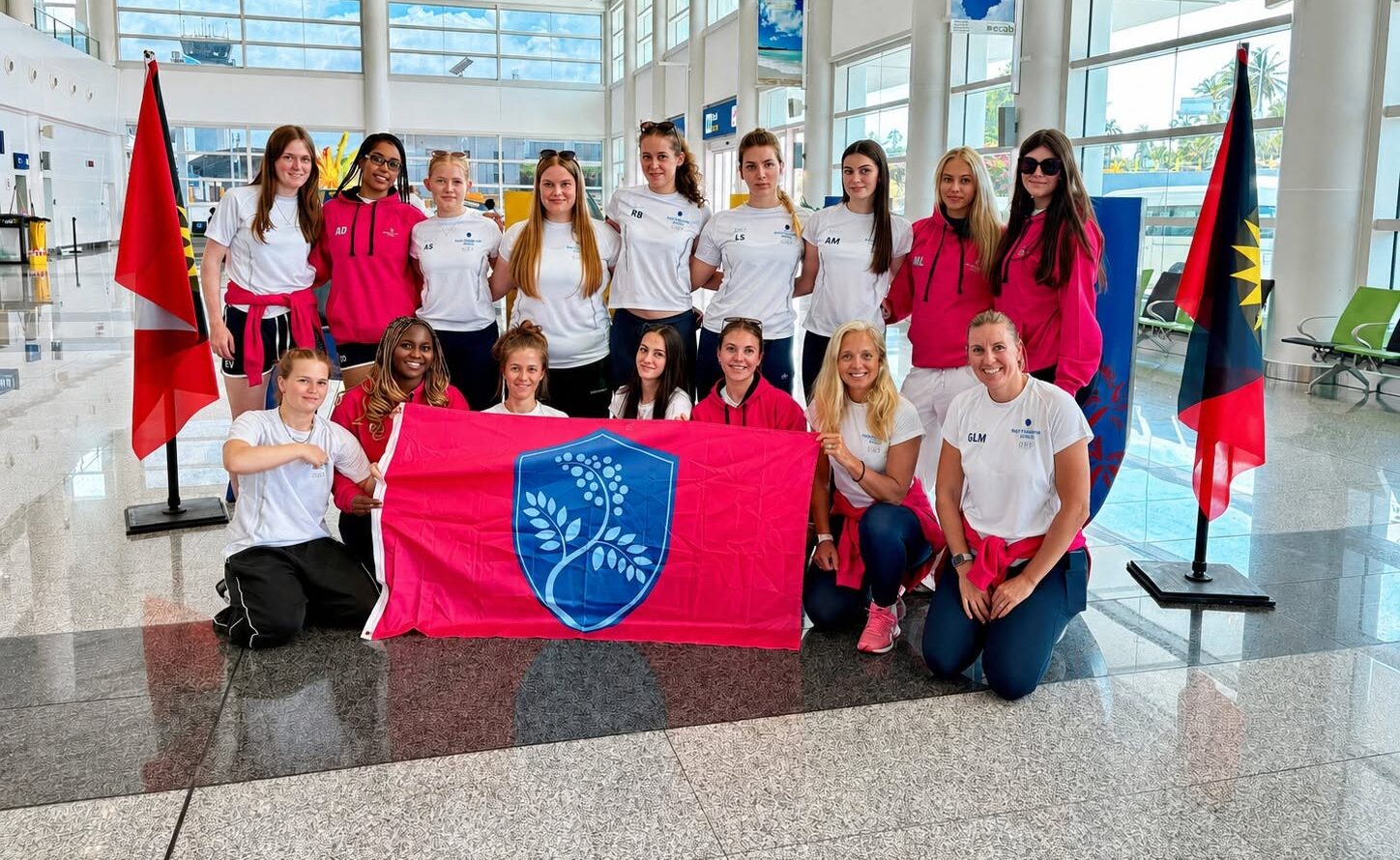
    Antigua and Barbuda is reinforcing its position as one of the world’s most sought-after sports tourism destinations, as a long-standing international partnership brings a British educational group back to its shores for the third year in a row. Nottingham Girls’ Day School, based in the United Kingdom, has returned for another annual sports tourism exchange, an initiative coordinated closely by the Sports Tourism Department under the country’s Ministry of Tourism, Civil Aviation, Transportation and Investment. The ongoing collaboration highlights the deep, lasting bond between the Caribbean nation and the UK school, cementing Antigua and Barbuda’s appeal as a preferred host for international youth sporting events.

    The 29-strong delegation, which touched down on the island on Tuesday, is made up of two competitive Under-17 netball squads. Over the course of their 9-day visit, running from July 9 to 17, the young British athletes will face off against local Antigua and Barbuda teams in a packed slate of exhibition matches. Beyond the competitive action on the court, the annual exchange is designed to deliver far more than just sporting results: it creates space for young athletes from vastly different backgrounds to hone their technical skills, form cross-cultural friendships, and immerse themselves in a new way of life through the unifying power of sport.

    When they are not competing, the student athletes will get the chance to explore many of Antigua and Barbuda’s most iconic natural and historical attractions. The group’s off-court itinerary includes a snorkeling expedition and other water-based activities at the scenic Cades Bay, a close encounter with stingrays at the world-famous Stingray City attraction, and a guided visit to the historic Shirley Heights lookout, a landmark that showcases the nation’s colonial history and sweeping coastal views.

    Karen Joseph, head of Antigua and Barbuda’s Sports Tourism Department, expressed the ministry’s excitement at welcoming the returning delegation, noting that the ministry expects this year’s exchange to build on the success of previous years. “Sports tourism is about so much more than competition,” Joseph explained. “It’s an opportunity for young people to connect, learn from one another and create lasting memories while experiencing everything our beautiful twin-island nation has to offer.”

    This recurring exchange is part of the Antigua and Barbuda Ministry of Tourism’s broader strategic push to establish the country as a premier global sports tourism hub. By attracting international athletic delegations and hosting recurring cross-border sporting exchanges, the ministry aims to deliver tangible benefits to local athletes, inject consistent revenue into the local tourism sector, and showcase the country’s outstanding hospitality, world-class sporting infrastructure, and unrivaled natural beauty to an international audience.

  • Trump Threatens Fresh Strikes on Iran as Ceasefire Appears to Collapse

    Trump Threatens Fresh Strikes on Iran as Ceasefire Appears to Collapse

    On July 8, 2026, a fragile ceasefire between the United States and Iran collapsed dramatically, sending tensions between the two nations soaring and triggering widespread alarm over the risk of a full-scale regional conflict. Speaking at the NATO summit held in Ankara, Turkey, U.S. President Donald Trump delivered a blunt statement confirming that the truce, which had briefly raised hopes of de-escalating months of mounting violence between the two countries, was effectively dead. Trump went on to warn that a new round of harsh U.S. military strikes could be launched as early as later the same night.

    The president’s incendiary remarks rejected any path forward for diplomatic engagement with Tehran. In harsh language, he stated, “I don’t want to deal with them anymore. They’re scum. They’re sick people, they’re led by sick people.” While he did not fully rule out the theoretical possibility of future talks, he dismissed any such effort as a fruitless waste of time for all parties involved.

    Trump’s comments followed a major overnight U.S. military operation that targeted more than 80 Iranian positions across the country. According to official statements from Iranian authorities, the overnight strikes left eight service members from Iran’s air force and navy dead.

    Iran has responded to the escalating aggression with stark warnings of its own. Iranian officials cautioned that Trump’s hostile rhetoric is pushing the entire Middle East region “toward fire,” and added that Tehran’s network of regional military allies already have their “finger on the triggers” ready to retaliate. Iranian state media also issued a critical threat: if the U.S. proceeds with additional attacks, Iran will move to close the Strait of Hormuz, the narrow global shipping chokepoint through which roughly a fifth of the world’s oil supplies pass every day.

    The sudden collapse of the ceasefire and rising threat of wider conflict sent immediate shockwaves through global financial markets. Fears that sustained fighting could disrupt critical global energy supplies pushed Brent crude oil prices up 5% in a single day, reaching roughly $80 per barrel.

    In additional comments, Trump addressed the status of Iran’s nuclear program, claiming that all of Iran’s remaining nuclear material is stored in deeply buried underground facilities that “nobody is going to be able to get it except us.” He also ruled out an immediate U.S. ground invasion, noting that such an operation would only be launched if the goal is to “completely eliminate” Iran’s current government or if a new nuclear and security agreement is reached with Tehran.

    The rapid unraveling of the truce has ended a brief period of cautious optimism that emerged just days earlier, when the ceasefire was expected to dial back months of back-and-forth escalation. Now, analysts and global policymakers are bracing for a rapid expansion of conflict that could destabilize the entire Middle East and send shockwaves through the global economy.

  • Frontier Airlines launches daily San Juan–Punta Cana route

    Frontier Airlines launches daily San Juan–Punta Cana route

    Against the backdrop of a shifting ultra-low-cost airline landscape in the United States, Denver-based Frontier Airlines has announced a major expansion push into the Caribbean and Latin America, rolling out eight entirely new routes that include daily flights between San Juan, Puerto Rico and Punta Cana – one of the Dominican Republic’s most sought-after tourist hotspots. This move marks a strategic step to grow the carrier’s regional footprint and reinforce air links to top leisure destinations across the Caribbean basin.

    The expansion comes directly on the heels of Spirit Airlines, a key competitor in the U.S. ultra-low-cost segment, cutting back operations on a range of underperforming routes. As Spirit pulls back from select high-demand markets, Frontier has moved quickly to fill the gap, positioning itself to capture new passenger traffic while keeping low-priced travel options available for consumers looking for affordable getaways.

    Per airline leadership, the network growth is intentionally structured to retain low-cost access to popular routes that see heavy travel demand, while simultaneously supporting ongoing expansion across three core travel segments: leisure trips, business travel, and family visits. To drive early bookings and build buzz around the new routes, Frontier has rolled out introductory promotional fares designed to attract price-sensitive travelers who are the airline’s core customer base.

    “We are pleased to expand our service to ensure that consumers continue to have access to affordable travel options,” said Josh Flyr, Frontier Airlines’ vice president of network design and operations, echoing the carrier’s long-standing brand focus on delivering low-cost air travel to underserved or under-served routes.

  • Energy Minister outlines Dominican Republic’s long-term energy strategy to meet rising electricity demand

    Energy Minister outlines Dominican Republic’s long-term energy strategy to meet rising electricity demand

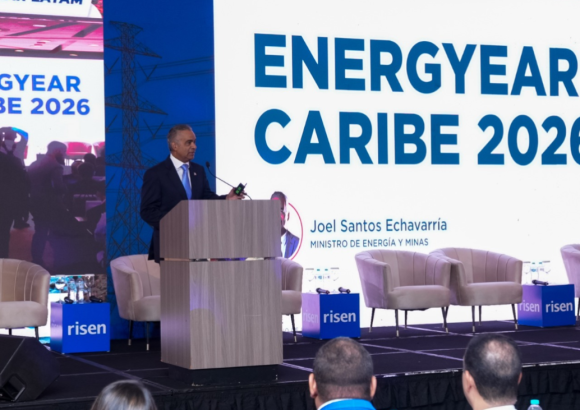
    Santo Domingo — When Energy Minister Joel Santos took the stage to open Energyear Caribe 2026 in the nation’s capital this week, he laid out a clear, urgent long-term vision for the Dominican Republic’s energy future: act now to upgrade the country’s power infrastructure, or risk being unable to meet growing electricity demand by the 2030s.

    Addressing a crowd of more than 600 senior energy industry leaders, technical experts, and policymakers gathered at Hotel El Embajador, Santos framed current investment as the foundation of the country’s energy security for the next 15 years. He emphasized that developments in power generation, cross-country transmission infrastructure, and last-mile distribution systems built in the coming years will directly shape how well the Dominican Republic can serve households, businesses, and industrial operations into the 2030s. A key warning accompanied his presentation: if critical infrastructure projects are pushed past 2028, future national governments will not have the capacity to keep up with rising demand.

    The government’s official strategic roadmap centers on five core priorities: scaling up total energy generation capacity to meet growing needs, updating aging transmission and distribution networks, streamlining and improving regulatory frameworks, expanding access to electricity for underserved rural communities, and rolling out widespread energy efficiency initiatives across all sectors. Santos explained that the strategy was specifically crafted to adapt to three shifting global and domestic trends: the Dominican Republic’s accelerating economic expansion, rapid technological change in the energy space, and the ongoing global transition away from fossil fuels to lower-carbon energy sources.

    Santos also highlighted the critical role of cross-sector collaboration, calling for far stronger coordination between the Dominican Republic’s public institutions and private energy companies. He argued that closer public-private partnership paired with forward-thinking, adaptive regulation is the only way to build an electricity system that is reliable in day-to-day operations, resilient to external shocks such as price volatility and extreme weather, and sustainable aligned with global climate and development goals.

    Energyear Caribe 2026, the regional energy conference that drew officials, utility leaders and experts from across the Caribbean and beyond, focused its 2026 agenda on the Dominican Republic’s long-term electricity outlook. Key topics of discussion included integrating higher shares of variable renewable energy into the national grid, modernizing outdated grid infrastructure, advancing much-needed regulatory reforms, and aligning short-term projects with long-term national energy planning goals.

  • Sugar sector cuts reliance on foreign labor as mechanization hits 70%

    Sugar sector cuts reliance on foreign labor as mechanization hits 70%

    SANTO DOMINGO – The Dominican Republic’s iconic sugar sector, a cornerstone of the national economy for generations, has achieved a remarkable technological transformation over the last half-decade that is reshaping its operational model permanently. Five years ago, mechanized harvesting of sugarcane accounted for just 1 percent of all harvest activity across the country. Today, that figure has surged to 70 percent, delivering major gains in overall productivity and drastically cutting the industry’s long-standing reliance on foreign migrant labor.

    This landmark progress was the central topic of a high-level working meeting held at the Dominican Republic’s National Palace, where President Luis Abinader held discussions with top executives from the nation’s largest and most influential sugar processing mills. The gathering focused on reviewing the industry’s current performance trajectory and reinforcing its strategic contribution to the country’s broader economic growth agenda.

    Senior leadership from three of the nation’s leading sugar producers – Central Romana, Ingenio CAEI, and Ingenio Barahona – were in attendance at the meeting, joined by Eduardo Sanz Lovatón, the Dominican Minister of Industry, Commerce and Micro, Small and Medium Enterprises.

    Official statements released following the meeting confirm that the widespread adoption of mechanized harvesting systems has streamlined operational workflows and lifted efficiency across the entire supply chain. Most notably, the shift to automated cutting has eliminated the need for thousands of foreign workers who previously filled labor-intensive manual harvesting roles. Both government officials and industry stakeholders stressed that ongoing investment in modernization infrastructure is steadily strengthening the long-term competitiveness and environmental sustainability of the sugar sector, one of the Dominican Republic’s most critical productive industries.

  • Collado highlights Puerto Rico as a key tourism market for the Dominican Republic

    Collado highlights Puerto Rico as a key tourism market for the Dominican Republic

    During a industry gathering hosted in San Juan, Puerto Rico, Dominican Republic’s Tourism Minister David Collado has announced promising new growth trends for Caribbean travel, revealing that Puerto Rico has solidified its position as one of the Dominican Republic’s most valuable inbound tourism source markets. Data shared at the event shows that visitor numbers from Puerto Rico to the neighboring Caribbean nation have already climbed 7.7% year-to-date, a steady upward trajectory that outpaces many other regional source markets.

    Addressing a packed audience of more than 200 travel industry professionals and media representatives, Collado shared official projections and historical figures: in 2025, a total of 269,000 Puerto Rican tourists traveled to the Dominican Republic, and the ministry forecasts that total annual arrivals will cross the 290,000 threshold by the end of 2026 if current growth holds.

    The minister attributed this consistent, strong growth to two key strategic improvements rolled out in recent years: expanded targeted tourism marketing initiatives and significantly enhanced air connectivity between the two Caribbean destinations. He specifically called out the launch of low-cost carrier Arajet’s operations in the Puerto Rico market as a game-changing development, noting that the airline’s entry has expanded the range of flight options for travelers and driven greater fare competitiveness, making cross-Caribbean travel more accessible than ever for Puerto Rican visitors.

    Beyond sharing growth data and projections, Collado used his visit to San Juan to convene a working meeting with the Dominican Republic’s public-private tourism marketing committee. The gathering focused on drafting and refining innovative new promotional strategies designed to further boost interest in the Dominican Republic among Puerto Rican travelers and cement the two destinations’ growing cross-regional travel ties.

  • Texas boy survives shark bite off Exuma, calls his older brother a hero

    Texas boy survives shark bite off Exuma, calls his older brother a hero

    A devastating vacation encounter off the coast of the Bahamas has turned into a story of extraordinary sibling courage, after 12-year-old Parker Roll, a Texas native, publicly credited his older brother Jack with saving his life following a sudden shark attack in late June. The incident unfolded while the Roll family was visiting Staniel Cay, Exuma, as part of a sightseeing tour of the Exuma Cays, when the unprovoked attack caught both boys completely off guard.

    Speaking in an exclusive interview with ABC’s *Good Morning America*, Parker reflected on the surreal moments after the shark locked onto his body. “I didn’t really feel it at first because there’s just so much adrenaline rushing through your body,” he recalled. “But I remember looking down, and I just saw this head — and that head was well over a foot wide.”

    Sixteen-year-old Jack, who was in the water nearby, initially mistook the dark shape of the shark for an ordinary submerged rock. It was only when he heard a shattering, “ear-piercing scream” from his younger brother that he immediately grasped the gravity of the emergency. Without hesitation, Jack sprang into action to contain the life-threatening bleeding. “I immediately took off my swimsuit because I was like, oh, we have to stop that bleeding,” Jack explained of his quick thinking. “I ran over there, wrapped it tight around his leg, and then picked him up and started carrying him over to the beach as fast as I could.”

    The pair’s older brother Adam quickly rushed to alert the tour boat’s crew, screaming at the top of his lungs to call for a first aid kit. The on-site crew helped carry the injured 12-year-old back to the vessel, which then had to make a grueling 60-mile open-water trip to reach the main Exuma shore. Complicating the emergency, the boat had no cell service and no working radio contact to call for emergency support mid-journey, leaving Parker to endure extreme agony the entire way. “I’ve never felt pain like that,” Parker said. “You’ve got salt water washing over huge wounds, and there’s tons of deep teeth marks all over my leg.”

    Once the boat docked, an ambulance was waiting to transport Parker to a local hospital, where he underwent emergency surgery, received dozens of stitches, and was treated for a severe injury to one of his toes. Remarkably, medical teams were able to save his leg, an outcome Parker calls nothing short of a miracle. “I definitely consider myself very lucky — that shark could’ve easily taken my leg off if things had gone even a little differently,” he said.

    The Roll family’s parents shared that every person on board the tour boat held onto hope and prayed throughout the nerve-wracking journey back to shore, as they had no way of knowing how the traumatic ordeal would end. In a positive update, doctors have told the family they are optimistic Parker will make a complete recovery with time and physical therapy.

    At the time of the *Good Morning America* interview, Parker said he can already “kind of” walk short distances, though movement still causes significant discomfort. He added that he is already looking forward to getting back to one of his favorite activities: riding his dirt bike. For Parker, there is no question who is responsible for him being alive today. “I definitely consider [Jack] as my hero,” he said. “He stopped the bleeding and saved my life.”

  • COE places seven provinces and National District under yellow alert

    COE places seven provinces and National District under yellow alert

    Authorities in the Dominican Republic have rolled out expanded weather emergency alerts across much of the country, after a combination of a trough and an active tropical wave created persistently unstable atmospheric conditions that raise risks of extreme weather events including intense downpours, thunderstorms, powerful wind gusts and isolated hail episodes.

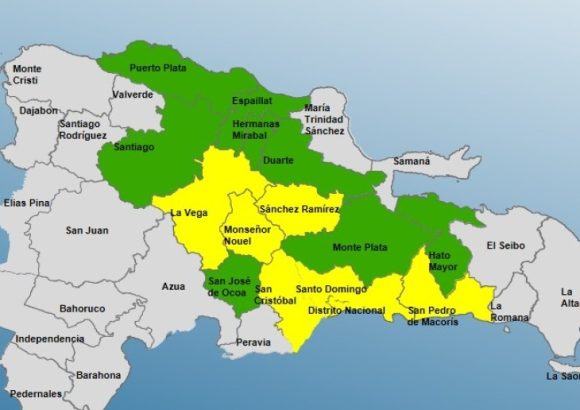
    Following an official meteorological assessment issued by the Dominican Institute of Meteorology (INDOMET), the country’s Emergency Operations Center (COE) activated yellow-level weather alerts for seven provinces and the National District. The areas placed under the higher yellow alert, which signals elevated risk of hazardous conditions, are La Vega, Monseñor Nouel, Sánchez Ramírez, Santo Domingo, the National District, San Pedro de Macorís and San Cristóbal.

    An additional eight provinces remain under green alert, a lower-tier warning that calls for sustained precaution amid the ongoing unstable weather pattern. These provinces are Hato Mayor, Monte Plata, San José de Ocoa, Duarte, Espaillat, Puerto Plata, Santiago and Hermanas Mirabal.

    National emergency and meteorological officials have issued clear warnings that the interacting weather systems will sustain a moisture-saturated, highly unstable atmosphere across the affected regions through the coming period. This conditions sets the stage for repeated rounds of heavy rainfall, severe thunderstorms, sudden strong wind gusts and occasional isolated hailstorms, all of which carry heightened risks of flash flooding and landslides in vulnerable areas.

    To reduce the risk of preventable accidents, the COE has issued urgent guidance to residents living in all alert zones. The agency strongly advises against attempting to cross swollen rivers, fast-flowing streams and steep ravines that are carrying elevated water volumes, and reminds the public to avoid all recreational activities on affected waterways until conditions improve.

    Alongside inland weather warnings, maritime safety advisories remain in effect for both the country’s Caribbean and Atlantic coastlines. On the Caribbean coast stretching from Cabo Rojo in Pedernales to Neiba Bay in Barahona, operators of small and medium-sized watercraft have been told to keep their vessels docked in port, as choppy, dangerous sea conditions create significant navigation risks. For all other stretches of the Dominican Caribbean coast, officials urge mariners to exercise heightened caution while underway.

    On the Atlantic side of the country, covering the stretch from Saona Island in La Altagracia to Cabo Cabrón in Samaná, operators of small, medium and less structurally sturdy boats are also ordered to remain in port due to the threat of dangerous swells. All remaining sections of the Dominican Atlantic coastline are under a caution advisory, with particular warning for navigation close to the shoreline.

  • Casa del Cordón opens new exhibition celebrating Dominican landscapes and culture

    Casa del Cordón opens new exhibition celebrating Dominican landscapes and culture

    In Santo Domingo, a celebration of Dominican art, national heritage and cultural identity has launched at the iconic Taíno Cultural Center Casa del Cordón, an institution backed by Banco Popular Dominicano. Titled “Dominican Narratives of the Natural and Cultural Landscape: Banco Popular Dominicano Collection,” the new showcase brings together curated works from 18 of the nation’s most celebrated contemporary and established artists, each offering a unique lens through which to examine the country’s stunning landscapes, long-held traditions and evolving sense of national character.

    Organized by noted historian and respected art critic Myrna Guerrero, the exhibition draws exclusively from Banco Popular’s extensive private art holdings, bringing rarely-seen works to public view. The collection spans multiple mediums, including vivid oil paintings, intricate hand drawings, and evocative documentary photography, with thematic threads weaving throughout the entire showcase. Visitors will encounter works exploring the country’s rich biodiversity, the quiet rhythms of rural community life, centuries-old architectural landmarks, shifting dynamics of modern urban spaces, longstanding agricultural traditions, and the intangible cultural heritage that binds Dominican people together.

    This new temporary exhibition is a core component of Casa del Cordón’s ongoing public cultural initiative, which was created with a clear mission: to expand equitable public access to Dominican artistic legacy beyond private collections. In addition to rotating temporary exhibitions like this one, the center delivers a full calendar of complementary programming, including hands-on educational workshops for local schools and community groups, and free guided tours led by trained cultural educators to help visitors deepen their understanding of the works on display.

    The exhibition opened its doors to the public on July 9, and will run through an open-ended schedule at the central Santo Domingo venue. It is open to the general public from 9:30 a.m. to 6:30 p.m. Tuesday through Sunday, with no advance reservation required for individual visitors. Alongside the new temporary showcase, guests also have the opportunity to explore the center’s permanent flagship exhibition, “Our First Settlers,” which houses more than 350 original pre-Columbian archaeological artifacts. This permanent collection traces the 5,000-year history of the island’s first Taíno inhabitants, offering a deeper context for the cultural roots that shape modern Dominican identity.