博客

  • Fire breaks out at a pub in Bangkok, killing at least 27 people

    Fire breaks out at a pub in Bangkok, killing at least 27 people

    A catastrophic overnight blaze that has become Bangkok’s deadliest fire in 17 years ripped through a popular music bar in the Thai capital early Sunday, leaving at least 27 people dead and 25 others in critical, hospitalized condition, local authorities confirmed.

    The fire erupted at Rong Beer Na Ladprao, a single-story music venue located in northern Bangkok, shortly before midnight on Sunday. Eyewitness accounts and on-site photos show panicked patrons fleeing the structure as towering flames burst through the roof and dense black smoke billowed into the night sky. In the wake of the disaster, scattered personal items, including dozens of lost shoes left by people scrambling to escape, litter the ground surrounding the gutted building.

    It took approximately 30 minutes for firefighting teams to bring the blaze under full control, according to Bangkok city officials. By dawn on Monday, the entire site had been cordoned off as dozens of forensic investigators began a painstaking search through charred rubble to pinpoint the fire’s origin. The building’s street-facing windows were blown outward by the force of heat and smoke, leaving debris including warped, burned televisions, speakers and an electric guitar scattered across the adjacent sidewalk. Through the shattered glass, onlookers can see the full scale of the destruction: blackened, burned-out tables still stand inside the venue, many holding intact empty beer bottles that survived the inferno.

    Thailand’s national police chief Kittharath Punpetch told reporters Monday after visiting the site that most of the deceased were found trapped in windowless bathrooms near the venue’s rear exit. It is believed these patrons fled to the bathrooms to escape advancing flames and smoke in the main hall, but were ultimately unable to escape. Multiple safety and access issues likely blocked escape routes for those inside, Kittharath explained. The rear exit was never accessed by fleeing patrons, and may have been blocked by a temporary table set up in the main hall to sell candy, or left undiscovered because the power failure left the venue completely dark. Access to a second exit near the kitchen area was also narrowed by installed shelving units and employee lockers, he added. Investigators have also found preliminary evidence that at least some of the venue’s required exit doors may have been locked at the time of the fire.

    Investigators are currently focusing their examination on the ceiling above the bar’s performance stage, where decorative building materials were found. Police will conduct forensic testing to determine if flammable materials were used in the venue’s interior decor, and will also inspect the quality and installation of electrical wiring running through the ceiling area. Thai Prime Minister Anutin Charnvirakul told reporters that a musician performing on stage during the fire gave a firsthand account that matches the investigative focus: the performer told the prime minister he spotted smoke leaking from a circuit breaker near the stage moments before the venue lost power, followed by an explosion that allowed thick smoke to rapidly fill the entire space.

    Data from Bangkok’s Erawan emergency services center puts the total number of injured at 73, with 25 of those patients fighting for life in critical condition. Bangkok Governor Chadchart Sittipunt confirmed that most of the fatalities were caused by smoke inhalation, rather than burns. Authorities are currently working to identify all victims, as many of the deceased were not carrying personal identification at the time of the fire.

    On Monday morning, Buddhist monks traveled to the disaster site to conduct spiritual rituals and pray for the souls of the victims. Medical personnel distributed face masks to local residents and people gathering near the site to protect against residual toxic smoke and fumes still emanating from the burned structure. Local officials also set up a dedicated registration station to collect information from relatives arriving at the site searching for missing loved ones.

    Sukanya Wongwongwai, a local Thai singer, told reporters she had been performing at a nearby venue when she heard news of the fire, and rushed to Rong Beer Na Ladprao after learning several members of her band were scheduled to perform at the bar that night. As of Monday, she confirmed one of her bandmates had been killed in the blaze, three are hospitalized with injuries, and one remains unaccounted for. “From what I heard from people who were inside, when the fire started everything went dark immediately,” she said. “The power was out and there was smoke everywhere, so they couldn’t locate other people or find the exits.”

    This disaster is the latest deadly fire to strike a Thai entertainment venue in recent decades. In 2022, a fire at another music bar in eastern Thailand killed 14 people. The deadliest blaze in Thailand’s recent history dates back to 2009, when a New Year’s Eve celebration at Bangkok’s Santika nightclub caught fire after indoor fireworks ignited the blaze, killing 66 people and injuring more than 200 others.

  • More Than 250 Volunteers Complete CHOGM 2026 Training as Recruitment Drive Continues

    More Than 250 Volunteers Complete CHOGM 2026 Training as Recruitment Drive Continues

    Preparations for the 2026 Commonwealth Heads of Government Meeting (CHOGM) in Antigua and Barbuda have reached a key milestone, with more than 250 aspiring volunteers successfully completing the first round of official training for the high-profile international summit. The full-day interactive training workshop was hosted on Saturday at the nation’s Multipurpose Cultural Centre, marking a critical step in the Organising Committee’s goal of recruiting a total of 500 volunteers to support the four-day event scheduled to run from November 1 to November 4 this year.

    Anika Kentish, the official Volunteer Coordinator for the 2026 CHOGM, highlighted that participants embraced the training curriculum with widespread enthusiasm. The programme was carefully designed to build core competencies required for supporting a global diplomatic gathering, covering foundational topics ranging from an overview of the Commonwealth association and the specific mandate of CHOGM to core professional skills such as customer service excellence, cross-cultural communication, collaborative teamwork, professional standards, and ethical conduct for working with international delegates.

    Kentish also noted that public interest and demand for volunteer positions has already outpaced that of recent major international events hosted by Antigua and Barbuda, including the 2024 Fourth International Conference on Small Island Developing States (SIDS4) and the 2023 Organisation of American States (OAS) General Assembly. This higher demand reflects the broad public excitement across the country to welcome heads of state, senior diplomats, and delegations from all 56 Commonwealth member states.

    Looking ahead, additional training phases are planned following the conclusion of Antigua and Barbuda’s annual Carnival celebrations. These upcoming sessions will include specialized leadership development tracks for team leads and venue managers, as well as role-specific skills training for volunteers assigned to specialized positions across the summit. Organisers reaffirmed that volunteers will be a cornerstone of the summit’s successful delivery, serving as frontline representatives of Antigua and Barbuda’s hospitality while supporting all logistical and operational aspects of the historic gathering.

  • St. John’s Hospice Holds Annual General Meeting at Government House

    St. John’s Hospice Holds Annual General Meeting at Government House

    On July 9, 2026, St. John’s Hospice gathered key stakeholders and its royal patrons for its annual general meeting, convened this year at the historic Government House of Antigua and Barbuda. The event brought together the hospice’s full Board of Directors, alongside the organization’s Patrons: His Excellency The Rt. Hon. Sir Rodney Williams, GCMG, KGN, KSt.J, Governor-General of Antigua and Barbuda, and Her Excellency Lady Williams.

    Chaired by St. John’s Hospice President Pedro Corbin, the meeting began promptly at 10 a.m. with the annual Chairman’s Report, which offered a comprehensive review of the organization’s activities and milestones across the 2025 fiscal year, closing on December 31. Corbin’s address outlined progress across four core priorities: strengthening the hospice’s institutional governance frameworks, expanding targeted fundraising campaigns, completing critical infrastructure upgrades, and advancing strategic plans to secure the organization’s long-term operational stability.

    Following the chairman’s presentation, Treasurer Pauline Walker delivered the official audited financial statements for the same 12-month period. The documents confirmed a small but stable operating surplus for the year, offering clear evidence of the hospice’s careful, responsible financial leadership. Board members used the moment to publicly acknowledge the ongoing support of the hospice’s broad network of givers, including individual donors, unpaid volunteers, corporate collaborators, and community partners. These contributions, the board emphasized, remain the backbone of the hospice’s core mission: delivering compassionate, person-centered end-of-life care to those in need across the country.

    In his featured remarks to the assembly, Governor-General Sir Rodney Williams offered high praise for the board, leadership team, paid staff, and volunteer corps of St. John’s Hospice. He commended the group for its unwavering dedication to delivering accessible, high-quality palliative care to the people of Antigua and Barbuda, highlighting the organization’s robust governance, prudent fiscal management, and consistent commitment to treating patients and their family members with respect and empathy.

    Sir Rodney Williams encouraged the board to continue building on the momentum of recent achievements, and issued a call to action for the broader Antigua and Barbuda community to back the hospice’s work. Whether through donating time as a volunteer, amplifying the organization’s mission through advocacy, or contributing charitable funds, community support remains critical, he noted, adding that St. John’s Hospice has grown into an irreplaceable national institution and a point of collective pride for the country.

    After the formal business of the AGM concluded, board members were invited to take a guided tour of the newly renovated sections of Government House itself. The tour gave attendees a first-hand look at the significant restoration progress completed at the site, one of the nation’s most culturally significant historic landmarks. It also highlighted the ongoing work to protect the building’s unique architectural heritage and cultural legacy for future generations.

    The St. John’s Hospice Board extended sincere gratitude for the opportunity to tour the restored space, and joined the Governor-General and Lady Williams in encouraging all citizens and residents of Antigua and Barbuda to visit the landmark and support its ongoing restoration and preservation efforts. A photo from the event captures Sir Rodney Williams, presiding at the head of the meeting table, with Lady Williams seated to his left and Hospice President Pedro Corbin seated to his right, alongside the full board in attendance.

  • Antigua and Barbuda Bulldogs Reach Next Stage of FIBA AmeriCup Qualifiers

    Antigua and Barbuda Bulldogs Reach Next Stage of FIBA AmeriCup Qualifiers

    The senior men’s national basketball team of Antigua and Barbuda, widely known as the Bulldogs, has secured their spot in the second round of the FIBA AmeriCup Qualifiers following a dominant performance in their opening group stage campaign.Competing in Group A in Guyana, the Bulldogs delivered a standout 86-57 victory against Turks and Caicos in their final group matchup on Sunday night, a win that pushed them to the top of the group standings. Across their four group-stage games, the team wrapped up the first phase of the competition with an impressive 3-1 win-loss record, outperforming other contenders to claim their progression ticket.Leaders of the country’s governing basketball body voiced widespread celebration after the landmark result. “What a moment for our country and our team. Congratulations to the Bulldogs!” stated Honorable Michael Freeland, President of the Antigua and Barbuda Basketball Association (ABBA). Freeland also extended gratitude to key stakeholders that made the team’s run possible, adding “Special thank you to the Government of Antigua and Barbuda, all of our private donors, the Executive and the planning committee who made this trip possible as well. This victory is for all of us.”ABBA General Secretary Carlena Knight-Humphreys echoed this excitement, praising the on-court effort of every member of the Bulldogs delegation. “First off, congratulations to my team, the players, coaching staff and the other officials. We did it! Thank you all for your hard work and dedication,” she said. Like Freeland, Knight-Humphreys highlighted the critical support from public and private partners back home, noting “I also must thank the Government of Antigua and Barbuda and all our private partners who ensured we got to Guyana.”The general secretary added that while the team will enjoy their group stage triumph, focus has already shifted to the upcoming second round. “What a journey it has been up to this point but while the celebrations will continue, we look ahead to the next round of games and we hope that many others will come on board and support the team for this next chapter,” she said.Antigua and Barbuda joins Barbados, which claimed progression from Group B, in the second round of qualifiers scheduled to take place between November 23 and December 1. Already confirmed participants for the second round include Nicaragua, Venezuela, Jamaica, Cuba and Costa Rica, though one South American qualifying spot still remains undecided. Officials have not yet announced which country will host the second round of matches.Following their successful campaign in Guyana, the Bulldogs team is scheduled to return home to Antigua and Barbuda on Monday.

  • More Than 1,100 Sign Petition to Protect Public Access to Jolly Harbour Beach

    More Than 1,100 Sign Petition to Protect Public Access to Jolly Harbour Beach

    A growing public advocacy campaign centered on coastal access rights has gained traction in Antigua and Barbuda, as more than 1,100 citizens and stakeholders have added their names to an online petition demanding that Prime Minister Gaston Browne and his national Cabinet intervene to safeguard public parking and unobstructed public entry to Jolly Harbour Beach. The campaign was launched by the Antigua Conservation Society on the advocacy platform Change.org, and by the time of initial media reporting, the petition had collected 1,186 verified signatures — 203 of which were added in a single 24-hour window on the Sunday following the petition’s launch.

    Framed as an issue of broader public principle rather than just a single parking lot dispute, the petition argues that the future of Jolly Harbour Beach access sets a critical precedent for all of Antigua and Barbuda’s shorelines, which are legally and culturally understood to be public resources open to all. “We respectfully ask you and your Cabinet to protect long-standing public access to Jolly Harbour Beach by preserving practical public parking and convenient beach access for the people of Antigua and Barbuda,” the formal petition text reads.

    Campaign organizers emphasize that the existing public parking area at the heart of the debate was included in the original master plan for the Jolly Harbour development, and has functioned as a community and visitor amenity for decades. It serves a wide range of users, from local Antiguan residents and small business operators to international tourists, yacht owners, and guests staying at nearby villas. If parking capacity is reduced as part of upcoming development plans, organizers warn, ordinary members of the public will face growing barriers to visiting one of the country’s most beloved coastal destinations.

    The petition also underscores the deep historical and cultural roots of human connection to the Jolly Harbour coastline, noting that archaeological research confirms human habitation and use of the area stretches back roughly 5,000 years. Protecting permanent public access to the shoreline, organizers argue, is not only a commitment to current beachgoers but also a responsibility to future generations of Antiguans.

    Beyond safeguarding access at Jolly Harbour, the campaign calls on the Browne administration to embed requirements for adequate public parking and unobstructed shore access into all future coastal development projects across the nation. To broaden support for the campaign, petition organizers have encouraged signatories to add personal comments explaining why public coastal access matters to them, and to share the petition across social media and personal networks to raise public awareness of the issue.

  • Antigua’s Laurel Jonas Earns Graduation from JCI Japan Academy

    Antigua’s Laurel Jonas Earns Graduation from JCI Japan Academy

    The Junior Chamber International (JCI) branch of Antigua has publicly extended warm congratulations to one of its top national leaders, National Executive Vice President Laurel Jonas, following her successful completion of the 39th annual JCI Japan Academy training program.

    This year’s iteration of the prestigious academy, a renowned global leadership development initiative hosted by JCI Japan, centered on the core theme “Evolve with True Heart,” which guided participants through immersive learning focused on both professional skill-building and value-aligned personal growth. Over the course of the program, Jonas engaged with a diverse cohort of young leaders from across the globe, taking part in workshops, collaborative projects, and mentorship sessions designed to refine modern leadership capabilities.

    In an official congratulatory statement shared by the organization, JCI Antigua framed Jonas’ graduation as a major milestone that underscores her ongoing commitment to expanding her leadership capacity and advancing personal development. The branch specifically highlighted Jonas’ consistent dedication, contagious passion for community service, and unwavering commitment to JCI’s mission of developing young active citizens as key factors that enabled her to successfully meet all of the academy’s rigorous requirements.

    Looking ahead, JCI Antigua expressed full confidence that the new insights, cross-cultural perspectives, and practical skills Jonas gained during her time at the Japan-based academy will translate to meaningful positive outcomes for both the local JCI Antigua organization and the broader Antiguan community it serves. Closing out the announcement, the organization reaffirmed its pride in Jonas’ achievement with a simple, celebratory message: “Congratulations, NEVP.”

  • APUA Reports Progress on Rehabilitation of Crabbs Water Storage Tank

    APUA Reports Progress on Rehabilitation of Crabbs Water Storage Tank

    The Antigua Public Utilities Authority (APUA) has recently released an update on the rehabilitation project for the 1.5 million imperial gallon water storage tank located at Crabbs, confirming that work is moving forward at a consistent pace and a critical milestone has already been achieved.

    Per the official update from the state-run utilities regulator, contractors working on the site have successfully completed the application of the first protective coat to the tank’s inner structure, marking the end of one of the project’s most foundational early phases. Restoration operations are continuing on schedule as the team works through the remaining scope of work.

    Beyond the interior coating work, the comprehensive rehabilitation initiative includes two other major upgrades: a full replacement of the tank’s existing base, and the installation of new corrosion-resistant protective rings across the structure. Both of these targeted upgrades are designed to deliver long-term benefits, including a significant extension of the tank’s overall service life and a marked improvement in its operational reliability for the local water supply network.

    At the time of the update, APUA has not yet shared a formal projected timeline for the full completion of the rehabilitation work.

  • Derde helft WK 2026: Messi tussen voetbal, slavernij, racisme en nationale identiteit

    Derde helft WK 2026: Messi tussen voetbal, slavernij, racisme en nationale identiteit

    For decades, a national football jersey has stood for far more than just 11 athletes stepping onto the pitch. For millions of fans across the globe, it carries layers of meaning tied to history, colonialism, slavery, migration, national pride, political ideology and core societal values. This shift explains why Lionel Messi, widely lauded as the greatest footballer of his generation, is no longer judged solely on his on-pitch performances – he has become the global face of Argentina, a nation with a deeply complex history of ethnicity and national identity. This intersection of sport and society is particularly visible in Suriname during the World Cup, where tournament fandom is shaped as much by history, politics, identity, migration and cultural values as it is by 90 minutes of play.

    For millions of people around the world, Messi remains first and foremost a once-in-a-generation footballing talent. His unrivaled technical skill, game-changing vision, understated public persona and trophy cabinet packed with every major honor in the sport have cemented his status as a global icon. To many of his fans, Messi exists separate from politics; they evaluate him exclusively on what he delivers on the pitch.

    But this separation between sports star and national identity is no longer a given. Across social media, an increasing number of posts frame Messi not just as a footballer, but as a symbolic representative of Argentina, tying his public image to a range of political and social conversations. Critics point to the Argentine government’s vote against a United Nations resolution condemning the transatlantic slave trade, ongoing debates over the lack of Black Argentine representation in the national team, and past racism controversies tied to Argentine football. For some observers in Suriname, these issues mean Surinamese football fans should not support Messi or Argentina during the World Cup.

    This reaction is emotionally understandable, but it demands nuance. Can a top professional athlete reasonably be held responsible for the policy decisions of their home country’s government? Sovereign states make political choices; footballers represent their nations only on the sporting field. To date, Messi has not made any public statement on the UN vote in question, so holding him personally accountable for a decision made by Argentina’s elected government is a difficult position to defend.

    That said, this does not mean the broader social conversation taking place is unwarranted. Football has not been a politically neutral pastime for many years. National teams have evolved into powerful symbols of their home countries, and fans naturally tie individual players to national history, colonial power dynamics, migration histories, human rights and contemporary political movements. This means footballers often end up as the focal point of public debates that extend far beyond the sport itself.

    Argentina’s history of ethnicity and national identity adds additional layers to this conversation. While the nation has a long, rich Afro-Argentine history, that legacy was largely underrepresented in mainstream national narratives for centuries. This gap has sparked international discussions about representation, national identity and how Argentina presents itself to the world. Past incidents, in which Argentine players or fans have been accused of racist language and behavior, have further fueled this ongoing debate.

    For Suriname, this conversation carries unique weight. The nation’s identity is defined by its extraordinary ethnic diversity: Afro-Surinamese, Hindustani, Javanese, Indigenous peoples, Maroons, Chinese, Europeans and people of mixed heritage collectively shape the country’s national character. As a result, issues like slavery, colonialism, discrimination and equity are not abstract academic concepts – they are central to Suriname’s collective national history. It is therefore understandable that many Surinamese feel more acutely sensitive to discussions of racism or political positions tied to the lingering legacy of slavery. But this raises a core question: should admiration for a footballer like Messi be contingent on the political choices made by his country of birth?

    In practice, there is no simple answer to this question. One camp argues that sport can never be separated from social responsibility, meaning athletes must be held accountable for the actions of the nations they represent. The opposing side believes football is meant to unite people, and individual athletes should not be blamed for political decisions over which they have no direct control. Both perspectives deserve to be taken seriously.

    This same double standard can be observed when we compare how fans treat players from other nations. Few people hold English striker Harry Kane personally responsible for the United Kingdom’s centuries of colonial violence. Portuguese icon Cristiano Ronaldo is almost never judged on Portugal’s historic role in the transatlantic slave trade. French star Kylian Mbappé is not held accountable for France’s controversial migration policies. Egyptian winger Mohamed Salah is rarely called out to answer for Egypt’s domestic political landscape.
    what many observers also overlook in this debate is the fact that Messi has spent the vast majority of his life outside Argentina. Born in Rosario, Argentina in 1987, Messi moved to Barcelona at age 13 to join FC Barcelona’s famed youth academy. He lived in the Barcelona region for nearly 20 years starting in 2000, before a short two-year stay in Paris during his time at Paris Saint-Germain. Since 2023, he has resided in the United States, where he plays for Major League Soccer’s Inter Miami CF. While he retains strong cultural ties to his country of birth, most of his childhood and adult life has been spent in Spain.

    The World Cup has made clear that modern football is increasingly about far more than football itself. Fans do not choose which team or player to support based only on on-pitch quality. Historical connections, shared language or culture, political beliefs and core social values all shape fandom. As a result, a win or a loss carries meaning that stretches far beyond the final score on the scoreboard.

    The World Cup has never been only a sports tournament. Fans often gravitate toward a specific nation because they have family ties there, share a language, have a shared migration or colonial history, or connect with its cultural identity. That is why so many Surinamese cheer for the Netherlands, while others feel a closer bond to Brazil for its signature attacking style of play, and still others support Ghana, Senegal or Morocco because of shared connections to the African continent.

    For many fans, Messi will always remain a footballing genius. For others, he is inextricably tied to the nation whose public face he has become. This tension is likely to persist long after the final whistle of the World Cup. Perhaps that is both the great strength and the defining challenge of modern football: the game brings people together, but it also forces us to confront the big questions that divide our societies. It pushes us to reflect on identity, history, responsibility and how we view nations, athletes and one another. Ultimately, a World Cup always tells us as much about the world we live in as it does about the game played on the pitch.

  • CARICOM Backs Guyana’s Bid to Host UN Climate Summit in 2030

    CARICOM Backs Guyana’s Bid to Host UN Climate Summit in 2030

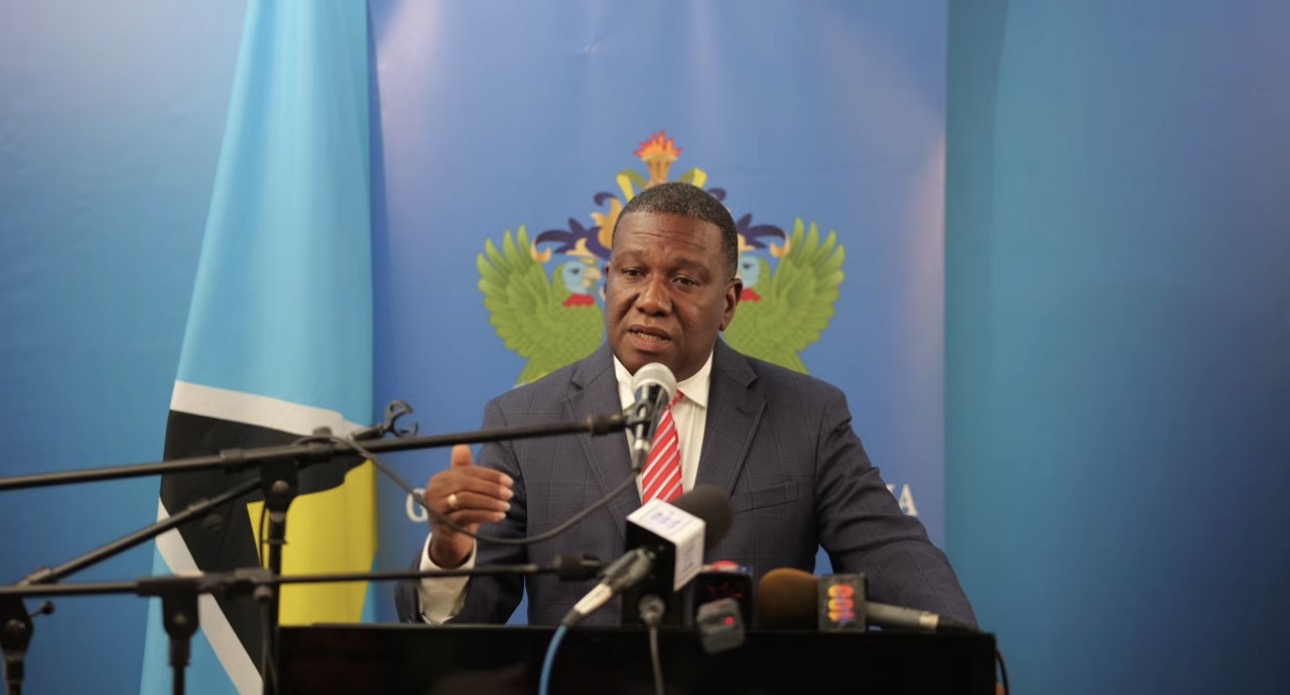
    At the 51st Regular Meeting of the Caribbean Community (CARICOM) Conference of Heads of Government held in Saint Lucia, regional leaders have thrown their full collective weight behind Guyana’s historic campaign to host the 35th United Nations Climate Change Conference (COP35) in 2030. The unanimous endorsement marks a major milestone for the Caribbean, a region on the frontlines of climate change impacts despite contributing very little to global greenhouse gas emissions.

    Beyond backing Guyana’s hosting bid, heads of government also formally approved the CARICOM Climate Diplomacy and COP35 Framework (2026–2030), a cohesive strategic document designed to unify the bloc’s advocacy for member state interests in global climate talks. Official meeting communiqué details outline that the framework will not only align the bloc’s diplomatic engagement ahead of COP31 – scheduled for November 2026 in Antalya, Türkiye – but also anchor long-term regional climate goals for the coming half-decade.

    During deliberations, leaders reaffirmed two non-negotiable core priorities for the Caribbean in international climate negotiations: holding global warming to the critical 1.5°C threshold above pre-industrial levels, and securing formal international recognition of the unique vulnerabilities faced by Small Island Developing States (SIDS) across the globe. Many Caribbean nations fall into this category, facing existential threats from sea-level rise, intensifying tropical storms, and coastal erosion that disrupt livelihoods and economies.

    As part of the bloc’s coordinated climate action in the lead-up to 2030, CARICOM has called for high-level global participation in the Second Global Biodiversity Alliance Summit, set to be hosted by Guyana between October 26 and 28, 2026. The summit will build momentum for the region’s broader climate and conservation agenda ahead of COP35.

    If Guyana’s bid succeeds, it will make history as the first CARICOM member state to ever host a United Nations Climate Change Conference. Hosting the high-stakes global gathering would bring unprecedented international attention to the Caribbean’s ongoing climate struggle, amplifying the region’s calls for increased climate finance from major global emitters and greater investment in climate resilience infrastructure for vulnerable SIDS.

  • Grondbezitters in Coronie opgeroepen percelen te ontwikkelen

    Grondbezitters in Coronie opgeroepen percelen te ontwikkelen

    On July 13, Suriname’s government announced sweeping updates to national land policy during a landmark ceremony in the Coronie district, where 24 local residents officially received their long-awaited land ownership documents. The new measures, led by President Jennifer Simons, are designed to close loopholes in current legislation that have allowed large swathes of allocated state land to sit unused or be repurposed illegally for years, creating land shortages for local residents looking to build homes or expand agricultural operations.

    During the official title handover event, which also featured Land Policy and Forest Management Minister Stanley Soeropawiro in attendance, President Simons laid out the core changes coming to national land law. The updated legislation will serve two key purposes: it will strengthen legal protections and tenure security for legitimate landholders, while also establishing clear mandatory guidelines for the intended use of every parcel allocated by the state. “We are revising the law not only to solidify the ownership title you receive today, but also to enforce the requirement that you use this land for the purpose it was granted to you,” Simons told the gathered recipients. Under the new rules, the state will retain the right to reclaim any parcel that is left unused for multiple consecutive years or repurposed for activities that do not match the approved allocation terms.

    The Coronie title distribution came just one day after the government issued more than 180 land documents in the neighboring Nickerie district, marking a broader push by the administration to clear backlogs in pending land applications across the country. Simons also confirmed that the government is developing a new national financing program to help new landowners build homes at affordable, below-market interest rates, addressing a key barrier to development for low-income residents. She added that old, unresolved land applications in Coronie will be prioritized to clear the district’s lengthy backlog of requests.

    Minister Soeropawiro emphasized that balanced land management in Coronie goes far beyond housing and agriculture, highlighting the district’s unique coastal ecosystem that depends on intact mangrove forests for natural storm protection and biodiversity conservation. Any new land allocation in the district will account for the critical role of these natural habitats, he noted, ensuring environmental protection remains a core priority alongside local development.

    Bronto Somohardjo, chair of the permanent committee for Land Policy and Forest Management in the National Assembly of Suriname, pointed out a long-standing inequity in Coronie’s land distribution: in past decades, large portions of available land were allocated to foundations based outside the district, leaving few parcels available for local residents. The new policy reforms will include a review of these existing allocations to free up more unused land for Coronie residents, he confirmed.

    Multiple members of the National Assembly echoed the government’s call for responsible land use. Lawmaker Le-Roy Doorson urged new landholders to develop their parcels rather than sell them for quick profit, emphasizing that sustained use will drive both personal and district-wide growth. Fellow parliament member Ivanildo Plein highlighted the suite of supporting government policies alongside the land allocation, including low-interest mortgage access, expanded access to agricultural land, and government-backed support for marketing local agricultural products, which together create unprecedented opportunities for smallholder farmers and new landowners. Steven Reyme, another lawmaker, stressed that secure land ownership creates intergenerational wealth, noting that “Land gives a family a stable foundation, and creates a lasting legacy to pass down to children and grandchildren.”

    Closing the ceremony, President Simons offered her congratulations to the 24 new landowners, expressing her hope that they will leverage their new parcels to build a more prosperous future for themselves and for the entire Coronie district.