The Caribbean island nation of Saint Lucia is preparing to welcome its inaugural cohort of third-country nationals transferred from the United States this week, launching a groundbreaking new bilateral arrangement that will cap incoming transfers at 10 individuals every quarter for an initial two-year trial period.
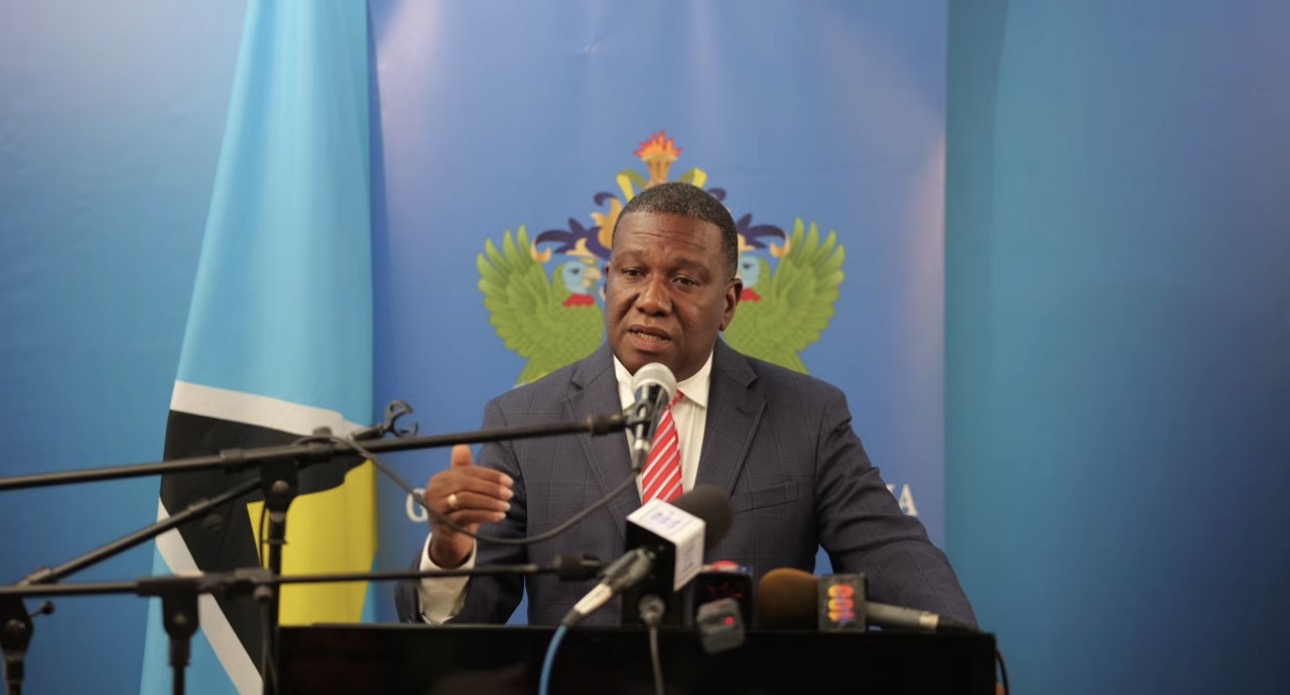
The first group set to arrive includes six people: five men and one woman. During a press briefing addressing public questions about the program’s structure and the future of transferred individuals after their arrival, Foreign Affairs Minister Alva Baptiste confirmed that U.S. personnel will accompany the first group during the transfer process.
Discussions around the arrangement first began between the two governments last year, with negotiations centered on aligning the scope of the program with Saint Lucia’s limited geographic size and available national resources. Baptiste noted that the talks stretched over an extended period as both parties worked to find a framework that worked for the small island nation. “There was a long gestation period where we were discussing with the United States of America what we can afford to do and what we cannot afford to do,” he said. “And in the spirit of partnership, we finally came to an agreement as to what the government in its soundness of judgement believed that it can manage.”
The hard cap of 10 quarterly transfers will remain in place regardless of family grouping, meaning even a single family of 10 or two smaller families of five will not push past the established limit. “The quantum is 10. Whether it’s a family of 10 or, you know, two families of five, but 10 per quarter,” Baptiste confirmed.
Framed as a pilot initiative, the two-year runtime will allow the Saint Lucian government to evaluate the program’s on-the-ground impact and practical functionality before making any long-term decisions about its future. However, the imminent arrival of the first group has sparked widespread public questions around unaddressed details, including housing arrangements, long-term immigration status, and the possibility of transferred individuals permanently settling on the island.
Baptiste has firmly ruled out detaining individuals solely because they are transferred under the program, emphasizing that all people entering Saint Lucia through this initiative will be treated with dignity. “No, we cannot treat them as if they’re prisoners. We are going to receive them and treat them with respect. The same respect that we expect people from other countries to treat our people when our people go to them,” he said.
Upon arrival, the first group of transfers will coordinate with the International Organisation for Migration (IOM) for support, while a multi-agency committee drawing representatives from the Ministry of External Affairs, the national immigration department and other relevant government bodies is managing all local logistics for the program.
Key questions around long-term stays remain unresolved. Baptiste acknowledged that if any transferred individual chooses to remain in Saint Lucia beyond the program’s initial terms, the government will need to negotiate new solutions to address that scenario. “If at all anybody decides to stay, then this is a new conversation that we will have as to how we go about navigating that particular challenge,” he said.
Legal status for new arrivals is another outstanding policy issue the government is still developing. Baptiste explained that special regulatory dispensation will be required for participants, and targeted policy adjustments are being drafted to ensure the program operates in full compliance with existing Saint Lucian law. “This is all new to us. And we are going to grapple with it,” he said. “And we are not going to be secretive about that situation at all.”
Financial terms of the bilateral arrangement also remain under negotiation. The Saint Lucian government has already submitted its formal request for U.S. financial support to cover program implementation costs, but Baptiste declined to share the specific amount the nation has requested. “We have communicated the financial requirements to the United States of America in terms of us implementing that particular programme. So it’s premature to say to you that it’s not going to cost or it’s going to cost X or Y or Z,” he noted.
Baptiste emphasized that the government has been fully transparent with U.S. officials about Saint Lucia’s existing fiscal constraints, and stressed that funding for the pilot program will not divert resources from existing public programs that serve native Saint Lucians. Describing the initiative once more, he said, “It’s almost a pilot project for us.” Going forward, the government plans to release regular public updates as it gathers more experience with the program’s implementation.