博客

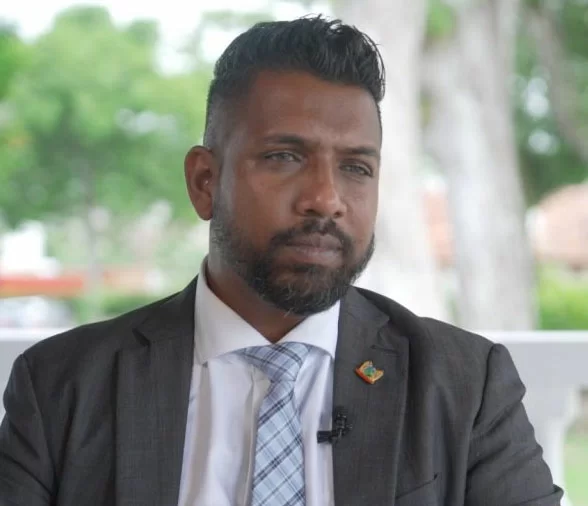
  • Jeremy Enriquez Sues GOB Over Failure to Appoint Ombudsman

    Jeremy Enriquez Sues GOB Over Failure to Appoint Ombudsman

    As of July 13, 2026, a high-stakes constitutional challenge is pressing the Government of Belize to answer for its ongoing failure to fill the vacant post of Ombudsman, a critical independent oversight position that has remained unoccupied for more than six months. The legal action was brought by Jeremy Enriquez, a Belizean citizen who lodged the formal constitutional claim on June 5 this year alongside an urgent court application demanding the Belize High Court force the government to move forward with an immediate appointment.

    Even though Enriquez submitted the case with an official certificate of urgency designating it as a time-sensitive constitutional matter, the court took five full weeks to schedule a preliminary hearing, which is now set to proceed on July 21. Enriquez has lambasted this administrative delay, calling it untenable for a pressing constitutional issue centered on a core public oversight body that has been left without a leader for half a year.

    The Office of the Ombudsman is enshrined in Belize’s constitution as an independent watchdog tasked with investigating complaints of unfair, illegal, or improper conduct by government ministries, public departments, and state authorities. For ordinary Belizeans, it also serves as a low-cost channel to seek legal remedy for harm caused by government actions, filling a critical gap in access to justice for citizens who may not afford lengthy formal litigation.

    The position became vacant at the end of 2025, when former Ombudsman Major (Ret’d) Gilbert Swaso completed his final term. According to Enriquez, the government’s refusal to appoint a qualified replacement has gutted a key constitutional check on executive power, eroding public trust in Belize’s commitment to the rule of law. For Enriquez personally, the vacancy has directly blocked his own efforts to challenge government decisions under Belize’s Freedom of Information Act.

    Enriquez currently has two outstanding review requests pending before the Ombudsman’s office: one focused on government payments tied to litigation stemming from detentions carried out during the 2020 national State of Emergency, and a second seeking access to public records related to the former Voice of America property in Belize. With no sitting Ombudsman authorized to process these requests, both cases have been put in indefinite limbo.

    The legal challenge comes just one month after Belize’s Attorney General Anthony Sylvestre publicly addressed growing concerns over the prolonged vacancy. At that time, Sylvestre explained the delay was tied to the government’s proposed plan to restructure the existing Ombudsman’s office into a full National Human Rights Institution, a reform that he claimed requires amendments to national legislation and extended consultations with civil society groups before a new appointment can be made.

  • LETTER: Nowhere Else to Turn

    LETTER: Nowhere Else to Turn

    In a heartfelt open letter addressed to a local editor, an anonymous non-established government worker has lifted the lid on years of uncertainty and unfair working conditions stemming from a lack of transparency around their employment terms. The worker, who has served in the public sector since graduating from secondary school in 2018, said they originally took on the role believing it would follow standard public service working arrangements. But in a sudden shift, management recently reclassified their position as a special role on the basis of the duty allowance they receive, granting agency leadership broad authority to summon them for work at any time – including public holidays, for any length of shift and to complete any assigned task.

    Under the terms of the national Collective Bargaining Agreement for government workers, management claims the worker’s total compensation is limited to their base salary plus this duty allowance, with no additional overtime or entitlements for on-call work. What makes the situation particularly unacceptable, the worker argues, is that no party has been able to provide them with a copy of the agreement to verify these claims themselves. When they approached their labor union to request access to the document, representatives refused to share it. A subsequent inquiry to their government ministry directed them to the national Government Printery, which told the worker it no longer held copies of the agreement.

    The worker stressed that they are not refusing to carry out their assigned duties and have a long track record of hard work in their role. They simply believe that all employees have a fundamental right to full transparency around the terms of their employment. “Workers deserve to know what they sign up for and what the rules really say,” they wrote. “To just pop up with new rules after years of work is unreasonable. If the agreement really does grant the government these far-reaching powers, the very least workers should get is the chance to read it for themselves.”

    The ongoing uncertainty and unpredictable on-call schedule have already taken a major toll on the worker’s personal and financial life. They told the editor they still do not earn enough to afford building a adequate family home, and the constant risk of being called into work has left them with almost no personal time. This lack of work-life balance has even put the possibility of starting a family or maintaining a normal social life out of reach. “It feels like the people at the bottom always have to carry the burden while nobody in charge is listening,” they added.

    Now, the worker is issuing a public appeal to anyone who holds a copy of the 2010–2020 Collective Bargaining Agreement for non-established government workers to share the document with them. They argue that it is fundamentally wrong that working people should have to beg for access to the legal agreement that governs every aspect of their employment. The letter closes with a plea for public attention and meaningful change, calling on leaders to address the lack of transparency and unfair working conditions faced by low-level non-established public servants across the country.

  • Cuba registers 504 athletes for Santo Domingo 2026 Games

    Cuba registers 504 athletes for Santo Domingo 2026 Games

    As preparations ramp up for the XXV Central American and Caribbean Games set to take place in Santo Domingo in 2026, Cuba has formally submitted its largest national delegation in recent Games history, locking in 504 athletes across 42 competitive sports to compete next year. The island nation’s roster will be spread across 356 of the 497 total medal events on the Games’ official program, marking an ambitious showing against a backdrop of persistent domestic economic challenges.

    According to José Antonio Miranda Carrera, director general of high performance at Cuba’s National Institute of Sports (Inder), the size and scope of the 2026 delegation underscores the country’s long-standing dedication to regional athletic excellence. Despite facing ongoing economic constraints that have impacted sports training and logistics, Cuba remains committed to retaining its position among the top three performing nations in the Games’ overall medal standings, a goal Miranda says the entire delegation is focused on achieving.

    Minor adjustments to the final roster left Cuba just two spots short of filling its full 506 allocated athlete quota, with late changes to entry numbers in the canoeing and diving disciplines forcing the small cut. Even with this adjustment, the 2026 delegation still outpaces the 494 athletes Cuba sent to the 2023 Central American and Caribbean Games hosted in San Salvador, representing a small but notable expansion of the nation’s competitive presence.

    Cuba’s competitive targets for the 2026 Games extend beyond a top-three ranking: officials have set a goal of claiming roughly 70 gold medals, and the event will also serve as a critical qualification pathway for the 2027 Pan American Games in Lima. A total of 19 sports at the Santo Domingo Games will award qualification spots for the upcoming Pan American event, making early, strong performances critical for Cuban athletes aiming to compete in Lima in two years.

    To acclimate to local time zones, venue conditions and the Dominican Republic’s climate, a number of Cuban athletic squads have already arrived and begun training on the ground. Among these early arrivals are athletes from women’s volleyball, judo, shooting, weightlifting, and triathlon, who have been setting up training camps ahead of competition. The nation’s men’s and women’s water polo teams are scheduled to join the pre-Games training group on July 19, completing the bulk of the delegation’s arrival for preparation.

    Looking back at recent regional competition, Cuba secured third place in the overall 2023 San Salvador Games medal table, finishing behind hosts Mexico and Colombia. But across the entire history of the Central American and Caribbean Games, Cuba holds an unrivaled record as the most successful competing nation, leading the all-time overall medal standings by a significant margin. This historic legacy of excellence is a core driver of the 2026 delegation’s high ambitions, officials say.

  • Dominican Republic promotes free zones during U.S. trade and investment roadshow

    Dominican Republic promotes free zones during U.S. trade and investment roadshow

    A cross-country investment promotion initiative led by the Dominican Republic’s Embassy in the United States, in partnership with ProDominicana, Banco Popular Dominicano, and a coalition of public and private sector entities, has successfully wrapped up the DR Trade & Investment Road Show 2026. This three-city outreach mission was designed from the ground up to drive new U.S. capital inflows into the Dominican Republic’s fast-growing industrial parks and free trade zones, aligning with the country’s broader economic development goals.

    Running from July 7 to 10, the roadshow traveled to three strategic U.S. economic hubs: Houston, Texas; Columbus, Ohio; and Raleigh, North Carolina. The event drew more than 110 attendees, consisting primarily of C-suite executives and senior business leaders from leading U.S. companies spanning high-growth sectors that the Dominican Republic has prioritized for expansion. These sectors include advanced technology, manufacturing, energy production, healthcare, supply chain logistics, aerospace engineering, and financial services.

    Notable corporate participants in the roadshow included global industry giants such as Google, Lenovo, Lockheed Martin, First Solar, Cheniere Energy, Excelerate Energy, and Sempra. Leading U.S. financial institutions also joined the initiative, with representatives from PNC Bank, KeyCorp, and Fifth Third Bank in attendance to explore potential collaborative opportunities in the Dominican market.

    During the event, the official Dominican delegation laid out a detailed overview of untapped investment opportunities across the country’s top industrial and free trade zones. Key sites highlighted included the Las Américas Industrial Park, Punta Cana Industrial Park, Santiago Industrial Park, Nigua Industrial Park, Savanna Industrial Park, and the Itabo Industrial Park (PIISA), each offering unique geographic, regulatory, and infrastructure advantages for foreign investors.

    The initiative also received formal support from state and local government officials across the three host U.S. states. These public sector representatives participated in roundtable discussions and bilateral meetings, laying a solid foundation for future cross-border cooperation agreements, reciprocal trade missions, and structured business referral programs that will connect U.S. firms with Dominican commercial partners long after the roadshow concluded.

    More broadly, the 2026 DR Trade & Investment Roadshow is a core component of the Dominican government’s long-term economic strategy. By actively courting foreign direct investment, the country aims to strengthen its already robust free trade zone sector, expand co-production capacity under the Dominican Republic-Central America-United States Free Trade Agreement (CAFTA-DR), help diversify regional supply chains that have faced persistent disruption in recent years, and solidify its position as a cost-competitive, strategically located manufacturing hub serving the large U.S. market.

  • Education Ministry receives torch for Santo Domingo 2026 Games

    Education Ministry receives torch for Santo Domingo 2026 Games

    The countdown to the 25th edition of the Central American and Caribbean Games, scheduled to open in Santo Domingo in 2026, has passed a major milestone as the event’s iconic “Flame of Values” torch was officially received by Dominican Republic’s Education Minister Luis Miguel De Camps. In a ceremony marked by widespread participation from education stakeholders, De Camps framed the torch as far more than a ceremonial precursor to the regional sporting competition, positioning it as a living symbol of the core principles that anchor the Dominican national education system.

    The reception event, held at the Education Ministry, brought together a cross-section of the country’s education community, including Alberto Rodríguez, director of the National Institute of Physical Education (INEFI), senior education ministry officials, local teachers, and hundreds of secondary and university student representatives. During his remarks at the gathering, De Camps emphasized that the flame embodies a suite of foundational values that both sports and education seek to instill: discipline, mutual respect, personal integrity, relentless perseverance, collaborative teamwork, and unwavering fair play.

    Student leaders who took part in the ceremony echoed this sentiment, welcoming the flame to the education sector and highlighting its broader meaning as a unifying force that connects nations across the Central American and Caribbean region. They noted that the flame also represents a shared commitment to athletic excellence and responsible citizenship, reinforcing the well-documented role that organized sports play in fostering holistic character development for young people.

    The journey of the “Flame of Values” began months ago far from the Dominican Republic: the torch was first lit on April 11 at the historic archaeological site of Teotihuacan, Mexico, a location steeped in regional cultural history that nods to the shared heritage of participating nations. After traveling to the Dominican Republic, the national torch relay was officially launched on May 6 by Dominican President Luis Abinader, under the official name “Wiche García Saleta Route: The Flame of Values”.

    The multi-month relay, which travels across the Dominican Republic accompanied by Colí, the official mascot of the 2026 Games, is set to conclude on July 24, 2026. On that day, the final torchbearer will light the Games’ cauldron during the official opening ceremony in Santo Domingo, marking the official start of 11 days of competition that will bring together more than 6,000 elite athletes from 37 countries and territories across the region.

  • ARTEMI calls for protection of local artisans in Miches

    ARTEMI calls for protection of local artisans in Miches

    Miches, a fast-growing emerging tourism hub in the Dominican Republic, is facing growing tension between local organized artisans and unlicensed external vendors over access to public beach spaces, with the community’s official artisan body calling for urgent regulatory intervention from government officials.

    During a recently held press briefing, the Miches Artisans Association, widely known by its local acronym ARTEMI, clarified that the vendors currently operating without permission on the region’s popular shorelines are informal street sellers from the adjacent La Altagracia province, rather than registered artisans from within the Miches municipality.

    Unlike these unregulated operators, ARTEMI explained that its registered members follow a structured, cooperative model that aligns with local tourism goals. The association’s artisans collaborate closely with area hotels, sell their handcrafted goods exclusively in officially designated commercial zones, and actively contribute to maintaining public order at high-traffic coastal sites including the well-known Playa Esmeralda.

    The group issued a clear warning that allowing unvetted, unregulated vendors to continue occupying public beach areas carries significant long-term risks for Miches’ tourism sector. Poorly managed informal commercial activity, they argue, could detract from the overall visitor experience, undermine public safety on crowded shorelines, and erode the positive reputation Miches has worked to build as a premium tourism destination.

    ARTEMI also highlighted the years of intentional investment local artisans and small business owners have made to position themselves to share in the benefits of Miches’ tourism boom. Local creators have completed formal skills training, built organized professional networks, and pursued legitimate business licensing, all with the goal of growing alongside the region’s expanding tourism industry.

    Backed by ProMiches, the public-private body leading regional tourism development, ARTEMI has formally called on municipal, provincial, and national tourism authorities to step up enforcement of existing local regulations. The association is pushing for officials to protect public coastal spaces from unauthorized commercial use and ensure that the bulk of economic gains from Miches’ tourism growth flow to the local residents who have built the destination’s community identity.

  • Family say shooting victim was bystander

    Family say shooting victim was bystander

    A peaceful Independence Day holiday in the Caribbean community of Bain Town devolved into deadly chaos when a sudden outburst of gunfire claimed the lives of two men and left three women wounded, with one of the fallen identified as an entirely innocent bystander caught in the crossfire. Thirty-three-year-old Delano Miller, a construction worker with a quiet, unassuming reputation, was the first fatality identified by his grieving family, alongside 24-year-old Fred Wildgoose. The violence unfolded in the Dumping Ground Corner neighborhood on the Friday evening of the holiday, marking the start of a bloody holiday weekend that would see two more deadly attacks across the area.

    According to Larrie Miller Ferguson, Delano Miller’s aunt, her nephew had spent nearly the entire day relaxing inside his family home watching television. He had only stepped outside the residence to collect a container of water when the shooting began, stopping briefly to chat with a group of acquaintances who often gathered along the street front. Before anyone in the group could process what was happening, unidentified gunmen opened fire on the area, unleashing a barrage of bullets so intense that those caught in the attack initially thought they were caught in the middle of an action movie set, Ferguson recounted.

    Miller’s father, who resides in the Bain Town home, heard the deafening cascade of gunshots minutes before a messenger arrived to tell him his son had been struck by gunfire. He immediately contacted Ferguson with the devastating news, and by the time the family connected with the information, Miller had already been rushed to the nearest hospital by emergency responders. Grieving relatives made their way to the medical facility shortly after, waiting for hours and navigating bureaucratic hurdles before they were allowed to confirm the grim outcome: Miller had been pronounced dead on arrival.

    The loss of Miller comes only months after the family buried Miller’s mother, adding an unbearable layer of grief to their already profound pain. Ferguson described her nephew as a soft-spoken, gentle person who took after his late mother, never looking for trouble or engaging in conflict. In the wake of the tragedy, she issued a sharp rebuke of the escalating violence plaguing the community, arguing that no grievance justifies deadly bloodshed.

    “Violence never solves anything,” Ferguson said in an interview. “If there was a problem or whatever happened between the parties involved, we can almost always reason through it and talk it out. Violence only creates more problems and complicates every situation. Now, whoever pulled the trigger is running, they’re afraid, and they might even feel sorry for what they did, but it’s too late to bring my nephew back.”

    This deadly shooting in Bain Town was the opening act of a violent three-day holiday weekend across the region. Two days after the Bain Town attack, local authorities found a 59-year-old man suffering from catastrophic deep lacerations and severe upper-body trauma; he was pronounced dead shortly after being discovered. Later that same Sunday, a 36-year-old man was killed in a separate shooting in the Armbrister Street district of Fox Hill, capping a weekend of bloodshed that has shaken local communities.

  • Santo Domingo expands sidewalk recovery program with new linear parks

    Santo Domingo expands sidewalk recovery program with new linear parks

    Santo Domingo’s municipal government is moving forward with an ambitious public space restoration project, reclaiming pedestrian pathways that have been blocked by unauthorized private use for decades and turning them into attractive, accessible linear community parks. According to Mayor Carolina Mejía, the city of the National District first launched the sidewalk recovery initiative in 2025, and has steadily expanded its scope to address growing public space access issues across the capital.\n\nThe program is overseen by the Mayor’s Office through its specialized Directorate of Public Space Advocacy and Use, which is tasked with enforcing public space regulations and returning blocked areas to community use. To date, the initiative has completed restoration work in multiple high-traffic and residential neighborhoods, including La Yagüita, Villa María, and Mata Hambre. Teams have also carried out full sidewalk clearing around the Dr. Luis Eduardo Aybar Health City, removing a wide range of unauthorized structures – from informal market stalls and private workshops to permanently placed personal benches – that had cut off pedestrian access to public walkways for years.\n\nOnce blocked sidewalks are cleared, the city immediately launches follow-up cleanup and beautification efforts to create usable, safe gathering spaces for local residents. Upgrades to the reclaimed areas include new energy-efficient street lighting, protective bollards to prevent future encroachment, community murals, native tree plantings, new public benches, and professional landscaping, turning formerly unusable pathways into welcoming linear parks that benefit the entire neighborhood.\n\nLooking ahead, the next phase of the initiative will focus on Viuda de la Cruz Street in the Villa Consuelo neighborhood, where crews will restore a 400-meter stretch of blocked sidewalk. This phase will also add a cultural component: custom murals highlighting Dominican national heritage, as well as celebrating prominent Dominican figures from the worlds of arts, sports, and public service.\n\nMayor Mejía specifically highlighted one of the initiative’s most notable success stories: the full recovery of sidewalks along Nicolás de Ovando Avenue. These walkways had been illegally occupied by local businesses for more than 25 years, cutting off access to pedestrians heading to the nearby Los Taínos Metro station. Today, the restored sidewalks are once again open and accessible to thousands of residents and commuters every day, demonstrating the tangible impact of the city’s ongoing public space recovery work.

  • Fatal collision on Santo Domingo bypass leaves one dead, several injured

    Fatal collision on Santo Domingo bypass leaves one dead, several injured

    A deadly high-impact collision between a passenger car and a large semi-trailer truck on the Santo Domingo bypass on Tuesday has left at least one person dead and several others hurt, according to initial official reports. As of the latest update from responding authorities, no information has been released on the identity of the deceased victim, nor have specific details been shared about the severity of injuries or current medical status of the people who were hurt in the crash.

    Multiple emergency response agencies swiftly dispatched teams to the crash site immediately after receiving distress calls. Crews from the National Emergency and Security System (911), the General Directorate of Traffic and Land Transportation Safety (Digesett), and additional local rescue organizations arrived to triage and transport injured victims, coordinate on-scene operations, and begin clearing the blocked portion of the highway.

    Unlike many severe collisions that result in full road closures, the Santo Domingo bypass has remained open to passing vehicle traffic following the incident. However, transportation officials have issued a formal advisory urging all motorists planning to use the route to exercise extra caution, as scattered debris from the crash still remains on the roadway surface, creating a potential hazard for drivers who do not reduce speed or proceed carefully.

  • Nygard convicted of assault after using Bahamas as lure

    Nygard convicted of assault after using Bahamas as lure

    Once one of the most prominent names in global fashion, 84-year-old former clothing empire founder Peter Nygard has reached another devastating milestone in his ongoing legal collapse, after a Quebec court convicted him of sexual assault and forcible confinement of an 18-year-old aspiring model in the late 1990s.

    The conviction marks the second guilty finding against Nygard in Canada, following a 2023 Toronto conviction on four counts of sexual assault that earned him an 11-year prison sentence. He is also currently awaiting extradition to the United States to face far-reaching federal charges of racketeering and sex trafficking that allege decades of systemic abuse across multiple countries.

    In an unexpected turn of events just as a 10-day judge-only trial was set to begin on Monday, Nygard appeared via video link from an Ontario prison and chose not to challenge the prosecution’s evidence. This last-minute decision spared his accuser from the stress of testifying, nearly 30 years after the alleged offences took place between November 1997 and November 1998.

    Court of Quebec Judge Nathalie Fafard formally found Nygard guilty on one count of sexual assault and one count of forcible confinement following his non-contest submission. Prosecutors outlined that Nygard first met the 18-year-old victim at a Montreal bar, where she shared her goal of building a professional modeling career. After an initial meeting at her workplace to discuss career opportunities, Nygard lured her to his downtown Montreal penthouse by claiming he had left his keys there. Once inside the unit, he locked her in a bedroom and assaulted her. Court documents also detail that Nygard offered the teen a lavish lifestyle and residency in The Bahamas, on the condition that she engage in sexual activity with him and other women.

    Judge Fafard also ruled that evidence from Nygard’s previous Toronto convictions was admissible in the Quebec case, noting striking similarities between the patterns of abuse that could not be written off as coincidence. “It would defy coincidence or any other innocent explanation for both events having happened,” Fafard wrote in her ruling.

    Quebec Crown Prosecutor Jérôme Laflamme told reporters after the hearing that his team had fully prepared for a lengthy trial and never anticipated Nygard’s sudden change of strategy. “Mr Nygard’s change of heart was quite sudden,” Laflamme said. “The complainant is present in the courthouse. She’s been prepared to testify … and I can’t wait to go meet her and explain the situation to her.”

    This Quebec conviction is legally separate from the 2023 Toronto guilty verdict, where a jury found Nygard responsible for sexual assaults on four women that occurred between the late 1980s and mid-2000s. He was sentenced to 11 years in prison in September 2024, and the Ontario Court of Appeal upheld both his convictions and sentence earlier this May when it rejected his appeal.

    Nygard’s defense attorney, Gerri Wiebe, told the court her client opted to allow a conviction ahead of his planned extradition to the U.S., where he has already entered a not guilty plea to the racketeering and sex trafficking charges. Canadian authorities have already ordered Nygard’s surrender to the U.S. on all nine counts laid out in the American indictment, and the Supreme Court of Canada recently declined to hear his challenge to the extradition order, leaving it fully in effect. Extradition proceedings cannot move forward, however, until all outstanding Canadian criminal cases against Nygard are resolved.

    Wiebe also argued that Nygard is in significantly frail health, and that transferring him to the U.S. would put his life at immediate risk. She requested a sentencing delay to allow Nygard to remain in Canada while all outstanding legal matters are finalized. Judge Fafard granted that request, delaying sentencing until a full medical assessment of Nygard’s health is completed. Legal teams are scheduled to return to Quebec court on October 2 to submit a joint sentencing recommendation.

    The pending U.S. case carries unique weight for The Bahamas, where Nygard once owned the expansive Nygard Cay private estate and hosted high-profile, lavish parties before his fashion company, Nygard International, collapsed amid widespread sexual misconduct investigations. American prosecutors allege that over 25 years, Nygard used the influence, staff, and financial resources of his fashion businesses to recruit and sexually exploit women and underage girls across multiple countries. The indictment claims the criminal ring operated with dozens of victims across the U.S., The Bahamas, Canada, and other regions, specifically targeting women and girls from low-income backgrounds, many of whom had pre-existing histories of abuse. Prosecutors allege that victims were lured with false promises of modeling jobs and financial support before being assaulted and trafficked for the sexual gratification of Nygard, his friends, and business partners. These allegations have not yet been tested in an American trial, and Nygard maintains his not guilty plea.