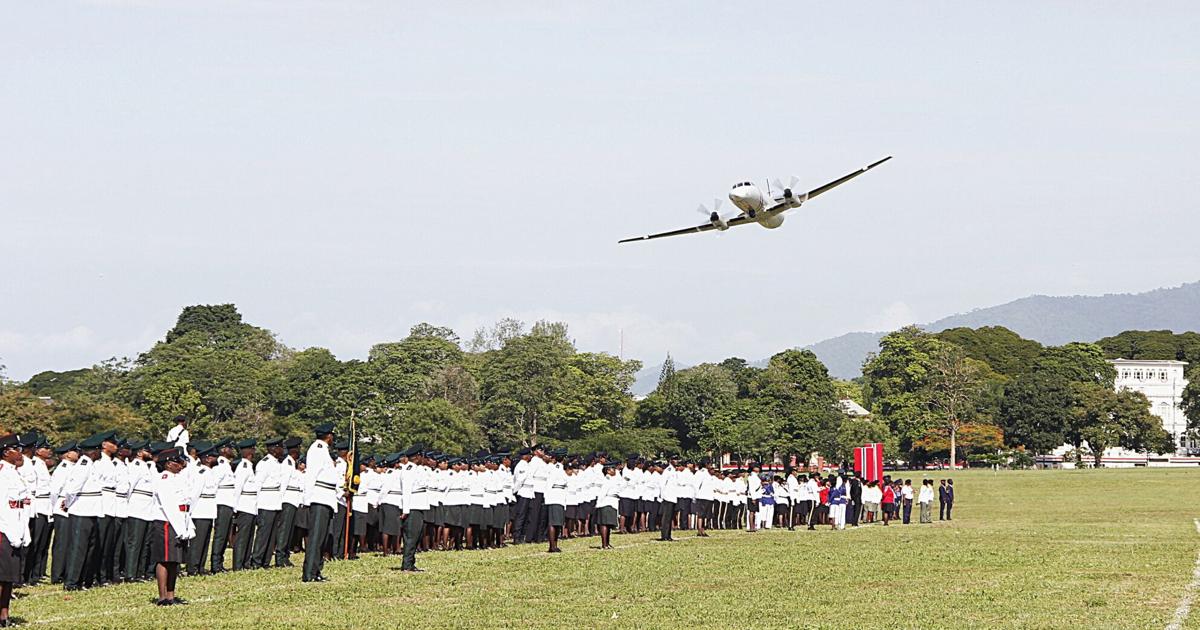
Trinidad and Tobago marked its 64th anniversary of independence on Wednesday with the return of the iconic national parade at Port of Spain’s Queen’s Park Savannah, marking the first full public celebration after a 2023 cancellation over security concerns. But the event split spectator opinion, with praise for the restored national tradition clashing with sharp criticism of poor viewing logistics and a relocated parade route.
Kicking off promptly at 8 a.m. as scheduled, the 2024 parade shifted from its longstanding location near the Queen’s Park Savannah Grand Stand to a new site adjacent to President’s House. Thousands of attendees gathered to watch coordinated marching contingents from uniformed services across the country, including the Police Service, Fire Service, Prison Service, Coast Guard, Air Guard, Traffic Wardens, Red Cross and national Cadet Force. One notable absence was the Military-Led Academic Training Programme (MiLAT) contingent, whose participation was cancelled after the government suspended the initiative in July for a full restructuring.
Logistical challenges emerged long before the first marchers stepped onto the parade square. Organisers barred private vehicles from entering the Savannah, forcing attendees to be dropped off near the National Academy for the Performing Arts (NAPA) or park several blocks away from the route. Compared to the easily accessible public viewing areas of previous years, the 2024 layout required spectators to walk much longer distances to reach designated viewing zones, and many arrived to find all grand stand seats already filled. Those who claimed spots in the open foreground area in front of the stands reported consistent visibility issues, with the main parade action positioned directly in front of VIP stands rather than the general public viewing area.
Many attendees attempting to reach closer vantage points cut directly across the Savannah, only to encounter an unmarked nearly three-foot-wide drain blocking their path. Local law enforcement officers were on hand to assist elderly attendees across the gap, but the obstacle added to widespread frustration with the event planning. Even with the hurdles, most attendees still caught glimpses of arriving dignitaries: Defence Minister Wayne Sturge and Chief Justice Ronnie Boodoosingh arrived first, followed shortly after by Prime Minister Kamla Persad-Bissessar, who received a muted reception from the crowd. The biggest cheers erupted for President Christine Kangaloo, who arrived just before the 8 a.m. start time, with many attendees shouting her first name in greeting. Riding atop a Land Rover Defender decorated in the nation’s red, white and black colours, Kangaloo was clearly visible to most crowds as she inspected the assembled troops standing at attention. Sound issues also plagued the event, with the national anthem performed by parade bands barely audible in many public viewing sections, but crowds still cheered loudly as their family members and friends in uniform passed by.
Among the high-profile attendees was legendary retired Trinidadian cricketer Brian Lara, who has a home overlooking the Queen’s Park Savannah and walked to the event with visiting friends from overseas. Lara was effusive in his praise for the return of the parade, which he called a vital national tradition after last year’s cancellation. “I think it’s amazing and it’s one of the first times I have been in the country to witness it, and the fact that it’s back with us is important,” Lara told reporters. “Look at how everyone is around. Of course, the parade itself is magnificent, but also to see the public attendance is awesome.” Other attendees echoed his optimism, noting that the national celebration provided a much-needed moment of unity amid ongoing domestic challenges. One family attendee described the event as “amazing”, adding that he hoped it would shift public focus toward collective progress rather than current struggles, saying “it highlights that we are moving upwards and not spiralling downwards.”
Critics of the new venue and layout were far less forgiving of the event’s organisation. Longtime attendee Timothy Wyse, who has watched every Independence Day parade since the 1960s and dressed in national colours for the 2024 event, said the public accommodation was a major step backward. “I find the accommodation for the people could have been better because, generally speaking, a lot of people were not able to see the parade,” Wyse said. He also criticised last year’s cancellation, arguing that “regardless of whatever threat, we have to show them we have more guts than that and we are independent.” Another attendee, Kerron M, called the new location “not good for the spectator at all”, noting that “it seemed to be a show for the VIPs and like the spectators were the backdrop.” He explained that most general admission attendees only saw the backs of marching contingents, and spectators without smartphones capable of optical zoom were left with almost no clear view of the parade, even missing the pass of the event’s mechanised units. Kerron argued that the public viewing section should have been positioned opposite the VIP stands to ensure equal visibility, and that the original Grand Stand location would have been a far better choice.
The aerial segment of the celebration also underwhelmed some attendees: a low fly-by by a fixed-wing aircraft from the Trinidad and Tobago Air Guard got the segment off to a strong start, but the scheduled helicopter display included only a brief pass with no aerial manoeuvres. A popular annual tradition was also missing: the Fire Service airport tender that traditionally sprayed cooling water over the crowd did not take part in this year’s event.
Momentum shifted when the parade moved off the Savannah parade square and onto Queen’s Park East, where thousands of spectators of all ages lined the streets to watch the procession. Marching bands mixed modern groovy soca hits including Yung Bredda’s *Inch by Inch* and Christo’s *Doux Doux Darlin* into their setlists, drawing cheers and spontaneous dancing from gathered crowds. The most popular addition to this year’s procession was the inclusion of cultural musical acts, headlined by the award-winning BP Renegades Steel Orchestra. Accompanied by a tassa group, rhythm section, and professional dancers, the steel orchestra drew a moving crowd of spectators following behind it, evoking the festive energy of Trinidad and Tobago’s annual Carnival. Bringing up the rear of the parade was a large, well-equipped music truck spinning classic nation-building soca hits from the 1980s and 1990s, including Brother Marvin’s *Jahaji Bhai* and Chris “Tambu” Herbert’s *The Journey Now Start*. The music truck proved to be a crowd favourite, though some attendees expressed disappointment when the procession turned onto Park Street toward Tragarete Road instead of continuing into downtown Port of Spain.
Many attendees praised the new cultural additions as a promising step forward for future Independence Day celebrations. A retired military member who attended the event called the updated procession “very good, an improvement over years”, though he added that he would have liked more interludes between marching contingents. Another attendye noted that the new musical elements gave organisers a strong foundation to build on for future events, saying “Give we the people something creative so we would want to come back… But the music truck and the pan and the rhythm section… well, it’s a good start.”