博客

  • Economy : The House of Representatives votes the renewal of HOPE/HELP act

    Economy : The House of Representatives votes the renewal of HOPE/HELP act

    On September 1, 2026, the United States House of Representatives approved legislation to extend the Haitian Hemispheric Opportunity Through Partnership for Encouragement Act and the Haiti Economic Lift Program, widely known as HOPE/HELP. The vote came roughly one month after the U.S. Senate passed the same extension bill in August 2026, clearing the way for the measure to move to the presidential desk for final approval.

    The extended trade framework will remain in effect for two years, expiring on December 31, 2028. Under standard U.S. legislative protocol, the bill will formally enter into force only after receiving signature from sitting President Donald J. Trump.

    Haitian government leaders have broadly celebrated the House’s vote, framing the renewal of HOPE/HELP as an indispensable pillar for the Caribbean nation’s struggling economy. The trade preferences at the core of the program are designed to cut tariffs on Haitian exports to the U.S. market, creating competitive advantages that support job retention, drive foreign investment, and strengthen Haiti’s core industrial sectors—most notably its large textile and apparel manufacturing industry.

    Haitian Prime Minister Alix Didier Fils-Aimé led extensive diplomatic outreach through the country’s Ministry of Commerce and Industry (MCI) in the months leading up to the vote, holding continuous dialogue with U.S. policymakers and international stakeholders to underscore how critical the program is to Haiti’s economy, employment levels, and overall social stability.

    Haiti’s Minister of Industry and Commerce James Monazard issued a statement welcoming the bipartisan approval of the extension by both chambers of the U.S. Congress, calling the outcome a transformative milestone for Haiti’s textile industry, its export sector, and the entire domestic supply chain that relies on preferential trade access.

    The MCI noted that the approval comes as a particularly important win for Haiti, which has faced severe ongoing economic constraints and months of market uncertainty over whether the long-standing trade preferences would be renewed. Once signed by President Trump, the extended provisions will go into effect immediately.

  • Two way tie at the top of national chess tournament

    Two way tie at the top of national chess tournament

    The Barbados National Open Chess Championship Finals have reached their halfway mark at the Wildey Gymnasium, with two players locked in a deadlock at the top of the leaderboard ahead of this weekend’s decisive final rounds. Amateur contender Lawrence Depradine and defending titleholder FIDE Master Martyn Del Castilho both hold 3½ points, though Depradine holds an advantage: he has one scheduled match still to play that his co-leader has already completed.

    Just half a point behind the front-runners, a small group of three contenders remains well within striking distance of the top spot, keeping the tournament’s outcome deeply unpredictable. Justin Kirton, veteran FIDE Master Dr. Philip Corbin, and rising junior talent Jeremiah Farley all sit on three points, with Kirton also holding an unplayed game in hand over many of his competitors.

    In the most recent completed round, Del Castilho secured a solid victory over Justin Parsons, while Depradine claimed a win against Julissa Figueroa. Kirton overpowered Renaldo Rochester, Corbin defeated Emar Edwards, and Farley was held to a draw by Noah Clarke. One of the tournament’s most notable early upsets has already made headlines: 14-year-old junior Farley upset defending champion Del Castilho in the tournament’s second round, a result that has shaken up the standings and highlighted the depth of young chess talent emerging on the island.

    With nearly half the field still within striking distance of the podium, the final rankings will not be settled until the final matches wrap up this weekend. Running parallel to the national championship is the 2026 VEXX Chess Tournament, which has also crossed its midpoint, with four of seven total rounds completed across all divisions.

    In the VEXX FIDE-rated open division, which draws 29 competitors, Mileke Sinckler and Loki Clarke share the top position with a perfect four points out of four. Three players—Aidan Singh, Charis Stuart, and woman FIDE Master Hannah Wilson—tie for third place with three points each, while Janiyah Browne, Gaybrianna Moore, Amari Blackett, and Carlos Chase are all just half a point back on 2½ points. The chasing group is optimistic that the co-leaders will drop points in the final rounds, opening a path for them to claim the division title.

    In the VEXX Novice division, which caters to less experienced players across a 12-person field, Benjamin Farmer holds a clear lead after four rounds, having earned a full four points. Jaeden Hutson, Nia Inniss, and Kashaun Brathwaite trail just one point behind on three points, setting up a tense battle over the final three matches. Farmer will now look to defend his advantage and hold off his challengers to secure a standout victory when the tournament concludes.

  • CXC introduces enhanced SBA checks amid growing use of AI

    CXC introduces enhanced SBA checks amid growing use of AI

    The rapid proliferation of artificial intelligence tools in academic spaces has pushed the Caribbean Examinations Council (CXC) to roll out updated, stricter protocols for School-Based Assessments (SBAs) ahead of the June 2026 examination cycle. The new policy was announced by Magalie Celestine, CXC’s local registrar for Dominica, during a public presentation of 2025 examination results held Monday at the Dominica Public Service Union Building, where she addressed attending educators, parents, students, and members of the regional press.

    Under the revised framework, all students completing SBAs must develop their work in full alignment with CXC’s newly updated official Standards and Guidelines for artificial intelligence integration in academic assessments. A key new requirement mandates that every SBA submission undergo automated and manual originality screening to detect uncredited AI-generated content. Additionally, both participating students and their supervising teachers are required to sign formal honesty declarations confirming the work meets academic integrity standards, which are submitted alongside the completed SBA.

    Celestine openly acknowledged that these additional anti-plagiarism and AI oversight measures have created a heavier administrative and workload burden for both examination candidates and teaching staff. Compared to previous examination cycles, the revised SBA submission process is far more rigorous and time-intensive for all parties involved.

    Despite these growing growing pains, Celestine noted that the current SBA model for most core subjects is nearing its end. Starting from the June 2027 examination cycle, SBA submissions will no longer be required for 13 Caribbean Secondary Education Certificate (CSEC) subjects and 17 Caribbean Advanced Proficiency Examination (CAPE) subjects. This phase-out is a core component of CXC’s long-term strategy to overhaul its assessment practices to address the shifting landscape of academic work, driven largely by the expanding influence of generative artificial intelligence.

  • Lawyers welcome virtual hearings but urge safeguards

    Lawyers welcome virtual hearings but urge safeguards

    Barbados is set to roll out virtual court hearings across two Magistrates’ Courts starting this month, a long-awaited modernization push designed to cut through systemic backlogs and streamline judicial operations, according to an official announcement from Minister of Legal Affairs and Criminal Justice Michael Lashley on Sunday. While the legal community has broadly welcomed the shift as a necessary update to the island’s justice system, leading defense attorneys are sounding the alarm about critical risks to due process and accused persons’ rights if in-person hearings are sidelined.

    Leading the charge of cautious advocacy is experienced defense attorney Lesley Cargill-Straker, who agrees that the criminal justice system needs urgent modernization but argues efficiency cannot come at the cost of fair adjudication. She stresses that core components of a just trial—from confidential attorney-client communication to accurate assessment of witness testimony—depend on in-person interaction that virtual platforms cannot fully replicate.

    One of Cargill-Straker’s most pressing concerns centers on remanded prisoners, who currently are guaranteed an in-person court appearance every 28 days. This regular face-to-face contact allows attorneys to take updated client instructions, address emerging legal concerns, complete required documentation, and build the trust-based attorney-client relationship that is foundational to effective representation. Trekking to a prison for every private consultation, she notes, is logistically unfeasible for most legal practitioners. Telephone calls, meanwhile, are often an inadequate substitute due to high costs, strict access restrictions, and widespread distrust among incarcerated people of prison-managed virtual communication tools. Compounding these issues are existing systemic barriers: the prison already faces chronic shortages of private meeting rooms and understaffing that make confidential off-site client communication difficult at best.

    Beyond practical legal challenges, Cargill-Straker highlights the human impact of eliminating regular in-person court appearances for remanded people. For many incarcerated individuals awaiting trial, the trip to court is the only chance they get to interact with people outside the prison system—an important consideration for a system focused on rehabilitation and eventual reintegration into society. She also points to gaps that would marginalize vulnerable groups: unrepresented accused people without access to digital devices or reliable internet would be locked out of meaningful participation in their own cases. Even for represented clients, she questions whether magistrates can accurately gauge a witness’s demeanor or detect outside prompting when testimony is delivered remotely via video platforms.

    Virtual hearings, Cargill-Straker acknowledges, do bring clear benefits for the legal community. For attorneys who often have cases scheduled in multiple courts across the island on the same day, virtual appearances eliminate the need to rush across Barbados to make a hearing call, or request costly adjournments when simultaneous scheduling makes physical presence impossible. For accused people released on bail, virtual hearings eliminate the need to take a full day off work or rearrange personal commitments just to wait hours in a courthouse for a brief hearing that may end in a minute.

    Fellow attorney Rasheed Belgrave shares the broadly positive view of the reform, noting that hybrid virtual-in-person proceedings are already well-established in Barbados’s High Court, so the rollout to Magistrates’ Courts is a natural and manageable expansion. Bail hearings, for example, are already regularly conducted via Zoom in criminal matters, so the model has already been tested locally.

    Belgrave adds that the shift will bring significant benefits to the Prison Service, reducing the number of prisoners that need to be transported to court on a daily basis. The current system is already prone to delays: when the prison faces operational challenges, courts are often only notified that the prison transport bus is not running on a given day, leaving attorneys with little option but to accept a new remand date. The change will also boost overall public and court security, Belgrave argues, coming in the wake of recent high-profile prisoner escapes.

    Virtual proceedings also offer a critical contingency for when magistrates cannot physically attend court due to unexpected emergencies, a situation that has already been managed effectively with virtual tools in the High Court. Belgrave explains that scheduling specific time slots for different hearing types—including case mentions, adjournments, bail hearings, and legal submissions—allows courts and legal teams to organize their work far more efficiently, cutting down on wasted time and long wait times.

    Looking ahead, Belgrave says the greatest efficiency gains will come once the system is expanded to all Magistrates’ Courts, and he has called for extending virtual hearings to the civil division, particularly for maintenance and family access matters. Family cases already take up a disproportionate share of court time, forcing parties to wait for hours for their hearing. Virtual proceedings would cut these delays, and make it easier for social service personnel from the merged Social Empowerment Agency, the National Assistance Board, Welfare Department, National Disabilities Unit, and Paredos parenting programmes to attend hearings without lengthy travel. He says he is optimistic that the technology will deliver meaningful improvements to Barbados’s judicial system once fully implemented.

    The rollout, set to launch later this month, will serve as a test case for how the hybrid model can balance modern efficiency with long-standing commitments to judicial fairness.

  • Insane Carnival Photographer Justin Peters Honours Shannan “Dancer Boy Shan” Lawes and Asher Otto With Framed Carnival Portraits

    Insane Carnival Photographer Justin Peters Honours Shannan “Dancer Boy Shan” Lawes and Asher Otto With Framed Carnival Portraits

    As Antigua’s 2025 Carnival draws to a close and the final celebrations of Insane Carnival wrap up the island’s biggest annual cultural season, one long-time band photographer has seized the moment to celebrate two standout figures with one-of-a-kind gifts that spotlight the magic of Caribbean carnival culture.

    Justin Peters, a photographer celebrated for his sharp eye for detail and years of work capturing Insane Carnival’s participating “Troopers”, has built a reputation for more than just documenting the event—his work captures the deep joy of camaraderie, the explosion of vivid carnival colors, and the intricate artistry of Janna Costume Designs, one of the leading costume houses for Antigua Carnival.

    This year, Peters selected two of Insane Carnival’s most high-profile, globally recognizable representatives to receive framed, timeless fine art prints of his iconic shots of the pair: Shannan “Dancer Boy Shan” Lawes, a popular fitness and dance instructor and social media content creator, and Asher Otto, a beloved Antiguan vocalist. Both images have been used for years in international marketing campaigns to promote Antigua Carnival to global travelers, with Lawes’ portrait even earning a spot in a recent summer 2025 feature on Antigua Carnival in the globally renowned business and lifestyle publication *Forbes* magazine. In that feature, writer Baz Dreisinger detailed Lawes’ unforgettable experience playing mas with Insane Carnival, highlighting the one-of-a-kind cultural atmosphere that makes the Antigua and Barbuda national carnival stand out from other Caribbean festival celebrations.

    Both Lawes and Otto expressed heartfelt gratitude to Peters for the thoughtful, personal gift, noting that the photographer’s work accurately captured the raw, joyful emotion they felt while participating in the parade in custom costumes from Janna Costume Designs.

    The *Forbes* feature was widely praised by carnival organizers for its authentic portrayal of not just Antigua’s unique open-road carnival experience, but the distinct immersive celebration that Insane Carnival has cultivated since its founding. That vision, first introduced by Insane Carnival Managing Director Captain Lenroy Browne when the band launched in 2014, has been brought to life in partnership with Janna Henry, head designer and founder of Janna Costume Designs. Over 12 years, the band has built a legacy of innovation and celebration, with Browne often emphasizing that the best years for Insane Carnival still lie ahead.

    Insane Carnival’s leadership publicly commended Peters for his ongoing dedication to the band, his commitment to personal artistic growth, and his consistent ability to capture the joy, emotion and beauty of every Trooper participating in the celebration. Organizers noted that both Lawes and Otto are long-time, loyal members of the Insane Carnival community, making them deeply deserving of the honor. The exchange of the commemorative portraits also highlights the close, collaborative relationships that are at the core of Insane Carnival’s identity—an identity that has long lived by the band’s promise to members: “Expect Anything!”

  • United Nations launches regional campaign to advance disability-inclusive employment across the Caribbean

    United Nations launches regional campaign to advance disability-inclusive employment across the Caribbean

    Across the Caribbean, persons with disabilities have long faced systemic barriers that lock them out of formal, decent work and full economic participation. To address this long-standing gap, the United Nations has officially launched the HireAbility Campaign, a regional movement centered on the transformative mission: “Break Barriers. Embrace Inclusion. Champion Rights.”

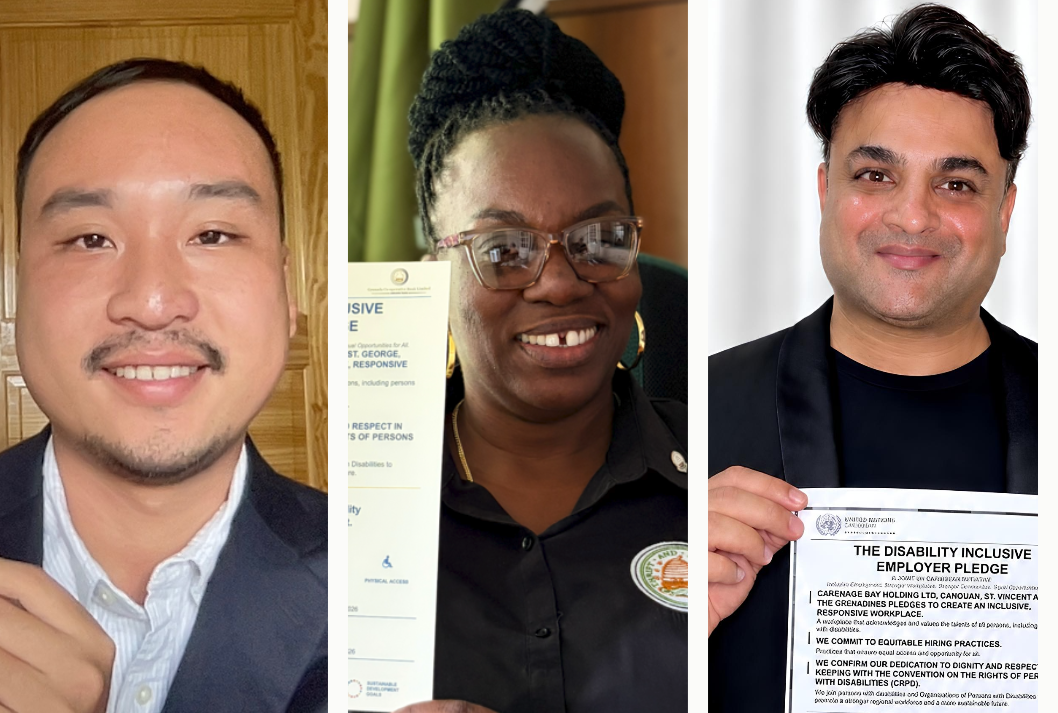
    The cross-stakeholder initiative unites six UN Country Teams across English and Dutch-speaking Caribbean nations, bringing together national governments, private sector employers, disabled persons’ organizations, youth advocates, global development partners, and UN agencies around a shared goal of building disability-inclusive workforces and workplaces. The campaign’s backbone is the Disability Inclusive Employer’s Pledge, through which participating companies commit to adopting equitable hiring practices and cultivating accessible, inclusive workplace cultures, and it has already earned early buy-in from leading regional businesses.

    Speaking at the official launch ceremony, Simon Springett, United Nations Resident Coordinator for Barbados and the Eastern Caribbean, framed the campaign as a landmark milestone for disability inclusion across the region. He traced its origins to a grassroots idea put forward by Zinzee Noel, a youth disability advocate and Grenada’s representative to the UN Youth Advisory Group (YAG), which has grown into a region-wide movement for equal employment opportunity. “Although barriers differ across countries, the aspiration is universal: persons with disabilities must be able to participate fully in society, access decent work, contribute their talents and skills, and be recognized for those contributions,” Springett emphasized. He thanked early supporting businesses, including Massy Stores Saint Lucia, Grenada Broadcasting Network, Grenada’s Unique Productions Inc., and Barbados’ Bajanpro Inc., for their leadership, and urged all stakeholders to treat the campaign as a long-term commitment, not a one-off event, on the path to fully accessible workplaces and inclusive communities.

    Noel, who co-hosted the launch alongside Loik Charles, a fellow youth disability advocate and YAG representative for Dominica, delivered a powerful welcome address centered on the campaign’s core truth: persons with disabilities already bring the skills, qualifications, creativity, and drive needed to make meaningful contributions to regional workforces. Drawing from her own lived experience, where she faced persistent hiring discrimination despite being highly qualified and capable, she noted that the HireAbility Campaign creates space to reframe public conversation around disability and work. “The HireAbility Campaign gives us an opportunity to change the conversation. Its message is simple but powerful: Break barriers. Embrace inclusion. Champion rights,” she said, adding that inclusive hiring delivers widespread benefits: beyond improving individual lives, it strengthens organizational performance, community resilience, and regional economic growth.

    Thomas Kring, Deputy Director of the International Labour Organization (ILO) Caribbean Office, echoed this framing in his keynote address, stressing that access to decent work for persons with disabilities is not a charitable act, but a fundamental human right tied to dignity, equality, and full economic participation. He argued that regional labor markets must be reformed to offer fair opportunities for disabled people to build their skills, secure quality work, and contribute fully to society, and called the Inclusive Employer Pledge a critical public commitment to equitable hiring, dignity, respect, and equal opportunity.

    One of the launch’s most notable moments was the inaugural signing of the Disability Inclusive Employer Pledge by representatives of three regional entities: Carenage Bay Holding Ltd in Canouan, St. Vincent and the Grenadines; Runman Belize Corporation; and The Grenada Co-operative Bank Limited. Signatories also shared concrete, actionable plans to deliver on their commitments, including The Grenada Co-operative Bank Limited’s announcement of a new dedicated internship program for persons with disabilities.

    Closing out the launch ceremony, Charles called on employers and stakeholder partners across the Caribbean to follow the lead of the inaugural signatories, sign the pledge, remove structural workplace barriers, deepen cross-sector partnerships, and commit to the long-term systemic changes needed to advance disability inclusion across the region.

    Immediately following the official launch, participants joined a disability inclusion sensitization webinar, where experts from the ILO and UN Population Fund (UNFPA) shared practical, actionable guidance on key topics including inclusive hiring practices, physical and digital workplace accessibility, reasonable workplace accommodation, prevention of violence and harassment against disabled workers, and building supportive, welcoming workplace cultures.

    The HireAbility Campaign will run for four months, concluding on the International Day of Persons with Disabilities on 3 December, giving additional employers across the region time to join the movement and sign the pledge. Its ultimate vision is to build a Caribbean where all talent is recognized regardless of ability, systemic barriers to employment are eliminated, and persons with disabilities can participate fully and equally in the world of work.


  • Security : Air travel restrictions in Haiti extended until March 2, 2027

    Security : Air travel restrictions in Haiti extended until March 2, 2027

    Amid persistent political and security instability across Haiti, the U.S. Federal Aviation Administration (FAA) has formally extended existing low-altitude flight restrictions for American air operators through early March 2027, prolonging a safety measure that was originally set to expire in September 2026.

    The updated restriction order, published as Notice to Air Missions (NOTAM) KICZ A0046/26, took effect on September 1, 2026 at 12:30 UTC. It bars all covered U.S. aviation operators from conducting flights below 10,000 feet mean sea level (MSL) across a broad swathe of Haitian territory and airspace. The restricted zone spans most of central and western Haiti, including the capital region of Port-au-Prince, covering the area between the Haiti-Dominican Republic border and 73 degrees west longitude, between 18°20’N and 19°10’N, plus a 17-nautical-mile buffer around Port-au-Prince’s coordinates.

    The restrictions do not apply to all flight activity. Overflights at altitudes above 10,000 feet MSL face no limitations, and flights operating in areas of Haiti outside the defined restricted zone also remain unaffected. Waivers from the restriction are available for operators that receive formal approval from U.S. authorities; eligible operations include specific pre-approved missions, and emergency landings or flights automatically grant pilots-in-command the right to deviate from the rule to protect passenger and crew safety. Operators seeking authorization must coordinate through the FAA Washington Operations Center via a dedicated phone line to process requests before operating in the restricted zone.

    The extension of the restrictions comes in response to what the FAA cites as ongoing safety-of-flight risks stemming from the widespread instability that has roiled Haiti for years. The order is classified as an emergency regulatory action under U.S. federal aviation law, drawn from powers granted to the FAA to mitigate immediate threats to flight safety. Full, up-to-date details on the restriction boundaries and approval process are available to the public on the FAA’s official website.

  • Dominica’s CSEC mathematics performance jumps by 10 percentage points

    Dominica’s CSEC mathematics performance jumps by 10 percentage points

    The Caribbean island nation of Dominica has achieved a landmark improvement in secondary-level mathematics proficiency, with top education officials hailing the latest results as a transformative step forward for the country’s education sector. At the official CSEC (Caribbean Secondary Education Certificate) results release ceremony, held August 31, 2026 at the Dominica Public Service Union Building in the capital city of Roseau, Chief Education Officer Dr. Jeffrey Blaize announced the unexpected and encouraging gain in national mathematics scores.

    According to Dr. Blaize’s official announcement, the share of students passing or meeting performance benchmarks in CSEC Mathematics rose by 10 full percentage points compared to 2025’s results. What makes this gain even more notable is that Dominica’s current national average now sits seven percentage points above the overall average across the entire Caribbean region, a gap that reflects targeted, effective investment in mathematics education on the island.

    Dr. Blaize noted that this result marks one of the strongest performances Dominica has recorded in CSEC Mathematics in over a decade, crediting coordinated efforts across the education ecosystem for the measurable improvement. In his remarks, he reserved special recognition for Meloticia Mills, the national Mathematics Curriculum Officer, whose strategic leadership has been central to rolling out new initiatives designed to strengthen mathematics instruction across all secondary institutions. Dr. Blaize emphasized that Mills has played an indispensable role in advancing the Ministry of Education’s core goals, from aligning curricula to modern instructional standards to creating expanded, high-quality professional development pathways for secondary mathematics educators.

    Another key driver of the improvement identified by Dr. Blaize was a specialized teacher training program completed in June 2026, which provided advanced instructional training to 29 secondary school mathematics teachers from across the island. The intensive program was developed and delivered through a collaborative partnership between three regional and international education bodies: the Commonwealth of Learning, the Virtual University for Small Island States, and The University of the West Indies. Designed to update educators’ instructional techniques and modernize their pedagogical approaches, the program’s overarching mission was to lift overall mathematics education quality and translate better teacher training into stronger student learning outcomes. With the latest CSEC results now published, education leaders say the investment in teacher development has already delivered measurable, positive returns for the island’s student population.

  • OPINION: Gas station owners are right to strike

    OPINION: Gas station owners are right to strike

    Across multiple regions, independent gas station owners have recently taken the bold step of going on strike, a move that has drawn mixed reactions from motorists, industry observers, and policymakers alike. But when examining the structural pressures and unfair practices that have pushed small fuel retailers to this point, it becomes clear their call for action is not only warranted but long overdue.

    For years, most independent gas station operators have operated on razor-thin profit margins. Major oil refining companies and large fuel distribution networks control the bulk of the supply chain, allowing them to dictate wholesale fuel prices that leave little room for small retailers to cover operating costs. Expenses ranging from property rent and utility bills to employee wages have surged in recent years amid broader inflation, while unfair competition from large chain retailers and big-box stores that sell fuel at discounted rates to draw in customers for other products has further eroded small operators’ ability to stay profitable.

    Many striking owners also highlight regulatory burdens that disproportionately impact small businesses. Compliance with new environmental standards, tax reporting requirements, and fuel quality regulations often comes with high administrative and upgrade costs that large corporate chains can absorb far more easily than family-owned and independent stations. What makes the situation even more frustrating is that policymakers have repeatedly ignored repeated calls for reform, leaving station owners with no other option but to halt operations to draw attention to their crisis.

    Critics of the strike argue that the work stoppage drives up fuel prices for consumers and creates inconvenience for daily commuters. This concern is not unfounded, but the root of the public’s inconvenience lies not in the owners’ decision to strike, but in the broken and uncompetitive fuel market that has pushed small retailers to breaking point. If the underlying issues that forced this action are left unaddressed, consumers will face far worse outcomes in the long term: widespread closure of independent stations will leave the market even more concentrated in the hands of a few large corporate players, which will only lead to higher, less competitive prices for motorists over time.

    Gas station owners do not take the decision to strike lightly. This action is not a push for excessive profits, but a fight for survival for thousands of small, often family-owned businesses that are core parts of local communities. Their demands for fairer regulation, anti-competitive practice enforcement, and more balanced wholesale pricing are rooted in legitimate economic grievance. When all factors are considered, there is no question that their industrial action is fully justified.

  • Oasis All Stars crowned champions of BHTA football

    Oasis All Stars crowned champions of BHTA football

    The second annual Adopt-A-School Futsal Competition, hosted by the Barbados Hotel and Tourism Association (BHTA), concluded on Sunday with Oasis All Stars claiming the top title at the Kendal Hill Oasis venue. The knockout tournament brought together teams from across Barbados’ tourism and hospitality sector, with four squads advancing to the final event day to compete for medals and individual honors.

    Oasis All Stars kicked off their championship run with a dominant 3-0 shutout against Wyndham Grand Barbados in the first semifinal. Strikers Aquille Barrow, Jayden Goodridge and Sekani Mayers each found the back of the net once to secure their spot in the tournament decider. In the second semifinal matchup, Caribbean Aircraft Handling booked their place in the final with a comfortable 4-1 win over the joint BHTA-Stansfield Scott-National Sports Council team. Antonio Bartlett and Amal Mayers led the charge for Caribbean Aircraft Handling, each netting a brace, while Roshon Gittens scored the only consolation goal for the losing side.

    Before the final kickoff, the two defeated semifinalists faced off for third place. The BHTA-Stansfield Scott-National Sports Council side rebounded quickly from their earlier semifinal loss, cruising to a 4-1 victory over Wyndham Grand Barbados. Ryan Forde, Demar Linton and Tito Beckles each scored for the third-place team, with an own goal from Wyndham Grand adding to their scoreline. T’Shane Lorde netted Wyndham Grand’s lone goal in the fixture.

    The highly anticipated final match delivered a tense, close contest, with Oasis All Stars narrowly edging Caribbean Aircraft Handling 3-2 to take the championship title. Goodridge, Barrow and Mayers, who had each scored in the semifinal, repeated their performance to secure the win for Oasis All Stars, while Kemar Bartlett and Slantony Gilkes answered with two goals for Caribbean Aircraft Handling.

    Along with team honors, the tournament awarded individual and special recognition to standout participants and squads. Jai Shorey of Oasis All Stars earned the Best Goalkeeper award, while Aquille Barrow took home the prize for the Most Goals scored throughout the competition. Hilton Barbados Resort was named the team with the Best Jersey for its distinctive design.

    Beyond the on-court competition, BHTA Tourism Liaison Officer Sade emphasized that the event carries far broader community purpose than just sport. “The tournament is about much more than just football, it’s about supporting education, building communities and promoting wellness,” she explained. The competition’s proceeds and outreach support critical infrastructure upgrades and improvements at selected primary and secondary schools across Barbados, while also encouraging healthy active lifestyles among employees of BHTA member organizations. Additionally, the event fosters stronger inter-organization connections through healthy competitive engagement and team building.”