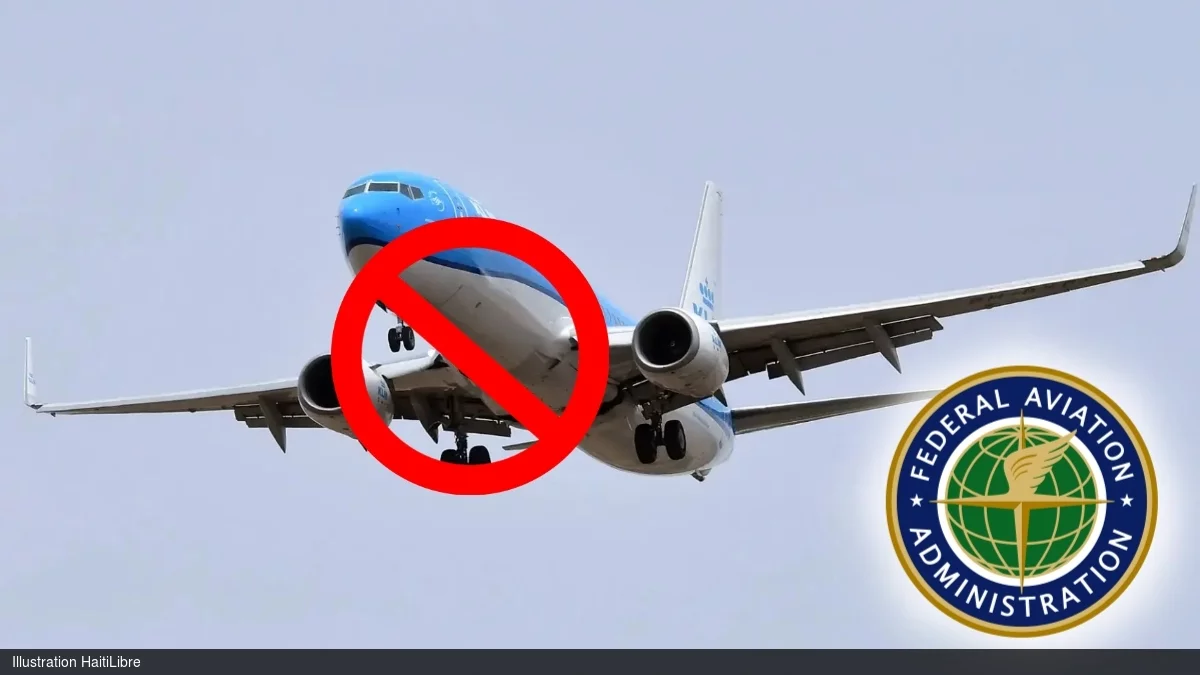
Amid persistent political and security instability across Haiti, the U.S. Federal Aviation Administration (FAA) has formally extended existing low-altitude flight restrictions for American air operators through early March 2027, prolonging a safety measure that was originally set to expire in September 2026.
The updated restriction order, published as Notice to Air Missions (NOTAM) KICZ A0046/26, took effect on September 1, 2026 at 12:30 UTC. It bars all covered U.S. aviation operators from conducting flights below 10,000 feet mean sea level (MSL) across a broad swathe of Haitian territory and airspace. The restricted zone spans most of central and western Haiti, including the capital region of Port-au-Prince, covering the area between the Haiti-Dominican Republic border and 73 degrees west longitude, between 18°20’N and 19°10’N, plus a 17-nautical-mile buffer around Port-au-Prince’s coordinates.
The restrictions do not apply to all flight activity. Overflights at altitudes above 10,000 feet MSL face no limitations, and flights operating in areas of Haiti outside the defined restricted zone also remain unaffected. Waivers from the restriction are available for operators that receive formal approval from U.S. authorities; eligible operations include specific pre-approved missions, and emergency landings or flights automatically grant pilots-in-command the right to deviate from the rule to protect passenger and crew safety. Operators seeking authorization must coordinate through the FAA Washington Operations Center via a dedicated phone line to process requests before operating in the restricted zone.
The extension of the restrictions comes in response to what the FAA cites as ongoing safety-of-flight risks stemming from the widespread instability that has roiled Haiti for years. The order is classified as an emergency regulatory action under U.S. federal aviation law, drawn from powers granted to the FAA to mitigate immediate threats to flight safety. Full, up-to-date details on the restriction boundaries and approval process are available to the public on the FAA’s official website.