博客

  • Leisure : Did you know ? #55

    Leisure : Did you know ? #55

    In Haiti’s rugged, remote mountain landscapes, where paved roads are scarce and steep, muddy trails block access for most motorized vehicles, one hardworking animal has earned the nickname “the farmer’s truck”: the domestic donkey, locally called bourik. As the latest entry in HaitiLibre’s popular twice-weekly “Did You Know?” general knowledge quiz series reveals, these sturdy equines are far more than livestock—they are the backbone of rural economic life for thousands of high-altitude Haitian families.

    The core question of this 55th installment of the series asks: What is the primary role donkeys play for farming communities in Haiti’s mountain regions? The answer highlights their unique adaptation to the country’s challenging terrain: their sure, stable footing allows them to navigate paths that trucks, motorcycles and even four-wheel drives cannot reach. Every day, donkeys carry critical goods and people across these remote areas, transporting harvested crops from mountain gardens to regional and city markets, hauling firewood for cooking and heating, and delivering drinking water to communities cut off from infrastructure.

    Without donkeys, the cost and physical labor of moving these essential supplies would become prohibitive for small-scale Haitian farmers, who already operate on tight margins. Beyond their traversal skills, donkeys are uniquely suited to rural Haitian life because of their hardiness: they require very little food compared to larger work animals, tolerate extreme fatigue well, and can thrive in the harsh climate of Haiti’s mountain zones. As a critical link in the rural logistics and local commerce chain, they directly sustain the mobility and economic survival of thousands of households across the country’s highlands.

    This fun fact is pulled from the answer key of HaitiLibre’s ongoing livestock quiz, part of the platform’s expanding collection of free general knowledge quizzes. In a recent update rolled out on September 1, 2026, the site added 30 new quiz games, bringing its total catalog of accessible knowledge content to 240 unique games. The platform adds new quizzes every month to keep content fresh for returning users.

    Designed to appeal to learners of all ages and skill levels, HaitiLibre’s exclusive quizzes are 100% free to access and do not require user registration. Every topic is offered across three difficulty tiers—easy, intermediate, and expert—so casual learners and knowledge enthusiasts alike can find content suited to their skills. Quizzes are currently available in both French and English, covering a wide range of topics from Haitian history and culture to global current events and science.

    Users can explore the full catalog of quizzes any time at quiz.haitilibre.com/en, and the platform encourages visitors to share the site with friends and family, and leave feedback via a comment form available at the end of every quiz. For returning readers, the site also archives past “Did You Know?” entries, allowing curious learners to explore dozens of previous fun facts about Haiti and the wider world.


  • World Bank appoints Judith Green to lead Barbados and Eastern Caribbean portfolio

    World Bank appoints Judith Green to lead Barbados and Eastern Caribbean portfolio

    The World Bank Group has announced a key leadership appointment for its Caribbean operations, confirming that Jamaican national Judith Green will take up the post of Country Manager for Barbados and the Eastern Caribbean States starting September 1, 2026.

    Per an official press statement from the global development institution, Green will establish her headquarters in Bridgetown, Barbados, and will oversee representation for three distinct arms of the World Bank Group: the International Bank for Reconstruction and Development (IBRD), the International Finance Corporation (IFC), and the Multilateral Investment Guarantee Agency (MIGA).

    In her new leadership role, Green will collaborate closely with national governments and private sector stakeholders across the entire sub-region. Her core priorities will center on advancing targeted initiatives that drive inclusive job creation and advance long-term sustainable development goals tailored to the unique economic and social needs of Eastern Caribbean nations.

    Green brings decades of diverse, high-level experience across the public and private sectors to her new position, built over years of service within the World Bank Group and beyond. Immediately prior to this appointment, she held dual roles simultaneously: serving as World Bank Group Country Manager for Malaysia, and IFC Country Manager for Papua New Guinea, the Pacific Islands, Australia, and New Zealand. In those positions, she successfully partnered with both public and private sector partners to advance critical government regulatory reforms, mobilize billions in new private sector investment across emerging markets, and manage the delivery of large-scale strategic advisory programs that strengthened institutional capacity.

    Green also brings deep firsthand experience working with Caribbean economic governance. Between 2013 and 2016, she took approved external service leave from IFC to lead Jamaica’s Coordination and Implementation Unit. In that role, she oversaw the execution of Jamaica’s four-year Extended Fund Facility agreement with the International Monetary Fund, one of the Caribbean nation’s most ambitious and far-reaching economic reform programs of the past decade.

    Before launching her career with the World Bank Group, Green built her foundational expertise in international finance, holding senior roles at multiple global financial institutions where she specialized in corporate finance strategy and global loan capital markets.

  • WE United FC Leads U-15 League with unbeaten seven-game run

    WE United FC Leads U-15 League with unbeaten seven-game run

    As the 2026 Dominica Football Association Boys Under-15 League moves deeper into its regular season, defending title holders WE United FC have built an unbeatable lead at the top of the table, extending their perfect winning streak to seven consecutive matches. The dominant side has now collected a full 21 points from their opening seven fixtures, turning in a breathtaking attacking performance while holding firm on defense that has left competitors trailing far behind.

    Through seven matchdays, WE United’s forward line has found the back of the net 42 times, while the team’s defense has limited opponents to just four goals against – for an eye-watering goal difference of +38 heading into their seventh fixture. That match, scheduled against fourth-place Dublanc FC, ended in a walkover victory for WE United after Dublanc failed to field a team for the fixture. Per league rules, the default win awarded three points and three goals to WE United, pushing their final goal difference to an impressive +41 six matches into the season.

    Leading the charge for the undefeated side is captain Roqson Coipel, who has emerged as the league’s top goal scorer with a stunning 19 goals already to his name. Coipel most recently earned player of the match honors on the Geneva playing field following WE United’s victory over South City FC on August 29, cementing his status as one of the tournament’s most exciting young talents.

    Right now, Portsmouth Bombers FC and Point Michel FC are the closest contenders to the league leaders, both sitting on 15 points after six matches played. Portsmouth has notched five wins and one loss, scoring 40 goals and conceding six to hold a +34 goal difference. Point Michel shares the same five-win-one-loss record, having put 38 goals on the board and allowed just five, for a +33 goal difference. With only six points separating the table-topping WE United from their nearest challengers, and just three points between the top three sides overall, the race for the end-of-season crown remains wide open as the league progresses.

    In the current full league standings, Dublanc FC occupies fourth place with seven points from five matches, followed by Marigot United FC at six points. Goodwill Runnerz FC sits in seventh with three points, while South City FC and Harlem United FC each have one point from their opening fixtures. Tarish United FC remains rooted to the bottom of the table, still searching for their first point after three completed matches.

  • 20-year-old Haitian immigrant dies amid immigration uncertainty in US

    20-year-old Haitian immigrant dies amid immigration uncertainty in US

    A promising 20-year-old Haitian immigrant living in Springfield, Ohio, died Monday in a death his family attributes to suicide, bringing renewed attention to the mental health toll of shifting U.S. immigration policies on Haitian communities already facing prolonged uncertainty.

    Pierre Damas Bel, who had recently graduated with top academic honors and held ambitions to pursue a career in medicine, grew increasingly distressed after he lost his Temporary Protected Status (TPS) and was ordered to wear an ankle monitor by U.S. immigration enforcement officials. In a final phone conversation with his father shortly before his death, Bel told his parent he felt intense shame and humiliation over being forced to wear the electronic monitoring device, according to a statement from the younger Bel’s father.

    U.S. Immigration and Customs Enforcement confirmed Bel entered the United States through legal channels earlier this year, in 2024. His death comes at a moment of widespread precarity for Haitian immigrants across the country, as the U.S. Department of Homeland Security moves to terminate TPS protections for hundreds of thousands of Haitian residents. The policy shift has left many facing the imminent loss of their legal status, putting them at risk of detention and forced deportation to a country marked by persistent political and economic instability.

    In recent years, electronic ankle monitoring has become a routine practice for immigrants navigating the U.S. immigration system, and Haitian communities have been disproportionately impacted. Many people subjected to the devices have reported a range of physical complications, including persistent discomfort, swelling and painful blisters, as well as practical barriers to holding steady employment that have made daily life far more difficult. The psychological stigma of wearing the monitor has also been widely documented as a major source of mental distress for immigrant populations.

    Bel’s death also follows a controversial move by the Biden administration just last week, when multiple deportation flights carrying Haitian migrants were sent back to the Caribbean nation. Media reports confirm that the flights included minor children, among them a 3-year-old who was born in the United States.

    This report follows World Health Organization guidance for responsible suicide reporting, and excludes unnecessary details about the method and specific circumstances of Bel’s death to avoid contributing to further harm. Anyone experiencing suicidal thoughts or severe emotional distress is encouraged to reach out to a licensed mental health professional, a trusted loved one, or a local crisis support service for immediate help.

  • ‘Flavours of the World Festival’ returns to Dominica for creole season

    ‘Flavours of the World Festival’ returns to Dominica for creole season

    One of Dominica’s most anticipated cultural and culinary events is making a comeback this year, kicking off a highlight of the island’s 2026 Creole Season celebrations. The Flavours of the World Festival, a gathering that blends global cuisine, cultural exchange and live entertainment, will welcome attendees from across the island and around the world on Sunday, October 4, running from 2:00 PM to 9:00 PM at the open-air Windsor Park Stadium Forecourt in the capital city of Roseau.

    As an official anchor event on the 2026 Creole Season calendar, the festival is designed to do more than just satisfy hungry visitors. Curated to showcase the rich diversity of global food and drink traditions, the event gives attendees the unique chance to sample authentic, handcrafted dishes from regions across the world while immersing themselves in the cultural customs that shape each cuisine.
    Beyond the extensive culinary offerings, the 2026 iteration of the festival packs a full schedule of activities for guests of all ages. According to an official press statement from the organizing committee, the day’s lineup will feature continuous live musical performances from local and regional artists, vibrant traditional cultural showcases, dedicated interactive activities to keep younger attendees engaged, and an exclusive premium VIP experience for guests seeking enhanced access and amenities.
    A fan-favorite staple of the festival, the Archipelago Chef’s Competition, will also return this year. The live culinary contest pits talented emerging and established chefs against one another in a timed challenge, highlighting the creativity and skill of the region’s culinary community while giving attendees a front-row seat to the action.
    In a new twist for the 2026 event, organizers have added Flavours of Fashion, an inclusive cultural initiative that invites all attendees to join in by wearing clothing that reflects their own cultural heritage, personal ancestral roots, or a global culture they admire. Event leaders note that this new feature is intended to further the festival’s core mission of celebrating cultural diversity, encouraging creative self-expression, and fostering connection between guests from different backgrounds.
    “Flavours of the World Festival is much more than a food event. It is a celebration of diversity that brings people together through culture, cuisine, music, and community,” organizing leaders shared in their press statement. Positioned as a family-friendly gathering, the festival is marketed as a welcoming, inclusive space where both local Dominicans and international tourists can spend quality time with loved ones, exploring new tastes and traditions together.
    For guests planning to attend, tickets are already available for purchase in-person at two convenient locations: Bullseye Pharmacy and Depex. Digital tickets can also be purchased in advance through the official event ticketing portal, 767events.com.

  • Nevis Assembly President and Youth Parliamentarians Participate in 48th CPA Regional Conference

    Nevis Assembly President and Youth Parliamentarians Participate in 48th CPA Regional Conference

    The 48th Regional Conference of the Commonwealth Parliamentary Association (CPA) for the Caribbean, the Americas and the Atlantic Region kicked off on August 30, 2026 at Jamaica’s Moon Palace Resort, running through September 5. Hosting this year’s gathering, the CPA Jamaica Branch extended invitations to regional member branches, including the Nevis Island Branch, to join critical discussions focused on the future of legislative governance in an increasingly digitized world.

    This year’s conference theme, “Strengthening Parliaments in the Digital Age,” brings together parliamentary delegates from 19 regional territories, including Anguilla, Antigua and Barbuda, The Bahamas, and host nation Jamaica, to address how legislative bodies can adapt to new technologies while upholding core institutional values. Leading Nevis’ delegation is Hon. Michelle Slack-Clarke, President of the Nevis Island Assembly. Slack-Clarke will deliver a featured presentation titled “Maintaining Parliamentary Decorum in the Digital Age,” exploring the delicate balance between adopting innovative digital tools for governance and preserving the long-standing standards, traditions and institutional integrity that underpin credible parliamentary proceedings.

    Slack-Clarke’s participation spotlights Nevis’ active role in shaping regional conversations around the evolving responsibilities of legislatures in the digital era. Beyond the main conference, the event will also host the 19th Regional Youth Parliament, scheduled to take place virtually on September 3, 2026. This year’s youth gathering centers on the theme “Youth Leadership in the Age of Artificial Intelligence,” designed to elevate young voices in conversations about AI’s impact on regional governance and development.

    Organizers opted for a virtual format this year to remove barriers to attendance, enabling broader, more inclusive participation from young emerging leaders across the Caribbean, Americas and Atlantic Region. The CPA Nevis Branch has nominated two young delegates, Ms. Shevonne Daniel and Mr. KJel Smithen, to represent Nevis in the virtual proceedings. The pair will join dozens of youth parliamentarians from across the region to debate the core motion: “Artificial Intelligence, Regional Dependence and the Caribbean’s Digital Future,” which examines both the transformative opportunities and unique challenges AI presents for the Caribbean’s digital transition.

    The virtual Youth Parliament session is scheduled to begin at 1:00 p.m. local time on September 3, and will be open to public viewing via a live stream on the Public Broadcasting Corporation of Jamaica (PBCJ) YouTube Channel and the official Jamaica Houses of Parliament web portal.

    In a statement ahead of the event, the Nevis Island Assembly expressed that its delegation’s participation in both the main conference and the Regional Youth Parliament underscores Nevis’ long-standing commitment to active engagement in regional parliamentary cooperation. The territory remains dedicated to strengthening democratic parliamentary institutions, and equipping both current legislators and emerging young leaders to successfully navigate the opportunities and challenges of the rapidly evolving digital age. The Assembly also extended its well wishes to Daniel and Smithen, expressing confidence that the pair will deliver thoughtful contributions to this important regional dialogue.

  • Security : Dominican customs strengthen controls on containers in transit to Haiti

    Security : Dominican customs strengthen controls on containers in transit to Haiti

    The escalating security breakdown in neighboring Haiti has pushed the Dominican Republic’s General Directorate of Customs (DGA) to roll out a series of strict new regulations for containers in transit bound for Haiti, addressing widespread industry complaints of systemic tax fraud and unregulated goods movement. DGA Director General Nelson Arroyo outlined the sweeping changes in a recent announcement, tying the policy shift directly to the chaos unfolding across the shared border.

    For months, worsening insecurity controlled by armed gangs across much of Haitian territory has upended normal regional trade routes. Major shipping companies have increasingly refused to enter Haitian ports, leaving massive volumes of cargo stranded at Dominican terminal facilities. With public port storage already stretched beyond capacity, many companies have turned to unregulated private warehouses to house their delayed shipments, creating major gaps in customs oversight.

    Compounding this trade disruption, Arroyo noted that Haiti’s current political and institutional collapse has left the Dominican Republic without a reliable counterpart to coordinate cross-border customs procedures, further eroding regulatory control over transit goods. In response, the DGA is targeting these vulnerabilities with a multi-layered set of new rules designed to restore visibility and accountability.

    One of the core new requirements mandates that all companies conducting international transit operations submit service requests at least 24 hours in advance of any movement. This advance notice allows DGA logistics teams to prepare proper monitoring resources for each shipment, eliminating the unplanned movements that have enabled fraud. The agency has also imposed a hard 1:00 PM daily cutoff for all container departures from ports and logistics centers; all departures must be scheduled between 8:00 AM and 1:00 PM, with any container not processed within this window forced to wait until the next business day. This curtailment of after-hours movement reduces opportunities for unsupervised diversion of goods.

    To prevent overwhelming inspection capacity, the DGA has also put in place a daily cap on the number of containers any single company can ship to the Haitian border. Arroyo explained that sudden massive influxes of containers, such as a recent case where one firm logged 40 transit containers in a single day, outpace the agency’s ability to track shipments properly. The cap ensures inspections remain thorough without creating unnecessary backlogs for smaller operators, Arroyo noted, adding that the rule targets only the few companies that move large volumes.

    Additional measures include specialized monitoring protocols for shipments classified as high-risk, as well as stepped-up patrols and surveillance at the Dominican Republic’s primary border crossings to stop illegal diversion of goods into Dominican territory. Arroyo emphasized that the new protocols will ensure high-risk shipments follow strict accountability frameworks from origin to final destination, guaranteeing compliance with all established customs regulations.

    Arroyo stressed that the reforms align with the Dominican Republic’s obligations under international transit agreements and global customs standards. Like all reputable customs authorities worldwide, the DGA requires full origin declarations and clear destination labeling for all goods moving through its territory, and the new controls will strengthen enforcement of these longstanding rules. Ultimately, the reforms are designed to protect the competitiveness of Dominican domestic production sectors and rebuild public and industry confidence in the country’s customs operations, addressing gaps that emerged from Haiti’s ongoing institutional and security collapse.

  • ‘Boost confidence, shrink classes’ to lift maths scores

    ‘Boost confidence, shrink classes’ to lift maths scores

    Across the Caribbean, regional math exam pass rates remain stubbornly below 50 percent even after marginal annual improvements, prompting two experienced Barbadian mathematics tutors to lay out actionable, student-centered changes they say can reverse ongoing underperformance, with a focus on addressing unrecognized barriers that hold learners back.

    Dominique Yorke, one of the two tutors speaking exclusively to Barbados TODAY, pinpointed low student confidence as the single most impactful barrier to strong math performance. She explained that for many learners, encountering an unfamiliar problem on an exam or class assignment triggers immediate self-doubt, leading many to disengage and avoid attempting the question at all before they even begin to work through it.

    Beyond psychological barriers, Yorke highlighted systemic gaps in traditional classroom structures that exacerbate learning loss. She noted that missed school days leave students with critical gaps in foundational knowledge, and overcrowded lesson schedules leave full-time classroom teachers with too little time to revisit missed material for individual learners. Many shy students also hesitate to ask questions or admit when they do not understand a concept, leading teachers to move forward with the curriculum under the assumption the whole class is following along.

    Because math education is inherently cumulative, with every new concept building on all previously taught material, these small early gaps quickly snowball into major gaps by the time students reach secondary education. Yorke shared firsthand examples of fourth-form secondary students in her tutoring program who are still working at a primary school Class 4 math level, having never mastered the foundational skills taught at earlier grade levels. She pushed back against the common focus on cramming purely for exam passing, arguing that instruction should center on deep, lasting conceptual understanding to properly prepare students for the Caribbean Examinations Council (CXC) assessments.

    Fellow tutor Janiya Harper echoed Yorke’s observation that low confidence is a widespread barrier, and added that cultural stigma around mathematics itself is a core contributor to this self-doubt. Harper explained that children grow up constantly hearing adults repeat the mantra that “math is hard,” which creates a self-fulfilling prophecy of underperformance before learners ever even encounter advanced material. To counter this, she recommends normalizing math as an everyday, accessible skill by connecting it to routine activities children already enjoy – such as calculating prices when buying snacks at a local shop – to help learners see math as approachable rather than intimidating.

    Yorke also called for a systemic shift to smaller class sizes, arguing that overcrowded classrooms force teachers to split their time too thinly to address individual student needs. Smaller cohorts would allow educators to dedicate one-on-one time to struggling learners, identify knowledge gaps early, and adapt instruction to different learning needs.

    She further emphasized the need to accommodate neurodivergent learners, noting that conditions such as dyslexia, autism, and ADHD change how students process mathematical concepts. For these learners, traditional lecture-style instruction from a whiteboard is rarely effective, and more interactive, hands-on learning activities are required to help them grasp core concepts.

    Both tutors agree that combining these targeted changes with existing extra lesson support would create steady, sustained improvements in regional mathematics pass rates, helping more students master the skills they need for future academic and professional success.

  • Winair achieves both IOSA and ISSA registration, setting a new safety benchmark for the Caribbean

    Winair achieves both IOSA and ISSA registration, setting a new safety benchmark for the Caribbean

    Simpson Bay, St. Maarten – August 21, 2026 – Windward Islands Airways International N.V., better known as Winair, has announced a ground-breaking safety achievement that cements its position as a global aviation trailblazer: the small regional carrier has become the first and only airline in the world to hold active registration in both the IATA Operational Safety Audit (IOSA) and IATA Standard Safety Assessment (ISSA) programs simultaneously.

    The dual achievement comes as the result of more than two years of rigorous preparation, internal evaluation and compliance work that began in early 2024. The process kicked off with specialized training for internal managers to become certified IOSA auditors, before expanding into sweeping operational reviews across every core department of the airline: from flight operations and in-flight cabin services to ground handling, aircraft maintenance, cargo management, aviation security and executive organizational oversight.

    Winair operates two distinct families of aircraft across its regional network, each of which falls under a separate IATA safety audit framework. Its fleet of DHC-6 Twin Otter aircraft, commonly used for short-haul inter-island routes across the Caribbean, underwent the ISSA assessment designed for smaller, commuter-focused aircraft. Its larger ATR 42 regional jets, which serve longer regional routes, completed the more widely known IOSA audit, the global gold standard for commercial airline operational safety certification. By passing both programs, Winair has earned internationally recognized safety credentials that cover 100% of its operating fleet, proving that every aspect of its service meets the strictest IATA safety requirements, regardless of aircraft type.

    This unprecedented accomplishment not only sets Winair apart from every other global airline, it also establishes a new gold standard for regional aviation safety across the Caribbean. Currently, Winair is also the only regional airline based in the Caribbean to hold IOSA registration, further reinforcing its standing as the region’s undisputed leader in operational safety.

    “Safety is non-negotiable at Winair – it is the foundation of every decision we make, every route we fly, and every service we provide to our passengers,” said Winair CEO Hans van de Velde in a statement following the announcement. “Securing both IOSA and ISSA registration is a testament to the relentless dedication and professionalism of every single member of our team. This is a defining milestone in our long-term strategy to connect the Caribbean to the world through trusted, seamless aviation partnerships.”

    Beyond the recognition of the airline’s existing safety practices, the dual registration is expected to open new doors for commercial expansion. Holding IATA’s top safety certifications clears the way for Winair to build expanded codeshare and interline agreements with major global carriers. For passengers, these partnerships will translate to greater access to seamless, multi-destination itineraries that connect small Caribbean island destinations directly to major hubs across Europe, North America, South America and the rest of the world.

    Industry observers note that the achievement marks a major turning point in Winair’s ongoing evolution into a safe, reliable, and trusted regional carrier, highlighting how small regional airlines can match and exceed the global aviation industry’s highest safety standards.

  • Consumenten kopen apparaten zonder te weten hoeveel stroom ze verbruiken

    Consumenten kopen apparaten zonder te weten hoeveel stroom ze verbruiken

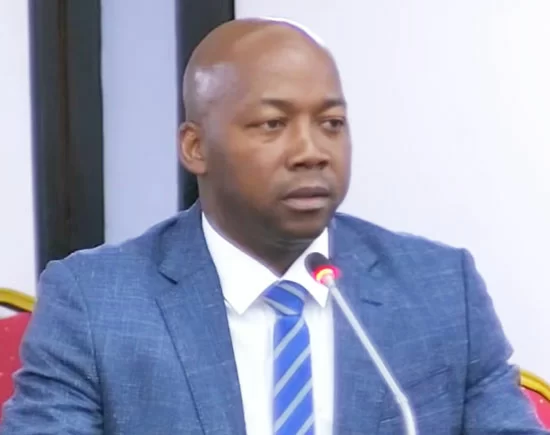
    Suriname is moving to develop a national energy labeling framework for household electrical appliances, after Minister of Natural Resources David Abiamofo publicly acknowledged the country currently lacks a standardized system to inform consumers about energy consumption of products like refrigerators, televisions, and air conditioning units.

    The issue was brought to the forefront of national debate during a Tuesday plenary session of the National Assembly (DNA), where lawmakers gathered to address persistent challenges facing the country’s electricity sector. Parliamentarians pushed for expanded public education initiatives focused on energy conservation and transparent consumption data for common household devices, a call Abiamofo fully endorsed. Addressing the legislative body, he questioned, “When it comes to energy labels, we have none in Suriname. Do you even know what energy label your appliance carries?”

    Abiamofo explained that most Surinamese consumers currently prioritize product features and upfront cost over long-term energy use when purchasing new electronics. “We see an attractive new television, we buy it, and we never stop to check how much power it will actually consume. Most of us don’t even know what the usage rate is, we just don’t think about it,” he told lawmakers.

    To fix this gap, the minister has proposed developing formal policy that mandates clear, accessible energy efficiency information for all electrical goods sold in the country, modeling the framework after systems already used successfully in other nations. These standardized labels give consumers immediate clarity on an appliance’s energy consumption before they finalize a purchase, helping them make more informed, cost- and energy-saving choices.

    The push for energy labeling comes at a critical moment for Suriname, which is currently facing a substantial gap between electricity generation capacity and peak demand. Data presented by Abiamofo during the DNA session shows that peak-hour electricity demand in the EPAR service area hits roughly 280 megawatts, while total available generation capacity only reaches around 254 megawatts. Compounding this shortfall, overall national demand has grown by approximately 10% compared to the same period last year.

    The minister added that rapid, large-scale expansion of generation capacity is not feasible in the short term to keep pace with this growing demand. To reduce strain on the grid, the Ministry of Natural Resources and state utility EBS have issued a new appeal to households, businesses, and public institutions to adopt more conscious energy use habits. While a similar public appeal last year successfully reduced consumption enough to limit widespread rolling blackouts, Abiamofo noted that energy savings so far this year have not met the necessary targets.

    Against this backdrop, mandatory energy labeling for appliances is positioned as a key long-term policy solution to drive more sustainable energy use across the country. Abiamofo emphasized that Suriname can draw on global best practices from countries that have already integrated these labeling systems to help shift consumer behavior toward more energy-efficient choices.