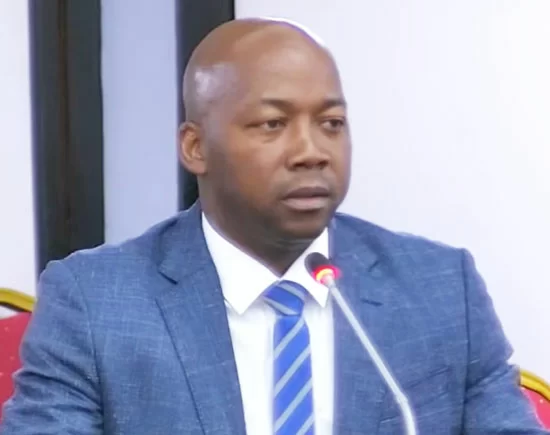
Suriname is moving to develop a national energy labeling framework for household electrical appliances, after Minister of Natural Resources David Abiamofo publicly acknowledged the country currently lacks a standardized system to inform consumers about energy consumption of products like refrigerators, televisions, and air conditioning units.
The issue was brought to the forefront of national debate during a Tuesday plenary session of the National Assembly (DNA), where lawmakers gathered to address persistent challenges facing the country’s electricity sector. Parliamentarians pushed for expanded public education initiatives focused on energy conservation and transparent consumption data for common household devices, a call Abiamofo fully endorsed. Addressing the legislative body, he questioned, “When it comes to energy labels, we have none in Suriname. Do you even know what energy label your appliance carries?”
Abiamofo explained that most Surinamese consumers currently prioritize product features and upfront cost over long-term energy use when purchasing new electronics. “We see an attractive new television, we buy it, and we never stop to check how much power it will actually consume. Most of us don’t even know what the usage rate is, we just don’t think about it,” he told lawmakers.
To fix this gap, the minister has proposed developing formal policy that mandates clear, accessible energy efficiency information for all electrical goods sold in the country, modeling the framework after systems already used successfully in other nations. These standardized labels give consumers immediate clarity on an appliance’s energy consumption before they finalize a purchase, helping them make more informed, cost- and energy-saving choices.
The push for energy labeling comes at a critical moment for Suriname, which is currently facing a substantial gap between electricity generation capacity and peak demand. Data presented by Abiamofo during the DNA session shows that peak-hour electricity demand in the EPAR service area hits roughly 280 megawatts, while total available generation capacity only reaches around 254 megawatts. Compounding this shortfall, overall national demand has grown by approximately 10% compared to the same period last year.
The minister added that rapid, large-scale expansion of generation capacity is not feasible in the short term to keep pace with this growing demand. To reduce strain on the grid, the Ministry of Natural Resources and state utility EBS have issued a new appeal to households, businesses, and public institutions to adopt more conscious energy use habits. While a similar public appeal last year successfully reduced consumption enough to limit widespread rolling blackouts, Abiamofo noted that energy savings so far this year have not met the necessary targets.
Against this backdrop, mandatory energy labeling for appliances is positioned as a key long-term policy solution to drive more sustainable energy use across the country. Abiamofo emphasized that Suriname can draw on global best practices from countries that have already integrated these labeling systems to help shift consumer behavior toward more energy-efficient choices.