Suriname’s acting president Gregory Rusland has publicly confirmed the total cost of securing exclusive broadcast rights for the 2026 FIFA World Cup, ending days of public and parliamentary speculation over the undisclosed sum. The $450,000 price tag for the rights, which include live coverage of all tournament matches, was announced by Rusland during a public plenary session of the National Assembly on Wednesday, answering repeated questions from sitting parliamentarians who had demanded transparency on the public expenditure.
Under the agreed financial arrangement, the national government has covered the full $450,000 payment upfront, but state-owned public broadcaster STVS will ultimately be required to cover 50% of the total cost through its own revenue streams, primarily expected to come from commercial sponsorships. The confirmation from the presidency came hours after STVS held its own press conference, where director Raoul Abisoina declined to share the exact total, deflecting all questions on the financial details to Rusland — who as vice president holds oversight responsibility for state media outlets in the country.
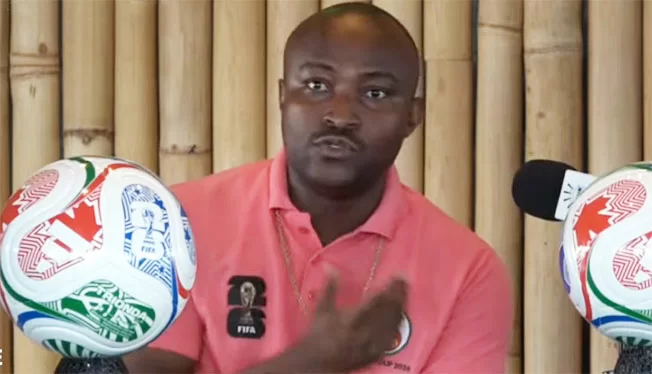
During that press briefing, Abisoina did confirm key procedural details surrounding the rights acquisition. The deal was negotiated and purchased through regional media firm IRIS-LATAM LIMITED, which held the regional tender for broadcast rights. The STVS chief refuted widespread local rumors that the total cost had reached $500,000, noting only that the actual sum was “far lower” than the circulated figure before the official confirmation from the presidency. He also acknowledged that the broadcaster would be responsible for covering half of the cost, matching the structure Rusland later outlined to parliament.
Abisoina told reporters he personally took part in negotiations alongside STVS’s board of commissioners to secure the deal. Multiple domestic Surinamese companies submitted bids for the exclusive rights in the tender launched by IRIS-LATAM, and STVS was ultimately selected as the winning bidder, according to Abisoina. To date, IRIS-LATAM has not released any information on the other competing bidders that participated in the process. Abisoina explained that the selection of STVS was based on two core criteria: the bid value submitted by the broadcaster, and the guarantee that all legal requirements and contractual terms would be fully met. He added that full public disclosure of the contract between STVS and IRIS-LATAM is not possible, as all financial management of the deal falls under the purview of the national government.
Addressing concerns over access for other media outlets, Abisoina pushed back on claims that STVS’s acquisition of exclusive rights would block private media from airing any World Cup content. He clarified that sublicensing agreements with other outlets have been part of the planning process from the earliest stages, and STVS is currently in active negotiations with at least two additional media organizations to share broadcast rights. That said, he emphasized that STVS’s exclusive status means no outlet may use the broadcast feed without the organization’s explicit written approval.
STVS also acknowledged a current gap in its broadcast infrastructure: Abisoina admitted that the existing transmission capacity of STVS and partner public broadcaster ATV (operated via state-owned telecom Telesur) is not currently sufficient to deliver World Cup coverage to all regions of Suriname. But he stressed that the state broadcaster is working aggressively to resolve all infrastructure gaps before the tournament kicks off, with full government funding already allocated for the necessary upgrades. “The government has freed up the required resources. I can assure the public that STVS will make sure coverage reaches even the areas that do not currently receive our signal,” Abisoina said during the press conference. He added that the Surinamese government views universal access to the 2026 World Cup as a core public responsibility, and has no intention of denying citizens the opportunity to watch the global tournament.
Speaking to parliament, Rusland noted that this acquisition marks the 12th consecutive time that STVS has secured broadcast rights for the FIFA World Cup. “The government has always covered the cost of these rights, and we will always meet the expectations of the Surinamese people,” Rusland told the legislative body. The requirement for STVS to contribute half the cost via sponsorship revenue is a new arrangement for this 2026 tournament, he confirmed.