The Caribbean Community (Caricom) is poised to move the global campaign for reparations for the centuries of harm caused by slavery and colonialism into a critical new implementation phase, with a landmark regional conference set to take place in Barbados from September 17 to 19. Organized by the Caricom Reparations Commission (CRC), the government of Barbados and the Caricom Secretariat, this gathering marks the first major regional summit focused on reparatory justice in over a decade, following earlier meetings held in St. Vincent and the Grenadines in 2013 and Antigua and Barbuda in 2014. The conference carries the forward-thinking theme “Reparatory Justice as the Coming Enlightenment,” and will center on shifting the global conversation from formal recognition and symbolic political statements to tangible, actionable reparations measures. The conference comes at a pivotal moment for the global reparations movement. In March of this year, the United Nations General Assembly adopted resolution A/RES/80/250, which formally classifies the transatlantic trade in enslaved Africans and race-based chattel slavery as one of the worst crimes against humanity in recorded history. Caricom has hailed this resolution as a landmark strengthening of both the legal and political foundation of its decades-long push for reparatory justice. Just this week, another significant legal development boosted the movement: the UN Committee on the Elimination of Racial Discrimination confirmed that signatory nations to the International Convention on the Elimination of All Forms of Racial Discrimination are legally required to consider reparations measures to address the ongoing harms of the transatlantic slave trade. The committee clarified that reparations extend far beyond direct financial compensation, encompassing actions such as opening restricted historical archives, supporting formal truth-telling processes, and reforming how societies publicly memorialize the history of slavery. At the core of the Barbados conference will be the revised Caricom Ten-Point Plan for Reparatory Justice, which received formal approval from Caricom heads of government in July. The original framework, first launched years ago, already includes key demands such as formal public apologies from former colonial powers, targeted development programs for Indigenous communities, investment in cultural institutions, improved public health and education infrastructure, technology transfer, multilateral debt cancellation, and targeted financial reparations. The revised plan will guide the movement’s work over the coming five years, and conference delegates will work to draft concrete operational roadmaps for the 2027-2031 period. A key priority on the agenda is the development of the Bridgetown Action Plan on Reparations, which will outline clear next steps for implementation. Delegates will also work to establish formal frameworks for reparations delivery and expand cross-regional collaboration on digital repositories and accessible historical archives connected to the slave trade. Between 150 and 200 delegates are expected to attend the summit, representing a broad range of stakeholders. In addition to Caricom heads of government and cabinet ministers, the gathering will include representatives from the African Union, the United Nations, national reparations commissions, academic researchers, civil society organizations, youth leaders, and members of the African diaspora. The conference reflects the growing cross-continental collaboration between Caribbean and African nations advancing the global reparations agenda. In June, leaders from African and Caribbean states gathered in Ghana to agree on a joint action framework that covers a wide range of priorities, including formal apologies from former colonial powers, multilateral debt relief, financial compensation, reform of global financial institutions, the creation of a global reparations fund, the repatriation of stolen cultural heritage, and targeted reparations measures to address the disproportionate harm of slavery inflicted on women and girls. For Suriname, a Caricom member state with its own deep history of colonial enslavement that has long supported the community’s reparations program, the upcoming conference carries direct national significance. Suriname President Jennifer Simons has previously reaffirmed the country’s full support for the revised Caricom Ten-Point Plan, tying the nation’s position to the shared historical bonds connecting the Caribbean and Africa and the recent UN recognition of slavery as a crime against humanity. All eyes will now turn to Barbados, where the global reparations movement will seek to prove it can deliver on its long-held goals by moving beyond demands for historical recognition to concrete, accountable action. After decades of debate confirming that slavery and colonialism caused persistent, intergenerational harm that continues to shape global inequality today, the conversation has shifted decisively: the core questions now are what form reparations must take, which nations and institutions bear responsibility for addressing harm, and how former colonial powers that accumulated wealth from centuries of exploitation will contribute to meaningful redress.
博客
-

Caribbean Cinemas Antigua Reopens Following Health Department Approval
After securing formal regulatory clearance from Antigua’s local Health Department, Caribbean Cinemas Antigua has welcomed back moviegoers, resuming normal operations following an unexplained temporary shutdown. In an official statement released to the public, the cinema chain confirmed that it has fully addressed all public health requirements and adhered to every safety guideline issued by health authorities ahead of its reopening.
The facility had paused all operations just days prior, though company representatives have declined to provide any on-the-record confirmation about what prompted the full closure of the cinema site. Even as the company remained silent on the closure’s root cause, independent local reports had previously circulated that raised public alarms over alleged non-compliance with public health rules at the venue’s on-site canteen. According to unconfirmed but consistent industry sources, health inspectors mandated that the cinema’s food service division implement targeted corrective adjustments before it could restart serving guests to meet the territory’s public safety standards.
The reopening marks the resolution of the regulatory standoff, giving local residents and tourists the chance to return to the island’s popular movie entertainment venue while maintaining the public health protections required by local authorities.
-

KT Rallies From 3–1 Down to Capture NPPA 8-Ball Singles Crown
The 2026 NPPA 8-Ball Singles Championship, hosted in Antigua and Barbuda, delivered a dramatic, history-making finish that will be remembered in pool circles for years to come. Keon ‘KT’ Tyson, representing the Money Team, pulled off one of the most impressive comebacks in the tournament’s recent history to defeat Bernard ‘Killa’ Percival of the Billiard Kings 5–3, securing the top prize while maintaining an unblemished 6–0 undefeated record across the competition.
Drawing a field of 81 skilled competitors, the tournament tested both technical precision and mental toughness from the opening round. KT entered the final having navigated every challenge thrown his way, but his road to the crown was far from a smooth walkover. The championship match opened in his favor, as he claimed the first rack to jump out to an early lead. That momentum quickly shifted, however, when Killa responded with three consecutive rack wins, putting him on the cusp of the title at 3–1 and leaving KT on the brink of his first defeat of the season.
What followed was a masterclass in championship composure. With his title hopes hanging in the balance, KT found another gear, reeling off four straight unanswered racks to flip the match’s momentum entirely and lock in the 5–3 victory. The comeback not only secured him the 8-ball crown but also preserved his perfect undefeated streak that had defined his dominant tournament run.
Beyond the dramatic final, KT’s statistical performance across the event set him apart from the field. He finished with a tournament-high 43 total points, recording an average of 7.17 points per match – the best mark of any competitor in the field. These consistent numbers cemented his status as the event’s strongest performer, but his ability to stay calm under the highest pressure was best showcased by his final-match comeback.
For runner-up Killa, the tournament was still an impressive showing despite his late collapse. He entered the final with a 5–0 record, and finished the event with a 5–1 overall mark, 34 total points, and a 5.67 point per game average. His only loss of the campaign came in the title decider, where a seemingly insurmountable 3–1 lead slipped through his grasp.
Former champion Cabrel ‘Joe Foguel’ vice captain of the SharpShooters claimed third place after beating teammate Desmond ‘Pumpkin’ Gordon, finishing his run with a matching 5–1 record. He posted 32 total points for a 5.33 point per match average, earning his place among the event’s top competitors. Several other players turned in notable performances: Pachy of Cue Action finished 3–1 with 21 points and a 5.25 average; Gordon posted a 4–2 record with 24 points; and Comeback Kid of Money Team and Tenty of Obsidian both finished 3–1 with 18 points each.
The depth of talent on display throughout the tournament was impossible to ignore. Ahead of the quarterfinal round, six of the eight remaining competitors remained undefeated – a testament to the improving competitiveness of the NPPA tour, especially given the single-elimination format that offers no second chance after a loss. Even qualifying for the late stages without a defeat stood as a notable achievement on its own.
In the end, no competitor could match KT’s combination of consistent performance and clutch play. While his 6–0 record and 43 total points are the first statistics that stand out, it is the back-and-forth arc of his final match that will define his title run: opening 1–0, falling to 1–3, then closing with four straight wins for a 5–3 victory. That comeback turned a near-defeat into the iconic moment of his championship campaign.
KT’s win marks the latest major individual title for the Money Team in the 2026 NPPA season, while podium finishes for Killa and Joe Foguel confirm their standing among the tour’s elite competitors. For the full field of competitors, this year’s event once again highlighted the growing depth and competitive standard of play across the NPPA circuit.
With the 8-ball championship wrapped up, the NPPA season has no time for extended celebration. The 2026 NPPA 9-Ball Singles Championship is set to kick off on Monday, September 7, with the full schedule already published. The 2026 NPPA 10-Ball Doubles Tournament will follow just over a month later, opening on Monday, October 5, with registration updates expected to be released in the coming weeks. For now, though, the 2026 8-ball singles crown belongs to KT Tyson – a champion who proved exactly how elite competitors respond when the pressure is at its peak.
-

LETTER: Antigua and Barbuda Deserves Answers on Crime and Public Safety
Across Antigua and Barbuda, a growing chorus of residents is raising one urgent, unanswered question: what concrete steps is the Royal Police Force of Antigua and Barbuda taking to curb widespread crime? For a population that has long celebrated the nation’s reputation as a relatively peaceful Caribbean society, the slow normalization of serious criminal activity has sparked fear, frustration, and a demand for far more than generic post-incident press releases and vague reassurances that “investigations are ongoing.” What citizens want is a clear, comprehensive, and honest response from the institutions tasked with protecting their safety.
Crime and the pervasive fear of it extend far beyond immediate harm to victims. It reshapes the fabric of daily life: parents hesitate to let their children play and travel freely, business owners lose sleep over the security of their establishments before opening and after closing, residents stay locked indoors rather than feeling comfortable in their own homes, and no one can go about their routines without a constant, nagging sense of vulnerability.
Against this backdrop, the public is pushing for concrete answers to a series of critical questions. What is the Royal Police Force’s overarching crime-fighting strategy? What proactive preventative measures are being rolled out across high-risk communities? How are authorities tackling the rampant spread of illegal firearms, what intelligence-led policing frameworks are being deployed, and are there enough patrols covering vulnerable neighborhoods? Are repeat offenders monitored consistently to reduce recidivism, and does the force have sufficient manpower, cutting-edge technology, functional vehicles, specialized training, and investigative resources to address the evolving landscape of modern crime?
The writer of this open appeal emphasizes that if there are gaps in resources, systemic deficiencies, or legislative and institutional barriers blocking effective police work, the public has a right to know. Silence and sporadic, vague communication breed uncertainty, and uncertainty in turn fuels widespread fear. Crucially, this demand for accountability is not an attack on rank-and-file police officers: the appeal acknowledges that many hardworking men and women in the force put their lives on the line every day to serve the nation, and they deserve adequate resources, strong leadership, functional systems, and public trust to carry out their work. But supporting frontline officers does not mean waiving accountability for institutional leadership.
The Royal Police Force’s top leadership is called out first for its failure to engage in consistent, meaningful public communication. Citizens should receive regular updates on crime trends, prevention initiatives, enforcement actions, and measurable progress, without compromising the integrity of active investigations. Public confidence cannot be built through a culture of silence.
Accountability does not end with the police force itself. The Police Service Commission, tasked with overseeing police governance, must explain how it is fulfilling its mandate to ensure effective leadership within the service. Residents have a right to know whether officer performance is being evaluated consistently, and whether police leaders are held to clear, appropriate professional standards. The cabinet minister responsible for public safety and security must also address the nation directly: public security is one of the most fundamental responsibilities of any government, and the public is entitled to know what policies are being implemented, how much funding is being allocated to crime reduction, what systemic weaknesses have been identified, and what changes the government will make if current strategies are failing to deliver results.
This appeal makes clear that post-hoc statements condemning criminal activity are no longer enough. What Antigua and Barbuda needs right now is a coordinated, actionable plan: proactive prevention, intelligence-driven operations, visible community policing, stronger partnerships between law enforcement and local communities, effective investigation protocols, institutional accountability, and most critically, consistent, transparent communication. The nation should set clear, publicly stated public safety objectives that allow residents to track progress over time: citizens should be able to see whether rates of serious crime are rising or falling, whether case detection and clearance rates are improving, and what new interventions are being rolled out to address emerging crime trends. When official, credible information is withheld from the public, misinformation and rumor quickly fill the information vacuum, only amplifying existing fear.
True leadership requires visibility not just when there is good news to share, but especially when residents are afraid and demanding answers. And accountability must come with real consequences if leaders fail to deliver: if those responsible for policing, oversight, and public security cannot deliver a credible crime-reduction strategy, cannot show proof of measurable progress, and cannot communicate a clear path forward, the public has a right to question whether those leaders should remain in their posts. If they cannot fulfill the core responsibilities of their roles, they should step down to make way for leaders who can deliver results.
This is not a partisan or unreasonable demand. Accountability applies regardless of which political party holds power or who occupies a given public office, because public office is a public trust. The writer stresses that residents are not asking for a perfectly crime-free society — no police service or government can ever guarantee that. What they are asking for is for public institutions to confront crime strategically, aggressively, and intelligently, and for leaders to be open and accountable for their performance.
The appeal also acknowledges that citizens themselves have a role to play in reducing crime. Local communities must cooperate with legitimate police investigations, families must uphold their responsibility to guide young people, witnesses must be encouraged and protected from retaliation, and the harmful culture of shielding criminals who terrorize neighborhoods must be rejected outright. But residents cannot be expected to carry this burden alone.
Across the country, people just want to feel safe in their own homes, business owners want to feel secure at their places of work, children deserve to grow up without violence being normalized as a regular part of life, and both residents and visitors deserve to have confidence in Antigua and Barbuda’s public safety system. This is our home, the writer argues, and we cannot afford to wait until fear becomes a permanent part of daily life before demanding decisive, transformative action.
Once again, the core questions that demand answers are these: What is the Royal Police Force of Antigua and Barbuda doing to combat crime? What is the government’s formal strategy to reduce violence and criminal activity? What is the Police Service Commission doing to ensure accountability and effective leadership in the force? What measurable public safety targets have been set? And when will the public get a clear, actionable path forward? The people of Antigua and Barbuda deserve answers — and more than that, they deserve action.
-

…CWU welcomes assurances over workers’ jobs
Months of growing uncertainty over the future of Hilton Trinidad & Conference Centre’s workforce have been eased after the state-owned enterprise e TecK issued formal written guarantees to the Communication Workers’ Union (CWU) confirming job security and operational continuity following its completed acquisition of the hotel’s operating company.
For weeks leading up to this announcement, frontline and management staff at the iconic Port of Spain hospitality landmark were left in limbo amid rumors about impending ownership changes, potential layoffs, and shifts to management structure. The restructuring stems from a long-standing lease arrangement where e TecK held ownership of the land and property, while Hilton International Trinidad Ltd operated the hotel under a long-term sub-lease. That structure has now been revised, with e TecK completing its full acquisition of Hilton International Trinidad Ltd and signing a new hotel management agreement that keeps Hilton at the helm of daily operations.
CWU Secretary General Joanne Ogeer confirmed in a public statement this week that the union received official correspondence outlining binding commitments to protect workers’ rights through the transition. The formal guarantees cover every key area of concern for employees: uninterrupted employment with no breaks in service, full retention of existing salaries, benefits and contractual working terms, no changes to reporting structures or job duties, and the preservation of CWU’s role as the recognized collective bargaining representative for staff.
Notably, e TecK’s written confirmation explicitly states that Hilton will remain the hotel’s manager beyond the September 18 transition date, with no disruption to daily hotel operations for guests or staff, even as Hilton International Trinidad Ltd will be renamed HotelTT Asset Management Company Ltd as part of the corporate restructuring. The CWU emphasized that the core changes are limited to the ownership and corporate level, and per the formal commitments, there will be no impact on day-to-day operations, service standards, or the Hilton brand presence at the Port of Spain property.
Additional guarantees address long-term employment rights: e TecK confirmed that the acquisition will not reset employee tenure or terminate existing employment relationships, and the restructuring will not be used as justification to cut any collectively bargained benefits that staff have already secured.
While the CWU welcomed the clear, significant commitments that resolve months of uncertainty for its members, the union made clear it will not relax oversight of the transition. CWU representatives stressed that the organization will remain fully vigilant to ensure all formal commitments are honored not just in writing, but in practice, and will hold both e TecK and Hilton accountable to the terms laid out in the correspondence. The union also reaffirmed its commitment to upholding the hotel’s reputation as a key national tourism asset, with members and leadership pledging to continue delivering high standards of service, professionalism, and operational excellence as the transition moves forward, with the shared goal of supporting long-term stability and success for the property.
-
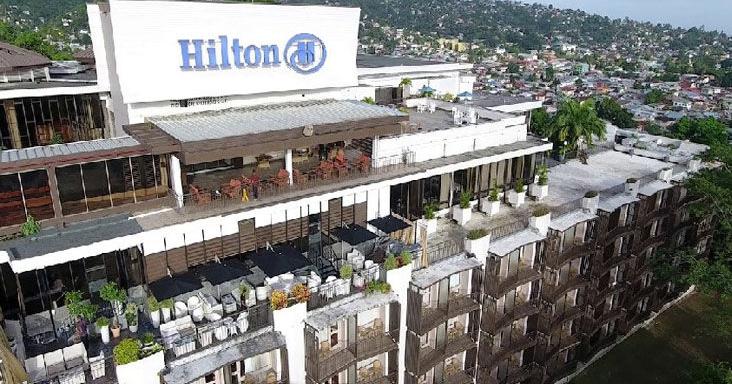
Hosein: Relief for Hilton workers
Hundreds of workers at Hilton Trinidad can finally set aside long-held job security fears after the Trinidad and Tobago government finalized a restructured ownership and operating framework that locks the global hospitality brand into continued operation in the country, Minister of Land and Legal Affairs Saddam Hosein confirmed at a Port of Spain press briefing Wednesday.
Speaking to reporters at the Office of the Attorney General and Legal Affairs, Hosein framed the deal as a quick resolution to a long-unresolved problem inherited by the current administration, noting that while key foundational work is complete, remaining outstanding issues will still be addressed in coming months. “This marks a major milestone for both our government and the hotel’s workforce, even though our work is not done,” Hosein said. “We inherited a decades-long impasse over this property, and we have delivered a resolution in a remarkably short timeline. For workers, this means you can breathe easy: Hilton is not leaving Trinidad.”
The agreement was formally closed by the Evolving Technologies and Enterprise Development Company (e TecK), the state-owned enterprise for which Hosein serves as line minister. Under the new structure, which aligns the property with global standard hotel industry operating models, e TecK has acquired all issued and outstanding shares of Hilton International Trinidad Ltd. through its subsidiary HotelTT Asset Management Co Ltd, which will now hold full ownership of the Hilton Trinidad and Conference Centre asset. Hilton will remain the brand and operator of the property, managing all day-to-day services, bookings and brand standards under a new hotel management agreement.
Previously, e TecK owned the underlying land and sublet the property to the local Hilton affiliate, an unusual structure that Hosein noted was unique among Hilton’s global portfolio of properties. The new arrangement mirrors the successful ownership-operator model already in place at Trinidad’s Hyatt Regency, modernizing the legal and commercial relationship between the state and the global brand. All 250+ existing Hilton Trinidad employees will transfer to HotelTT Asset Management Co Ltd, with no planned layoffs tied to the restructuring. A town hall meeting to answer staff questions about the transition is scheduled for Monday.
A critical next step for the property is a major multi-stage renovation, with officials estimating that up to TT $400 million in upgrades will be needed to bring the entire property back to full operating capacity. Currently, only half of the hotel’s guest rooms are available for bookings, with the remaining half deemed unusable due to deferred maintenance. The previous administration had identified the $400 million price tag for renovations but left no funding plan in place to complete the work. Despite the high cost, Hosein emphasized that the hotel is one of Trinidad and Tobago’s most iconic hospitality assets, and maintaining it as active hotel stock is critical to supporting the country’s growing tourism and events sector.
“Right now, we have a booming energy industry drawing international business travel, major international sporting events, and annual anchor events like Carnival and Christmas that draw thousands of visitors to the country,” Hosein said. “We need additional available hotel rooms to support this growth, which is why we made it a priority to keep Hilton here. The brand could have chosen to exit, but we worked out a deal that works for both parties.”
The initial management agreement between e TecK and Hilton runs for six months, with an option to extend for an additional six months if both parties agree. This window will give officials time to finalize long-term plans for the full renovation, while e TecK will immediately begin emergency repair work and room upgrade projects. Even with the interim agreement, Hilton has already reopened its full global reservation system for the property, allowing bookings for events as far out as 2025 Carnival, which Hosein said will drive immediate revenue growth for both the operator and the state.
“Under the new structure, Hilton operates the state-owned asset, so when operator revenue grows, government revenue from the property also grows,” Hosein explained. While he declined to share specific financial details of the deal, Hosein confirmed that Hilton Trinidad has consistently operated at a profit, which was a core factor in the government’s decision to retain ownership and keep the brand.
In closing, Hosein firmly denied recent unconfirmed media reports claiming the government planned to sell the property to a private financier linked to the ruling United National Congress. “There is no truth to these claims, no offers to purchase are on the table at this time, and these mischievous reports have no basis in fact,” he said.
-
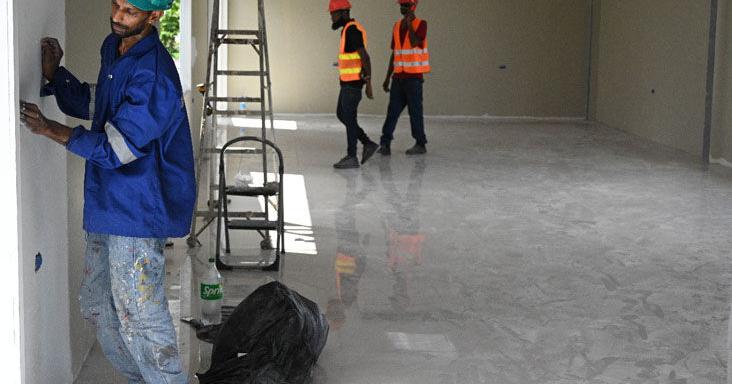
All schools will open
As the new academic term approaches, Trinidad and Tobago’s Education Minister Dr Michael Dowlath has issued a formal confirmation that every public school across the nation’s eight educational districts — seven in Trinidad and one in Tobago — will welcome students on schedule when the term opens on Monday. The announcement came following an on-site inspection tour of two education facilities in Debe, addressing ongoing public concerns about delayed infrastructure repair works across the island nation’s aging school network.
During press briefings after his visit to Parvati Girls’ Hindu College, Dowlath acknowledged that a small number of schools across Tobago still have outstanding maintenance issues, but he confirmed all outstanding problems will be fully resolved by the end of the weekend. For sites where repair work will extend into the new term, the minister outlined clear safety protocols: active work zones will be fully cordoned off from student access, and prominent warning signage will be posted to eliminate safety risks, allowing classes to proceed without disruption.
This year, the government has expanded its national school repair programme dramatically, with more than 350 separate projects underway across the country – a marked increase from previous years. The National Maintenance Training and Security Company Ltd (MTS) has been appointed as the lead project manager for the entire initiative, focusing upgrades on high-priority infrastructure including restroom facilities, sewer and electrical systems, potable water storage, roof repairs, classroom structural upgrades, and replacement of outdated furniture. Dowlath explained that the full cost of the programme is still being compiled, so no final estimate has been released to the public.
In addition to planned vacation repairs, the ministry also initiated a round of emergency maintenance after school principals conducted a nationwide campus inspection two weeks prior to the start of term. Many dormant campus systems, particularly plumbing and sewer lines, develop unexpected issues after sitting unused through the holiday break, and these emergency problems require urgent resolution. To meet the deadline, MTS has deployed teams working 24-hour shifts over the weekend to finalize all critical works before Monday’s opening.
Addressing widespread questions about why repairs did not begin in July as many stakeholders expected, Dowlath clarified that all projects must go through mandatory statutory approval processes for electrical, plumbing and sewer works, which introduced unavoidable delays. To ensure compliance and safety, multiple oversight bodies are monitoring works: the Ministry of Public Utilities provides regulatory supervision, the Ministry of Education deploys on-site school supervisors, and MTS manages day-to-day construction activities.
For schools facing furniture shortages, Dowlath noted that MTS is also leading procurement of new desks and seating through the official Office of Procurement Regulation (OPR) process, and teams are accelerating the process to deliver supplies as quickly as possible. The new digital Schools’ Infrastructure Management System (SIMS) is already improving communication, allowing principals to submit and track maintenance requests in real time. At Parvati Girls’ Hindu College, for example, principal Dr Sharda Maharaj-Ramjattan used the platform to push for upgrades to new Form Six student accommodation, and work is currently progressing on schedule to expand capacity for the college’s senior cohort, who are currently housed in temporary prefabricated buildings.
The inspection tour also included a visit to the new temporary campus being prepared for Grant Memorial Presbyterian School’s Infants to Standard Two student cohort. The original wing these students occupied was deemed structurally unsafe by the Ministry of Works, so the students will be temporarily decanted to a renovated space at St Paul’s Anglican School, with all repairs set for completion by Sunday.
Earlier this week, the parent-teacher association of Marabella North Secondary School publicly raised concerns about multiple unaddressed infrastructural and maintenance issues at their campus. Dowlath confirmed that MTS CEO Nicholas Kanhai is personally aware of the issues, and work is already underway to resolve them. Kanhai noted that the national repair programme prioritizes schools with the most critical needs, meaning some campuses will receive more extensive upgrades than others. As of this week, more than 100 projects across the country have been fully completed, and Kanhai emphasized that no school will be blocked from opening on Monday due to unfinished work. In the small number of cases where works extend into the term, all active construction will be scheduled after school hours and on weekends to avoid disrupting classes.
Dowlath also addressed the systemic context of the country’s school infrastructure crisis: between 2016 and 2024, many school campuses were left underfunded and neglected, and more than half of the over 800 schools in the Trinidad and Tobago education system are more than 50 years old. The current expanded repair programme is designed to address this decades-long backlog and bring all campuses up to modern safety standards. Finally, the minister confirmed that eligible children from the migrant population will be allowed to enroll in schools for the new term as long as they meet all official registration requirements.
-
Bodoe: Only a few CDAP drugs affected by shortages
In a radio interview with I95.5 FM yesterday, Trinidad and Tobago’s Health Minister Dr Lackram Bodoe publicly addressed growing public complaints over drug shortages under the nation’s long-running Chronic Disease Assistance Programme (CDAP), confirming supply gaps for a small subset of medications while outlining immediate and long-term plans to resolve the issue.
Established two decades ago, CDAP enables nearly 300,000 local citizens to access subsidized chronic disease medication through a network of 289 participating private pharmacies across the country. Out of the 52 prescription medicines officially listed on the programme’s formulary, Bodoe confirmed that only six to seven are currently out of stock, leaving between 43 and 45 medications fully available for patient pickup.
Bodoe emphasized that the current shortages are not a permanent or funding-related crisis. He clarified that procurement logjams, rather than a lack of government allocation for health services, are the root cause of the temporary supply disruptions. The government allocates between $800 million and $900 million annually to cover public-sector medication costs, including CDAP supplies, so funding is not a constraining factor. The Minister projected that all out-of-stock drugs will be restocked and available to patients within three to four weeks, once ongoing procurement processes are completed.
In the interim, Bodoe said that safe, clinically effective alternative medications are already available for all currently out-of-stock drugs. He has issued guidance to clinicians to prescribe these proven alternatives when a patient’s usual CDAP medication is unavailable, and that participating pharmacists are prepared to dispense the substitute treatments. For context, Bodoe cited the common hypertension drug Lisinopril, which is currently out of stock under CDAP, as an example: Enalapril, another effective hypertension treatment, is readily available as a replacement.
Beyond addressing immediate CDAP shortages, the Minister revealed that the health ministry is undertaking a broader overhaul of national pharmaceutical management, including a full revision of the national formulary that sets priorities for state-funded drug purchases. The revision process involves input from practicing clinicians across the country to ensure public funds are allocated to the most clinically necessary and effective medications.
This review extends to high-priority categories including cancer treatments, where Bodoe noted the ministry is working alongside national oncologists to evaluate purchasing priorities. He explained that with a constant stream of new oncology drugs entering the global market, the government has a responsibility to balance patient access with fiscal prudence: many new cancer treatments have not yet established clear long-term clinical efficacy, so public funds must be directed toward treatments with proven patient outcomes.
In a surprising disclosure during the interview, Bodoe revealed that an internal supply chain audit covering 2016 through 2025 uncovered a far larger systemic issue: more than $300 million worth of publicly funded pharmaceuticals and medical supplies have expired while stored in the national public health supply system. The Minister stressed that at no point were these expired medications distributed to patients for use; all expired stock was properly disposed of before reaching clinical settings. Nonetheless, he described the accumulation of hundreds of millions of dollars in expired supplies as an unacceptable supply chain failure, and confirmed that the Ministry of Health and National Insurance Property Development Company (NIPDEC) are already collaborating to implement corrective measures to prevent this issue from recurring in the future.
-
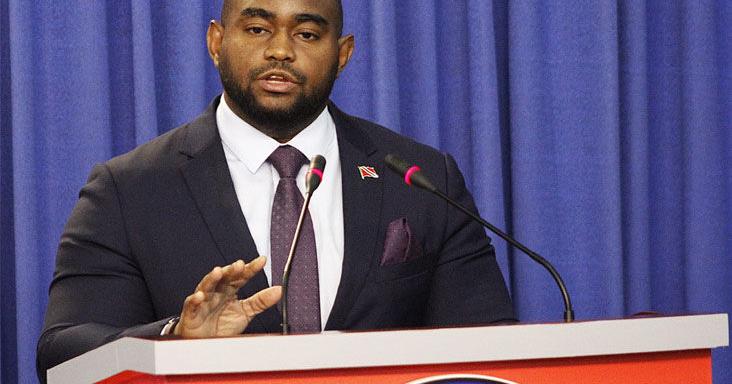
Sobers: We’ll get the work done
After years of stalled diplomatic and technical engagement, Trinidad and Tobago and Venezuela have taken a landmark step to reset their bilateral relationship, announcing the establishment of a joint commission designed to break long-standing inertia and advance collaborative work on issues of shared importance to both nations.
Trinidad and Tobago’s Minister of Foreign and Caricom Affairs, Sean Sobers, outlined in a recent telephone interview with local outlet *Express* that the new body’s technical working group will enable both governments to map out priority action items and deliver tangible outcomes aligned with the needs of their respective populations. According to Sobers, the joint commission will address cross-ministerial issues that have remained unresolved and untouched for years, long before the current United National Congress (UNC) administration took office last year.
Public servants from the recent Trinidad and Tobago delegation to Caracas, including Permanent Secretary and head of the country’s Foreign Service Randall Karim, have already initiated outreach to their Venezuelan counterparts to complete the foundational technical work required to launch the commission and bring it into full operation. “We will work it out; what we prioritise will be actioned and we will get the work done, and I am certain that both countries are poised for huge progress on several varying fronts,” Sobers said of the initiative.
In addition to the joint commission announcement, the bilateral talks yielded mutual reciprocal visit invitations: Sobers confirmed that Trinidad and Tobago has extended an official invitation to Venezuela’s Minister of People’s Power for Foreign Affairs and Foreign Trade Felix Plasencia to visit the twin-island nation, while Plasencia has extended a corresponding invitation for Trinidad and Tobago’s government ministers and officials to travel to Venezuela for further in-depth bilateral negotiations.
Sobers praised the warm and extraordinary hospitality extended to the Trinidad and Tobago delegation during its Caracas visit. Upon arrival in the Venezuelan capital, the delegation was greeted by Raul Li Castro, Venezuela’s Vice-Minister of Foreign Affairs for Latin America and the Caribbean, alongside other senior government officials. The delegation then proceeded to “Casa Maria”, the headquarters of Venezuela’s Ministry of Foreign Affairs and Foreign Trade, where Sobers and Plasencia held more than five hours of extensive substantive talks, running from 11 a.m. to 4 p.m.
Sobers emphasized that the wide range of topics covered during the talks had been dormant for years, predating the UNC administration that took office in 2025. Aligning with the joint official statement released by both nations’ foreign ministries last Thursday, Sobers confirmed that the two countries are now formally charting a new era of cooperative relations.
He pushed back against criticism from opposition lawmakers from the People’s National Movement (PNM), who he claimed have sought to undermine the current administration’s diplomatic efforts, saying the government would not be distracted by opposition noise and disruption. He also warned the public to guard against fake news and misinformation that may be spread by the opposition, stressing that “This team is going to get Trinidad and Tobago and Venezuela working again to deal with all the issues for the benefit for all our peoples.”
During the talks, Venezuelan officials also formally thanked Trinidad and Tobago for the critical humanitarian assistance it provided following the devastating earthquake that claimed the lives of more than 6,000 people in Venezuela. On behalf of Trinidad and Tobago Prime Minister Kamla Persad-Bissessar, Sobers assured Plasencia that the country remains ready to provide emergency assistance whenever and wherever it is needed in the future.
Sobers also addressed opposition questions over why he, rather than the Minister of Energy or Minister of Trade, led the diplomatic mission to Venezuela, responding bluntly: “Don’t blame me if my leader has confidence in me.” He defended the role of the Ministry of Foreign Affairs, noting that in any national government, the foreign ministry holds a core responsibility to maintain expertise on issues that cut across all cabinet portfolios, especially when those issues intersect with the country’s international relations.
He went on to criticize the diplomatic approach of the previous PNM administration, arguing that it failed to follow proper diplomatic protocols and concentrated key diplomatic engagements exclusively among a small group of senior government officials rather than routing negotiations through the formal, established structure of the Ministry of Foreign Affairs. “That was the kind of upside-down approach that existed before over a near decade. You had Stuart Young and (Dr Keith) Rowley being the ones to go out there and having discussions, so you had a situation where a lot of things would have happened in silos and vacuums and people don’t know about it,” he explained.
-
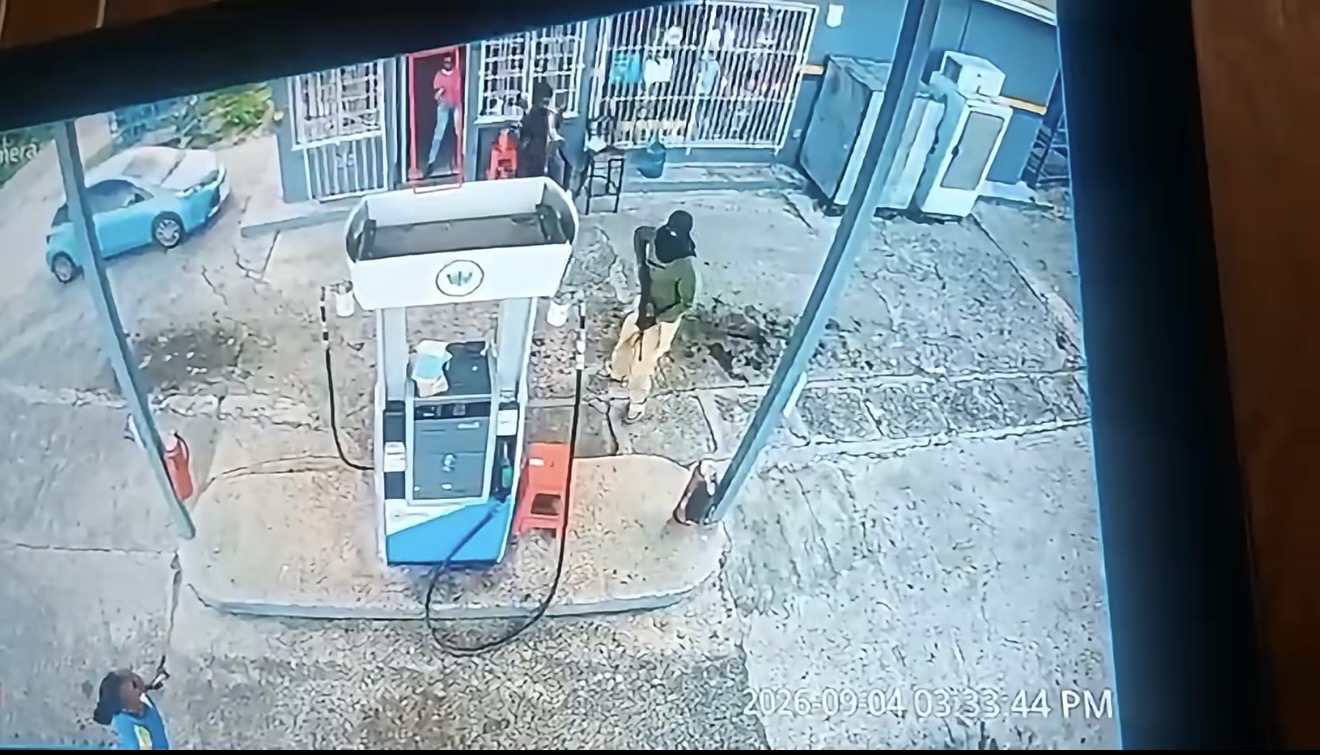
Buckley Line Gas Station Robbed by 3 Armed Masked men
A brazen armed robbery has shaken the Buckley Line community after three masked individuals carrying weapons stormed a local gas station in a targeted mid-day raid, according to initial law enforcement reports.
Witnesses at the scene told responding officers that the three suspects, all concealing their facial features with masks to avoid identification, entered the gas station’s retail and refueling complex brandishing firearms before demanding cash from the on-duty cashier. The perpetrators forced the employee to empty the contents of the store’s cash register, before fleeing the premises on foot in an unknown direction, according to preliminary accounts from local police.
No injuries to staff or customers present during the incident have been reported, though the gas station employee who was on duty during the robbery has been offered trauma support following the terrifying encounter. Local law enforcement has launched a full investigation into the robbery, with investigators reviewing nearby security camera footage in the hopes of identifying the three suspects and recovering the stolen funds.
Residents in the Buckley Line area have been reminded by police to remain vigilant and report any suspicious activity matching the description of the robbers to authorities immediately. Investigators have not yet released a detailed description of the stolen amount or the exact physical characteristics of the three suspects, as the probe remains in its early active phase.