博客

  • Lyrical Boss and Zsura Crowned KOSCAB Junior Party Monarch Champions

    Lyrical Boss and Zsura Crowned KOSCAB Junior Party Monarch Champions

    The annual Antigua Carnival celebration’s highly anticipated 2026 KOSCAB Junior Party Monarch Competition has wrapped up, with two rising young soca stars stepping into the spotlight to claim the event’s most prestigious titles. Lyrical Boss secured the coveted Jumpy Monarch crown with his dynamic track “Making Bread”, outperforming a field of talented emerging competitors to take the top spot.

    Following Lyrical Boss in the final Jumpy rankings, Soca J earned first runner-up recognition for his performance of “Paper Fight”, while Jamario claimed the second runner-up spot with his high-energy delivery of “Look How Me Mash Up De Place”. Beyond the core judged competition, Jamario picked up an additional honor as Best New Artist in the unjudged Jumpy awards segment, with Lyrical Boss adding a second accolade to his night by taking home the Best Performer award.

    In the parallel Groovy Monarch category, it was Zsura who dominated the competition, walking away with the title for his standout performance of “Small Package”. Ava secured first runner-up placement in the Groovy division with her track “Play Ground”, and Ruez rounded out the top three as second runner-up with “Be Mine”. Zsura’s winning streak extended beyond the main title: the rising performer also swept the judged special awards for the Groovy category, taking home both Best New Artist and Best Performer honors in one night.

    Additional unjudged special awards for the Groovy category recognized a range of standout young competitors. Marz was presented with the Leadership Award, while Dreya took home the Most Punctual Award. The Most Improved honor was split between Cutie and Princess Lay Lay, and Jamario added another award to his carnival haul by winning the People’s Choice Award, which reflects popularity among attending audience members.

    As a key highlight of Antigua Carnival, this year’s junior competition did more than crown new champions: it served as a critical platform to showcase the next generation of Antiguan and Barbudan soca talent. Across both competitive categories, the young participants delivered high-energy, engaging performances that delighted crowds and reinforced the vibrant future of the region’s beloved soca music culture amid the annual carnival celebrations.

  • Oproep tot meer verbondenheid: ‘Ontwikkeling begint met bruggen bouwen’

    Oproep tot meer verbondenheid: ‘Ontwikkeling begint met bruggen bouwen’

    On a recent Saturday, the Consulate General of Suriname in the Netherlands hosted a one-day lecture conference titled “Breaking Borders, United as One”, where senior Surinamese diplomats and community leaders from diverse backgrounds converged to deliver a clear, shared message: greater interconnectedness, mutual respect and cross-group collaboration are non-negotiable prerequisites for Suriname’s long-term sustainable development. The gathering brought together voices representing communities across Suriname and the large Surinamese diaspora in the Netherlands, to address growing social and economic divides that threaten national progress.

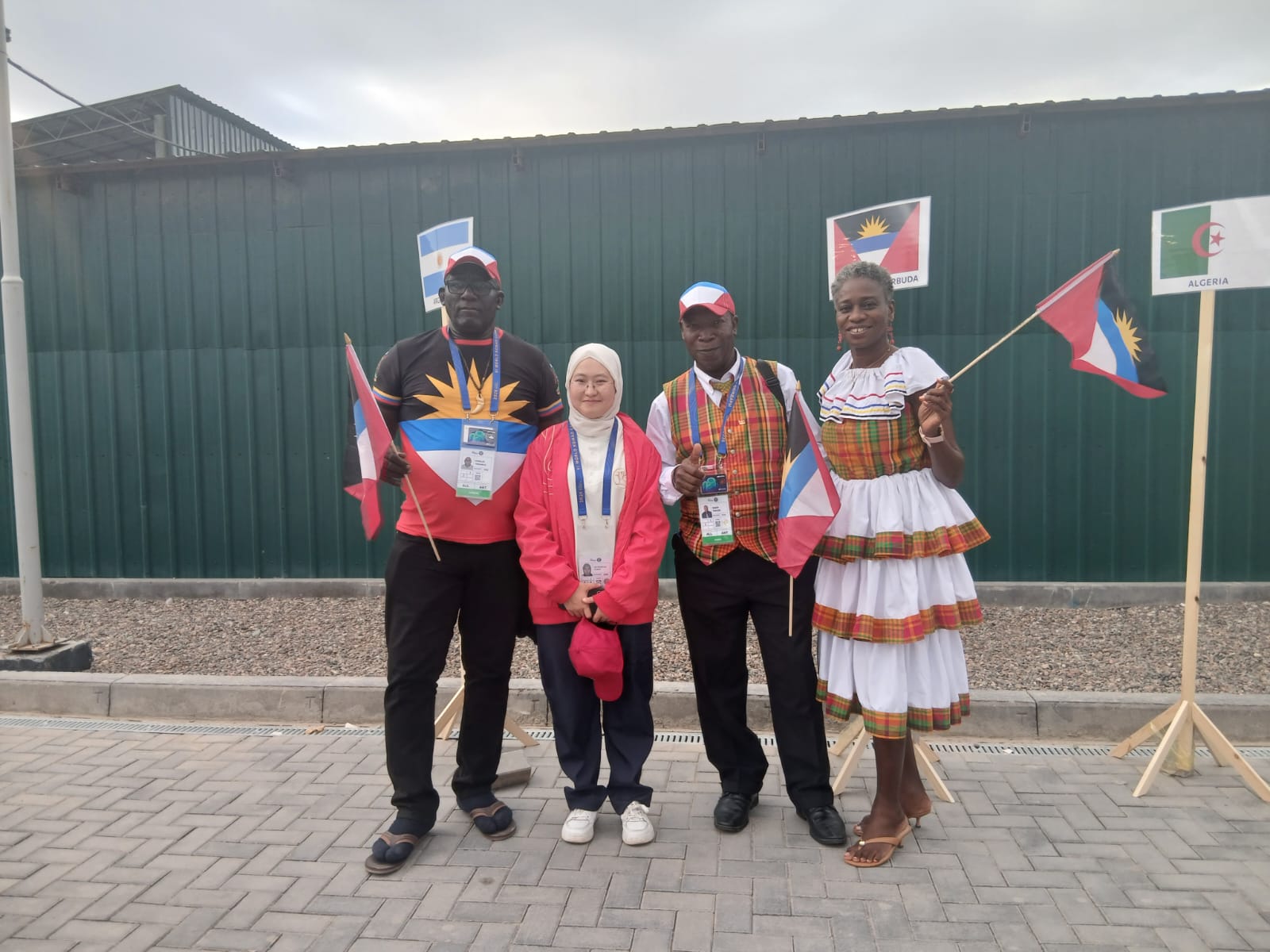
    Opening the discussions, Surinamese Ambassador Ricardo Panka, who appears at the far left of the event’s group photograph, emphasized that interconnectedness is not an end goal in itself, but the foundational bedrock upon which all productive collaboration and societal advancement is built. For Panka, durable, inclusive growth in Suriname can only be achieved when communities and individuals actively seek out connection, listen to one another, and actively bridge divides that threaten to pull the nation apart. “Connectedness is the foundation on which collaboration is built. And collaboration, in the end, is the engine that drives development,” Panka stated. He issued a call to all Surinamese people, regardless of where they reside, to keep building cross-community bridges, hold one another accountable when needed, and always ground those conversations in mutual respect and a commitment to Suriname’s shared national interest.

    Consul General Roseline Daan, featured at the far right of the event’s group photo frame, framed the conference as a direct response to an era of growing social and economic strain that demands more intentional collective action. She noted that public discourse too often centers on highlighting differences between groups, when shared priorities and collective responsibility are the only solid base for long-term, sustainable progress.

    Other speakers brought unique perspectives shaped by their distinct community backgrounds, all converging on the urgent need to build a more inclusive Surinamese society. Guest speaker Raj Mohan argued that the Surinamese nation is not confined to its geographic borders; instead, it lives and grows wherever Surinamese people make their homes. Rejecting the idea of a divide between Surinamese residing in the Netherlands and those based in Suriname, Mohan noted, “We form a single story that has stretched across oceans.”

    Head Captain Sylvester Aboikoni issued a warning that core values of respect, harmony and mutual understanding are increasingly coming under pressure from rising individualism, persistent economic hardship and growing societal tension. To strengthen overall social cohesion, he argued, these foundational values must be recentered as guiding priorities for the entire community.

    Diana Vlet, speaking on behalf of Suriname’s Indigenous community, pointed out that the contributions of Indigenous peoples to Suriname’s national development still do not receive adequate widespread recognition. She called for greater attention to Indigenous history and culture to be integrated into national school curricula and centered in national heritage institutions. True national connectedness, Vlet stressed, can only take root when all population groups are recognized as equal members of the Surinamese community.

    Cultural steward Harriëtte Mingoen drew an important distinction between multiculturalism and interculturalism to frame her argument: while multiculturalism simply places different cultures alongside one another without deeper engagement, interculturalism centers intentional encounter, collaborative work, and mutual learning between groups, all without requiring any community to abandon its unique identity.

    Carla Tlon, a scholar of Suriname’s Chinese diasporic community, drew attention to the underdocumented history of Surinamese people of Chinese descent. Many family histories of this community have yet to be formally recorded, she noted, even though centering these shared histories builds greater understanding and empathy across all segments of Surinamese society.

    Closing the conference, Ambassador Panka reiterated his call to strengthen cross-border ties between Surinamese communities across the globe. For Panka, the ultimate goal of the day’s discussions was clear: to deliver “less distance, more results” for the entire Surinamese community, wherever its members may live.

  • Thousands watch World Cup final at Brentwood

    Thousands watch World Cup final at Brentwood

    On a momentous day for global football, thousands of passionate fans flooded Brentwood Park in Chaguanas on Sunday to experience the 2026 FIFA World Cup Final at a massive public viewing event organized by local telecommunications providers bmobile and Amplia. The entire grounds quickly transformed into a vibrant tapestry of red and blue, the iconic national colors of the two finalists — Argentina and Spain — as supporters turned out in droves to cheer on their respective teams.

  • Eight IDC escapees still at large

    Eight IDC escapees still at large

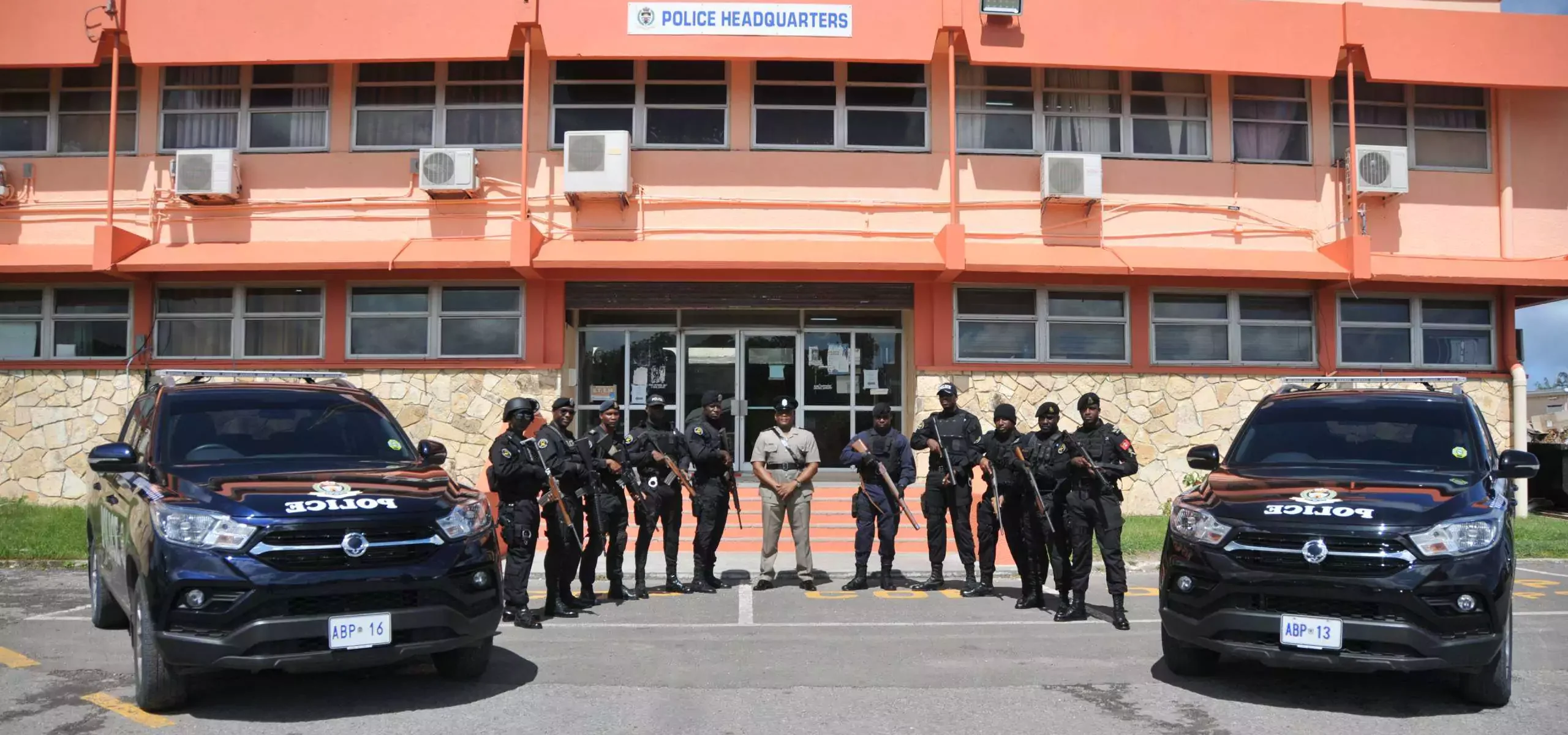
    A coordinated multi-agency manhunt is underway in Trinidad and Tobago after 14 immigration detainees staged a brazen escape from the Arima Immigration Detention Centre on Saturday afternoon, leaving eight Venezuelans still at large nearly 24 hours after the breakout. The coordinated escape attempt unfolded shortly before 4 p.m. local time, when a sentry detention officer spotted unusual smoke billowing from the facility’s male housing block. Following standard protocol, the sentry immediately alerted his on-duty supervisor, and the two officers entered the unit to assess the potential emergency.

    Instead of finding an accidental fire, the two officers were ambushed by a large group of male detainees. The escapees overwhelmed the outnumbered officers, forced open a secured facility gate, and fled the detention compound. Investigative reports confirm the group escaped along the facility’s western corridor before exiting the main compound and scaling the southern perimeter fence to make their getaway. Facility staff triggered an emergency alarm immediately after the assault, prompting a rapid response from local law enforcement.

    Within the first hour of the escape, four of the 14 detainees were taken back into custody. Two were caught mid-ascent while trying to climb the outer perimeter fence, and two more were arrested in open land just outside the facility’s boundary. By 6:40 a.m. on Sunday, a fifth escapee was apprehended following a joint operation led by ASP Rampallard of the police Air Support Unit and officers from the Northern North Task Force along the Eastern Main Road in Wallerfield, and was promptly returned to the detention centre. Official reports confirm a sixth escapee has also been recaptured, though no additional details on that arrest have been released to the public.

    The eight men who remain at large are all Venezuelan nationals: Luis Brito, Jose Brito, Roimer Duran, Edison Monroy, Felix Espanol, Edison La Rosa, Everth Ramirez and Ernesto Jose Figuera Caicedo. All have been listed as active fugitives by the Trinidad and Tobago Police Service (TTPS).

    The large-scale search operation has been coordinated at the highest levels of local law enforcement, spearheaded by Deputy Commissioner of Police Suzette Martin, Assistant Commissioner of Police Vena Butler and Superintendent Steve McKenzie. Multiple units have been deployed to track down the escapees, including the Northern North Criminal Investigations Department, Northern North Task Force, officers from Pinto and Malabar Police Stations, detention centre staff, the Air Support Unit, Inter-Agency Task Force, police Canine Unit, Trinidad and Tobago Prison Service K-9 Unit, the Trinidad and Tobago Defence Force, Special Investigations Unit, and the Guard and Emergency Branch. The search operation is being supervised on the ground by ASP Balewa, ASP Rampallard, Inspector Mascall and Woman Inspector Ramai.

    Investigators have already collected physical evidence from the scene of the escape: WPC DeGraff photographed and secured multiple items of evidential value that will be used to build the case against the escapees and any accomplices that may have assisted the breakout. In an official public warning, the TTPS emphasized that the eight remaining fugitives are unlawfully at large, and any member of the public who knowingly provides shelter, transportation, or any other form of assistance to the men could face arrest and prosecution for aiding fugitives. Police have urged anyone with credible information on the whereabouts of the escapees to contact TTPS emergency services or the closest local police station immediately to share tips.

  • Support for IACHR SoE concerns

    Support for IACHR SoE concerns

    Against a backdrop of rising violent crime and sustained reliance on emergency governance across the Caribbean, a leading criminologist has echoed the Inter-American Commission on Human Rights (IACHR) warning that repeated use of states of emergency requires careful balancing of public safety imperatives and constitutionally enshrined civil liberties.

    In an interview with the *Express* published Saturday, criminologist Akinee Harry broke down the core argument laid out in the IACHR’s 2025 annual report, which flags the growing use of prolonged states of emergency across three Caribbean nations — Trinidad and Tobago, Belize, and Jamaica — as a growing threat to fundamental human rights. The regional human rights body specifically raised alarms about eroded protections for freedom of expression, freedom of association, and personal liberty linked to the ongoing deployment of these extraordinary measures.

    Harry emphasized that democratic governments carry two non-negotiable, complementary responsibilities, not competing priorities: shielding their populations from the harm of violent crime, and upholding the civil rights guaranteed to all citizens under national law. “The Inter-American Commission on Human Rights raises an important principle,” Harry noted. “Every democratic state has both a duty to protect its citizens from violent crime and an equally important duty to safeguard constitutional rights. These responsibilities should not be viewed as competing objectives.”

    He acknowledged the severe security pressures facing the three countries named in the report, noting all three grapple with well-entrenched transnational organized criminal networks, rampant illicit firearms trafficking, and persistently high homicide rates that threaten public stability. Under international and domestic law, Harry confirmed, governments are fully within their rights to declare a state of emergency when a clear, pressing threat meets the legal threshold for extraordinary action. But he aligned with the IACHR’s core position that emergency powers must remain just that — exceptional tools to address temporary crises, not routine fixtures of daily governance.

    Crucially, Harry argued that small island developing states (SIDS) like those in the Caribbean cannot build long-term public safety on repeated cycles of emergency declaration. Lasting reductions in violent crime, he explained, require systemic upgrades across the entire criminal justice ecosystem: more robust community policing, enhanced intelligence gathering capabilities, streamlined and effective prosecution processes, and improved rates of conviction for violent offenders. Beyond institutional criminal justice reform, he called for targeted, sustained investment in evidence-based violence prevention programs that address the root social and economic conditions that push people toward criminal activity.

    “Without broader institutional reforms, criminal organisations often adjust their methods once emergency measures come to an end,” Harry explained, noting that temporary crackdowns rarely produce lasting reductions in criminal activity if underlying systemic weaknesses remain unaddressed.

    For Harry, the central policy debate is not whether states of emergency should ever be used, but how they are structured and overseen. Any deployment of extraordinary emergency powers, he stressed, must remain lawful, proportionate to the threat at hand, and fully transparent to the public. These measures must also be subject to robust checks and balances from both parliamentary oversight bodies and the judiciary, to prevent abuse of power.

    He also urged governments to outline clear, measurable performance benchmarks when declaring a state of emergency, to rigorously assess whether the measures are actually delivering sustained improvements to public safety. Without these guardrails, emergency powers can slowly erode the democratic foundations that states are meant to protect, he argued.

    Ultimately, Harry framed the IACHR’s intervention as a constructive call to action rather than an attack on Caribbean governments’ efforts to curb crime. The commission’s concerns, he said, should be seen as an invitation to strengthen democratic accountability, and to explore evidence-based alternative approaches to tackling violent crime that do not rely on repeated states of emergency.

  • Naps student wins bronze

    Naps student wins bronze

    Trinidad and Tobago has marked a groundbreaking milestone in its academic and youth science history, after 18-year-old Naparima College student Reginald Mohammed secured the country’s first ever medal at the International Chemistry Olympiad (IChO), bringing home bronze from the 2026 event hosted in Tashkent, Uzbekistan.

    The annual global competition, which ran from July 10 to 19 this year, gathered hundreds of the world’s most talented young chemistry minds from across the globe to test their expertise in two grueling five-hour assessments: one theoretical examination and one practical lab assessment. The tests push participants far beyond standard secondary school chemistry curricula, challenging their advanced content knowledge, critical analytical thinking, and hands-on laboratory skills.

    Mohammed, an Upper Six student and head prefect from Debe, was one of four young competitors selected to represent Trinidad and Tobago at this year’s in-person event. The full national team also included Leon Copilah of Iere High School (Upper Six), Soren Narine of Fatima College (Lower Six), and Zeeshaan Lall, a Form Five student also representing Naparima College. The team was led by head mentor Dr Denise Beckles, a chemistry lecturer at The University of the West Indies (UWI), which oversaw pre-competition training for all national qualifiers.

    This medal win caps years of steady growth for Trinidad and Tobago’s national IChO program. The country made its competition debut with a virtual entry in 2021, followed by in-person delegations to the 2023 Olympiad in Switzerland and the 2025 event in the United Arab Emirates, before claiming its first historic medal in 2026.

    Speaking to local outlet *Trinidad Express* via WhatsApp on Sunday, just hours before the team boarded their return flight to Trinidad and Tobago, Mohammed called his win a long-awaited dream come true. “Elated — it was always a personal goal of mine to represent T&T on the international stage, at an Olympiad,” he shared. “I was confident in my ability, having taken part in the TT Chemistry Olympiad for many years, and all the faculty at UWI and my teachers in school and family believed that I could achieve a medal, which gave me the extra push.”

    Mohammed explained that preparation for the competition required far more work than standard secondary school coursework, as the IChO covers advanced chemistry topics far outside the standard high school curriculum. To prepare, he maintained a daily routine of working through past competition papers and expanding his knowledge across all branches of chemistry, rather than focusing on only one subfield. “It was a lot of work … But ultimately, I’m happy that my dream to represent T&T internationally and to win a medal came true,” he added.

    Following the conclusion of this year’s Caribbean Secondary Education Certificate (CSEC) exams, Mohammed and the entire national team participated in an intensive daily training program hosted by the UWI Department of Chemistry, where coaches covered both theoretical frameworks and hands-on practical lab skills needed to compete at the global level.

    Selection for the T&T national IChO team is an extremely competitive process that begins months in advance. Each year, the local Trinidad and Tobago Chemistry Olympiad (TTChO) opens its first-round competition to all secondary school students across the country every December, with two divisions: Level A for Forms One through Five, and Level B for Form Six students. The top 10 scorers from each division advance to a two-week virtual training program led by UWI chemistry faculty, after which finalists sit a second-round examination in May. Only the top four performers earn the chance to represent the country at the international competition.

    Naparima College formally announced Mohammed’s historic achievement on the school’s official social media pages, extending enthusiastic congratulations to the entire team and supporting staff. The institution called the win a truly landmark milestone for both the school and the entire nation, noting that the program’s success has been six years in the making.

    “Naparima College is proud to announce a truly historic milestone! We were honoured to receive a congratulatory call from Dr Terry Mohammed of the Department of Chemistry, The University of the West Indies, celebrating an extraordinary achievement by our students and staff!” the post read. “Master Reginald Mohammed, our Head Prefect, has earned Trinidad and Tobago’s first-ever medal at the International Chemistry Olympiad (IChO)—a landmark achievement for our nation, The University of the West Indies, and Naparima College!”

    The school also recognized Lall, the second Naparima College student on the national team, noting that his selection as a Form Five competitor was an outstanding achievement in its own right. “With more opportunities ahead, this is just the start of an exciting journey for Zeeshaan!” the post added.

    The institution went on to trace the program’s growth back to 2020, when Dipak Balladin captured the first national TTChO title, marking the start of Naparima College’s Olympiad journey. After national delegations in 2021 and 2025, Mohammed’s 2026 medal win has cemented this moment as a historic turning point for science education in the country. “This accomplishment at the International Chemistry Olympiad is the culmination of years of dedication and excellence,” the school wrote. “Today, in 2026, Reginald Mohammed has etched his name in history by becoming our country’s first International Chemistry Olympiad medallist!”

    The post credited the historic win to the consistent hard work of students, school faculty, and the Naparima College Science Department, which has spent years nurturing young scientific talent. “This remarkable success reflects the unwavering commitment, perseverance and hard work of our students, teachers and the entire Science Department, who have consistently pursued excellence and inspired generations of young scientists,” the statement read. “On behalf of the Naparima College family, we extend our heartfelt congratulations to Master Reginald Mohammed, our Olympiad team, our dedicated Science Department, and everyone who contributed to this historic achievement. History has been made, and Naparima College is immensely proud! Congratulations once again to everyone involved!”

  • T&T’s Spain fans ‘pardy’

    T&T’s Spain fans ‘pardy’

    The quiet streets of St. James transformed into a raucous, carnival-style celebration on the night of the 2026 FIFA World Cup final, as hundreds of football fans packed Universal Bar and spilled into surrounding areas to cheer on their teams, with Spain ultimately claiming an iconic 1-0 victory over defending champions Argentina. The mood of celebration ignited the moment Ferran Torres scored the match’s only goal, a historic strike that secured Spain’s win and sent the large crowd of Spanish supporters into a frenzy of joy.

    Led by bandleader Jamerson Joseph, the Belmont-based Phoenix Rhythm Section kicked into a high-energy, frenzied beat, while jubilant fans danced to popular soca hits from local superstars Machel Montano and Bunji Garlin. Draped in Spain’s iconic red and yellow jerseys and flags, supporters hugged, pranced around the venue, and chanted in unison: “Spain is the boss. We deserve a party.”

    Across the bar, Argentina’s fanbase, identifiable by their light blue and white team apparel, grappled with disappointment, though most chose to stay and soak in the atmosphere of the historic final rather than leaving early. The match, which pitted Argentina’s legend Lionel Messi against Spain’s rising teen star Lamine Yamal, was broadcast on two large screens for the crowd. Fans gathered anywhere they could find a spot: sitting on folding chairs in the bar’s central aisle, perched on staircases, spilling out onto the adjacent street, and overflowing into the neighboring 52 Bar and the watering hole near St. James Market.

    Bar proprietor Dennis kept the energy high by maintaining a steady flow of cold drinks, offering a special deal of 12 cold beers for $150 to keep the crowd refreshed through the final. Diego Martin resident Ricardo Jacob, one of the many vocal Spanish supporters in attendance, celebrated the win enthusiastically, noting he had hoped Yamal would score the decisive goal to mark a special coincidence on the 19th of the month for the 19-year-old winger. Jacob also pointed to a key turning point in the match: Enzo Fernández’s second yellow card, which left Argentina down to 10 men for the closing stretch of the game. “I knew it was all over for them when Argentina started playing with ten men. I was glad Enzo Fernández picked up his second yellow card,” Jacob said, referencing a local idiom to sum up Argentina’s defeat.

    Even among Argentina’s supporters, the mood remained largely good-natured. Mark Riley, a die-hard Argentina fan celebrating his birthday at the watch party, still posed for photos with his family beside his blue-icing birthday cake. Notably, Riley’s wife Alysha, who had supported Spain throughout the tournament, shared her delight after the final whistle: “I am supporting Spain. I’m so glad they won. It feels great.”

    The split loyalties extended across local public figures as well: former health minister Terrence Deyalsingh had publicly declared his support for Argentina ahead of the match, posing in his team’s shirt at Queen’s Park Oval and saying “It’s Argentina all the way.” Meanwhile, Spanish supporter Major Lawrence Wilson, who watched the match at the Oval, told reporters in a post-match phone interview he was over the moon with the result. “When Spain won, I was at the Oval. The crowd roared. Very few people supported Argentina. I was surprised. I made about six pit stops to celebrate Spain. I am heading to another bar in Chaguanas now,” Wilson said.

    Wilson also highlighted the historic nature of Spain’s win, noting that the victory makes Spain the first country in football history to hold both the men’s and women’s World Cup titles consecutively. The win also blocked Argentina’s attempt to become only the third men’s team in history to successfully defend a World Cup title, he added.

    Veteran sportscaster Selwyn Melville, who correctly predicted a Spanish victory before the final, echoed that assessment of the Spanish side’s dominant run. Spain entered the final on an undefeated streak of more than 30 international matches, a run that Melville said reflected the team’s exceptional organization and tactical structure. “Basically, the Spanish played about 30-plus games without being beaten. Their structure and how they run the game shows they are very organised. It’s a hard team for anybody to beat. Even though Messi and they were defending champions. Spain had much more to offer,” Melville explained. He added that the Spanish side entered the final with a clear winning mentality, controlled the tempo of the match for most of the game, and the result was only a matter of time: “The Spanish came out with the will and wish to win a World Cup. I think they were very lucky to get to that stage. They had good opportunities. The Spanish were very much in control of the game and it was only a matter of time.”

  • Spain’s late, late show

    Spain’s late, late show

    The 2026 expanded 48-team World Cup, hosted across the United States, Canada and Mexico, closed out its historic 104-match tournament with a groundbreaking extra-time final that cemented Spain’s place as the undisputed new powerhouse of global football. Substitute Ferran Torres delivered the moment of a lifetime, netting the game-winning goal in the 106th minute to seal a 1-0 victory over defending champion Argentina, ending Lionel Messi’s bid for a back-to-back title in what is widely expected to be his final World Cup appearance.

    Torres’ decisive strike came after he pounced on a bouncing ball inside the Argentine penalty area, firing a clinical left-footed shot that skimmed just under the crossbar and found the back of the net. Speaking after the match, the goalscorer framed the moment as a victory for the entire Spanish nation, saying, “It was a goal scored by 47 million people” — a nod to his country’s population.

    The win marks Spain’s second men’s World Cup title, adding to the trophy the nation first claimed in 2010. Beyond the individual victory, Spain etched its name into the history books by becoming the first country ever to hold both the men’s and women’s World Cup titles simultaneously, following the Spanish women’s squad’s 2023 World Cup victory.

    From the opening whistle, the final was a story of total Spanish domination, despite the narrow 1-0 scoreline. La Roja registered 20 shots on target before Argentina even managed its first attempt on goal, which did not come until the second half of extra time, when the defending champions were desperately chasing an equalizer. Spain won nine of the game’s first 10 corner kicks, and only a World Cup final-record 12 saves from Argentine goalkeeper Emiliano Martinez kept Messi’s side in the game until the final minutes.

    Argentina’s challenge was further hampered when Enzo Fernandez was sent off in second-half stoppage time after picking up a second yellow card for a reckless tackle on Spanish defender Pau Cubarsi, leaving the side to finish the match with 10 men. A late chance to level the score did fall Argentina’s way in the final minutes, when Messi’s corner kick fell to reserve Giuliano Simeone, but the young forward sent his effort high over the crossbar, leaving him stunned on the pitch.

    Along with the team’s historic dual titles, Spain set multiple other tournament records throughout the run. The side conceded only one goal across eight matches, breaking the record for the fewest goals allowed by a World Cup champion. The victory also extended Spain’s unbeaten streak to 38 matches (29 wins and nine draws), the longest such run ever recorded by a European men’s national team — surpassing the previous 37-match record set by Italy between 2018 and 2021, which Spain itself ended.

    At 65 years old, Spain head coach Luis de la Fuente also made history as the oldest manager ever to lead a men’s side to a World Cup title. “We are world champions,” de la Fuente said after the match. “It was together we reached this stage.” When asked about the team’s mindset heading into the final, he added, “I spoke to my players, and they said: ‘Look, we’ve won everything, coach. We’ve won everything.’ And that is beautiful.”

    A moment of post-match pushing and shoving was quickly resolved, and Spain’s team showed great sportsmanship by forming an honor guard for Argentina’s squad as the defeated side walked to the stage to receive their runner-up medals. The final also made history off the pitch, hosting the first ever halftime show in World Cup history, attended by dozens of A-list celebrities from across film, music and sport, including Brad Pitt, Tom Cruise, Serena Williams, Kevin Durant, David Beckham and Zinedine Zidane. The match was watched by a sold-out crowd of 80,000 fans in-stadium, with an estimated 2 billion viewers tuning in from around the world.

    For Messi, the defeat brings a likely close to an unprecedented international career that has cemented his status as one of the greatest players to ever step onto a football pitch. The 39-year-old Inter Miami star has long hinted that this tournament would be his final World Cup, having previously indicated a 2025 home qualifier against Venezuela would be his last competitive match for Argentina on home soil. An emotional Messi, who was brought to tears after receiving his runner-up medal, acknowledged Spain’s superiority after the match. “I feel sad,” he said. “They were better, to be honest.”

    Over his two-decade international career, Messi amassed a historic list of accolades: the 2022 World Cup title, 2008 Olympic gold, two Copa América titles (2021 and 2024), and 16 Argentine Player of the Year awards over 19 years, winning the honor as a teenager and still claiming it into his late 30s.

    Argentina head coach Lionel Scaloni echoed Messi’s assessment of the match, praising his squad’s effort while acknowledging Spain’s better performance. “There is sadness, but also the knowledge that we gave it our all,” Scaloni said. “I could say a lot about how we got here, but it’s not worth it. I am eternally grateful to these guys; they competed right to the end. The other team was better.” He added, “We are gracious in victory, and we must be gracious in defeat.”

    Spain entered the tournament ranked among the pre-tournament favorites, and delivered on expectations by executing their simple but flawless game plan: dominate possession, stifle opposing attacks, and deny opponents any clear scoring chances. This strategy worked from the group stage all the way to the final, and helped Spain block Argentina’s bid to become the first men’s team to win back-to-back World Cups since Brazil achieved the feat in 1958 and 1962. Speaking after his winning goal, Torres acknowledged the pressure of facing the greatest player of his generation, but credited Spain’s collective identity for the win. “When you have Messi on the other side, well, you are nervous,” Torres said. “At the end of the day, we always depended on us. We always come up with our football, and we showed it again.”

    This expanded 2026 World Cup also set new overall records, with more than 300 goals scored across the tournament — averaging nearly three goals per match, more than any previous edition of the competition. As the confetti cleared on the final, Spain stands alone as the new dominant force in global men’s and women’s football, with a record-breaking run that will be remembered for generations.

  • Twee aardbevingen treffen Peru: minstens vijf doden in Junin-regio

    Twee aardbevingen treffen Peru: minstens vijf doden in Junin-regio

    On the evening of July 18, 2026, back-to-back earthquakes with magnitudes of 5.1 and 3.7 shook the mountainous Junin region, located east of Peru’s capital Lima, leaving at least five people dead and 21 others injured, Peruvian emergency authorities confirmed.

    The seismic activity triggered widespread structural collapse across the region, with at least 48 residential buildings completely destroyed and another 18 damaged beyond habitation. The destruction has forced roughly 300 local residents to flee their homes for emergency shelter. Rural communities including Chupaca and Chongos Bajo bore the brunt of the damage, as many of the region’s older homes are constructed from adobe, a fragile mud-brick material that offers little resistance to earthquake shaking. Rescue teams have been deployed across the disaster zone, working around the clock to search for any people who may be trapped beneath rubble.

    Peru’s incoming president Keiko Fujimori released a statement of condolence via social media following the disaster, writing: “I deeply regret the devastating impact of the earthquake in Junin. My deepest condolences go out to the families of those who lost their lives, and I stand in full solidarity with all those affected by this tragedy.”

    According to Peru’s National Seismological Center, the first earthquake struck at a depth of 24 kilometers, while the second followed at a shallower depth of 18 kilometers. Initial magnitude readings from the European-Mediterranean Seismological Centre had estimated the first quake at 5.6 magnitude, before the figure was revised downward.

    Geographically, Peru sits along the Pacific Ring of Fire, a horseshoe-shaped zone of high tectonic activity that accounts for roughly 85 percent of all earthquakes recorded worldwide. The region is notorious for frequent intense seismic and volcanic activity, making major earthquake events relatively common across Andean South America.

    Emergency response teams have already been deployed to the Junin disaster zone to deliver temporary shelter, medical care, and basic supplies to displaced residents. Local authorities have issued public warnings about the elevated risk of aftershocks in the coming days and urged local residents to follow official safety protocols to avoid secondary hazards.

    The Peru disaster comes just weeks after a pair of far more powerful earthquakes, registering magnitudes 7.2 and 7.5, hit Venezuela, killing thousands. Official updates from Venezuelan authorities have now pushed the confirmed death toll from that disaster to 5,069, with another 16,740 people injured.

    The powerful February tremors caused catastrophic infrastructure damage across northern Venezuela: 856 buildings sustained structural damage, including 190 that collapsed completely. Critical transportation links including bridges and highways also suffered severe destruction, complicating initial rescue efforts. The coastal state of La Guaira remains the hardest-hit area, accounting for the vast majority of fatalities and the bulk of total property damage.

    International aid teams, including an urban search and rescue unit dispatched from the Netherlands, have been on the ground in Venezuela supporting recovery operations. With search efforts now shifting, officials say the chance of finding any additional surviving trapped people is effectively zero, so teams are now focused on recovering the remains of missing victims.

  • Column: Tussen glorie en realiteit

    Column: Tussen glorie en realiteit

    The 2026 FIFA World Cup has drawn to a close, closing out weeks where football gripped the entire globe’s collective attention. Across the world, streets emptied as fans crowded into cafes, roaring with celebration or weeping in disappointment, millions of hearts beating in unison with every pass, shot, and goal. At the center of it all stood Lionel Messi, the legendary Argentine maestro, taking the field for what was billed as his final major appearance on the world’s biggest football stage.

    As he stood alone on the pitch after the tournament’s final match, the stadium around him erupted into a cacophony of conflicting emotions. The thunderous roar of fans chanting his name mixed with the soft, almost tangible grief of those who knew this moment marked the end of an era. In that quiet, charged instant, Messi absorbed every feeling: the unwavering love of supporters from every corner of the globe, the admiration of peers and critics alike, the decades-long weight of a record-breaking career, and the quiet ache of an approaching goodbye. Even with his mythic status as one of the greatest players to ever step onto a football pitch, Messi remains human at his core: full of feeling, marked by doubt, carrying a lifetime of memories, and unafraid to show his vulnerability and emotion, a mirror for every person who has ever dared to chase a dream.

    Alongside him stood Lamine Yamal, the young Spanish prodigy brimming with raw talent and unquenchable hope, who offered Messi a warm, respectful embrace at the end of their semi-final matchup. That simple, heartfelt moment was far more than a display of sportsmanship: it was a symbolic passing of the torch, a meeting of past and future, of hard-won experience and fearless youthful ambition. The old master and the game’s next great promise stood side by side, a visual promise that the next generation will carry football’s legacy forward, and keep the dreams of the sport alive for decades to come.

    Yet even as the world lingered on the magic and emotion of the tournament, reality waits just outside the stadium gates. While millions of fans lost themselves in the drama and spectacle of 30 days of world-class football, everyday life is still defined by soaring costs, the constant struggle to earn a fair living, and the fight to build a stable future amid widespread uncertainty and global upheaval.

    Most stark of all is the sharp contrast between the celebration of global unity that football offers and the persistent conflict that divides our world. When former U.S. President Donald Trump took the stage to present the World Cup trophy to the winning side, U.S. military airstrikes were hitting targets in Iran — a nation whose own national team had fought their way through the tournament with remarkable grit, pride, and resilience. This jarring juxtaposition puts the split reality of our modern world on full display: on one side, a global celebration of sport and connection, and on the other, unending violence and human suffering. Joy and war, hope and destruction, sport and politics, exist side by side, impossible to separate.

    Conflicts around the world continue unabated even as global audiences celebrate football’s biggest stars. Families are torn apart, and dreams are crushed under the rubble of ongoing war, while millions around the world sit transfixed watching their favorite heroes shine on the world stage. It is exactly this stark contrast that makes Messi’s final World Cup moment feel so powerful and so painfully poignant all at once. Football has a unique ability to bring people across every border and division together, but it also forces us to confront the harsh realities we too often choose to ignore.

    Perhaps that is the true meaning of Messi’s final dance on the World Cup stage. It is a celebration of all that makes us human: our capacity for hope, our drive to chase our dreams, but also a recognition of our shared vulnerability and the messy, complex world we all inhabit. When Messi stood on that pitch, surrounded by the moment and the people who love him, audiences did not just see a champion lifting a trophy. We saw a human being who connects us all. And in that connection, there is power to keep moving forward, to keep dreaming, and to keep fighting, long after we leave the stadium.

    His tears are not just tears of goodbye. They are tears for everything that football represents: connection across division, unending passion, the fight to be the best, and the hope that binds us all together. For football is far more than just a game. It is a mirror held up to our global society, full of sharp contrasts, raw emotion, and the indestructible hope that drives every one of us forward.