博客

  • Dominican Republic hopes for fair and reciprocal U.S. tariff treatment

    Dominican Republic hopes for fair and reciprocal U.S. tariff treatment

    Santo Domingo — For the Dominican Republic, the United States holds an unshakable position as the nation’s primary strategic partner, according to President Luis Abinader, who has outlined the country’s core priorities in ongoing bilateral trade negotiations centered on the longstanding DR-CAFTA free trade agreement.

    Speaking during his regular weekly address to the public, Abinader confirmed that Dominican officials have already formally flagged concerns about recent shifts in tariff rules applied to Dominican goods entering the U.S. market, raising the issue directly with both the U.S. Department of State and the U.S. Embassy based in Santo Domingo.

    While the president stressed that broader diplomatic and cooperative ties between the two nations remain robust across a range of policy areas, he acknowledged that the current tariff framework has not delivered the level of fair, reciprocal treatment that the Dominican government expected when the agreement was implemented.

    At the heart of the country’s negotiation demands is the preservation of the zero-tariff market access that Dominican exporters have relied on since DR-CAFTA entered into force. Abinader made clear that full adherence to the terms of the existing free trade deal is the non-negotiable top expectation for his administration as discussions with Washington progress.

    The Dominican Republic is currently engaged in active negotiations with the U.S. to update and refine the bilateral tariff agreement, with the explicit goal of securing and expanding favorable market access for the country’s export-focused sectors. President Abinader has repeatedly classified these talks as one of his administration’s top economic and diplomatic priorities.

    As the Dominican Republic’s single largest trading partner, the U.S. market shapes the trajectory of much of the country’s economy. Changes to tariff rules therefore carry outsized importance for key Dominican industries, from export-oriented manufacturing free zones to agricultural producers and the broader manufacturing sector, whose competitiveness depends heavily on preferential access to American consumers.

  • Trump posts map depicting Dominican Republic under U.S. flag

    Trump posts map depicting Dominican Republic under U.S. flag

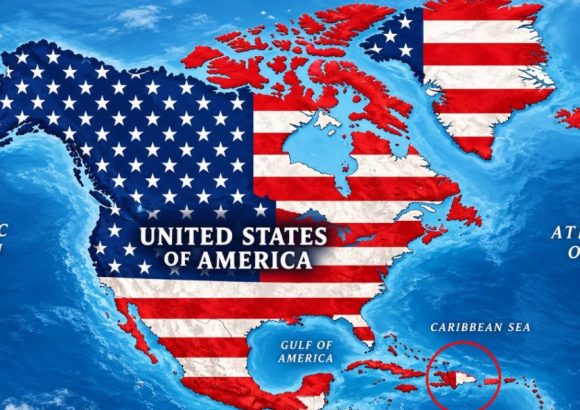
    Former U.S. President Donald Trump has reignited debate over his expansionist political rhetoric after posting an uncaptioned map to his Truth Social platform that depicts multiple North American and Caribbean nations, including the Dominican Republic, Mexico, Canada, Greenland, and Iceland, as falling under the coverage of the U.S. flag. The cryptic post, shared on Monday, comes as Trump has spent months rolling out a series of provocative proposals to redraw geographic boundaries and rename key North American waterways and land masses, fueling concerns about his territorial ambitions if he wins a second presidential term. The map was published just hours after Trump floated another controversial renaming suggestion on the same platform, arguing that the U.S. state of New Mexico should be rechristened “New America.” This proposal follows a string of similar renaming pushes, from rebranding the Gulf of Mexico as the “Gulf of America” to a recently signed executive order that would rename Lake Ontario — a transboundary body of water shared by the U.S. and Canada — as “Lake America.” The provenance of the map shared this week remains unconfirmed. Trump regularly reposts user-generated memes, fan-created graphics, and AI-generated content from his supporters, and there is no evidence to frame the image as an official U.S. government policy proposal or formal territorial claim. Even so, the post aligns with a pattern of aggressive territorial rhetoric Trump has deployed in recent months. He has repeatedly made public comments about U.S. interests in Greenland, pushed for closer integration of Canada into the U.S., and refused to rule out the use of military force to achieve political goals in Cuba. This pattern of commentary has already drawn formal and informal pushback from regional governments. On Monday, Mexican President Claudia Sheinbaum issued a sharp public statement that, while not referencing Trump’s map directly, made clear Mexico’s position on territorial sovereignty. “Mexican territory is not and will not a colony or protectorate of any foreign country,” she asserted. Though analysts and the public have focused particular attention on the unprompted inclusion of the Dominican Republic and other smaller Caribbean nations in the map, Trump has so far offered no context to explain why the countries were marked as falling under the U.S. flag, nor has he unveiled any formal policy proposal seeking to absorb those nations into the United States.

  • PM Browne Orders Clean-Up of Point Fisheries Complex, Warns Against Illegal Dumping

    PM Browne Orders Clean-Up of Point Fisheries Complex, Warns Against Illegal Dumping

    Antigua and Barbuda’s Prime Minister Gaston Browne has ordered an immediate clean-up and full structural reorganization of the Point Fisheries Complex, announcing that the long-troubled facility cannot continue operating in its current state of persistent waste accumulation and poor public hygiene. Browne first publicly raised alarms about the government-owned complex’s condition during his weekly “Browne and Browne Show” on Saturday, after unflinching photographs exposing the site’s squalor were brought to his attention by members of the public. In his address, the Prime Minister voiced clear frustration over the pervasive buildup of general garbage, discarded building materials, and rotting fish waste at the site, confirming that years of neglect have left the facility failing to meet even basic public maintenance standards. The complex was originally developed with grant and infrastructure support from the Government of Japan, with a core mission to deliver safe, functional working infrastructure for thousands of local workers across Antigua and Barbuda’s fishing sector. Today, however, Browne emphasized that the site’s degraded, unsanitary condition directly undermines that original mission, and has created significant negative externalities for the surrounding residential Point community. Browne issued a stark warning to facility operators: any party unwilling to adhere to strict new hygiene and maintenance standards will be barred from continuing to use the public infrastructure. As a core component of the planned reorganization, the Prime Minister confirmed that formal orders have already been issued to relocate a portion of the complex’s current operations to the nearby Cooks area, a temporary shift to facilitate deep cleaning and infrastructure repairs. The scope of the clean-up effort will not be limited to the fisheries complex; crews will also extend remediation work to clean blighted public spaces across the entire wider Point community. Browne used the urgent intervention at the Point complex as a platform to renew scathing criticism of rampant illegal dumping across the entire country of Antigua and Barbuda, calling out the widespread practice of abandoning derelict vehicles and large unwanted items along public roadways. Moving forward, Browne confirmed that abandoned vehicles will be classified as a form of indiscriminate illegal littering, as the national government prepares to roll out significantly stricter enforcement measures to crack down on the practice. Relevant national authorities have been actively reviewing policy changes that would impose much heavier financial and legal penalties for illegal dumping, an effort designed to deter both private individuals and commercial operations from converting roadsides and other public green spaces into informal waste disposal sites. During his address, the Prime Minister stressed that maintaining clean, healthy communities cannot be the sole responsibility of the national government. He called on local residents to take greater personal and collective responsibility for the condition of their shared public spaces, noting that repeated unaddressed dumping does more than lower quality of life for local communities. It also erodes the scenic appeal of Antigua and Barbuda, one of the Caribbean’s most popular tourism-dependent economies, threatening a core pillar of the nation’s economic livelihood.

  • Tekort aan co-schapsplaatsen zet artsenopleiding onder druk

    Tekort aan co-schapsplaatsen zet artsenopleiding onder druk

    A new joint analysis from Suriname’s Faculty of Social and Health Sciences (FMeW) has sounded the alarm over a rapidly worsening bottleneck in the clinical training stage of the country’s medical education programs, a gap that threatens training quality and student outcomes if left unaddressed.

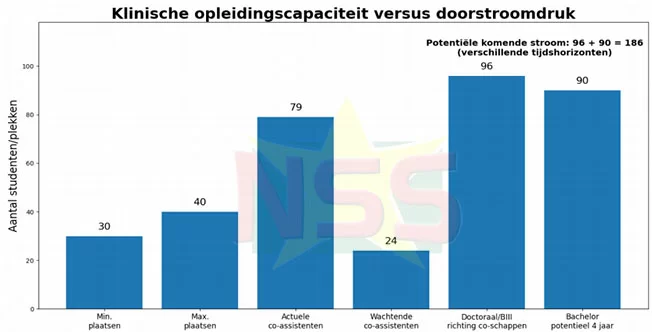
    Currently, data shows the faculty only has between 30 and 40 available clinical placement (co-schap) spots for trainee doctors. To make matters worse, 79 trainees are already active in placements across the system, with an additional 24 candidates still waiting for an open position to become available. This existing backlog is only the start of the challenge: a far larger cohort of undergraduate medical students is currently progressing through their pre-clinical coursework and will soon require clinical placements of their own.

    FMeW officials warn that expanding overall admission numbers for medical degrees without simultaneously expanding the available capacity for clinical training will only create cascading problems down the line. These risks include extended waiting periods for aspiring trainee doctors, measurable declines in training quality that put patient care at risk, and growing demotivation among students stuck in prolonged backlogs.

    A breakdown of future demand makes the scale of the gap clear. Around 96 students from the existing doctoral/BIII training pathway are still waiting to move into clinical placements. Over the coming years, an estimated 90 additional students from the new bachelor-master curriculum track will also reach the point where they need clinical training. This adds up to a potential total of 186 future students requiring placements, even if the full cohort does not need spots at the exact same time.

    Unlike pre-clinical coursework that can be expanded through online learning or larger lecture halls, clinical placement capacity cannot grow indefinitely without targeted investment and systemic change. During the clinical phase, trainees must gain hands-on experience delivering direct patient care under the close supervision of experienced medical professionals. This requires sufficient access to hospital departments, qualified supervisor time, steady patient volumes, and structured learning spaces that are already stretched thin across the current system.

    To address the growing crisis, FMeW has put forward a series of targeted policy recommendations. The core proposal is to expand the national clinical training network beyond the existing hub at the Academic Hospital Paramaribo, by formally integrating other hospitals and independent care institutions into the training system. Additional recommendations include increased public and institutional investment in hiring and training more clinical supervisors, expanding access to simulation-based medical education to supplement hands-on training, and implementing digital planning tools to streamline placement allocation and reduce administrative backlogs.

    The landmark analysis was compiled by a cross-institutional team led by FMeW Dean Fitzgerald Gopie, Vincent Lumsden, chair of the national Specialists Registration Committee, and former Director of the Suriname Health Fund Rick Kromodihardjo. The study emphasizes that any public debate about appropriate medical student admission numbers cannot be separated from discussions of clinical training capacity. Allowing more students into medical programs at the entry level without creating additional space for clinical training, the authors conclude, does not solve the country’s need for more qualified doctors — it simply shifts the crisis to a later stage of training, where it will create more harmful consequences for students and patients alike.

  • International Billfish Tournament launched with big goals

    International Billfish Tournament launched with big goals

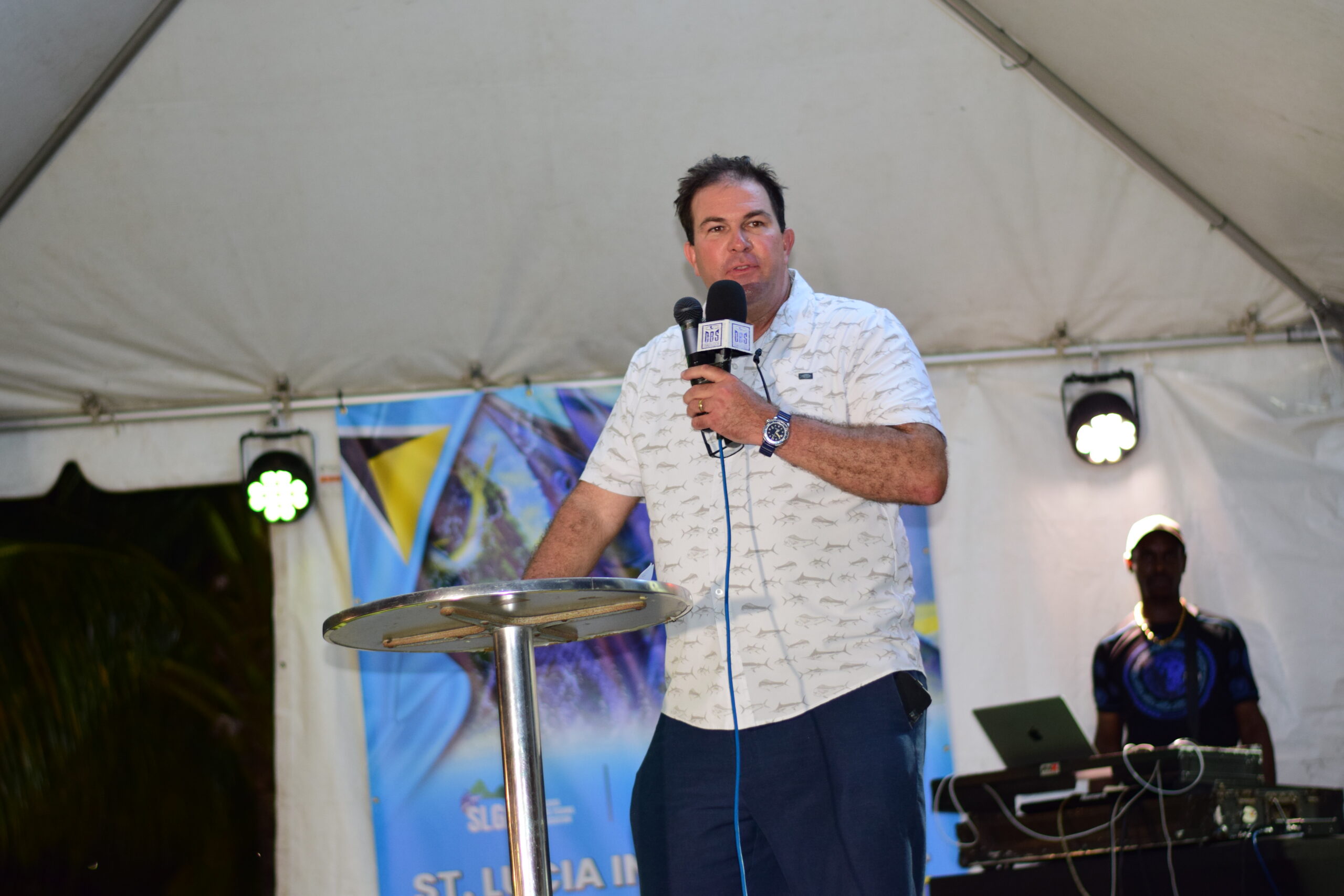
    One of the Caribbean’s most anticipated annual sport-fishing competitions is gearing up for its comeback after pandemic-related disruptions, with early registration numbers already outpacing last year’s totals and approaching pre-2020 participation levels. The 31st edition of the Republic Bank Saint Lucia International Billfish Tournament, first launched in 1991, is set to kick off later this month, and organizers are holding out hope that this year’s event will draw the largest crowd of competitors in its 32-year history.

    After a multi-year hiatus forced by global public health restrictions, the iconic offshore competition was officially opened to participants at a launch event held Friday night at IGY Rodney Bay Marina. Anglers from across Saint Lucia, the broader Caribbean region, North and South America, and Europe have already signed on to compete, marking a full return to the tournament’s traditional international appeal.

    Organized under the oversight of the Saint Lucia Game Fishing Association (SLGFA), the 2023 tournament will run from September 22 to 26, with a structured schedule that balances administrative prep, on-water competition, and closing celebrations. The first day is reserved for competitor registration and a mandatory captains’ briefing to review course layouts, rules, and safety protocols. Three full days of offshore fishing follow, before the event wraps with official weigh-ins and an awards ceremony on the final day.

    Ryan Devaux, who serves dual roles as SLGFA president and CEO of gold sponsor Terra Caribbean Saint Lucia, shared key registration updates ahead of the tournament: 21 boats have already been confirmed for this year’s competition, up from 18 total participating vessels in 2022. Of this year’s confirmed entries, eight are first-time participants, pushing the total number of competing anglers past 120 – a figure that matches pre-pandemic participation totals. With registration still open and late sign-ups still rolling in, the SLGFA says it remains optimistic that 2023 will see a record-breaking turnout for the tournament.

    The event has secured longstanding backing from key public and private stakeholders. Republic Bank (Eastern Caribbean) returns as the title sponsor, alongside government support from Saint Lucia’s Ministry of Education, Youth Development, Sports and Digital Transformation through its Alternative Sports Desk.

    To align with global sustainable sport-fishing practices, the tournament will operate under official International Game Fish Association rules and utilize a catch-and-release framework for all billfish species. Teams earn points based on successfully releasing blue marlin, sailfish, and white marlin, and are required to submit time-stamped video evidence of each release to tournament officials for verification. For edible gamefish categories, inshore scales at Rodney Bay Marina will be open to weigh catches, with prizes awarded to teams that land the heaviest yellowfin tuna, wahoo, and dorado.

    The tournament’s all-time record has stood unbroken for nearly 30 years: the benchmark remains a 707-pound blue marlin caught by Martinique-based angler Jean-Francois Fredonic in 1996. For any competitor that manages to land a larger blue marlin this year, a special grand prize is on offer: a brand-new Jeep.

  • Antigua and Barbuda Police Strengthen INTERPOL Ties to Combat Cross-Border Crime

    Antigua and Barbuda Police Strengthen INTERPOL Ties to Combat Cross-Border Crime

    On September 7, 2026, the Royal Police Force of Antigua and Barbuda (RPFAB) joined law enforcement agencies across the globe to celebrate the United Nations International Day of Police Cooperation, a yearly observance that spotlights how cross-border collaboration strengthens public safety, supports crime victims, and shields local communities.

    Established by the UN General Assembly in 2022, the annual day honors the critical role of international policing partnerships in advancing global peace, security, and equal justice. This year’s commemoration centers on the official theme: “Protecting against Vulnerability, Building Trust and Legitimacy in Policing,” which prioritizes safeguarding populations most at risk of criminal harm while reinforcing the transparency, accountability, and public trust that underpin effective modern policing.

    For the small island nation of Antigua and Barbuda, cross-border police cooperation has become an indispensable tool for tackling transnational crime, which by nature does not respect national borders. Through long-standing partnerships with INTERPOL, regional security bodies, and other global law enforcement counterparts, the RPFAB has gained critical capabilities to advance public safety. These collaborations enable real-time intelligence sharing, targeted tracking of wanted fugitives, coordinated probes into cross-border criminal activity, more robust defense against cybercrime, and more effective tracing of illicit firearms and drug traffickers moving across jurisdictions. Beyond operational coordination, global partnerships also grant the RPFAB access to cutting-edge specialized training, expert knowledge, investigative technologies, global criminal databases, and shared resources that drastically boost the force’s capacity to prevent, detect, and solve crime.

    The tangible benefits of these partnerships extend far beyond routine law enforcement operations. They directly contribute to protecting vulnerable crime victims, dismantling transnational organized criminal networks, recovering stolen assets and property, arresting fugitives who have fled across borders, and upholding the overall safety and security of Antigua and Barbuda’s population.

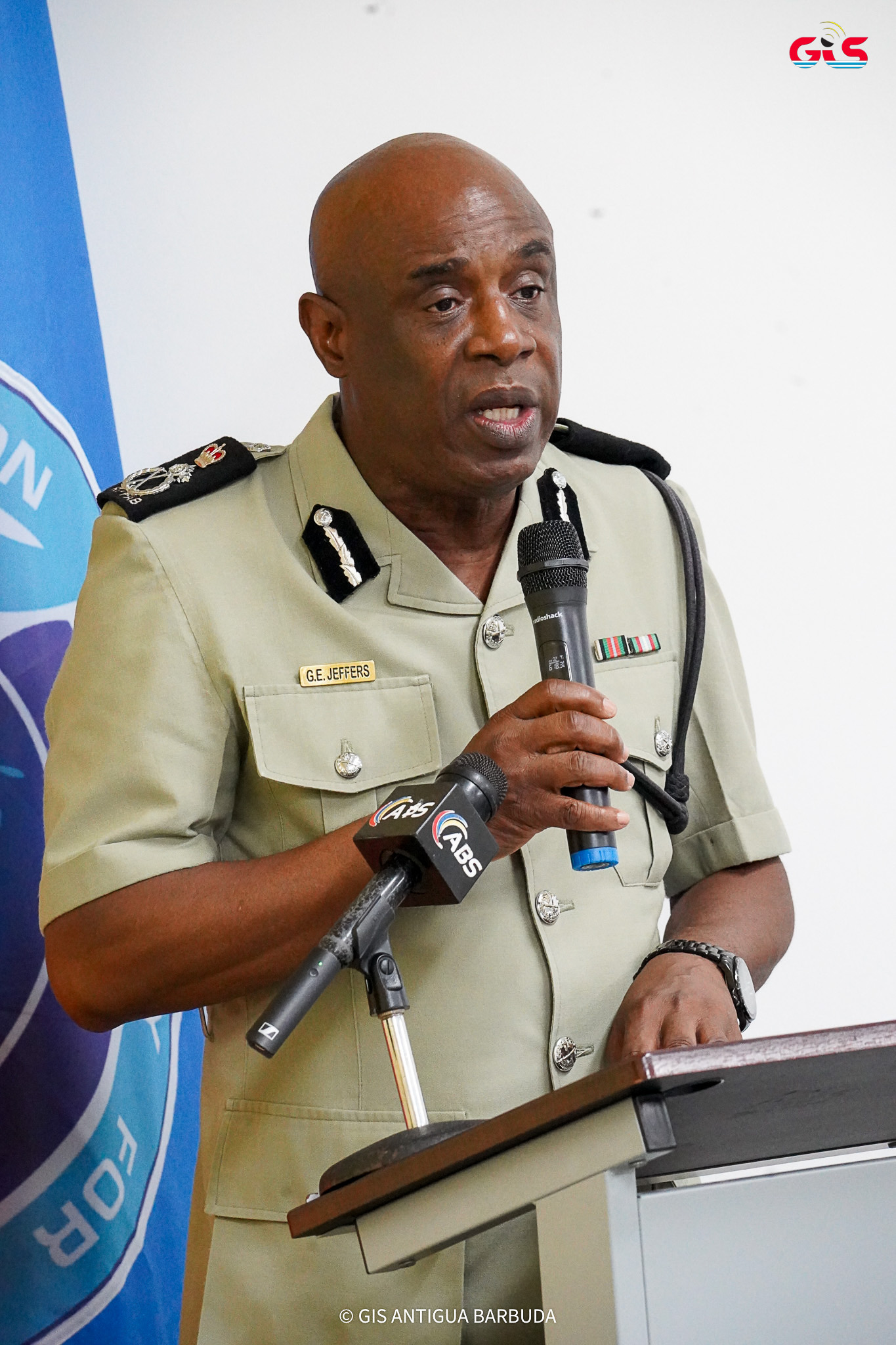
    RPFAB Commissioner Everton Jeffers emphasized that sustained, strong ties with regional and international policing partners are non-negotiable for effective public safety. “Crime recognizes no geographical boundary, and neither can our determination to confront it,” Jeffers stated. “International police cooperation gives us the ability to combine our intelligence, expertise and resources with those of trusted partners around the world to protect our people and bring offenders to justice.”

    Jeffers also noted that a police force’s effectiveness is ultimately rooted in the confidence of the communities it serves. “We will therefore continue to strengthen our partnerships at home, across the region and internationally, while policing with integrity, professionalism, fairness and respect for all,” he added. The commissioner also publicly recognized the relentless dedication of rank-and-file police officers and law enforcement professionals who work daily with global counterparts to exchange information, coordinate cross-border investigations, and support operations designed to make local communities safer.

    As it stands today, INTERPOL connects law enforcement agencies across 196 member countries, creating a global network that allows intelligence and evidence shared in one jurisdiction to directly advance investigations and operations in another. As policing organizations around the world marked the 2026 International Day of Police Cooperation, the RPFAB reaffirmed its ongoing commitment to deepening its relationships with INTERPOL and all other regional and international law enforcement partners.

    The force also renewed its core pledges: to protect vulnerable populations, build and maintain public trust, uphold the rule of law, and collaborate closely with both local communities and global partners to address evolving transnational security threats. The end goal, the force confirmed, is to build a safer, more secure future for all residents of Antigua and Barbuda.

  • Derelict Vehicles Could Attract Fines of at Least EC$3,000 Under Planned Law

    Derelict Vehicles Could Attract Fines of at Least EC$3,000 Under Planned Law

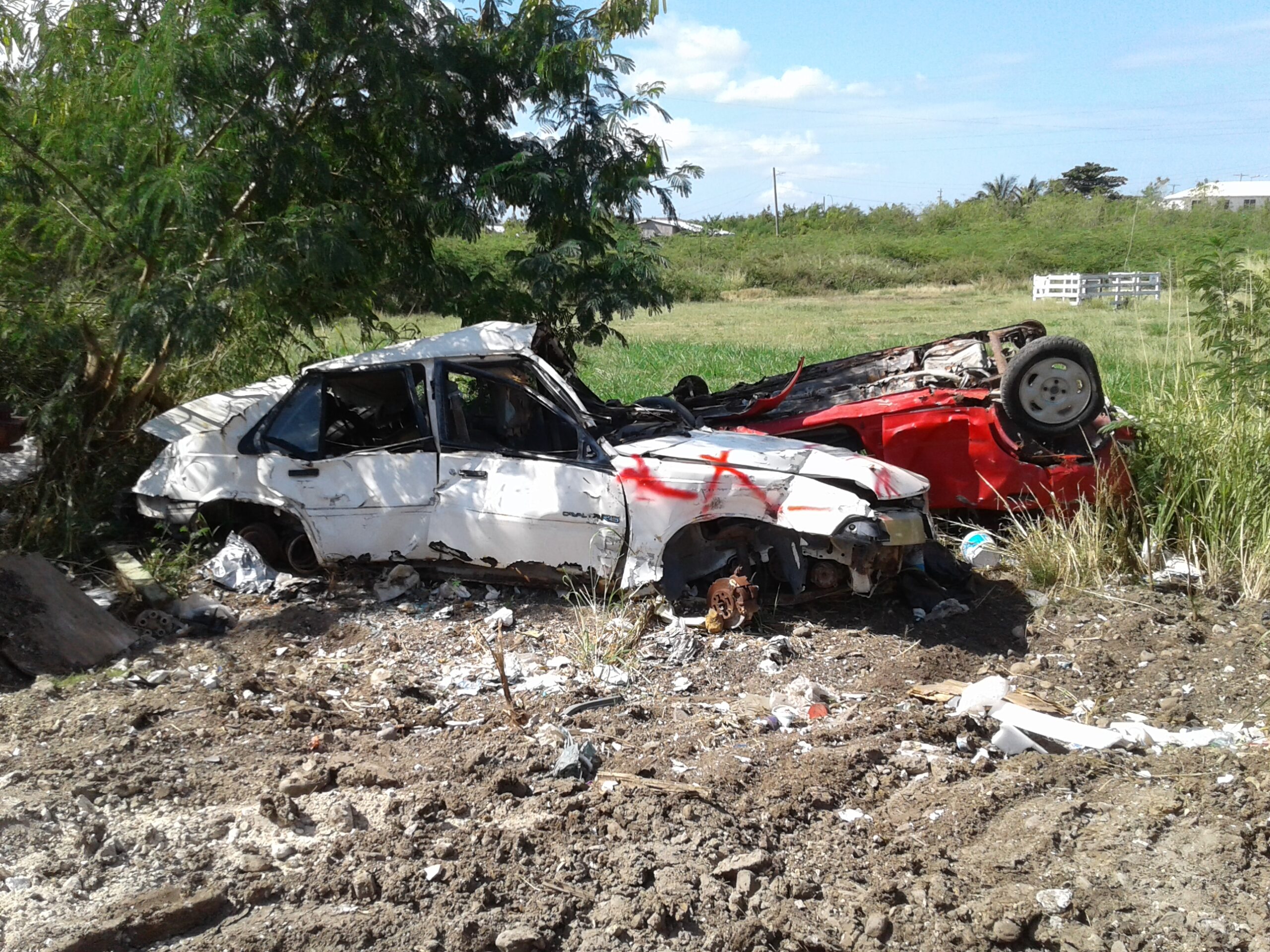
    Across the twin-island nation of Antigua and Barbuda, abandoned unroadworthy vehicles left scattered along public roadways have emerged as a growing nuisance, clogging critical alternative routes and impeding smooth traffic flow. To tackle this persistent public problem, the country’s government has tabled plans to amend existing national legislation, introducing harsh new penalties that will categorize the practice as a form of unlawful littering.

    During an appearance on the local *Browne and Browne Show* over the weekend, Prime Minister Gaston Browne laid out the details of the proposed regulatory changes. Under the current framework, abandoning derelict vehicles along public roads is not explicitly classified as littering, a gap that the amendment aims to close. “We’re going to change the law, and the parking of a vehicle that is not roadworthy at the side of the road will be constituted as littering,” Browne confirmed during the interview.

    When it comes to penalties, the prime minister revised his initial proposal to set a higher starting fine. Early plans floated a penalty range between EC$2,500 and EC$3,000, but the updated proposal will mandate a minimum fine of EC$3,000, with the maximum penalty potentially climbing as high as EC$5,000 for repeat or severe offenders. Beyond monetary penalties, Browne has put forward an alternative penalty for non-payers: court-ordered community service valued up to the maximum fine amount, with tasks including public street cleaning and native tree planting. “If we don’t criminalize them, at least there must be some form of compensation by way of labor,” Browne explained, noting that stricter consequences are needed to deter the practice even among vehicle owners who have adequate private storage space on their own property.

    The push for legislative change comes directly after senior traffic officials raised urgent concerns about the impact of abandoned vehicles on the country’s road network. Superintendent Elson Quammie, head of Antigua and Barbuda’s Traffic Department, told authorities that the problem has gotten worse as more motorists divert to secondary and community roads to avoid chronic congestion on the nation’s main highways. Many of these alternative routes, which are critical for easing peak-time travel, are now partially blocked by derelict vehicles and other unauthorised roadside obstructions.

    Quammie added that ongoing targeted removal operations have already cleared abandoned vehicles from several high-problem communities, including Point and Villa. But the issue has bounced back quickly: within weeks of these areas being cleared, residents have begun leaving new unroadworthy vehicles along the road verges. With limited staffing and resources, traffic enforcement teams cannot maintain a permanent presence in every community across the country, Quammie noted, making legislative change a necessary long-term solution. Browne also highlighted specific problem spots, including a newly built concrete thoroughfare leading to Yorks Bay and Hermitage, where multiple abandoned vehicles have been left, blocking access for local residents and visitors.

    While removal operations will continue in the short term to clear the most dangerous obstructions, the government is still drafting the amendment text. As of the latest announcement, no timeline has been set for the proposed changes to be introduced for debate and a vote in the national Parliament.

  • Dominican Republic : The Dominican military industry is booming

    Dominican Republic : The Dominican military industry is booming

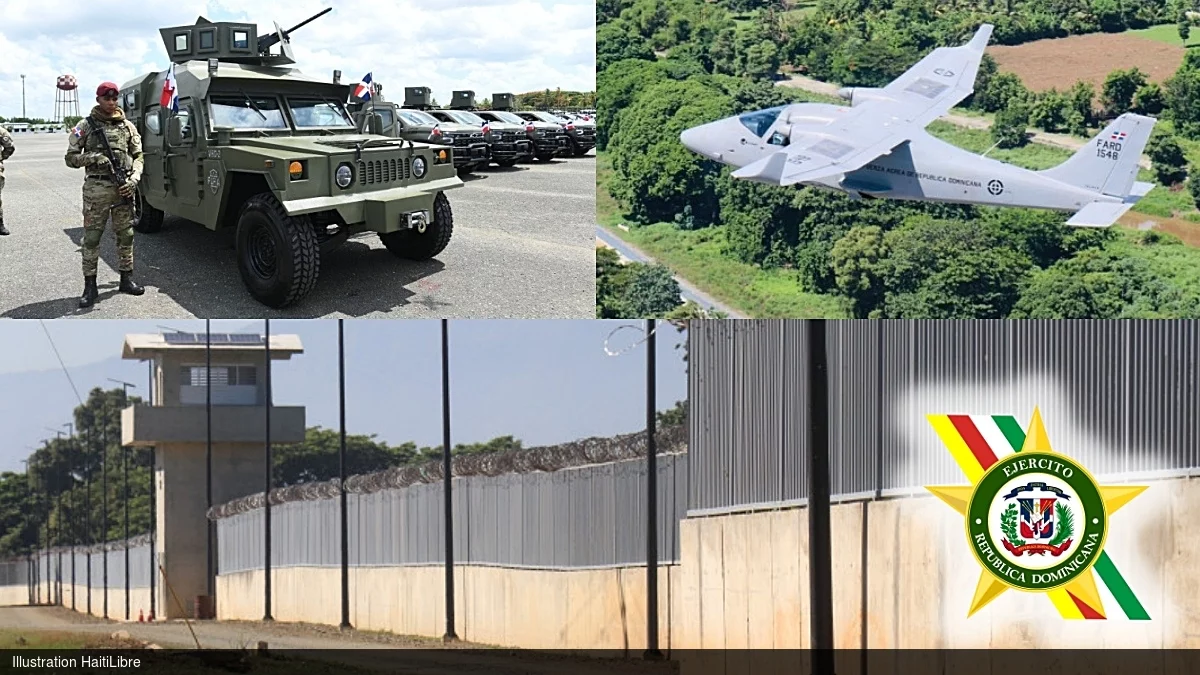
    Shared between Haiti and the Dominican Republic, a 392-kilometer land border cuts across varied terrain, from winding river corridors to paved international highways. Of this boundary, 172 kilometers run along four major waterways—the Massacre, Artibonite, Libón, and Pedernales rivers—while 48 kilometers are made up of cross-border trading routes, with four official entry points at Dajabón, Elías Piña, Jimaní, and Pedernales that anchor critical bilateral commerce and binational market activity. In recent years, the Dominican government has prioritized upgrading border control, launching an ambitious infrastructure project that has become a cornerstone of its national security strategy, even as its domestic military industrial sector grows at an unexpected pace.

    At the core of the border upgrade is a continuous perimeter barrier combining reinforced concrete foundations, reinforced metal fencing, and dedicated paved patrol lanes that let security forces respond to incursions rapidly. Complementing the physical barrier are elevated watchtowers staffed around the clock, plus a cutting-edge fiber-optic communications network that transmits real-time voice and high-resolution image data across the entire border surveillance system. Dominican Defense Minister Lieutenant General Carlos Antonio Fernández Onofre outlined that the perimeter infrastructure is being targeted at the border’s most strategically vulnerable points, with an expanding synchronized network of autonomous drones and fixed surveillance cameras being rolled out incrementally to match evolving security needs.

    Early results from the infrastructure buildout have already exceeded expectations, according to Fernández Onofre. Areas that once faced persistent crime, including rampant theft of cattle, motorcycles, and vehicles, have seen these illegal activities virtually eliminated since the new security systems went online. Beyond ground-based infrastructure, the upgrade has leveraged the Dominican Republic’s growing domestic military industry, most notably the TP-75 DULUS—the first domestically assembled surveillance aircraft built by national producers, specifically designed for border reconnaissance and airborne monitoring.

    Fernández Onofre emphasized that the locally built aircraft has drastically improved coordination between Dominican air and ground security units, delivering timely, actionable intelligence to support defense and counter-smuggling operations along the entire boundary. A key advantage of the TP-75 DULUS is its low operational cost: the plane can complete a full patrol of the entire land border in just four hours when taking off from the San Isidro Airbase, regardless of whether it departs for the northern or southern segment of the border, at a total cost of just 2,000 Dominican pesos, equal to less than 7 gallons of high-octane SP95 fuel per flight hour.

    The TP-75 DULUS is not an isolated achievement for the Dominican military industrial sector. The country already produces its own FURIA armored personnel vehicles for domestic security use, and Fernández Onofre confirmed that domestic manufacturing of surveillance drones is set to launch in the near future, expanding the country’s self-sufficiency in defense technology.

    Border security efforts extend far beyond the land boundary, however. The Dominican Navy has significantly upgraded its maritime surveillance capabilities at both the northern and southern maritime ends of the Haiti-Dominican border, with patrol missions focused on protecting national sovereignty, cracking down on a range of illicit activities including illegal unregulated fishing, smuggling of contraband, and human trafficking, as well as conducting search and rescue operations to preserve life at sea—all of which contribute to broader stability in the border region.

    Fernández Onofre confirmed that maritime patrol intensity will continue to increase as new vessels ordered by the Dominican government are commissioned into service. “We have already reinforced patrols along both the northern and southern maritime borders with Dominican Navy vessels, and this buildout will continue as all ordered patrol units are delivered and brought into active service,” he said. Most recently, the Dominican Republic signed a new agreement this year with Portugal to acquire four new offshore patrol vessels, which will further expand the Navy’s operational reach in both territorial waters and international maritime border zones, cementing the country’s improved border security posture. As domestic military production expands, the country is moving closer to full self-sufficiency in core defense technologies for border protection.

  • LUCELEC-backed scholar aiming higher after SPISE experience

    LUCELEC-backed scholar aiming higher after SPISE experience

    For promising young Saint Lucian STEM enthusiast Anaiah Bousquet, a summer spent at the Student Programme for Innovation in Science and Engineering (SPISE) has been far more than a five-week academic crash course. It has reshaped her perspective on her career, expanded her professional boundaries, and given her newfound confidence to chase ambitious goals that will benefit her home region.

    A recent graduate of St Joseph’s Convent, Bousquet is one of the 2024 cohort’s two Saint Lucian SPISE participants, supported by a full scholarship from St Lucia Electricity Services Limited (LUCELEC) that will carry through to her 2026 university enrollment. This year’s intensive residential STEM initiative was hosted at the University of the West Indies (UWI) Cave Hill Campus in Barbados, bringing together top young talent from across the Caribbean.

    LUCELEC’s long-standing commitment to nurturing local STEM leadership has stretched more than 13 years, with the utility company awarding an annual SPISE scholarship to high-achieving Saint Lucian students seeking access to this elite regional programme. For Bousquet, the experience balanced intense academic challenge with engaging, collaborative work that opened new doors. “It was a very rigorous but entertaining experience,” she explained of the programme, which introduced her to cutting-edge concepts while connecting her to a network of like-minded young STEM lovers from every corner of the Caribbean.

    Throughout the programme, university recruitment officers encouraged participants to look beyond regional higher education options and frame their academic journeys as investments in the Caribbean’s long-term development. For Bousquet, that message landed deeply. “Being around others who enjoy STEM and who come from many different backgrounds has certainly prepared me for university and further education,” she noted. “SPISE has allowed me to think bigger and to have higher aspirations.”

    Bousquet emphasized that LUCELEC’s sponsorship was far more than financial support—it was a vote of confidence that made the entire experience possible. “For me, having a company such as this sponsoring me was a very big deal,” she said. “To have a company that focuses so much on youth development in our country really means a lot, and it really enhanced my belief in myself and allowed me to perform my best at SPISE.”

    Beyond the impact on her own journey, Bousquet says the scholarship sends a critical message to other young Saint Lucians facing financial barriers to advanced learning. “Oftentimes, for economic reasons, people are not always able to go into all the programmes or the courses they would like, but it shows that there are companies like LUCELEC that are willing to support you throughout your journey,” she explained. That visibility makes elite STEM opportunities feel attainable for a new generation of local students.

    Bousquet also argues that collaborative regional STEM programmes like SPISE are foundational to growth for both individual Caribbean nations and the bloc as a whole. A key benefit, she notes, is the access to hands-on practical learning that fills gaps in traditional secondary education. “One of my challenges in STEM was getting practical experience, because oftentimes in school, we learn a lot of theory, but it is difficult to get hands-on experience with the areas of study,” she said. “So, the way I overcome this is by enrolling in many practical courses such as SPISE…. I would certainly aim to do more of these in the future.”
    Bousquet’s track record—including a gold medal at the Caribbean Science Foundation’s annual Mathematics Olympiad and her standout performance at SPISE—speaks to her relentless dedication to advancing her STEM skills. Looking ahead, she plans to pursue a career as a chemical engineer, with a focus on solving one of the Caribbean’s most pressing challenges: improving regional food security. “This is something I am very passionate about as it combines my interest in food and in STEM,” she said.

    Developed by the Caribbean Science Foundation, SPISE holds its annual session between July and August at UWI’s Barbados campus. In Saint Lucia, the programme has long depended on LUCELEC’s sustained support to open its doors to local emerging talent.

  • Eleven Canefield East families receive keys to climate-resilient homes

    Eleven Canefield East families receive keys to climate-resilient homes

    In a major milestone for Dominica’s ongoing national affordable housing strategy, 11 households in the Canefield East community have officially moved into newly built climate-resilient residences, marking the latest progress in the government’s push to expand access to safe, long-lasting housing for all citizens.

    This handover ceremony is not an isolated project, but a key phase of a broader national housing program that carries a dual mission: expanding access to low-cost, quality homes for Dominican families while upgrading the nation’s overall ability to withstand the growing threat of hurricanes and other extreme natural disasters amplified by climate change.

    The government’s heightened focus on climate-resilient housing development traces its origins back to the catastrophic damage inflicted by Hurricane Maria, a storm that devastated large swathes of Dominica’s housing stock and exposed the critical vulnerability of traditional construction to extreme weather. In the wake of that disaster, officials redirected increased public and partner funding toward designing and building homes engineered to resist severe wind, flooding, and other climate-driven hazards.

    Supported by funding from a diverse range of international and domestic partners, the long-term national housing strategy has already delivered thousands of resilient homes across the island. These constructions form a core pillar of a wider national effort to boost both household-level security and overall national resilience to climate shocks.

    The Canefield East handover is part of the program’s current active phase, which is on track to deliver a total of 215 new homes and apartment units across nine different Dominican communities before completion. For the 11 families that have already taken possession of their new properties, the residences represent far more than just shelter: they deliver long-term stability, enhanced personal and financial security, and much-needed peace of mind, while equipping these households with a far stronger foundation to navigate future climate-related challenges.