博客

  • 50th CARICOM : PM returns from Saint Kitts and Nevis (Video summary)

    50th CARICOM : PM returns from Saint Kitts and Nevis (Video summary)

    Following his participation in the 50th Ordinary Session of the CARICOM Conference of Heads of State and Government in Saint Kitts and Nevis, Haitian Prime Minister Alix Didier Fils-Aimé returned to Port-au-Prince on February 26, 2026, delivering a decisive address at Toussaint Louverture International Airport. Surrounded by key government officials, including Secretaries of State, the Acting Commander-in-Chief of the Haitian National Police, and representatives of the Armed Forces of Haiti, the Prime Minister articulated a clear vision for national recovery.

    The administration’s unwavering commitment to reestablishing state authority across Haiti’s territory formed the cornerstone of his message. Prime Minister Fils-Aimé identified security enhancement as the fundamental prerequisite for organizing free, inclusive, and credible general elections, emphasizing that this remains the government’s paramount priority.

    During the CARICOM summit, the Prime Minister engaged in substantial bilateral diplomacy. High-level discussions with U.S. Secretary of State Marco Rubio, Jamaican Prime Minister Andrew Holness, CARICOM Secretary-General Carla Barnett, and distinguished CARICOM representative Kenny Anthony focused on reinforcing regional cooperation mechanisms. These dialogues centered on developing concrete initiatives for stabilizing Haiti and facilitating economic recovery.

    International partners reportedly expressed strong approval of Haiti’s National Pact for Stability and the Organization of Elections, which has been endorsed by over 200 political parties, socio-economic organizations, and civil society groups. This widespread domestic support is interpreted as a significant indicator of Haitian stakeholders’ dedication to resolving the crisis through dialogue and nationally-owned solutions.

    Additional diplomatic engagements included constructive talks with representatives from the United Arab Emirates regarding potential strategic partnerships in security enhancement, foreign investment attraction, and financial oversight capacity building. Concurrently, discussions with Jamaican officials progressed plans to reopen the Haitian Embassy in Kingston and intensify bilateral cooperation against illicit trafficking and organized crime, particularly through enhanced security presence in the Bay of Port-au-Prince.

    The Prime Minister also secured international support through meetings with European nations. Representatives from Austria discussed establishing scholarship programs for Haitian university students, while Finland committed a substantial contribution exceeding two million dollars to address the ongoing humanitarian crisis.


  • Dominican Republic commemorates 182nd anniversary of national independence

    Dominican Republic commemorates 182nd anniversary of national independence

    The Dominican Republic observes its 182nd National Independence Day on Friday, February 27, 2026, commemorating the nation’s hard-won sovereignty declared in 1844. This annual celebration serves as a powerful testament to the enduring principles of freedom, national identity, and self-determination that form the foundation of the Dominican state.

    The path to independence distinguished itself through collaborative leadership rather than singular authority. While Juan Pablo Duarte, Francisco del Rosario Sánchez, and Matías Ramón Mella are recognized as principal architects of liberation, they operated alongside numerous patriots including Antonio Duvergé, Pedro Santana, Ramón Santana, the Puello brothers, and José María Imbert. This collective effort underscored the movement’s strength through unified action.

    Duarte’s strategic vision materialized through underground organizations La Trinitaria (founded July 16, 1838) and later La Filantrópica, which became instrumental in galvanizing opposition against Haitian governance. His leadership during the 1843 anti-Boyer movement established him as a central figure in republican reform efforts, though subsequent political developments forced his temporary exile.

    The movement persevered under Sánchez and Mella’s direction, culminating in the January 16, 1844 Manifesto of Independence which articulated the nation’s liberal republican framework. The definitive rebellion commenced on February 27, 1844, when Mella fired the symbolic first shot at Puerta de la Misericordia. Sánchez subsequently orchestrated the final uprising at Puerta del Conde, raising the national flag in the early hours of February 28 under the enduring motto “God, Fatherland, and Liberty.”

    Post-independence, Sánchez’s presidency of the Central Governing Board provided crucial guidance during the nation’s formative period. The successful revolution demonstrated how shared purpose and coordinated effort could achieve national liberation against formidable challenges.

    Today’s anniversary transcends historical remembrance, serving as both a tribute to the Founding Fathers’ legacy and a contemporary call to uphold their ideals. It reinforces the continuing relevance of unity and collective responsibility in advancing national progress and democratic development.

  • Is a La Ruta Maya Boycott Coming?

    Is a La Ruta Maya Boycott Coming?

    BELIZE CITY – This Saturday’s Guinness-powered Boom to the City canoe race has evolved into a potential precursor for broader athletic protests, according to emerging reports from the Belize Canoe Association. Vice President Elvin Penner indicates the event may foreshadow significant disruptions to the upcoming La Ruta Maya Belize River Challenge, including the possibility of an organized paddler boycott.

    The escalating tensions between the Belize Canoe Association and Love FM, the longstanding organizer of La Ruta Maya, have reached a critical juncture. Penner has publicly called for solidarity from paddlers, sponsors, and enthusiasts to demonstrate against what he characterizes as “years of disrespect, disregard, abuse, mistreatment and unfair treatment” from the event organizers.

    Following Saturday’s race, the Association will convene a decisive meeting to determine their official stance regarding the modified La Ruta Maya event, which has unexpectedly altered its traditional finish line for the first time in its history. Central to the discussion will be whether to require official sanctioning of the race by the governing canoe association.

    Penner outlined the potential consequences of such a decision: “Should Love FM refuse our sanctioning requirements, we would then implement sanctions against any paddler participating in an unsanctioned event. This would prohibit their participation in future Association-sanctioned races and disqualify them from representing Belize in international competitions.”

    In a significant development, the Association has already initiated discussions about creating an alternative event. “Preparations have commenced to develop a superior competition, executed properly from inception,” Penner confirmed.

    The Association is also considering economic pressure tactics, including potentially requesting that Bowen and Bowen support the paddlers’ position. Failure to gain corporate backing could result in a consumer boycott of Belikin products.

    Additional protest measures under consideration include a comprehensive media blackout of Love FM coverage and symbolic demonstrations at the race finish line, signaling a profound shift in Belize’s canoe racing landscape.

  • Dominica Medical Council established with passing of new Bill

    Dominica Medical Council established with passing of new Bill

    The Commonwealth of Dominica has taken a significant step toward modernizing its healthcare regulatory framework with the parliamentary passage of the Medical Profession Bill 2026. This landmark legislation establishes the Dominica Medical Council, a comprehensive regulatory body designed to oversee the nation’s medical profession with enhanced authority and independence.

    Health Minister Cassanni Laville presented the bill before Parliament, emphasizing its critical role in transforming healthcare governance. “This legislation creates a contemporary, autonomous regulatory entity tasked with supervising registration, licensing, professional standards, and disciplinary procedures,” Minister Laville declared during his parliamentary address.

    The newly formed council will supersede the existing medical board, implementing a governance structure that aligns with current healthcare demands and international standards. Its mandate encompasses several key functions: ensuring proper credentialing of medical practitioners, monitoring professional conduct, establishing clear disciplinary protocols, and maintaining elevated qualification standards through continuous education requirements.

    Minister Laville highlighted the council’s sophisticated organizational design, which includes appointed positions such as a registrar and auditor, along with specialized committees focused on education, training, and disciplinary matters. “This architectural framework guarantees institutional robustness, ethical integrity, and operational independence,” Laville explained. “These safeguards benefit patients, protect medical professionals, and preserve the healthcare system’s overall credibility.”

    The legislation also introduces strengthened legal protections for medical practitioners operating within Dominica, providing enhanced professional security while ensuring accountability. This balanced approach aims to elevate healthcare quality while addressing both practitioner needs and patient safety concerns.

    The establishment of the Dominica Medical Council represents the most substantial overhaul of medical regulation in recent history, positioning the nation’s healthcare system for improved standards, greater transparency, and enhanced public trust.

  • Motie over SZF en RZW unaniem aangenomen met 31 stemmen

    Motie over SZF en RZW unaniem aangenomen met 31 stemmen

    In a rare display of political unity, Suriname’s National Assembly has unanimously approved a comprehensive motion addressing systemic governance issues within the country’s healthcare sector. All 31 parliament members present voted in favor of the measure, which was jointly submitted by every political faction in the legislative body.

    The motion emerged from a government interrogation session initiated by Assembly members Rossellie Cotino and Silvana Afoensoewa, both representing the National Democratic Party. During the parliamentary proceedings, Minister of Health, Labor, and Welfare André Misiekaba provided extensive responses to lawmakers’ probing questions while submitting numerous documentation from both the State Health Fund and the Wanica Regional Hospital.

    Central to the parliamentary motion is the government’s constitutional obligation to ensure transparent, efficient, and lawful management of public resources within the healthcare system. The Assembly emphasized that healthcare protection, continuity, and affordability constitute fundamental citizen rights that must be safeguarded.

    The resolution identifies persistent financial shortfalls within the healthcare sector as requiring immediate governance improvements and expenditure transparency. Parliament specifically condemned the practice of improperly withholding citizen premiums from the health fund, mandating their prompt restitution.

    In its decisive action, the National Assembly has issued a formal demand for the government to:

    • Implement robust internal control mechanisms and supervisory structures within state enterprises to ensure proper utilization of public funds
    • Submit within 30 days a comprehensive written report to parliament detailing:
    – The State Health Fund’s financial position, including liquidity, debts, receivables, and current obligations
    – Governance frameworks, internal control systems, and compliance with statutes and board regulations
    • Restore stability and operational normalcy at the Paramaribo Milk Center
    • Engage judicial authorities whenever financial misconduct is suspected
    • Recover unlawfully obtained public resources
    • Initiate legislative discussions establishing governance codes for parastatal institutions

    This unanimous parliamentary decision delivers a powerful message that financial transparency, accountability, and sound governance must become immediate priorities within Suriname’s healthcare administration.

  • Cuba meldt dood van vier ballingen na aanval vanaf Florida-speedboot

    Cuba meldt dood van vier ballingen na aanval vanaf Florida-speedboot

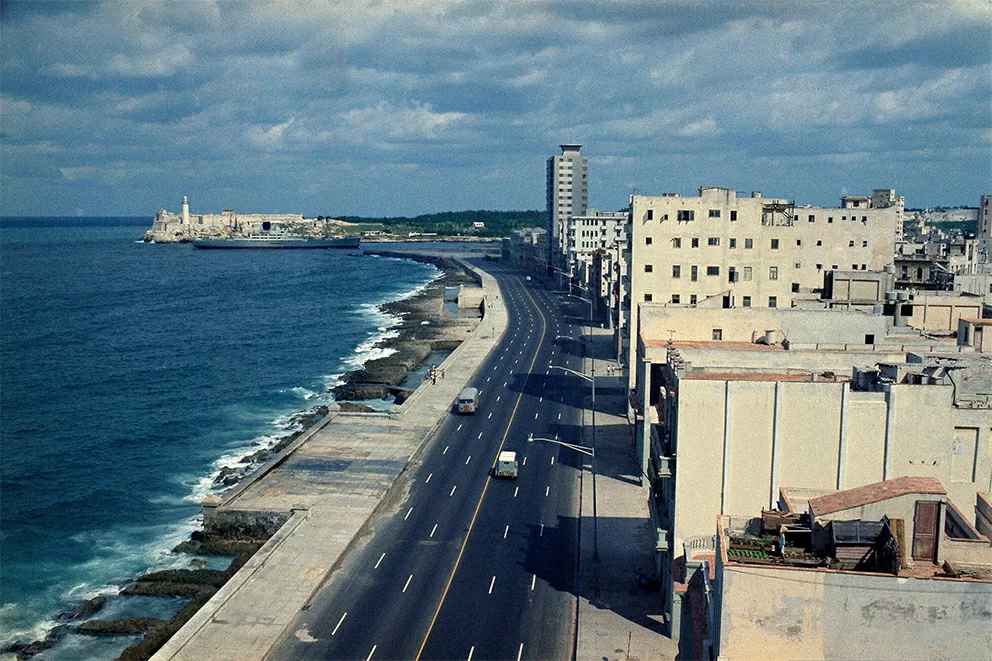
    Cuban authorities have confirmed the lethal outcome of a maritime security incident involving armed exiles from Florida, resulting in four fatalities and six injuries. The confrontation occurred when a speedboat registered in Florida breached Cuban territorial waters and initiated gunfire against a Cuban patrol unit on Wednesday.

    According to Cuba’s Ministry of the Interior, the assailants were heavily armed opponents of the Cuban government, some of whom were previously sought for plotting terrorist attacks. The group was equipped with automatic weapons, handguns, improvised explosives, bulletproof vests, and telescopic sights. An additional suspect has been detained in Cuba for alleged involvement in the planned infiltration.

    The wounded, including the Cuban patrol commander, received medical evacuation and care. Cuban officials stated that interrogations revealed the group’s intention to execute a terrorist infiltration mission.

    Cuba’s embassy in Paramaribo condemned the incident as a terrorist attack and urged the United States to curb anti-Cuban group activities within its borders. An official embassy statement emphasized that “this assault not only violates Cuban sovereignty but also jeopardizes regional peace and stability.”

    US Secretary of State Marco Rubio denied any American government involvement, confirming that no US officials participated in the operation. He announced that the US would conduct an independent investigation to determine the exact circumstances, noting the unusual nature of open-sea shootings.

    This incident follows heightened tensions stemming from US oil sanctions against Cuba and references the recent US arrest of Venezuelan President Nicolás Maduro, a key Cuban ally. Rubio reiterated calls for substantial changes in Cuba’s governance.

    Historical context reveals Miami as a traditional hub for anti-Castro activities, including the failed 1961 CIA-backed Bay of Pigs invasion. While such operations have diminished in frequency, recent energy crises and political tensions appear to have reinvigorated opposition efforts.

    Authorities have identified six suspects detained from the speedboat, including two previously known for alleged terrorist plots against Cuba: Amijail Sanchez Gonzalez and Leordan Enrique Cruz Gomez. The death of Michel Ortega Casanova has been confirmed, while three other deceased individuals remain unidentified. Cuban national Duniel Hernandez Santos was arrested for complicity.

    The speedboat had approached within one nautical mile of Falcones Cay on Cuba’s northern coast when intercepted by a five-member border patrol. The exchange of fire resulted in injuries to the patrol commander.

    Florida politicians have called for independent investigations, with Attorney General James Uthmeier coordinating with federal and local authorities. Congressman Carlos Gimenez, representing southern Florida, advocated for federal scrutiny by the State and Defense Departments, emphasizing the need to identify any American citizens or legal residents among the casualties.

    International human rights organizations demand transparency and independent investigation, warning of potential escalation in an already volatile region. The Organization of American States (OAS) urged restraint and dialogue, while the United Nations emphasized violence prevention and peaceful resolution. The European Union called for calm and adherence to international law, with regional allies Venezuela and Nicaragua expressing solidarity with Havana. The US maintains its position of intensified sanctions and continued pressure on the Cuban government.

  • High Court Awaits Key Filing in Orson Elrington Rape Case

    High Court Awaits Key Filing in Orson Elrington Rape Case

    The Belize High Court anticipates a critical procedural development today in the sexual assault case against prominent attorney Orson ‘OJ’ Elrington. Justice Nigel Pilgrim has mandated that by midday, Director of Public Prosecutions Cheryl-Lyn Vidal must formally submit the virtual complainant’s position regarding conducting trial proceedings in camera—completely closed to public observation.

    During Wednesday’s hearing, Justice Pilgrim established that the court requires direct input from the alleged victim before rendering any determination on courtroom access. The judge emphasized that the complainant’s perspective carries equivalent juridical weight to arguments presented by defense counsel advocating for maintaining public access to the proceedings.

    Both prosecution and defense teams have already presented their legal submissions—Vidal for the state and Alifa Elrington for the defense. However, Justice Pilgrim suspended further deliberation pending clarification of the complainant’s stance on this consequential procedural matter.

    Following the noon filing deadline, defense representatives will have opportunity to formulate their response ahead of the scheduled 3:00 p.m. hearing continuation. This afternoon’s judicial decision will ultimately establish whether one of Belize’s most closely watched legal proceedings will unfold under public scrutiny or behind closed doors. Court reporters will provide comprehensive updates regarding these developments in subsequent news broadcasts.

  • Imports Surge Past Quarter‑Billion Dollars

    Imports Surge Past Quarter‑Billion Dollars

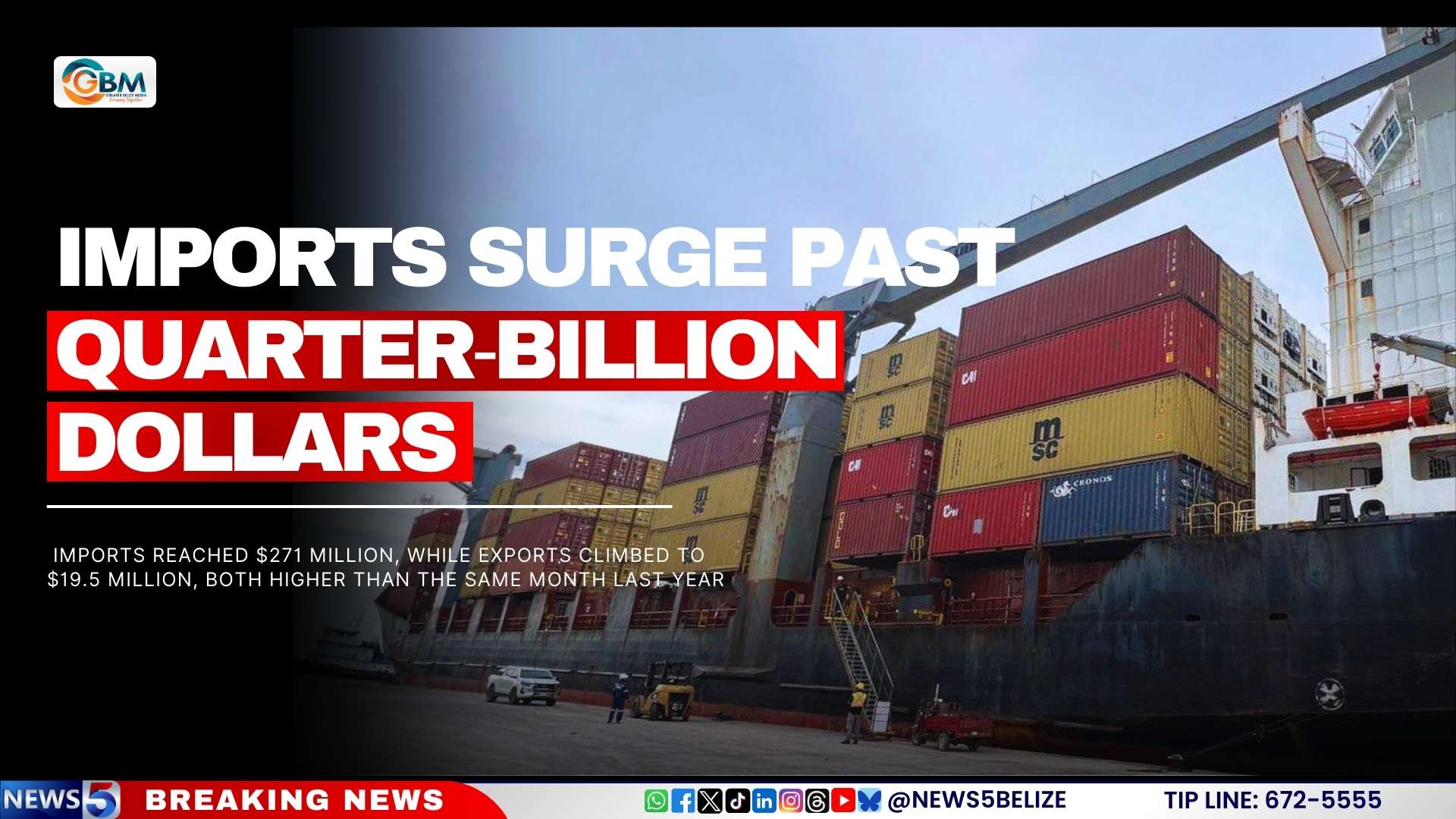
    Belize’s economy demonstrated vigorous trading activity in January 2026, recording substantial growth in both import and export sectors according to the latest data from the Statistical Institute of Belize. The nation’s import expenditure surged to $271 million, marking an 11.7% increase equivalent to $28.5 million compared to January 2025, while exports climbed to $19.5 million.

    The import expansion was predominantly driven by capital investments in machinery and equipment, which escalated from $61.6 million to $76.1 million, indicating robust industrial development. Consumer goods including athletic apparel, footwear, agricultural inputs, and tobacco products contributed significantly to the import growth. However, construction materials experienced a modest decline, suggesting a temporary cooling in the building sector.

    Agricultural exports emerged as the standout performer, with banana shipments generating $7.8 million compared to $6.1 million the previous year. The pepper sauce industry achieved remarkable growth, more than doubling its export revenue. While marine products and sugar experienced slight contractions due to fluctuating global demand, the overall agricultural sector demonstrated strong competitiveness in international markets.

    Geographically, European markets dramatically increased purchases from Belize, with exports soaring from $2.1 million to $4.9 million. The United States also expanded imports, particularly conch and pepper sauces, rising from $3.5 million to $4.4 million. Conversely, CARICOM nations and the United Kingdom reduced imports, primarily reflecting decreased banana shipments to these traditional markets.

  • Carriacou students swap single-use plastic for sustainable water supply

    Carriacou students swap single-use plastic for sustainable water supply

    Windward Aid has launched a comprehensive initiative addressing both water scarcity and plastic pollution on the Caribbean island of Carriacou. The program represents a strategic expansion of the organization’s 2026 recovery and resilience framework across Grenada and surrounding regions.

    The intervention unfolds through two parallel components: Edu Aid Phase 11 and Aqua Aid Phase 11. The educational arm has deployed reusable metal flasks and water dispensers across 18 schools and early childhood institutions, fundamentally transforming hydration practices for students. This systematic shift eliminates dependence on single-use plastic bottles while ensuring consistent access to potable water throughout the academic calendar.

    Environmental implications are particularly significant for small island developing states like Grenada, where plastic waste frequently ends up incinerated or marine-bound, threatening both ecological systems and tourism economies. The problem intensifies during dry seasons when bottled water consumption typically spikes.

    Simultaneously, the humanitarian response scales household water support from 100 to over 200 families during the current dry season. This expansion operates through community-led identification processes targeting vulnerable households.

    The timing proves critical given compounding challenges. Hurricane Beryl’s July 2024 passage damaged rainwater harvesting systems across Carriacou, with many cisterns remaining underfilled despite recent roof reconstructions. Further exacerbating shortages, the National Water and Sewerage Authority (Nawasa) has faced approximately two months of desalination production halts due to technical failures at its plant.

    Implementation relies on partnership with Boley Springs, which manages water quality assurance, sanitization protocols, and weekly distribution logistics meeting national potability standards. Weekly deliveries now transport up to 360 five-gallon bottles to educational institutions, with empties collected for professional sanitization and refilling.

    Education officials emphasize the program’s dual significance. Principal Kerwin Noel of Mt Government School noted the long-term environmental benefits, stating plastic reduction lessons ecological burdens for future generations. Carriacou District Education Officer Delon Moses characterized the intervention as ‘high priority’ amid persistent water scarcity following Hurricane Beryl.

    Windward Aid representative Alana Clement emphasized care maintenance for distributed equipment during handover ceremonies, noting the particularly harsh dry season conditions.

    Beyond immediate crisis response, the initiative models integrated resilience linking climate recovery with environmental stewardship. Each refillable bottle now symbolizes reduced landfill burden, diminished marine pollution, and classroom-based climate adaptation progress.

  • RGPF investigate bush fire at La Calome, St David

    RGPF investigate bush fire at La Calome, St David

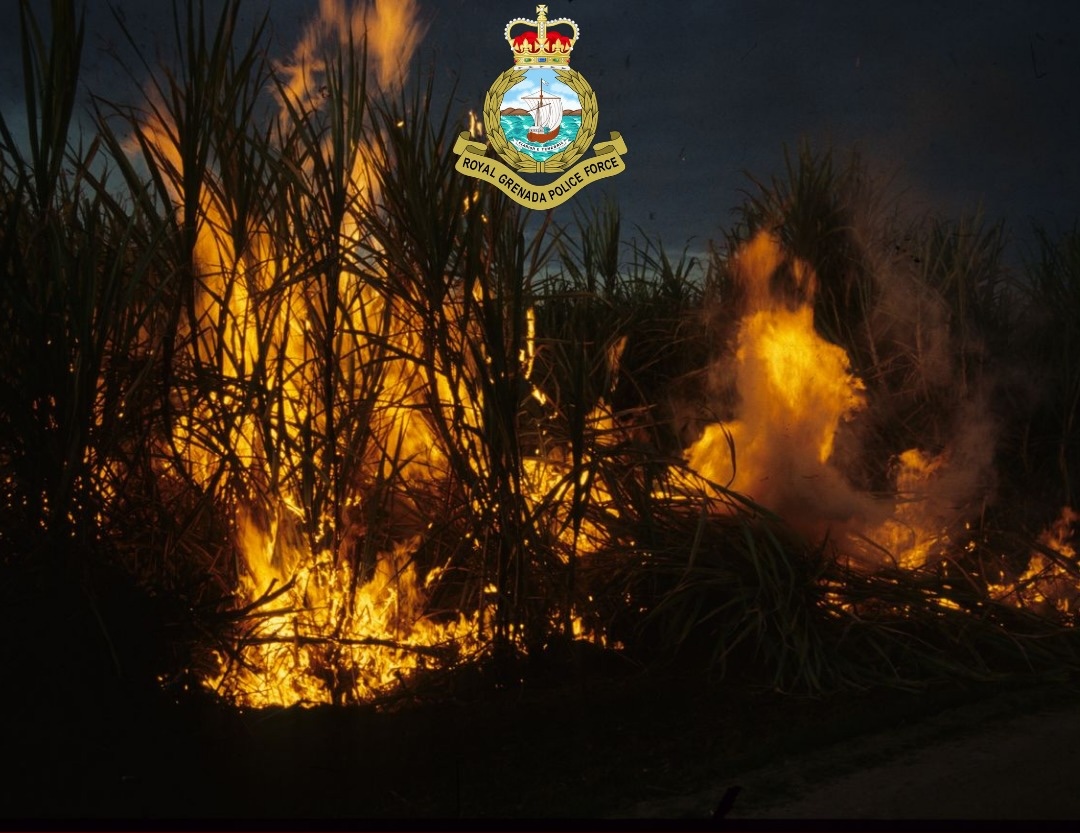
    Authorities in Grenada are investigating the origins of a significant agricultural fire that ravaged approximately 10 acres of predominantly sugar cane fields in the La Calome region of St. David on February 25, 2026. The Royal Grenada Police Force (RGPF) has confirmed the commencement of a formal probe into the incident which required extensive firefighting efforts.

    Emergency services were alerted to the burgeoning bush fire at approximately 10:09 PM. Fire Department personnel arriving at the scene encountered intense flames and thick smoke originating from the cane field, with the fire having already spread to adjacent bamboo clusters. Fire crews mounted a sustained response operation, dedicating four hours and deploying in excess of 6,000 gallons of water to achieve containment and eventual extinguishment of the primary blaze.

    In a subsequent development on February 26 at 4:48 AM, firefighters were dispatched again following reports of a minor reignition at the site. Officials confirmed the situation was promptly addressed and posed no substantial threat. Crews remained on site to conduct thorough monitoring, ensuring complete elimination of hot spots and preventing any potential rekindling or spread to surrounding areas.

    The incident highlights vulnerabilities in agricultural zones to fire hazards, with potential economic implications for local farmers. The RGPF continues to gather evidence to determine the fire’s cause, whether accidental or otherwise.